Home Blog Page 461

The University of KwaZulu-Natal is lookin for a vice-chancellor

0

Mphathi Nxumalo

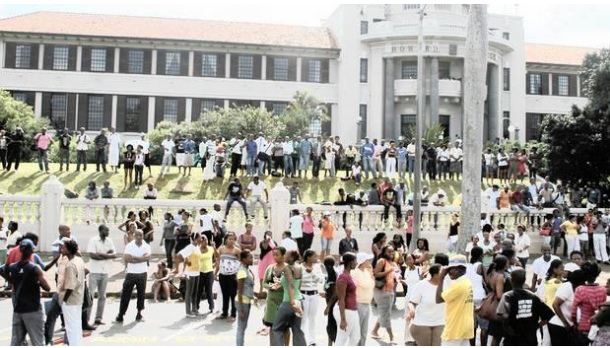
The hunt is on for a new boss for the University of KwaZulu-Natal (UKZN)

The deadline for applications for the position of vice-chancellor at the UKZN is this Thursday after an extension from January 1 and two education experts advised on the quality traits to look out for.

The advertisement followed the resignation of Dr Albert van Jaarsveld last year after a turbulent three years at the institution. His term was due to end in September this year.

During his tenure Van Jaarsveld had to deal with a number of issues including #FeesMustFall and claims of racism after some of the university’s top executives were suspended following an acrimonious fallout with him.

After his resignation in August last year, Professor Nana Poku was appointed as acting vice-chancellor.

Normah Zondo, acting executive director, corporate relations division at UKZN, said the post was initially advertised last year. She said the appointment process could take anything between three and nine months.

Some of the candidate requirements include a PhD or doctorate, at least eight years demonstrable leadership and experience at executive management of a faculty or college.

“The successful candidate must be a credible individual of unquestionable integrity with strong interpersonal and financial capabilities, who is an institutional leader and is able to establish substantive networks internally and externally with different stakeholders,” read the advert for the position.

According to Stellenbosch academic and a former vice-chancellor Jonathan Jansen, in the tough turbulent times that are facing higher education, vice-chancellors should have a good dose of humility.

In his opinion piece entitled: “Cheat sheet for VCs running universities in turbulent times”, which was recently published in the Daily News, he said vice-chancellors should work for the betterment of the institution and the people at the institution.

He said understanding one’s limitations and surrounding oneself with competent people was another key aspect for successfully running the university.

“A singular ambition. Sitting in the main office, you tend to overreach by wanting to do everything on a long list of goals. Do one or two big things well and you are more likely to make an impact,” Jansen advised.

Also weighing in, education expert Professor Kobus Maree said the new vice-chancellor would have to be adept at many things, including handling financial matters. “This is particularly important since free tertiary education was announced in the country and balancing the books is important. Another matter that needs to be changed is to decolonise the institution’s curriculum,” Maree said.

“Diversify staff and also recognise and promote people who have been previously excluded,” he said.

Despite the challenges that an institution faces, Maree said real leaders would not shy away from applying, but “would see this as an opportunity to turn the institution around”.

“It is a huge opportunity,” he said.

Daily News

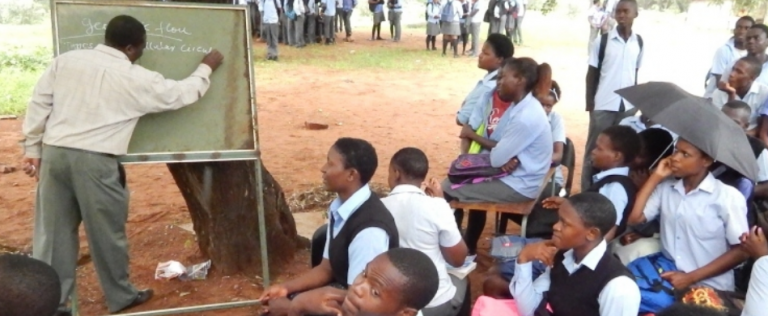
Poor-quality teachers are holding back South Africa’s education system

Natasha Robinson

Half of all South African pupils who have attended school for five years can’t do basic calculations. This is according to a 2015 TIMMS report on mathematics achievements among Grade 5 pupils in SA.

At the same time, it’s calculated that 10% of the country’s teachers are absent from school each day, while research found that 79% of SA Grade 6 maths teachers were classified as having content knowledge levels below the level at which they were teaching.

Given that teacher quality is one of the biggest factors determining the learning outcomes of pupils, what will it take to improve teacher quality and professionalism in the country?

Numerous suggestions have been floated. But one idea has recently generated particular interest — the introduction of “teacher professional standards”.

Their development began in the United States in the late eighties. It was stimulated by the view that higher expectations for pupil learning could be accomplished only by higher expectations of teaching quality. In the South African context, teacher standards are a response to a lack of teacher accountability. This has been identified as a cause of the poor quality of South African education.

The basic premise of teacher standards is that if you expect more from teachers, don’t allow them into the classroom until they’ve met a basic set of criteria, and hold them to account if they fall short, then the quality of teachers will improve. But introducing teacher standards in SA also comes with a caveat. Research into the value of teacher standards for SA warns that this approach could serve to deprofessionalise the country’s teaching force if not approached carefully. This is because there are effectively two types of teacher standards, and it’s important not to conflate the two.

There are standards that professionalise teaching and standards that simply manage teachers. While standards that professionalise create cultures of collegiality, expertise and pride among teachers, standards that manage can leave them feeling brow-beaten, untrusted and demotivated.

Yet management standards are often mistaken for professional standards. When this happens, teacher morale drops. This is a common trend in countries like SA which have a “vicious” rather than “virtuous” schooling cycle.

HOW THE SCHOOLING CYCLE WORKS

The quality of a nation’s teachers cannot be divorced from the quality of its pupils exiting schools. This is because successive cohorts of pupils progress through school, enter university as student teachers, and graduate as teachers where they nurture the next cohort through the cycle. The end of school is therefore the beginning of higher education.

In a virtuous schooling cycle, education is a desirable career choice for top graduates. This allows for competitive entry requirements for teacher education programmes, which in turn allows for rigorous and challenging courses. This, in turn, produces high-quality teachers who improve pupil outcomes. The quality and professionalism of the teachers nurtures the next generation of high-quality teacher trainees.

Compare this to SA, which has a vicious schooling cycle. Initial teacher education is highly variable but generally insufficient… Research on newly qualified teachers indicates that students enter their studies with very poor skills, and leave with little more. Consequently, their pupils do very poorly and teaching is perceived as a low-status career. Teacher education programmes are therefore, in general, unable reliably to attract high-quality graduates. The vicious cycle repeats itself.

In vicious schooling cycles, governments… hold teachers accountable. Standards are used to manage teachers, and to protect pupils from the worst teachers through supervisory surveillance and control. Invariably, the relationship between teacher unions and governments becomes antagonistic and generates feelings of fear and mistrust. This, in turn, alienates the best school graduates who frankly have better career options.

NOT ALL STANDARDSPROFESSIONALISE TEACHING

Given its vicious cycle, management standards may be more likely than professional standards in SA. Does this mean that SA teachers are damned to the stick, rather than the carrot? Not necessarily. There are many excellent teachers who are hungry for opportunities to develop in ways that nurture autonomy and collegiality.

SA should not shy away from developing and promoting professional best practice, and providing the opportunities for teachers to reach them. At the same time, management standards must be considered carefully. While they may prevent the worst teaching, they’re unlikely to create the professional culture that promotes the best teaching and attracts the best candidates. — The Conversation.

• Natasha Robinson is a PhD candidate and research consultant, University of Oxford.

• Nick Taylor, senior research fellow at Jet Education Services, also contributed to this article.

Education quality and the youth skills gap are marring progress in Africa

David E Kiwuwa

The Ibrahim Index of African Governance measures and monitors Africa’s governance performance. It produces an impartial picture of governance performance in every country on the continent. David E Kiwuwa, associate professor of international studies at the University of Nottingham, asked Mandipa Ndlovu, a Zimbabwean academic, researcher and 2017/18 Ibrahim Scholar to unpack some of the findings from the 2018 report.

Where do you see progress in Africa in terms of good governance and leadership over the past decade?

The Index defines governance as the provision of the political, social and economic goods and services that every citizen has the right to expect from their government. Governments have a responsibility to deliver these services to their citizens.

The 2018 Index shows that countries that have done well in overall governance have also seen improvements in transparency and accountability. These improvements fall under the broad category of “safety and rule of law”. Here, the continent is in a better position than it was five years ago. For this trend to continue national security needs to be reinforced.

The health measure has improved in 47 countries over the past ten years. Countries like Nigeria, the Democratic Republic of Congo and Burkina Faso have taken great strides. This is thanks to improvements in several areas like the provision of antiretroviral treatment, a drop in child mortality and better management of communicable diseases. Maternal mortality rates have also stabilised and immunisation has become more common.

In spite of this progress, Africans are not satisfied with their governments’ handling of basic health services.

Where is progress slowest?

Gender is one area of concern. The 2018 report notes that gender representation in leadership had the largest improvement over the last five years. However, the empowerment of women in general registered the biggest slowdown. Gender representation therefore, must not be conflated with gender empowerment.

The data also shows that policies and representation do not always translate into action. South Africa, for example, continues to face high rates of femicide and patriarchal ideals within its judicial structures. This is despite its liberal constitution.

While the country shows great improvements under “women’s political participation” and “representation of women in the judiciary” there is a decline in “women’s political empowerment”. Women are well represented in the country’s cabinet, for instance, but there’s been a marked deterioration in how empowered ordinary women feel to participate in politics.

Such disconnects are concerning.

However, countries like Rwanda must be commended for their deliberate inclusion of women in places of influence. Interventions like these are still too rare on the continent.

Also worrying is the lack of progress under “sustainable economic opportunity”, the worst performing measure. Almost half of the continent’s citizens (43.2%) live in a country that’s seen a decline of sustainable economic opportunities in the last 10 years.

Why have African governments struggled to translate economic growth into improved sustainable economic opportunities for their citizens?

Trends indicate that transparency and accountability are vital for sustainable economic opportunity in the long term. Greater accountability and transparency is needed on national expenditure, for example. Protectionist systems that allow for the abuse of power and inhibit the levelling out of socio-economic disparities must be exposed. Only then can these systems be reformed to open up more opportunities for all.

Increasing access to sustainable economic opportunities improves human development. This in turn allows for innovation in health, technology and other spaces that increase the overall functionality of good governance.

What role can education play in improving governance?

The gaps in African governance are twofold: socio-economic inclusion and education. It is important to focus on both areas to bring about overall improvement. Although improvements have been recorded in the sub-category of “participation” in the last 10 years, student and youth resistance movements belie the progress.

The rise of populist movements coupled with the lack of voter registration within the youth dividend must not be misconstrued as political apathy.

In South Africa for example – where the 2018 index was launched – there is a critical skills gap that has not been adequately addressed. The quality of education in South Africa is worrying.

Also in South Africa, as well as the rest of the continent, youth enrolment in schools is improving. But “education quality”, “satisfaction with education provision”, and “alignment of education with market needs” are persistent causes for concern.

Education has a great bearing on sustainable economic opportunities because skilled workers feed the market. Africa is currently experiencing a skills gap deficit. With 27 countries registering deteriorating education scores in the last five years there is a further decline to already fragile sustainable economic opportunities.

The opinions expressed in this article are solely those of the author. They do not reflect the opinions or views of the Mo Ibrahim Foundation.The Conversation

David E Kiwuwa, associate professor of International Studies, University of Nottingham.

=

African countries should be building private-public partnerships in higher education

Staff Reporter

Private-public partnerships have become a common strategy for countries all over the world to meet their development goals. In the global north, these partnerships – which bring capital and expertise together – tend to focus on developing infrastructure. That includes energy, ports, rail and fibre networks.

Such partnerships have also benefited some sectors of society in African countries and elsewhere in the global south.

In Africa’s education sector, public-private partnerships have been largely limited to infrastructure developments and the provision of education.

It’s time for the continent’s higher education sector to develop its own partnership models that deal with a different currency: knowledge. Public-private partnerships should centre on the production, transfer and use of knowledge for social and economic development.

First, the sector must interrogate why strategic public-partnerships are important. What are the advantages? Who benefits? And, are there accrued benefits for those beyond the partners involved?

It’s also vital to examine partnerships that already exist. Their successes and failures must be interrogated. There is good work being done on the continent. Now the success stories must combine their efforts for greater impact.

The mechanics

Ideally, public-private partnerships in the higher education sector should involve a combination of several actors: the private sector, academic researchers and governments. Other scientific resources, such as science granting councils, have a role to play, too.

The National Research Foundation in Southern Africa, National Council for Science and Technology in Eastern Africa, and Programme d’Appui Stratégique à la Recherche Scientifique in Côte d’Ivoire are examples of such councils.

Higher education institutions and research groups must explore and create opportunities to connect researchers. This will allow them to establish collaborative projects with other scientists throughout the continent.

They must also support opportunities and activities that would link researchers with projects at national laboratories and research centres run by governments and the private sector.

This would allow experts and leaders from academia, government agencies and national organisations to contribute knowledge to inform transformative science and policies.

At the same time, we cannot ignore the fact that partnerships’ power relations and dynamics must be carefully managed to ensure equal benefit for, for instance, those from the global south and those from the global north.

Who benefits, and how

Academic researchers, including students, get exposure by getting involved in real and immediately relevant research. Private sector researchers are supported with an up to date base of literature to inform their work.

This knowledge and skills exchange is beneficial for both parties. Of course, it also benefits governments and nations more broadly by producing solutions to problems or challenges.

International and regional academic partnerships have become the “overriding paradigm” for international development cooperation and policy.

As a result, the partners stand to benefit through connecting with global networks and learning from each other.

In addition, African perspectives and those from other parts of the developing world would be included to inform global issues.

We live in an interconnected world. Problems and solutions should be addressed together, rather than from one perspective.

Learning lessons

As I have said, there are already networks and partnerships that involve public and private organisations in the research space, and from which lessons can be drawn and models developed.

A few examples include the Global University Network, which consists of 4 500 research institutions across 160 countries; the Social Aspects of HIV/AIDS Research Alliance in South Africa; and the US-based Improvement Science Research Network.

Governments can also be drawn into existing and new partnerships. They could either act as partners, or offer links to researchers through existing bilateral or multilateral agreements in other sectors.

These links can used to create continent-to-continent partnerships; continent-to-country partnerships; partnerships on demand based on regional requests and requirements; and organisational partnerships.

This mimics the partnership structures already prioritised by the African Union.

Quartz

Man who went from gardener to lecturer will do PhD in England

0

Nompilo Gwala

Like many kids, he grew up working the fields and herding cattle and when he was a teenager he took odd jobs as a gardener to help his family make ends meet.

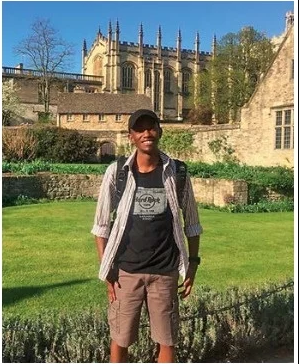
But he’s come a long way since those days – because now Sizwe Mkhwanazi is off to Oxford University in England to study towards a PhD in education.

The hallowed halls of Oxford, one of the world’s most prestigious institutions, will soon be his new home and he sometimes still has to pinch himself to make sure he isn’t dreaming. Growing up in Platrand, a little farm outside Standerton in Mpumalanga, Sizwe (24) always knew he was destined for greater things. So he did everything in his power to get money to help him achieve his dreams.

He was 14 when he got his first gardening job, he tells DRUM when we meet him at the University of Johannesburg (UJ) where he’s involved in a research project.

“I made R300 with every garden job.”

He also formed strong relationships with some of his employers, who offered to help him buy school books. Even though he’s swopped his gardening overalls for the occasional suit and academic gown, he’s still passionate about gardening – but education is undoubtedly his greatest love, says Sizwe, a Mandela Rhodes scholar.

He was just five on his first day at the small farm school in Platrand. “There was no one to babysit me,” Sizwe recalls.

His mother, Delisile (42), had him when she was 18 and she was trying to put food on the table for her only son at the time. She worked as a farm worker wherever there was work and so, to keep her son as safe as possible when she wasn’t at home, she sent him to school.

Once little Sizwe was over the shock of being left in a strange environment, he started enjoying himself.

Sizwe didn’t know what he wanted to be one day but he knew he wanted more for himself. After primary school he enrolled at Qondulwazi High School, but he only stayed until Grade 9 because he felt the government high-school system “wasn’t good enough”.

“Learners didn’t have access to much-needed facilities like the internet.”

He completed the rest of his studies at Gert Sibande TVET college, where he completed a national certificate vocational programme, which is equivalent to matric. He juggled school and his gardening job throughout his time at college, then applied to study at UJ in 2011.

“But despite being an A-student at college, the university rejected my application.”

Fortunately, Blade Nzimande – then minister for higher education and training – heard about Sizwe’s struggles through someone at the college and wrote a letter to the university requesting them to take the boy in.

They obliged and he graduated with a diploma in entrepreneurship as well as a BTech. Sizwe’s academic brilliance won him a Mandela Rhodes scholarship to study his MTech and do a postgraduate diploma in management and entrepreneurship at North-West University in 2015.

“The following year I started a great adventure as a business management lecturer at UJ,” he tells us.

He thought he was done with studying until close friends convinced him to apply for the Mandela Rhodes scholarship to study for his master’s and PhD in the UK – and he got it!

He completed his master’s degree in education at the smaller Oxford Brookes public university on the outskirts of Oxford recently and will be going to the prestigious main campus this month to start his PhD.

He likes England, Sizwe says. “It has always felt like home. I have never felt like an outcast there.”

Sizwe was home from June to September to conduct research on the evaluation of skills and credentials needed to teach entrepreneurship at university level.

He has been collecting data and he also attended the Brics summit, which was held in July in Durban, for his research.

Being raised by a single mother made him passionate about helping other young people who were raised by single parents. That’s why he started an organization called Youth for Action Foundation that aims to help the youth in rural areas to achieve better results in school.

He has fond memories of growing up on the farm, especially the times he spent with his grandfather, Amos Nkwali Mkhwanazi (70), and grandmother, Poppy Topsy Mkhwanazi (72). He doesn’t know who his father is but it hasn’t really affected his life.

“Growing up on a farm was nice. Whenever you needed something, you could ask your neighbour.”

He often couldn’t tell whether his family was struggling or not because the community helped one another so much during times of hardship, he adds.

“We were the village’s kids. We ate at different houses. Wherever we played the mother who was there had the responsibility of feeding us all that day. The struggles were there but as kids we couldn’t see them,” says Sizwe, who has three younger siblings, Kamohelo (15), Londeka (8) and Mncendisi (4).

His siblings didn’t really experience rural life like their older brother because he got them a nice apartment in a security complex in Protea Glen, west of Soweto in Joburg, where they have been living for the past four years with their mother.

Sizwe is actively involved in the Royal Commonwealth Society, which is a network of individuals and organisations committed to improving the lives and prospects of Commonwealth citizens.

His involvement in these organisations has earned him a place as a runner-up in The Queen’s Young Leaders Awards, which recognises and celebrates exceptional people between the ages of 18 and 29 from across the Commonwealth.

Having achieved what he set for himself, Sizwe says there’s been a great spirit – not only in his hometown, but in other local communities too – since he got the opportunity to study in the UK.

“A young single mother from my community in Protea Glen approached me and said, ‘Sizwe, now that you’re going to be doing your PhD remember you’re not doing it just for yourself, but you are doing it for our children too’.”

His main goal is to become a professor of entrepreneurship education and he believes this is his calling.

“I’ve really been fortunate,” he says.

“But I’ll never forget the people who helped me get here.”

Malawi: Journalist in news-reading campaign in secondary schools

0

Sellaphine Banda

Lilongwe — Centre for Education Development (CFED) through Tiwerenge Project Sunday donated free Weekend Nation newspapers to Muloza Community Day Secondary School (CDSS) in Mulanje District to promote the reading culture among students.

Muloza CDSS becomes the tenth school to receive the news papers from CFED across the country.

CFED President Albert Sharra, a renowned journalist, said the project is an innovation meant to bring change in the promotion of reading culture in Malawi.

“Besides promoting the reading culture, the project will ensure that students and teachers are well versed with current affairs to help them make informed decisions,” said Sharra adding that CFED was still looking for more sponsorship to increase the number of schools to benefit from the project in the country.

In his remarks Muloza Head Teacher, Clement Majawa lauded CFED for the donation, saying besides promoting reading culture among students, the newspapers will enhance students’ writing skills.

Majawa said the school has already identified a patron for the project to ensure smooth implementation and a students’ club will also be set up to facilitate the same.

Schools that have started benefiting from the project include Mulunguzi CDSS and Primary School (Zomba), Lumbira CDSS and John Pual II Leadership & IT institute (Blantyre), Ntambanyama Primary School (Thyolo) and Livingstonia CDSS (Rumphi).

In Mchinji District, Chankhate Primary is also benefiting from the project. CFED was founded in 2015 and operates in all the districts in Malawi.

According to Sharra, the project runs from January to July 2019 with the hope to be extended depending on the success of the current phase as well as availability of sponsorship. In the initial phase of the project, Sharra said would use personal funds.

Education lekgotla punts for expansion in entrepreneurship

0

Yoliswa Sobuwa 

It has been recommended on the last day of the Basic Education Sector Legotla that entrepreneurship would be expanded vigorously across all subjects to ensure that activities are learner-centred and challenge-based.

The third lekgotla took place at the Birchwood hotel in Boksburg on the east rand. President Cyril Ramaphosa gave the opening speech calling from zero tolerance of racism, sexism, bullying, violence and other forms of antisocial behaviour at schools.

Basic education minister Angie Motshekga said the commission recommended that there is a need to continue to strengthen the foundations of learning in the early grades.

“The recommendations from the commissions added to the success of this lekgotla,” Motshekga said.

Some of the recommendations included the need to strengthen reading as a key priority, particularly in the early grades, and the intensification of the rollout of information and communications technology (ICT) for the development and sustenance of skills for a changing world and the fourth industrial revolution.

The need for the strategic introduction of coding in the early years of schooling was also stressed, as well as for teacher skills to be developed to manage the demands of a competence-based curriculum and for the provision of resources necessary for practical subjects and tasks.

Motshekga said they had an engaging time in plenary sessions and commissions. “All that is expected of us now is to interrogate the recommendations and categorise them into short, medium and long-term deliverables and, more importantly, to implement them and report on them quarterly so that we can present a consolidated progress report at the next lekgotla,” Motshekga said.

Oprah Winfrey Academy scholarship applications now open

0

Staff Reporter

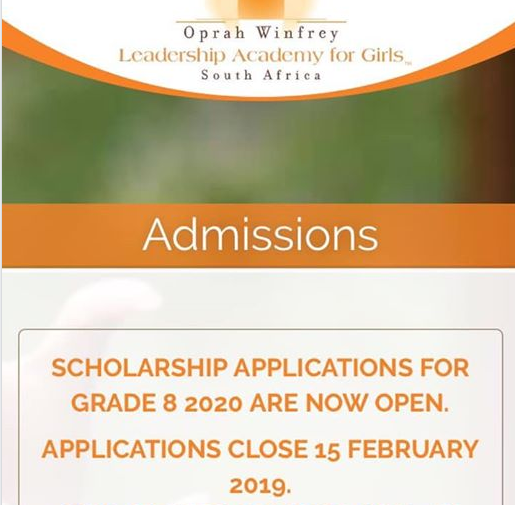
The Oprah Winfrey Leadership Academy for Girls scholarship applications process for 2020 are now open.

Scholarship applications for 2020 opened on 14 January 2019 and will close on 15 February 2019.

Only applications for grade 8 2020 will be accepted.

“All other grades at the Academy have reached their capacity. If you have not heard from the Academy by 15 March 2019 your application has not been successful,” reads the statement.

From the start, Oprah Winfrey knew that university study was essential to the students achieving their professional and personal goals, contributing to society and establishing financial independence.

The academy strives to raise future leaders who are able to navigate a variety of social and cultural contexts, and who will remain committed to the development of South Africa and the African continent.

Students must fall in the criteria below to qualify for a scholarship:

  • they are academically talented and have leadership potential
  • they are a South African Citizen or permanent resident
  • their family or household total income before deductions is less than R10 000 per month
  • they are currently in Grade 7

Life at the Academy is not only about academics. Afternoons and weekends are also extremely busy for the girls as they get involved in a number of sporting, social, creative, debating and leadership activities.

Two critical teams in the lives of the girls outside of the classroom are the Residence Life Team and the Wellness Team. These teams work in collaboration with the teachers to facilitate the girls’ growth into thoughtful, responsible and resilient young women leaders.

To apply, go to http://www.owlag.co.za/admissions

University of Pretoria drops Afrikaans

0

Staff Reporter, BBC

The University of Pretoria has dropped Afrikaans as its official language in favour of English.

The University of Pretoria told the BBC it needed to “transform the culture” to make it “truly South African”.

English is the preferred language of instruction for many in South Africa.

Afrikaans language policy has historically been used to exclude black learners in a country where racism remains deeply embedded 25 years after white-minority rule ended.

The word apartheid, which has now been internationalised and is in the Oxford Dictionary, is in fact an Afrikaans word.

The language is still spoken by millions, but it is hoped that this move will make the many more millions who do not speak it feel welcomed in one of the best academic institutions in the country.

.

Only 18-percent of students at the University of Pretoria want to be taught in Afrikaans. .

The new policy will only affect students registering at Tuks for the first time this year.

Some student bodies have welcomed the move and said the playing field will finally be levelled.

Lobby group Afriforum is adamant a one-language policy will undermine social cohesion.

Alienating

Black and non-Afrikaans-speaking students on Twitter have been discussing the new policy, with many sharing the humiliating and alienating treatment they say they were subjected to at the University of Pretoria.

One said that black students were intentionally humiliated by Afrikaans-speaking lecturers

 There have been mixed feelings on Twitter but education officials aren’t moved.

When asked about these testimonies, the University of Pretoria’s spokesman Rikus Delport told the BBC: “I’m sure there are incidents of that happening.

“That’s what led to the whole coming together, and saying ‘let’s decide how we go forward’. It flowed from that.”

Towards multilingualism

South Africa has 11 official languages – Zulu, Xhosa, Afrikaans, Sepedi, Setswana, English, Sesotho, Xitsonga, Siswati, Tshivenda and Ndebele.

Their constitutional recognition came with the advent of democracy, in an attempt to help end institutional racism and heal South Africa’s bitter historical divisions.

“In an ideal world we would like all languages to have equal status in teaching, but it’s not practically possible or feasible, so not a lot happens in other languages,” the University of Pretoria’s spokesman told the BBC.

“The university will still encourage multilingualism. We’ll offer support services to students in their enrolment – where practically possible – in their home language.”

Graduations and other official ceremonies will continue to feature the three languages already in use for those occasions – English, Afrikaans and Sepedi.


South Africa’s top six mother-tongue languages:

  • Zulu: 22.7%, Xhosa: 16%, Afrikaans: 13.5%, English: 9.6%, Setswana: 8%, Sesotho: 7.6%
  • South Africa has 11 official languages altogether
  • English is the most commonly spoken language used officially and in business

Source: SA.info/Census 2011


Demand for Afrikaans-language teaching is falling, according to the University of Pretoria, which says 85% of its students came from Afrikaans-speaking households in 1992, dropping to 30% in 2015. Only 18% of students said they wanted classes in Afrikaans at the last count in 2016.

“Afrikaans will be phased out over time,” the University of Pretoria’s spokesman told the BBC. “Students already in the pipeline will still continue getting their classes in Afrikaans.”

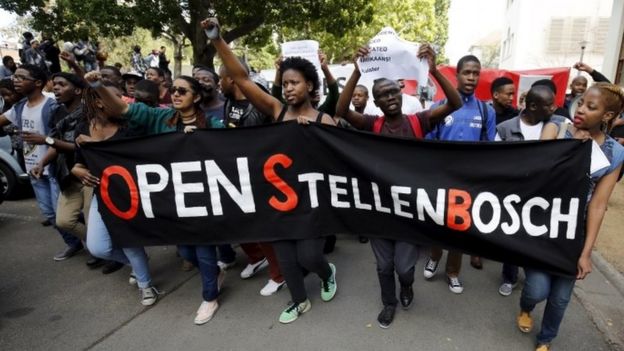
Students march with a banner during a protest at South Africa's Stellenbosch University in Stellenbosch -1 September 2015
Image copyrightREUTERS Image captionEnglish was given equal status to Afrikaans at Stellenbosch University following student campaigns

Although the changes came into effect at the start of the year, the university says the decision to switch to English was made back in 2016, prompted by high profile student campaigns across the country like #AfrikaansMustFall and #FeesMustFall.

That wave of protests also led to English being given equal status as Afrikaans at Stellenbosch University in 2017.

Backlash

The pro-Afrikaner civil rights group AfriForum opposed the University of Pretoria’s proposed reform at the time, and has now accused the university of dishonesty in its changes to languages policy. The university denies this.

“They got it wrong. They associated it with [the appointment of] the new vice-chancellor – but I don’t know where they got that impression, because the change has been coming for some time”.

South Africa’s finance minister has also waded into the debate, saying people will regret the university’s decision to drop Afrikaans in years to come.

“It’s obvious there are people who differ from us, who don’t agree with it – and we have to accept that,” the University of Pretoria’s spokesman said.

“This was a decision made by an extended consultation process over a long period of time, not something that happened overnight.”

The university is hoping to change building names at all its campuses within a year.

South Africa: Ekurhuleni executive mayor announces R100 million for top performers

2

Charles Molele

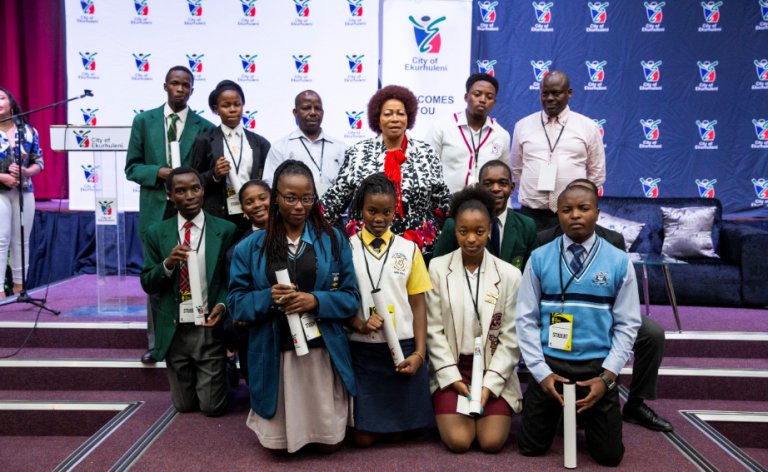
Ekurhuleni executive mayor Mzwandile Masina said the metro has set aside R100 million in bursaries to benefit deserving learners including the 2018 matric top performers from the city region.

On Thursday, Masina honoured top matric performers, teachers from best performing schools and university graduates, who benefited from city’s bursary scheme.

He singled out the North Ekurhuleni district as one of the top 10 districts in South Africa after it was named as such by Basic Education Minister Angie Motshekga earlier this month. The region contributed significantly in the attainment of Gauteng’s number one spot for the 2018 matric results.

Speaking during the Excellence Awards ceremony held at the Alberton civic centre on Thursday, Masina said the city’s R100 million bursary scheme was meant to assist struggling families and were in recognition of hard-working learners.

“We are rolling out these bursaries as part of our acknowledgement of the hard-work that the learners have put in as well as to assist struggling families to enrol their children for further education and training. We will continue doing this good work,” said Masina.

On Thursday, Masina spent his morning at the City of Ekurhuleni Academic Excellence Awards Ceremony 2019, Alberton Civic Centre in Alberton, Ekurhuleni, with hundreds of top-performing matric learners and new graduates from the city’s bursary programme.

The ecstatic Ekurhuleni mayor spent his day interacting with teachers, school principals, parents and officials from Department of Basic Education and the Gauteng Education MEC Panyaza Lesufi.

During the awards ceremony, Masina handed out certificates, bursaries and corporate gifts to top learners, assisted by the MMC of Human Settlements Lesiba Mpya, city manager Dr Imogen Mashazi and programme director Simphiwe Ngema.

Said Masina: “Once these learners complete matric, we do not leave them in the lurch, the City awards bursaries to the amount of R100 million to deserving learners. The majority of our bursaries are awarded to those pursuing academic studies in scarce skills, such as in the fields of science, mathematics, engineering, technology and accounting skills.”

He urged graduates from Ekurhuleni to become entrepreneurs and plough back into their communities by starting businesses and creating employment for other young people.

“We are happy that you are now equipped with the necessary skills to truly impact your communities and make noticeable change. You serve as the pillar of this community and you have been exemplary in your discipline,” he said.

Over the past three years the city has also seen an average of about 80% of Ekurhuleni’s graduates graduating in scarce skills.

“In total, there are 217 graduates from our bursary programme for the year 2018. Of these graduates; 52 are graduating from the Science, Aviation, Engineering and Built Environment faculty, 89 are graduating from finance, commerce, economics and transport management faculty. 40 are graduating from the humanities and law faculty, 9 from the health sciences faculty and 27 from the information, communication and technology faculty,” said Masina.

“A total of 180 graduates are graduating from our traditional universities and universities of technology, the rest of the graduates are from recognized and reputable colleges. Of the graduates, 139 are graduating with degrees, 73 with national diplomas and 5 with national certificates. We have a healthy spread of graduates across the City with 92 coming from the South of Ekurhuleni, 44 graduates from the North of Ekurhuleni and 81 graduates from the East of Ekurhuleni.”

After Masina’s address, a discussion entitled This is My Story: Building Bridges and Breaking Barriers took place between learners sharing how they coped with their studies during examinations.

Tineke du Plessis, one of the 2018 best performing learner overall from Hoerskool Dr EG Jansen in Ekurhuleni South, said high school built her character, confidence and resilience.

“I was scared of high school and had a big challenge on how to juggle my academic life with sport and cultural activities at school. But I gave all to my studies. I am planning to study at the Potchefstroom University this year and I am sure I will succeed after going through matric and its challenges,” said du Plessis during the open discussion.

Nezipho Mhlanga, one of the 2018 best performing learners from priority schools from Tembisa West Secondary School in Ekurhuleni South, said it was not easy for her to study for her matric because she came from an impoverished background and lived in a shack with her family.

“I grew up in a township and life can be difficult but I spent most of my time going through my books and studying Accounting and Economics. I received seven distinctions (in 2018). I have a passion for Accounting and I would like to be a chartered accountant after completing my studies. I am highly inspired by Nonkululeko Gobodo, the first black female chartered accountant in South Africa,” said Mhlanga.

Masina congratulated Tineke du Plessis for being the overall best performer and Nezipho Mhlanga for being the overall best performer from priority schools.”

“I also wish to congratulate the North District for featuring in the national top 10 best performing district list as number 7, even though this is a slight drop from number 4 in the previous year. I wish to congratulate the Ekurhuleni South district for being the most improved district; we applaud this district for its consistency in improving every year,” said Masina.

“Most importantly, none of this would be possible without our educators. I wish to congratulate the following teachers: Kamlesh Narshai, Elaine Garnet, Taryn Deaconos, Rachel Masadza, Rae Brodie, Heidi Harmse, Lis de la Hunt, Debbie Doman, Bettie Vivier, Panayiota Constantopolous, Henning Pieters, Alet van der Venter, Caitlin Mclellan, Wilna du Plessis, Candice Vengatass, Sue Sutton, Hannelie Naude, Christina di Batolomeo, Marguerite Froneman, Teresa Swart and Annemie Smit for outstanding teaching and performance in their subjects. These teachers have produced numerous distinctions and bachelor passes, please continue the good work.”