Home Blog Page 463

Lesufi slammed for failing to place thousands of pupils at start of academic year

Bongani Nkosi

The Gauteng Education Department has been urged to ensure that 2019 should be the last year that starts with thousands of pupils not in class.

For several years now the department has battled to place all Grade 1 and Grade 8 pupils in schools before the beginning of the academic year.

This year started with more than 16000 pupils yet to be placed in provincial public schools.

It was about time this annual drama came to an end, a law clinic and an opposition political party have said.

“(The year) 2020 should see no learners scrambling for school places while others are in class already,” said Isabel Magaya, a researcher and lawyer at the Centre for Child Law.

IFP MPL in Gauteng Bonginkosi Dhlamini said it was exhausting that pupils were subjected to the same issue each year.

“It cannot be the case that every year for the past few years, learners have not been able to kick-off their academic year at schools in our province. MEC Panyaza Lesufi must walk his talk and take swift action,” Dhlamini said.

He said thousands of pupils were still not in class, weeks after the start of the 2019 academic year.

“A day without learning is a day too many. It is deplorable that learners in parts of Gauteng can be seen loitering in the streets in uniform due to failure to place them,” he said.

The number of Gauteng pupils starting the year without being placed has, however, declined over the years.

The figure stood at between 40000 and 58000 in 2017.

The number decreased to 31000 in 2018 and just more than 16000 this year.

Magaya said while this decline was laudable, the problem should be eliminated altogether.

“The centre is of the opinion that more could and should be done to effectively deal with placement shortages,” she said.

“The centre notes that some of the problems with late placements are as a result of non-compliance and late applications by parents, but the centre is of the view that these problems also stem from wider systemic issues such as poor infrastructure planning and delivery by the (provincial) department ”

The centre expressed doubt the province had complied with its 2009 promise to the Constitutional Court to spend R1.7billion – or 40% – of its annual budget on building new schools.

Steve Mabona, spokesman for the department, said there were various factors that saw pupils unplaced, including that some parents rejected allocated schools.

He said the department would know the exact number of unplaced pupils this week.

IOL

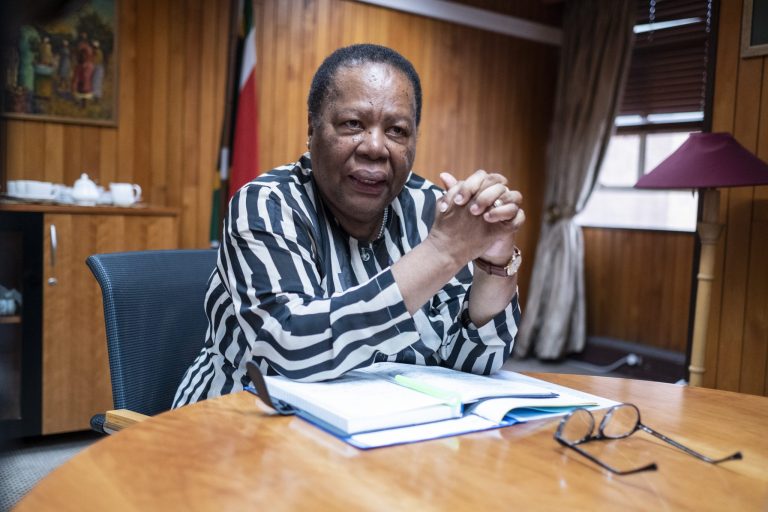
[VIDEO]: Naledi Pandor’s exclusive interview with Inside Education

0

Staff Reporter

The Minister of Higher Education and Training, Naledi Pandor, urged President Cyril Ramaphosa to act on government’s 30% procurement policy to create more jobs.

Pandor spoke to Inside Education on Thursday on issues of graduate unemployment, the improvement of TVETs and FET colleges and youth described as NEET (Not in Education, Employment, or Training).

She said small to medium enterprises were central to creating employment and that her department was in the process of establishing partnerships and programmes with SMMEs.

Here is the full interview


Naledi Pandor: Youth entrepreneurship key to job creation in South Africa

0

Charles Molele

Higher Education Minister Naledi Pandor says her department will support President
Cyril Ramaphosa’s bold plan to create 257 000 job per annum by promoting entrepreneurship in the post-school sector.

According to Statistics SA, South Africa’s unemployment rate is high for both youth and adults; however, the unemployment rate among young people aged 15–34 was 38,2%. This means that more than one in every three young people in the labour force did not have a job in the first quarter of 2018

In an interview with Inside Education this week, Pandor pointed out that small business
development was one of the critical solutions to job creation and has vowed to raise the
matter with the president during the upcoming cabinet Lekgotla – a meeting of cabinet ministers, provincial Premiers, and directors-general, takes place annually to prepare for the State of the Nation Address in February.

The Banking Association of South Africa (BASA) shows has identified SMEs as productive drivers of inclusive economic growth and development in South Africa and around the world.

The association reports that some researchers have estimated that in South Africa, small and medium-sized enterprises make up 91% of formalised businesses and provide employment to about 60% of the labour force.

BASA also states that SMEs’ total economic output accounts for roughly 34% of GDP.

“While contributing significantly to the economy, SMEs foster diversification through their development of new and unsaturated sectors of the economy. In addition, innovative and technology-based small and medium enterprises can provide a platform for local, regional and international growth,” reads a BASA report on SMEs.

This is why the minister of higher education has focused some of her attention on bringing together new graduates with small businesses.

“We have a number of initiatives such as learnerships to support SMMEs and to create
jobs among the youth. The setas investments and learnership should be a significant
contribution to job creation.

“But also, we are working and talking to not-for-profit organisations that are involved in
skills development. You have organisations like Harambee for example. We are looking at what form of partnership they could have with us as government.

“At the moment they [Harambee] works largely with the private sector. They don’t work with are institutions necessarily. They receive some funding from the setas. But it is not an organised contractual partnership between my department and them.

“In order to reach the president’s objectives, I need organisations like Harambee to work so much closely with the colleges,” said Pandor.

She said more jobs for young people could be created in South Africa if the government
implemented its commitment to direct 30% of its procurement spend to small businesses.

“We have very enterprising young people. I meet them all the time. If government can
act on its decision that it will procure from small and medium entrepreneurs, we will
create lots of jobs for young people.

“If I have invented radio or computer or tablet and government decide every child at school will have a tablet and decide they will procure from small entrepreneurs, that entrepreneur is set for life and will employ many more young people,” said Pandor.

As a department, we will raise the matter with the president at the Lekgotla to say let us
support entrepreneurs to create jobs because there are many innovative young people, said Pandor.

She added that the idea that says government needed to create the bulk of the jobs for the unemployed youth needs to shift.

“We must create entrepreneurs so that they can be the ones to create jobs.  We sure can support innovative and inventive young people. The SETA investments and learnerships should make significant contribution [to job creation],” she said.

Pandor added that her department has established a number of partnerships or collaborations with the private sector to promote entrepreneurship among the youth. This was in response to the president’s call to grow the economy and create more jobs in the country.

Pandor told Inside Education her department already kick-started a pilot project that will see 36 colleges paired with businesses across South Africa to benefit about 845 undergraduates.

13 trades were targeted for this project, including: mechanical fitter, boilermaker, electrician, millwright, bricklayer, plumber, automotive mechanics, diesel mechanic, carpenter and joiner, welder, rigger, fitter and turner, and pipe fitter – all of which have been identified as key trades that meet the demand for the country’s skills.

“I’m especially excited about the [establishment] of centres of specialisation where students going to undertake the 13 programmes have apprenticeship contracts.

“For the first time, we have 845 young people coming into these 36 colleges with 13 trades and they already have a link with business. They know they will do their theory at college level and part of their studies will be in the business to which they are apprentices.

We’re starting it as a pilot [project] and should it succeed, I want it expanded,” said Pandor.

Pandor also spoke of the establishment of the Entrepreneurship Development Programme
in Higher Education Programme with the University of Johannesburg (UJ). The programme focuses on entrepreneurial students, entrepreneurship in academia which includes curricula and staff capability and entrepreneurial universities. The programme also aims to bring all partners, including TVET colleges, FET colleges and SETAs.

At a recent roundtable with business leaders, Pandor said these programmes were critical to ensure the employability of graduates.

“Universities South Africa has agreed to host the programme at their offices in Pretoria,
Gauteng Province. Processes are currently underway to set up a permanent office that
will coordinate activities across the system.

“I am inspired by the success of young entrepreneurs and innovators. Especially those who have taken advantage of the booming tourism, the booming mobile industry, the growing market in renewable energy and the evolving market in cultural and creative industries. It is our local innovators and entrepreneurs who will ultimately create the millions of jobs that we need to grow an inclusive economy.”

 

Some of the equipment stolen at Menzi Primary School found

Staff Reporter

Some of the equipment stolen at Menzi Primary School in Tsakane was recovered on Friday.

Spokesperson for Gauteng Education Steve Mabona said the equipment was found at All-In-One-Store Wholesale and Retail at corner Mooi and Helen Joseph in Johannesburg.

The store sells appliances, gadgets, hardware and design equipment.

Mabona shared photographs of the find.

Inside Education reported on Wednesday that Menzi Primary School was robbed a week after Gauteng Education MEC, Panyaza Lesufi,  opened the facility and asked Tsakane residents to look after it.

At the time, Lesufi challenged the community to help to find the perpetrators. He said that failing this, all expensive equipment at the school would be withdrawn by Friday..

Mabona told media the robbery occurred in the early hours of Tuesday. He added that two guards were tied up and locked in the strong rooms.

“The criminals broke the main volt door to access the keys of the entire school,” Mabona said.

The stolen items stolen included 185 tablets, eight teacher laptops, two projectors and three desktop computers. A plasma TV and R500 in petty cash were also taken.

The police retrieved 16 tablets and three laptops from the All-In-One-Store.

Two men were arrested.

At the opening of the multi-million rand state-of-the-art school, Lesufi appealed to members of the local community in Tsakane to protect the school from vandalism and theft from local criminals.

He said, “All our schools in Duduza and Tsakane were burgled and broken into during the school holidays this past December. I am appealing to community leaders to protect the school from theft and criminals.

“The department of education invested more than R105 million into the construction of this beautiful school and all we want is to see our children go to school without any hindrance,” Lesufi said.

The school is the first in Tsakane to have smart classrooms.


Naledi Pandor: It’s all systems go for NSFAS ahead of opening of tertiary institutions

0

Charles Molele

Higher Education Minister Naledi Pandor says she does not anticipate any funding and registration hiccups during the opening of institutions of higher learning next month.   

In an interview with Inside Education on Thursday, Pandor said that her work that her department has put in resolving the financial and management challenges at the National Financial Aid Scheme (NSFAS) has started bearing fruit.

“There has been a significant progress at the NSFAS. We have sorted out funding, managerial and IT systems challenges. We have also appointed Randall Carolissen as the administrator of the scheme and a team of experts to address IT systems, financial management and human resource issues,” said Pandor.

Pandor said her department has already paid universities towards the education of more than 300 000 students for the 2019 academic year.

“We are happy with the progress made so far. We have paid universities and colleges. This week I was at coastal colleges in KwaZulu-Natal and NSFAS funding has been allocated to all students. Our concern is mainly in the college sector but we are confident everything will be resolved before the opening of universities and colleges in February,” said Pandor.

Tertiary institutions were engulfed in chaos last year during registration after students organizations, including Economic Freedom Fighters (EFF) Student Command demanded that all students who qualified for fee-free education be admitted.

The auditor-general raised serious concerns about a lack of internal controls in the NSFAS and other problems. There were also reports that NSFAS was facing funding problems as students faced a backlog of payments.

The institution was also hit by the resignations of NSFAS CEO Steven Zwane and chairperson of the board Sizwe Nxasana last year amid allegations of mismanagement.

Treasury allocated R57 billion for fee-free tertiary education for students from households earning less than R350 000 a year.

This year, the fee-free education will also extend to second year students and government hopes to cover everyone in five years.

Africa Code Week 2018 touched over 2 mln young Africans

Staff Reporter

Africa Code Week (ACW) 2018 exceeded all expectations by empowering 2.3 million youth across 37 countries with digital and coding skills – compared to 1.3 million youth engaged across 35 African countries in the previous edition.

According to Cathy Smith, Managing Director of SAP Africa, the resounding success of Africa Code Week is a wake-up call unveiling what the young generation actually needs and rightfully expects: “young people in Africa don’t just need opportunities: they need to know how to take the first steps to get there. They need role models and guidance.”

Capacity building as the cornerstone of youth empowerment

From an initial focus of introducing coding skills to African youth and raising awareness of the importance of digital education, ACW key partners focused and augmented efforts in 2018 to sustain the impact of the programme through capacity-building with governments, schools and NPOs. As a result, close to 23,000 teachers were trained on the ACW digital learning curriculum in the run-up to October 2018 events.

Leveraging Africa Code Week to accelerate nationwide ICT capacity building since 2015, Morocco stands out again this year with a record of 5,208 teachers trained throughout the year 2018. Tunisia and Nigeria follow with respectively 2,800 and 2,553 teachers trained this year.

“There is only one way to bring the promises of the Fourth Industrial Revolution to the young generation: through a reference point, and that reference point is the teacher,” says Davide Storti, YouthMobile Initiative Coordinator at UNESCO’s Knowledge Societies Division. “We look forward to furthering dialogue with governments, so we can translate the powerful partnerships and networking built by and around Africa Code Week into long-term programmes that sustain the excitement around 21st century learning.”

Fast-growing stakeholder commitment

Launched in 2015 by SAP’s Corporate Social Responsibility EMEA department, ACW is an award-winning initiative taking place every year in the month of October. It is now actively supported by key partners UNESCO YouthMobile, Google, the German Federal Ministry for Economic Cooperation and Development (BMZ), the Cape Town Science Centre, the Camden Education Trust, 28 African governments, over 130 implementing partners and 120 ambassadors across the continent.

According to Alexandra van der Ploeg, Head of Global Corporate Social Responsibility at SAP, “fostering powerful partnerships with a sharp focus on capacity building is one of Africa Code Week’s strengths, and a solid cornerstone as it strives to not only support UN Sustainable Development Goal 4 (‘Ensure quality and inclusive education for all’), but also SDG 17 which aims to ‘strengthen and revitalise the global partnership for sustainable development’.

This fourth edition saw unprecedented collaboration from our public and private sector stakeholders, as well as from NGOs, to train more teachers and reach more young people than ever before,” she says.

Supporting Africa Code Week for the third year in a row, Google expanded their grant allocations to support more organisations in their efforts to inspire a new generation of digital African workers. In 2018, Google micro grants were awarded to 53 non-profit organisations to facilitate teacher trainings and coding workshops in both urban and rural areas, allowing 100,000+ youth across 11 countries to be exposed to computer science (CS) and coding skills – 57% of which were girls.

Empowering girls, reaching the unreached

More than 46% of this year’s 2.3 million participants were female, reflecting a huge appetite for digital skills development among Africa’s girls. Dedicated grants came in from key partner BMZ, who has been supporting ACW since 2016 as part of the #eSkills4Girls initiative. This year, BMZ awarded 20 grants to organisations across 15 emerging and developing countries, introducing 13,791 girls to digital skills and employment perspectives. SAP further collaborated with UNESCO and BMZ/GIZ to strengthen the gender component of the Train-the-Teacher package for Africa Code Week.

“Female representation in African companies in STEM-related fields currently stands at only 30%, requiring powerful public-private partnerships to start turning the tide and creating more equitable opportunities for African youth to contribute to the continent’s economic development and success,” concludes Sunil Geness, Director of Government Relations and CSR at SAP Africa and Global Coordinator of ACW 2018.

More partners joined forces this year to reach youth with special needs or living in remote areas. In Botswana for instance, more than 150 children got to touch a computer and code for the first time using solar-powered devices. Mining company and SAP partner Debswana aligned their own CSR programme to Africa Code Week, engaging 1,181 children at their Orapa Mine alone.

In Mozambique, ACW volunteers joined forces with INAGE and Mapal to train teachers from special needs schools, who in turn were able to introduce coding skills to hundreds of hearing-impaired students. Another highlight came from Cameroon, where Train-the-Trainer sessions were organised in October 2018 for vision-impaired teachers in Yaounde’s CMPJ.


African universities move up the ranks

0

Sarah Smit

Higher education institutions in Africa have moved up university rankings. This is according to the 2019 Emerging Economies University Rankings.

According to the rankings, compiled by Times Higher Education, African countries were better represented than in previous years. Egypt holds the position as the most represented African nation on the ranking, while the highest ranking African institution on the table is in South Africa.

The list ranks 442 universities from 43 countries, across four continents. The rankings use the same 13 performance indicators as the World University Rankings to judge institutions on their teaching, research, knowledge transfer and international outlook. But these indicators are recalibrated to reflect the development priorities of universities in emerging economies.

READ MORE: Rethinking university rankings: We need to talk about quality of teaching

With 19 institutions included in the 2019 list, Egypt more than doubled its representation on the rankings and achieving its strongest performance yet. Seven of these feature in the top 200, up from just two in 2018.

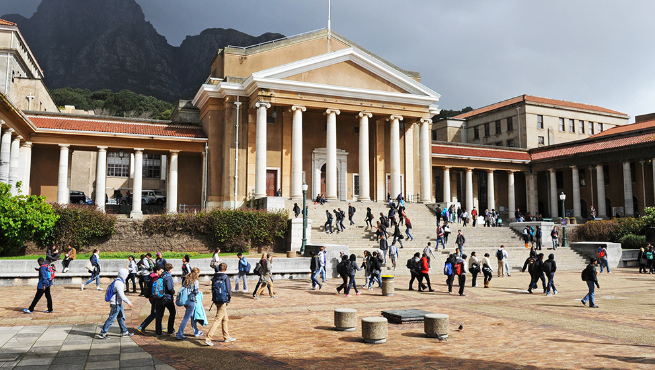
The University of Cape Town retained its position as the the highest ranked African university on the table, coming in again at number nine. South Africa also has seven institutions ranked in the top 200.

South Africa now has nine institutions on the table, up from eight last year. The Tshwane University of Technology appeared on the table for the first time in 2019, making it the only ranked South African technikon.

According to the rankings, University of the Witwatersrand has shown improvements across the board, allowing it to move up one spot to take 11th place. Stellenbosch University has also significantly improved in the last year, moving up 14 places to 24th in 2019.

However, each of South Africa’s other previously ranked institutions — including the University of KwaZulu-Natal, the University of Pretoria and the University of Johannesburg — have fallen in ranking this year.

READ MORE: University rankings buy into corporate thinking

Morocco, Nigeria and Tunisia all have more institutions on the rankings than they did last year, while Ghana and Kenya have each retained one ranked institution. The University of Ghana and Kenya’s University of Nairobi have both slipped down the rankings.

China remains the most represented nation in the annual listing, with 72 institutions ranked in total. The nation also claims four of the table’s top five spots.

MG

UCT remains top university in Africa

0

Staff Reporter

The University of Cape Town (UCT) remains the top university in Africa, holding its position at ninth in the 2019 Times Higher Education (THE) Emerging Economies University Rankings.

For the Emerging Economies Rankings, THE uses the same 13 performance indicators as for their World University Rankings to judge a university’s strengths across teaching, research, knowledge transfer and international outlook.

However, the weightings are recalibrated to better reflect the characteristics and priorities of universities in emerging economies. More weighting is given to a university’s industry links and international outlook, for example.

UCT’s scores in the teaching and research categories increased, as did its reputation survey scores, which are the most prominent within these categories. This offers a good indicator of the institution’s positive international reputation among leading academics.

The notably improved research score confirms UCT as a research-intensive institution producing cutting-edge outputs.

“The notably improved research score confirms UCT as a research-intensive institution producing cutting-edge outputs.”

Destination of choice

Scores for the citations and international outlook categories increased too, pointing to the continued impact and influence of UCT’s research and affirming the university as a destination of choice for international students.

Despite a slight drop in the industry income category, which reflects UCT’s research impact and contribution to industry, this remains the university’s highest score across the categories.

China continues to dominate the Emerging Economies University Rankings, with seven universities in the top 10. This year Tsinghua University surpasses Peking University as the top institution overall. Zhejiang University moves up three places to third position, displacing Lomonosov Moscow State University which moves down to fifth.

South Africa has nine institutions in the ranking, up from eight last year, and retains seven in the top 200.

The ranking includes 442 universities from 43 countries.

#Laerskool Schweizer-Reneke ‘racism’ report released

Sibongile Mashaba

Tensions were high outside Laerskool Schweizer-Reneke in North West on Wednesday when provincial Education MEC Sello Lehari visited to receive a report on allegations of racism.

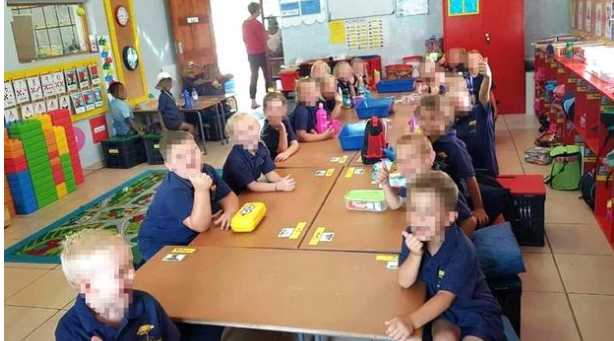
Schooling was disrupted last week after a picture showing white and black Grade R pupils sitting at different tables in one classroom was posted on social media.

Lehari said the team appointed to investigate allegations of racial segregation at the school had concluded its work, including looking at accusations that the principal was also a racist.

Education spokesperson Freddy Sepeng said on Wednesday that Lehari would brief the media on the matter in Mmabatho on Thursday.

He said the teacher, Elana Barkhuizen, who took the picture and sent it to a WhatsApp group, remained on suspension.

On Tuesday, Lehari said the team had been appointed to investigate traces of racism in all schools in the province.

Meanwhile in Gauteng, the school governing body and parents in Eldorado Park, south of Joburg, are not backing down on their decision not to allow seven black teachers back to the local secondary school.

They protested outside the school, opposing the Gauteng Department of Education’s decision to bring back the teachers. They said the department was imposing the teachers on them, knowing very well that they had caused problems at the school and made “false accusations of racism and intimidation”.

Commenting on the issue, Centre for Unity in Diversity director Zohra Dawood said the integration of school systems into a single, national department in 1994 was a high-risk enterprise and its effects continue to be felt.

“These strains manifest in debates around private versus public education (rich versus poor), the role and responsibilities of school governing bodies, role of home language on education outcomes, school leadership, and qualifications of teachers, among many others.

“These are vexing concerns and must be dealt with in a responsible way, underpinned by Section 29 of the Constitution.

““Resorting to conclusions that might inflame tensions do not serve any purpose and have the effect of harming the very constituency that we seek .

“The interests of children must not be held ransom by political or other interest,” Dawood said.

A 14 year old developed a new surgical technique to sew up hysterectomy patients

0

Forest Parks

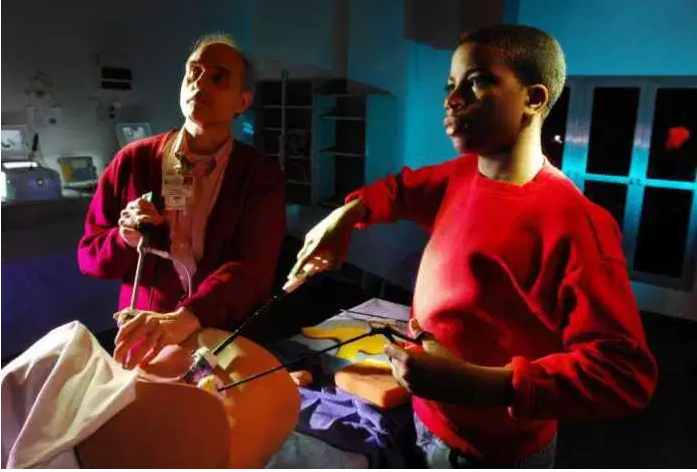
Tony Hansberry II is just 14 and has pioneered a new technique to speed up and simplify the difficult task of sewing up hysterectomy patients. This could open up the procedure to less seasoned surgeons.

Last Summer the Jacksonville teen completed a University of Florida’s Center for Simulation Education and Safety Research internship. During this time he was asked by an obstetrics and gynaecology professor, Brent Seibel, to help him figure out why surgeons were not using a standard dipstick (with clamps on the end) device called an Endostitch to sew up hysterectomy patients.

Tony spotted the issue and created a totally independent solution to utilise the device in a fashion not explored before. The professor couldn’t even fully explain and was quoted as saying “Instead of buttoning your shirt side to side, what about doing it up and down?”

Basically the endostich could not clamp properly on the tube where the uterus was. Tony suggested the device be used in a different manner from its design to secure the tube vertically rather than horizontally.

He was able to replicate the stitching procedure around 3 times the regular speed with his untrained hands! The technique needs to be tested with experienced surgeons now.

If you wondered how Tony ended up interning at a hospital at his young age it’s because he is a student at Shands at Darnell-Cookman Middle/High School, a magnet school in the medical field.