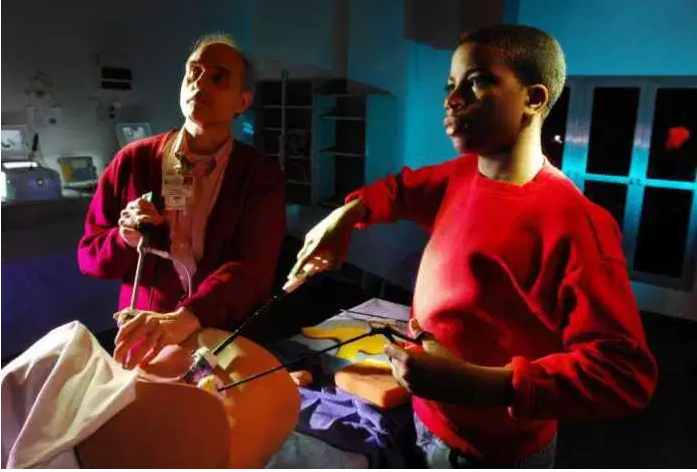
Tony Hansberry II is just 14 and has pioneered a new technique to speed up and simplify the difficult task of sewing up hysterectomy patients. This could open up the procedure to less seasoned surgeons.
Last Summer the Jacksonville teen completed a University of Florida’s Center for Simulation Education and Safety Research internship. During this time he was asked by an obstetrics and gynaecology professor, Brent Seibel, to help him figure out why surgeons were not using a standard dipstick (with clamps on the end) device called an Endostitch to sew up hysterectomy patients.
Tony spotted the issue and created a totally independent solution to utilise the device in a fashion not explored before. The professor couldn’t even fully explain and was quoted as saying “Instead of buttoning your shirt side to side, what about doing it up and down?”
Basically the endostich could not clamp properly on the tube where the uterus was. Tony suggested the device be used in a different manner from its design to secure the tube vertically rather than horizontally.
He was able to replicate the stitching procedure around 3 times the regular speed with his untrained hands! The technique needs to be tested with experienced surgeons now.
If you wondered how Tony ended up interning at a hospital at his young age it’s because he is a student at Shands at Darnell-Cookman Middle/High School, a magnet school in the medical field.
Students who have enrolled to study at Technical Vocational Education and Training (TVET) colleges should not feel inadequate as their skills are invaluable to the economy.
This reasurance comes as student bodies and opposition parties demand fundamental changes in the sector.
Higher Education minister Naledi Pandor encouraged students at the Coastal KZN TVET College in Durban to believe in the colleges.
TVET colleges have recently come under the spotlight for employing under-qualified lecturers and using outdated curricula.
Pandor told students that TVET colleges were not meant to be like universities and did not aspire to be such.
“TVET is not a Cinderella sector in South Africa. We provide vocational training. We want you contribute to this economy not only as employees but also as employers.”
Pandor said the department was exploring options to enhance curricula.
“When you pursue a diploma in hospitality, you mostly study French or Portuguese, and have at least one international language to make you more attractive to the job market.
“We want to modernise technical and vocational training.”
Pandor said the department has set plans re-brand TVET colleges as first choices.
“Too many South African student want to go to university and too few are choosing colleges. We want to have the largest number of students in the future. That is where the skills to grow the economy will come from.”
Pandor said the government also planned to introduce centres of specialisation in the TVET sector.
“We want specialised focus on plumbers, electricians, mechanical engineers and so on.”
However DA youth leader Yusuf Cassim argued that it is with good reason that the most students rejected TVET colleges.
He said the curricula taught was a “shame, outdated” and condemned young people to a life of unemployment. “We’ve been saying for years that the curriculum needs to be more relevant. We also said the quality of lecturers is poor.”
Cassim lamented that the government was preoccupied with making grand promises but failed to invest in improving infrastructure in TVET colleges.
Last year, the South African Further Education and Training Students Association (Safetsa) shut down some TVET colleges. They demanded that the department address the question of unqualified lectures, delays in issuing of certificates for courses completed, and inadequate funding for students by the National Student Financial Aid Scheme (NSFAS).
Safetsa secretary-general Nomazizi Mzizi said Pandor was not taking the sector seriously.
“How do you speak about excellence in the sector when lecturers are not even qualified for the jobs they are in? You find a lecturer with an N4 certificate teaching students doing N5.”
Mzizi said they had also raised the issue of outdated curricula with the department but had not received a satisfying response.
“TVET colleges are dumping grounds. The minister is busy preaching about the fourth industrial revolution, but I can assure you the textbooks that are used are very ancient.”
She added that NSFAS continued to provide inadequate budgets for TVET students.
Meanwhile, the SA College Principals’ Organisation general-secretary Sam Zungu said the decision to establish centres of specialisation was an intervention meant to breach the gap between colleges and industry.
“We can’t deny that TVET colleges have not received attention over the years. But we have made strides to improve the quality of our education.
“There is a an effort being made to bring people with quality skills to teach in our institutions.”
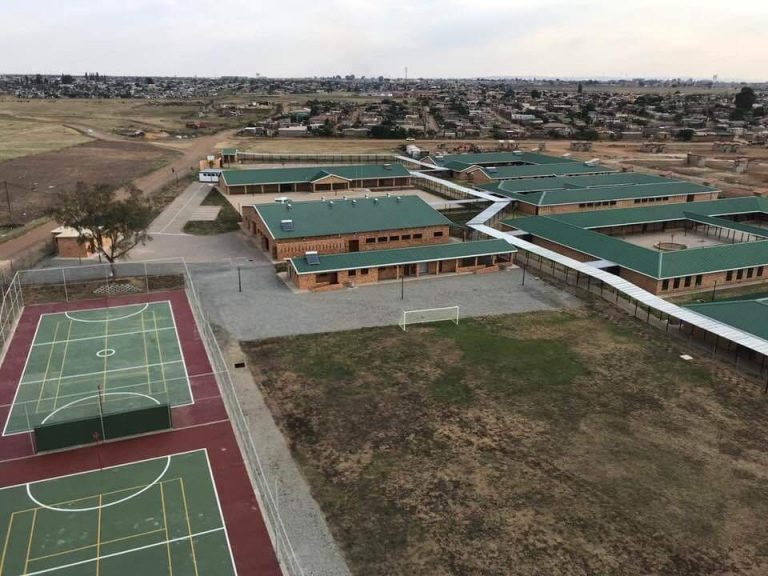
The state-of-the-art Menzi Primary School was robbed – just a week after Gauteng’s education MEC opened the facility and asked Tsakane residents to look after it.
Now Gauteng’s education MEC has challenged the community to help to find the perpetrators by Friday or all expensive equipment at the school will have to be withdrawn.
Department spokesperson Steve Mabona said the robbery occurred in the early hours of Tuesday and added that it was alleged that two guards were tied up and locked in the strong rooms.
“The criminals broke the main volt door to access the keys of the entire school,” Mabona said.
He said the administration block and IT offices, where the tablets were charged, were the main areas that were broken into.
“There is evident forceful entry on the doors of all the areas they went into,” he said.
Items stolen included 185 tablets, eight teacher laptops, two projectors and three desktop computers. A plasma TV and R500 in petty cash were also taken.
A case has been opened with Tsakane police, Mabona said.
Gauteng MEC for Education Panyaza condemned the incident and said the department would work with law enforcement agencies to bring the perpetrators to book.
“These are educational facilities, aimed at enhancing the quality of education and life of children in the township. We are extremely disappointed that criminals can disrupt the education of learners in this community.
“However, we challenge members of the community to assist and hunt the robbers, by Friday, 18 January 2019, failing which, we will have no choice but withdraw all expensive equipment from the said school,” Lesufi said.
Since the 1990s, pupils at the school used zinc shelters and other temporary structures as classrooms. But last Wednesday – the start of the 2019 academic year – it was a different story when the newly renovated school was handed over.
The school has been equipped with 33 “smart classrooms”, two science laboratories, two computer laboratories and a library.
“Cheaper” South African private schools outperformed their most expensive counterparts last year, producing more of the country’s top performing matriculants outside the government school system.
On Thursday, the Independent Examinations Board (IEB) released a list of the 61 top matriculants in 2018. The IEB is the examination agency for South Africa’s private schools.
These pupils ranked among the top 5% in six or more subjects and achieved a rating level of 7 in Life Orientation in the IEB examinations.
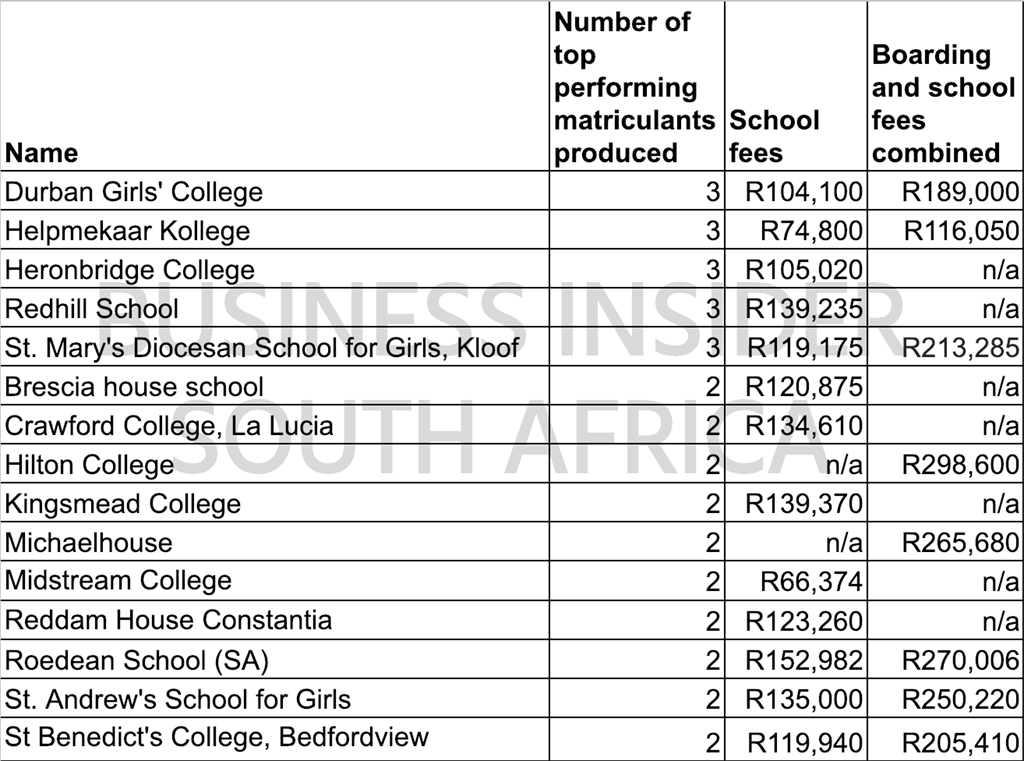
Fifteen private schools had two or more top-performing pupils in that list of top performers. But only three of those schools with multiple top matriculants – Roedean School, Michaelhouse, and Hilton College – were among the most expensive private schools in South Africa.
Meanwhile, Helpmekaar Kollege in Johannesburg and Midstream College in Centurion – with school fees less than half of those at the most expensive private day schools – produced five of the country’s top performing matriculants between them.
However, the top list is not corrected for school or class sizes, and schools with very large intakes have a statistically improved chance of producing multiple top matrics.
Business Insider South Africa compiled a list of the private schools which produced the most top-performing IEB matriculants, comparing them with their annual school fees.
The fifteen schools with the most top performers had average school fees of R118,057 – while the country’s ten most expensive private day schools has average tuition fees of R147,191.
Banyana’s Banyana’s new superstar Thembi Kgatlana’s mother‚ Constance‚ admits when her daughter started playing football she was a little mystified as to why.
Now‚ after 22-year-old Kgatlana top-scored at the Africa Women Cup of Nations (Afcon) in Ghana for runners-up Banyana last year‚ and won Women’s Player of the Year at the Caf Awards in Senegal this week‚ Constance Kgatlana can only say: “I’m very proud of my daughter. I feel great.”
Kgatlana‚ who also won Goal of the Year‚ competing against men and women players‚ was greeted by her beaming mom – sporting a shirt from Houston Dash‚ her daughter’s club in the USA – returning from OR Tambo International Airport.
“She was seven years old when she started playing soccer. I felt so bad when she started playing football‚” Constance Kgatlana laughed.
“I was asking her‚ ‘Why football? Why not netball?’ But she said to me‚ ‘Mama‚ this one is going to be my talent’.
“She knew‚ even as a little girl. So I left her. And then I encouraged her.
“I was an athlete at school. So she gets it from me‚” Kgatlana’s mom laughed.
“Her father was a footballer and I was an athlete‚ a sprinter.”
Kgatlana’s father‚ Gabriel‚ travelled with her to Dakar.
He said there will be a party – no doubt a long-lasting one – for his daughter in their home town of Mohlakeng in Randfontein‚ soon after she returns from duty for Banyana in next week’s friendlies in Cape Town against Sweden and Netherlands.
Gabriel Kgatlana said Thembi was a good student at school.
“I saw her talent‚ and also off the field too. At school Thembi was wise‚ wise‚” he said.
“She was about eight years old when we saw her football talent. She would play with the boys in the street.
South Africa has been recognised as a leading player in the space science sector.
The South African National Space Agency (SANSA) has been selected by the International Civil Aviation Organisation (ICAO) to become the designated regional provider of space weather information to the entire aviation sector using African airspace.
This means that every aircraft flying in the continent’s airspace will rely on SANSA for the space weather information as part of its flight plan, Department of Science and Technology said on Sunday.
SANSA, an entity of the department, underwent an extensive assessment to earn the distinction, becoming one of two ICAO-designated regional space weather centres. The other is the joint Russia-China centre.
The department said SANSA’s designation by the ICAO presents an opportunity to further use the newly revamped space weather centre at Hermanus in the Western Cape.
The newly upgraded centre’s monitoring of the sun and its activity has been providing the country with vital early warnings and forecasts on space weather conditions, and these benefits will now be extended to the international aviation community.
SANSA will partner with one of the ICAO’s three global space weather centres, PECASUS, the Pan-European Consortium for Aviation Space Weather User Services, to provide ICAO with space weather information for the African region.
PECASUS is a consortium of nine European countries, and partnering with it will provide South Africa with better access to international models and expertise.
The department said South Africa’s international reputation has also been enhanced, with the country now seen as a leading player in the space science sector.
“South Africa’s designation as a regional space weather information provider will grow the science, engineering, technology and innovation sector, offering opportunities to develop scarce skills and increase national research output, while ensuring that usable products are generated from the knowledge,” the department said.
Space weather, which can influence the performance and reliability of aviation and other technological systems, is caused by the sun, the nature of the Earth’s magnetic field and atmosphere, and the Earth’s location in the solar system.
This use of the space science and technology for the good of the nation is the aim of South Africa’s National Space Policy and National Space Strategy, and space weather information has both national and international benefits.
Owing to the increased interconnectedness and interdependence of technological systems in the world today- which will expand as the Fourth Industrial Revolution gathers momentum- space weather events can have a negative impact on multiple systems. These can lead to serious operational failures in the communication, navigation, energy and aviation sectors, among others, with potentially disastrous effects.
With this in mind, the space weather can lead to reduced signals from global navigation satellite systems, adversely affecting navigation; increased radiation, which can destroy human cells and tissue, especially during long-haul flights; and blackouts of high-frequency radio communications, which are critically important for the aviation and marine sectors.
While South Africa is the only African country with operational space weather capabilities, the department said it will engage with other African countries on data sharing, infrastructure hosting, training, product development, and research collaboration opportunities.
“The country’s space science programme is feeding the knowledge economy and placing the national system of innovation at the centre of South Africa’s developmental agenda,” the department added. – SAnews.gov.za
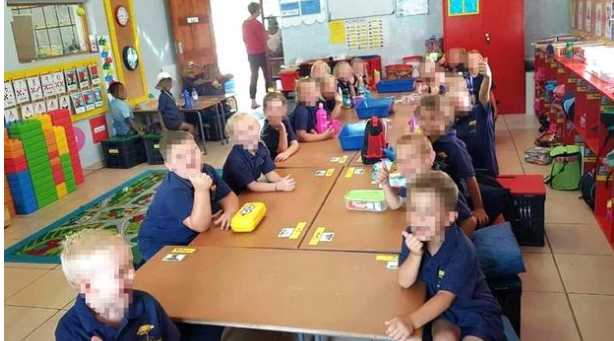
Rustenburg – Laerskool Schweizer-Reneke teacher Elana Barkhuizen, suspended after a picture of her class showing black learners separated from their white counterparts went viral and caused an outcry, is expected to address the media on Tuesday.
Trade union Solidarity said Barkhuizen would make a brief statement in Afrikaans in Pretoria, but would neither take questions nor grant interviews.
North West Education MEC Sello Lehari suspended her last Thursday after a parent of one of the black pupils in the Grade R class complained.
Barkhuizen reportedly took the picture and sent it to a parents’ Whatsapp group to reassure them that their children were coping well with their first day of school.
The picture went viral on social media and led to a protest at the school.
Solidarity said it would take legal action to lift Barkhuizen’s suspension, which it said was unlawful.
“Lehari’s hasty and populist actions led to Barkhuizen’s unlawful suspension while being innocent,” Solidarity chief executive Dr Dirk Hermann said.
“Had he listened to the other side he would have reached a different conclusion. However, he charged and convicted her in ‘bundu court’ fashion in the presence of a worked-up crowd.”
Some “no-fee” schools are insisting parents pay once-off fees – and turning away Grade R children whose parents can’t pay.
South African schools are divided into five categories known as quintiles. The quintiles range from the poorest to the least poor, with quintile 1 being the poorest 20% of schools in the country. Quintile 5 covers the least poor public schools and parents of children who go to schools in quintiles 4 and 5 are expected to pay school fees.
Schools in quintiles 1 to 3 are no-fee schools, which means parents do not pay school fees. If school governing bodies introduce fees in a public school and parents are unable to pay, the school cannot deny learners admission.
The parent of a child at Solomon Mahlangu Primary School in Khayelitsha told GroundUp that when she arrived at the school with her child for registration, she was told she had to pay R400 for the child’s Grade R graduation in November.
“I asked to pay half of the money then and the rest of it at the end of the month but they said no… The school told me I couldn’t take my child to school without a slip of payment,” said the parent. She had to borrow R400 so that her child could start school.
A volunteer parent at Equal Education, Vuyokazi Bobotyane, said she had visited the school to find out why parents of Grade R learners were being turned away if they were unable to pay an upfront amount of R400. She said that when she asked the principal why parents were expected to pay the money, she was told it was for Grade R graduation at the end of the year.
She said the principal had told her that the School Governing Body had decided the fee should be paid at the beginning of the year and that children would be admitted to the school when parents paid.
When GroundUp contacted the school, Nombulelo Davane a staff member, confirmed that learners had to pay R400 and said if parents could not afford the amount they should “speak to the principal and give the money on a certain date”.
Jessica Shelver, spokesperson for MEC for Education Debbie Schafer, confirmed that no-fee paying schools are not allowed to ask parents to pay any form of registration or upfront fee. She said some schools might ask for donations but this should be completely voluntary.
Shelver said that if parents were turned away for not being able to pay a fee at a no-fee school, “they should contact the district office”.
The parent of a child at Soyisile Primary School in Khayelitsha said that parents were made to pay R200 before their children were admitted to Grade R this week. She was told that this fee was for a chair in the school for her child.
“I said I don’t have R200 and then they said I must come back when I do. So I went back home and borrowed R200 and then they allowed my child to be admitted,” said the parent.
GroundUp tried to contact Soyisile Primary School by phone last week and on Monday but could not reach anyone.
Bobotyane said that most of these parents did not have the money as it is mid-January and some of them are waiting for their social grants.
Daphne Erosi, a community liaison officer for Equal Education, said that she had been in touch with seven no-fee schools in the Western Cape where children had been expected to pay fees. Some children whose parents could not afford to pay had still not returned to school.
“Some kids are still waiting for month end and one parent I know had to borrow money because her child was crying. She had to explain to her child that she was waiting for money and it was heartbreaking. It is not sitting well with me,” said Erosi.
Section 41 (7) of the South African Schools Act stipulates that no learner may be deprived of their right to “participate in all aspects of the programme of a public school despite non-payment of school fees”.
The University of South Africa (Unisa) and its student representative council (SRC) reached an agreement on Saturday that will see the student strike called off with immediate effect and operations at the university resuming by Monday‚ the university said.
“The agreement came as a result of the breakthrough made by the parties during negotiations within the university; as well as constructive engagement by the parties with the Department of Higher Education and Training (DHET; focusing on the registration challenges at Unisa‚ which included accreditation‚ enrolment planning‚ provision of laptops and other matters‚” Unisa said in a statement.
“As Unisa‚ we welcome this agreement and we are pleased that the operations of the university will return to normal; and that thousands of our people who aspire to acquire an education and better their lives; will be afforded the opportunity access Unisa – a university that plays a leading role in the higher education sector in the country and on the continent.
This breakthrough also demonstrates how crucial dialogue is in efforts to find solutions. Notwithstanding this agreement‚ we still urge students to register online unless it is absolutely necessary to visit a Unisa Service Centre‚” said Unisa principal and vice chancellor Professor Mandla Makhanya.
The high court in Pretoria on Friday granted the university an interdict against students who had been protesting since Monday.
In terms of the agreement reached on Saturday‚ Unisa said it had agreed to consider an additional 25‚000 spaces for students who had applied for the first semester of 2019 and who qualified.
In response to a demand by students that the NSFAS accord all benefits to Unisa beneficiaries‚ the university said that plans were in place to engage with NSFAS on the matter.
Ahead of South Africa’s elections in May, President Cyril Ramaphosa unveiled the ruling African National Congress (ANC) manifesto. The BBC’s Andrew Harding unpacks the key themes from his speech.
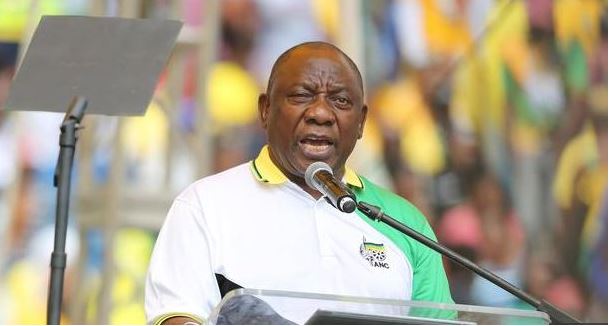
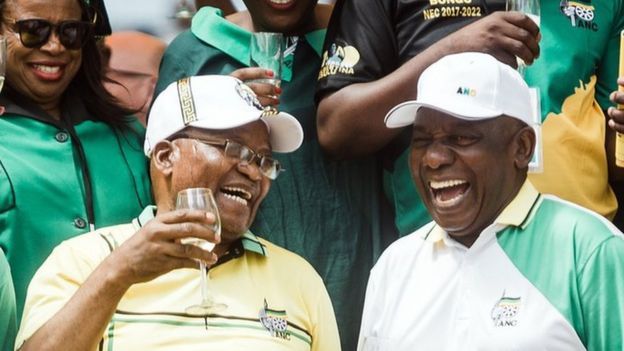
President Ramaphosa walked into a packed Moses Mabida stadium in the coastal city of Durban like a CEO preparing for a board meeting. No dancing. No singing. He delivered the ANC’s manifesto speech with conviction, but no razzmatazz.
It was a sharp contrast with his controversial, man-of-the-people predecessor, Jacob Zuma, who had been greeted by his local crowd with a nostalgic roar of approval a few minutes earlier.
But President Ramaphosa is betting that after a decade of chaos and misrule under Zuma – a man now facing a corruption trial, and possible bankruptcy – South Africans are, overwhelmingly, looking for competence and honesty rather than grand promises and wild rhetoric.
The ANC may not have entirely made up its own mind on that score, but if, as expected, he can lead it to a comfortable victory in May- ideally, significantly more than the 53.9% that it managed in municipal elections in 2016 – then his position and his chances of becoming a two-term president, look secure.
Hence a speech that – in tone and content – sounded, more often than not, like that of a CEO rather than a politician.
Politics of land expropriation
Perhaps one shouldn’t read too much into the length devoted to each issue in a speech.
But land reform – a divisive, emotive, deeply controversial issue that has often dominated the political debate over the past year – secured just 42 seconds in the president’s 90 minutes manifesto speech.
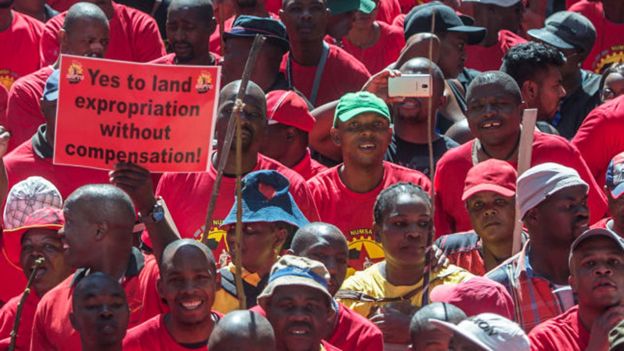
Yes, South Africa’s constitution will probably be amended this year to spell out the fact that the government can, in certain circumstances, expropriate land, which is mostly held by white farmers, without compensation, but don’t expect a revolution.
The cautious Mr Ramaphosa knows it would spell economic disaster.
Image copyrightAFP Image captionThe radical EFF opposition party has made land expropriation without compensation a key campaign issue
Tellingly, his paragraph on land was preceded by a much longer one on another emotive issue, which he clearly believes will have more traction in poor townships.
The president won cheers when he promised to clamp down on illegal traders “wherever they come from.”
The subtext was clear – the ANC understands its electorate’s concerns about high levels of immigration, and the strains that creates in crowded, poor communities.
And there was a bigger, political point being scored here.
The ANC has, at times, seemed openly panicky about the threat posed by small, but radical and populist parties like the Economic Freedom Fighters (EFF) with their talk of nationalisation and land expropriation.
Mr Ramaphosa does not seem to share that panic.
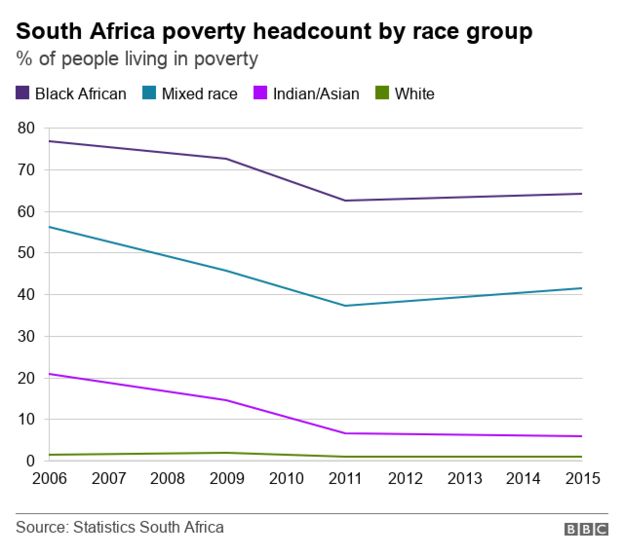
His message to wavering voters is that the answer to inequality and poverty doesn’t have to be revolutionary.
Rather it is about enforcing existing laws, cleaning up the civil service, and supporting private enterprise in rural communities and townships. It’s a message designed to appeal to South Africa’s instinctively conservative electorate.
Taking a stand against rape
Mr Ramaphosa talked about corruption, and about the failures of the ANC, and about many other troubles which South Africans have heard their politicians promise to fix since democracy first arrived here 25 years ago.
But sometimes it’s important to shift the debate, and Mr Ramaphosa did that – to electrifying effect – towards the end of his time at the podium, when he abruptly urged every male ANC supporter in the stadium to get to his feet, and to make a commitment to fight against what the president described, twice, as a national crisis.
Image copyrightAFP Image captionMore than 40,000 cases of rape are reported every year in South Africa, most of the victims are female
He was talking about South Africa’s extraordinarily high levels of rape and sexual violence against women – an issue all too often overshadowed here.
The men in the stadium all stood. Mr Ramaphosa applauded them.
Gender violence in South Africa
1 in 5 women are assaulted by their partner
More than 40,000 cases of rape are reported every year, most of the victims are female
Femicide in South Africa is 5 times higher than the global average
Source: Medical Research Council 2009 study; Stats SA Demographic and Health Survey 2016
It felt like a rare, galvanising moment for a factionalised and tired governing party that often gives the impression – with its front ranks of familiar, ageing faces – that it is running out of ideas and of steam.
Mr Ramaphosa has repeatedly promised South Africans “a new dawn.” At that moment, it felt like he meant it, and that his supporters believed it.
Creating jobs
Every year, the ANC promises to create more jobs in a country which now boasts the highest levels of youth unemployment in the world.
Former President Zuma once promised to create five million jobs in a decade. He failed, but blamed that failure on the global recession and on a multitude of other factors.
Image copyrightGETTY IMAGES Image captionProviding jobs for the youth remains ANC’s biggest challenge
In Durban, President Ramaphosa came up with a new figure. 275,000 new jobs a year – a significantly more modest pace.
But can he – could anyone – deliver?
“We have a plan,” Mr Ramaphosa insisted. And my impression is that many South Africans, and plenty of foreign investors, seem inclined to believe him, or at least to give him the benefit of the doubt.
The president – a wealthy businessman – spoke with almost nerdish enthusiasm about investment and infrastructure projects, about reducing the cost of doing business, cutting red tape, improving broadband connectivity and so on.
“After a period of doubt and uncertainty we have arrived at a moment of hope and renewal,” he said, describing the ways his government has already begun to tackle corruption and strengthen the state institutions that were so badly undermined during the Mr Zuma’s era.
But if Mr Ramaphosa is earnest, and committed, what about his party?
ANC feuding
The opinion polls suggest the ruling party under Mr Ramaphosa will secure a comfortable victory in this year’s elections.
But the scale of the challenges facing South Africa is enormous, and there are many here in South Africa who wonder if President Ramaphosa – conscientious, process-driven, and moderate – and his feuding, corruption-riddled party can really change direction after so long in power and implement its ambitious plans.
Image copyrightGETTY IMAGES Image captionANC is caught in a feud between allies of former President Zuma (C) and President Ramaphosa (L)
One section of the speech gave me particular pause for thought on that.
South Africa’s education system is failing the country’s youth.
The statistics repeatedly show that, despite a big education budget, many students are dropping out or emerging with basic maths and reading skills so poor that they are fundamentally unfit for the workplace.
Internet of Things and blockchain
The state of education is yet another national crisis, and unless it is fixed, South Africa’s unemployment figures and its economy will surely continue to struggle.
But in his manifesto speech, Mr Ramaphosa said precious little about how to get the basics of education right – how to ensure teachers stay in class; how to engage with powerful teaching unions.
Instead, in a paragraph that seemed to have flown in from Davos, rather than reflecting the realities of a poor township like Diepsloot, Mr Ramaphosa talked about the 4th industrial revolution, blockchains, data analytics, and the internet of things.
It was ambitious, and impressive. But half the country’s youth is unemployed and more fundamental changes seem urgently required.