Home Blog Page 465

Rwanda warns schools against hiking fees

Jean d’Amour Mbonyinshuti

Rwanda’s Ministry of Education (MINEDUC) has intervened to stop the increase of fees in public and government aided schools, saying that the cost of education was increasingly becoming unaffordable for some parents.

The Government subsidises education through various initiatives, including setting up infrastructure, equipping schools with academic materials, providing capitation grants, as well as paying teachers, which it says, should offset the cost of education.

Besides, parents are required to pay schools fees and, over the years, such fees have been increasing.

School fees in many public and government aided schools is over Rwf100,000 per term.

“School fees have been on the increase over the years and it is a serious concern,” said Francoise Umutoni, a parent who has a student at a Gicumbi-based school.

Umutoni said that in addition to the school fees of Rwf105,000 for her Senior Three son, she pays extra charges every term, which pushes the fees to an estimated Rwf200,000.

“We also have to rent mattresses from the school and there are some other school materials that we are required to buy from the school,” she added.

Parents are also required to pay extra fees such as insurance, bonuses for teachers and paying for mock tests, according to officials.

Other charges include, fees for students’ welfare, school development such as buying a school vehicle, construction fees, and paying for teachers and school employees who are not on government payroll among others.

According to the Ministry of Education, persistent increase of school fees in public and government assisted schools contravenes government policy on access to education for all, especially for pupils and students from financially disadvantaged families.

“The Ministry of Education expresses its deep concerns with the continued malpractices of various schools that have continuously increased overall school costs without prior consultation,” Eugene Mutimura, the Minister for Education said in a statement.

The statement, dated January 9, says such consultations should be done during the respective schools general assemblies and should be approved by district authorities after thorough analysis.

“No schools are allowed to increase (parents’) contributions through overall school costs in the first term of (the) school year 2019,” the statement reads in part.

In addition to the existing procedures, according to the ministry, any schools desiring to increase schools fees and other related fees will be required to inform their respective district authorities through an official letter, with a copy to the ministry.

Schools to be audited

On Wednesday, Isaac Munyakazi, the State Minister for Primary and Secondary Education, said that effective this academic year, schools will be audited to justify how they spend money.

“Measures will be taken against school leadership which will not comply with these instructions and will be found with unclean audit,” he said

The minister said the raising school fees was a burden to parents even in 12-Year Basic Education, which initially was designed to be free and accessible to all.

“We issued guidelines to all districts to follow up and stop such malpractices,” he added.

Unfair parents’ committees

Some parents faulted their respective parents’ committees, saying they connive with schools to take unpopular decisions against the will of other parents. The ministry said it was aware of this.

“Sometimes such parents’ committees connive with school management to take decisions that don’t best represent the interests of other parents,” said Munyakazi.

However, some schools said there was need for the ministry to consult schools on why they increase the fees.

“I don’t think any school can increase school fees just to cheat parents. There is need to consider the cost of living which is high and schools are required to take care of students ,” said  a head teacher of a Kigali-based school who preferred anonymity
Tertiary institutions should adopt rigorous admission criteria for teacher education programmes

Nicola Vermooten

Future generations need to be taught by capable and committed teachers.

On 3 January 2019 Angie Motshekga, Minister of Basic Education, announced the results of the 2018 National Senior Certificate (NSC) examination. While the reported results may appear promising at first glance, Nic Spaull, Education Analyst, remarked that Motshekga neglected to account for the unacceptably high dropout rate among pupils. Considering that 489,800 pupils who started Grade 1 in 2007 dropped out before reaching Grade 12, the results of the 2018 NSC examination reiterate concerns that have been raised about the quality of education offered in South Africa.

In response to mounting political and economic pressure to overhaul the South African education system, policymakers have introduced a number of education reforms. Education reforms are typically modelled in accordance with top performing education systems from across the globe, such as Finland, Japan and Singapore.

While policymakers can use top-performing education systems as a backdrop to gain a better understanding of the challenges associated with the South African education system, they should be wary of trying to replicate other countries’ secret to success. Policymakers should recognise the differences that exist between South Africa and other countries in order to accurately discern which solutions they can borrow. The arbitrary transfer of existing solutions will write the next chapter to the already exhausting list of failed education reforms.

The majority of top-performing education systems consider teacher effectiveness as one of the most prominent predictors of teaching and learning outcomes. Accordingly, in their search for a sustainable solution to address concerns about the quality of education offered in South Africa, policymakers have begun to turn their eyes to teachers.

While teachers undoubtedly play a critical role in enhancing teaching and learning outcomes, they cannot be expected to overhaul the South African education system by themselves. Other stakeholders, such as tertiary institutions that offer Initial Teacher Education (ITE) and Post-Graduate Diploma in Education (PGDE) programmes, must implement measures to bolster the effectiveness of the future teaching force. Based on the results of my doctoral research and a review of relevant literature, I propose that the admission criteria for teacher education programmes represent such a measure.

In response to the ever-increasing demand for teachers in South Africa, Tertiary institutions have adopted demand-driven admission criteria for teacher education programmes, whether it be ITE or PGDE programmes, that is far less stringent compared to those of other degree programmes. It should, therefore, come as no surprise that teaching has become a “stopgap” or “last resort” occupation for many. Tertiary institutions must adopt rigorous admission criteria for teacher education programmes in order to reverse this trend.

While academic performance may not accurately predict students’ future proficiency in teaching, it matters. Academic performance offers an indication of the extent to which students are prepared for the rigour of tertiary education. Therefore, tertiary institutions should set higher standards for academic performance.

With that said, apart from academic performance, another admission criterion should also be taken into account. As an example, it is necessary to evaluate students’ motivation to pursue a career in teaching as research has demonstrated that career motivation is associated with both employee and organisational outcomes. This will help to attract students who are eager to mould the youth.

Policy makers may argue that the quality of teachers graduating from tertiary institutions is more important than the admission criteria for teacher education programmes. However, to ensure that future generations are taught by capable and committed teachers, I propose that tertiary institutions must revisit the admission criteria for teacher education programmes. DM

MEC calls for calm as parents demand removal of Laerskool Schweizer-Reneke principal

Boitumelo Tshehle

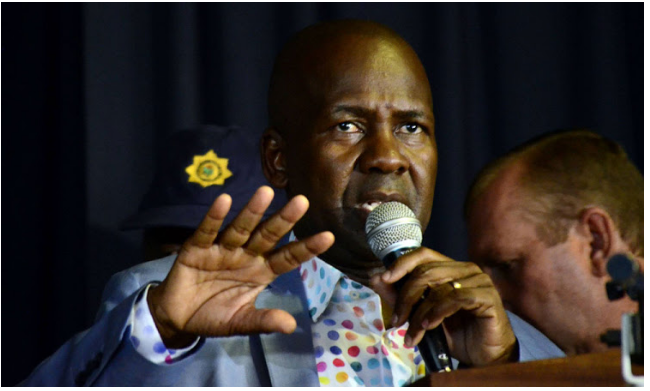
North West education MEC Sello Lehari told angry residents on Thursday to allow his department to investigate racism at Laerskool Schweizer-Reneke and not to be judgemental.

Lehari was responding to questions by residents who wanted him to fire the teacher at the centre of learner separation in a grade R class.

The MEC had earlier suspended the teacher while investigations are ongoing.

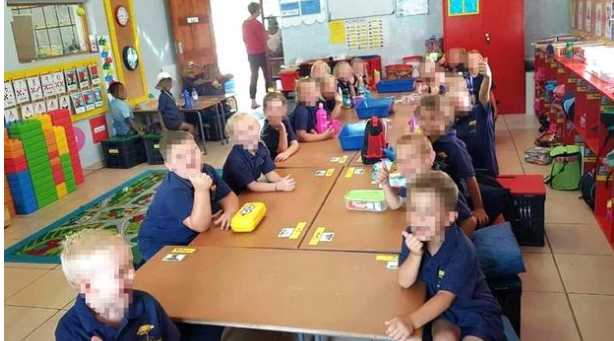
The teacher allegedly took the picture showing four black pupils sitting at the corner of the class while their white classmates sat face-to-face in a long table, separating them by colour.

“I am only here for education business, you cannot question forever, I cant answer for ever. It is now time that we go and do what you want,” said Lehari.

The residents also want the school principal to be fired, prompting the MEC to declare that he will take a decision on the principal on Monday.


A message for the class of 2018 from education minister Angie Motshekga

Angie Motshekga

It is with an immense sense of pride that I congratulate the class of 2018.

The 2018 cohort was a pioneering group that saw key advancements and points of progress made in the administration of the National Senior Certificate (NSC) examinations. For the first time in 2018, African sign language was administered to candidates, while another first for the department of basic education was the examination in technical mathematics and technical science.

Offering these two subjects is in sync with the department’s intention to provide a broader scope of subject offerings for learners, to allow for a stronger vocational slant in the curriculum.

End of supplementary exams

The year 2018 brought an end to supplementary examinations, as they are commonly known, and examinations have been set for June 2019. All candidates wishing to write these examinations have until January 31 2019 to register.

The department wishes to congratulate the class of 2018 on their achievements. At the same time, I wish to inform those learners who have been unable to meet the NSC requirements that, apart from the June examinations, the Second Chance Matric Support Programme presents an opportunity, a second chance, to qualify for their matric certificate. We encourage all learners who have not passed to take advantage of this important opportunity not only to achieve their certificate but also to improve their marks and open up opportunities.

Candidates can register for the Second Chance Matric Support Programme by visiting the department’s website.

The department wishes to congratulate the class of 2018 on their achievements while encouraging those that may not have achieved a passing grade to pick themselves up and make the most of the additional support opportunities available.

As we look forward to the 2019 school year and yet another opportunity to improve the lives of South Africa’s youngest citizens, the department wishes the class of 2019 everything of the best. Apply yourselves from the first day and ensure that this is the best of your 12 years of schooling.

Find more information at www.education.gov.za or visit your nearest district education office.

Public schools around the country opened on January 9 2018. While many of the children were very excited for their first day at school, some could not hold back the tears.

Angie Motshekga is South Africa’s Minister of Basic Education.

‘Take your children to township schools …’ – Black parents told

Boitumelo Tshehle

Black parents who are not happy with how a North West school separated black grade R pupils from their white classmates have been told to take their children to townships schools.

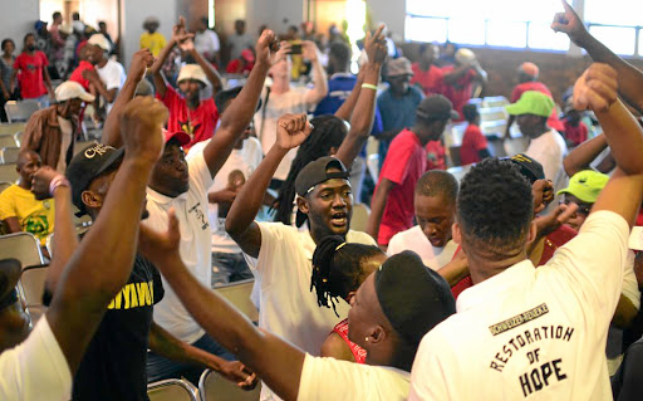
As protests raged at Laerskool Schweizer-Reneke over a viral image of black children segregated from their white counterparts at the school, white parents, some armed with guns, said blacks who were not happy with the arrangement should remove their children from the predominantly white school.

The school was forced to shut its doors to learning yesterday as a result of protests as tensions threatened to boil over. “If you are not happy here, take your child to another school. Nobody is forcing you [to bring them here],” a white parent said.

Another parent said Schweizer-Reneke had one white-dominated primary school and plenty of black-dominated schools. “Blacks don’t put their children first, we put our children first, and their safety and education come first. This is the only white-dominated school in this town.

“There are over 10 [black] schools in the township. If they are not happy, let them take their children there,” said another white parent.

North West MEC for education Sello Lehari was told that the reason black pupils were separated from their white classmates was because they (blacks) were struggling with Afrikaans.

The explanation was given to Lehari during his visit to the school yesterday.

An image that has since gone viral on social media showed 18 white pupils occupying a single large desk in a classroom while the only four black children sit at a separate desk at the far end of the class. The picture – sent to a parent WhatsApp group and later distributed on social media – went viral and sparked outrage almost immediately.

SA Human Rights Commission chairperson Bongani Majola said they will be sending a team to the school to investigate the matter. “If the findings come out that children were discriminated against because of their colour, this will be very serious,” he said.

However, the SGB said the picture “merely captured a moment and was not a true reflection of the school’s ethos”.

Another picture sent later showed the children sitting at the same desk.

On arrival at the school yesterday, Lehari found parents of white pupils breaking the school’s fence and removing their children, while Schweizer-Reneke’s black residents protested inside the school yard.

Lehari announced the immediate suspension of the teacher who taught the class. He said he decided to do so because the explanation given for the separation of pupils did not sit well with him.

“I was told the teacher did that because the black children did not understand Afrikaans, so they were teaching them separately from the white learners. I don’t agree with that, and that’s why I suspended her,” he said.

Lehari said the province needed wiser teachers who treated every pupil – irrespective of their race – like their own children.

The MEC also expressed concern that some white parents came to the school armed with guns. He said he would determine the future of the school principal on Monday.

Protesting parents told Sowetan that the racial segregation incident at the school was not isolated.

Some incidents, they said, dated as far back as 2008. One of the residents, Kabelo Zondo, said at that time, black and white children were prevented from sharing a classroom.

Ramaphosa urges matrics to focus on education

Staff Reporter

President Cyril Ramaphosa visited the Siqongweni High School near Pietermaritzburg, Kwa-Zulu Natal on Thursday morning.

He was accompanied by Basic Education Minister Angie Motshekga.

The aim of the visit was to welcome the 2019 academic year; to conduct an oversight and to ensure full scale readiness for learning and teaching at the beginning of the school calendar.

Siqongweni High School was one of the best performing schools in KwaZulu-Natal. Ramaphosa took a tour of the school and inspected the infrastructure improvements before addressing the learners.

Last year, Ramaphosa launched the whose aim is to provide safe sanitation facilities for all our learners.

He said the school performance had been consistent and impressive, despite the tough socio-economic circumstances of our learners.

Senior ANC leaders are in KwaZulu-Natal this week in the build-up to the launch of the party’s election manifesto at the weekend.

While at the school, Ramaphosa urged pupils to focus on their education.


South Africa: Officials to probe school racism following segregation photo

Sibongile Mashaba

North West MEC for Education Sello Jonas Lehari was to lead a team of senior management to Laerskool Schweizer-Reneke to Thursday to investigate allegations of racism.

This after a photograph showing racial segregation in a Grade R classroom at the school. The image was allegedly taken on Wednesday and sent to a WhatsApp group by the class teacher to show parents that things were still going well on the first day of schooling.

The photograph shows a group of white learners sitting together while their four black classmates sit at a small table near the door.

Premier Job Mokgoro said he had noted with shock the images which were widely circulated, “depicting different seating spaces allegedly allocated for black and white learners” at the school.

“The matter has been brought to the attention of the provincial Department of Education who dispatched a team to the school to investigate as to what exactly happened.

“MEC for Education (Lehari) willlead a team comprising senior managers to the school who will also conduct an intensive investigation into the matter and action to be taken will be informed by the outcomes of these investigations,” Mokgoro’s spokesperson Vuyisile Ngesi said.

“The North West provincial government condemns any form of racism in the strongest possible terms and deeply regrets this unfortunate incident 25 years into the democratic dispensation,” Ngesi said.

A mother of one of the black learners was quoted as saying: “This was meant to be an exciting day for me but it’s not. All I saw was messages from the white parents saying ‘dankie, dankie’ (‘thank you, thank you’) on the WhatsApp group but no one was saying anything about the separation of the learners.”

The images caused a stir on social media with political parties weighing in on the matter.

Federal DA Youth leader Luyolo Mphithi condemned the incident, saying he would also visit the school.

“It is outrageous that a classroom in 2019 can be racially segregated, which only serves to teach young children from day one to see each other as different and separate. This is unconscionable.

“We hope that the school staff is ready and willing to address this issue immediately and to make a commitment to change outdated attitudes toward integration,” Mphithi said.

National Freedom Party spokesperson Sabelo Sigudu said government had failed to improve the quality of education in public schools, driving parents to take their children to private schools.

“These private school tendencies of segregating learners based on the colour of skin is against the principles of a democratic South Africa we live in today.

“We want to hold the government responsible for neglecting public and rural schools, as the result blacks including coloured and Indian people have no option but to take their children to such racist private schools for better education. This increased deterioration in public schools is directly leading the country to the apartheid era. This is barbaric.”


Unisa SRC threatens to shut down Pretoria campus

0

Staff Reporter

The disgruntled Students’ Representative Council (SRC) at Unisa has threatened to shut down one of the institution’s biggest campuses in Pretoria after their meeting with management collapsed.

This comes after the university management and the SRC failed to reach an agreement on the demands put forward by the students’ representatives.

EFF Student Command secretary-general Wadzanai Mazhetese said: “We are escalating now and planning to shut down the main campus in Pretoria. We are bringing students from all over the region to join us.

“I can confirm that campuses in KwaZulu-Natal, Nelspruit, Limpopo and Florida are closed. The Sunnyside campus is currently in the process of being closed.”

The SRC demands that all students who completed higher certificates in 2018 should be allowed to proceed with registrations from January 2 and for all qualifying students to be afforded space in the university.

Mazhetese said they are also calling for an urgent resolution of matters regarding Unisa qualifications not being registered with the South African Qualifications Authority (SAQA), and would approach stakeholders including the Department of Higher Education and Training to address qualification issues at the institution.

“The meeting we had yesterday ended without an agreement. We did not agree with the management and we have resolved that we are proceeding to meet the relevant stakeholders, like the Department of Higher Education and the SAQA.

“We think we might be able as a collective to find a resolution to the issues we have raised with Unisa. The meeting is supposed to be scheduled for Thursday (today), but we are awaiting confirmation from both entities,” said Mazhetese.

The meeting discussed a range of issues from academic programmes to financial aid. One of the biggest issues is the closing of some courses which has led to some campuses offering no more than five accredited courses.

“Some of the demands we raised included the issue of qualifications. Over 150 qualifications have been closed. We were expecting the university to engage us on that issue.

“They have not done that. We have proceeded to invite SAQA to reach out to Unisa to say these qualifications ought to be administered so that they don’t prejudice students,” said Mazhetese.

This also comes at a time when thousands of students are expected to finalise their registration for 2019. Unisa, however, said even though students could not access some of their campuses, they are encouraged to register online and direct their queries to the university’s toll-free number or to email.

Unisa spokesperson Martin Ramotshela said: “When people are being blocked off from accessing our campuses, it does not mean that registration must stop. Registration happens online. There is no need to extend the registration period, and none of us can foretell what is going to happen between now and the 25th.”

Pretoria News

The University of Venda’s gets a new vice-chancellor and principal

Staff Reporter

The University of Venda has appointed Dr Ndanduleni Bernard Nthambeleni as the new vice-chancellor and principal.

Nthambeleni is an accomplished executive with more than 22 years’ experience in the higher education sector.

Before the appointment, Nthambeleni was the executive director of the grants management and systems administration directorate at the National Research Foundation.

He has also worked as a lecturer at the former Vista University and was a member of the South African Research and Innovation Management Association since 2009.

According to Serobi Maja, the university’s council chairperson, the appointment of Dr Nthambeleni is important to Univen at a challenging time for the South African higher education sector.

“He will enhance the university’s vision and be instrumental in driving it to reality.

“With the challenges of transformation in the higher education sector, it is to our advantage to have an academic leader of international standing who understands the issues in higher education.

“He will assist by setting goals, including raising the expectations and performance of Univen for globally impactful research,” said Maja.

Nthambeleni succeeds Professor Peter Mbati, whose term expired in January last year.

State-of-the-art school in Tsakane informal settlement unveiled

Charles Molele

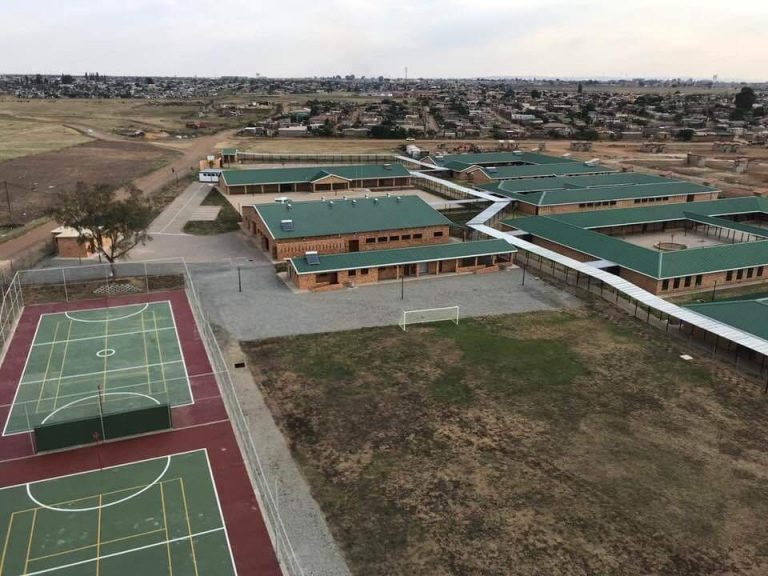
The life of five-year-old Busisiwe Madidiza has changed significantly since the opening of the new R105 million state-of-the-art Menzi Primary School in Tsakane, Ekurhuleni.  

According to her mother, Nokuthula (35), her daughter’s numerical and communication skills have improved dramatically since she enrolled at the brand new school last year.

The school, which is a modern information-technology-based facility, is built right in the middle of extreme poverty, with dirt roads and shacks built from corrugated iron sheet.

“My daughter now can read and write well just like those in [former] Model C schools in the suburbs, thanks to this new school in our township,” Nokuthula said on Wednesday during the official opening of the school by Gauteng Premier David Makhura, MEC of Education Panyaza Lesufi and MEC of Infrastructure and Development Jacob Mamabolo.
“I am not sure where she will land in future but the greatness that already lies within her is already showing in a profound way.”

Menzi Primary School caters for 1 088 learners from Grade R to Grade 7. It has 33 smart classrooms, two science laboratories, a library, IT control rooms, a nutrition centre, a dining hall, 5 courtyards, sports facilities and a 1 088 capacity school hall.

The building of the school is in line with Gauteng’s modernisation programme to create smart classrooms.

The construction of Menzi Primary School began in 2015 but faced many challenges along the way including strikes and work stoppages by local sub-contractors as they demanded more work and that more locals be employed on the site.  

Despite these numerous challenges, the project was successfully executed and a sectional handover was done during the first week of December 2017 – this is according to the Gauteng Department of Infrastructure and Development.

During the opening, Lesufi appealed to members of the local community in Tsakane to protect the multi-million rand state-of-the-art school from vandalism and theft from local criminals.

“All our schools in Duduza and Tsakane were burgled and broken into during the school holidays this past December. I am appealing to community leaders to protect the school from theft and criminals.


“The department of education invested more than R105 million into the construction of this beautiful school and all we want is to see our children go to school without any hindrance,” Lesufi said.

He added the newly built school was the first in Tsakane to have smart classrooms.

“This is the first primary school in this community where our children will never smell chalk; will not be asked to go and clean a duster and will not know what is a chalkboard,” said Lesufi.

Lesufi told parents and community leaders present that the local children from the nearby townships now have an opportunity to change their lives for the better with the opening of the school.

“The children of this community are the first generation that will not queue for a RDP house but will queue for a graduation ceremony,” said Lesufi.  

“We must unleash these children to be part of the Fourth Industrial Revolution (4IR). These children here today will not have somebody to drive to Eastgate Mall. A driverless car will drive them there. That is why in the history of KwaThema, Duduza and Tsakane, our children will never be exposed to a blackboard as we know it.

“We provide classroom devices in the form of interactive boards. We say, One Learner, One Tablet. This school is connected to data and the learners have access to information and general knowledge just like any learner in any school in the suburbs,” said Lesufi.

Makhura congratulated his Lesufi for making it possible for the province to claim the number one spot at 87.9%.

“Education is a number one priority in Gauteng and we are happy for being declared number one. We are number one not because of the schools in the suburbs but because schools in the townships have improved,” said Makhura.

“This school does not belong to the Premier or the MEC Lesufi. It belongs to the community for the benefit of the children so we need to make sure that our children are safe and study in a conducive environment.”

Community leader Buti Cindi (62), told Inside Education that the ward committee will work with the community to ensure that the school is protected and not burned during service delivery protests as is the norm in South Africa.

“We are going to convene a meeting to educate to our people that we must protect this school. If we have a service delivery protest, let us resort to other forms of protests rather than burn a school and destroy this much needed infrastructure,” said Cindi.

Acting Ekurhuleni Executive Mayor Lesiba Mpya promised to build better roads connecting to the school after several people complained about the condition of the roads in the area and riding in the gravel roads with stones, mud and sand.

The school was built on dolomite ground.

“We noted the conditions of the roads. They are definitely not in good shape. But we promise that we are going to include the construction of the roads in our budget for the 2019 financial year,” said Mpya.