Home Blog Page 470

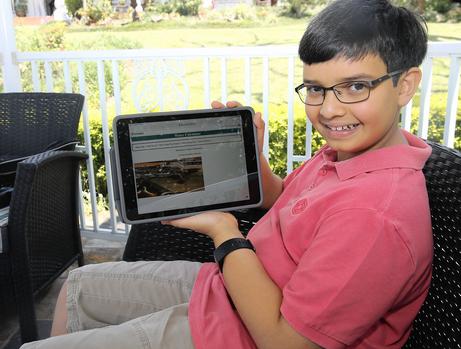
Whizz-kid, 11, set on cracking water shortage code

0

Candice Soobramoney

At age 11 Kabir Budlender talks computer coding a mile a minute.

He is advanced and informed beyond his age and has aspirations of improving the lives of communities around him by using his programming skills.

The Grade 5 pupil at The Ridge School in Westcliff, Johannesburg, recently came first in the Excellence in Education Awards inaugural coding challenge category in Melrose Arch.

The national competition, open to public and private schools in various age groups and categories, celebrated creativity in the integration of Apple technology into teaching and learning.

The participants in this category had to code a website concept.

Due to the severe drought in Cape Town, Kabir developed the Water Calculator, a website to manage water use in drought crisis that is also interactive. At this stage, it is still a demo version.

The second phase would entail getting the working table up and running and incorporating Bluetooth technology that would connect to a tap.

This would allow for data to be uploaded directly to a cellphone.

From there, Kabir, who began learning information technology in Grade 2 and attended a holiday school to learn block-based coding, intends on coding an app from the website.

He hopes it will go live next year.

“Section 27 of the bill of rights states that all people have a right to healthcare, food, water and social security. All of these things are important, but the one that I chose to focus on was water.

“I would like to live in a world where it is a reality that everyone has water. However, this is not the case because the country is in a drought, which means there is not enough water for everybody.

“Therefore, we all have to be conscious about how much water we use. We need a way where all people can keep track of how much water they use in an easy and efficient way,” said Kabir.

Asked about the benefits of the website, he said: “Insert what you used the water for, for example, washing the dishes. Then type in how much water you used. If you want, you can also type in the time. The Water Calculator can then give you a total of how many litres you use as you use it. You can either take a screenshot and make a folder or photo album or you can print it.”

He said this would allow households to become conscious of their use and reduce their consumption if need be.

Kabir, who plays the violin and piano and is part of his school’s orchestra, believes everyone has a right to water “so use it wisely”.

For his efforts, he won headphones and his teacher, Daniel McLachlan, an iPad.

Kabir, who enjoys flight simulation and aviation technology, has ideas on what he wants to study after he matriculates, possibly becoming a pilot.

His mother, Nasreen Rajab-Budlender, an advocate, said she was amazed by Kabir’s programming knowledge.

But after she reflected, she said there had been signs that his love for computers and technology began at an early age.

“When he was a toddler he once fell asleep holding onto a USB cable and would attempt to climb onto our briefcases to reach the computer.”

She said her son booked all their domestic and international flights, showing a maturity beyond his years.

His father, Steven Budlender, is also an advocate and Kabir has a younger brother, Imran, 8.

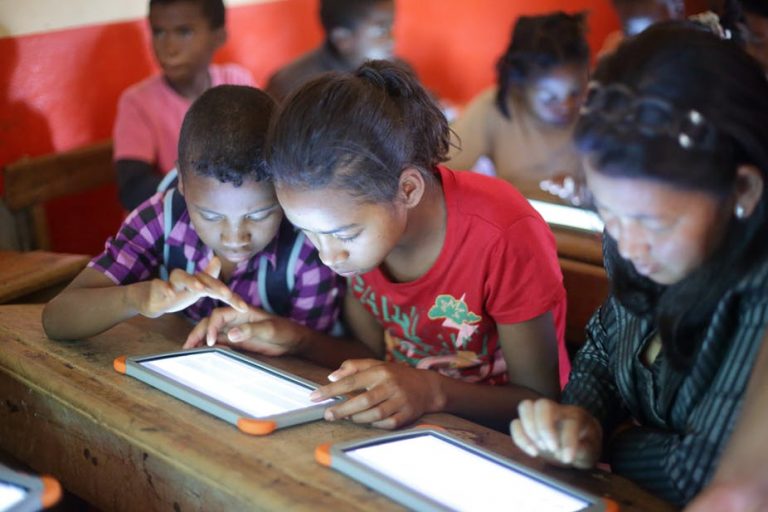
Zimbabwe’s education system poised for digital age

Columbus Mabika and Rejoy Masengedzero

Primary and Secondary Education Minister Paul Mavima last week said the Government was close to luring American multinational technology companies, Google and Facebook, to assist in digitising the country’s education system.

Minister Mavima made the remarks in Harare during the handover of 4 711 680 textbooks worth $21 million, donated by UNICEF.

This was the second tranche of textbooks that have been handed over to schools after about 2 340 000 textbooks were distributed recently under the same arrangement.

He said Government was also in the process of obtaining science equipment at a cost of US$2 million which will be distributed to schools throughout the country.

He said the Government was enroute to adopting a complete digital learning environment in schools in line with global standards.

This, he said, was also in line with President Mnangagwa’s vision of transforming Zimbabwe into a middle-income economy by 2030.

“Next week I will be leading a delegation to California, USA, to meet Google and Facebook executives to discuss how best we can work with them to digitalise our education system,” he said.

“We want 100 percent digitisation of our schools within the next three to four years. Things will not be the same. We should move in line with technology to produce learners of this time.”

Speaking at the same event UNICEF chief education officer in Zimbabwe Mrs Jenal Condo said UNICEF will continue to work on programmes aimed at increasing equitable access, and completion of, quality, inclusive education, with improved learning outcomes in Zimbabwe.

Mrs Condo hailed the new curriculum as a great landmark to Zimbabwe which will lead to the development of education aimed on the acquisition of relevant 21st century skills.

Growing bookworms in rural areas

0

Nivashni Nair

When a Pretoria-based soldier made a social media appeal for books for his nephews three years ago, he opened a chapter in his life that would see him deliver more than 21000 books all over the country.

Ntokozo Ndlovu, a human resources clerk at the South African Army College, was surprised to collect more than 4000 books from a single post on social media in 2015 after he found that the library in Inzinga, in KwaZulu-Natal’s midlands, did not have Zulu books for his nephews, aged six and eight.

“I donated 3500 books to the Inzinga library and I gave some other books to the boys,” he said.

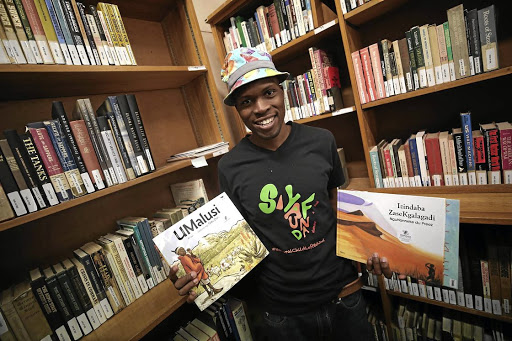
The story of the Siyafunda “We are learning” Donate a Book programme began when Ndlovu started getting requests for books from rural schools in KwaZulu-Natal. He enlisted friends Thembelani Ndlela and Njabulo Shange to help start the programme.

They visited rural schools to determine if there was a need for libraries and infrastructure, if children were reading and if teachers were promoting the culture of reading.

Only 21% of state schools have libraries, and only 7% have books in those libraries.

Ndlovu has distributed 21450 books to 37 rural schools and three rural school community libraries – which are open to the public – reaching more than 11000 children.

Two weeks ago, Ndlovu travelled from Pretoria to Umlazi township in Durban when 20 pallets of 552 boxes of books arrived from the US for his programme.

Ndlovu and his team will be drafting a plan of action on how to distribute the books and establish libraries in rural areas across the country.

“My mother was a Zulu literature teacher in her day,” he said.

“She used to read folk tales and sometimes make us read aloud, practise spelling, and it was fascinating.”

His mother, Ngethembi Ndlovu, is one of the 12 avid book lovers who make up the Siyafunda team.

Ndlovu uses the hashtag #NoRuralChildLeftBehind18.

South Africa: Higher education minister vows to protect universities’ integrity

0

Yoliswa Sobuwa

Minister of higher education and training Naledi Pandor has vowed to work closely with Universities South Africa to help institutions guard against assaults on academic integrity. This came after the alleged degree fraud at the University of KwaZulu-Natal and the University of Zululand.

“Academic integrity of our academic qualifications is fundamental to our university system. All universities from around the world are at risk from these issues but I don’t believe that these problems are widespread here.

“It is clear that there are criminals outside and within our university system who will stop at nothing to use our universities for financial gain. I will not allow our universities to be captured,” Pandor said.

Pandor said she has also noted the reports circulating about the sale of student places and irregular awarding of qualifications at the University of KwaZulu-Natal.

“The institution has kept me briefed about the work it is doing to bring those responsible to book. This also includes university staff members who may have collaborated with criminals for financial gain,” Pandor said.

In May this year, Professor Gregory Kamwendo from the University of Zululand was allegedly murdered as he was working hard to protect the integrity of academic qualifications and strengthen the quality of the academic project at the university.

“We now know his murder may have been linked to the work he was doing. We live in a violent society and universities are no longer ivory towers. We owe it to Professor Kamwendo and his family and many other committed academics in our university system to deal decisively with the criminals involved.

“I assure you I will work constructively with our institutions to maintain the integrity of our academic qualifications and to ensure that our students are receiving the best possible opportunities for learning,” Pandor said.

Kenya: Worrying trend of university students committing suicide

Ouma Wanzala

At least 12 university students have committed suicide since January in a worrying trend for education stakeholders, who are now seeking ways to address the problem.

The latest case involved a fourth-year student who was set to graduate this month. The university where he was studying requested that its name and that of the student not be revealed because the family was yet to come to terms with the loss.

NEGATIVE LIGHT

Some of the causes of suicides in universities have been identified as depression, mental illness, relationships among students gone sour and family rows.

Cases of suicides in universities have also been recorded in previous years but many universities have always been reluctant to share statistics for fear that this could portray their institutions in a negative light.

WORRYING

University managers told the Saturday Nation that, even though the actual number of suicides may be small compared with the student population in both public and private universities, the trend was worrying. They have since tasked their deans of students to look into ways of dealing with suicides in their respective institutions.

STATISTICS

Many universities were reluctant to share statistics of suicides in their institutions, even though they admitted that such cases had been reported.

Some of the cases, however, have burst into the public limelight. For instance, last month, a second-year law student at the University of Nairobi, who was on holiday, committed suicide in Nakuru a few days before he was to report back to the university’s Parklands campus. The university’s management acknowledged the incident but declined to reveal the name of the student.

LAW STUDENT

“We are aware of the death of the law student but he died while at home and therefore we are not in a position to tell what could have made him commit suicide,” said Mr John Orindi, the university’s director of corporate affairs.

RELATIONSHIPS

At Kenyatta University, at least two cases of suicide have been documented this year. The first was reported last month in Bomet County, where a student killed himself as a result of relationship problems. The 26-year-old and his wife were said to be in a rocky relationship.

TRAUMATISE

“He left behind a detailed account telling of the tribulations the couple had undergone since they first met at the university,” said a report by Kongasis Chief Edward Barusei.

Another case was reported at the campus but the management was unwilling to providedetails, saying they did not wish to further traumatise the student’s family.

HANGING

In October, Philip Munene Ntoiti, a student at Meru University of Science and Technology, was found dead. The third-year student in the main campus was pursuing a Bachelor of Education degree. It is believed that he committed suicide.

The same month, a student at Laikipia University also committed suicide in Gilgil by hanging himself. However, he did not leave a note to indicate why he had decided to take his own life after he had travelled from his home in Nyahururu.

CONFESSED

In September, a second-year student at Jomo Kenyatta University of Agriculture and Technology (JKUAT) also committed suicide in Juja. The body of Titus Ndirangu Mwai was found hanging in his room near the university. The student, who was studying for an agribusiness economics degree, is said to have confessed to harbouring suicidal thoughts due to domestic problems with his relatives.

BHANG ROLLS

And in August, a Co-operative University student died at a police station in Nairobi after being arrested with several rolls of bhang. Tony Munguti, a fourth-year student, allegedly committed suicide inside Hardy Police Station in Karen a few hours after his arrest.

DISTURBANCE

According to the police, Munguti had been arrested for creating a disturbance but was found in possession of 50 grammes of bhang, leading to his detention. The Bachelor of Commerce student is said to have killed himself using a sweater he was wearing.

A month earlier, another suicide was reported, again at JKUAT.

EXAMINATION

The student, who was in his final year, committed suicide at his elder sister’s house in Kasarani, Nairobi, a few days before he was set to sit for his end-of-semester examinations.

Edwin Mwaizi Igunza’s body was discovered by his sister, Ms Luize Minaywa Igunza, after she arrived from the family home in Kitale.

The student left a suicide note explaining that examination stress and fees problems were the reason for committing suicide. The 23-year-old was studying mining engineering.

UNFAITHFUL

At Chuka University, two students committed suicide in April. The first, Kelvin Mugendi, was a second-year computer science student.

He committed suicide after he found out that his girlfriend was unfaithful. The student left behind a suicide note addressed to his girlfriend.

DECOMPOSING

In the same month, the decomposing body of the second student was found hanging from a mango tree near his hostel. Michael Gikonyo was also a second-year computer science student.

In February, Derrick Kiprop, 22, a student at Murang’a University College of Technology, committed suicide after a dispute with his lover.

DIFFERENCES

He is said to have disagreed with his lover’s decision to end their three-month relationship over irreconcilable differences. The third-year student was pursuing a degree in software engineering.

Fellow students described him as a focused person and wondered why he had committed suicide over a love affair.

Last year, there were also several cases of students committing suicide.

LOVE TRIANGLE

In September, a University of Kabianga student took her own life over a suspected love triangle. The body of Hellen Nyambura Kinyanjui, 22, was discovered after police were notified of the incident by Mobebi chief Reuben Serem.

Hellen’s body was dangling from the ceiling of her rented residence at Chepnyogaa trading centre, a walking distance from the university.

CIRCUMSTANCES

In the same month, a fifth-year medical student at Kenyatta University committed suicide under unclear circumstances. Stella Karanja, who was on the verge of completing her course, took her own life within the Kenyatta University compound.

Still in the same month, a student at the University of Nairobi, who was pursuing a degree in engineering, set himself on fire at Equity Bank in Siaya County.

TRANSFERRED

The 23-year-old, Sylvester Anyiko Majonjo, who was working at the bank as an intern, attempted suicide because he was being investigated after it was discovered that he had fraudulently transferred some money from a customer’s account to his.

In August of the same year, a 24-year-old fourth-year University of Nairobi student committed suicide in his parents’ house in Dandora.

SUPPLEMENTARY

The student had asked his father to pay for a supplementary exam after he had failed some units, but his father was unable to raise the money.

The student’s body was found hanging on a piece of clothing long after he had committed suicide.

TUITION FEE

In June 2017, another student committed suicide in Shauri Moyo, two weeks after he was sent home over tuition fee.

Fredrick Kinyanjui, 22, a second-year student at Multimedia University was found hanging in his family home.

Art exhibition re-imagining the future of higher education

Noloyiso Mtembu

At least 60 artists have displayed their work reimagining the future of higher education at the Stellenbosch University Museum as part of the institution’s centenary celebrations.

The Forward? Forward! Forward exhibition opened this week and will run until April next year, featuring work of some of the most prominent and most promising painters, sculptors, film-makers and photographers in the country and the world.

Museum director Bongani Mgijima said the exhibition enables the university community to think beyond the past and the present.

“Commemorations, by their very nature, tend to look backwards. By facing forward, this exhibition departs from the norm. It aims to stimulate discussions that will enable the university to move beyond its divisive and exclusive pasts into an all-embracing and inclusive future,” said Mgijima.

He said student protests over opening campuses and free education in the past few years had placed higher education on the national agenda.

“The Forward? Forward! Forward exhibition has been necessitated by a need to position the museum as a safe space for conversations on the future. It is these difficult but necessary conversations that will enable universities to move forward,” he said.

Among the art exhibited is a 10-minute-long film about an ancestral presence, Lhola Amira, by Gugulethu artist and academic Khanyisile Mbongwa titled Lagom: Breaking Bread with the Self-Righteous.

Another intriguing piece is a display of more than 14000 words on a seemingly unending conveyor belt of paper by Mari Retief titled Words Matter.

The exhibition was put together by the museum curator of exhibitions, Ulrich Wolff, and co-curator Elizabeth Miller-Vermeulen.

Miller-Vermeulen said the exhibition was the result of an open call to artists to propose artworks addressing the future of higher education, locally and in Africa, and reimagining the future of Stellenbosch University.

She said artists had delivered an intriguing range of exciting works, touching numerous themes in a variety of media.

Ghana: Stakeholders and government must join hands to improve education

0

Lawrence Markwei

Stakeholders in education must join hands with government to determine Ghana’s priorities for education at this stage of the country’s development, Dr Emmanuel Adjei, Head of Department of Information Studies at the University of Ghana has said.

He said this was because the years ahead were vital to the future of education in the country since policies and programmes developed for the education sector have to be seen in the context of the country’s stage of development.

Dr Adjei said this when he presented a paper on the topic, “Mitigating the challenges to Education; The role of stakeholders,” as part of the events to mark the 95th anniversary of Accra High School.

He said as a nation, it was time to set educational goals adding that the choices made and their implementation should set the nation on the path towards competitiveness and innovation which could be relevant in the current global economy.

Dr Adjei said since the world was changing rapidly, there was the need for the country’s education to continue to fuel growth and prosperity in order to adapt to the changing world.

“To this end, we must invest heavily in education at all levels with the systems of education providing relevant skills for today’s market and the jobs for the future,” he said.

He said the axiom that the private sector was the engine of growth with the government acting as the driver should recognise education as the fuel that ran the engine.

Adjei said stakeholders in the education sector were many; therefore, there was the need for all of them to effectively play their role so that students would learn better and attain their potentials.

He said education must be seen as the life of a nation and the live wire of its various industries since it was the foundation of moral regeneration and survival of its people.    

Dear graduate, you should take that ‘crappy’ job

0

Staff Reporter

For most graduates, the reality is that the crappy, lame, “I-didn’t-study-for-so-long-to-end-up-here” job is better than sitting at home waiting for your perfect job to come along and find you (which, unless your name is Kim Kardashian, isn’t going to happen).

We know that these jobs are not what you studied for, but the bleak unemployment stats mean that many will not find immediate employment in their field of study.

Of all youth aged 15–34, 38.2% are unemployed,.Taking any job is in fact a strategic career move.

Here are four reasons why you should take that “crappy” job.

1. A FOOT IN THE DOOR IS PRICELESS IN TODAY’S ECONOMY

Before you get a job, you are a just another CV or a number. But once you get a job — even an entry level one — you have a face.

You will be able to interact with senior staff members and even across departments. This access to a network of information and people allows you to be the first in finding out about new opportunities which will assist you in moving up the proverbial ladder.

If you come across an opportunity within a large organisation — even if its way below what you believe you are qualified for — consider taking it. Often in major corporations there is a lot of room for growth.

2. EXPERIENCE IS KING

Qualifications are one part of attaining employment, experience is the other.

Experience, even in lower positions, makes you a more valuable asset to the organisation because it shows that you have resilience, tenacity, and problem-solving skills. Experience cannot be taught, rather it is something you pick up working in a real job. Experience offers transferable skills which can serve you as you grow your career.

3. IN-HOUSE TRAINING

Once employed, companies often provide in-house training to their staff. It may be in the form of a learnership or a technical training. These make you much more employable. On the job skills, training, and experience are vital for an employee to remain competent, relevant and productive.

4. INCREASE IN SOCIAL CAPITAL

Studies have found that a lack of social capital contributes to unemployment. In other words, if among your immediate circle (family and friends), a few are employed, then the chances of you finding employment decrease exponentially. But, once in the workplace, you will then have a brand-new network of people who are part of the formal economy. They come with their own contacts and experience and can be instrumental in helping you find a long-term career.

With approximately 3.3 million young people aged 15-24 not in employment, education or training, graduates looking to secure employment, should not overlook entry level jobs, no matter how far they are from their qualifications.

Regent Business School launches Employability Unit

0

Dhivana Rajgopaul 

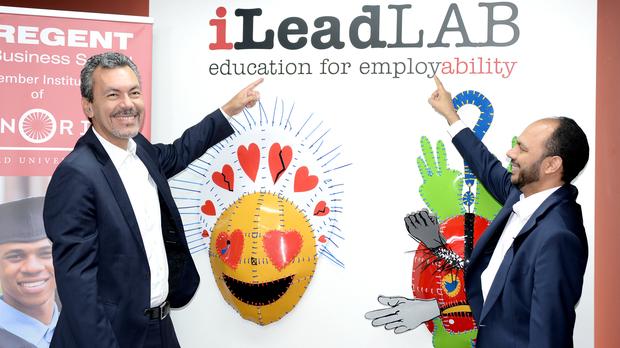
Regent Business School has announced the opening of iLeadLAB – a new ‘Employability Unit’.

This new initiative is aimed at empowering young people with core skills and competencies to creatively bridge the gap between education and the demands of the 21st century workplace. 
 
It is aimed at unemployed youth and aspiring entrepreneurs. According to the business school,  employability and enterprise are key elements of this mission and defines the commitment to diversity and inclusivity with regard to employability and entrepreneurship.
The iLeadLAB, the Employability Unit at Regent Business School, is the brainchild of the institute’s Managing Director, Dr Ahmed Shaikh. According to Shaikh, the iLeadLAB is a direct response to the accelerated pace of technological transformation and labour market disruption. 
 
“Gone are the days of copy-paste employment and training strategies. Global business requires dynamic, qualified individuals who are in sync with the demands of a rapidly-changing digital workforce. The new upskill is multi-skilling and our Employability Centre helps turn students into innovators and entrepreneurs to be reckoned with,” explained Shaikh.
 
Shaikh points out that corporates are increasingly looking for high-performance individuals who will pack a powerful punch within their internal business culture and external stakeholder-engagement environments. “With businesses around the world using more technology to simplify or amplify operations, the pressure is on for employees to evolve too.
 
A group of Regent Business School students have been selected for a pioneering 10-day bootcamp at the Employability Unit’s iLeadLAB. 
 
Besides being taught how to flex their critical and creative thinking muscles to thrive in dynamic world markets, the students were exposed to a wide variety of skills and experiences that included hands-on training in the art of successful communication, information literacy, global citizenship and exposure to 3D printing amongst other things. 

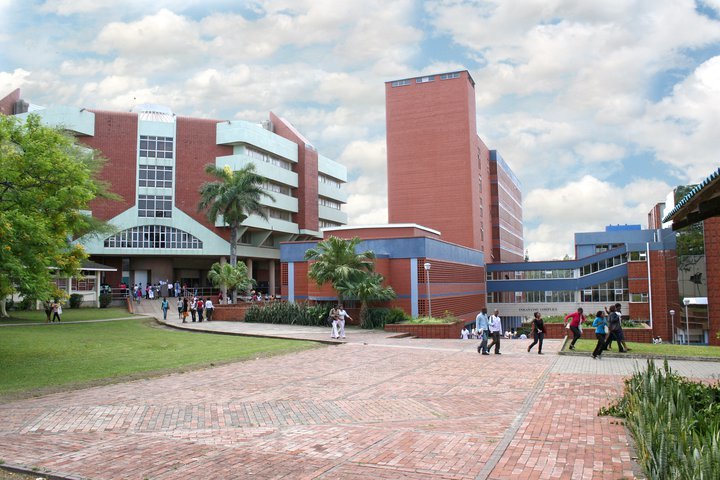
South Africa: University of Zululand SRC disbanded

Kailene Pillay

The Students’ Representative Council (SRC) at the University of Zululand was disbanded after members looted hotel rooms at the upmarket Gooderson Drakensberg Gardens and Resort last month.

The students booked 20 single rooms for a strategic planning workshop in November, but some were found in possession of duvets, pillows, kettles, crockery and other items on check-out.

University spokesperson Gcina Nhleko-Mdluli confirmed the university council took a resolution to dissolve the SRC, due to serious misconduct by 12 of the 15 students.

Nhleko-Mdluli said the students were deemed “not fit to stand office and to be student leaders”.

“An administrator will be appointed from the three SRC members who were not implicated in committing the misconduct,” she said.

The university will hold consultations with the appointed administrator and the announcement will be communicated to all students once the process is finalised, Nhleko-Mdluli said.

She said the university was prioritising the matter and appealed to all students to allow the process to follow its due course.

Gooderson Leisure chief executive Gavin Castleman said it would not press criminal charges against the students, as they had recovered all of the missing items.

“We are leaving it in the university’s hands now,” he said yesterday.

Castleman said the students checked into the resort on November 10 and stayed for three nights.

“When they were checking out on that Wednesday (November 14), the cleaning staff notified management that a large number of items were missing from most of their rooms.

“This is a common procedure that cleaning staff check the rooms before guests check out,” Castleman said.

He said on inspection, they found that duvets, pillows, cushions, kettles, cutlery and crockery were some of the items missing from the rooms.

Castleman said they were found in the students’ bus.

“We did decide not to press charges and we trust the university will take appropriate action,” he said.

Chairperson of the Parliament’s portfolio committee on Higher Education and Training urged the university and the hotel to use the law to correctively deal with the theft that took place.

Speaking during a committee meeting in Parliament yesterday, chairperson Connie September said it was disappointing when student leadership was involved in “stupid acts” that involved stealing and destruction.

“Strong leadership is required from the students. Students should not be associated with such acts, as they are future aspiring leaders.

“This is unnecessary attention that has been brought to the university, whose leadership and governance challenges still need resolution,” said September.