Home Blog Page 473

PICS: UKZN engineers turn Waste to Art

Staff Reporter 

One does not normally associate engineers with high fashion, but such was the case as sassy young UKZN engineering students sashayed down the catwalk during a unique fashion show as part of a cocktail evening themed ‘Waste to Art’, held at the KZNSA Art Gallery this week.

They were dressed in the most stylish and eco-friendly designs created out of recycled materials by final-year Durban University of Technology (DUT) fashion design colleagues.

To the rustle of plastic bags and the swish of hessian, the enthusiastic young models demonstrated just how stylish “trash” can be.

‘Waste to Art as a Means of Social Upliftment’ is the brainchild of Professor Cristina Trois, newly appointed South African Research Chair (SARChI) in Waste and Climate Change at UKZN.

Trois is passionate about the necessity of innovative waste management to mitigate against climate change and ensure a sustainable future for the planet.  “The event provided the opportunity to showcase local design talent and creative ideas to turn waste into a means of income generation,” said Trois, “as well as providing a networking platform for the many role players in the waste and climate change, and local and foreign government sectors.”

Other highlights of the evening included, a display of fashionable gowns made out of recycled materials by Grade 10 Maris Stella pupils who were inspired by the Vodacom Durban July 2018 theme “It is Time”; Angela Shaw of the KZNSA Art Gallery elaborating on the waste-inspired artwork made by local designers on show in the gallery; and Robin Opperman of the trendsetting Umcebo design house presenting a stunning mural of black manta rays made from plastic, bottles and wire.

‘Waste to Art’ was run in conjunction with the international training seminar and summer school on ‘Managing Waste as a Resource’, which is running from 26-30 November at UKZN under the aegis of the UKZN SARChI Chair in Waste and Climate Change, UKZN Extended Learning, the South African National Energy Development Institute (SANEDI) and the International Waste Working Group (IWWG).

Key focus areas of the summer school include waste as a problem and its impact on climate change, the environment and society; waste as a resource; waste characterisation techniques; integrated waste management systems and the management of industrial and organic waste; waste management models as a decision making tool for municipalities; waste management in developing countries; and lessons learnt from waste management projects.

The summer school in waste and climate change is aimed at practitioners, waste managers and regulators, professionals, companies in the waste sector as well as postgraduate students at tertiary education institutions.

Daily News

South Africa: Mobile libraries donated

Staff Reporter

The Kgato Primary School in Bloemfontein has received a donation of seven mobile libraries to help improve learning and teaching at the school.

The donation is with the courtesy of Novus Holdings in partnership with the New Africa Education Foundation (NAEF). Novus Holdings is a leading commercial printing and manufacturing company, while the NAEF is a non-profit organisation.

The libraries are part of the two donors’ community social investment programme. Through the libraries they are hoping to build a world where every child can fulfil their potential.

These libraries were officially handed over to the school on Tuesday, 20 November.

The donation at Kgato coincided with World Children’s Day on 20 November.

The libraries are fitted with wheels and can be wheeled from one classroom to another.

The donation of the libraries is part of the Read to Lead campaign, aimed at improving literacy levels across South Africa.

To date, this initiative has seen more than 27 mobile libraries donated to selected schools in KwaZulu-Natal, the Eastern Cape, Gauteng, the Western Cape and the Free State.

The libraries are a project by Future Foundations, a Novus Holdings CSI initiative. The Future Foundation’s mission is to transform communities by making a sustainable difference with a special focus on education.

“Reports show that learners who read for pleasure are on average one and a half grades ahead of their peers. We hope that these mobile libraries will inspire a love of reading in children, and thereby foster their potential,” said Carrie Nixon, corporate communications manager at Novus Holdings.

Nixon said research indicated that access to libraries improved learner performance and increased their chances of fulfilling their potential.

“Research done by the University of the Free State in 2014 on schools in rural areas proved that children from primary schools who had access to mobile libraries showed a vast improvement in their reading and speaking capabilities.

“In addition, it is widely believed that literacy is one of the indicators of prosperous nations,” said Nixon.

A study published in 2016, “The World’s Most Literate Nations”, ranks countries on their literate behaviors using various criteria, with one criteria being access to libraries. South Africa came in the position of 51,5, with the best ranking being 1 and the worst 61.

“Access to books is key in having a more literate nation. It is crucial that we promote reading in schools, especially as access to reading material is fundamental to improving literacy. The Read to Lead campaign will go a long way in bridging this gap,” said Ahmed Motala, chief executive at the NAEF.

Malawi: National Library Service drills teachers in library management

0

Andrew Mkonda

National Library Service says it is geared to complement government efforts of ensuring that pupils are able to read and write in their junior classes, by establishing libraries in primary schools.

Karonga Acting Branch Librarian, Peter Mbale said on Monday at the end of a training workshop aimed at equipping teachers and head teachers on how they can promote reading culture in pupils.

Mbale said it was pathetic to note that the reading culture in the country is dwindling saying if the problem is not taken care of, the country will have citizens with little information in future.

He called on teachers to be proactive in instilling the reading culture among the learners right away from primary level.

“Generally, the reading culture is going down, that is why we have come up with this initiative of establishing libraries in primary schools,” said Mbale.

Coordinating Primary Education Advisor in the district, Janet Chawinga said the initiative by National Library Service has come at the right time when government is working tirelessly to ensure that learners from standard one to four are able to read.

Chawinga said the establishment of libraries in primary schools will also go a long way in improving reading skills and performance among the learners.

National Library Service with support from Book AID International in United Kingdom has trained teachers to establish libraries in five primary schools in Karonga.

South Africa’s school governing bodies have the power to build inclusive schools

Phillip Louw

It is not surprising that the exclusionary admission policies and practices of certain public schools are considered discriminatory on the basis of race.

With the admission policy and practices of some schools in the media spotlight for the exclusionary effects they have on certain black learners, the governing bodies of public schools across the country would do well to proactively reflect on whether their admission policies and practices are, in fact, as inclusive, relevant and non-discriminatory as the law and good practise require them to be.

It is well-established in our law that governing bodies of public schools have significant powers to determine the admission policies of their respective schools. However, these powers are not absolute and must be exercised flexibly, in accordance with the South African Schools Act and any applicable provincial law, and ultimately in the best interests of all learners.

The Constitutional Court has confirmed in the Rivonia Primary School case that the powers of governing bodies to determine their respective school’s admission policies must “be understood within the broader constitutional scheme to make education progressively available and accessible to everyone, taking into consideration what is fair, practicable and enhances historical redress”.

When well-resourced and well-functioning public schools give admissions preference to, for instance, children of past learners, learners who live in wealthier suburbs and learners whose parents are able to pay school fees, they prevent their schools from becoming inclusive, transformative and diverse spaces and instead ensure that access to quality education is over a lengthy period reserved for the privileged few.

The same effects occur where these schools attempt to exclude learners from disadvantaged areas on the basis that these learners may feel “isolated and excluded” attending a public school away from the areas where they live or that they lack the home support necessary to excel at or participate in the activities offered by a well-functioning public school.

In turn, these policies and practices ultimately prevent quality education from becoming progressively available and accessible to every learner and they certainly do not enhance historical redress.

It is inevitable that the public focus will be on the exclusionary and discriminatory effects of these policies and practices in a situation which is exacerbated by an insufficient number of well-functioning public schools in disadvantaged areas. Under these circumstances, the encouraging of governing bodies of well-resourced and well-functioning public schools to expand within reason the capacity of those schools so as to allow more learners to access quality education is also understandable.

Given that privilege and disadvantage have a colour in our society, it is not surprising that the exclusionary admission policies and practices of certain public schools are considered discriminatory on the basis of race.

If we are to reverse the reality that learners’ socio-economic status far too often determines what quality of education they are likely to receive, we need the governing bodies of our public schools to proactively push for the regular review of their school policies (including their language and admissions policies) instead of waiting for something to go wrong before these reviews are conducted. We need these policy reviews to be informed by the views of school staff, learners and parents and we need them to ensure that the admissions policies and practices of all of our public schools are as inclusive as possible.

Policies are living documents that need to evolve with the changing needs of learners, school staff, parents and the broader school community. When developed and reviewed proactively, regularly and creatively in proper consultation with all relevant stakeholders, these policies will not only be relevant and responsive to the needs of our schools, but can really become powerful tools with which to build inclusive, transformative and diverse learning environments.

Dr Phillip Louw is Manager: Dictionary Content Development and Technical Systems, Oxford University Press SA. The nature and scope of the powers given in law to the governing bodies of our public schools is discussed in the comprehensive definitions and case studies included in the newly released Oxford South African Dictionary of School Terminology.

South Africa: Are there too many teachers in KZN?

Thami Magubane

The number of students training to be teachers at tertiary institutions in KwaZulu-Natal should be reduced because there is an “oversupply” in the province.

This is according to members of the provincial legislature, who have advised the education department to assess its needs and project how many teachers it will need over the next few years.

The MPLs suggested that the department should then negotiate with tertiary institutions to lower their intake numbers for students wanting to be teachers.

Chairperson of the finance portfolio committee Sipho Nkosi said: “A few years ago, we asked the former Education MEC Senzo Mchunu to ask institutions of higher learning in the province to increase student intake in education.

“We would advise the current MEC for Education, Mthandeni Dlungwana, to go back to the institutions and ask them to reduce the number of students, based on the department’s needs.”

He said they were concerned about the number of graduate teachers who were struggling to find jobs and were migrating to Gauteng.

Mchunu said when he had approached tertiary institutions, the province had been short of teachers.

“In my second year as MEC, I encountered a teacher shortage, especially in maths and science. We engaged institutions to say their intake was not helping us,” said Mchunu.

He said they had presented a plan of how many teachers the department would need over time and how tertiary institutions could assist.

Asked about whether the department would approach tertiary institutions, Dlungwana’s spokesperson, Kwazi Mthethwa, said the MEC had an open-door policy and would listen to the ideas coming from others.

Swaziland students sell themselves for sex because scholarships have not been paid

Staff Reporter

Students in Swaziland/Eswatini are selling themselves for sex to raise cash for food because the government has not paid their allowances.

A trade in young women has developed with businessmen ‘pimping’ students to affluent tourists from neighbouring South Africa, the Sunday edition of the Swazi Observer reported (5 November 2018).

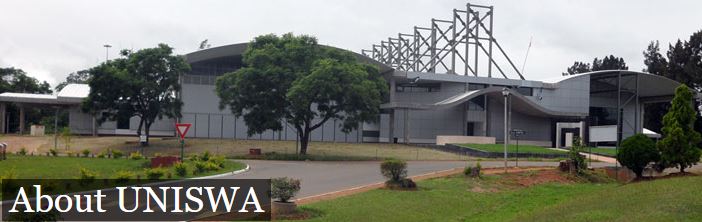
According to the newspaper the students are taken from the Kwaluseni campus of the University of Eswatini (formerly UNISWA), ‘for purposes of pimping them to affluent tourists flooding a popular hangout spot in Matsapha’.

The Observer reported, ‘These businessmen take advantage of the girls’ financial situation on campus and select “top of the grade” individuals for purposes of promoting their business into hosting upmarket guests. They also take advantage of the girl’s academic statuses to market them to guests who arrive solely for purposes of whetting their sexual appetites.’

The newspaper reported, ‘delayed payments of allowances which themselves are meagre force girl students into availing themselves for sexual favours in exchange for food, drinks and other goodies’.

It said the businessmen target the youngest first-year students.

It quoted one student saying, ‘They become virtual call girls.’ The student added the men spend fortunes on them and then demand sex.

There is an ongoing dispute between students and the government over the payment of scholarships and allowances that cover fees, living expenses and items such as books. In May 2017, the Swaziland National Union of Students (SNUS) launched a campaign for scholarships for all.

They want the Swazi Government to reverse a decision taken eight years ago to prioritise courses and cut scholarships by 60 percent. Students want all students admitted to higher learning institutions to have scholarships, regardless of the programme they are doing or the institution they are in.

Meanwhile, the outgoing President of SNUS Brian Sangweni told its 11th National General Congress that thousands of high school graduates with good grades remained idle at home because the government would not pay them scholarships to study.

He said, ‘Those who are lucky to make it and enrol into the institutions are also not off the hook of suffering due to lack of living allowances to enable them to live a healthy and dignified period of study and to realise their optimal potential.’

He added students were finding it hard to concentrate to their studies and some dropped out or committed suicide because of the pressure.

Lack of transformation in South Africa’s renewable energy sector

0

Thuletho Zwane 

Local and international investors, unions and black energy bodies all agree that renewable energy is critical for South Africa’s future power needs and that proper implementation of Renewable Energy programmes will lead to economic growth, jobs and empowerment. However, the major point of contention is how the transition from non-renewable energy to renewable energy should take form and who should be the primary beneficiaries of the transition.

In 2010, the Department of Energy (DoE), the National Treasury and the Development Bank of Southern Africa (DBSA) collaborated to set up the Independent Power Producer (IPP) office and designed the Renewable Energy Independent Power Producers Procurement Programme (REIPPPP). At the heart of the programme was the provision that Eskom, South Africa’s public  power utility, enter into Power Purchase Agreements (PPAs), ensuring that investors could forecast accurately their profits and bankability. Investors’ payment risk would be mitigated by government guarantee.

As a result of this structuring, the implementation of REIPPPP  has been successful. The programme has been lauded throughout the world as a unique model for delivering on a triple bottom line of economic, developmental and environmental benefits for the country.  REIPPPP attracted private sector commitments of R193-billion, including R53.2-billion in foreign investment in only four years after the first request for proposals (RFP) went to the market.

There were four rounds of bidding between August 2011 and April 2015 during which the Department of Energy (DoE) received 305 bids for 17.5 gigawatts (GW) of renewable energy.

The department selected 92 Independent Power Producers (IPPs) to produce 6.328 GW of renewable energy.

A DoE report titled The State of Renewable Energy in South Africa shows that the country’s most favourable renewable energy resource endowments are located in the most remote and poor areas where investment and employment are desperately needed. Most projects are located in the rural areas of the Northern, Eastern and Western Cape. These areas attracted investment commitments of R174bn of the country’s total. The report estimates that projects in the three areas will create an estimated 93 600 employment opportunities of a national total 107 347 of estimated job opportunities.  

The report also states these IPPs will also generate socio economic development (SED) contributions to local communities of R88.9-billion.

There has been no shortage of interest from investors in participating in the REIPP procurement programme. This can be seen from the oversubscribed, transparent and well-run process carried out by the IPP office. South Africa’s competitive tender process was designed to facilitate private sector investment into grid-connected renewable energy generation. As a result of this programme, South Africa has achieved more investment from IPPs in four years than in the rest of Sub-Saharan Africa over the past two decades.

In his study, The South African Renewable Energy IPP procurement Programme: Review, Lessons Learned & Proposals to Reduce Transaction Costs, UCT Professor Anton Eberhard writes that since 2011, prices have fallen sharply and the projects of selected bidders (or “preferred bidders”) are now amongst the lowest priced gridconnected renewable energy projects in the world with the average cost of supply being far below Eskom’s cost of its new coal power stations.

It is against this backdrop that in June, Energy Minister Jeff Radebe announced a new R56-bn round of renewable energy projects to be implemented by the private sector. He told a conference in Midrand that the new IPPs will be part of the country’s energy strategy to move to cleaner electricity generation. The new bid round of the Renewable Energy IPP programme was launched in November 2018, and it is estimated to be 1800MW, he said. He added that his department secured R56-Billion of investment into 27 new projects.

“These 27 projects are making a significant contribution to government’s commitments to meaningful black ownership participation and economic transformation,” said Radebe.

However, there has been some criticism of the current REIPP procurement programme most of which is centered around the lack of black participation and the full cost of transitioning from fossil fuels to renewables.

Black Energy Professional Association (BEPA), an NGO that is highly critical of the current REIPP procurement programme, was created to establish a unified voice to represent black interests; provide perspectives on transformation and empowerment; and develop skilled black professionals that can meaningfully participate in the energy sector.

In an interview with African Leader Magazine, BEPA Chairperson Meta Mhlarhi said REIPPP continued to exclude black professionals from full participation in the energy sector.

Mhlarhi said they were unhappy that the minister and the IPP office decided to open the new bid window in November because most of the issues raised by black actors in this industry have not yet been resolved.

“There are some structural barriers that must be dealt with. One of the key structural inequalities that still exists is access to capital and access to land. Because of these barriers, we find no black people or group that have led any development in the last ten years. And this is where the money is, in EPC [Engineering, Procurement, Construction].

“We want to participate in the entire value chain. The current REIPP procurement programme fosters an environment where black people can only participate as empowerment partners,” she said.

Mhlarhi also spoke of unfair competition and the volatile and depreciating exchange rate which has negatively affected local companies in the space.

“We are expected to compete with internationally backed IPPs such as Biotherm, Scatec Solar, Globeleq and Building Energy. Enel, the Italian utility, has been particularly prominent with equity holdings in 11 awarded projects since BW 3 [bid window 3]. How am I, as a black South African woman, expected to compete with an international Eskom equivalent,” said Mhlarhi.

Eberhard makes an interesting observation around the emergence of preferred local-foreign equity partnerships. Some of these partnerships include Pele partnering with Enel on four of the seven projects in which it has an equity holding; Aveng repeatedly partnering with Acciona Energy, a Spanish company, under the entity Blue Falcon Trading; and Intikon Energy partnering with SolarReserve, a US developer.

Mhlarhi said that these internationally backed companies have limited their ability to compete. She said what made this worse is the IPP office’s stringent RFP [request for proposal] and lender requirements that end up ‘forcing’ local developers to on-sell projects or partner with the multinationals, losing a lot of money in the process.

Herein lies the disconnect between announcements made by the energy minister and what is happening on the ground. Mhlarhi said the current packaging of REIPPPP removes the entrepreneurial spirit and makes it impossible for young people to participate.

She made a few recommendations that the government should consider so as to remove these structural barriers. Her recommendations include having an exclusive black bid round. Mhlarhi also suggested that the Industrial Development Corporation of South Africa (IDC), DBSA and the Public Investment Corporation (PIC) come up with a fund, backed by the National Treasury, for black industrialists and black business in the energy space. She added that the government can, through the department of rural development and land reform, tender out government-owned land where these projects can be developed.

Other criticism of REIPPPP comes from the unions.

We spoke to the National Union of Metalworkers of South Africa (Numsa) General Secretary, Irvin Jim,  who said Numsa has been calling for a just transition from fossil fuels to renewable energy.

Numsa has come under fire for supposedly being opposed to renewable energy and defending fossil fuels. Earlier this year, environmental activist organisation Greenpeace condemned Numsa for a court interdict preventing 27 contracts with renewable energy IPPs from being signed. At the time, Greenpeace said Numsa’s intention was to sabotage renewable energy in favour of coal.

However, Jim said Numsa is not against the move from coal to renewable energies. What they want is for this sector to represent the demographics of South Africa. The union wants this sector should be “a socially-owned renewable energy sector,” he said.

One of the main problems with the REIPP procurement programme is that there was not enough engagement with affected stakeholders, said Jim. Key stakeholders were excluded from this process and they want workers to believe them when they tell them it is for their benefit.

“They did not consult the unions who would be affected by the closure of power stations. They also did not consult the coal transporters who represent some of the business people whose existence is based on the work they provide to Eskom. And they did not consult the community of Mpumalanga about the closure of power stations; and about the benefits of IPP’s as well to detail the plans the state has in place to respond to the closure of power stations and its impact on the local economy,” said Jim.

Resistance of REIPPPP also came from Eskom. In April, Eskom begrudgingly signed the much-delayed 20- year guaranteed power purchase agreements  (PPAs) with the 27 IPPs.

Former Acting Eskom Group Chief Executive Masthela Koko asked if the cost of Eskom signing the PPAs for the 27 IPPs could be justified.  Koko said the impact on the average electricity price due to purchases from IPPs was not fully appreciated.

Eskom purchases a unit of electricity from the IPP’s at a cost of R2,22 cents and sells it for 85 cents, when it can produce it at around 42 cents, said Koko.

If consumers were to buy directly from IPPs today, the price they would pay would not be a blended price of 85 cents, but the expensive R2,22 cents today and R2,26 cents in 2023, compared to Eskom customers who pay between 42 cents and 85 cents for electricity.

Economic risk consultant and former MD at Econometrix Rob Jeffrey said IPP agreements should not have been signed given South Africa’s surplus supply of electricity and  the current low economic growth rate.

Jeffrey said the country did not need additional power from the IPPs and he called the decision to introduce REIPPP “economically and financially costly” and “damaging”.

“It is the weary consumer, the poor and the economy that will be the major losers,” said Jeffrey.

He added that the IPPs would not create thousands of jobs as per government projections but the jobs would be created only during the construction phase.

“Large-scale high penetration use of renewables would lead to a significant decline in the mining sector generally and the coal sector in particular. The coal sector could shrink by 46% given the direct, indirect and induced impact reduce the Gross Domestic Product (GDP) of South Africa by over 2.5%. This will result in a loss of at least 29000 jobs in the coal mining industry, and almost 162000 jobs in the economy. This will detrimentally affect more than 600000 dependents,” he said.

The move would also cut the country’s balance of payment. “Coal is the country’s largest export earning commodity, earning approximately R55- billion per annum. This would decline significantly as the sector becomes less efficient and South Africa becomes a less favoured mining destination,” said Jeffery.



South Africa: R56m Toyota manufacturing institute opens in KZN

0

Staff Reporter

Representatives from national, provincial and local government, academia and the business sector today welcomed the establishment of South Africa’s newest manufacturing institute.

The new institute is called the Toyota Wessels Institute for Manufacturing Studies (TWIMS).

TWIMS is situated in Kloof, KwaZulu-Natal and will welcome its first group of students in 2019. It has partnered with the Gordon Institute of Business Science (GIBS) which will deliver the academic programme.

A team of leading academics led by Professor Justin Barnes, the new TWIMS Executive Director has developed the manufacturing-focused curriculum.

“We believe that manufacturing holds the key to the long-term, sustainable development of the South African and African economy. Unfortunately, this sector’s contribution to our gross domestic product is in decline. We hope to address that by developing a new generation of world-class, business-minded manufacturing specialists,” says Professor Barnes.

The TWIMS campus was officially opened on 26 November.

In 2019, GIBS will offer a manufacturing focused master’s in business administration (MBA) and a post graduate diploma in business administration (PGDip) at TWIMS.

TWIMS will also facilitate and host a number of non-academic programmes, including executive development programmes, short certification courses, specialist conferences and thought leadership seminars.

Lastly, TWIMS aims to become the hub for manufacturing research in Africa. For this purpose, it is creating dedicated research fellows and is facilitating links with manufacturing research centres across the world.

Dr Johan van Zyl, President and CEO of Toyota Europe and a trustee of the Toyota SA Educational Trust further said, “The creation of a deep manufacturing culture has contributed to the development of Asian economies such as Japan, Thailand and Korea. I believe we need to start building a similarly deep culture of manufacturing – in its widest possible interpretation – in South Africa. The development of this culture can transform South African society”.

While Toyota is globally renowned for its world-class manufacturing practices, TWIMS will cast its net much wider than just the automotive sector. Students are recruited from the full range of manufacturing sectors and associated services.

Barnes said, “At TWIMS, we hope to showcase some of the best manufacturing solutions on the continent. Our research covers all sectors – from garment making to high-tech manufacturing – and all tiers of academic knowledge on the industry”.

World-class campus

The TWIMS campus is housed in the historic Crowhurst Manor. While the historic sections of the property have remained intact, TWIMS will add an auditorium, and will have classrooms with high-speed links to global academic partners and a modern technology “sandbox” that will allow for the testing of manufacturing concepts on site.

The campus also has a boutique hotel for visiting students and academics, and a coffee shop, exercise facility and library.

Not-for-profit structure

TWIMS was created with funding from the Toyota South Africa Educational Trust, which in turn received its seed funding from the Wessels family and Toyota Motor Corporation Japan.

It is incorporated as a Non-Profit Organisation (NPO), which means that any retained income will be used to fund deserving, but needy students from designated groups who would like to study at TWIMS.

With the creation of TWIMS, the Trust will contribute to each level of education. It underscores Toyota’s belief in the power of education as a pivotal investment in the success of other economic endeavours.

“We trust that our contribution to creating a sustainable and flourishing manufacturing culture in South Africa and on the continent will support the efforts of government and the private sector to develop our economy,” said Professor Jonathan Jansen, the Chair of the Toyota SA Educational Trust.

Ghana: Parents must be responsible for their ward’s education’

Benedicta Gyimaah Folley

The Ga West Municipal Director of Education, Samuel Narh Kudji has admonished parents to see themselves as major stakeholders in the education of their children.

“To build an inheritance for your child, you should see yourself as a major shareholder in your child’s education at all, because the time you allocate each day for your child is the valuable inheritance you are accumulating for his or her education,” he said.

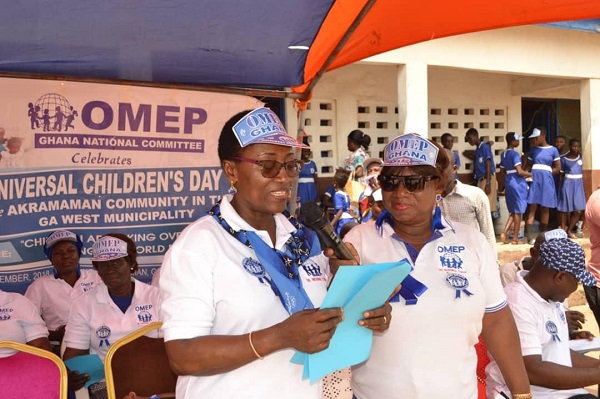
Mr Kudji was speaking at the Universal Children’s Day held at Akramaman in the Ga West Municipality of the Greater Accra Region.

It was under the auspices of OMEP Ghana, a non-governmental organisation focused on early childhood education and had the theme: “Children are taking over and turning the world blue.”

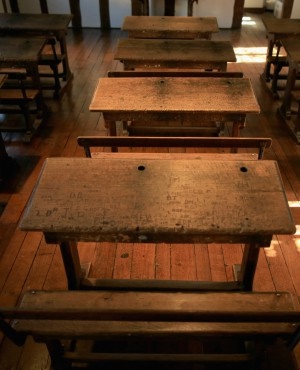
As part of the celebration, the foundation donated 50 dual-desks to the Akramaman Anglican Basic School.

Mr Kudji urged parents to contribute positively to their children’s academic performance to enable them have sound minds to excel at all levels of their education.

He appealed on parents to provide basic needs of children both at school and at home, adding that, parents’ provision of balanced diet for children was essential for their growth and development.

He commended the foundation for their support saying “the gesture is timely.”

Mrs Nyamikeh Kyiamah, president of OMEP Ghana, said that “we want to build a world where every child is in school, safe from harm, can fulfil their potential and encourage celebration by wearing blue clothing or accessories and share with the world during it celebration.”

Mrs Kyiamah advised children to learn hard to become useful citizens in the country explaining that the aim for celebrating the Day was to improve child welfare worldwide, promote children’s rights, togetherness and awareness amongst all children.

South Africa: KZN Education Department warns disruptive teachers

Sne Masuku

The Department of Education issued a stern warning to teachers who compromised education by disrupting teaching and learning at the province’s schools.

This followed strike action on Friday by teachers at Khulugqame Primary School in KwaDabeka. They had downed tools and protested against the re-instatement of the school’s principal who had been on suspension for allegedly misappropriating school funds.

The principal was suspended in July and returned to the school on Monday, which led to teachers refusing to teach.

A small group of angry parents who supported the striking teachers, yesterday said they were not informed of the department’s findings in its investigation, and wanted to know why the principal had returned.

An acting official from the department was placed at the school in July to perform the principal’s duties until she returned on Monday.

The parents who had gathered outside the school, and who did not want to be named, said they were informed when the principal was suspended, but were not made aware of the findings of the investigation or the reasons why she had returned.

Pupils were locked outside the school’s main entrance and the teachers sat in their vehicles outside the school gate yesterday.

A graduation ceremony for the Grade R pupils, which had been scheduled to take place at 10am, was cancelled.

The parents said they were told someone had changed the gate lock overnight and there wasn’t a key to open the gate.

Parents demanded a meeting with the department official to address them about the principal’s return, and also threatened to stone the teachers’ cars to get the department’s attention.

One parent said they supported the teachers because they also did not want the principal back at the school, but they were also worried about their children being locked out.

“We want a new principal. If teachers are refusing to teach what is going to happen to our children? No classes have taken place for the past two days. Teachers must have valid reasons why they wanted the principal gone. We support the teachers because there was no communication about the principal’s return,” said the parent.

Kwazi Mthethwa, the department spokesperson, warned that schools would not be held to ransom by any group.

Mthethwa said the teachers and parents should respect the department’s decisions.

He could not comment on the matter against the principal or about the reasons she was reinstated.

“Those blocking the school processes of teaching and learning are warned to desist. Instead, they should engage in peaceful ways of doing things. We call upon all education stakeholders to come together and map the way forward,” said Mthethwa.

Attempting to calm the angry parents, the school principal said the situation “was out of her control” and that the keys to the school were missing.

“I don’t know who changed the locks. I have been reinstated by the department, and you should raise your concerns with the department,” she said.

South African Democratic Teachers Union (Sadtu) officials were at the school yesterday, but refused to speak to the Daily News as they were not authorised to do so.

Nomarashiya Caluza, Sadtu’s provincial secretary, had not commented by the time of publication.