Home Blog Page 475

Zimbabwe president launches e-learning kits

Farirai Machivenyika

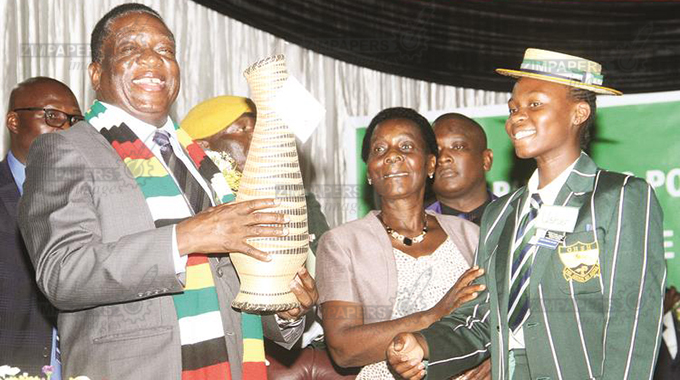
President Mnangagwa yesterday launched smart e-learning kits and exercise books at Girls High School in Harare, as part of efforts to modernise the education sector, pursuant to the achievement of Vision 2030.

The launch was a result of collaboration between the Ministry of Primary and Secondary Education; the Ministry of Women Affairs, Community, Small and Medium Enterprise Development and the private sector.

The 10 e-learning kits that were launched were donated by Devtech and a Rwandan organisation.

Each kit includes 40 tablets and an overhead projector. The kits will be distributed to one school in each of the country’s 10 provinces.

The exercise books that were launched are a new initiative to raise awareness on various social issues that include health, gender climate and environment, among others, by including such messages on the exercise books’ covers.

President Mnangagwa said the achievement of quality and inclusive education relied on the provision of teaching and learning resources.

“The smart e-learning kits and exercise books we are launching today will indeed be useful in building a knowledge base for learners, which is integral in the modern and fast-changing world of today, as well as critical to the achievement of vision 2030,” he said.

“These materials must be adaptable to our situation and touch on science, technology, ICTs, health, environment, gender, HIV and AIDS, among others.”

The President said investment in education was key to poverty reduction and production of a skilled human resources base.

“Furthermore, the modernisation and industrialisation agenda, coupled with the need to enhance productivity, entrepreneurship and wealth creation, all require an effective and responsive education system,” he said.

“Our education system must, therefore, inculcate the appropriate fundamentals to learners so that they think broadly and creatively from a young age.”

President Mnangagwa said Government was open to partner private players to improve the education sector.

“It is upon this background that my Government is opening up platforms for companies to partner and promote matters related to science, entrepreneurship, child welfare, gender equality, public health, environmental care and financial literacy, among others,” he said.

“In the same vein, administrators in our primary and secondary education system must undertake programmes and activities that purposely encourage scientific thinking, problem solving, innovation and inventions amongst our young learners.

“One of the key pillars of the competency-based curriculum is research and development, which requires extensive electronic equipment, as well as ICT infrastructure such as internet connectivity, to access critical information from the global village.

“I, therefore, invite more partners to invest in the provision of robust solutions to our education system.”

President Mnangagwa said the competence based curriculum should equip learners with scientific, vocational and technical skills to contribute to the socio-economic transformation of the country.

“This reorientaion, however, demands adequate and appropriate resource provision, especially in areas of contemporary teaching and learning materials,” he said.

“I urge teachers to play their part in improving the standard, quality and relevance of our education system.”

President Mnangagwa urged students to take advantage of the e-learning platforms that would be established at their schools.

“I encourage all learners to take advantage of e-learning platforms established at their primary and secondary schools to equip themselves with knowledge and skills that prepare them for higher and tertiary education,” he said.

“Our future and the prosperity of our nation depends on the ability of our young people to adapt to the ever-changing and evolving global trends.”

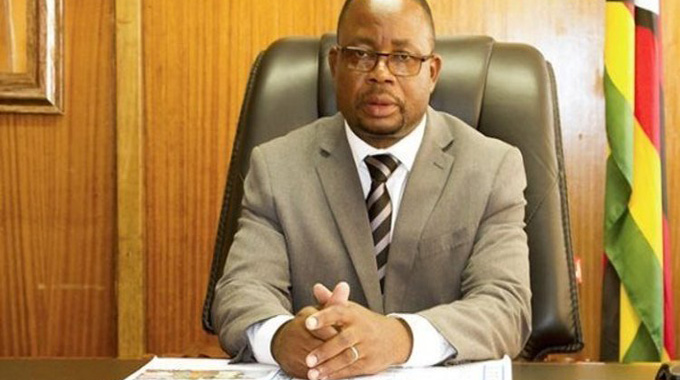
Speaking at the same occasion, Primary and Secondary Education Minister Paul Mavima said education was critical in the achievement of Government’s vision.

“Education is the most important sector to achieving the vision of an upper middle income society by 2030,” he said. “We have to empower our learners with skills that would make them competitive in the 21st century,” he said.
South Africa: R51bn in irregular expenditure could fund free education

0

Simnikiwe Hlatshaneni

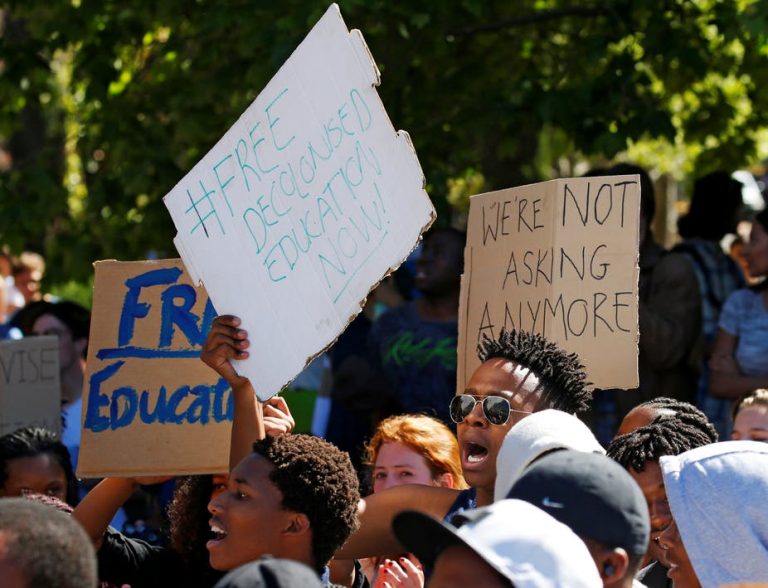
The irregular expenditure incurred by government in the last financial year, could have funded the phasing in of free education over the next few years, according to a researcher.

Auditor-General Kimi Makwetu yesterday revealed a massive R51 billion in irregular expenditure in his audit results for the 2017-18 financial year. This excluded R28.4 billion in non-compliant spending by state-owned entities Transnet and Eskom.

“If you look at it from the outside, you will realise what is required to fund free education for the poor was a drop in the ocean; it is absolutely nothing,” said Mukovhe Masutha of the The Centre for Emerging Researchers.

“For this year, we estimated the cost of funding the phasing in of free education for first year tertiary students to be about R7.3 billion. For the next three years, it would cost about R40 billion.”

The provision of free education for first years could have been covered for nearly seven years, going by the above figures, says Masutha.

A total of R35 billion is the exact amount of money owed to the National Student Financial Aid Scheme in historical student debt, according to the agency.

Masutha said government did not have a financial, but a governance crisis as the money required for such initiatives as free tertiary education was used to fund mismanagement and corruption.

“The annual pile of wasteful expenditure, as revealed by the auditor-general, illuminates the bogus logic that informed the anti-free higher education brigade,” Masutha said.

“The medium- to long-term benefits of extending fully subsidised free higher education for the poor and the working class are there for everyone to see. Not only does it increase the base of our economically active population, but it also reduces the country’s social welfare monstrosity.”

According to Makwetu, unauthorised expenditure rose by 38% to R2.1 billion, while fruitless and wasteful expenditure was up more than 200% to R2.5 billion.

The auditor-general, however, sent out a warning to government entities that the enactment of the Public Audit Amendment Bill would give him more powers, and non-compliant officials would face punitive measures.

This week, the Act was gazetted after President Cyril Ramaphosa signed it into law. It gives the office powers to recover money lost through irregular expenditure from accounting officers – including directors general, municipal managers and the boards of state-owned companies.

The standing committee on the auditor-general has urged Makwetu’s office to move with speed towards completing the development of regulations.

South Africa’s finance minister blames former president for VAT hike

Gaye Davis

Finance Minister Tito Mboweni has singled out former President Jacob Zuma’s sudden introduction of fee-free higher education as one of the main reasons for the decision to increase Value Added Tax (VAT).

Zuma made the announcement just ahead of the African National Congress (ANC)’s elective conference in December last year.

Mboweni was replying to debate on a tax bill that gives effect to the rise from 14 to 15% in VAT which kicked in earlier this year.

The ANC was forced to back the bill in the face of stinging criticism from opposition parties.

They blamed the ruling party for mismanaging the economy and for allowing state capture to siphon billions from the fiscus, while the South African Revenue Service suffered under the leadership of former commissioner Tom Moyane.

Mboweni gave MPs a basic economics lesson: if you want to spend on big-ticket items, you need the money to pay for them.

“There have been some major adjustments to the expenditure side of the budget which need to be financed – in particular, the free higher education. So, when you introduce such a large expenditure item, you have to find the revenue to fund that.

“If you don’t understand that inter-relationship, then we’re in a difficult conversation, where you might argue that you want less taxation, but you want higher expenditure. The two don’t go together.”

Having to find the money to fund fee-free higher education came as the economy remained mired in low growth and government debt ballooned, along with increasing demands on the public purse.

A seemingly subdued Mboweni – absent recently from question-time and some key debates – told the House the VAT hike’s effectiveness would be reviewed in three years’ time, with a report-back due by June 2021.

South Africa: Grade 1 pupil stabbed to death inside North West school toilet

ANA Reporter

A Grade 1 pupil was stabbed to death inside a school toilet in Makapanstad, North West on Wednesday, the department of basic education said.

“A Grade 1 pupil was stabbed multiple times, allegedly by a Grade 11 pupil from another school, Mankala Technical High School, who had been hiding in the primary schools toilet,” said spokesperson Elijah Mhlanga.

“It is alleged that the suspect apparently slept in the toilet overnight without anyone knowing he was there. The deceased was one of the first to go to the toilet in the morning and the Grade 11 pupil allegedly repeatedly stabbed him. He was rushed to the local clinic where he was sadly certified dead.”

He said the principal of the school managed to apprehend the alleged perpetrator and handed him over to the police.

“It appears the suspect knew the deceased, and it is alleged that he was in a romantic relationship with the Grade 1 learner’s older sister who also attends Mankala Technical High School with the suspect. It is believed the couple may have had a fallout and the alleged perpetrator targeted the younger brother. However police will conduct a full investigation around the circumstance of this horrific murder,”  he said.

The incident occurred at Dikeledi Makapan Primary School, in Makapanstad.

North West Education member of the executive council (MEC) Sello Lehari, was expected to visit the school on Thursday.

In September this year, Maths teacher Gadimang Mokolobate, 24, was stabbed to death allegedly by a 17-year-old pupil in a classroom at Ramotshere Moiloa High School in Dinokana near Zeerust in North West.

Basic Education Minister Angie Motshekga sent her deepest condolences to the family of the pupil.

“Words cannot begin to comprehend the heartache caused by this tragic incident,”  she said.

African News Agency (ANA) 

Zimbabwe: $1,5m education resource centre for Kwekwe

Michael Magoronga

Kwekwe is set to have a state-of-the-art Better Schools Programme Zimbabwe (BSPZ) education resource centre, with construction expected to commence early next year.

The resource centre, which will cost about $1,5 million, is set to house the district education offices, a computer resource centre, a hall, board room for meetings, among other facilities.

The Ministry of Primary and Secondary Education is renting a house that has been subdivided into makeshift offices for education inspectors, hindering the smooth delivery of services.

In a speech read on his behalf by his Permanent Secretary Mrs Tumisang Thabela during the ground breaking ceremony in Kwekwe on Saturday, Primary and Secondary Education Minister Professor Paul Mavima said the construction was in line with the requirements of the new education curriculum and the 21st century educational requirements.

“The centre is in line with the new education curriculum requirements as well as pedagogies of the 21st century,” she said.

“The BSPZ centre is expected to drive programmes that can make up better, offer computer skills for both teachers and learners in line with the education curriculum.”

Ms Thabela said the recently educational curriculum required competent staff and up to date facilities, adding that education should play its role in the vision 2030.

“We have rolled over from our content based to a competency based curriculum in an attempt to address the relevance of the education product we offer to our learners,” she said. “Education sector should also play its role in the quest to achieve the vision 2030 as initiated by President Emmerson Mnangagwa.

“Infrastructure development is a key component in the socio-economic development of the country just like education is a key component in achieving the vision.”

Kwekwe District schools inspector Mr Bernard Mazambani said the project was part of their 100-day projects in line with the Second Republic.

“Our district has been housed at different structures with different consequences there,” he said.

“We, therefore, took advantage of the Second Republic who introduced quick wins and we came up with our own quick win project in the form of the resource centre.”

Mr Mazambani said every pupil in the district will contribute a dollar every term towards the construction of the centre. Kwekwe District has 137 primary and 55 secondary schools with a total enrolment of 99 398.

The Zimbabwe National Army (ZNA) has pledged to assist in the construction of the facility.

Commander 5 Infantry Brigade, Brigadier General Simo Maseko said the organisation supported the notion of empowerment through education.

“We are profoundly humbled to be associated with the development of education which opens the minds of our citizens, allowing them to think widely and deeply,” he said in a speech read on his behalf by his deputy, Colonel Paul Ngadze.

Swaziland: Students want out of Taiwan

Sabelo Majola

A dream opportunity for students to study in Taiwan has turned into a living nightmare.

Instead of attending to studies most of the time, they are forced to work long hours, and in very difficult conditions. They are made to work in a cold chicken factory, which is under 10 degrees Celsius most of the time.

“It is really depressing for them, and many, if not all of them, regret taking this opportunity and want to come back home,” said a student who asked not to be named.

Over 40 Emaswati left the country in September in the hope that they would realise their ambition of studying abroad. Now they are forced to work long hours in a chicken factory and other shady places.

These students are enrolled at a private tertiary institution called MingDao University in Taiwan where they are pursuing a course in Bachelor of Business Administration (BBA) Degree in Pitou Township where the university is located.

According to several sources who are based in Taiwan, and familiar with the situation, these students are forced to work in the chicken factory where they are made to peel chickens under freezing temperatures to pay for their tuition fees and accommodation at the university.

They work for 40 hours in a week, which is ten hours per day. The conditions are so unfavourable that two of the students are reportedly back in the country after failing to keep up with the situation.

Information gathered is that the students have only two days of class per week which is one full day and a half day and they work for five days.

“The institution is making a profit out of the students because they get only two per cent of their earnings and the rest is forfeited for tuition fees and accommodation but the forfeited sum is way more than the fees of the two.

“This is a case of slavery and the students all want to come back home due to the unfavorable conditions they are exposed to in Taiwan,” revealed a source.

One Liswati who is also a student in Taiwan, confirmed to this newspaper the situation emaSwati are undergoing, revealing that one male student was recently taken ill as a result of depression.

The student, who is on government scholarship, stated that she got wind of this situation from one of the 40 in MingDao who opened up to a group of other students in Taipei and was reduced to tears.

“He said he couldn’t cope with the conditions, and wants to go back home, or a change of universities,” she said.

“Right now it is winter, so it really is depressing for them,” said the student referring to the cold weather conditions these students have to work under.

She told this newspaper that as far as she is aware, the students in MingDao are desperate to leave that place.

She likened this situation to slavery, as the students cannot just leave, as the university will punish those remaining behind.

“If you run away, the ones left behind will be made to suffer,” said the source.

To make matters worse, the students are also made to hustle for food as the institution doesn’t cover for that but they are only given one meal per day during work.

“It really is hard for them. if a male student was close to tears talking of their situation, you can only imagine how hard it is for a female,” said our source.

Students have to pack large number of chickens a day, because the factory supplies frozen chickens.

The local students were lured through an advert that was published in the print media.

The “Work/Study Programme” in MingDao University ‘offered’ a limited number of candidates scholarship.

The advert was advertised to be exclusively designed to give each candidate hands-on practical and work experience in the work environment while completing a four-year Bachelor of Business Administration (BBA) course at the very same time. It stated that each candidate would be earning a monthly salary which would cover their tuition fees, accommodation, insurance, miscellaneous fees and will still have roughly E3 000 remaining per month.

This situation emaSwati find themselves in is similar to a case reported recently at the University of Kang Ning in Taiwan that was eventually reprimanded by the ministry of education in that country for allowing over 40 of its Sri Lankan students to work in slaughterhouses in Taipei and Tainan, as reported by the China Times.

The students were allegedly promised huge sums of money for working in the slaughterhouses but they only got about 25 per cent of the money as monthly earnings.

When sought for comment via Whatsapp as his phone was not available on the network, Embassy of the Republic of China (Taiwan) in the Kingdom of Eswatini second secretary David  Taiwei Lin said he couldn’t comment on the matter as he was currently out of the country.

Swazi Observer

South Africa: More and more sexual abuse cases reported at KZN schools

Thami Magubane

The KwaZulu-Natal education department has revealed that cases of pupils being sexually and physical abused by teachers are on the rise.

It also revealed that the number of teachers being attacked or verbally abused at schools was increasing.

In a parliamentary response to the DA, it said 20 sexual assault cases and 30 physical assault cases had been recorded in the province in 2016/17.

In the last financial year, 33 sexual assault and 22 physical assault cases were recorded. About 231 pupils had been referred for counselling.

“One case of sexual or physical abuse of a pupil by a teacher is one too many. This information points directly to our young people being failed on so many levels,” said DA spokesperson on education, Rishigen Viranna.

He said schools should be a place of learning and safety, but it appeared that criminality was endemic.

“We also acknowledge that many teachers have the best interests of pupils at heart, and it is extremely alarming to hear of such cases (of teacher abuse).”

Viranna said the department should deal with security issues by filling security guard vacancies.

He also said that a teacher sex offenders’ list should be created so that schools and provincial departments could vet teachers to avoid sex pests moving from one province to another.

The department said in the parliamentary response that the National School Safety framework was in place.

It said about 73300 pupils had been addressed on issues of safety and bullying, and about 1199 teachers had been trained on the guidelines for the management of child abuse, neglect and exploitation for public schools in the province.

With regard to teachers being abused, in total 16 teachers reported abuse, with the most reports coming from uMkhanyakude area, with six, followed by four in uThukela district.

Education spokesperson Muzi Mahlambi said they were concerned about the violence and bad behaviour and needed the help of communities to deal with it, saying that incidents playing out in schools were a reflection of social ills.

“We have reached a point where abnormal things have been normalised; there is no sense of shame any more,” he said.

Khethelo Goba, the provincial secretary of the Congress of South African Students, said the Education Department should increase the number of security guards at schools from one to three. And that parents should take the lead in protecting their children.

Themba Ndhlovu, of the SA Council of Educators, said they were concerned about the increase in attacks on teachers.

“This is about a lack of respect. Children do not fear anyone. Parents need to play their role, as primary education and discipline takes place at home.”

The Mercury


Zimbabwe: Brace for 300% school uniform price hikes says minister

Leopold Munhende

Zimbabweans should brace for a massive 300 percent price hike on school uniforms next year, industry minister Mangaliso Ndlovu has warned.

The minister was speaking on Monday at a government-hosted Indaba on prices with business leaders in Harare.

Ndlovu said a business executive confided in him that there would be massive price hikes in the new year if a solution is not found to the current economic challenges.

” … this last proposal was inspired by a conversation that I had with someone from the textile sector,” said the minister.

“They told me that we should expect school uniforms to rise by no less than 300 percent next year.

“They said that, as manufactures, they had not increased prices but from dispatch up to the last person who buys the product, prices were rising exponentially,” said the minister.

The Indaba was attended by representatives of the Consumer Council of Zimbabwe (CCZ), Confederation of Zimbabwe Industries (CZI) and the Grain Millers Association of Zimbabwe (GMAZ) amongst many other business associations.

Zimbabwe experienced hikes in prices of goods and services coupled with a shortage of basic commodities in recent weeks.

This was after Finance Minister Mthuli Ncube and his Reserve Bank of Zimbabwe Governor John Mangudya’s announced new Fiscal and Monetary regimes in September.

Ndlovu told industry leaders that although government will not introduce price controls, it was up to them to ensure that retailers stick to gazetted prices.

“The national competition commission is implored to interrogate the cost build-up from manufacturer through to retailer and following up the value chain.

“They are also assigned to recommend pricing models for each sector,” added Ndlovu.

The Indaba follows another meeting between president Emmerson Mnangagwa and captains of industry at State House recently.

New Zimbabwe

South Africa: Parents feel the pinch with school fees rising by 8%

0

Athina May

Above inflation school-fee increases for next year will see many parents struggling to pay and relying on the state to meet the shortfall.

Tough economic times are seeing schools raising fees by up to 8% because of non-paying parents.

Schools such as Harold Cressy High received less than 50% on school fee returns this year due to subsidised pupils and are still struggling to recuperate fees from parents, who may face debt collectors before the festive season begins.

Harold Cressy principal Khalied Isaacs said that at their school under 50% of pupils were paying fees and the rest of their pupils paid partial fees or were subsidised, yet the school still struggled to recuperate fees from paying parents.

“Our biggest challenge is getting parents to come in and talk to us and make arrangements. We want to step up with regards to that because we end up with a situation where parents don’t pay all year and don’t answer calls, that’s the parents we end up having to hand over to debt collectors.”

Gardens Commercial High principal Dylan Tommy said they had a shortfall in the collection of fees.

“Last year close to 60 (pupils) got subsidised and we should’ve got R500000 from those parents (in fees), but we got R60000 (by the department) to make up for the half million. At least it’s something some other schools got nothing.

“This year we’ll have a 5% increase and we’ll try to assist parents as far as possible.

“Some are paying double for this year’s fees and next year. Some Grade 12’s leave the school and their parents go on paying.”

Bergvliet High School principal Stephen Price said fees would be pushed up by 7.98% to approximately R31900 a year, to make up for the shortfall in funds to run the school, as money supplied by the department was often not enough to cover school expenses for the year.

Price said the Western Cape Education Department (WCED) paid the school approximately R150000 to operate, apart from teachers salaries, which could cover expenses for up to three months, which was why the school developed innovative solutions, such as fund-raising, to bring in additional income.

Human Sciences Research Council (HSRC) Education specialist Dr Andrea Juan said schools were in a difficult situation because they had to balance education with who could afford it, leaving principals to become fund-raisers, which increases their job load.

“Raising school fees is essential for schools to maintain standards,” she said. “Principals come up with innovative ways because they can’t rely on government as the money is not enough.

“The new way of running schools places a lot on principals who have a completely different role as fund-raisers.

“Policy is not explicit on raising funds, but the burden is there and principals operate as the standard bearer of maintaining excellence.” Education MEC Debbie Schäfer said tough economic times were leading to a growing number of parents who could not pay fees, putting strain on fee collection for daily running costs.

However, the WCED is trying to step in by compensating 97% of fee-paying schools. Schäfer warned that parents who were able to pay fees and refused to do so could see legal action being taken against them by schools.

South African teenager goes on dream trial with English champions Manchester City

Mark Gleeson

Promising South African youth international goalkeeper Constandino ‘Costi’ Christodoulou has gone on a dream trial with English champions Manchester City and could be in line to become the country’s next export to the Premier League.

The 16-year-old Hilton College pupil‚ who trains with Maritzburg United‚ is the captain of South Africa’s under-17 team and played for them in the Cosafa Championship in Mauritius in July‚ where the side narrowly missed out on a place at the African U-17 Championship in Tanzania.

Christodolou is the youngest player to have competed in the MultiChoice Diski Challenge league and is highly rated by Maritzburg coach Fadlu Davids‚

The teenager flew to Britain at the weekend‚ took in the derby clash between Manchester City and Manchester United on Sunday and on Monday began his trial at the club.

City have flown him over for an extended two-week period‚ and completed all the legal documentation required by the Premier League for him to trial with them at their Academy‚ which is a strong signal of their intent.

The English champions have been tracking the player since he first made his debut for Amajimbos when he was just 15 years-old.

Christodoulou has been training at Maritzburg over the last two years.

The club pick him up from school‚ where he is boarding‚ on a daily basis.

Because he averages a pass mark of some 90 percent for his subjects‚ Hilton have allowed him to train in the mornings and catch up with school work later.