Home Blog Page 479

African women access university using smartphones

The world’s battle to provide education for all rages on and now technology companies are joining the fray, helping thousands of young women in underdeveloped countries achieve what had, until recently, been deemed almost impossible: the chance to attend university.

As part of the 2030 Agenda for Sustainable Development, a plan has been set in motion to ensure that all children are receiving a quality education by 2030 in what has come to be known as Goal 4.

This agreement was only signed in 2015 and there is still much work to be done. There are currently an estimated 263M children and teens out of school and even more than that without access to quality or full time education.

Sub-Saharan Africa remains one of the worst areas affected, according to UNESCO – roughly 21% of primary aged children are not in school, with that percentage increasing to 34% of lower secondary and 58% of upper secondary aged children. The Democratic Republic of Congo (DRC) remains one of the worst countries affected and is particularly challenging for girls. Thanks to the political unrest, poverty and gender bias that wracks the country, just 36% of girls reach secondary education, dropping to a meagre 4% at university level. When compared to the 37.1% in the UK or the 56% in the US, the contrast becomes even more stark.

Finding ways to achieve Goal 4 will not be easy, especially when considering the barriers to learning faced by these countries – access to learning materials and the cost of providing them being the most pressing.

But several of the world’s largest technology companies have pledged to help make this goal a reality by providing innovative ways for the children in need to access quality education.

One such company is Vodafone, whose Instant Schools program provides an online platform of educational resources in DRC, Ghana, Lesotho, Tanzania, Mozambique and South Africa.

This platform is free for anyone with access to the Vodafone network, which does not charge for the content or data used but instead provides an online learning platform for those struggling to attend school. The material is available in several local languages to both students and teachers and contains both global and local content, allowing users to tailor the teaching to their specific needs.
Forbes

Zimbabwe: Gay association launches scholarships for LGBTI students

0

Tonderayi Mukeredzi

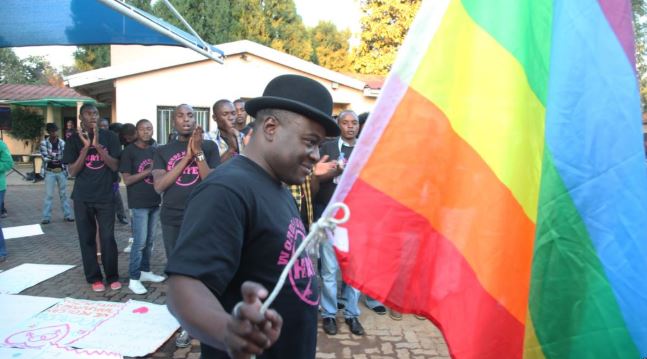
Gays and Lesbians of Zimbabwe (GALZ), the association of lesbian, gay, bisexual, transgender and intersex (LGBTI) people, has announced a scholarship programme for gay students pursuing studies at state universities.

GALZ director Chester Samba said the Munhu!Munhu Scholarship programme will provide funding to LGBTI students between the ages of 18 and 35 to pursue a university degree in democracy, governance, justice, human rights and conflict resolution studies, as a strategy to improve the inclusion of marginalised groups in higher education.

Under the scholarship programme, gay students who are facing challenges with school fees and those who have dropped out of college because of their sexual orientation or gender identity and would like to continue with their studies, will be assisted with full tuition fees, stationery, accommodation and mentorship.

“This has also been prompted in part by the economic challenges the country is going through. So, we thought it would be good to help students who are already learning around issues of governance, public health and human rights,” Samba said.

“It is our desire that when the students complete their studies they can also plough back into the organisation with their skills and give us some useful resource – but that’s not a condition.”

GALZ will sponsor at least 10 students, starting in 2019, who are already enrolled at state universities and have successfully completed their first year.

Violations of rights

Samba said that over the years, GALZ has documented several violations of LBGTI students’ rights in higher education institutions.

“The environment has not been conducive enough for students to be able to express themselves, come out or identify themselves. In instances where this has happened, it has led to serious consequences such as harassment by other students, making the learning environment very difficult,” he said.

Samba said the association has initiated a study to investigate the climate for LGBTI students in higher education institutions, and will be guided by the study to gauge the extent the environment was unconducive for learners.

Although GALZ claimed it has helped over 100 college dropouts finish their tertiary education in the past, the scholarship programme is likely to stir controversy in a largely conservative country known for being homophobic. Deposed former president Robert Mugabe once described homosexuals as “worse than dogs and pigs”.

In the past two weeks, Minister of Higher Education, Science and Technology Development, Professor Amon Murwira, described the study by GALZ on universities’ campus climate, as illegal and against the constitution.

Misconceptions 

There is a common misconception, however, that homosexuality is illegal in Zimbabwe. What is a criminal offence is same-sex marriages, contact and sex.

Tonderai Bhatasara, a lawyer and partner at law firm Mupanga Bhatasara Attorneys, said the constitution prohibited same sex-marriages and not homosexuality per se.

“The constitution bans same-sex marriage but that is not the law that is operational: the Criminal Law Codification Act is the one that makes it an offence for adult men to have even consensual sex or contact,” he said. “The constitution gives the basic broad principles, then subsidiary legislation fills the gaps, in this case, the Criminal Law Codification Act. People are still being prosecuted or being convicted for same-sex marriages or acts and not for sexual preference.”

Legally, GALZ operates as a universitas – which at law is described as a juristic person. In 2014, Bhatasara successfully defended GALZ in a case where the association was being accused of operating without registration as required by the Private and Voluntary Organisations (PVO) Act.

He explained: “It was just a tactic by government to try and close them down. Police stormed their offices, seized all their property, and then charged them for practising without being registered in terms of the PVO Act.”

Samba, whose organisation serves about 5,000 LGBTI people annually, said the environment for gay people had improved under the new government, as the association was now working with government and in dialogue with the ruling oligarchy, which was unthinkable in the past. There is however still very little understanding, and low awareness about LGBTI issues owing to the conservativeness of society, he said.

University World News

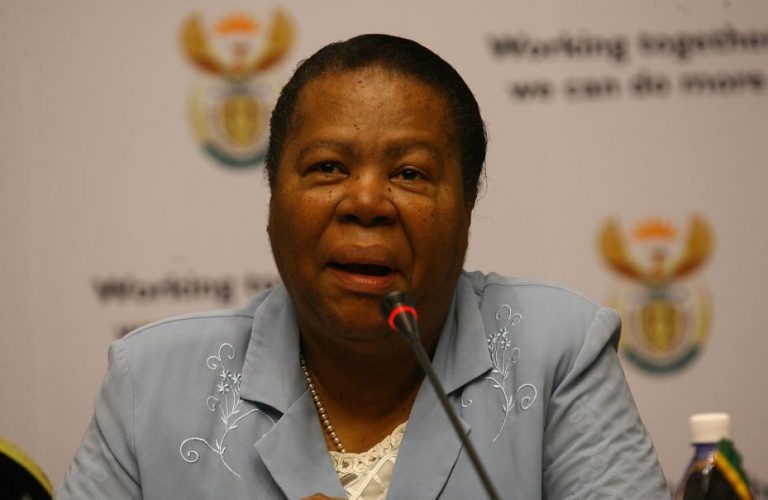
Naledi Pandor convenes a colloquium on transformation in Higher Education

Staff Reporter

Higher Education and Training Minister, Naledi Pandor, will on Monday convene a one-day colloquium on advancing transformation in higher education.

The conversation is set to take place on 05 November 2018 at Emperor’s Palace in Kempton Park, Johannesburg.

It will be attended by various stakeholders, including the Ministry; Departmental officials; representatives of University South Africa, the Council on Higher Education; the South African Union of Students, the Transformation Study Group; the Transformation Managers Forum; the Higher Education Transformation Network; the Commission for Gender Equality, and the South African Human Rights Commission and others.

The aim of this colloquium is to examine the concept of transformation and assess its varied application in the higher education system in South Africa.

More importantly, the colloquium will seek to identify and escalate the successful examples of transformation as well as develop strategies to fast-track transformation in higher education.

The colloquium will focus on are the themes of: institutional culture; governance, management and leadership; monitoring and evaluation (barometers); architectures (institutional transformation designs); transformation competencies (interface between academic and staff competencies and student aspirations and needs); challenges and transformation strategies that work.

South Africa must not lag behind in the Fourth Industrial Revolution

Edwin Naidu

Minister of Higher Education and Training Naledi Pandor said she would soon ask the National Treasury for more funding – and set up a ministerial committee – to ensure South Africa does not lag behind in the fourth industrial revolution (4IR) race.

This is in addition to her announcement at a recent BRICS 2018 Future Skills Challenge in Midrand that technical and vocational education and training would get a R2.5billion boost to equip it with 4IR skills.

At the closing ceremony, Pandor said to ensure 4IR success, co-operation among BRICS nations – Brazil, Russia, India, China and South Africa – was vital to improve skills, strengthen academic ties and enhance student mobility. Sharing knowledge, research and innovation between academics in BRICS countries could strengthen integration, she said.

“If universities in BRICS collaborate successfully on research and teaching in student and staff exchanges, we can make a significant contribution to global knowledge.” She said the BRICS Network University was an education project underpinned by the 4IR, which had major implications for business and education.

BRICS Network University is a group of 60 higher education institutions from member countries – 12 from each of the five BRICS countries – established by BRICS education ministers to engage in educational and research initiatives across themes that include: university linkages and higher education mobility; technical and vocational education and training (TVET) exchanges; and sharing of education statistics and learning assessment experiences.

“We’re in the age of the pervasive influence of emerging technologies and artificial intelligence and need responsive skills and a development research focus and investment to benefit fully. Through its research partnerships, the BRICS Network University can help reduce the poverty, unemployment and inequality that characterise many countries in the developing world,” Pandor said.

It is crucial that South Africa introduce these 4IR skills as two-thirds of the children at primary school are likely to end up working in jobs that are not in existence today.

While she praised universities for developing 4IR skills, Pandor said much still had to be done to equip the country’s technical and vocational education and training colleges with related infrastructure. Ensuring that schools, colleges and universities prepared adequately for the 4IR was a critical requirement, she said.

Pandor said she would appoint a ministerial committee to address 4IR concerns. “Its remit will be to assess what is being done at different universities in the country and then to advise as to what my department should do to put us on a good edge in terms of participation in the digital revolution.”

She added it was high on her agenda to provide the infrastructure to bring colleges up to speed, so they could respond to the demands of new technology and contribute to employment creation and enterprise development in South Africa – but not all of her efforts would require funding, as she sought to draw on the existing experience of institutions in this area.

The minister added the challenges were not insurmountable and she was impressed at the steps being taken to ensure that South Africans were joining the digital innovation race.

“The Gauteng Department of Education’s introduction of technology to all schools has been a really bold step. We should encourage more provinces to do so. An older initiative in the Western Cape has also had a positive impact. All our universities are doing more, boasting digital facilities in libraries, and wireless is being used widely; certainly, they’re ahead of colleges,” she said.

Commenting on the BRICS 2018 Future Skills Challenge, Pandor said it was a unique initiative, enabling co-operation among the youth, through BRICS, to find solutions to challenges: “The focus on future skills differentiates this skills challenge from all other existing international skills challenges and competitions”.

University World News

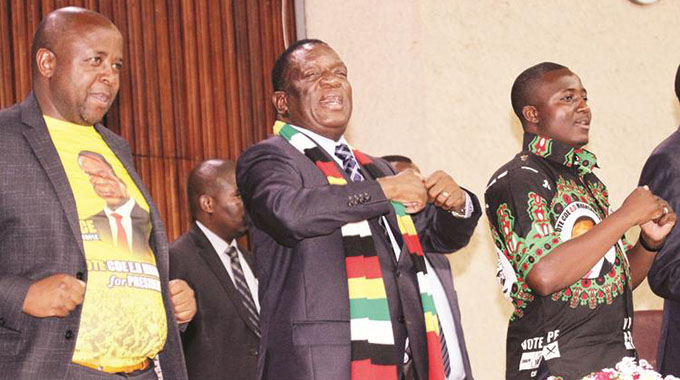
Zimbabwe’s Edward Mnangagwa calls youth to action

0

Tendai Mugabe

President Mnangagwa says his Government has set the country on a robust economic recovery path and challenged youths to be actively involved in economic programmes aimed at realising Vision 2030.

The vision seeks to transform the economy into an upper middle class with a per capita income of US$3 500 by the year 2030.

The President said it was disheartening that youths appeared to be taking a back-seat when it comes to the country’s economic affairs, yet the new Government and the party had taken a policy position that economics should take priority ahead of politics.

Further, President Mnangagwa said Zanu-PF and the new Government had no room for leaders who pay lip service to party and Government programmes.

Addressing the Zanu-PF National Youth Assembly at the party headquarters in Harare yesterday, the President said leaders must walk the talk in defending party policies and Government programmes.

“While we have, as a party, declared that we prioritise economic programmes, it is disheartening, greatly disappointing and totally unacceptable that the youth league is invisible with regards to mobilising and organising its constituency for full participation in the economic affairs of the country as mandated by the party constitution.

“We must constantly hear you loudly. In addition, as Government we are moving with speed to implement devolution of Government power, thereby promoting development and growth for provincial economies.

“What is your role when that power has been devolved to the provinces? It was our expectation that the youth league by now should have organised party youths from branch, district, up to the provincial levels to identify economic prospects within their localities and initiate sustainable economic projects.

“It is unacceptable and a misnomer that the youth league is mute when it comes to the economic development trajectory of our country.

“The future belongs to the young people yet you as the party youth leadership are lethargic in your approach. This must stop and stop forthwith. I want you to become loud. We can have one or two provinces that are quiet, but not all provinces.”

On Vision 2030 and the role of young people in promoting party policies and programmes, President Mnangagwa said: “As you are aware, my Government has embarked on a modernisation programme and industrialisation agenda in a bid to leap frog our country’s development towards the attainment of Vision 2030. It is our expectation as a party that you, the youth league, run with this vision. You must promote reforms and development and stability, which we seek to achieve.

“In recent past we have seen calculated plans by our detractors to destabilise and derail the progress the country has made to date. It is the youth league of the party, which must defend, articulate and advance the policies of the party that are intricately linked with those of the majority of our people. Defend the interests of the people wholeheartedly. As the youth league you should by now have clear programmes and strategies that outline how this will be achieved from a party youth perspective.”

President Mnangagwa said leaders should serve the people.

“The phase we have entered as a party demands that you here as leaders of the youth league from various levels honestly and critically introspect and interrogate the degree to which you have worked towards the fulfilment of the aims and objectives of the youth league,” he said.

“This a constitutional mandate that should never be taken lightly if we are to modernise and build an inter-generational party that transcends the present and last for posterity. In the Second Republic there is no room for leaders more so in the party who pay lip service to party and Government programmes. Leaders must walk the talk.”

President Mnangagwa also briefed the youths on his recent meeting with the business people, which saw prices of basic goods that were spiralling coming down.

He said the price hikes were fuelled by social media and urged Zanu-PF youths to be active on such platforms correcting the misinformation.

The Herald

Africa: Olusegun Obasanjo, Jeffrey Sachs propose an Africa Education Fund

Staff Reporter

Former Nigerian President Olusegun Obasanjo and development economist Jeffrey Sacks today in Bali, Indonesia, called for the establishment of an Africa fund for education as they delivered the second Babacar Ndiaye Lecture in Bali, Indonesia.

The two personalities, who were the guest speakers at the international lecture series introduced by the African Export-Import Bank (Afreximbank) in 2017 to honour the late Dr. Babacar Ndiaye, said that such a fund will ensure that every child in Africa got a full high-quality education in this generation.

They called on African leaders to support the fund and to make a commitment that every African child should be empowered and financed to stay in school until completing his or her secondary education.

“Africa needs to support every child to stay in school through age 18 and to achieve 100 per cent secondary school completion,” said Prof. Sachs, who is Director of the Center for Sustainable Development at Columbia University, New York. He noted that three quarters of African children were currently not completing secondary education and said that with an African fund for education and commitment by African leaders, the continent will be transformed into a middle income to high income economy.

Prof. Sachs argued that the current global disequilibrium was working to Africa’s benefit as it presented the African Union (AU) with the opportunity to fully realize its potential as a great unifier, saying that Africa should be a politically and economically unified region.

“The AU is the right vision and the right instrument for Africa’s unity,” he said. A unified Africa would be largest region in the world and could become a global leader by taking advantage of the most recent technological advances and with the introduction of open boarders of trade.

Prof. Sachs said that the current disruption of technology had brought about dramatic technological revolution in a way that worked to Africa’s advantage as the continent could leapfrog development through the adoption of digital technologies.

With digital technology and e-commerce, Africa could make revolutionary advances in health care, education, the functioning of the private sector economy and other areas, he added. To achieve that, Africa needed develop infrastructure and train people in the new technologies.

President Obasanjo, laying out his support for the Africa fund for education, argued that there was no shortage of money for good causes in Africa. According to him, people only wanted to know that their money would go where it was supposed to go and that such money would be properly accounted for.

He added that it was up to Africans to develop their continent, saying, “Africa is the architect of its own future”.

In his address, Prof. Benedict Oramah, President of Afreximbank, said that the greatest problem of Africa was the neglect of Africa by Africans.

Prof. Oramah said that the call to establish an Africa fund for education should be seen as a call to action by everyone and pledged that the Bank would work out modalities to support and ensure that it emerged.

The lecture series recognises and immortalises Dr. Ndiaye, who was President of the African Development Bank (AfDB) from 1985 to 1995, for his many important contributions to Africa’s economic development, in particular, his critical role in the creation of Afreximbank.

Dr. Ndiaye, who died in July 2017, was also behind the creation of several other continental institutions, including Shelter Afrique and the African Business Roundtable. He is credited with fostering the emergence of many young entrepreneurs who are helping to build Africa today.

The event attended by about 200 participants from African and global banks, development finance institutions and the business community attending the 2018 IMF and World Bank Group Annual Meetings, as well as members of the diplomatic community, policy makers, academicians, African and non-African ministers of finance, economy and development, central bank governors, and CEOs of global and African corporates.

Exams continue as University of Namibia staff strike

Sakeus Iikela

The University of Namibia (Unam) staff strike currently underway has not affected the examinations, although the workers’ union says nobody would report to work until a solution has been found.

Unam employees, including lecturers and supervisors, are demanding a 6% salary increase backdated to January 2018.

The workers, who are represented by the Namibia Public Workers Union, could, however, not agree with the management over their demands, and they went on strike.

Unam branch union representative Barbara van der Westhuizen yesterday said the strike would continue if management failed to come up with a solution, or until such time that “a settlement is reached”.

“Staff members are frustrated, as you can see. They are very vocal and energetic, and we want our increase. Life has become very expensive for us, inflation is going up, and everything is increasing, and we feel that 6% is not an unreasonable demand,” she stressed.

Van der Westhuizen also said Unam was contravening the strike rules which they set up by using students to invigilate.

She added that the management had denied them access to the campus to check whether they were using scab workers or not.

“We have heard that other people have been brought in to do our work. That is absolutely against the labour law that requires that no scab labour must be used when employees are on strike. We have also heard reports that management has been sent to various campuses to oversee the invigilation of examinations,” she said.

According to her, the university used some postgraduate students at the Henties Bay campus to invigilate the examinations, and that such students were “given access to the safe where the exam papers are,” an act she says was against the university’s examination rules.

Furthermore, there was a possibility that the examinations could be nullified if the claims of students being used to invigilate turned out to be true, she noted.

Unam’s marketing director, Edwin Tjiramba, said the strike did not interrupt the examination processes at all campuses.

He also refuted claims that the university had brought in scab workers to invigilate during the strike period.

Management denied the protestors access to the university premises to protect the rights of those who reported for work and were helping with the examinations. Tjiramba explained.

“We are also aware that within our rules, we have to protect those employees who fall inside the bargaining unit, but decided to come to work. We think that allowing protestors to visit the premises is tantamount to a fishing expedition, where you are not telling us that you think so and so is violating the rules, or is doing somebody’s work,” he added.

The university, he said, will also investigate the claims that students were used to invigilate and allowed access into examination paper lockers at some campuses, and that “the university will deal with it accordingly”.

Tjiramba, however, denied the claims of scab workers, saying that people who were invigilating were “staff who fall within the bargaining unit, but chose to come to work”.

The Namibian

South Africa: Parktown Boys’ High sexual assault case postponed

Nomahlubi Jordaan

The case against Collan Rex‚ a former assistant water polo coach at Parktown Boys’ High School‚ was postponed on Wednesday to next month – to the dismay of parents and child activists supporting them.

Rex‚ appearing at the Palm Ridge Magistrate’s Court in Katlehong‚ east of Johannesburg‚ is out on bail of R3‚000.

His case was postponed to November 27 for the probation officer’s report.

“The probation officer’s report was not ready today [Wednesday]‚ so the case was postponed for it to be made available‚” Gauteng education spokesperson Steve Mabona said.

A group of parents protested outside the court after the matter was postponed.

“The parents are not happy with the disciplinary process involving other teachers at the school. They say that the department is not doing what it is supposed to be doing. We have explained that we cannot act outside the disciplinary processes taking place‚” said Mabona.

Mabona said Gauteng MEC for education Panyaza Lesufi had launched an investigation into the conduct of the teachers who had been accused of racism and assault.

Child rights groups also protested against the delay in the court proceedings‚ criticising the Department of Social Development for failing to ensure its probation officers completed their reports.

“I am outraged regarding this postponement – everybody was ready to go ahead with sentence today and only the State social workers caused the delay‚” said Rees Mann of South African Male Survivors of Sexual Abuse.

“Today would have been an important day in the healing process for these boys but now they will have to go home and suffer in silence for the next few weeks while Rex gets to go home‚” Mann said in a statement.

Luke Lamprecht‚ representing Women and Men Against Child Abuse‚ said: “I am devastated for the boys and their parents‚ who expected this case to end today.”

“Basically what happened today amounts to tertiary abuse by the State‚” he asserted.

“The boys have had to endure three sets of interviews – their initial statements to SAPS and follow up Victim Impact statements and then were subjected to yet another‚ third set of interviews by State-appointed probation officers from the Department of Social Development‚ who did not compile their reports on time‚” Lamprecht said.

WMACA added: “This very important case has raised issues surrounding sexual abuse and initiation rites at boys’ schools that we cannot look away from – toxic masculinity and the protection of predators by enablers such as the old boys’ system should be looked at and discussed in depth in future – it is something that we as a society can no longer look away from and should address urgently if we’re to prevent such wholesale abuse from being repeated.”

During the trial‚ the court heard testimony from Rex’s victims‚ who alleged that he had choked them‚ shown them pornographic material and performed sexual acts on them. They were aged between 13 and 16 years.

The 22-year-old‚ who was also a boarding master at the school‚ pleaded guilty to 144 counts of sexual assault against 12 of the 23 boys who are complainants in the sex scandal. However‚ he pleaded not guilty to a further 183 counts‚ which included one of rape‚ 110 of attempted murder‚ 55 of sexual assault‚ seven of exposure of pornography to a child‚ two of sexual grooming and eight of assault. Delivering his judgment in September‚ Johnson found Rex guilty of 12 counts of assault and a further 144 of sexual assault.

Sowetan

South Africa’s top agriculture college shuts its doors following protests

Russel Molefe

One of the top agricultural colleges in the country, situated in Limpopo, has been shut down following a series of protests which disrupted classes and administrative functions at the institution.

This was after students at Tompi Seleka College of Agriculture embarked on a three-week strike, in which properties were damaged. The students demanded that their concerns around the maintenance of the college building and surroundings be attended to.

Though several meetings were held between student leaders and officials from the Limpopo Department of Agriculture and Rural Development (LDARD) to resolve the impasse, the students continued to protest.

Members of the Student Representative Council (SRC) and other structures at the college could not be reached, as all students have now all been sent home.

Explaining the decision to shut down the college, LDARD spokesperson Selby Makgotho said: “College management and the department held several meetings with the students wherein progress was presented in relation to the issues raised.

“However, students continuously embarked on violent protests, whereby they barricaded roads leading to the institution and intimidated members of the staff and students not supporting disruptions at the college. The situation escalated daily, as were the list of their demands.”

Makgotho said matters came to a head when students forcefully removed lecturers from their offices and barricaded the entrance to the college. Three students were subsequently arrested.

“In the interest of the safety of the property, the personnel, students opposing violence and the livestock at the college, the LDARD was forced to suspend the academic programme,” Makgotho said.

Authorities have opened several cases of malicious damage to property against the students.

News24

South Africa: Limpopo SGB chairperson pockets matric farewell money

Peter Ramothwala

A school governing body (SGB) chairperson allegedly stole R29 000 earmarked for her school’s matric farewell and later claimed it was taken during a robbery at her home.

The woman from Dennilton in Limpopo was arrested by police and appeared in the Moutse magistrate’s court on Friday after it emerged that she had reported a fake robbery.

She claimed the money from a cheque she was given by the high school principal was stolen during a house “robbery”.

But, according to a teacher at the school who wished to remain anonymous, the principal gave her the cheque to be cashed the following day.

“Instead of bringing the money to the school, she claimed she was robbed at her house and had already opened a criminal case at the police station.

“We are still shocked that one can steal from their children,” said the teacher.

The SGB chairperson was released on R1 500 bail.

Police spokesperson Brigadier Motlafela Mojapelo said she was arrested last week during an operation conducted by members of crime intelligence and Dennilton detective service.

“A case of house robbery was reported on Wednesday at Dennilton police station by this woman. She alleged that two suspects wearing balaclavas entered her house and took the money.

“It soon came to light during preliminary investigations that the woman was making up stories and a case of perjury was immediately opened against her,” he said.

He said the police managed to recover some of the money from two other people who had already deposited it into their respective bank accounts.

“The suspect had earlier gone to the local bank to cash a cheque and instead of taking it back to the school principal as per the school arrangement, she proceeded home and allegedly staged a fake house robbery.

“Cases of this nature are starting to mushroom as we gradually approach the festive period and a stern warning is issued against these tendencies,” Mojapelo said.

Police said cases of theft were being considered against the recipients of a portion of this money and further arrests cannot be ruled out.

The Limpopo department of education has condemned the theft and called for punishment for the SGB chairperson.

Spokesperson Sam Makondo said: “We can’t allow a situation where parents can’t be trusted with school money. We are very much disappointed and those who steal from learners should be jailed.”

Sowetan