Home Blog Page 481

WATCH: We give the youth skills

Sun Reporter

“We are proud of what has been achieved through this partnership.”

Anglo American Platinum’s senior social performance manager at Amandelbult, Tshepo Kgasago, said that the successful partnership between Zizwe Opencast Mining and the Baphalane Community Trust proves that communities can benefit from core business activities and contracts.

“We are proud of what has been achieved through this partnership. It is a model on how communities can be included to benefit sustainably from procurement opportunities,” Kgasago said.

In line with Anglo American’s sustainability strategy, Kgasago also said that the company is looking at a number of interventions across many other communities.

“We have built schools, clinics, houses, roads, orphanages and old age homes for our communities. We also provide small business and artisan training to build skills such as welding, brick making and painting.

Kgasago said they train over 500 young people every season.

“We want to equip people with the skills to stand on their own feet. From our training programmes alone, we assist over 500 young people at a time,” Kgasago said.

Anglo American Platinum’s broader work on skills development provides opportunities for 18 to 35-year-old young unemployed people so that they can form part of the workforce in local mining projects such as this one.

“We train welders so they can work in the community and start their own businesses. We also offer bursaries to youth to further their education and other study opportunities for adults.

The local contractors we have assisted through our training programmes are now building houses for orphans and child-headed families, as part of our programme to improve living conditions for vulnerable people.

The programme is part of Anglo American Social Way, a project to address inclusive socio-economic challenges.

“They are really inspiring and we encourage them to persevere,” Kgasago added.

Daily Sun

Zimbabwe: Varsity students exposed to sex predators as they squat into rundown homes

Robert Tapfumaneyi

Thousands of young female students enrolled at the Bindura University of Science Education (BUSE) live with the constant threat of abuse by community sex predators following a sharp accommodation crisis that has often driven the scholars to dilapidated farm and mining homes close to the higher learning institution.

This, according to BUSE vice chancellor Eddie Mwenje, has affected their performance in their studies.

The situation is even worse for female students forcing them to often rent into substandard single rooms and engaging in “awful anti-social acts”.

“Most of the living conditions are not a conducive and safe environment for female students, encourages truancy and consequently poor concentration on academic work by students,” said the BUSE boss while addressing a Friday graduation ceremony presided over by State universities Chancellor and President Emmerson Mnangagwa.

BUSE is located in Bindura some 87km north-east of Harare in Mashonaland Central province.

The university can only accommodate about 400 out of more than 6 000 students.

A single room in nearby Chipadze or Chiwaridzo high density suburbs would often require $400 for a student to see through a semester.

In his address, Mwenje said construction of student hostels should be a priority as this affected their studies.

“Students’ accommodation still remains a challenge. The university has an enrolment of 6000 students and is only able to accommodate 398 students in its accommodation facilities,” he said.

“The situation is not conducive for students learning and shows, how young girls become more and more exposed to the vice of the society.

“There is however some light at the end of the tunnel as there are negotiations and agreements with several players to construct hostels with a capacity to take 4 000 students.”

He added, “This will create a conducive learning environment for our students and protect them from some of the vices of the society especially against the girl child.”

BUSE offers courses within the field of science, technology, engineering mathematics and commerce.

New Zimbabwean

Zimbabwe: Inmates miss out on public exams as government fails to pay their fees

0

Robert Tapfumaneyi

Inmates serving time and simultaneously pursuing studies in most of the country’s prisons often fail to take part in final public examinations because the government does not have money to pay for their examinations fees.

This is according to a recent Zimbabwe Human Rights NGO Forum report on Zimbabwean prison conditions.

The crisis has been noted among young offenders whose Grade 7, ‘0’ and ‘A’ Level end of year finals are compulsory.

The NGO group, in its report titled Rights Behind Bars, said the state should address the issue of exam fees, shortages on qualified staff and learning materials at many prisons and detention facilities around the country.

“While in prison, school is voluntary for adults. You can go to school or you can choose not to. That provision is there. It’s a choice for the prisoner to take it or not,” said Kenia Shonhai, a project lawyer with Zimbabwe Human Rights NGO Forum.

“But for the young offenders, one has to attend school whether they like it or not. But the biggest challenge is that most of them have failed to write the final examinations because the government has no funds to pay their examination fees.

“At Whawha, young offenders have a nice school building, well-built classrooms. When we visited the prison, the teachers were there. The children were going to school.

“But the major issue is of exam fees. The government does not have the funds to pay for their fees.”

He added, “Some are only able to write if well-wishers donate or pay for their exams fees, particularly faith based organisations.

“It is the same issue with adults studying tertiary courses. Most institutions did not have materials and qualified staff to teach the inmates.”

Commenting on the findings, Zimbabwe Prison Correctional Service (ZPCS) deputy commissioner human resources Fadzayi Mupure said the all prisoners do not forfeit their right to education by virtue of their detention in jails.

“The education of illiterate prisoners and of young prisoners is compulsory and special attention should be paid to it by prison administration and where it is fairly possible and barring any other compelling considerations, the education of prisoners, including juveniles must be provided by qualified teachers and integrated with the educational system of the country so that after their released they may continue their education without difficulty,” she said.

New Zimbabwe 

This Ethiopian homegrown coffee brand is opening 100 cafés in China

0

Abdi Latif Dahir

Bethlehem Tilahun Alemu has a dream: that everyone should one day taste hand-roasted Ethiopian coffee.

Widely acknowledged as the birthplace of coffee, Ethiopia is one of the world’s largest coffee bean producers and Africa’s top grower of the plant. Coffee is also brewed and drank in the Horn of Africa nation in elaborate ceremonies, often using crafting techniques passed down from generations over centuries. As an entrepreneur, Alemu always wanted to replicate this dynamic experience—what she calls “the magical process”—to coffee lovers worldwide.

And so was born in 2016 the idea for Garden of Coffee, a brand that uses artisanal methods to source, process, roast, and package Ethiopia’s legendary beans. Twenty workers at the company’s atelier in Addis Ababa currently oversee this activity, roasting five types of coffee beans only for individual orders and shipping them to over 20 countries including Russia, Sweden, Germany, and the United States.

This personalized roasting, Alemu says, helps preserve the quality of the coffee for the final customer, reduces the ecological footprint associated with factory roasting, and creates a business model that values local manufacturing. This is especially vital as Ethiopia takes crucial steps in improving governance and accelerating poverty reduction and economic growth through job creation.

The 2015 Quartz Africa Innovator also employs similar ethical practices with her shoe brand SoleRebels, which are made by locally-trained artisans in Ethiopia and shipped all over the world.


China-bound

Alemu is now venturing out of Ethiopia. In August, Garden of Coffee launched in China, a tea-loving market that is increasingly turning towards coffee. Starbucks, Coca-Cola, e-commerce giant Alibaba, hedge fund manager Bill Ackman, and local Chinese start-up Luckin Coffee have in recent years all bet big on China’s nascent coffee scene. Java House, East Africa’s largest chain of coffee shops, also said in August it would capitalize on this increased demand for specialty coffee to supply the Chinese market.

GARDEN OF COFFEE_ Garden of Coffee’s WeChat promo

Through a deal with Suzhou Reyto trading company, GOC says it will ship 12 tons of hand-roasted coffee to China in the first year. The company has also launched advertisement and marketing on the multi-purpose messaging and social media app WeChat, will soon place its product on the shopping site Taobao. But it’s big plan is  to open over 100 café roasteries across China by 2022. Through a subscription service, customers will also be able to receive their favorite coffee of choice in one, two, or four-week intervals.

By embracing traditional Ethiopian roasting methods and taking them globally, Alemu says she hopes to shape the “fourth wave” that is defining coffee’s evolution. The first wave involved the mass drinking of the brew, the second grew with the rise of a coffee culture through brands like Starbucks, while the third focused on artisanal coffee making. The fourth wave now focuses less on commercialization, more on long-term sustainability, besides promoting and preserving local ways of farming. Placing Ethiopian coffee at the heart of this movement is only pragmatic, argues Alemu. But it is also a judicious growth strategy: because of demand, Garden of Coffee is set to increase its hand-roasting artisans to 300 by 2021.

GARDEN OF COFFEE _ Garden of Coffee roasted samples

“We are doing this not only because hand-roasting coffee is an ancient art that we strongly feel is worth preserving and promoting, but because we believe this method of coffee roasting is the key to unlocking Ethiopian coffee’s true magical tastes,” Alemu tells Quartz. “That’s the critical distinction.”

South Africa: History made as Fort Hare awards first PhD written in isiXhosa

Staff Reporter

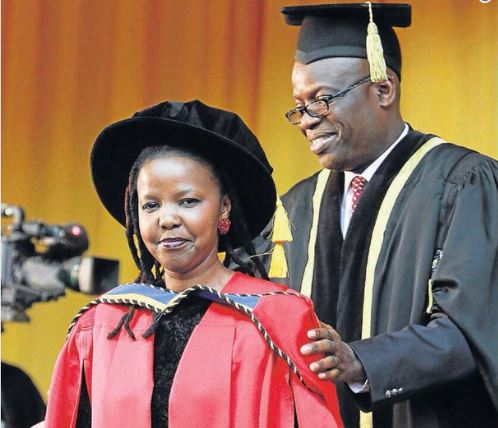
A high school teacher from East London has made history by being the first Fort Hare PhD student to write her thesis in isiXhosa.

This is a first in the university’s 102-year history.

Nompumelelo Kapa, an isiXhosa teacher at Beaconhurst High School, received a doctorate in literature and philosophy at the university’s Alice campus on Friday.

She said she was proud to have made history by writing her doctoral thesis in isiXhosa.

Sowetan quoted Kapa as saying: “We are talking about transforming and decolonising Africa, so isiXhosa should be considered and we also want to produce more isiXhosa writers, journalists, translators and others.”

Kapa said isiXhosa had become stifled as a result of “people finding it fashionable to write and speak in other languages, especially English, and in the process losing their identity and roots and endangering our heritage”.

Kapa’s supervisor, Professor Nomsa Satyo, described Kapa’s feat as a milestone, according to The Herald. “It is the first of its kind,” Satyo said.

In April last year, Rhodes University student Hleze Kunju became the first PhD student to write a thesis in isiXhosa, according to IOL.

Kapa received wide praise on social media for her achievement.


An APP to assist matriculants with exams

Nico Gous

It’s crunch time for the 796‚542 matrics preparing for the National Senior Certificate (NSC) exams which start on October 22.

But‚ as with a lot of problems these days‚ there’s an app for that. TutorSA is a local app that has partnered with the University of Johannesburg (UJ) to offer free private tutoring for high school learners.

The app allows learners to have one-on-one discussions with tutors‚ upload photos of question papers‚ watch tutorial videos‚ get career guidance‚ among other things‚ for free.

“Historically‚ where we come from‚ our background‚ we tend to struggle between having to go and study with doing everything else in the name of ‘hustling‚’” TutorSAchairperson Simon Lekwape said.

TutorSA is a local app which offers free tutoring among other things for high school learners. Date: Wednesday October 17 2018.

TutorSA is a local app which offers free tutoring among other things for high school learners. Date: Wednesday October 17 2018. 
Image: Supplied

“Most of the guys are struggling not because the guys are stupid‚ but because of certain behavioural issues where we’re just trying to catch so many balls at once.”

TutorSA was informally established in 2007 by three university students offering face-to-face tutorial services to matriculants at the Forte High School in Dobsonville‚ Soweto. After increased demand‚ they formally registered as a non-profit organisation in 2012.

It’s still early days for the app‚ with 109 current users. The app provides tutoring for mathematics‚ science‚ accounting‚ life science‚ economics and business studies from grade 10 to matric. There are more subjects available for grade eight and nine.

The tutors are third-year education students at UJ who have to complete at least 15 hours of tutoring for their studies.

Tutor Mack Mogale said: “You can log in at any time … I think this is a new way to incorporate extra classes‚ but when it comes to the actual teaching we still need the classroom. We still need the teacher-learner interaction.”

Lekwape said their biggest struggle was changing the mindset around education.

“The mindset that is still out there with the department [of basic education] is that not every learner will have a smartphone‚” Lekwape said.

“The app itself will not accommodate everyone. It is only for certain digitally savvy learners who will benefit from it.”

Lekwape said data costs were another challenge to expanding the app‚ which is currently available for free on the Play Store for Android.

Sowetan

30‚000 Gauteng parents have not yet submitted school applications for next year

Nonkululeko Njilo

More than 30‚000 learners who have not submitted the required documentation for the 2019 academic year‚ which will hinder the placement process‚ the Gauteng education department said on Monday.

“It is concerning that about 34‚109 learners have not submitted required documents‚ as per admissions regulations‚” said department spokesperson Steve Mabona.

Meanwhile‚ the department also indicated that more than 400 public schools had so far reached their full capacity – and these schools would not be overcrowded.

“440 schools have unfortunately reached capacity‚ and we will not overcrowd them. We appeal to parents not to despair as we are working around the clock to ensure that all learners are placed‚” said MEC Panyaza Lesufi.

Mabona said that 228‚050 pupils – which accounts for 80.63% of the province’s learners – had been placed in schools by Monday.

The department said that all unplaced learners would be offered placement at schools with available space – but unfortunately it might not be at their nearest school or school of choice.

“The department is working tirelessly to ensure that all unplaced learners who applied during the application period are placed by the October 31 2018 deadline‚” said Mabona.

Parents of the learners who have not yet submitted have been urged to visit their local district offices for submissions.

“It is paramount. Failure to submit required documents will hinder the process of placing all affected learners‚” said Mabona.

Sowetan

Bafana donate boots for Steyn City’s drive to provide shoes to Diepkloof

0

Marc Strydom

Luxury housing estate Steyn City‚ where Bafana Bafana trained for part this week‚ have been donated an autographed pair of boots by the national team to be auctioned in as part of a drive to donate 13‚000 school shoes to primary school children in Diepsloot.

Bafana’s choice of training venue this week at Steyn City School that services the expensive housing estate of Steyn City raised eyebrows.

SA national coach Stuart Baxter said it was the fast surface of the pristine new pitches at the brand new‚ 10-month old school‚ that was the deciding factor on the venue.

Bafana were visited this week by Diepsloot Stream Soccer Club.

The national team donated a pair of brand new Nike boots autographed by the players to Steyn City‚ which will be auctioned off as part of a fund-raising drive for the estate’s annual #DeliveringHappinessDiepsloot drive.

In November Steyn City will deliver 13‚000 school shoes to primary schools in Diepkloof in Soweto.

Africa: A unique opportunity to promote scientific collaboration

Rami M Ayoubi and Engin Akcay

Science diplomacy has three different faces: science in diplomacy (using science as a diplomatic instrument in foreign policy); diplomacy for science (diplomacy seen as a way to establish scientific collaboration in the international realm); and science for diplomacy (where scientific cooperation can help improve international affairs).

Although it is not a new phenomenon in developed countries, science diplomacy is crucial for Africa because of the continent’s overwhelming social, cultural and economic inequalities. Together with underdevelopment, 29 out of 55 African countries are suffering from ongoing wars, armed conflicts or skirmishes that adversely affect the quality of higher education they can offer.

On the whole, traditional diplomacy has had significant success in peacekeeping and peacemaking, but more could be done, especially in Africa. In addition to shuttle and cultural diplomacy, science diplomacy could play its part in helping Africa be better educated and, in turn, more peaceful.

Since the 1960s, developed nations have recognised the part science diplomacy can play and its positive effect on society generally. But how could it be reformed so that it plays a crucial role in African higher education in the near future?

Revisiting science diplomacy

With its all-encompassing characteristics, science diplomacy represents a unique opportunity to promote scientific research collaboration, to enable academics from different countries to get to know each other better, to foster a culture of co-existence and to create alternative communication channels.

Especially in risky times when bilateral and multilateral relations are being disrupted around the globe, academics can work on a scientific study or project-based activity in which their respective national interests meet. Science diplomacy can be useful in drawing attention to rationality as opposed to ideas fuelled by prejudice and misperception, encouraging the different parties to focus on shared values or points instead of on their differences.

In such circumstances, a science diplomacy action plan needs to be responsive and dynamic so it can gradually help to mitigate the effects of conflict, reducing tension, promoting reconciliation and also producing solid outcomes for science and higher education institutions.

The African context

Interestingly, African higher education suffers not only from security threats but also corruption, insufficient infrastructure and a lack of qualified academics. According to a list released in 2018 by the Center for World University Rankings, there are only 13 African universities – South Africa (7), Egypt (4), Uganda (1) and Nigeria (1) – in the top 1,000 universities in the world.

In addition to institutional capacity and qualification challenges, there are also inadequacies in terms of the quantity of institutions. News website Quartz Africa reports that the top 10 most populous African countries have 746 universities serving about 660 million of Africa’s one billion people.

Science (and technology) have been the primary springboard of development in history. As a nation advances in science, so it advances in global prestige. Being aware of this fact, the African Union (AU) and its Science and Technology Division have so far taken certain steps to advance the continent’s scientific standing.

These include Africa’s Science and Technology Consolidated Plan of Action, the Kwame Nkrumah Scientific Awards Programme, the Science, Technology and Innovation (STI) Strategy for Africa 2024, EU-Africa Cooperation in STI, the Scientific Technical Research Commission, the African Scientific Research and Innovation Council and the African Observatory of Science, Technology and Innovation.

However, science diplomacy is not one of the direct goals of the AU’s Agenda 2063, even though it could indirectly link every single objective. The AU in general and African countries in particular need a well-coordinated roadmap and science diplomacy model.

Understanding science diplomacy

In the African context, science diplomacy needs to be conducted within a clear framework in line with a concise strategic plan. It should be considered as part of a five and-or 10-year national strategy plan.

On the one hand, science diplomacy is the best way to maximise the limited (national) scientific capacities of African institutions. On the other, it could provide a very beneficial synthesised approach for African decision- or policy-makers, given that it blends academic, diplomatic and bureaucratic approaches.

It would require both internal and external cooperation. At the internal level, every African country could initially pledge to begin a bilateral collaboration with every neighbouring country, a sub-regional collaboration and an overall partnership with (and led by) the African Union at a continental level.

In addition, the external action model could be based on overseas partnerships with international institutions – such as the European Union, the World Health Organization and International Energy Agency – and also multicultural or multipartite networks engaging with national institutions from developing or developed countries.

What makes external collaborations more successful is a dynamic and equal approach. In other words, they should be independent of any kind of dependency or system of hierarchy that could subsume the spirit of consensus. In fact, science diplomacy is based on a win-win approach.

While research institutions, universities and diplomatic missions should pioneer science diplomacy in Africa, regional think-tank institutions and civil society organisations can play a complementary role in supporting scientific collaboration and increasing the multiplier effects of their initiatives.

As long as the parties involved do not look to prioritise just their own self-interest and reflect wider perspectives, science diplomacy could serve the AU’s Agenda 2063 in particular and Africa generally. That is what Africa’s next generations need.

Science diplomacy and aid policy

An efficient science diplomacy strategy could be a springboard for African countries. That is why African policy-makers should reconsider their approach to science diplomacy. It could reduce the brain drain and enable countries to re-engage with well-qualified African immigrants abroad.

Moreover, a science diplomat could be assigned to diplomatic missions abroad for better coordination and more efficient representation or, at the very least, an existing diplomat could be put in charge of science diplomacy affairs. A well-selected science diplomat could make an exceptional contribution to his or her country and region.

Creating a strong link between science diplomacy and aid policy could enable donor countries or institutions to allocate a specific amount of their aid budgets to upscale their own science diplomacy with recipient countries.

In particular, donor countries and-or international institutions could design an initial plan with a single African country that could be followed by a wider strategy through the relevant sub-region of the continent. For instance, if an Ethiopian university is chosen to collaborate, the overall plan should include other selected universities in East Africa.

This would not only feed regional priorities but also the African Union’s global mission in the long term. It is noteworthy that some internationally known universities have recently tended to either open up branches in Africa or sign functional memoranda. These links could be used as the first step towards a more long-standing scientific partnership.

In our view, therefore, science diplomacy is not a luxury but a social responsibility for the contemporary world.

Dr Rami Ayoubi is senior project consultant at Cardiff Metropolitan University in Wales. Email: rayoubi@cardiffmet.ac.uk. Dr Engin Akcay is research fellow at Cardiff Metropolitan University. Email: eakcay@cardiffmet.ac.uk.


Concern mounts as MyCiTi strike may impact matrics

Bulelwa Payi

With no immediate end in sight to the wildcat strike by MyCiTi bus drivers, fears have been raised about its impact on commuters using public transport.

Despite a court interdict preventing striking workers from intimidating those not taking part in the strike or preventing them from working, acts of intimidation were reported on Saturday.

The City of Cape Town voiced concerns over the reports of intimidation. Mayoral committee member for transport Brett Herron said he had advised that charges be laid against those involved.

Provincial education authorities said they feared the strike could result in matric pupils not reaching exam venues in time.

While around 8000 matric pupils began writing exams last week, there have been no reports of major transport disruptions affecting them so far.

“More than 50000 learners will be on the roads next week as the majority of our National Senior Certificate (NSC) candidates begin writing their exams. Tuesday marks the start of the 2018 NSC examination period for the majority of our learners,” said education department spokesperson Jessica Shelver.

“Our concern is that the strike action, as well as the knock-on effect that this has on other modes of public transport, will mean that learners may not reach their venues on time, which may result in them having to write the supplementary exam in June next year – which could have a major impact on their study plans and their futures.”

Although efforts are being made by political parties represented in the council to help find a resolution to the strike, there’s no indication yet as to when the negotiations between the striking workers’ union, the National Union of Metalworkers of SA (Numsa) and the vehicle operating companies contracted to the City will resume. At the time of going to print, Numsa had not responded to questions sent to it.

But ANC councillor Khaya Yozi said initial discussions with workers’ representatives had revealed the workers were unhappy over conditions of employment including long shifts and being expected to do duties not related to their work without compensation.

The strike, which has entered its second week, has put a strain on the declining public transport service, and transport experts have called for urgent intervention, including by the national government. For every hour lost in productivity due to delays in the public transport system, the City’s economy suffered an estimated loss of R450 million, said Professor Marianne Vanderschuren, of UCT’s Africa Centre for Studies in Public and Non-motorised Transport.