Home Blog Page 482

South Africa: School admission woes leave parents in the dark

Sarah Evans

It is around this time of year that children starting Grade 1 start to get excited. There’s school uniform shopping, baggy pants and skirts get hemmed and little feet take their new school shoes for a practice run around the house as parents and their children get ready for the first year of school.

But Yolandi Cook’s son, Bryce, is not doing any of these things. Last week, he looked up at his mom and asked: “Mommy, which school am I going to next year?”

“I don’t know, my boy,” she replied.

Cook is one of many mothers whose children were either rejected by the schools they applied to, remain on waiting lists, or missed the cut-off date for applications and have nowhere to send their children next year.

In response to reports about the schools’ admissions process, News24’s sister publication Parent24 has been overwhelmed with letters and emails from parents struggling to get their children into schools.

While Gauteng’s online admissions process was intended to end inefficiency in the system and root out corruption, parents also complain that the electronic method further limits their ability to talk to officials and gives them even less say in the process.

Urbanisation

However, the department lauds this system as one of its crowning achievements and, in its 2017/2018 annual report, the department notes that the system won the 2017 Centre for Public Innovation Award for innovative enhancements in government.

Gauteng’s online applications for Grade 1 and 8 closed at the end of May this year. The department’s spokesperson did not respond to questions on Friday but said in April that there had been more than enough time for parents to apply, and said then that applications would be reopened if there was enough time.

He said the department processed more than 90 000 applications last year and placed 90% of pupils who applied on time.

But the system has not been perfect.

At the heart of the issue is the fact that the department places children at schools – a policy many parents have complained about for years.

Adding to glitches in the system is the fact that on the whole, urbanisation has left the education department scurrying to find places for thousands of pupils who move to bigger cities every year for better education.

The national Department of Education could not be reached for comment on Friday but a spokesperson, Elijah Mhlanga, told the Financial Mail in January that it was crucial for existing schools in rural areas to be fixed, for new schools to be built and for jobs to be created in those areas.

‘Those phones just ring’

Not having your child placed at the school of your choice is more than just a question of better classroom sizes or extramural activities.

It’s a problem for parents with more than one child whose children attend different schools, and a problem for parents who might live close to the school their children are placed, but work far away.

Cook has three children and was hoping that she would be able to get her youngest son into Grade 1 next year at the same school as her daughter. Her two eldest children already attend different schools.

She missed the online applications cut-off, thinking it wouldn’t matter very much since there was already an older sibling in the school to which she applied.

Her son was also in one of the feeder schools to the school she wanted him to attend. While the rule, generally, is that this could count in a parent’s favour, there is no guarantee, as Cook discovered.

She says she went from office to office, talking to school principals and government officials trying to find a school for her son. All the schools in her area are full.

“You can phone until you are blue in the face, those phones just ring,” she says.

Bukelwa Qwadikazi wrote to Parent24 in August, complaining that she applied early for her child to enroll for Grade 5 in 2019 but has been unsuccessful.

Her son went to the same school from Grade 1 to 3, and in Grade 4, the family moved to Limpopo. They returned to the Western Cape the following year, thinking her son would easily be accepted back into the school he previously attended.

Not so.

Three visits to the principal later, and after being sent “from pillar to post” by other schools and officials, Qwadikazi’s son is now on a waiting list but she has been told there is no guarantee he will be accepted.

Her applications to other schools in the area were rejected.

The single mother says she cannot afford private schooling and needs to start buying school uniform. All she can do now is wait.

Officials not familiar with rules

Another mother from Kempton Park said she missed the cut-off date for applications by one day, and by October 16 her child had not been placed.

In another case, a parent was told his application was rejected because it was late, when in fact the application was sent in on time, according to the father.

After being sent from pillar to post, from one official’s office to the next, the father lodged a formal appeal to the department at the end of September, with documents proving that the application was submitted on time.

He was advised to accept the rejection and his child has now been placed in a school 12km away from where he lives.

It also appears that the system is being overseen by officials who do not know the rules.

According to the article dated March 16, 2017, if you are told the school is full then the school needs to provide a letter stating that.

“I have tried this route, the education department did not know which letter I was referring to and asked me to send them the article in order for them to draft me such a letter???” one desperate parent wrote.

The South African Schools Act states that the head of department must inform parents in writing if their child is rejected by a school.

5km rule negatively affecting children from poor areas

The department of education in Gauteng is trying to rectify some of these challenges by amending its regulations. The deadline for public comments on the proposed changes closed last month.

Many parents have highlighted the 5km rule as a problem.

Because of the feeder school system, where children living within 5km of their school of choice are given first choice at attending that school, children from poorer areas are often prevented from going to school in areas where historically better-resourced schools are situated.

In a joint submission to the department, Equal Education (EE) and the Equal Education Law Centre said that school feeder zones had been narrowly drawn around the country’s previously privileged schools.

The Gauteng department of education is shifting away from the 5km rule as the only criterion for the determination of feeder zones, and the proposed amendments allow for a more “in-depth consideration” of the circumstances in which pupils are accessing schools, highlighting the need for geographical and spatial transformation, EE said.
News24

South Africa: Teachers’ long holiday cut in half

Sne Masuku

Teachers fuming that their December holiday would be cut by half, from six to three weeks, have to accept the Basic Education Department’s decision, which was made final on Thursday, they were told.

Schools will close on Wednesday, December 12, for pupils, and on Friday, December 14, for teachers. Schools will re-open on Monday, January 7, for teachers and on Wednesday, January 9, for pupils.

This means pupils will have 16 working days off, excluding public holidays, and teachers just 12 days off before returning to school in January.

Teachers’ unions said despite voicing their frustrations and making it clear that they were not prepared to sacrifice their longest holiday of the year when they were asked to comment on the draft calendar, their unhappiness had fallen on deaf ears.

Basic Education spokesperson Elijah Mhlanga said the department had the prerogative to proceed.

“This is an administrative matter. We are not changing the policy. People have a right to be upset, but we also have a job to do in the interests of the country,” he said.

Mhlanga said the shorter December holiday would be a one-off occasion because the objective would have been met, saying the usual December holidays would apply next year.

The Council of Education Ministers made the decision to close schools early to ensure that the matric exam marking processes did not have a negative impact on teaching time.

Mhlanga said the marking of exam papers would start on December 1, and would finish on December 14. He said they wanted schools to close before marking commenced.

Thirona Moodley of the National Professional Teachers’ Organisation of South Africa, said teachers were not only inconvenienced, but were extremely unhappy.

Moodley said teachers were up in arms especially after the department issued the final circular confirming the short holiday without considering their needs.

She said the December holiday was the only time teachers had a chance to relax and go away.

“Teachers have just finished preparations for the exams. They have, throughout the year, dedicated their after-hours, weekends and winter holidays to provide winter classes for the Grade 12s. Now that the final circular has been issued, teachers have been left with no choice,” she said.

Bheki Shandu, deputy secretary of the South African Democratic Teachers’ Union, said teachers had already made holiday plans earlier in the year and would now be forced to cut them short.

“The department announced this year that adjustments would be made to the school calendar and, as a result, the holidays would be shortened. It seems like there is nothing we can do about it now. We appeal to the department to ensure that in future teachers are warned about these changes early,” he said.

Matakanye Matakanya, of the National Association of School Governing Bodies, said they were against the new arrangement if it was going to become permanent.

“Schools should ensure that admissions are done this year. The department has the responsibility to plan to minimise glitches at the beginning of next year,” he said.

While the unions said they were unclear about the need for the change, Mhlanga said the department needed to create time to process matric results, and they had identified a need for schools to open early next year.

He said they also wanted to avoid conflict between learning and marking time.

“The teachers who will be marking matric scripts are required to be at school. These teachers will have to finish everything first before marking can start,” he said.

Unions said this did not make sense, as matric marking would have begun two weeks before schools closed.

Daily News

Teen pregnancy a rising concern

Jyothi Laldas

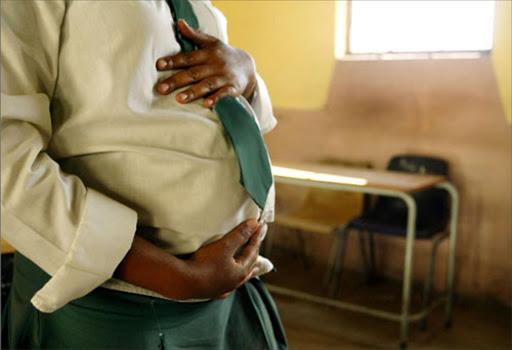
Girls between the ages of 15 and 19 years old account for 11% of births worldwide. Of this 11%, almost all the births, 95%, are in low to middle income countries, South Africa included.

This is according to the World Health Organisation’s (WHO) latest fact sheet on adolescent pregnancy. The WHO claims that teenage pregnancy is still a major contributor to mother and child mortality in addition to feeding ill-health and poverty.

Despite ongoing awareness and deterrent attempts by government and non-governmental organisations, teen pregnancy is still a major concern. Annually, about 16 million girls between 15 and 19 years old become pregnant while about one million girls under the age of 15 give birth. A further three million girl undergo unsafe abortions each year, according to the fact sheet.

A common misconception in South African society is that girls fall pregnant to make quick cash, in the form of government child support grants.

However, according to former Statistician-General Pali Lehohla, the idea that girls get pregnant to make money is unfounded.

“The evidence before us from 1998 to 2016 does not show that. It doesn’t show any increase in the proportion of teenagers who are getting pregnant, therefore dismissing that myth which is popular among parents, especially in rural areas,” said Lehohla.

A lack of education and viewing sexual intercourse as a taboo subject among parents is another large contributor to teenage pregnancy.

In a statement, Health MEC Dr Sibongiseni Dhlomo said the department will continue targeting women and teenage girls to educate them about the benefits of abstinence from sex; family planning; and seeking early antenatal care for those who are pregnant. He also sounded a warning bell on the dangers of using traditional medicine (isihlambezo) to induce pregnancy.

According to the statement, it is believed that eight percent of pregnancies are from teenage mothers, but teenage mothers contribute 25% to the rate of maternal deaths.

“When people who are aged 13, 14, 15 are falling pregnant, it tends to have a lot of other consequences.

“Some of these girls even drop out of school and never go back again. Some of them are even getting infected with HIV and Aids while they are pregnant. So, we want to say that there is merit in delaying sexual debut.

“But for those who believe they are ready to have sexual partners, we really request them to visit their local clinic, because it is still possible to have a partner but not to fall pregnant.

“To those who are planning to fall pregnant, we welcome that. But they must not delay making the first visit to our clinics, and thereafter stick to the agreed-upon schedule,” he said.

KwaDukuza residents shared their views with the Stanger Weekly on the topic of teenage pregnancy, with many saying it is the responsibility of parents to educate their children.

A local teacher, who asked to remain anonymous, said parents send their children to school expecting that their teachers will give them the “birds and bees” talk.

“This is a common misconception among parents, that it is our job to teach their children about the moral compass in terms of engaging in sexual intercourse. Education about such things must start at home. We cannot build your child’s character alone.

“A solid upbringing will contribute greatly to appropriate decision-making as they grow.

“A child who is taught right and wrong, good and bad at home will gain from the supplementary information we provide at school, the technical aspects if you will. If you do not want a pregnant child then raise them so they know what is safe and what is not.”

Rene Pillay, a nurse by profession, said she has seen a great deal of girls come to her place of work having fallen pregnant or having undergone unsafe abortions and experienced complications.

“For many girls in this situation, they do not know what to do or how to handle the situation, so they panic and take frantic decisions which end up impacting them for life.

“An unsafe abortion can render a girl unable to reproduce and cause unbelievable damage to them both physically and emotionally. I really want to encourage girls to take proper precautions if they intend engaging in sexual activities and I want to encourage boys to protect themselves too. While pregnancy may physically affect only the girl, risks of sexually transmitted diseases affect both females and males.

“Parents and caregivers, please talk more openly about these subjects with your teens, it could make all the difference,” said Pillay.

News24

Nigeria: Sex-for-Marks

Agency Report

Peter Okebukola, former Executive Secretary, National University Commission (NUC), on Tuesday said the admission of academically weak students by Nigerian higher institutions was responsible for the trending sex-for-mark menace in the system.

Mr Okebukola, who made the assertion in an interview with the News Agency of Nigeria (NAN) in Lagos, said that if universities and other institutions admitted students who were academically sound and had good scores on entry, there would be no room for any lecturer to harass such students.

“If, in the first instance, a student is academically good, what will a lecturer tell her, sex-for-which mark? All those girls who run after those lecturers or can be harassed by lecturers are those who are academically weak.

“Even, if the lecturer does not want to get engaged with them sexually, the girls will offer them their bodies.

“If at the point of admitting our students, we ensure that they have met some respectable score that when you teach them in class they can understand and do well on their own; then the problem would have been addressed,” he said.

The former NUC boss noted that many of the universities in an attempt to make money from different programmes in various satellite campuses, admit “wishy-washy students” who are desperate to pass.
Mr Okebukola, who said that perpetrators of such acts be punished when caught, advised that all the variables that bring such menace to bear should be addressed.

He said Nigerian universities were on the right track in exposing the rot in the system and advised that any person found culpable should be sanctioned.

“Sex-for-mark is trending in every university in the world and it is important for it to be curbed with sanctions by thoroughly investigating the phenomenon and when people are found guilty, deal with them,” he said.

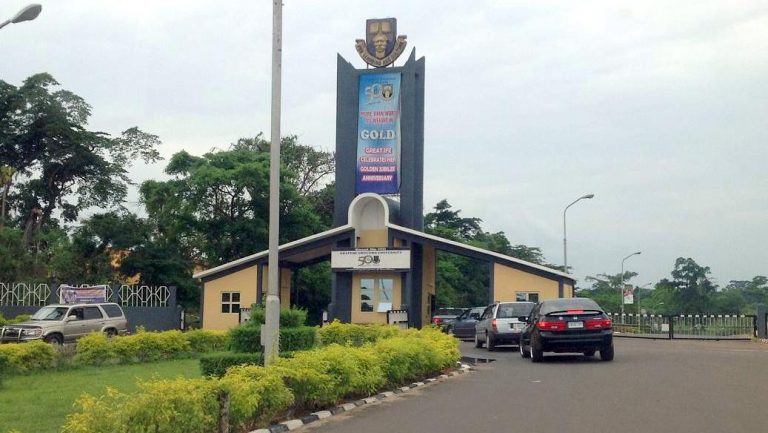
NAN reports that among Nigerian universities that recently had cases of sexual harassment include Obafemi Awolowo University (OAU), Ile-Ife, Lagos State University (LASU), University of Lagos (UNILAG) and Covenant University, Ota, Ogun.

News Agency of Nigeria

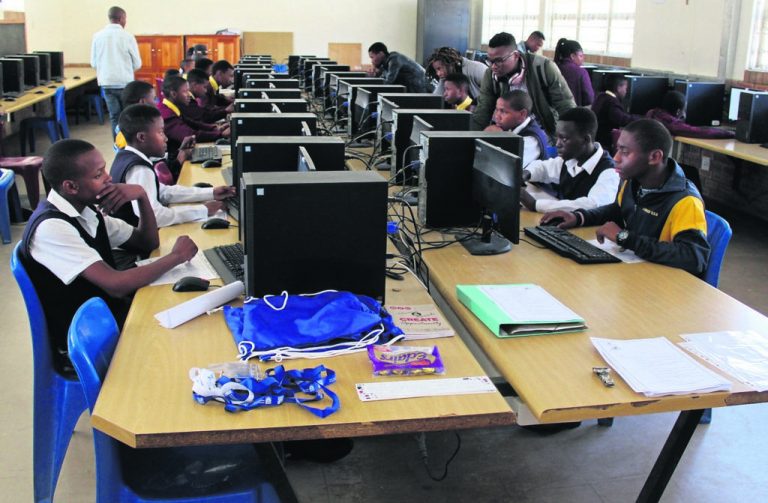
Power cuts shut down matric computer exams

Yoliswa Sobuwa

The first day of the 2018 National Senior Certificate examinations on Monday were delayed in four provinces because of power cuts.

There were about 37340 candidates who sat for the first practical examinations in computer applications technology (CAT).

Basic education spokesperson Elijah Mhlanga said everything went fine except for power cuts that affected computers in Limpopo, North West, Northern Cape and Western Cape.

“We had to move the pupils to other places which delayed the exams and saw them finishing in the afternoon.  However, we have requested Eskom and municipalities to keep electricity stable due to the impact on exams. There should, however, be no problems with next week’s papers because they are not practical subjects that need technology which needs power supply,” Mhlanga said.

On Tuesday, 4170 candidates will write their examinations for Information technology.

The 2018 NSC final examinations will get off to a full start on Monday with the non-official languages.

A total of 796 542 candidates will sit for their matric examinations. The exams will extend over five-and-a-half weeks.

Mhlanga said a total of 147 NSC question papers have been set, internally moderated by the department and approved by Umalusi. The question papers have been adapted for the blind and deaf candidates.

Brailling of question papers for the blind and enlargement of font sizes for the partially sighted has also been completed. Printing and packing of the question papers by the provincial education departments is at an advanced stage.

Sowetan

Promoting technical colleges

Nicola Branson

Improved education is widely regarded as one of the key dimensions needed to address South Africa’s pervasive legacy of poverty, inequality and youth unemployment. Improving access to higher education, and to technical colleges, in particular, has a special place in this debate.

The research is clear on this. The completion of any post-schooling education substantially improves labour market prospects. Therefore, increasing access is critical.

But much of the debate has focused on the high costs of tertiary education and the need for fees to fall at universities. A bigger challenge is increasing the overall number of students enrolled in the technical college system, known in South Africa as Technical and Vocational Education and Training (TVET).

Technical colleges are intended to provide vocational or mid-level skills education to school leavers with a minimum schooling level of Grade 9. They offer an important alternative to university for improving education and skills development.

The government recognises the importance of these colleges and has announced a goal of having 2.5million students enrolled in them. This is a tall order.

Latest statistics show that public and private colleges together had about 780000 students compared with about 970000 in universities. That’s despite admission requirements being lower for college applicants. This indicates that technical colleges are not a first-choice. But how should the government change this?

Some answers can be found from data collected in a long-term research project, the National Income Dynamics Study, that assessed the changing life circumstances of 28000 South Africans. It shows that young people from poor families are the ones who aren’t signing up for any kind of tertiary education. Attention needs to focus on this group.

Why young people drop out

While there are a number of factors that combine to hinder further access to further education, three stand out: academic merit; household income and level of parental education.

The data shows that academically able young people from high-income and low-income households are more likely to enrol at university. Academically eligible youth from middle-income households tend to enrol in technical colleges.

While technical college students are more socio-economically similar to those not enrolled in any post-secondary schooling, they tend to have noticeably higher scores on their numeracy tests, marginally higher household incomes during Grade 12, and mothers who are more educated.

Young people with lower scholastic ability in low and middle-income houses appear to be the most at risk for not progressing to post-schooling training.

Funding reform, and more

Funding should be directed at a number of key groups: The middle-income students with scholastic ability who qualify for university but end up at technical colleges owing to financial constraints. Funding must be used to increase enrolments and broaden the base of students, particularly those with lower levels of scholastic ability, in post-secondary schooling. The perception on technical institutions as second-rate must be addressed.

Nicola Branson is a senior research fellow, SA Labour and Development Research Unit, School of Economics, UCT. This article is based on a study that forms part of the Siyaphambili Project, a hub for post-schooling information and research.

Matrics late for exams because of public transport

Staff Reporter

While thousands of MyCiTi bus  drivers set aside their duties to strike on Tuesday, thousands of matric learners, who rely on public transport, were preparing to make their way to their first NSC examination.

Unfortunately, some pupils were left stranded. Bloubergrant High School principal Malcolm Pedro said two learners arrived late for their exam and needed to be accommodated.
 
“What helped us is that we planned for two sessions for the exams even though we only have 26 learners. We’re speaking to the rector as to what the protocol is to follow if there is a transport strike. We need to put something in place if there are real issues with transport. We don’t want to add to their stress,” said Pedro.
 
Table View High School also reported a late arrival for the exam on Tuesday and although South Peninsula High school reported no latecomers, acting school principal Zeid Baker expressed concerns over transport strikes during the upcoming exams.
 
Baker said there were nine public transport buses assisting learners at the school, so the possibility of a strike was always a concern.
 
“It’s a critical period for our children, it’s their future. 
 
“Why must we arrest our kids’ future. We have had one or two situations with strikes earlier this year that affected pupils. There are communities that have legitimate reasons for protesting but organisers should also see the bigger picture.” 
 
Education MEC Debbie Schäfer and Transport and Public Works MEC Donald Grant said they were concerned about the ongoing reports of Metrorail train delays and how it would affect matric candidates. 
 
“We have discussed these concerns and appeal to all public transport operators to assist us in ensuring that candidates get to their exam centres on time,” the MECs said in a joint statement.

Mbagwu reiterates plan to develop rugby through schools

African News Network

The Nigeria Rugby Football Federation (NRFF) President, Kelechukwu Mbagwu believes the country’s quest to become of the great teams in the world lies with grassroots development of the game with schools as the launch pad.

Mbagwu, who is delighted by Nigeria’s progress in rugby since his board came to power last year, said the NRFF has started making efforts to put structures in place across the country to enable school children embrace rugby at their formative stage.He declared that his board has started seeking public and private partnerships to raise funds for the basic infrastructure that would put Nigeria at par with best rugby playing nations of the world.

Highlighting NRFF’s achievements since he assumed office, Mbagwu said ratifying the board’s constitution, which paved the way for Rugby Africa to lift the ban on Nigeria, has helped the growth of the game, noting also that the federation has succeeded in taking the league that was only played in the South West and North to other regions of the country.

Mbagwu added that the outstanding performance of the national men’s team in recent international engagements with mostly domestic talents has proved that the country is blessed with quality players that would soon start challenging the leading African nations in the sport.“The federation is pushing hard to get the I-try programme in the North to other parts of the country. “If we could get rugby to be taught in schools I think we would have succeeded in laying the foundation that would take the sports to enviable height.

“You can see from the performances of the national team in the regional championship in Cote d’Ivoire and the international friendly against Niger Republic that we are on course. Beating other top African countries in the tournament to qualify for the final of the championship, which we lost controversially just after coming out of suspension has raised Nigeria’s stake in international rugby,” he said. Mbagwu revealed that the board was currently trying to assemble a formidable female rugby team that would represent Nigeria in a rugby sevens championship in Las Vegas, U.S. next year.

“We are also trying to fix a date for the Independence Sevens in line with Rugby Africa’s programme because they want to observe the championship, grade some of Nigeria’s match officials and technical personnel for 2019 programmes.“This is a fall out from our super performance at the Africa Regional Sevens Tournament in Abidjan, where we placed second behind host Cote d’Ivoire.

“The African body is also trying to see if they could include the Independence championship in their calendar as a recognised international event. The Independence sevens tournament is another tournament to expose Nigerian teams to be exposed and compete with the best teams to tough competitions. “We are also fighting to ensure rugby becomes part of the sports at the National Sports Festival coming up in December in Abuja. The Beach Rugby Tournaments and some Sevens events will hold later in the year,” he said.

African News Network

Parents have to build toilets for Eastern Cape school

Yamkela Ntshongwana and Nombulelo Damba-Hendrik

Parents at Sidubi Poort Junior Secondary School in Cofimvaba say they have decided to build toilets for their children because the Eastern Cape Department of Education has been dragging its feet for over seven years. Community members have volunteered to do the work.

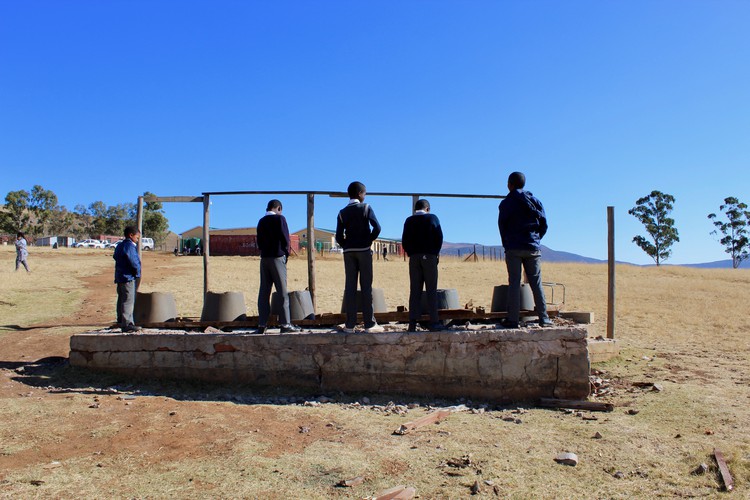
The current toilets at the school in Ngxingweni village were built in 1984. There are eight pit latrines for the 208 learners and teachers. Some of the toilets are full and the seats are broken. Children and teachers have to relieve themselves in the bush outside the school premises.

Teachers say the education department first promised to fix the toilets in 2012, but keeps on postponing. “When we first asked for toilets, the teachers’s toilets were still in better condition … [Now] we are also forced to go to those bushes to relieve ourselves,” said a teacher.

A member of the School Governing Body, who did not wish to be named, said, “Teachers are supposed to be well respected people. Then tell me if they relieve themselves in bushes where is their dignity? … We can’t just sit because government is failing our children and teachers.”

“These bushes are far from the school and when learners go to them, they have to go in numbers, at least four of them for safety reasons,” said a teacher.

Unemployment is high in Ngxingweni village and most people survive on social grants, but they have been willing to use the little money they have to assist the school to build toilets.

Parents started collecting money a year ago and have so far raised just under R5,000. It is not enough for new toilets yet, and some of the funds will be used first to fix the pit latrines. Community members have been fetching sand for construction from a river bank a few kilometres away from the school.

Learners at Sidubi Poort Junior Secondary School have to relieve themselves outside. Photo: Nombulelo Damba-Hendrik


At Mvuzo Junior Secondary School in Qamata village, also in Cofimvaba, the education department told teachers to destroy all broken pit toilets. Department officials visited the school and said the toilets, built over 30 years ago, were putting learners’ lives at risk.

However, the department did not say when it was going to build new toilets.

The school has 321 learners from grade R to grade nine. They now relieve themselves at a wall a kilometre away. Teachers were told they have to accompany the learners, but they say they do not have time to do this.

“I’m a male teacher … What are the community members going to say when they see me watching their children relieving themselves? On the other hand, there are learners who are waiting in class for a lesson,” said a teacher. “The challenge we are facing is that when learners go to relieve themselves, they leave the school in groups … We can’t keep our classes in order. And learners are missing lessons.”

“Even if we go in groups, that does not guarantee our safety. There are snakes here and anything can happen. To be honest I’m always scared of going … but we do not have a choice,” said learner Jessica Ngqomo.

She said some boys at the school were still using the destroyed toilets and refusing to go to the bush.

Spokesperson for the department Malibongwe Mtima said the department has close to R2 billion to replace unhealthy and unhygienic pit latrines. Mtima did not respond to questions about the two schools.

Equal Education says the Eastern Cape has over 1,700 schools with pit latrines, the highest number in the country. It said the need to address this crisis cannot be overstated, particularly when taking into account the danger it poses to learners and teachers.

A toilet at Sidubi Poort Junior Secondary School. Photo: Nombulelo Damba-Hendrik

Zimbabwe: Government sets aside $4,2m for school laboratories

Zvamaida Murwira

Government has set aside $4,2 million for the establishment of school laboratories and strengthening vocational skills as it seeks to attain Vision 2030 as enunciated by President Mnangagwa, a senior official has said.

Outgoing Secretary for Primary and Secondary Education Dr Sylvia Utete-Masango said $9 million had already been spent on the procurement of learning material, as her ministry strives to revamp the education system in line with the vision of the Second Republic led by President Mnangagwa.

Dr Utete-Masango said this during a meeting she held with teachers’ trade unions last week, aimed at sharing the new Government’s thrust as it related to their portfolios.

“We are mainly prioritising infrastructure in terms of rehabilitating some of our school buildings that need revamping,” she said.

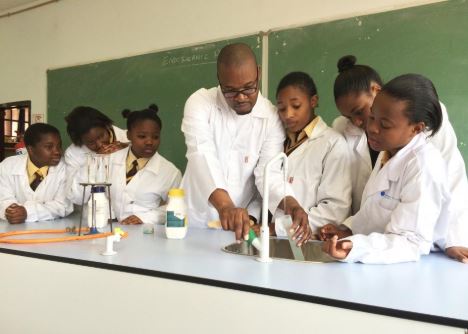
“Whenever we build a new school, we should also prioritise teachers’ accommodation. We are also prioritising learning material, strengthening vocational skills and science.

“Government has set aside $4,2 million meant for procurement of science and laboratory equipment targeting primary schools as well.

“We are happy that so far we have spent over $9 million on procuring teaching and learning material and part of that funding came from Unicef.”

Dr Utete-Masango implored teachers to be conversant with the Government’s thrust on the education sector.

“We felt we should share with you the Government’s mantra and how it affects our ministry,” she said.

“What the new Government is doing is to revamp the economy.

“The approach being used is the 100-day cycle where each ministry will have to indicate their programmes and how it is impacting on the economy.”

In an interview, Primary and Secondary Education Minister Professor Paul Mavima said Government would repeal the Education Act and replace it with a new legal framework.

The new framework, he said, will look at various issues such as governance, how to deal with girls that fall pregnant, and corporal punishment.

“The Education Act should be aligned with the Constitution,” said Prof Mavima.

“It has to be repealed and we come up with a new law. The new law has to do with equalisation of learners.

“The biggest issue has to do with finances.

“The other issue relates to inclusivity, rationalising schools, Government schools and private schools and issues of governance is an issue of concern, school development committees and school development associations.

“We will deal with issues of corporal punishment and exclusion of girls who fall pregnant.”

The Herald