Home Blog Page 483

Mbagwu reiterates plan to develop rugby through schools

African News Network

The Nigeria Rugby Football Federation (NRFF) President, Kelechukwu Mbagwu believes the country’s quest to become of the great teams in the world lies with grassroots development of the game with schools as the launch pad.

Mbagwu, who is delighted by Nigeria’s progress in rugby since his board came to power last year, said the NRFF has started making efforts to put structures in place across the country to enable school children embrace rugby at their formative stage.He declared that his board has started seeking public and private partnerships to raise funds for the basic infrastructure that would put Nigeria at par with best rugby playing nations of the world.

Highlighting NRFF’s achievements since he assumed office, Mbagwu said ratifying the board’s constitution, which paved the way for Rugby Africa to lift the ban on Nigeria, has helped the growth of the game, noting also that the federation has succeeded in taking the league that was only played in the South West and North to other regions of the country.

Mbagwu added that the outstanding performance of the national men’s team in recent international engagements with mostly domestic talents has proved that the country is blessed with quality players that would soon start challenging the leading African nations in the sport.“The federation is pushing hard to get the I-try programme in the North to other parts of the country. “If we could get rugby to be taught in schools I think we would have succeeded in laying the foundation that would take the sports to enviable height.

“You can see from the performances of the national team in the regional championship in Cote d’Ivoire and the international friendly against Niger Republic that we are on course. Beating other top African countries in the tournament to qualify for the final of the championship, which we lost controversially just after coming out of suspension has raised Nigeria’s stake in international rugby,” he said. Mbagwu revealed that the board was currently trying to assemble a formidable female rugby team that would represent Nigeria in a rugby sevens championship in Las Vegas, U.S. next year.

“We are also trying to fix a date for the Independence Sevens in line with Rugby Africa’s programme because they want to observe the championship, grade some of Nigeria’s match officials and technical personnel for 2019 programmes.“This is a fall out from our super performance at the Africa Regional Sevens Tournament in Abidjan, where we placed second behind host Cote d’Ivoire.

“The African body is also trying to see if they could include the Independence championship in their calendar as a recognised international event. The Independence sevens tournament is another tournament to expose Nigerian teams to be exposed and compete with the best teams to tough competitions. “We are also fighting to ensure rugby becomes part of the sports at the National Sports Festival coming up in December in Abuja. The Beach Rugby Tournaments and some Sevens events will hold later in the year,” he said.

African News Network
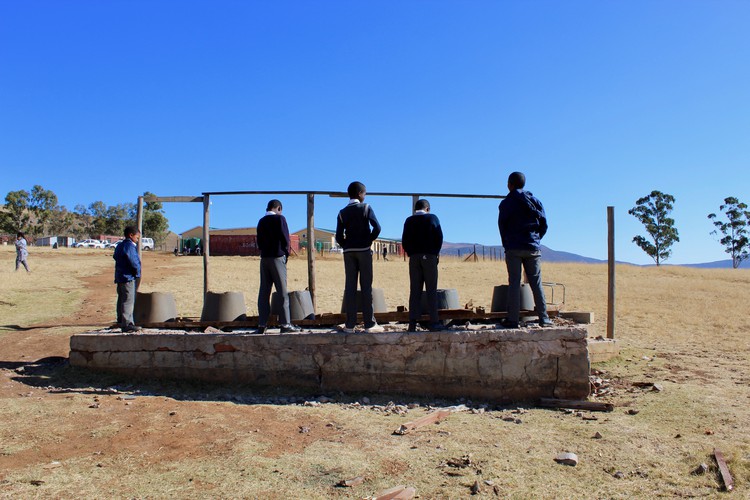
Parents have to build toilets for Eastern Cape school

Yamkela Ntshongwana and Nombulelo Damba-Hendrik

Parents at Sidubi Poort Junior Secondary School in Cofimvaba say they have decided to build toilets for their children because the Eastern Cape Department of Education has been dragging its feet for over seven years. Community members have volunteered to do the work.

The current toilets at the school in Ngxingweni village were built in 1984. There are eight pit latrines for the 208 learners and teachers. Some of the toilets are full and the seats are broken. Children and teachers have to relieve themselves in the bush outside the school premises.

Teachers say the education department first promised to fix the toilets in 2012, but keeps on postponing. “When we first asked for toilets, the teachers’s toilets were still in better condition … [Now] we are also forced to go to those bushes to relieve ourselves,” said a teacher.

A member of the School Governing Body, who did not wish to be named, said, “Teachers are supposed to be well respected people. Then tell me if they relieve themselves in bushes where is their dignity? … We can’t just sit because government is failing our children and teachers.”

“These bushes are far from the school and when learners go to them, they have to go in numbers, at least four of them for safety reasons,” said a teacher.

Unemployment is high in Ngxingweni village and most people survive on social grants, but they have been willing to use the little money they have to assist the school to build toilets.

Parents started collecting money a year ago and have so far raised just under R5,000. It is not enough for new toilets yet, and some of the funds will be used first to fix the pit latrines. Community members have been fetching sand for construction from a river bank a few kilometres away from the school.

Learners at Sidubi Poort Junior Secondary School have to relieve themselves outside. Photo: Nombulelo Damba-Hendrik


At Mvuzo Junior Secondary School in Qamata village, also in Cofimvaba, the education department told teachers to destroy all broken pit toilets. Department officials visited the school and said the toilets, built over 30 years ago, were putting learners’ lives at risk.

However, the department did not say when it was going to build new toilets.

The school has 321 learners from grade R to grade nine. They now relieve themselves at a wall a kilometre away. Teachers were told they have to accompany the learners, but they say they do not have time to do this.

“I’m a male teacher … What are the community members going to say when they see me watching their children relieving themselves? On the other hand, there are learners who are waiting in class for a lesson,” said a teacher. “The challenge we are facing is that when learners go to relieve themselves, they leave the school in groups … We can’t keep our classes in order. And learners are missing lessons.”

“Even if we go in groups, that does not guarantee our safety. There are snakes here and anything can happen. To be honest I’m always scared of going … but we do not have a choice,” said learner Jessica Ngqomo.

She said some boys at the school were still using the destroyed toilets and refusing to go to the bush.

Spokesperson for the department Malibongwe Mtima said the department has close to R2 billion to replace unhealthy and unhygienic pit latrines. Mtima did not respond to questions about the two schools.

Equal Education says the Eastern Cape has over 1,700 schools with pit latrines, the highest number in the country. It said the need to address this crisis cannot be overstated, particularly when taking into account the danger it poses to learners and teachers.

A toilet at Sidubi Poort Junior Secondary School. Photo: Nombulelo Damba-Hendrik

Zimbabwe: Government sets aside $4,2m for school laboratories

Zvamaida Murwira

Government has set aside $4,2 million for the establishment of school laboratories and strengthening vocational skills as it seeks to attain Vision 2030 as enunciated by President Mnangagwa, a senior official has said.

Outgoing Secretary for Primary and Secondary Education Dr Sylvia Utete-Masango said $9 million had already been spent on the procurement of learning material, as her ministry strives to revamp the education system in line with the vision of the Second Republic led by President Mnangagwa.

Dr Utete-Masango said this during a meeting she held with teachers’ trade unions last week, aimed at sharing the new Government’s thrust as it related to their portfolios.

“We are mainly prioritising infrastructure in terms of rehabilitating some of our school buildings that need revamping,” she said.

“Whenever we build a new school, we should also prioritise teachers’ accommodation. We are also prioritising learning material, strengthening vocational skills and science.

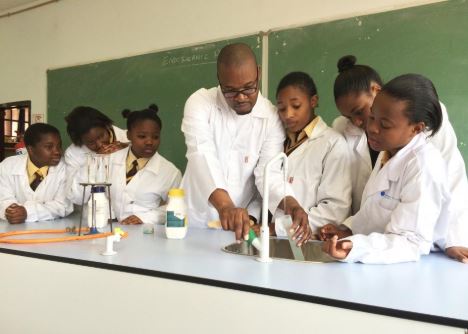
“Government has set aside $4,2 million meant for procurement of science and laboratory equipment targeting primary schools as well.

“We are happy that so far we have spent over $9 million on procuring teaching and learning material and part of that funding came from Unicef.”

Dr Utete-Masango implored teachers to be conversant with the Government’s thrust on the education sector.

“We felt we should share with you the Government’s mantra and how it affects our ministry,” she said.

“What the new Government is doing is to revamp the economy.

“The approach being used is the 100-day cycle where each ministry will have to indicate their programmes and how it is impacting on the economy.”

In an interview, Primary and Secondary Education Minister Professor Paul Mavima said Government would repeal the Education Act and replace it with a new legal framework.

The new framework, he said, will look at various issues such as governance, how to deal with girls that fall pregnant, and corporal punishment.

“The Education Act should be aligned with the Constitution,” said Prof Mavima.

“It has to be repealed and we come up with a new law. The new law has to do with equalisation of learners.

“The biggest issue has to do with finances.

“The other issue relates to inclusivity, rationalising schools, Government schools and private schools and issues of governance is an issue of concern, school development committees and school development associations.

“We will deal with issues of corporal punishment and exclusion of girls who fall pregnant.”

The Herald

5 Questions: Naledi Pandor and why SA can’t afford to sleep on the job crisis

0

A’Eysha Kassiem

Higher Education and Training Minister Naledi Pandor says while SA is gaining ground on solving its skills crisis, there’s still lots to do. Here, in this edited Q/A, is what she considers some ways of solving SA’s job crisis.

Fin24: In a technical and vocational college report published last year, it found that there were some 3.4 million young people who were neither in training nor in education. How do we reach out to them and get them working?

Naledi Pandor (NP): I think one of the things we need to do is have diverse offerings (at training colleges) available because there are young people who come from school who may want to become an electrician, a plumber, an automechanic. But then there is the young person, who is a bit older, who has been out of school or who has never been to school and he needs a very different set of programmes. In terms of that person, our community colleges should respond to her and they should offer her a programme that a young adult would be excited to partake in and I think, at times, that programme may very well include some form of basic literacy – be it computer literacy at a basic level and then a skill such as design or needlework, financial management skills, or marketing or in fact digital (skills).

Fin24: To what extent do you think we’re on the right track?

NP: I think there’s a lot to do. There’s nothing wrong with talking but that shouldn’t be the only thing. We must become very good at implementation and follow-through. I believe that beyond the plan, the issue of impact is important. Nothing should be left to chance. We should be following up, making sure that what we support and provide funding for is working the way we intended it to work.

I think there’s a lot of scope for Setas (Sector Education and Training Authorities) and for employers to do much more. I’m concerned that in the Seta programmes, young people are doing learnerships and then they move to another Seta and do another learnership, whereas the learnerships should help … them to take up employment… There are so many sectors in which there are opportunities – I’m keen to encourage our (training and vocational colleges) to include entrepreneurship as a strong part of our training.

Fin24: Retired judge Jonathan Heher in his report on free higher education has previously highlighted the gross underfunding of the training sector. Are we investing enough and what more needs to be done?

NP: Well, we’re not yet investing enough. Both in TVETs (Technical and Vocational and Education Training colleges) and universities and thirdly in the community colleges. These are sectors desperately in need of funding, but from this year there is an upward trend and should this be sustained, we will begin to see a turnaround.

However, money is also a problem because sometimes you place resources in institutions and they don’t have the capability to effectively manage these institutions and then a lot is wasted. So we are supporting the colleges with developing financial administration and working very closely with their finance officers to ensure there are persons who are able to oversee and manage increasing large allocations from the state.

Fin24: What would you say to the critics and to businesses who question the quality of the TVET certificate?

NP: In my view, SA is going to succeed at addressing its problems only in so far as we manage to establish partnerships across different stakeholder groups. The problems of SA don’t belong to President Cyril Ramaphosa or to his political party, they are South African problems and so we must constantly search for ways of collaborating. I’ve made it my own objective that I should establish strong partnerships with the business sector so we are now going to pilot a programme from next year (so that) when students enter the programme, they will already have an apprenticeship contract and that is the way that TVET colleges should be. We should be having very strong links with industry.

Fin24: In his opening address at the Jobs Summit, President Cyril Ramaphosa said we can’t be a nation of zombies – and that the unemployed are like zombies wandering around aimlessly. What hope would you give the jobless, especially the youth?

NP: I would encourage young people to find out what is available, to visit their local library, to use the facilities there, to seek out information in terms of the kind of internships offered by different government departments, by NGOs. Try to get active, don’t be on the street corner. There are many opportunities. I find that information is a big gap in our community, not a lack of opportunity.

Fin24

South Africa: Academic institutions are where black intellectuals go to die

0

Thabi Myeni

Almost three years ago, I wrote an article titled, “Dear Academia, Take Us Black”. The article came after my first encounter with the Fees Must Fall protest action. The observation I made was that University of KwaZulu-Natal’s academic staff had shut the blinds, got into their cars and drove off to God knows where “intellectuals” run to when their safe spaces are breached. This is the anti-black nature of academia.

Anti-blackness is not just about hating black people; it is informed by one’s social behaviour towards black people, distancing oneself from blackness and utter denial of black people’s right to exist as black people and not as products of a Eurocentric society.

Fast forward to the week of the 24th of June 2018, a similar feeling came over me at the BRICS (Brazil, Russia, India, China and South Africa) Young Scientist Forum (YSF), where there were undoubtedly brilliant and well educated black academics. It is not about what black academics said at this conference, it is more so what they did not say that struck a chord with me. It was their utter indifference to black suffering, the anti-blackness that was left unchecked and most importantly, their restraint from giving black (centric) academic input.

BRICS YSF was supposed to be a monumental pushback against imperialism and the devastation it continues to cause in South Africa particularly. The most educated black people in the country understand white capitalist greed and racial disparities but fail to locate them in praxis as white monopoly capital.

Most presentations that touched on black discourse were wrapped in undertones about respectability. It was a room full of young black people who “made the right decisions” to escape the gutters of Limpopo and Eastern Cape. Applauded for an unsung resistance for infiltrating white academia. Our highly accomplished people excelled by societal standards, it was “black excellence” indeed, but they failed dismally to critically acknowledge historical context, speak to the racialised nature of academia and agitate a space where the devaluation of black existence is the standard.

Black academics are so dissociated from the land struggle that when it was a topic of discussion, it was almost comical. “We want the land” became a passing joke. Is it not anti-blackness and “othering” that gives black academics the privilege to comically relieve themselves with the community’s life or death situation? The point is that as long as black intellectuals continue to subscribe to white academia, they will continue to unconsciously show the struggle the middle finger.

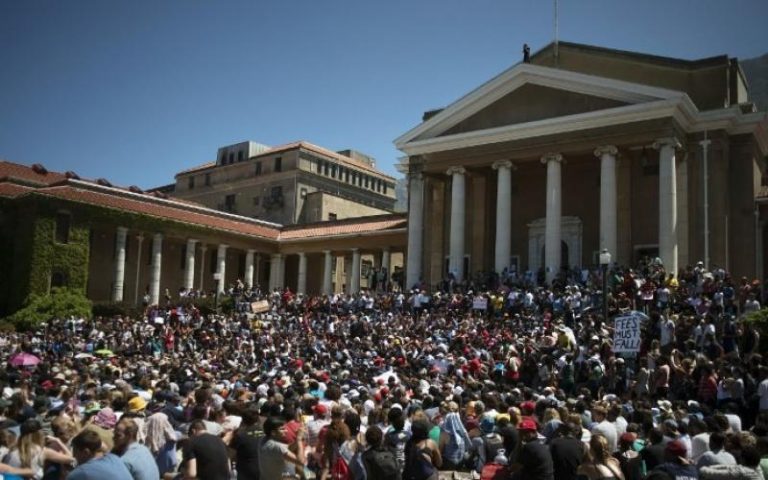
The experience solidified how black intellectuals leave the community to go to academic institutions where their blackness is killed and castrated. There are many reasons why Fees Must Fall, Rhodes Must Fall and any other black-led student initiatives never went beyond institutions into the communities in recent times. Perhaps one of the most viable reasons is that black academics have written themselves out of any struggle outside of white institutions where they seek validation and class.

Somehow there is a false sense of class escapism that black students get when they walk in between tall buildings, rub shoulders with white people and get exposure to metropolitan culture. The coinage of populist words like “student struggle” is a story for another day, but this is how we know people are choosing to identify more with the white institution than with the black community.

Academia is a process for assimilation and it legitimises whiteness as the default academic currency. Of course this critique comes with understanding that black academics are thrown into this system, where they continue to operate with the institutional currency in order to attain legitimacy and make it to the end, but their decision to do so is informed by anti-blackness and individualism.

If we can learn anything from black children who walked these institutions before us like Sibongile Mkhabela, Margaret Mncadi, Tsietsi Mashinini and Onkgopotse Tiro, it is that academic institutions are not an opportunity for self-worth politics called “student struggles” but about the community, agitation and organising for black resistance.

It is the duty of the oppressed to revolt. Academic institutions must be utilised to better confront the marginalisation of the community. Black academia’s duty at the very least is to investigate imperial dominance and give academic integrity to radical economic transformation, the same way that Steve Biko gave black academic integrity to Black Consciousness.

Black academia must be defined, claimed and returned to a space that is black-centric and where the groundwork for the struggle meets intellectual blackness.

* Thabi Myeni can be contact at <thabi@gmail.com

South Africa: Matric exams kick off

eNCA

The class of 2018 will sit for their first paper of the year-end matric exams on Monday.

More than 600, 000 matric pupils will sit for the final exams and more than 167, 000 part time candidates will also be writing the finals.

On Monday, the first practical examinations in Computer Examinations Technology (CAT) will be written by 37 340 candidates.

This will be followed by the practical examination for Information Technology that will be written by 4,170 candidates on Tuesday

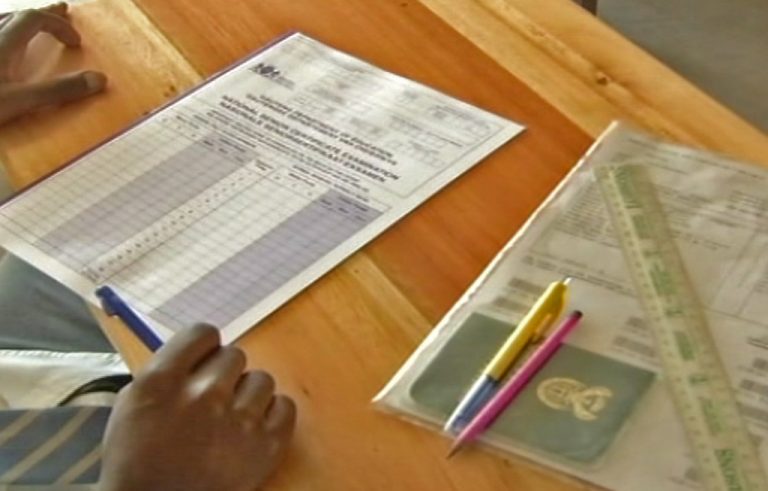
The 2018 National Senior Certificate examination will get off to a full start next week Monday with the writing of the Non-Official Languages.

The Department of Basic Education says it has left no stone unturned in its bid to ensure a credible examination.

“The Department of Basic Education (DBE) has embarked on an intensive review of all its systems and processes and has taken cognisance of the limitations that may have presented a challenge in previous years and all these have been thoroughly addressed,” the department said.

For the first time, Sign Language will be administered.

The department said question papers will be signed and learners will respond by signing and that will be recorded using the appropriate technology.

Umalusi says it has strengthened its systems to minimise the risk of irregularities during the exams.

The quality assurance body says it is ready to administer and manage the process.

“I can report to you that our system is ready to administer the 2018 final examinations and like I said we will conduct the examination to run smoothly,” said Umalusi CEO Dr. Mafu Ramoketsi.


47 rapes on South Africa’s campuses last year

Edwin Naidu

South African universities are taking steps to make campuses safer for female students, after Higher Education and Training Minister Naledi Pandor named the higher education institutions at which incidents of rape or sexual assault had occurred in 2017.

University authorities recently indicated that they had responded swiftly to making campuses safer, putting moves in place to ensure stronger support for victims of rape and sexual assault. These included establishing a court on campus, adopting a zero tolerance policy against attacks, improving security and appointing a former police officer to respond to incidents.

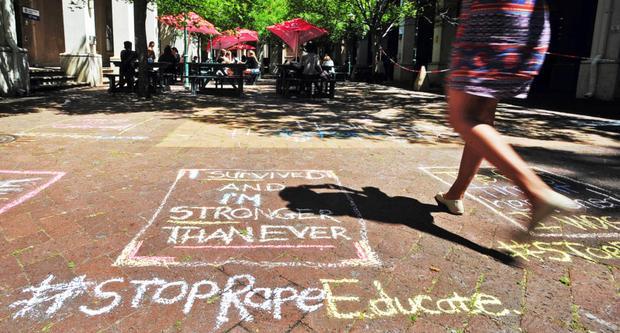
Pandor told Parliament last week that 47 students had been raped on campuses in 2017, prompting her to call for an emergency meeting with universities to discuss ways in which to address this scourge.

“We’ve got a date. I thought what we should do, rather than making it a ministerial concern, (with) me calling vice-chancellors, is work through Universities South Africa. They’re working with my team and we agreed on a date,” Pandor said.

The chief executive of Universities South Africa (USAf), Ahmed Bawa, said that Pandor had suggested that USAf hold a round-table meeting before the end of the month with university and college authorities, and student leaders and other structures, to address the high levels of violence on campuses.

“A key challenge is the level of gender-based violence on our campuses and the urgent need to ensure that women students feel safe, but there are also other forms of violence that are prevalent and need to be addressed. We will work closely with the ministry to address this unacceptable state of affairs,” he said.

Also in response to the situation, the Department of Higher Education and Training was finalising a draft policy and strategy to advise South African higher education institutions on how to deal with gender-based violence, including rape.

UCT – one of South Africa’s top-ranked universities – recorded the highest number of cases of rape (nine) and sexual assault incidents in 2017 followed by Walter Sisulu University with seven, the Tshwane University of Technology with six, Nelson Mandela University with five and the University of Johannesburg with four.

Rhodes University and the University of the Western Cape each reported two.

The University of the Witwatersrand, the Cape Peninsula University of Technology, the Durban University of Technology, North West University, the University of Pretoria and the University of South Africa each reported one incident.

Another incident was reported last week, when a student was allegedly raped at Walter Sisulu University, resulting in a student boycott of classes in protest against the lack of safety on campus.

In response to the crisis, University of Cape Town spokesperson Elijah Moholola said UCT had established the sexual assault response team, a multidisciplinary group of professionals, to address the culture of rape, sexual assault and gender discrimination.

The Office for Inclusivity and Change was implementing programmes for gender-based violence prevention and sexual assault case management, and the Student Wellness Service also provided psychological support for students.

University of Pretoria spokesperson Rikus Delport said every student and staff member had the right to feel secure, both on and off campus: “We are continually looking at ways in which we can improve our support, especially support of survivors, when such incidents occur. We have appointed a former police sergeant, with approximately 16 years of experience in sexual assault and rape cases, to assist students and staff. As soon as a case is reported, the officer will immediately assist the victim by accompanying her or him to the closest designated crisis centre at a hospital.”

Buhle Zuma, senior communications officer at Wits University, said they have a “zero tolerance approach” to sexual violence and harassment.

“As such, the university has a Gender Equity Office dealing with all aspects of gender-based violence and the advancement of gender equity on its five campuses. Wits is the only university in the country that has a specific, complainant-centred policy dealing with gender-related misconduct. This is supported by other policies on sexual harassment, sexual assault and rape, anti-discrimination and sexual and romantic relationships between staff and students,” she said.

Yonela Tukwayo, spokesperson for Walter Sisulu University in the Eastern Cape – where an alleged rape occurred last week, and which reported seven incidents of sexual assault in 2017 – said: “Our universities are microcosms of the societies we operate in and no university has foolproof mechanisms to block out societal ills Since the beginning of 2018, no rape incidents have been reported. We, in effect, had six cases of rape from 2017 because one was withdrawn.”

In August, the Rhodes University community in Makhanda (formerly Grahamstown) was rocked by the suicide of Khensani Maseko after she had laid a rape complaint against a fellow student in May.

In response, the university said last month that it had appointed Dr Zethu Mkhize as its harassment and discrimination officer. Mkhize said her role was to provide a “safe haven to those who had been wronged and to advise them of their options.”

University World News

City migration means 300 KZN rural schools face closure

Sne Masuku

The exodus of pupils from rural areas to schools in cities means about 300 schools in KwaZulu-Natal face closure.

The first phase of shutting down 143 schools has already begun.

The exodus has been blamed on teachers being left with almost empty classrooms at most schools in rural areas and some crime-stricken townships. The department declared such schools non-viable because of the low pupil numbers.

However, the process has resulted in some unforeseen complications. Sources say that in some cases, neighbouring schools have been combined, with two principals now reporting to the same school, neither of whom is sure who is in charge.

Compounding the problem, the teachers report to and take instructions from the principal they are familiar with, creating tension and chaos.

The Transformation of the Schooling System was introduced by former education MEC Senzo Mchunu. According to the system, primary schools with fewer than 150 pupils, and high schools with fewer than 200, were declared non-viable.

Some education stakeholders said they were not against the closure of such schools, but felt that the department should focus on making them more attractive and competitive by delivering quality education.

Nomarashiya Caluza, the provincial secretary of the South African Democratic Teachers’ Union, said the relocation of pupils to schools outside their communities left teachers without pupils to teach. She said the department was left with no choice but to merge affected schools.

“We were never against the closing of non-viable schools, but the processes are disadvantaging teachers. The merger creates leadership problems when principals have to leave their own schools and get displaced. Teachers are also disadvantaged when they get placed at schools far away from their homes,” she said.

Caluza said the department often did not follow the guidelines when closing non-viable schools.

Dr Rishigen Viranna, the DA spokesperson on education and education portfolio committee member, said that the department needed R100million to continue closing down non-viable schools because the department had to bear the cost of transporting pupils from one school to another if they were not close to each other.

Thembeni Madlopha-Mthethwa, the IFP spokesperson on education and education portfolio committee member, said the party was against schools closing.

“Schools bring community development. Parents move their children in search of better learning resources and quality education,” she said.

Madlopha-Mthethwa challenged the department to conduct research on what drove parents to remove their children from a school before taking the decision to close it.

“There are state-of-the-art schools that are being declared non-viable,” she said.

One such school, Manxayeni Primary in Jozini, northern KwaZulu-Natal had only three teachers teaching Grades R to 7. “It is impossible for three teachers to teach all the grades even if the classes are small. A school cannot be managed by three teachers,” said Madlopha-Mthethwa.

The merger between Gagisa and Mlamuli primary schools in Richmond in KwaZulu-Natal in 2015 had made the school ungovernable.

A teacher at the school, who did not want to be named, said there was no consultation before the merger, saying it had been imposed on them.

“Teachers have leadership battles. The school has never functioned normally. The principal was forced to resign due to the problems created by the merger,” she said.

Scelo Isaac Bhengu, president of the Educators’ Union of South Africa, cautioned the department to resolve teachers’ and community issues before shutting down schools.

Education department spokesperson Muzi Mahlambi said the department was trying to redress the imbalances of the past.

“Previously, schools were built in areas without consideration of the future growth in those areas. Due to new challenges facing our communities, their human settlement patterns have changed.”

He said the system engaged in a thorough process of consulting communities before effecting changes.

“Some of the factors that derail the process will be financial constraints, which may warrant transport and accommodation of pupils,” said Mahlambi.

IOL

Educated girls crucial for skilled workforce

Human Rights Watch

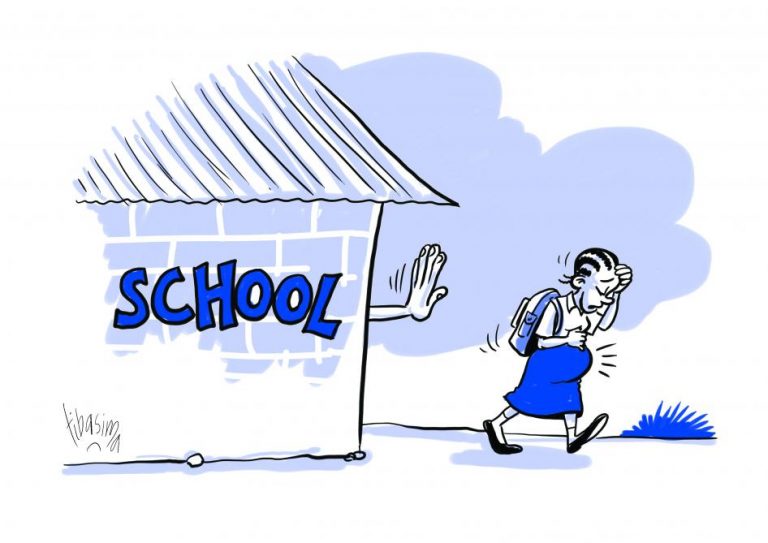
African governments should ensure the right to education for all girls by ending discrimination against those who are pregnant or have children, Human Rights Watch said today ahead of the United Nations International Day of the Girl Child.

This year’s theme, “With Her: A Skilled GirlForce, ” has particular importance for Africa, where governments are forcing tens of thousands of girls to drop out of school prematurely and failing to teach them adequate skills.

“Africa cannot have a skilled workforce if authorities throw girls out of school because they are pregnant,” said Agnes Odhiambo, senior women’s rights researcher at Human Rights Watch. “When girls get a quality education, they gain the skills and knowledge they need to achieve their potential and transform their lives, families and communities.”

Millions of girls across Africa are banned or discouraged from school because they’re pregnant, already a mother, or forced into marriage.

In Equatorial GuineaSierra Leone, and Tanzania, government and school officials deny pregnant girls the right to attend school. Elsewhere in Africa, governments are not doing enough to ensure that adolescent mothers resume their education after pregnancy.

In 2013, African Union member countries unanimously adopted Agenda 2063, a continent-wide economic and social development strategy. Under this strategy, African governments committed to build Africa’s “human capital,” which the AU terms “its most precious resource,” through sustained investments in education, including “elimination of gender disparities at all levels of education.”

In 2017, the African Commission on Human and Peoples’ Rights and the African Committee of Experts on the Rights and Welfare of the Child called on African countries to put in place measures to achieve equal access to education for girls and boys. They jointly stated that, “it is compulsory … to facilitate the retention and re-entry of pregnant or married girls in schools.” In 2018, the AU called on member countries to “Leave No Child Behind for Africa’s Development.”

Although many African governments have made strong commitments to guarantee that pregnant girls and young mothers can attend school, girls face many difficulties in enrolling and remaining in school, and excelling academically, Human Rights Watch said. Many teenage mothers are not in school because of poor implementation and weak monitoring of national re-entry policies.

Pregnant girls and young mothers are often stigmatized or rejected, have little to no support from their family or school, are condemned by government officials, face economic hardship, and are sometimes exposed to exploitation and violence. These problems present barriers to girls who are trying to continue their education.

Discriminatory government policies often regard education for adolescent mothers as a privilege that can be withdrawn as a punishment. In June 2018, Burundi – a country with widespread sexual violence with near-total impunity – reversed its policy protecting girls’ right to education regardless of pregnancy, their marital status, or motherhood. Burundi’s education minister in June 2018 banned the boys who get the girls pregnant as well as the girls themselves – including those forced into marriage – from going to formal public or private schools. A month later, under unclear circumstances, the minister lifted the ban.

In some countries, adolescent mothers are expected to transfer to technical and vocational centers, which often charge tuition fees and provide poor-quality training. Human Rights Watch has found that female students are very often limited in the technical subjects they are allowed to study in these centers.

The African Union should not tolerate discrimination against pregnant girls and adolescent mothers. It should press all member countries to end, in policy and practice, the expulsion of female students who become pregnant or get married. Governments should ensure girls get the support they need to remain in education, including through small accommodations – for example, giving students time for prenatal checks (where those cannot happen outside class time), time to breastfeed during breaks, and time off in case her child is ill or to comply with other medical or bureaucratic requirements.

African governments should also adopt a comprehensive approach to girls’ education, and address the many factors that lead to teenage pregnancies and difficulties that prevent girls from getting an education. The steps governments should take include eliminating primary and secondary school fees and providing financial support for at-risk and highly vulnerable girls; and strengthening the quality of education provided in public schools, including through effective teacher training.

Governments should also ensure that schools have systems to protect students’ safety; and provide adolescents with access to comprehensive sexual and reproductive health education and services at school and in the community, as well as birth control. Governments should also provide information to parents, guardians, and communities about the benefits of educating girls.

“Banning pregnant girls from schools is counterproductive and contrary to African governments’ international legal obligations,” Odhiambo said. “Ensuring that all girls benefit from quality education, free from discrimination, is critical for building a skilled female workforce for Africa’s development.”

HRW

Stop blaming teachers – a collaborative model can fix our schools

Nicola Vermooten

A collaborative service delivery model promises to alleviate the burden of unreasonable tasks among teachers and, in turn, allow them to concentrate on meeting standards for pedagogy. What is more, professionals will be able to generate innovative solutions to students’ physical and emotional needs.

A recent report published by the Centre for Risk Analysis at the Institute of Race Relations revealed that “education is the single greatest obstacle to socio-economic advancement in South Africa”. As opposed to bolstering socio-economic advancement, the quality of education in many public schools exacerbates poverty and inequality. Consequently, countless South Africans remain caught in a poverty trap.

Skimming through scholarly and non-scholarly publications about the South African education system reveals that the finger is typically pointed at teachers. While of the rate of absenteeismlate coming and turnover among teachers show that there is some merit in allegations of mediocracy, blaming teachers for the quality of education in public schools has not offered a long-term, sustainable solution. In fact, it has led to the stigmatisation of the teaching occupation and, in turn, contributed to teacher attrition.

A number of factors determine the performance of an education system. One of these factors is teacher quality. I endorse research that demonstrates the salience of teacher quality. Even so, I recommend that it is imperative to acknowledge the complexity associated with the task of improving the performance of an education system.

In a subsequent report that was also published by the Centre for Risk Analysis at the Institute of Race Relations, its CEO Frans Cronje, highlighted the salience of parental involvement and control in the education process, which directs attention to the need for collaboration among relevant stakeholders. In accordance with these recommendations, I propose that professionals, from different areas of specialisation, signify educational resources that should also be involved in the education process.

I performed a qualitative study among 37 teachers from fee public schools and no-fee public schools in the Cape Winelands Education District. The majority of participants stated that they are routinely expected to perform work tasks that exceed the level of responsibility that can be expected of teachers. This was especially noticeable among participants from no-fee public schools.

To alleviate the burden of unreasonable work tasks among teachers, I propose that the Department of Education must involve professionals, from different areas of specialisation, in the education process through the introduction of a collaborative service delivery model in public schools.

The collaborative service delivery model will provide a platform for professionals with diverse expertise and backgrounds to collaborate their efforts. This promises to alleviate the burden of unreasonable tasks among teachers and, in turn, allow them to concentrate on meeting standards for pedagogy. What is more, professionals will be able to generate innovative solutions to students’ physical and emotional needs.

I recognise that some public schools already have access to selected professionals. However, I propose that all public schools must have regular access to a variety of professionals, including dietitians, medical doctors, occupational therapists, psychologists (ie clinical, counselling, educational or industrial), social workers and speech-language therapists.

Probably the first question that comes to mind regarding the introduction of a collaborative service delivery model in public schools concerns the cost involved in leveraging the expertise of the above-mentioned professionals.

The majority of these professionals are expected to complete a compulsory internship before their registration with relevant professional councils (eg Health Professions Council of South Africa and South African Council for Social Service Professions). Given the shortage of opportunities to complete such internships, I propose that professional councils must encourage graduates to complete part of their internship in public schools.

Earlier this year, the then minister of finance Malusi Gigaba emphasised the importance of “educating our youth, protecting the vulnerable and investing in enablers of inclusive growth” during the the annual budget speech.

In accordance with this, he proceeded to allocate R324-billion to higher education and training for the next three years. A large proportion of this amount is spent on university education. Encouraging graduates to complete part of their internship in public schools will help to demonstrate a return on this substantial investment.

The provision of quality education is essential for socio-economic advancement in any country. To improve the quality of education in public schools across South Africa, we must stop pointing the finger at teachers. We must rather seek long-term, sustainable solutions, such as the introduction of a collaborative service delivery model in public schools.

Nicola Vermooten is a registered industrial psychologist and PhD candidate, Stellenbosch University