Home Blog Page 486

Nigeria: 65,818 applicants apply for 2,200 Lagos teaching jobs

Agency Report

The Lagos State Government has disclosed that 65,818 applications were received for the 2,200 teaching job vacancies offered by state government after the deadline for the submission of applications ended at midnight on Thursday, September 6.

The Permanent Secretary, Lagos State Ministry of Education, Adebunmi Adekanye, who disclosed this today after receiving reports on the exercise, said the huge number of applications was mostly influenced by the prompt payment of salaries and the welfare package of the Lagos State for teachers and other employees of the State.

She noted that a breakdown of the applications shows that 44,725 people will compete for the 1,200 jobs in the Public Secondary Schools category while 21,093 applied for the teaching job in the public primary sector.

The Permanent Secretary stated that the next step in the recruitment exercise is the electronic sorting of the applications to ensure that the applicants meet the set criteria and shortlisted eligible candidates are invited for written examination.

Mr Adekanye reiterated the commitment of the state government to fairness and transparency in the recruitment exercise which is aimed at injecting fresh and qualified teachers into the public primary and secondary schools in the state to improve the teaching and learning process in government-owned Schools.

Read original article here.

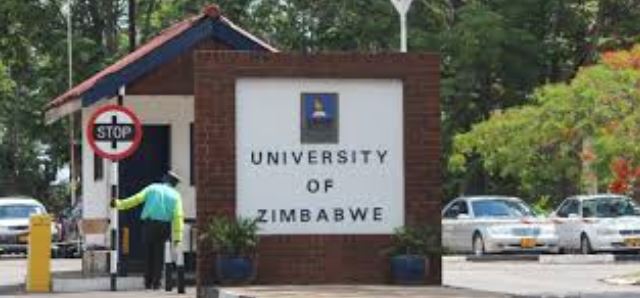
Zimbabwe: University of Zimbabwe vice-chancellor to stand trial

Tendai Rupapa 

Suspended University of Zimbabwe (UZ) Vice-Chancellor Levi Nyagura, accused of illegally awarding former First Lady Grace Mugabe a PhD, will stand trial on September 17 following the dismissal of his application for referral of the case to the Constitutional Court.

Nyagura last week had his application dismissed for lack of merit when he appeared before magistrate Mr Lazini Ncube.

Nyagura yesterday notified the court that he would approach the Concourt directly today in terms of Section 85(1) of the Constitution seeking permission to bring his constitutional challenge to the highest court in the land.

Prosecutor Mr Tapiwa Godzi opposed the application, saying Nyagura was merely frustrating the start of his trial.

“I do not believe that the Concourt will make a finding that there was a violation of accused’s right to a fair trial,” he said.

“Ordinarily, following the ruling yesterday, what is supposed to follow is the commencement of trial. These are delaying tactics and I submit that the matter proceeds to trial.”

Nyagura’s lawyer, Advocate Lewis Uriri, said it was for the Concourt to decide on whether or not his client’s rights were violated.

In his ruling, Mr Ncube said since the defence had not yet filed their application, the matter should proceed to trial.

“The accused only indicated intentions to approach the Concourt,” he said. “This matter should proceed to trial until he files his application. There is nothing that can stop this trial from proceeding.”

In his application for referral of the matter to the Concourt, Nyagura cited infringement of constitutional rights to a fair trial.

Adv Uriri argued that Messrs Tapiwa Godzi and Michael Chakandida from the President’s Special Anti-Corruption Unit, who are representing the State, have no authority to prosecute. – The Herald

Tendai Rupapa is a Senior Court Reporter


Overcrowded Eastern Cape schools at the centre of court application

Sesona Ngqakamba

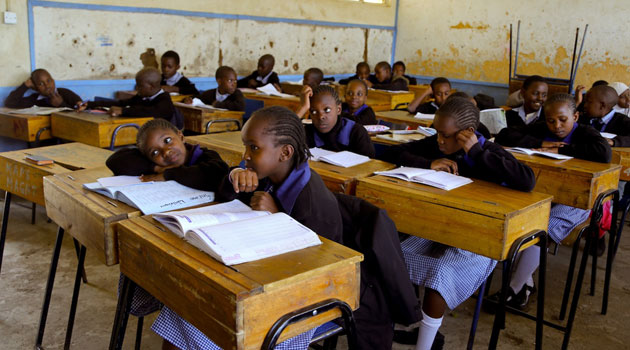
School overcrowding has taken centre stage in an application before the Mthatha High Court which a group of fed up parents, who have children at four Eastern Cape schools, have lodged.

The parents filed the application on August 20, seeking a court order for the provision of more classrooms.

“The application also seeks to ameliorate overcrowding in schools throughout the Mthatha and Amathole school districts, by requiring the MEC submit to the court plans for decreasing the overcrowding at schools in these districts, which have not been identified in the government’s existing infrastructure plans,” said the Legal Resources Centre (LRC), which is representing the parents.

According to LRC, the schools include Attwell Madala Senior Secondary School in Mthatha, Enduku Junior Secondary School in eNgcobo, Dudumayo Senior Secondary School in Mqanduli, and Mnceba Senior Secondary School in Ntabankulu.

“Overcrowded classrooms undermine children’s right to a basic education as enshrined in Section 29 of the Constitution. Regulation 9(2) of the Regulations Relating to Minimum Uniform Norms and Standards for Public School Infrastructure, state that ‘acceptable’ classrooms contain a maximum of 40 [pupils],” the LRC said in a statement.

The Infrastructure Norms, published in 2013, were meant to be phased in over seven years. It required the MEC to provide plans for implementing the norms and to continually report back to the Minister of Basic Education on the progress of these plans, the law centre added.

“However, available plans do not include provision for the applicant schools, where overcrowding has reached crisis levels,” it added.

The Department of Education says it is still in the process of preparing its response to the matter.

“We are still consolidating our response as the department. The time has not lapsed yet for us to submit documentation. We are also still collecting information, with the hope that we will respond on time…,” department spokesperson Malibongwe Mtima told News24.

Mtima added that the department would follow all court processes.

The LRC added that overcrowding at Mnceba Senior Secondary School has led teachers to hold classes under trees outside. At that school, there are 12 classes and with more than 80 pupils and two classes with more than 100 pupils.

“Enduku JSS has six classrooms with more than 70 [pupils] and Attwell Madala SSS has six classes with more than 80 [pupils]. Almost all the classrooms at Dudumayo SSS have more than 80 [pupils] and four classes have over 100 [pupils].”

The LRC said it hoped the court application would lead to a court order which resulted in more classrooms at the applicant schools and that all overcrowded schools in the Mthatha and Amathole districts would be included in the MEC’s plans to implement the Infrastructure Norms. – News24

South Africa and the fourth industrial revolution

0

Staff Reporter

The draft White Paper on Science and Technology envisions a South Africa that will participate in the fourth industrial revolution, the era of  increase automation, digitisation and artificial intelligence.

The white paper is set to inform government’s response to the fourth industrial revolution.

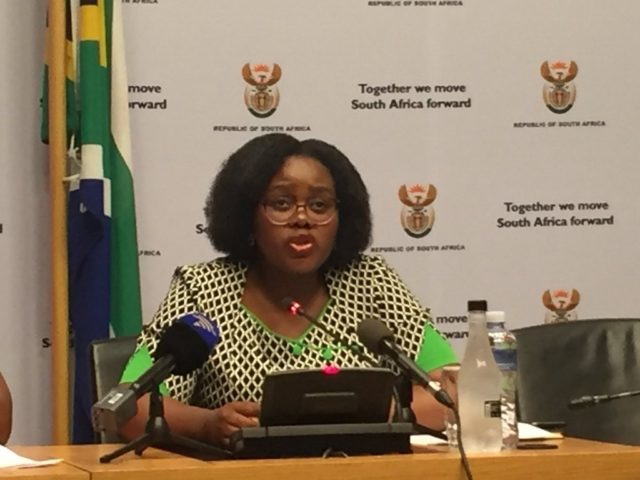
On Monday, Science and Technology Minister, Mmamoloko Kubayi-Ngubane, said the paper was a milestone long-term policy direction.

She said science, technology and innovation (STI) will ensure a prosperous and inclusive society in which the potential of all South Africans is realised.

Kubayi-Ngubane said at a briefing in Pretoria on Monday that members of the public have 30 days to weigh in on the document.

The first White Paper on science and technology was adopted in 1996. The new policy document is meant to focus on ensuring the country benefited from science, technology and innovation for economic growth, social development and transformation.

“STI lies at the heart of preparing for the emerging future. South Africa needs to build on progress in areas such as biotechnology, nanotechnology, advanced manufacturing as well as ICT research and innovation,” said Kubayi-Ngubane.

She said the white paper proposed policy interventions including accelerated skills development, leveraging ICT, open markets as well as support for interdisciplinary and trans-disciplinary research.

The current White Paper shifts the focus of South Africa’s science sector towards business-led innovation that tackles societal problems and expands the economy.

It also reaffirms a key government goal to boost total research and development (R&D) spending from 0.8% to 1.5% of gross domestic product (GDP) in the next decade.

On 5 September, the document was approved by the government’s cabinet, which will refer the legislation to Parliament, where it will be open for public comment before being signed into law.

“This White Paper proposes policy interventions to accelerate skills development, leverage ICT, commit to openness and support inter and transdisciplinary research. It also puts in place mechanisms to institutionalise foresight capacity to assist collaborative planning across government for STI.”

South Africa’s universities are already on board

University of Witwatersrand (Wits) Vice-Chancellor Adam Habib said Wits at the forefront of the technology revolution.

Habib indicated that Wits is embracing the Fourth Industrial Revolution and infusing technology through all aspects of University life, including teaching, research and learning. 

Habib said Wits was in partnership with Telkom, the University of Fort Hare and the University of Johannesburg to explore how the Fourth Industrial Revolution could shape the futures of South Africa. The partnership will explore the impact of the 4IR on the economy and seek to build an inclusive developmental future for all South Africans.

He said Wits has embraced the Fourth Industrial Revolution and infuse technology through all aspects of University life, including teaching, research and learning.

“We have invested R500 million in an ICT upgrade, adopted a new cutting edge research strategy, and introduced innovative blended learning options, including a digital campus, online courses and high tech classrooms,” said Habib.

Not only is STI pushed in academic spaces but the department of science and technology will use this to improve the lives of south Africans.

What about the workers?

Kubayi-Ngubane said STI will be  used to modernise existing industries such as agriculture and mining; develop emerging industries such as those linked to the next industrial revolution; exploit new sources of economic growth such as green industries and improve the quality of life.

She added that civil society will be empowered to distribute the benefits of technology to communities, as well as to help identify and support grassroots innovators.

The White Paper reveals that ciivil society will be involved in high-level government planning for STI programmes and will be supported by training, funding and networks to play a stronger role. There will also be support for grassroots and social innovation, when linked to provincial and local development strategies, with the hope that this will have significant transformative results.

Workers will be affected.

During a briefing in Pretoria on Monday, Kubayi-Ngubane said traditional jobs were already being lost due to automation and traditional commerce disruptions with the rise of electronic commerce and services.

Mining and labour analyst Mamokgethi Molopyane said government needed to collaborate with employers in sectors that have high automation potential and come up with policy that will proactively mitigate the negative impact that automation can be expected to have on thousands of workers – including how to reskill, and where to reassign displaced workers.

*An education system that makes the biggest contribution is one that is agile, fosters innovation, evolves as work changes, and can transition in line with the advances of technology. Current attempts at fixing the education system are archaic and indicate how unprepared we are for the future,” said Kubayi-Ngubane.




Officials turn to sport in bid to end school violence

Sne Masuku

A call to revive sport at schools to restore discipline and end the scourge of crime and violence has been hailed as the best solution. Education stakeholders said sport had largely ceased to exist at public schools due to funding shortages.

A concern shared by education stakeholders was that the lack of sporting activities at schools contributed to ill-discipline and violence, but the institutions lacked sporting resources.

This came in the wake of three pupils who were stabbed to death at Masakhaneni High School in Kwa-Makhutha and another at a school in Inanda last week.

Another pupil was reportedly recovering at home after he was stabbed at KwaMakhutha High School.

Some schools in Durban are set for a sporting revival in an attempt to restore the discipline that existed when sport played a big role in the curriculum.

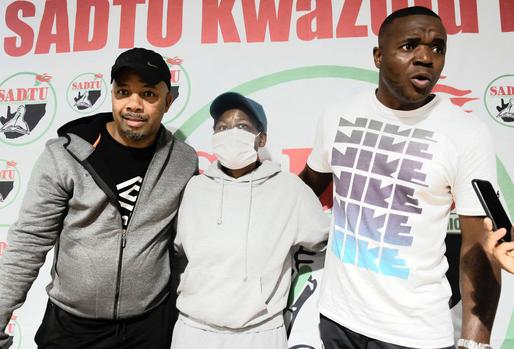
An initiative launched yesterday by the South African Democratic Teachers’ Union (Sadtu) will feature soccer stars including Banyana Banyana players. Union officials said they hoped to unite pupils and communities to fight the scourge of violence and instability at schools.

Sadtu general secretary Nomarashiya Caluza said sport was non-existent at most public schools, which could not afford specialists to coach pupils in the various codes.

She said the question of what contributed to violence at schools had led to a partnership between Sadtu and the sports stars.

Education department spokesperson Kwazi Mthethwa welcomed the initiative, but said it was not true that the department had neglected sports.

“We believe that a healthy body promotes a healthy mind. As a result, in March last year, we signed a memorandum of understanding with the department of arts and culture, which shows how serious we are about the promotion of sports at school,” he said.

Caluza said teachers and pupils should be reminded of the value of sports and other extracurricular activity at school. She said attempts to encourage the department to revive sport had always been met by the excuse that there was no funding.

Scelo Isaac Bhengu, president of the Educators’ Union of South Africa, said sport was the strongest source of discipline and was useful for pupils in and out of the classroom.

Daily News

TUT suspends classes as protests continue

Staff Reporter

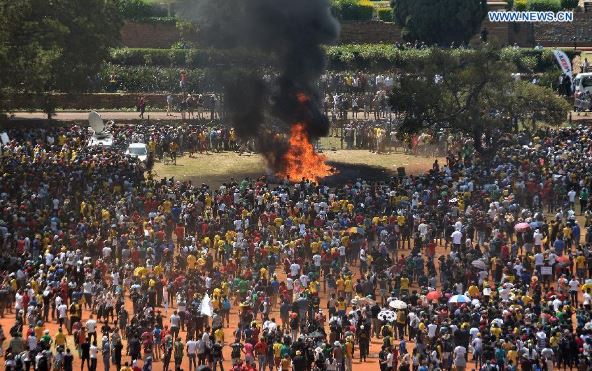
The academic programme at the Tshwane University of Technology (TUT) in Soshanguve has been suspended indefinitely by management after overnight protests.

TUT management made the decision on Monday morning following ongoing disruptions at both its Shoshanguve campuses.

The institution moved to suspend lectures after violence erupted at the weekend.

“Due to the volatility of the situation and the risk to the safety of staff and students, the University had no choice but to come to this decision, which aims to normalise the situation at the institution,” TUT spokesperson Willa de Ruyter said in a statement on Monday.

The university has also issued suspension letters to students allegedly involved in recent protests. The students, a media statement released on Monday, “were identified as perpetrators of the ongoing protest action and damage to TUT property”

Protests erupted last month following the shooting death of final year law student Katlego Monareng, allegedly at the hands of the police.

Monareng was allegedly shot by a police officer following a protest against a perceived ‘rigged’ student representative council election outside Soshanguve north campus.

Police were deployed to the institution’s Soshanguve campus after violence erupted over claims that the Student Representative Council (SRC) elections were rigged.

TUT and the Independent Police Investigative Directorate (Ipid) have initiated a forensic investigation into last week Thursday’s events.

According to Ipid spokesperson Moses Dlamini, the ballistic report will take six weeks before results will be made available. He said the directorate is still investigating the bullet that killed Monareng.

A law firm was appointed to probe the allegations.

The institution turned to the High Court on Friday, to obtain an interdict to prevent students from protesting or causing disruptions.

“The interdict will be enforced to prevent perpetrators of the ongoing unrest and damage to TUT property from entering the Soshanguve North and South campuses. In addition, it will be enforced to prevent any person from participating in any disruptive activities on these campuses,” De Ruyter said.


Malawi mulls free secondary school education

Wongani Chiuta & Owen Khamula

Malawi government has ordered head teachers in public secondary schools to delay the collection of school fees as the schools open Monday after a two-month summer holiday.

But Secretary for Education, Science and Technology, Justin Saidi, in a circular to all head teachers in the country, has not given reasons why there should be a delay in the collection of fees.

“As you are aware, the 2018/19 academic year starts from 10th September, 2018. I write to advise that you should delay the collection and receipt of tuition fees from students for the 2018/19 academic year.

“You will receive further instructions on the same in due course,” says the letter in part.

Saidi says the instruction only applies to payments of tuition fees and does not apply to the collection and receipt of the other fees such as text book, revolving fund, general purpose fund or boarding fees where applicable.

“I would like to appeal to all education division managers to make sure that the content of this circular letter is urgently brought to the attention of all headmasters for information and implementation,” says the further.

Sources in the Ministry of Education said that the Democratic Progressive Party (DPP) are using this as campaign tool to offer free secondary education.

Governance and rights activist Makhumbo Munthali said the Ministry of Education communique seems to suggest that government is considering introducing free Secondary School education.

” While the idea to introduce such a policy is ambitious and good in as far as increasing access to education for those learners who would not manage to pay fees, the question of the timing of when such a policy should be implemented should be seriously looked into,” he said.

Munthali argued that already the country is failing to successfully manage primary education despite introducing free primary education with the burden to cover the deficits now transfered to parents under the so-called development funds and others.

“No wonder many have repeatedly said Primary School is not free – a complete diversion from the Education Act of 2013. It is against such a background that many would still raise serious doubts on the feasibility of government implementing free primary education,” he said.

Munthali added: “Just like Primary Education experience, government may simply transfer the burden of financing the likely huge deficit that may be incurred in financing free tuition secondary education to parents and learners under the non-tuition fees like PTA/Development funds at school level.”

He said informed by the free Primary School experience, it would therefore be important for government to clearly spell out the mechanisms it has put in place in order to successfully implement the new free secondary school policy.

“Politically, it is clear that this decision may have been made bythe DPP government in order to strengthen its chances of winning the 2019 Tripartite elections. It may hence be seen as one of those desperate attempts by the ruling party to outsmart its strong competitors in MCP and UTM in the election.

“However, the only problem with ‘politically-motivated’ policies is that they are often not sustainable, and they in the short or long term put huge burden on the tax-payer. In summary, its important that government addresses the shortfalls with the implementation of free primary education before extending such a policy to secondary school,” Munthali said.

In Africa, Ghana is already offering free secondary education which started out this month under President Nana Akufo- Addo. In 2015 Gambia removed fees for all public primary and secondary schools, while in 2016 Tanzania removed lower secondary school fees.
Nyasa Times

South Africa: Inside the Royal Bafokeng nation’s R450 million school in rural North West

James de Villiers 

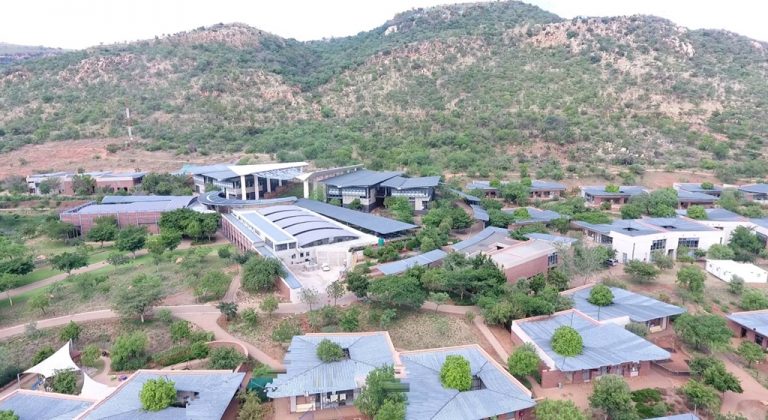
Lebone II – a private school entirely funded by the Royal Bafokeng Nation – accommodates over 800 pupils on 80 hectares in Phokeng, rural North West.

The primary and high school counts a full-sized Olympic swimming pool, classrooms with their own courtyards, and an impressive shaded atrium, among its many amenities.

When the school moved to its impressive new R450 million facilities in 2011, King Leruo Molotlegi said he envisions a school that will be a place of academic excellence rooted in an African context.

He had too many memories of his fellow black pupils at Hilton College, which he attended himself, becoming very disoriented about themselves and their identities whilst at school, the king said.

“They downplayed their heritage, and felt embarrassed by their languages and traditions.

“Leadership in understanding that preparing young people for the world of work, does not mean asking them to forget who they are and where they come from.”

The school’s R450 million construction cost was paid by Royal Bafokeng Holdings (RBH), which manages the nation’s mineral reserves.

The impressive central pavillion at Lebone II (Supplied)

The first Lebone (which means “light” in Setswana) school was founded by former king Lebone Molotlegi in 1998, whose dream was to found a world-class education facility in the village of Phokeng.

Inside the school’s theatre (supplied)

The Royal Bafokeng Nation owns mineral-rich land in the North West after the Bafokeng men left Phokeng on foot for Kimberley – a 480 km journey –  in the 1800s to work in the diamond mines, and then pooled money to buy the land with help of Lutheran missionaries.

After 1994, King Lebone became the first Royal Bafokeng king to legally control the territory. The nation  subsequently negotiated a mutually beneficial agreement with mining companies, after large platinum deposits were discovered in the area.

Architectural elements in front of the school’s windows to block out excess sun (supplied)

Caron Edmunds, marketing manager at Lebode II, says the school’s operations are funded partly from RBH, with the balance raised through school fees and fund-raising initiatives.

Monthly school fees are R6,740 for matric pupils at the school – much cheaper than Hilton College’s R276,560 per annum school fees.

“We apply a means and needs sliding scale to our fees, allowing candidates with potential to access the education that will allow them to succeed,” Edmunds told Business Insider South Africa.

“Our enrolment is structured so that between 50 and 70% of our annual student intake is from the Royal Bafokeng Nation.”

Lebone II school buildings (supplied)

She says Lebone II is founded to inspire, uplift and serve the local community and they are inherently linked to it.

“With our spirit of excellence, we bring out the best in all our students and know that when they graduate and go out into the world, they will go on to achieve personal greatness,” she says.

“More than this, we know that one day, they will return to bring their wisdom and skills back to the community. This is our reason for being, and is something of which we are very proud.”

Business Insider

Africa: Less than half of refugee children enrolled in school

0

Sonia Elks

More than half the world’s school-age refugees are excluded from education as host nations struggle under the weight of growing humanitarian crises, the United Nations said on Wednesday.

Four million refugee children around the world do not attend school, an increase of half a million from a year earlier, the U.N. Refugee Agency (UNHCR) said in a report.

“Education is a way to help young people heal, but it is also the way to revive entire countries,” said the U.N. High Commissioner for Refugees Filippo Grandi.

“Based on current patterns, unless urgent investment is undertaken, hundreds of thousands more children will join these disturbing statistics.”

The UNHCR said there were nearly 20 million refugees under its mandate, which excludes about 5 million Palestinian refugees, by the end of 2017 as the number of displaced people worldwide grew.

More than half were children and 7.4 million were of school age.

Only 61 percent of refugee children attend primary school, compared to more than 90 percent of all children, said the report.

The figure is even lower for older children, with less than one in four secondary-age refugees in school. Just one percent attend higher education, compared with more than a third of young people globally.

More than 500,000 refugee children were newly enrolled in school last year, but the rapidly growing refugee population means the proportion missing out on education has not shrunk.

Katherine Begley, a senior technical advisor for education at humanitarian agency Care USA, said schooling was a vital step in helping refugee families rebuild their lives.

“Education protects and education empowers,” she told the Thomson Reuters Foundation.

“It provides opportunities to cultivate friendships and supports work to establish a routine that children who are coming out of traumatic circumstances need as quickly as possible.”

What little education is available is often in poorly constructed temporary shelters or in the open air.

Social and cultural conventions mean girls are especially likely to miss out – a major concern, said Francisca Vigaud-Walsh, senior advocate for women and girls.

“We need to break this cycle by reducing the barriers to schooling,” she said.

“Less education increases vulnerabilities to forced marriage, exploitation, and even trafficking in refugee contexts.”

To address the problem, the UNHCR said refugees should be enrolled in mainstream schools rather than specially created ones, offered extra support, and barriers to enrolment such as requirements for identity documents should be removed.

Thomson Reuters Foundation

Stakeholders want teaching of leadership, entrepreneurship as subject in schools

Ujunwa Atueyi

With continuous decline in moral values and lack of good virtues among Nigerian youths, stakeholders have called on managers of the country’s educational system to facilitate the teaching of leadership and entrepreneurship as a subject in all schools.

They made the call at the launching of a book titled, Leadership and entrepreneurship series, co-authored by Chief Executive Officer, Crystal Marketing Centre Ltd, Dipo Ojedeji and creative director, Manners and Conduct, Aderonke Faseru.

The stakeholders regretted that social vices and societal ills are multiplying by the day, thus the need for government at all levels to begin to redirect the minds of the youths and expose them to good traits of leadership and entrepreneurial education.

Vice chancellor, Caleb University, Prof. Ayandiji Aina, who described the attitude of most Nigerian youths as unsatisfactory, pointed out that majority of them lack skills, mentorship and moral values, which he described as a threat to the country.

Citing so many nefarious acts the contemporary youths usually engage in at homes and in schools, he stated that from all indication parenting has gone wrong in the society.

He said, “We recently had conference on revitalising Nigerian education system, and I have come to realise that we cannot revitalise without doing something in the feeder system.

If the foundation is wrong, there is nothing we can do at higher education level.

Thus I recommend this book for all schools as it has lesson plans that will enable teachers inculcate leadership traits and stimulate entrepreneurial spirits of leaners at early age.”

Tobi Lawal, who chaired the event, said Nigerian youths are highly intelligent and hard working but lack mentorship and direction.

Teaching of leadership and entrepreneurship in practical terms is key.

They must be made to understand that attitude, integrity and passion are imperative to living a responsible life.

The book reviewer and education consultant, Busola Adegbaju, said the 17-chapter book, which is divided into two segments-leadership and entrepreneurship, regretted that Nigerians are known for high intellectual prowess, but applying it to realities of life is a challenge.

Describing lack of application of knowledge to real life as a huge gap, which must be bridged, she said issues of leadership and skills must be prioritised in Nigerian schools.

“I have read a lot of books, and I have not seen one with this volume of activity pages. This will encourage collaboration among pupils.

The author was able to develop a curriculum in the book and this is laudable, as it will stimulate hands-on activities and enable learners to be explorative.

This is the standard in developed climes but unfortunately it is lacking in our schools.”

The authors urged both the federal and state governments to ensure that leadership and entrepreneurship is separated from civic education and prioritised in teaching and learning.