Home Blog Page 489

Inside one of SA’s most advanced state-school laboratories

James de Villiers 

Stellenbosch High School’s new science classrooms will help create “wow moments” for students of all ages, says Niel Retief, department head for life sciences.

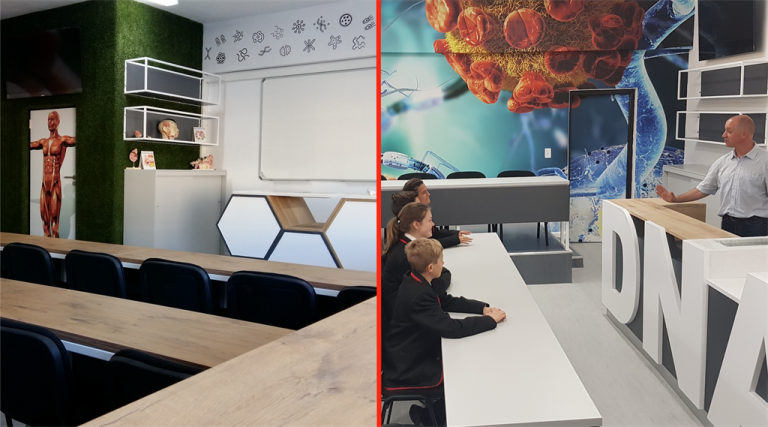
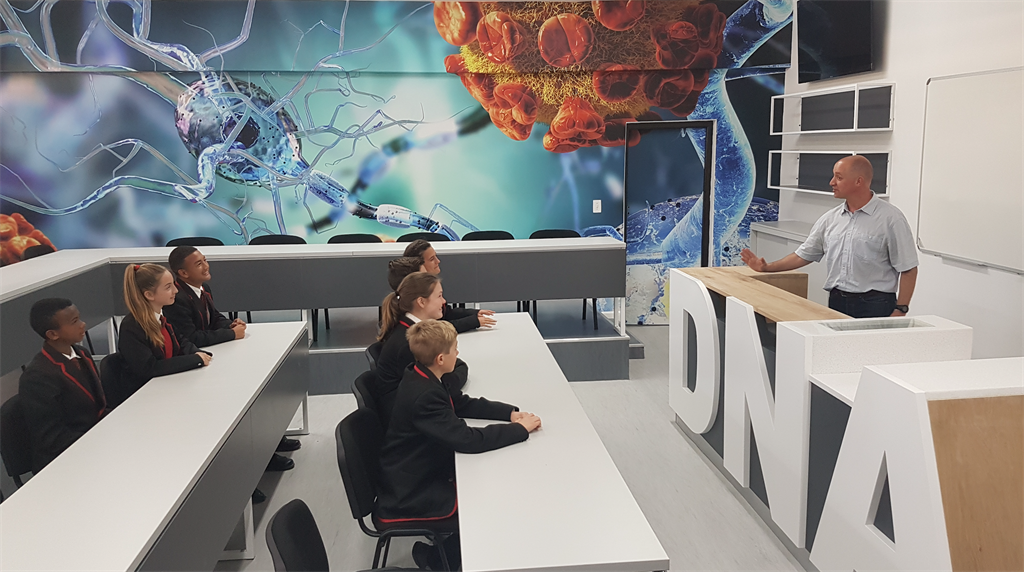
The two laboratories, named Life and DNA, were upgraded for a cost of R400,000 each, and are among the most advanced public school laboratories in South Africa.

They features high-speed wi-fi, several television screens, and presentation equipment to immerse students in the sciences while doing experiments.

Inside the DNA laboratory which was renovated at a cost of R40,000 (supplied)

“When we teach, we constantly look for ‘wow’ moments… the twinkle in your learners’ eyes when they grasped a new concept,” Retief told Business Insider South Africa.

“The idea was born to renovate the classrooms into visually stimulating high-tech spaces, where we could use media and technology to create more of these ‘wow’ moments.”

The 40-year-old classrooms were renovated with the help of the Dagbreek Trust and the Atterbury Trust, which seek to advance Afrikaans.

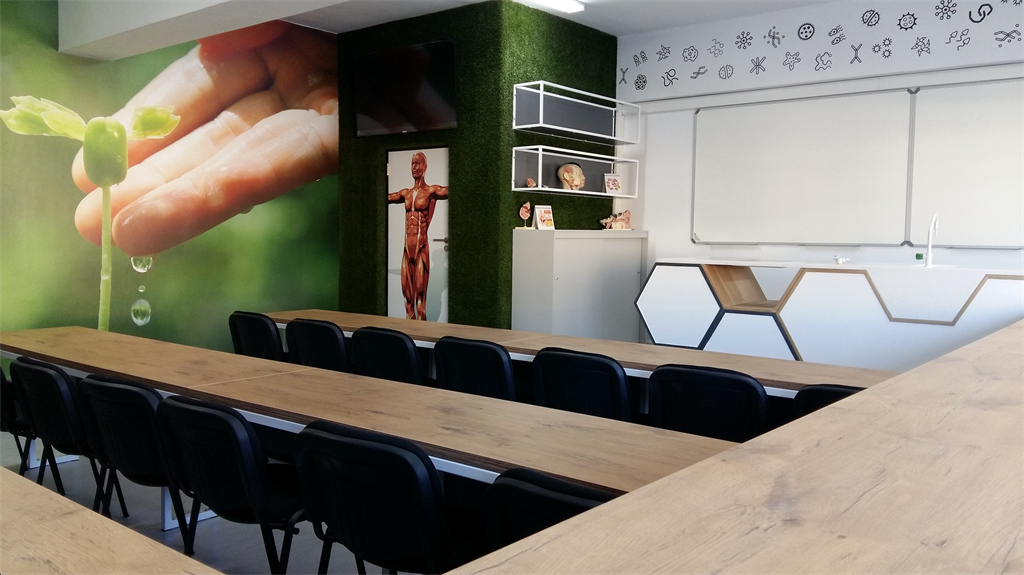
Each was designed with a distinct colour scheme and layout to augment the specific field of sciences taught.

The Life laboratory at Stellenbosch High School (supplied)

“On [their] own they do not necessarily enhance learning. You still need enthusiasm and a love for what you do. Now it is just so much easier,” Retief says.

Three additional classrooms will be constructed which will focus on physics and chemistry.

“What we have now is a space in which learners want to learn. The feedback from learners and staff is extremely positive and I had former learners who said that want to redo biology and life sciences!”

Read original article here.

Southern Africa has low levels of trained teachers

Alvine Kapitako

There are low levels of trained teachers at secondary level and in some Southern Africa countries at primary level, according to the recently released SADC Gender Protocol 2018 Barometer report.

The United Nations Educational, Scientific and Cultural Organisation (Unesco) states that the optimum learner-teacher ratio to promote effective teaching and learning is 1:25.

However, only three countries in Southern Africa, namely Botswana, Mauritius and Seychelles, meet this criteria. This impacts on the quality of education delivered in the classroom, according to the report.

To achieve universal primary and secondary education, Unesco advises that sub-Saharan Africa must see substantial growth in the number of educators.

According to the report, sub-Saharan Africa will need to train an additional four million primary school teachers and 11 million secondary school teachers over the next 12 years.

“Government expenditure on education must increase and be optimally utilised if the region is to realise its educational goals,” according to the report.

Spending on education in the SADC region ranges from a low of six percent in Zambia to a high of 30 percent in Zimbabwe. Namibia is at 26 percent.

This year’s budget in Namibia saw the Ministry of Higher Education, Training and Innovation receive N$3.2 billion and about N$9.8 billion over the Medium Term Expenditure Framework (MTEF).

This entails: N$960 million for the University of Namibia, N$600 million for Namibia University of Science and Technology and N$1.45 billion for the Namibia Students Financial Assistance Fund in respect of fiscal year 2018/19. The basic education ministry received N$13.5 billion

Furthermore, Unesco recommends at least six percent of the country’s gross domestic product (GDP) should be allocated to education.

In SADC, eight countries, namely Botswana, Lesotho, Malawi, Mozambique, Namibia, South Africa, eSwatini and Zimbabwe have met this target and allocate six percent or more of their GDP to education, the report highlights.

Zambia at only one percent is the lowest in the entire SADC region, Tanzania is at three percent, Madagascar and the Democratic Republic of Congo are at a lowly two percent.

Angola is at three percent, Comoros is at four percent. The highest is Lesotho at eleven percent, Botswana at ten percent, Namibia at eight percent and South Africa at six percent.

According to the report, it appears impressive that the eight SADC countries have reached or exceeded the recommended level of spending for education.

However, a review of their performance at different schooling levels and tertiary level is not hugely different from those countries that spend less than six percent of their GDP on education.

“This raises two key points – the region needs further investment in education, especially in the eight SADC countries that are underspending and the region needs a review of current spending on education to identify wastage, misappropriation and misallocated funds,” according to the report.

The 2017 barometer highlighted the SADC Policy Framework on Care and Support for Teaching and Learning (CSTL). Its goal is for SADC children and youth to realise their rights to education, safety, protection, care and support through an expanded and strengthened education sector response.

DRC, Malawi, Mozambique, South Africa, eSwatini, Zambia and Zimbabwe have begun implementing the policy.

“It is imperative that all other countries adopt and implement the CSTL. The Mozambique Ministry of Education uses the CSTL policy framework to change the teaching and learning environment which has improved the quality of education in Mozambique,” the report says.

Read original article here.

Nigeria: Cambridge officials rate Nigerian students high in academics

Ujunwa Atueyi

Officials of Cambridge International Education (CIE) have described Nigerian students as highly intellectual individuals who can compete favourably with their peers in any part of the globe.

Regional Director for Sub Saharan Africa, Juan Visser and Country Examination Manager for Nigeria, Marinee Nottingham who spoke with The Guardian on the sideline of the 2018 British Council Recognition and Outstanding Cambridge Learners Award in Lagos, said the performance of the award recipients is at par with global standards.

The students and their schools were recognised for their outstanding performance in the November 2016 and June 2017 Cambridge examination series.

Visser who commended the award recipients and their teachers said receiving Cambridge award is not an easy task as both pupils and teachers must show high level of commitment and dedication.

He clarified that CIE operates as a non-profit and non-teaching department of the University of Cambridge, and has been operating in Nigeria for many years.

“The 2018 award is outstanding global category, winners were selected by Cambridge. So it means that the winners are topping the world. We operate in 160 countries with over 10,000 schools and all learners across the world write the same examination because we want to ensure that we have the best standards of exam submitted to Cambridge.

“Winners were selected globally. So we recorded excellent achievement for Nigerian learners and what it also means is that the schools in Nigeria were able to teach and impact their students with the same quality standards as top schools in other areas of the planet. It is an indication that the schools are world-class institutions for them to have been able to sit for Cambridge examination and get top results. It is a deserved honour and we are very proud of them.”

He said the Cambridge awards run in top countries globally especially those that have been giving them significant large number of entries including Zimbabwe, Kenya, and so many others countries globally like UK, Singapore and Australia among others.

He urged schools that are interested to be credited as Cambridge schools, to visit their website and avail themselves of the unlimited information.

Nottingham on her part, stated, “We find that Nigeria produces top quality results and marks that we put them in top of our global results and it is compared with countries like the US, China, South Africa, Zimbabwe among others. To get this award, you have to be on top nation and we are very proud of them. As far as Cambridge International is concerned, our contribution in any country we operate is to have an international and a global benchmark operating in schools.

“So, I would rate the performance of Nigerian students in Cambridge examination excellent.

Read original article here.

Zimbabwe: Good month for education

Leroy Dzenga

Since the beginning of the month of August, Zimbabwean intellect has been on global display across many platforms.

Young men and women were ambassadors of a country which has recently fallen victim to bad press, obviously influenced with underlying politics.

Four separate groupings of local students made the nation proud as they shone, showing the world the depth of Zimbabwean mental proficiency.

Three Zimbabwean universities participated at the 27th All African Human Rights Moot Competition at the University of Ghana in Accra.

Out of 60 universities which participated the University of Zimbabwe came fifth, Great Zimbabwe University sixth and Midlands State University came eighth. One of the students who travelled and raised the Zimbabwean flag high, Fourth Year Bachelor of Law Honours Degree student Catherine Ndoro from Great Zimbabwe University (GZU), recounted the race they ran.

“Moot court is more or less like a real court. We are given a fictional case and we stand in as legal representation. We prepare arguments on behalf of the parties and we get to deliver (submit) before a panel of judges,” Ndoro said.

“We were being judged on both the manner of delivery as well as the content we delivered, knowledge and understanding of the law as well as its correct application, which is the primary assessment criteria,” said Ndoro.

In one of the competition’s stages, they met with another Zimbabwean college, MSU.

“Competition was very stiff and we also had to face one of our very own MSU in one of the rounds. Overall the competition proved that the quality of legal education in Zimbabwe is exceptional as all the Zimbabwean teams which attended made it to the top 10,” said Ndoro. Besides the competitive side in which Zimbabwean universities did well, there were extra benefits they got from their sojourn to Accra like mentorship workshops and networking opportunities.

n North America, the Zimbabwean flag also flew high.

A team of five high school students, namely Bennedictus Chingiodza (St George’s), Tamuda Chimhanda (St Ignatius), Danai Hakata (Tynwald High School), Gabriel Matemba (Harare High) and Letticia Vanganayi (Harare High) went to the First Global Robotics Challenge in Mexico.

Also known as the Olympics of Robotics, the competition is an annual robotics challenge where high school students converge to compete and test their acumen against global peers.

The team which was representing Zimbabwe won five out of eight games and came fifth in Africa. Tadzoka Pswarayi who travelled with the Zimbabwean team as its manager said Zimbabwe left a mark to be remembered at the global stage.

“Teams were placed into alliances and each alliance had three teams (countries). The game field stimulated a plant using green energy. There was solar, a wind turbine and a combustion plant. The object was for the players to power the plant by delivering solar panels, turning the wind turbine and powering the reaction plant,” Pswarayi said.

Pswarayi added; “This year’s competition theme was ‘Energy Impact’ as topics such as climate change have an impact on the sustainability of the world. The mini-robots which were being used by the students are prototypes that can be turned into large scale machines. The design aspects and coding and the engineering are apt.”

 During the competition, the adjudication was observing different competences and the Zimbabwean team won bronze in the Courageous Achievement Award.

 “The award comprises testing both soft skills and technical skills as well as game performances in the matches,” said Pswarayi. Team captain Danai Hakata relished the experience which they took as a learning curve.

“I was really excited about going to Mexico and it was a great experience, meeting many people from different nations and cultures was absolutely amazing,” Hakata said.

The Robotics Olympics gave an opportunity for students to create technological solutions to real issues.

“From the Olympics I learnt that it is not about winning the competition only, but it is about working together to solve a global problem, which was how we can get more green energy.

Each team had a unique robot, all built from the same kit that made me realise how important it is to always think outside the box,” Hakata said, promising to help the next team when they build their robot. According to the students’ coach Charles Matanga it took the team four months to build the robot at Impact Hub in Harare where the programme was being coordinated.

Currently Zimbabwe is ranked 51 out of 193 in global high school robotics.

Another show of Zimbabwe’s intellectual range was shown when Thandeka Tshuma, a student at John Tallach High School in Matebeleland North was a runners up in the SADC essay competition.

Tshuma’s essay titled; “The role of the private sector in developing industries and regional value chains in the SADC region” was only beaten by one entry. For her impressive effort Tshuma walked away with US$1000, a Samsung Galaxy phone, a laptop bag, flash disk and a key holder from SADC.

In addition, President Emmerson Mnangagwa added $2000 to her rich pickings as a token of appreciation for the way she carried the nation’s name through her writing.

Not to be outdone were the St Johns College Pipe Band who went to Scotland the home of pipers and drummers to challenge for the coveted prize at the Glasgow Annual Championships.

They went to with a mission and came back with a world title.

“St John’s College, proudly sponsored by AMP Meats and Colcom, has just won first place in their category “Novice Juvenile B” at the world championships. Our official title is Best Drum Corps and Best Piping in our category,” the school wrote on their Facebook page. In a statement, the College’s headmaster Cav Trinci lauded the team’s dedication before and during the competitions.

“This journey meant hours and hours of practice and endeavours on weekends, holidays and meant additional hours during very busy individual term schedules for the boys and tutors of the pipe band,” he said.

All these are cases of exceptional young Zimbabweans who have decided to be a beacon of light on the global stage. Zimbabwe’s education system is still competitive across the globe and continent. What is left is for the incoming cabinet to consolidate these signs of competence and ensure that there is growth going forward.

It can be argued that Zimbabwe’s future is bright and the above cases can stand as admissible evidence.

Read original article here.
More kids experiment with liquor

Zisanda Nkonkobe

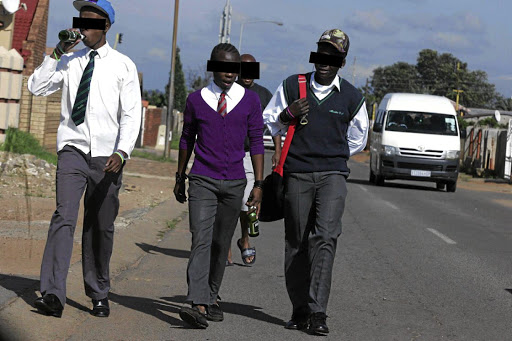
Statistics by the South African Depression and Anxiety Group has shown that some children start drinking when they are only 11 years old.

The figures revealed that one in 10 children under the age of 14 years has drunk alcohol in the last month, with less than three in 10 teenagers between 15 and 17 years having consumed alcohol in the past month.

Ingrid Louw, the CEO of the Association for Alcohol Responsibility and Education (Aware.org), said the problem is widespread, noting that possible reasons (for underage drinking) range from a lack of self-esteem, peer pressure, a lack of confidence in oneself, an unstable home environment and boredom.

“You’re bored and you just don’t know what to do and all of your friends are going down to the tavern on the corner to get a quart,” Louw explained.

“The other thing, and this is data that hasn’t been unpacked and contextualised yet, but a simple thing like the accessibility of the liquor can also be to blame.

“So the number of taverns in an area close to schools plays a role. Sometimes there’s too many taverns.”

To try to combat this the nonprofit organisation, in partnership with the Eastern Cape Liquor Board, is launching a sports and recreation programme next month aimed at teenagers and young adults. The programme aims to spread dual messages of responsible drinking to young adults and against underage drinking to teenagers.

Aware.org spokesperson Ashveer Kewalpershad said they plan to host five sporting tournaments in the Eastern Cape, the first of which will be held towards the end of next month and the last to be staged in February.

He said the programme was part of a R6-million investment into harm-reduction programmes in the province.

East London-based Dr Daya Appavoo said when taken in excess alcohol affects the liver, heart and muscles. “It impacts on your whole system and the problem becomes apparent almost immediately,” he said.

“School children who consume alcohol may start performing badly in school, some drop out and others don’t participate in sport.”

Appavoo continued: “They may become anti-social and display behavioural problems in the classroom. They stand a higher chance of becoming addicts if they start drinking from a young age as the habit becomes entrenched in them.”

Rhiannon Bond, senior social worker at the South African National Council on Alcoholism and Drug Dependence, said that there was a specific programme aimed at teenagers who experimented or indulged in occasional drinking.

“Most of our minors coming in are experimenting with either alcohol, marijuana and cigarettes as those are the main gateway substances,” Bond said.

Read original article here.
The ANC supports making history a compulsory subject

Staff Reporter

The ANC study group on basic education welcomed the findings of the basic education ministerial task team on making history a compulsory subject in South African schools.

The report, which was  presented in Parliament on Tuesday, showed the processes taken by the Ministerial Task Team as well as its findings and recommendations with regards to history as a compulsory school subject.

The task team was established in 2015 and was given the terms of reference to conduct a comparative international study on how to best implement the introduction of history as a compulsory subject up until matric.

The task team recommended a phased approach and that compulsory history be introduced.

It recommended that “Africa-centeredness” become a principle in revisiting content, specifically that both ancient and pre-colonial African history be brought into the curriculum for Grades 10 to 12.

The ANC task team supported the move.

They, however,  recognised the possible challenges that will be faced, especially relating to funding the restructuring of the curriculum, training of teachers as well as the writing, quality assurance and printing of textbooks.

“Whilst acknowledging efforts by the department as well as the ministerial task team to date, we urge them to fast track all avenues of implementation including consultations with the Department of Higher Education and Training, Teacher Unions and other relevant stakeholders,” said ANC Study Group Spokesperson Nonceba Mhlauli.

Mhlauli said history as a compulsory subject in schools was long overdue. She said the subject played a pivotal role in building a sense of nationalism, patriotism and national unity.

She added that history, as a subject, enabled South African citizens to learn and understand the struggles that were faced by many in order for this country to gain democracy.

The report completed by the ministerial task team found that certain aspects of pre-colonial history are taught [in Grades R to 9]. The report read that this tended to be portrayed as a ‘happy story’, appropriate to that level, but fails to provide the nuanced and complex history which should be taught at a higher level [in Grades 10 to 12].

“Problematic and controversial issues and themes, such as class, social stratification and the status of women and workers in ancient and pre-colonial history, must be included,” the team recommended.

The task team also found strong circumstantial evidence that many schools avoided teaching apartheid history, although it is included in the current curriculum, the report reads.

Mhlauli said history as a school subject needed to tackle social inequality and speak to issues of social cohesion, national and African identity.

“It must contribute to our project of decolonising our school curriculum. As a school subject, it will increase the analytical and cognitive thinking of learners which will build learners in a holistic manner,” she said.


Treasury slams excess cash on NSFAS books

0

Lameez Omarjee

he National Student Financial Aid Scheme (NSFAS) had R153.8m more cash left than projected at the end of the 2017/18 financial year, it has emerged.

Speaking to Parliament’s Standing Committee on Appropriations (SCOA) on Tuesday, Treasury’s deputy director general Dr Mampho Modise explained that at an entity like NSFAS, excess cash was not always a good thing – and in this case, it meant there were fewer transfers to students than there should have been.

According to the report submitted by Treasury, NSFAS’ cash available at the end of the year came to R3.7bn, which was 4.4% higher than projected.

During the same period, there were lower payments to students. Budgeted transfers and subsidies came in at R10.12bn, but actual transfers amounted to R7.3bn.

Modise said the appointment of an administrator at the entity to deal with the administrative hiccups could help with the scheme’s backlogs.

Last week, Higher Education and Training Minister Naledi Pandor announced that Dr Randall Carolissen would be the new administrator. For one year, Carolissen will take over the governance, management and administration of the NSFAS.

Carolissen is currently the Group Executive: Revenue Planning, Analysis and Reporting at the South African Revenue Service (SARS). He is also the Chair of the Council of the University of the Witwatersrand.

Carolissen’s appointment will help fast-track payments to students, Modise added.

Read original article here.

2 KZN pupils stabbed to death at school

Mxolisi Mngadi

Two school boys have died after they were stabbed, allegedly by other pupils, at KwaMasakhane High School in KwaMakhutha, south of Durban on Tuesday.

Provincial police spokesperson Lieutenant Colonel Thulani Zwane said the pupils were stabbed and injured at the school premises at about 11:00 on Monday.

“They were taken to hospital, where they died on arrival,” Zwane said.

Zwane said the motive for the stabbings was unknown at this stage, but that KwaMakhutha police were investigating two counts of murder.

 “No arrest has been made at this stage,” he said.

Provincial education department spokesperson Sicelo Khuzwayo said that, according to the information they had gathered at the school, two pupils had been involved in a fight outside of school over the weekend.

“It is suspected that, when they arrived at school, they continued with their fight which led to the stabbings,” he said.

Sihle Mngadi, a Grade 11 pupil who was allegedly involved in the weekend fight was stabbed by another pupil, he said.

“Mangaliso Mbatha, a Grade 10 pupil, who had nothing to do with the weekend fight, tried to intervene and was also stabbed,” said Khuzwayo.

“The matter is in the hands of the police, who are investigating the motive behind the stabbings,” he said.

Khuzwayo said they were very concerned about the loss of lives of young people in such a horrific manner.

“We expected these pupils to achieve so much in their future. We wish to express our deepest condolences to the pupils’ families, friends and schoolmates,” he said.


Dr Randall Carollissen appointed NSFAS administrator

Yoliswa Sobuwa

Minister of Higher Education and Training, Naledi Pandor has appointed an administrator for the National Student Financial Aid Scheme.

Dr Randall Carollissen has been appointed as the Administrator for a period of one year to take over the governance, management and administration of the entity.

The appointment will be effective from the date of the publication of a notice in the Government Gazette, which will be done early next week.

Dr Carolissen is currently the Group Executive: Revenue Planning, Analysis and Reporting at the South African Revenue Services (SARS). He is also the Chair of the Council of the University of the Witwatersrand.

This comes a week after Pandor, met with the Board of the funding aid scheme following the resignation of its Chairperson.

Department spokesperson Lunga Ngqengelele said following the meeting, the Minister announced that she would be appointing an Administrator to take over the management, governance and administration of NSFAS.

“The Board agreed with the Minister on the need for the appointment of Administrator” Ngqengelele said.

The immediate focus for the Administrator will be to ensure the effective closeout of the 2017 and 2018 student funding decisions and disbursements, as well as to urgently finalise plans for the 2019 funding cycle.

Over the next few months the Administrator will work with universities and TVET colleges to make sure that student funding for the 2019 academic year works smoothly.

New league to unearth rough diamonds

Sihle Ndebele

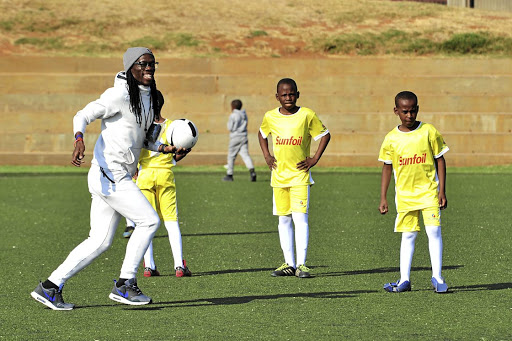
The Gauteng department of education has joined forces with the Willowton Group to form the Sunfoil Schools League aimed at unearthing raw football talent.

The league will be contested by 14 Soweto primary schools from Saturday until November. It is an Under-12 tournament for both boys and girls.

In an attempt to make the schools league popular, the department and the sponsors have invited SuperSport United’s Dean Furman and Reneilwe Letsholonyane to be the ambassadors of the league.

The duo was present at the official launch at Soweto’s Nike Centre in Pimville this week.

Letsholonyane urged the pupils to make the most of this opportunity, explaining that during his youth such opportunities were not available.

The Matsatsantsa A Pitori midfielder, who hails from Jabavu, Soweto was also eager to mentor some of the youngsters who will be taking part in the new league.

“These kids must grab this opportunity with both hands,” Letsholonyane said.

“When we grew up, we only dreamt about backing from [the] sponsors. We hope that other big companies will also come on board [and support this initiative].”

David Sweidan, group executive of marketing at Willowton, said the company’s main objective was to push for growth of soccer in township schools and to encourage participating pupils in becoming future professional soccer players.

“This schools’ league is part of our programmes to uplift the communities who support us by buying our products,” Sweidan said.

“We linked up with Gauteng’s department of education to unearth raw football talent. At this stage, the tournament will only take place in Soweto, but we hope to spread it countrywide later,” he said.

Read original article here.