Home Blog Page 490

Poverty-stricken communities in Ghana are restoring once-barren land

Albert Oppong-Ansah

In the scorching Upper East Region of Ghana, the dry seasons are long and for kilometres around there is nothing but barren, dry earth. Here, in some areas, it is not uncommon for half the female population to migrate to the country’s south in search of work, often taking their young children with them.

“We realised that the long dry spell, bare land and high temperature of 40 degrees and the absence of irrigation facilities for farmers to [allow them] to farm year-round…effectively made them unemployed for the seven-month dry season,” Ayaaba Atumoce, chief of the Akaratshie community from the Garu and Tempane districts, tells IPS.

“But for this initiative, our younger and future generation may have never known the beauty and importance of such indigenous trees as they [would have] all been destroyed.” Talaata Aburgi, a farmer from the Garu and Tempane districts in Ghana.

The Garu and Tempane districts, which encompass 1,230 square kilometres or 123,000 hectares, had large portions of barren and degraded land until just three years ago. Now, there are pockets of lush grass, neem trees, berries and indigenous fruit growing on some 250 hectares of restored land. The dry earth is beginning to flourishing, albeit it slowly.

Atumoce remembers that growing up in the area, there was dense forest cover. But it gradually diminished over time as the mostly farming communities here supplemented their income by making charcoal and selling it at regional centres.

According to the 2015 Ghana Poverty Mapping report, the rate of poverty in these two districts is 54.5 percent or 70,087 people—accounting for the highest number of impoverished people in the entire region.

The rate at which trees were cut down surpassed the rate at which new trees grew, if they did at all. And soon there were less and less trees for people to make charcoal with. Sprouts were soon unable to grow also as the land became hard and lacked nutrients.

And rainfall patterns changed.

“Previously, we would prepare our farmlands in early February and start planting when the rains begin in late March or early April and ended in late September or mid-October. Now, our planting is pushed to the end of June or early July and ends just around the same period it used to. We are getting low yields,” Atumoce says.

Carl Kojo Fiati, director of Natural Resources at Ghana’s Environmental Protection Agency, tells IPS that deforestation and indiscriminate bush burning in the Upper Region has reduced the natural water cycles band, a natural cycle of evaporation, condensation and precipitation, and resulted in the reduced rainfall pattern and unproductive land.

“When the shrubs are allowed to grow it draws water from the ground that evaporates into the atmosphere and becomes moisture. This moisture adds to other forms of evaporation and this is condensed and comes down as rain,” he explains.

Women and children affected

The reduced rainfall affected this community significantly. According to the Garu and Tempane districts Annual Report, 2014, large portions of the population migrated south in search of jobs from November 2013 to April 2014. According to the report, 53 percent of women in the Kpikpira and Worinyanga area councils migrated with their children to the southern part of Ghana to engage in menial jobs, exposing their children to various forms of abuse, and depriving them of basic needs such as shelter, education, health care and protection.

But three years ago, World Vision International (WVI) Ghana began implementing the Farmer Managed Natural Regeneration (FMNR) programme. FMNR is a low-cost land restoration technique.

“After watching the video [presented by WVI] we got to know and accepted that we are suffering all these consequences because we harvested trees for timber, firewood, and constantly cleared our farmlands, engaged in indiscriminate burning and cutting,” Atumoce says.

But by this time, farmers in Garu and Tempane already knew that their crops like maize, millet, groundnuts, onions and watermelon would not grow without the use of chemical fertilisers, Atumoce explains.

“For the past 20 years, our parcels of land have not been fertile because one cannot plant without applying fertiliser. There was a long spell of drought; I observed that because the rainy season was delayed and the period of rain has now shortened. It decreased our crop yield and left us poor,” Atumoce says.

Asher Nkegbe, the United Nation Convention to Combating Desertification and Drought focal person for Ghana, explains to IPS that Ghana has adopted Land Degradation Neutrality (LDN) and set nationally determined contributions (NDCs). NDCs are commitments by government to tackle climate change by 2030. As part of Ghana’s NDCs, the country has committed to reforesting 20,000ha of degraded lands each year.

This includes identifying highly-degraded areas, establishing a baseline and increasing the vegetation cover. The Garu and Tempani districts are considered LDN key areas.

Ghana’s natural resources are disappearing at an alarming rate. More than 50 percent of the original forest area has been converted to agricultural land by slash and burn clearing practices. Wildlife populations are in serious decline, with many species facing extinction, according to a World Bank report.

The Garu and Tempane districts were the second and third areas in which the project was implemented, run in conjunction with the ministry of food and agriculture, the Ghana National Fire Service and other government agencies. From 2009 to 2012 the pilot was conducted in Talensi, Nabdam District, which is also here in Upper East Region.

The projects have been handed over to the communities and another one is now being introduced in Bawku East District, also in Upper East Region.

Farmers undertaking periodic pruning at vegetation Susudi, in the Upper East Region of Ghana. Credit: Albert Oppong-Ansah/IPS

Simple restoration methods

The restoration in Garu and Tempane began using simple principles. This community of mostly farmers selected a degraded area and were asked to not destroy the shrubs there but to protect and allow them to grow.

They were also taught by the ministry of food and agriculture how to periodically prune away weak stems, allowing the shoots to grow into full sized trees rapidly. They were also advised to allow animals to graze on the vegetation so that their droppings could become a source for manure.

“The critical science behind regeneration and improved soil nutrient are that the leaves of the shrubs or vegetation drops and decay. The decayed leaves constitute carbon in the soil and that promotes plant growth,” says Fiati.

So far, 23 communities in Garu and Tempane have adopted the approach, and 460 people were trained by the ministry of food and agriculture. Volunteers were also trained in fire fighting techniques by the Ghana Fire Service. Community volunteer brigades were then formed, and these play an active role in quashing bushfires threatening the land.

New bylaws to regulate the harvesting of surplus wood, grasses, and other resources were also passed and enforced to prevent the indiscriminate felling of trees.

The Garu, Tempane and Talensi districts are estimated to now have over 868,580 trees, with an average density of about 4,343 trees per hectare, compared to a baseline of around 10 trees per hectare.

“We gave the farmers animals to keep as a source of an alternative livelihood so that farmers do not go back to the charcoal burning,” Maxwell Amedi, Food Security and Resilient Technical officer of WVI Ghana tells IPS.

A significant number of people, including mothers and their children, now remain in the area thanks to this alternative source of livelihood.

Amedi notes that forests are essential to realising the world’s shared vision for its people, and the planet. Forests, he says, are central to future prosperity as well as the stability of the global climate.

Talaata Aburgi, 60, from Susudi community in the Garu and Tempane districts, tells IPS that neem trees have always been used here to cure ailments including diabetes, skin ulcers, birth controls, malaria fever and stomach ache. She is glad that these trees are now repopulating the area.

In addition, red and yellow berries and other indigenous fruit have started growing again. Birds, butterflies and wild animals, like monkeys and rabbits, have reappeared. As IPS travelled through the region and visited Aburgi’s farm, we saw a significant number of farmers adopting FMNR.

The FMNR project, Fiati says, is an excellent method of correcting the problem of reduced rainfall by bringing the production cycle in sync with nature.

Nkegbe is optimistic.

“With lessons learned and the results observed with regeneration initiatives, there is hope. We are scaling it up and have even expanded it to include traditional healers and have set up 14 herbaria. It may not be 100 percent but for sure there are positive signs. More support is needed,” Nkegbe says.

Meanwhile, Aburgi says that adopting the initiative has contributed to young herders spending less time seeking grazing land and allows them to attend school for longer periods.

“But for this initiative, our younger and future generation may have never known the beauty and importance of such indigenous trees as they [would have] all been destroyed,” Aburgi says.

Read original article here.

Black academics empower female students

Naledi Mashishi

A group of Black women academics are pooling their efforts to help a new generation of academics find their place at Wits University.

The FAB Academic Research Club, set to be formally launched in September 2018, is the brainchild of Dr Busi Mkwananzi, a lecturer in the Wits School of Social Sciences. She says the programme aims to familiarize undergraduate students with the different aspects of research by giving them articles to read and critically discuss.

“It’s bringing research back to the Black child by showing them they can disagree. I want to develop people’s voices, undo the idea that you can’t disagree with experts, and teach students to disagree in a way that is constructive,” she says. Mkwananzi, a former dentist who now holds a PhD in Demography and Population Studies, says the articles given to the students will predominantly be her own. She calls this a decolonized approach because it will encourage students to debate her ideas with her directly and contest the idea that research is produced by “old white people”.

Mkwananzi runs her research club along with fellow Wits academics Dr Peace Kiguwa, Dr Poppy Masinga, and Prof Mzikazi Nduna. The four academics have engaged in various initiatives since 2010 including Fatherhood Connections (FACTS), Witsie, and Sexual Orientation and Gender Identities. The initiatives all share a common purpose: to introduce students to the expectations of research and academic work from an undergraduate level, and fully equip them to deal with the demands of a career in academia.

The initiative shines a light on the serious underrepresentation of Black women in academia.

A 2015 report by AfricaCheck showed that only 14.5% of professors in South Africa were Black African. And of the 2 175 professors in South Africa, only 41 of them were black women.

This is a trend that is reflected within individual institutions. During the 2015 student protests, #TransformWits revealed that 55% of Wits academics were white, 10% were black African, 3% were coloured and 24% were non-South African.

The 122-year old institution has made significant strides through its Transformation programme which started prioritising an increase in Black African and Coloured academic staff in 2015. Since then it has allocated R35 million to recruiting new academics and developing existing Black and coloured academics. This includes a program to advance black and coloured academics at Wits to full professorships over the course of 5 years, to which the university has allocated R10 million.

Lindiwe Manyika, Director of the Wits Transformation and Employment Equity Office, says that Wits has set targets to address the professoriate gap and is actively identifying talented and qualified people, particularly Black women, from the corporate sector to encourage them to join the university’s academic staff. The university is also encouraging people to nominate candidates.

However, recruiting candidates has been challenging.

“The academic space is inherently different from the corporate space. We need to make sure the candidates we have recruited are properly supported so we are able to retain them, especially when they are coming from different backgrounds,” she said.

Mkwananzi, on the other hand, argues that recruiting at a postgraduate level is not enough to address the racial disparities. She says that Black women are underrepresented because of structural issues which begin at an undergraduate level.

“The problems we have as a Black child is like an onion, it’s a layered problem. The outer layer is fees and access but once you strip that away the inner layer is the institutional culture and opportunities,” she added.

Read original article here.


She argues that when she was a student, the lack of Black academics in the Wits Health Sciences department translated into a lack of opportunities for black students which left them feeling alienated from the academic space. When lecturers approached undergraduate students to help with research-related work, Mkwananzi and other Black students were not approached, despite the fact that she was a top achiever.


Prof Mzikazi Nduna, head of the School of Human and Community Development, agrees. “Women are less confident than men, have less access to resources, and may get pregnant.


“Higher education dissociates social issues from students. [Universities] think issues like rape and pregnancy happen outside in the townships and not on campus, so they don’t create policies that help students and academics who face those issues,” she says.


Nduna specifically pointed to the Wits pregnancy policy, which was only adopted by the university for the first time in 2018. The lack of such policies creates barriers for women who want to pursue a career in academia while also starting a family and find it difficult to meet the demands of research, which include travelling for research and conferences, while raising small children.


The high-pressured environment of academia which prioritizes individual research over group work also creates an environment that leaves academics feeling isolated.


The mentorship initiatives has attempted to address these issues by providing support for pregnant students and securing bursaries to assist with the financial burden of studying. Students who have participated in the mentorship initiatives have gone on to publish research, present their work, contribute to books, and participated in panel discussions. A number of the students have also successful completed their postgraduate studies and secured positions at universities. Khanyisile Buyela, who participated in FACT, credits the initiative with equipping her with the skills to complete her masters in counselling. “I wouldn’t have finished without it,” she says.


“Research is very lonely. No one else understands what you’re doing, so [FACT] became like a family,” she says.

While recent appointments such as those of Prof Mamokgethi Phakeng as the vice-chancellor of the University of Cape Town and Dr Judy Dlamini as the chancellor of Wits are to be celebrated, the meaningful increase of Black female professors, in academia is unlikely to be shift dramatically without the same change in the institutional culture of universities.

Rwanda: Govt suspends 57 schools in crackdown

Marie-Anne Dushimimana

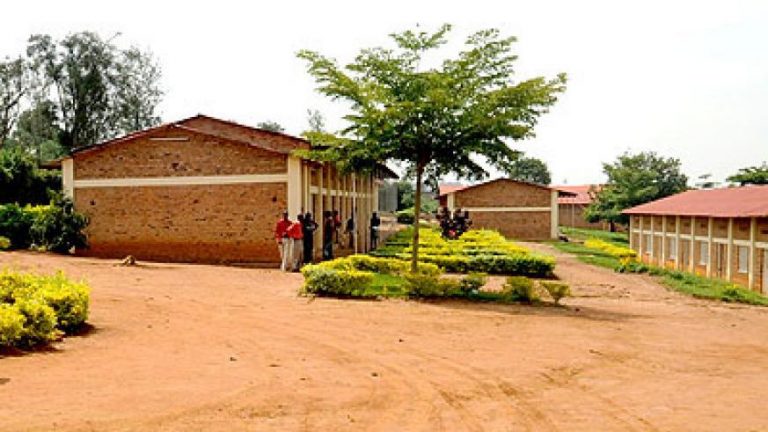
The Ministry of Education has suspended, for a week, 57 public schools, citing failure to meet the basic requirements which students need to be able to follow their studies.

The suspension is a culmination of the ministry’s inspection of public schools, which took place from August 13-15 to establish whether recommendations given to some 90 schools in various reports had been met.

Eugene Mutimura, the Minister for Education, said the decision was informed by the fact that the suspended schools did not meet government guidelines on basic things such as food, hygiene, lighting and whether students had access to some equipment like computers.

“Various reports showed that schools were unhygienic in the kitchens, toilets, and there are complaints of bedbugs in dormitories. In some schools, there are no lights in dormitories and classrooms. How do you expect such students to have better results if they don’t have a way to revise?” he wondered.

Some schools, the minister said, were given laptops through a programme called “smart classroom” but they are being kept in stores.

More punitive measures are being planned in case the suspended schools fail to fulfil the requirements within a week, the minister said.

This is not the first time the ministry is making random school inspections and taking measures on those falling short of minimum requirements.

“The change is that now we want to give more space to schools to change these things which affect students, contrary to before, when there was no time for them to change anything,” said Olivier Rwamukwaya, the State Minister in charge of TVET.

No effect on students

Mutimura said the students will not be affected by this decision as their school term will be extended.

“We are the one who set the school calendar. So be sure no student will be affected by this decision. If the school administrators fail to meet the requirements, they are the one who are going to suffer the consequences, “he said.

There are 1567 secondary schools countrywide, only 90 with very severe cases were evaluated.

Read the original article here.

NSFAS’ two centres of power

Zamayirha Peter

National Student Financial Aid Scheme (NSFAS) chief executive officer (CEO) Steven Zwane’s job is on the line following the appointment of Randall Carollissen as the scheme’s administrator.

The former SA Revenue Service (Sars) group executive for revenue planning, analysis and reporting takes over all governance, management and administrative duties previously performed by the CEO.

On Friday Zwane said he was in the dark about his future, given that all his duties had been handed to the administrator, yet he remains CEO.

“I really don’t know at this point. The minister [Naledi Pandor] is yet to inform me on the way forward. I was not present at the meeting where the administrator’s appointment was communicated to the board, but she [the minister] did write to me and I welcome his appointment and see it as a positive move to address the challenges of the scheme,” said Zwane.

 “In terms of my stay and what work I will do given the new appointment and the stipulated duties from the minister’s statement, I don’t know how to respond. For now all I can say is it is what it is … I mean … how do you move forward?” he said.

“This looks like an attempt to push me out but if that were the case, due processes would need to be followed and I can’t pre-empt that process. I just see myself as being a victim of a process and different times … things are unfolding and you ask yourself what the motive of the department is and the timing really isn’t right, given the work we are tasked with doing.”

Responding on the future of Zwane, Lunga Ngqengelele, the spokesperson for the minister of education and training said the CEO’s future would be decided by the administrator.

“He [the CEO] is still an employee of Nsfas and is bound by his contract, as such would still remain, with or without the board. But in this case, he now will have to report to the administrator as the law dictates.

“When the administrator comes in he will decide what he requires to fulfil his mandate. Remember that he will be coming with experts. The minister has nothing to do with the CEO [Zwane] at all.

“The minister holds the board, which has been replaced by the administrator, accountable. Zwane remains an employee of Nsfas because he was appointed by the board,” said Ngqengelele.

Last week Minister of Higher Education Naledi Pandor appointed deputy vice-chancellor of the Central University of Technology, Professor Neil Garrod, as the chairperson of the board, following Sizwe Nxasana’s resignation.

Garrod will continue as chair until the administrator begins his term next week which will see the board he joined a week ago dissolve.

Some of the duties of the administrator will be to ensure the effective closeout of the previous and current year’s funding decisions and disbursements, as well as to finalise plans for next year’s funding cycle.

These are the same objectives with which Zwane was tasked.

Furthermore, the minister expects the administrator to work with universities and technical and vocational education and training colleges in the next few weeks to make sure that student funding for next year proceeds smoothly.

Zwane was adamant he would continue with his duties as stipulated in his contract.

He said it was “business as usual up until a point where the minister directs otherwise”.

“I am employed by the board. My appointment was concurred by the minister of finance and the minister of higher education and training.

“It was an audited process by the auditor-general and I went through interviews and the like, and it was also a resolution of the board that I am a successful and suitable candidate.”

Zwane said most of the blame that was directed at him was for problems he found at the scheme, issues which he says were there for years.

“I am less than a year in the job. I found Nsfas chronically understaffed and the systems were also not properly used.

“Even in previous academic years it has failed to deliver what was expected of it.

“Since my arrival I have been hard at work and have been trying to fix the failures of the past two years, and planning for this year’s and next year’s academic year. We are ready to open new applications and to try to close off last year’s and this year’s outstanding issues.”

He believed there was a third force calling for his removal but said he was unsure what the motive and goal was.

Last month National Education, Health and Allied Workers’ Union called for a motion of no confidence in him and Nxasana. In fact, the union gave him five days to vacate office.

“I’m here trying to do my job and it’s something I am passionate about. I too am a former Nsfas beneficiary and I understand what the scheme does for the future of its beneficiaries.”

Read original article here.

TVET colleges to be built in 67 rural villages

Aneesa Adams 

A group of volunteers from all over the world has come together to do something amazing – build TVET (Technical and Vocational Education and Training) colleges in 67 rural African villages.

Project Director Kgomotso Sekhu said the Cape to Cairo in 67 days initiative aimed to build these schools by 2029 using 100% recycled materials. The idea was born from Madiba’s call for 67 minutes of activism and was launched in July this year, on the hundredth anniversary of his birth.

The 12 volunteers from South Africa, England, Canada, Scotland, Swaziland and the US jumped into 4x4s and set off on their journey through Africa on July 18th.

They met up in Ngobi village, in North West, where they identified the land where the first school will be built. They then made their way to Cape Town.

The Journey

 “Our first stop was in Simon’s Town, where we discovered that the place is known for its penguin colony. We got to see the beauty of the place and its penguins. From Simon’s Town our journey continued to a township called Langa, which is named after King Langalibalele, where we met with community people to get to know more about the place. We found out most people in Langa are unemployed.

“We then went to Knysna, where we visited a village called Judah Square, which is the biggest Rastafarian community in South Africa. We spoke to Sister Nancy, who told us more about Rastafarian culture and their values. We found out she heads a crèche with 40 children. They need help with equipment such as tables, chairs and mattresses,” Sekhu said.

Knysna was their last stop in Western Cape.

From Knysna, the group travelled to Free State, visiting a little place called Nyakallong, where they met a group of senior citizens who make flowers from recycled plastic bags.

“They need more plastic bags, so that their project can be more successful in the future. That’s where we came in – to help spread the message about the importance of recycling and reduction of littering in our communities,” he said.

Next was Botswana, where they made good progress as the country’s Department of Education came on board for the project.

They were given accommodation and their food was sponsored by Nando’s and Wimpy in support of their selfless journey.

A long-term partnership with the department was also discussed. “They love the idea of building 67 schools in Africa using recycled materials,” said an excited Sekhu.

The group is now in Zambia. From there they plan to visit Malawi, Tanzania, Uganda, Kenya, Ethiopia, Sudan and, finally, Egypt’s capital Cairo.

Building a Legacy

Being a self-funded initiative, the team is trying to raise money to help them on this journey through crowd-funding platform GoFundMe.

Any money they raise will go towards the first college, set to be built this year in Ngobi.

Sekhu said they also hoped to create jobs, and bridge the skills gap in various sectors.

Read original article here.


National protest looming over NSFAS non-payments, student leader warns

Jan Gerber

There is a “looming national protest” by students due to the National Student Financial Aid Scheme’s (NSFAS) non-payment of allowances, says South African Unions of Students (SAUS) president Misheck Mugabe.

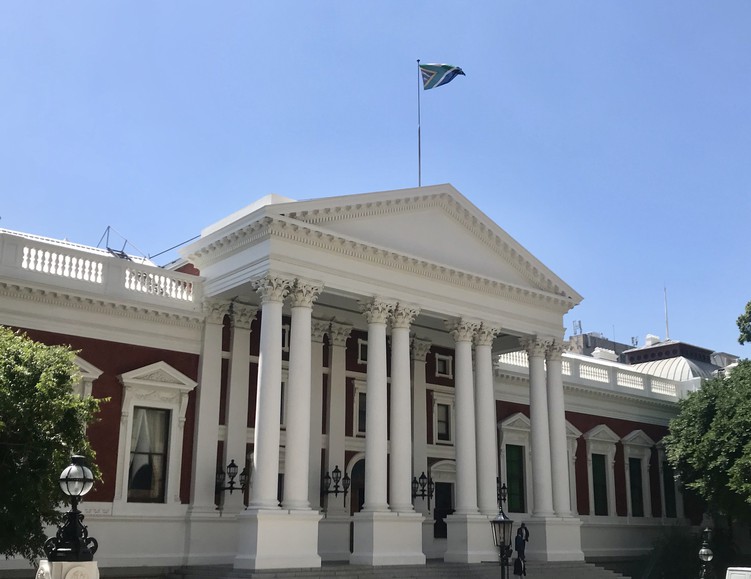
He was addressing the Portfolio Committee on Higher Education and Training in Parliament on Thursday. This meeting follows the committee’s meeting on May 30, where several problems with NSFAS’s payments – which have many students destitute – were discussed.

Mugabe said students at the universities of Venda, Limpopo and Mpumalanga were already on strike, while students at Nelson Mandela Metropolitan University in Port Elizabeth had also indicated that they were planning to join the protest.

 “There is a looming national protest due to NSFAS allowances,” he said.

He said some students had been evicted from private student housing due to the delay in payments.

Mugabe and South African Further Education and Training Student Association (Safetsa) president Yonke Twani called for the decentralisation of NSFAS and better communication with students and institutions.

“Visibility of NSFAS in campuses is still a challenge, because NSFAS is more visible when colleges are burning,” Twani said.

Both Mugabe and Twani said students were unhappy with the customer service they receive from NSFAS.

Newly appointed NSFAS board chairperson Neil Garrod contradicted his predecessor Sizwe Nxasana, who said former president Jacob Zuma’s surprise announcement in December last year that free higher education would be expanded to include students from poor and working class families had left the organisation with “literally a few weeks to put systems in place”.

‘We were not staffed to deal with 2018’

Garrod had to answer a question from the committee following the meeting in May on what progress the board has made in its oversight role with NSFAS.

He said the board had formed a sub-committee to work with a support team from the Department of Higher Education and Training and NSFAS management.

He said “leadership gaps” meant that the board was drawn into operational issues, resulting in their call for an administrator. They had received letters from Higher Education and Training Minister Naledi Pandor, in which she expressed her concern. Before a meeting with the minister could take place, Nxasana resigned last week.

Also read: Sizwe Nxasana resigns as NSFAS chair amid calls to disband board

“The board felt that its function as an oversight body has been compromised,” Garrod said.

The board requested the appointment of an administrator to resolve the payments to students and institutions.

NSFAS executive officer Steven Zwane said the management supported the appointment of an administrator, which would “assist [them] to get to the root causes of the problems”.

He also welcomed the extra support by the department, as they were “chronically understaffed”.

“We were not staffed to deal with 2018,” he said.

He outlined many procedural steps NSFAS was taking to address its inefficiencies.

The meeting continues. – News24

South Africa: Uitenhage learners protest over teacher shortage

Thamsanqa Mbovane    

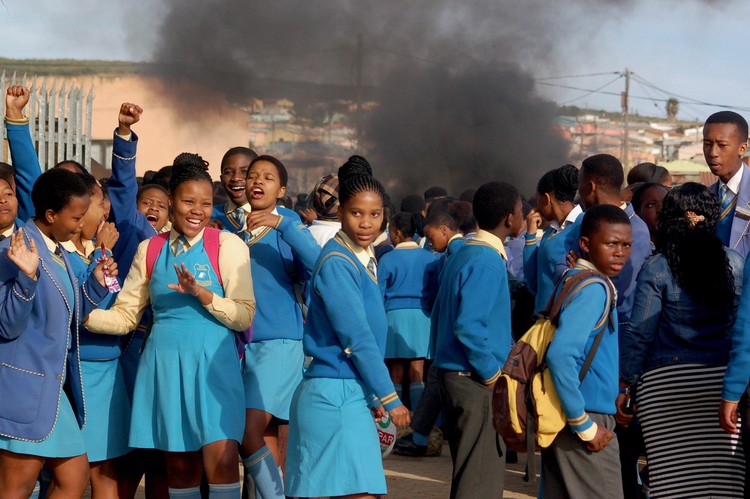
A pall of thick black smoke covered Molly Blackburn Secondary School in Khayelitsha, Uitenhage, on Wednesday morning. Scores of learners stood outside the gates, demanding six more teachers for grade 10, 11 and 12 classes.

They say they have been complaining since the beginning of this year.

The learners, with satchels on their their backs, sang and burnt tyres in front of the gate, blew whistles, and shouted: “We have had enough!”

The learners say the school is short of two maths, two physical science, one business studies, and one Life Orientation teacher.

Acting principal of the school Mninawa Sitole arrived at the protest and told learners: “We are not happy that you are all outside the school.” He said he had spoken to the district office in Port Elizabeth. “The problem is not in the school anymore … The matter is being handled at district level.”

Sithole was booed by the learners.

“ I can’t continue talking in this situation. I need to see your representatives,” he said.

The chairperson of the Representative Council of Learners, Lupelo Mkayi, who is 17 and in grade 12, said, “Since the first term we have had none of the needed six teachers. They keep sending us temporary tutors instead. And these tutors are not even trained as teachers … At times, we wrote exams without teachers in front of us.”

Spokesperson for the Eastern Cape Department of Education Malibongwe Mtima said, “This matter is receiving the utmost attention it deserves. We hope that the school will receive these educators as soon as possible … We are aware that the process is at the final phase … The recruitment process is underway. We appeal to learners to return to classes as we cannot afford time now. Examinations are around the corner.”

GroundUp

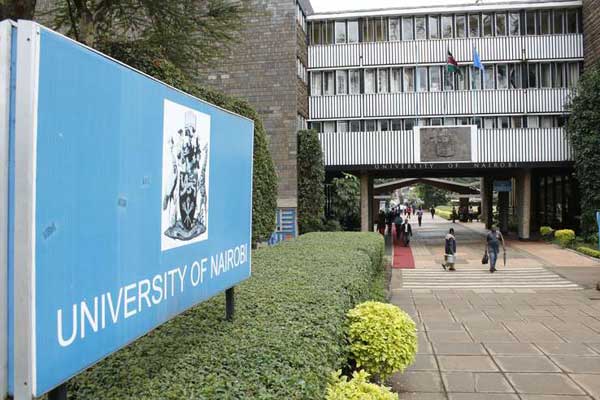
Kenya: University of Nairobi ranked top in research publications

Ouma Wanzala

The University of Nairobi (UoN) has emerged as Kenya’s higher learning institution that has heavily invested in research, a study by CPS Research International indicates.

The study, which was released Tuesday, indicates that UoN leads in the volume of publications, citations and referrals at 39.7 percent, followed by Kenyatta University, Moi University and Jomo Kenyatta University of Agriculture and Technology (Jkuat) at 11.3 percent, 10.5 percent and 8.9 percent respectively.

“Therefore, there seems to be a correlation between volume of research and volume of publications by a university in Kenya,” read the study.

The study also indicates that 69.71 percent of the total research funds disbursed to institutions of higher learning by governments, institutions, NGOs and other donors were given to top 10 national universities.

Top 10 Universities

“From the survey, the top 10 public universities received a total of Sh1.53 billion compared to Sh117 million received by top 10 private universities. These funds were given to universities towards research by government, institutional own funds, and county for the academic year 2018. The study indicate that in the academic year 2017/2018, universities received an approximate value of Sh1.85 billion from government for research.

“They also got Sh1.16 billion from industry, donors and other sources. The government thus happens to be the largest contributor of funds geared towards research in Kenyan universities,” reads the report titled ‘The state of research funding in Kenyan universities’ that was released by Herman Manyora, the lead researcher.

Based on research funds survey, UoN tops the list with a total value of Sh0.56 billion, representing 17.7 percent of total research funds received in 2018.

Other universities which followed were Kenyatta University (15 percent), Moi University (9.9percent), Jkuat (7.8 percent), Egerton University (4.0 percent), Maseno University (3.6 percent), Strathmore University (3.3 percent), Masinde Muliro University of Science and Technology (3.0 percent) and Mount Kenya University (2.9 percent) in their descending order of gain.

Private Universities

Strathmore University and Mount Kenya University were the only private institutions that appeared among the top 10.

The study shows that 68 percent of the funding for Kenyan universities is from government (national and county) and internal sources compared to 32 percent which comes from industry, NGOs and other donors.

“From the survey findings, 1.4 percent of all universities did not receive any research funds either from government or from other sources. Again, 4.2 percent of these universities failed to receive government research funds but instead were funded by industry and other donors.

It can, therefore, be observed that these universities though few (5.6 percent) point to the state of research underfunding in the higher education sector in Kenya,” reads the report.

Manyora asked the government to consider increasing funding for universities, saying the current budget is not sufficient.

“We have to take research seriously the way other institutions such as multinationals have taken it,” said Manyora.

Read original article here.

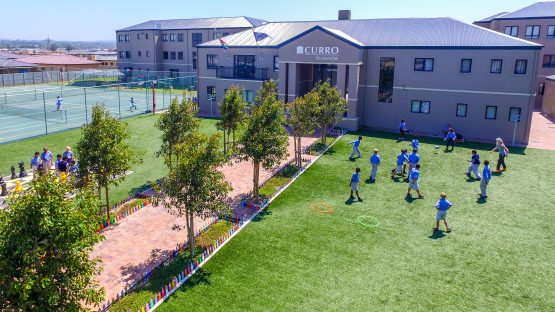
Curro to build private schools in townships

Ray Mahlaka 

Private education group Curro Holdings plans to spend R400 million building six new campuses in the 2018 financial year. The move will see the PSG-controlled company expand its low-fee private school offering in South African townships.

After the release of Curro’s interim results for the six months to end June 2018, CEO Andries Greyling said new greenfield developments and expansion investments are on the cards in townships including Gauteng’s Soweto, Soshanguve, and Mamelodi.

This is part of Curro’s more than R2 billion capital expenditure budget earmarked for new greenfield developments, investments in existing schools, and possible acquisitions.

Curro’s push into the lower-fee private school market has been many years in the making. The 22-year-old company’s move into academy schooling prompted JSE-listed rival Advtech to do likewise; it has been seeking opportunities in this market since 2014.

Curro currently operates Curro Academy lower-fee private schools in townships including Protea Glen in Soweto, and Pretoria’s Soshanguve and Mamelodi. Protea Glen is one of the townships earmarked for a new campus under the new investment.

Greyling said Curro is responding to the demand from parents for quality and low-fee private education.

In a township like Soshanguve, parents would enrol their children at public schools with 50 pupils in a classroom at a general cost of between R2 000 to R3 000 a month, he said. Meanwhile, parents could spend between R1 800 to R2 800 a month to enrol their children at Curro Academy schools in townships, with 35 pupils in a class. In contrast, Curro’s high-fee schools cost an average of R4 500 a month, with 25 pupils in a classroom.

“Our biggest growth is the Curro Academy as we are the only players in some of those township markets, and we are seeing good growth [in terms of enrolments],” Greyling told Moneyweb.

He has the statistics to back this up. Private school education over the past four years has grown from 2% to 6% as a percentage of the total number of enrolled pupils in SA – about 13 million (from grade 1 to 12), said Greyling.

“We need more schools due to the pressures of urbanisation … The biggest challenge in SA is the number of schools that need to be built in order to reduce the number of learners in a class to focus on quality education.”

Curro is in a race to achieve its 80@20 vision of having 200 schools on 80 campuses by 2020. For the six months to June 2018, Curro grew the number of its learners by 10% to 50 691 at 139 schools and 57 campuses.

Greyling said Curro’s 80@20 vision is achievable given its three recent acquisitions of Gaborone-based Baobab Primary School, Douglasdale-based Cooper College, and Dot’s Learning Centre in Cape Town.

The greenfield development of six new campuses will also build capacity, while five possible acquisitions could be concluded at the end of this financial year to December.

By the start of 2019, Curro aims to have grown the number of its campuses from 57 to 70.

Curro, which is no stranger to raising fresh capital through a rights offer, might rely on debt utilisation to fund its expansion plans. Greyling said debt levels will be reasonably managed.

Curro’s overall revenue grew by 18% to R1.24 billion compared with R1.05 billion for the six months to June 2017. Headline earnings per share grew by 25% to 33.6 cents from 26.9 cents.

The private education group’s shares, which trade at a hefty earnings multiple of over 60 times, finished 0.58% lower on Tuesday at R31.05.

Read original article here.

Ramaphosa plans to eradicate pit toilets

Staff Reporter

President Cyril Ramaphosa  launched a new Sanitation Appropriate for Education (SAFE) Initiative between the government and private sector on Tuesday.

The initiative aims to fast-track the eradication of pit toilets in the country’s schools.

Ramaphosa said pupils will be spared the dangers of using pit toilets.

“But today is also a day when we demonstrate solidarity. Solidarity of how various partners can get to together and respond to a national need, an urgent need.”

In March 5-year-old Lumka Mkhethwa (Viwe Jali) fell to her death into a pit toilet at her school in Bizana in the Eastern Cape.

Michael’s lifeless body was discovered by his mother on January 20, 2014. His hand protruded from a pool of human excrement in one of the pit latrines at Mahlodumela Lower Primary School in Chebeng Village, Polokwane.

The school principal had written numerous letters to the Department of Education in Limpopo asking for new toilets to be built for safety reasons.

The letters went unanswered.

Equal Education wrote that over 9000 schools in South Africa use pit latrines. The organisation said that these were the only forms of toilets at these schools.

The department of basic education has the number at 4000.

Ramaphosa launched the Sanitation Appropriate for Education (SAFE) initiative in Pretoria. This is a partnership between government, the United Nations Children’s Fund, the Nelson Mandela Foundation and the National Education Collaboration Trust, to which the President invited the private sector to contribute.

A few days after Lumka’s death in March this year, the president instructed the Basic Education Minister Angie Motshekga to carry out an audit of school sanitation facilities and submit a plan to eradicate them within three months.

This led to the birth of the Sanitation Appropriate for Education – or Safe – initiative which government says will “spare generations of young South Africans the indignity, discomfort and danger of using pit latrines and other unsafe facilities in our schools”.

Ramaphosa says it is a tragedy that this initiative was sparked by the deaths of innocent children.

“It reminds us that we must focus all our attention not on what we have achieved, but on what we have not achieved.”

Over R100 million in pledges was raised at the launch of the sanitation appropriate for the education project.

Equal Education has said it is difficult to reconcile Ramaphosa’s promises with government’s failure to engage with them on the delivery of sanitation infrastructure.

They called this initiative ironic.

“Last week, the South African government announced that it will appeal the #FixTheNorms judgment that set deadlines for them to fix school infrastructure, including toilets,” read their statement.

It is difficult to reconcile the SAFE Initiative launched today, with the State’s lodging of an appeal, in which it argues that it is not obliged to urgently fix schools, and its unwillingness to release school infrastructure improvement plans timeously, necessitating a Promotion of Access to Information application.

Still, despite our application, the Eastern Cape has without explanation failed to provide its improvement plans, which should by law have been prepared by November 2017.

Just last month the State missed its date to file with the Polokwane High Court, a plan to eliminate pit-latrines in Limpopo as required in the Komape case judgment, instead filing a last minute application to extend the Court set deadline, said Equal Education.