Home Blog Page 491

Football and education, Salome Kekana receives Banyana call-up

Sihle Ndebele

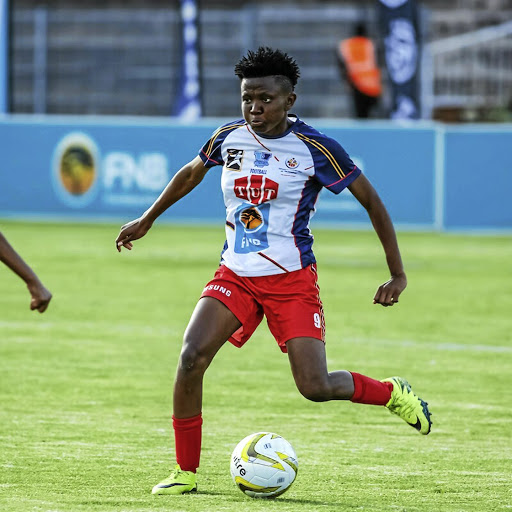
Banyana Banyana newcomer Salome Kekana is looking forward to becoming one of the leading and most consistent defenders in the senior women’s national team.

Incidentally, Kekana, a Tshwane University of Technology (TUT) player, has to be better than her idol, Nothando “Vivo” Vilakazi, in order to win coach Desiree Ellis’s faith and claim the left-back position in the Banyana team.

Banyana are preparing for the Cosafa Women’s Championships, to be hosted at a yet-to-be-confirmed venue in South Africa later this month.

“I am a right-back and my idol is Vilakazi. It’s funny because we play the same position. She’s the best left-back in the country.

“I know that I must work more than she does to play ahead of her. I will push her to win my berth in the team,” said Kekana.

Kekana, 22, was part of the Banyana training camp that ended on Friday. The aim of this camp was to assess players before the Cosafa Cup.

Kekana has never represented the national team, even at youth levels.

“My objective is to make the final team that will play the Cosafa Cup. All the senior players welcomed me with open arms.

“It’s the very first time I am called up to a national team. I have not even played for the under-17 or -20. I want to make the most of this opportunity,” noted a chuffed Kekana, a second-year sports management student at TUT.

The Soshanguve-born youngster says it’s not easy to juggle football and her studies. Nevertheless, Kekana insists on the importance of education.

She implied that her passion for football is the reason she copes with this balancing act.

“Balancing my studies and football is difficult but because I know how important education is, I make sure I [balance the two]. I am very passionate about football and at the same time education is the key to success,” Kekana stated.

Students to build their own science labs

Louise Bezuidenhout

How does one train science students without equipment? As a sociologist of science specialising in African countries, this is a question I get asked with sad regularity.

How, African science, technology, engineering and maths educators ask me, can the next generation of globally competitive scientists be trained using teaching laboratories that lack even the most basic equipment?

One of the most basic elements of molecular biology, for example, is to learn about DNA: how genes are expressed and converted into proteins. To do this, students must able to conduct their own experiments – and for that, they need access to a polymerase chain reaction to amplify their DNA samples.

While teaching labs in the global North may have dozens of polymerase chain reaction machines, African departments may have just one per laboratory, if at all. Instead of being able to run their own DNA experiments, students in these labs have to work in groups or watch a demonstration by a tutor.

The critical importance of conducting practical experiments as well as learning theory sets science education apart from many other taught courses.

The value of this practical training is two-fold: first, it provides an in-depth understanding of the biological systems that are being studied. Second, the practice of science in industry or academia is essentially a practical undertaking. Any graduate wishing to work as a scientist must have a good grasp of how to conduct experiments and produce data.

While there are increasing amounts of often free educational resources available online: videos, Massive Open Online Courses, papers and tutorials, they can’t make up for students getting their hands dirty – so to speak – at the lab bench

To truly understand their discipline, students need the opportunity to interact with laboratory equipment through practical instruction. Learning how to conduct experiments and deal with both the successes and failures of bench science is an important part of developing as a scientist. The skills that students develop through practical experiments are also fundamental for progressing into successful graduate studies and research careers.

There’s been considerable recent support for science and related education in Africa. That includes a rising number of training programmes, graduate scholarships and research support. However, regional universities are still battling to properly equip teaching laboratories.

There isn’t much money specifically earmarked for this task. Educators often have to rely on equipment bought out of hard-won grants, or rely on the increasingly aged equipment left over from forgotten past projects. New, imported equipment is prohibitively expensive. It’s also difficult to maintain.

This is why my colleagues Helena WebbJason NurseMarina Jirotka and I designed LabHack. It’s an event that aims to inspire budding innovators to take matters into their own hands and build the equipment they need to learn. Undergraduate student teams compete to design low-cost versions of basic laboratory equipment using hardware available in a local African context.

Our first LabHack was held at the Harare Institute of Technology in Zimbabwe in June 2018. The resulting prototypes were highly inventive and far cheaper than anything that’s commercially available.

Innovation in action

During the Zimbabwe LabHack teams of students from four universities, as well as local hobbyists and one high school team, demonstrated their prototypes for low cost laboratory equipment built out of locally-available hardware.

All the teams were interdisciplinary, which was important not only for design issues but also offered a means of building strong links for future collaborations.

The teams were asked to design one of three types of basic but crucial lab equipment: a magnetic stirrer, a polymerase chain reaction machine, and a centrifuge.

There was also an open challenge for students to build other types of equipment that would be used in teaching their specific discipline of science. In this category entries included a digital microscope and a bioprocessor, which is used for culturing cells.

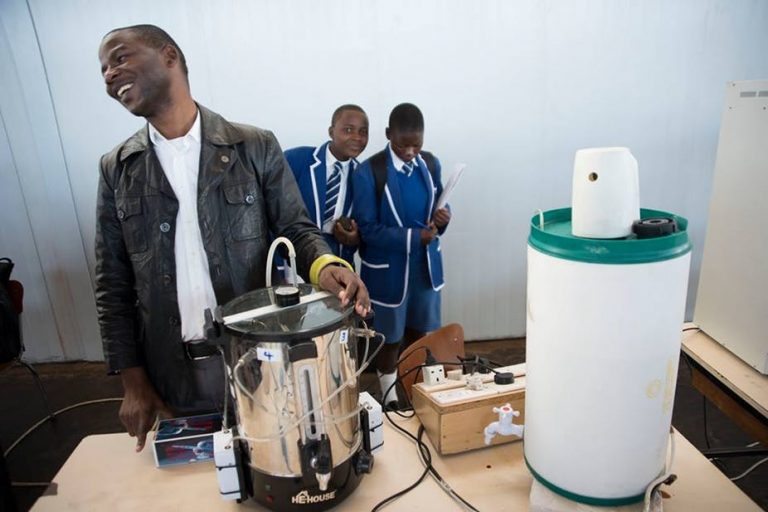
Each team was supplied with an Arduino kit, a single-board microcontroller that allows the equipment to be programmable. Apart from that they were self-funded and used easily available local resources. No team spent more than $100 on their final designs – a clear demonstration of how innovative thinking can produce highly inventive, working prototypes.

The teams also participated in a range of workshops hosted by local tech companies, which exposed students to emerging technologies like 3D printing and 3D scanning. Having these companies present their working models for tech-driven job creation in Zimbabwe also illustrated the possibilities of creating tech start-ups for possible future career choices.

Smart prototypes

The prize for best prototype went to a team that created a programmable centrifuge whose casing was predominantly designed out of plywood and cardboard. It was fully functional and significantly cheaper than any commercially-available models. Another winner created a centrifuge that relied on a motor taken from a toy car.

The winning centrifuge design. Jeffrey Barbee, Alliance Earth

These innovations effectively demonstrated the potential for equipping low-resourced educational laboratories with low-cost alternatives to expensive, imported equipment. We are hoping – with enough funding and sponsorship – that the Zimbabwe event will be the first of many LabHacks on the African continent. These could build a new community of science learners who study science in Africa, on machines designed by Africans for an African context.

Academic studies resume at Fort Hare university after eight-week strike

Chris Gilili

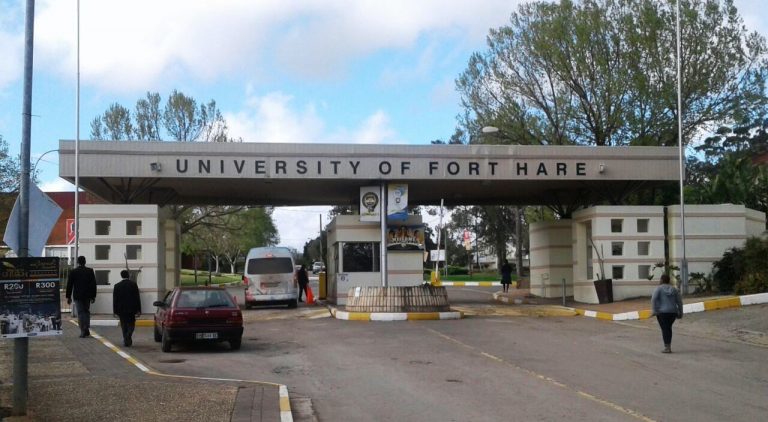
After eight weeks of deadlocked negotiations and disruptions at the University of Fort Hare, the second semester officially started on Monday.

Management and unions agreed on a 7% wage increase and a R3 000 once-off payment for each protesting worker. Additional support and extended exam time are some of the measures the university will exercise in trying to avoid delays caused by the long strike.

Some 500 academic and support staff were involved. Mid-year exams at the institution had come to a halt by June 12.

The initial demand was for a wage increase of 12% and other benefits. Exams are scheduled to resume this week. Exams were postponed twice this past year.

Bulelani James of the National Union of Health and Allied Workers’ Union (Nehawu) said: “We are in full support of the catch-up plan. Already all staff are back at work as we are trying to make up for the time lost. We are glad that the negotiations came to an agreement as students were the most inconvenienced by this.”

Spokesperson for the university Khotso Moabi confirmed that academic activity was back to normal at both Fort Hare campuses.

“The strike has finally come to an end, but a lot of academic time was lost during the eight weeks… There is a very short period of time left between now and the end of the academic year in mid-December.”

Moabi said the university suffered infrastructure damage during the strike but could not confirm the cost of the damage to the institution.

University of Fort Hare student representative council academic officer Dumisa Maputi said: “As the student body we are happy the strike has come to an end. Yes, it is going to put the students mostly under pressure. There is a graduation looming and we have to get ready. Overall we are happy that management reached an agreement with the unions. We look forward to a smooth academic year from now on.”

GroundUp

Fees Must Fall activist Bonginkosi Khanyile found guilty of public violence

Jeff Wicks

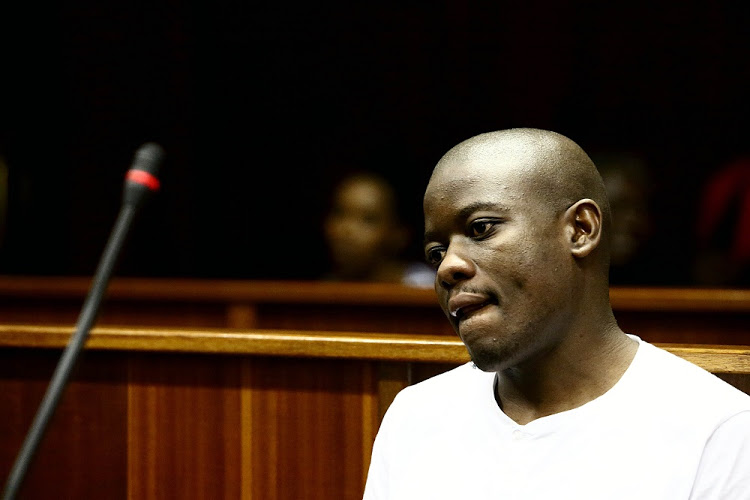
#FeesMustFall activist Bonginkosi Khanyile has been convicted on charges of public violence‚ failing to comply with a police instruction and possession of a dangerous weapon.

The student of the Durban University of Technology appeared in the Durban Regional Court on Monday before Magistrate Siphiwe Hlophe.

The public gallery was a sea of red‚ with members of the EFF Students Command showing their support for the popular activist.

Nearly three years after his arrest in 2016‚ during the height of national student unrest‚ Khanyile made an admission that would ultimately result in a guilty verdict.

Khanyile‚ through his advocate Danie Combrink‚ admitted that during the violent protest action he had disturbed the public peace‚ used a slingshot to stone police and ignored their pleas to disperse.

Using these admissions‚ coupled with evidence led by the state when the trial commenced last month‚ Hlophe found that the evidence was unchallenged.

“The court finds that on September 27 2016‚ the accused committed the crime of public violence. He unlawfully assembled with intent to disturb the peace and public security and intentionally struck the police with stones using a slingshot‚” he said.

“The court finds that on February 4 the accused participated in a public gathering at the Durban University of Technology and failed to comply with a police instruction to disperse. Accordingly he is found guilty.”

The slingshot was deemed to be a dangerous weapon.

“His actions caused the public peace to be disturbed and he was also aware of that. He was aware at the time that a sling[shot] was a dangerous weapon capable of hurting someone‚” said Hlophe.

Khanyile will return to court on October 16 for sentencing.

Read original article here.
Tanzania: Students loan scheme earns accolades

Alvar Mwakyusa

Tanzania is among a few African countries which have excelled in putting in place an exemplary loan scheme for students in institutions of higher learning, prompting many other countries in the continent to follow suit.

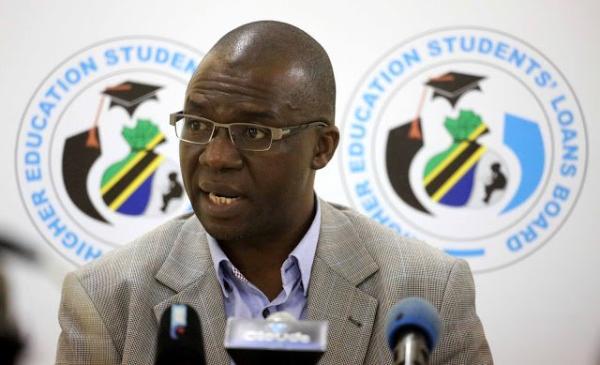
The Executive Director of the Higher Education Students’ Loans Board (HESLB), Mr Abdul-Razaq Badru, made the revelation during a meeting with a delegation of officials from Sierra Leone who are in the country for a one-week visit to learn about Tanzania’s loan scheme.

The delegation was led by Sierra Leone’s Deputy Minister for Technical and Higher Education, Dr Turad Senesie, who was flanked by that country’s Principal Deputy Financial Secretary in the Ministry of Finance, Matthew Dingie, and other high-ranking officials.

The scheme which offers loans to students in universities was established over 15 years ago and despite some teething challenges here and there, has registered considerable successes, Abdul-Razaq noted.

Badru said other countries which have picked a leaf from Tanzania’s higher education students’ loans scheme include Kenya, Uganda, Zambia, Malawi and Namibia, among others in the continent.

Currently, there are only ten countries in Africa with loans schemes for students in higher institutions of learning and Tanzania is among the top three in the continent, according to the HESLB chief executive.

“Some countries don’t see the need to re-invent the wheel and therefore come to us to learn on best practices of operating the scheme,” he explained.

The HESLB boss pointed to the fact that had it not been for the scheme, many students from poor families would not have been in position to pursue high-level academic studies.

Speaking at the occasion, the head of the Sierra Leonean delegation, Senesie, said the team had learned a lot of things on running of the system through their engagementwith different stakeholders in Tanzania.

“It was through the engagement that we have been enlightened on the legal structure, policy as well as disbursement and recovery of the loans. We are African brothers and thus a model development in the continent is ideal for us,” the deputy minister remarked.

Dr Senesie stressed that his country would not reinvent the wheel on the model developed by Tanzania but would instead expand the scope of funding by exploring other sources of financing. In Tanzania, it is the government which dishes the loans.

The amount loaned is based on a cost sharing policy and the financial ability of the central government. The scheme loan is meant to supplement the efforts of parents and guardians and came into force after enactment of Act No.9 of 2004 by the Parliament of the United Republic of Tanzania.

The delegation from Freetown also includes Mohammed Gondoe, Deputy Director General for National Social Security and Insurance Trust, Dr Alhassan Mansaray, Director for Fiscal Risk Management in the Ministry of Finance as well as Dr Ezekiel Duramany-Lakkoh, the Head of Department at the University of Sierra Leone and Mr Osman Kamara the Senior Budget Officer in the Ministry of Finance.

Read the original article here.

Sizwe Nxasana resigns as NSFAS chair amid calls to disband board

Staff Reporter

Sizwe Nxasana, chairperson of the National Students’ Financial Aid Scheme (NSFAS), has resigned in the wake of mounting calls for him to step down.

Nxasana said in a statement on Thursday that he had informed Minister of Higher Education and Training‚ Naledi Pandor‚ of his resignation on Monday.

The former chairperson cited the “extreme strain” on the NSFAS payments system.

He said the NSFAS mandate and funding obligations increased exponentially, placing extreme strain on the organisation’s systems and processes since December 2016.

Nxasana was appointed NSFAS chairman in 2015. He was tasked with turning around the scheme which suffered corruption and mismanagement that resulted in many poor young people unable to access higher education

In recent months, NSFAS has been struggling to ensure the smooth roll-out of free higher education. Many students have complained about delayed payments. This sparked protests at various tertiary institutions around the country.

In a statement, he said: “While the last few years have been extremely challenging, I am grateful for the opportunity to have been able to immerse myself in education and contribute to finding sustainable solutions for the higher education sector. I am passionate about helping our youth access education and want to recognise the many thousands of students whose success inspire all of us and give us hope for the future.

“I would like to recognise the many patriotic and committed South Africans in government, business and academia who have contributed their expertise and resources to try and make quality education accessible. I will continue making a contribution in my different roles and capacities to support less privileged young South Africans acquire the knowledge and skills to allow them to participate meaningfully in the economy and our nation’s life.”

Nxasana added that it was  time to move on and make way for new leadership and to see how government will take this forward.

He said former President Jacob Zuma’s announcement to extend free higher education in December 2017 also added pressure on NSFAS processes.

In May, during a sitting of Parliament’s Portfolio Committee on Higher Education and Training, Nxasana admitted there were still problems.

Referring to former president Zuma’s decision on December 16 last year to expand free higher education to students from poor and working class families, Nxasana said the financial aid scheme “literally had a few weeks to put systems in place” to distribute the funds.

“We are doing everything from our side.

“Yes, we had very limited time, from when the announcement was made, until the implementation,” he said.

NSFAS has received more than 417 000 applications for the 2018 academic year and funding decisions were made for about 358 000 of those.

At the time, Nxasana said the biggest problem was integrating NSFAS’ system with the different systems of the universities and colleges.

He said many institutions did not have the systems to administer allowances.

NSFAS came under fire recently after Pandor instructed the institution to halt funding for 2019 students because a backlog in disbursing aid for 2017 and 2018 had not been cleared. NSFAS has an annual budget of R30bn. Pandor reportedly wrote a letter to the board asking it not to open applications for next year until all 2018 processes were properly concluded.

In an radio interview, Deputy Minister of Higher Education and Training Buti Manamela said the implementation of fee-free higher education policy found NSFAS trying to come to terms with some of the challenges that it has faced before. And it had to readjust its system in order to ensure all were in place.

He said the adjustment meant that some students could not receive their allowances. Some believe that their allowances are insufficient.

Pressure is also mounting for Pandor to fire the chief executive of NSFAS and disband its board following the ongoing challenges in disbursing money for students who were promised free education.


TVET Colleges outstanding certificates affect job seekers

Staff Reporter

The Select Committee on Education and Recreation is concerned by a 10-year backlog in certification of students from technical and vocational education and training (TVET) colleges, MPs were told on Wednesday.

The committee was briefed by the South African College Principals’ Organisation (Sacpo) on the challenges with the certification of TVET students. They implored the Department of Higher Education and Training(DHET) to address the challenge.

The Chairperson of the committee, Lungelwa Zwane, said it is concerning that students, many of whom come from poor backgrounds, are made to wait more than 10 years before getting their certificates.

“The fact that we sit here with a backlog from as far back as 2007 means that someone is not doing their job efficiently between the DHET, Sita [State Information Technology Agency], Umalusi and TVET colleges,” said Zwane.

Zwane added that the delays in issuing certificates to students from technical and vocational education training (TVET) colleges hampered their capacity to find employment.

Sacpo told the select committee on education and recreation that some students had waited more than 10 years for their certificates.

Sacpo president Hellen Ntlatleng sketched a picture of a sector in disarray. She said some certificates had incorrect details, or were sent by DHET to the wrong campuses.

She added that college officials failed to arrange for certificates to be sent to the correct campuses in their institutions and colleges struggled to get feedback from the department about outstanding certificates.

DHET appointed a new service provider responsible for printing certificates in March 2018.

The committee advised the department to meet with Sita, Umalusi and colleges to devise solutions before the end of the financial year.

Zwane said these problems may have been as a result of lack of resources which directly impacted human capacity and under-resourcing of the examination section, which deals with the certification systems data.

TVET colleges remain underfunded with many of them experiencing leadership and infrastructure problems.

What is ironic is that DHET deputy minister, Buti Manamela, said his department has declared the month of August TVET Month.

August is to be used as a platform to encourage young people to consider college programmes at TVET colleges.

It has embarked on programmes such as Khetha that it uses to expose colleges to young people.


South Africa: Rhodes students march for Khensani Maseko

Mxolisi Mngadi

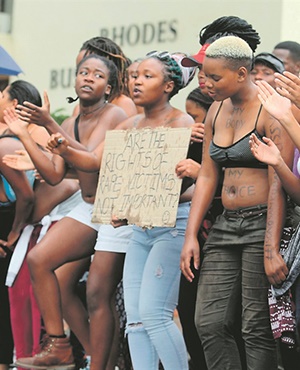
Rhodes University students are expected to march to the Settlers Monument in Grahamstown on Tuesday following the tragic death of 23-year-old Khensani Maseko.

Maseko took her own life on Friday after battling with depression following an alleged rape said to have occurred in May.

According to university spokesperson Veliswa Mhlope, Maseko reported the rape on July 30.

“The monument is where the university traditionally holds its graduation ceremonies and where Khensani would have rounded off her journey through Rhodes University. The issue of sexual consent will be discussed in a series of talks tomorrow, which will be open to everyone on campus,” Mhlope said.

READ: Rhodes University issues notice to suspend Khensani Maseko’s alleged rapist

Maseko’s family confirmed that she had committed suicide.

“On Friday 3 August, 2018, Khensani passed away by taking her own life, devastating her family, friends and the larger community of colleagues and peers. As a family, we do not take lightly the circumstances leading up to Khensani’s death.

“We would like to explicitly express that we condemn, in the strongest possible terms, any form of violence and abuse against women and more particularly rape against women. We urge that the law should be allowed to take its course,” the family said in a statement.

Suspension

Maseko, a third year Bachelor of Arts student, will be buried on Thursday, according to the family.

“In the days leading up to her funeral and final home-going, we wish, as a family to be afforded an opportunity to mourn and grieve the passing of our loved one in private,” it said.

The university earlier revealed it had issued a notice to suspend Maseko’s alleged rapist.

“A notice to suspend the alleged perpetrator was issued this morning, on the day when Khensani was due to meet with the support and an investigation team. The tragic passing of Khensani will not mark an end to the investigation into the circumstances leading up to her passing.”

READ: Shock, anger and condolences in wake of Rhodes student Khensani Maseko’s death

Mhlope said the institution was working with the police and the National Prosecuting Authority, and was pushing for an inquest to be held into her death.

Rhodes University Vice Chancellor Dr Sizwe Mabizela lowered the institution’s flag on Monday morning in commemoration of the third-year student’s death. The flag would fly at half-mast until her funeral.

Mhlope said the university had immediately made contact with her family after she reported the rape and they had travelled the next day from Johannesburg to Grahamstown for a meeting where they elected to take Khensani home for a while.

“It was also agreed at the meeting that Rhodes University will follow up on the matter.

“Khensani was due to return to the university for a meeting with the support and investigation team today [Monday],” Mhlope said.

Read original article here.

The ANC, corruption and a failed education system

Norimitsu Onishi and Selam Gebrekidan

The little girl hated going to the bathroom at school. The pit toilets were so dark, dirty and crumbling. Many children were so afraid of them that they simply relieved themselves in the schoolyard to avoid the ordeal.

But as she played with her best friend during recess, the girl, Ziyanda Nkosi, a 6-year-old first grader, really had to go. She stepped warily inside the closet-like latrine.

Even with the gentle pressure of her tiny frame, the floor caved in. Ziyanda flailed wildly, clinging to the edges of the hole, frantically trying to keep herself from falling in and drowning in the fetid pool below.

“Mommy! Mommy!” she screamed, managing to hold on long enough for an older boy to run in and save her.

Hundreds of parents, enraged that their warnings about the dilapidated school had been ignored for years, burst into protest a couple of days later, upending their quiet rural town for two weeks last August. They burned tires, blocked roads and demanded justice from the provincial government led by David Mabuza, a former math teacher who had become one of the most powerful figures in the African National Congress and was positioning himself to become South Africa’s deputy president.

One of the party’s historic promises had been to provide a good education for black people, who had been deliberately denied the opportunity under apartheid. ANC leaders like Nelson Mandela often spoke about freeing black South Africans through school, and Mr. Mabuza, whose first big post in the province was education minister, got his political start by promising just that.

David Mabuza, left, congratulating Cyril Ramaphosa, now South Africa’s president, on being named leader of the African National Congress in Johannesburg last December. Credit Joao Silva/The New York Times

But under the ANC the education system has been in shambles, so gutted by corruption that even party officials are dismayed at how little students are learning, in schools so decrepit that children have plunged to their deaths in pit toilets.

The rage in Ziyanda’s town grew so intense that protesters hurled stones at a local ANC leader, who narrowly escaped by whipping out his handgun and shooting randomly into the crowd, wounding two children and roiling the community all the more.

Mr. Mabuza never came to the school or met with the parents — and for good reason, local officials contend. The dangerous conditions were a clear reflection of his control over the province, where millions of dollars for education have disappeared into a vortex of suspicious spending, shoddy public construction and brazen corruption to fuel his political ambitions, according to government records and officials in his party.

But the uprising and allegations against Mr. Mabuza did not crimp his political rise. To the contrary, only a few months later, as the ANC tried to quash national outrage over misrule by its leaders, Mr. Mabuza scored his biggest triumph by far. He was picked to become second-in-command of the entire ANC., launching him into an even more prominent post — as South Africa’s deputy president, second only to the nation’s leader.

Mr. Mabuza may seem an odd choice, especially at a time when the ANC is desperate to purge its reputation for graft and restore its image as the rightful heir to Mr. Mandela’s legacy. After all, Mr. Mabuza’s rural province, Mpumalanga, is fairly small, has little economic clout and is widely regarded as one of the country’s most corrupt.

But that is the vexing secret behind Mr. Mabuza’s spectacular climb, current and former A.N.C. officials say: He siphoned off money from schools and other public services to buy loyalty and amass enormous power, making him impossible to ignore on the national stage and putting him in position to shape South Africa for years to come.

“He didn’t become what he is now because of his political capability,” said Fish Mahlalela, a senior ANC figure in the province and a national lawmaker.

“No, no, it was out of money and the manipulation,” he added. “Nothing else.”

Fish Mahlalela, a senior provincial ANC figure, said of Mr. Mabuza, “He didn’t become what he is now because of his political capability.”CreditJoao Silva/The New York Times

Perhaps more than any other member of South Africa’s new government, Mr. Mabuza undercuts the promise of a “new dawn” in the country after the removal of President Jacob Zuma this year.

Besieged by scandals that have hacked away at the ANC’s legitimacy and electoral prospects, the party installed a new president, Cyril Ramaphosa, in February. From the start, he pledged to root out corruption and finally deliver on the promise of a just South Africa for all of its citizens.

But to seal his new post, Mr. Ramaphosa first had to secure the backing of Mr. Mabuza, 57, who built such a formidable political machine that he became kingmaker in the back-room negotiations to choose South Africa’s new president. After campaigning for a rival, Mr. Mabuza abruptly switched sides and joined forces with Mr. Ramaphosa, helping the two emerge from a pivotal party conference last December as the country’s undisputed leaders.

Then, to the surprise of many in his province, Mr. Mabuza gave a speech just weeks after being sworn in as deputy president this year, lamenting the poor state of the schools and the “tragedies that take away the innocence of our children”.

He spoke movingly of a kindergartner electrocuted at school. Of a toddler who drowned after falling into a broken pit latrine. And of a 5-year-old boy whose body was discovered by his mother at the bottom of another dilapidated pit, his hand sticking out of a pool of feces.

Such deplorable conditions were all too common, he noted, symbolizing the failure to provide black South Africans with a decent chance at life.

“Where is our care?” Mr. Mabuza said in the speech. “What has gone wrong with our nation?”

Yet under Mr. Mabuza’s leadership, millions of dollars for schools in his province have been misspent year after year, according to the national government. His province routinely spent less on poor students than required, and school construction projects have been riddled with inflated costs, government records show.

Nearly a quarter of the primary schools in Mr. Mabuza’s province still have only dilapidated pit toilets, despite ample government funds to fix them. And during his tenure, his province was caught fabricating the passing rates on the annual national exam, enabling him to claim big leaps forward that never happened.

A dilapidated toilet in Middelplaas.CreditJoao Silva/The New York Times

The schools Mr. Mabuza did champion provided an easy way to funnel large amounts of money into politics, according to ANC officials, high-ranking defectors and anticorruption groups. He pushed to build big boarding schools whose costs tripled, for unexplained reasons, to $30 million each, alarming education experts. Some construction was so shoddy that roofs sprouted leaks soon after being finished, toilets barely worked, students lacked water, retaining walls collapsed and dormitories were missing doors, according to a provincial report.

Over the years, Mr. Mabuza’s province also became known as one of South Africa’s most dangerous. Nearly 20 politicians, most from inside the ANC were assassinated in the past two decades, some after exposing graft in public works projects.

All the while, Mr. Mabuza’s political career flourished. He attracted legions of new ANC. members with government contracts, cash handouts and even KFC meals, according to current and former party officials.

His sweeping recruitment drive turned his relatively insignificant province into the ANC’s second-biggest voting bloc. Under the party’s delegate system, his territory became more influential than even Gauteng, the province that includes Johannesburg and Pretoria, with a population three times the size and an economy nearly five times as big.

Now, critics contend, Mr. Mabuza’s role as the second-most powerful politician in the country casts doubt on the legitimacy of the new government and its bold assertions that the ANC is turning the page on corruption.

Under the ANC Mr. Mandela’s once heralded liberation movement, tens of billions of dollars meant to lift poor black South Africans have been stolen by party leaders. Strong institutions like the tax agency have been hollowed out by party officials bent on shielding their illicit activities.

But the nation’s poor schools are perhaps the A.N.C.’s greatest betrayal of the dreams of black South Africans — some of whom have turned to burning down schools in protest.

Mr. Mabuza, who declined to be interviewed, built his political career on the schools.

Unlike other, more celebrated anti-apartheid leaders, he did not go into exile; he was not imprisoned on the infamous Robben Island. Instead, he fought for the right of black South Africans to receive an equal education, a call he echoed in his recent speech.

But the schools also offered him a rich political opportunity, officials say.

Education represents about half of provincial budgets, followed by health. Officials from the National Treasury recently warned in a parliamentary hearing that misspending and mismanagement in Mr. Mabuza’s province were especially rampant in those two departments.

The consequences are evident not only in Mpumalanga, Mr. Mabuza’s province, but across South Africa, where corruption has run through every layer of the education system. Less than a quarter of South African children in fourth grade understand what they read, according to an international literacy test. In sub-Saharan Africa, where South Africa’s economy is by far the most advanced, children in countries like Kenya, Botswana and Swaziland do better in math and reading.

As many South Africans pin their hopes on Mr. Ramaphosa’s pledge for a fresh start, analysts say that much of the country is looking past an unpleasant truth: The new president owes his victory in part to corruption, and much of his administration’s future — as well as the country’s — rests in the hands of Mr. Mabuza.

“If there is any powerful person whom Ramaphosa’s presidency actually relies on, it is Mabuza,” said Ralph Mathekga, the author of “Ramaphosa’s Turn: Can Cyril Save South Africa?”

“We are being reluctant as a nation to face the reality of Mabuza,” he added. “If Ramaphosa gets hit by a bus, Mabuza is going to be the president.”


Class time at Mpumelelo Primary School.CreditJoao Silva/The New York Times

The numbers just didn’t add up, even at the beginning.

After apartheid ended in 1994, Mr. Mabuza got his first big break: He became Mpumalanga’s education minister, a chance to shape the schools and generations of students attending them.

He had the perfect résumé. The son of farmers, Mr. Mabuza grew up here in the province, walking miles from his village to the only primary school in a nearby town. Though he often had no shoes, he always tucked in his shirt and buttoned it up to the neck, recalled Reginah Mhaule, a childhood peer.

“He was never late,” said Ms. Mhaule, a longtime ally who recently became one of South Africa’s two deputy foreign ministers.

A bright student, Mr. Mabuza ultimately took one of the few jobs available to black South Africans back then. He taught math at the local high school and later became a founding leader of a teachers’ association.

Poor schooling was a major spark in the anti-apartheid movement, most notably in Soweto in 1976, when thousands of students protested the introduction of Afrikaans as the language of instruction. In Mr. Mabuza’s province, teachers and students began organizing against white-minority rule in the early 1980s.

Orlando High School in Soweto in 1977, one year after protests against the use of Afrikaans as the language of instruction in township schools.CreditAgence France-Presse — Getty Images

“The teachers were at the center” of the movement, said Sandile Sukati, a teacher who recruited Mr. Mabuza into the main student organization. Mr. Mabuza quickly stood out, he said, traveling far and wide to build ties among anti-apartheid groups.

“He was a leader in his own right,” Mr. Sukati said.

But after apartheid ended, Mr. Mabuza quickly ran into trouble, leading to the province’s first big scandal of the democratic era.

In 1997, three years into his tenure as education minister, the schools were performing poorly, especially on the national obsession: the annual matriculation exams that determine whether students graduate from high school. The passing rate in his province was 46 percent that year, slightly below the national average.

Mr. Mabuza was feeling the pressure, particularly as powerful ANC leaders returned from exile, often with military credentials that overshadowed his own, several current and former ANC officials said.

“I am in a tight situation,” Mr. Mabuza told some of the teachers, recalled Mr. Sukati, who worked under Mr. Mabuza at the education department.

The next year brought a stunning improvement. The passing rate inexplicably jumped to 72 percent — an incredible turnaround that catapulted Mpumalanga to No. 2 among the nation’s nine provinces.

“I was suspicious,” said Mr. Sukati, who is now a senior education official. “It couldn’t just happen like that.”

A whistle-blower exposed the cheating a few weeks later. The real passing rate, the authorities announced, was under 53 percent. Moreover, the doctoring had taken place inside Mr. Mabuza’s residence, where he met with a small circle of bureaucrats, some of whom were later fired, current and former ANC officials said.

An investigation was never completed. Mr. Mabuza never admitted wrongdoing or suffered any significant consequences. Dropped as education minister, he was named head of housing instead.

One of the A.N.C.’s historic promises was to provide a good education for black people, who had been denied the opportunity under apartheid.Credit Joao Silva/The New York Times

Ever since, Mr. Mabuza’s career has been remembered for that scandal, one that helped establish the kind of culture of impunity in his province that has tarnished the A.N.C. across South Africa, current and former party officials say.

“I think, the man, he had to be charged, but unfortunately I don’t know what went wrong,” said Ronnie Malomane, an ANC official who was taught math by Mr. Mabuza in the early 1980s. “They were just giving him position after position.”

Nationally, Mr. Mabuza’s standing kept rising, propelled by his success at attracting new party members. In 2009, Mr. Zuma appointed him premier of all of Mpumalanga province.

But Mr. Mabuza raised more red flags, stripping some of the decision-making power over government projects from local officials and concentrating it in his own office. He justified the move — called the “Rapid Implementation Unit” — as a way to act quickly. Others had a different explanation.

“That’s how he managed to loot,” said Collen Sedibe, a former ANC leader who grew up on the same street as Mr. Mabuza and worked under him in the provincial housing department.

Treasury officials in the province say they are now investigating the irregular expenditures “incurred through the contracts arranged centrally by the Office of the Premier.”

But parents, officials and educators had warned about the damage from corruption and neglect for years, pointing to the painfully overcrowded classrooms and decaying, apartheid-era schools.

“We are teaching because we have to teach, but proper teaching and learning is not taking place,” said Bernard Shakwana, a teacher at Ziyanda’s school, Mpumelelo Primary. Last year, he tried teaching the 60 students in his class under a tree because deep cracks in the school walls and floors suggested that the building might collapse.

Tifonto Masuku, who taught at the school for 35 years, said she retired early because the conditions had become unbearable. The quality of education had suffered so much that she considered it even worse than under apartheid.

“All this is because of the ANC,” Ms. Masuku said. She now runs a butcher shop.

‘They Wanted to Kill Me’

Some in South Africa see a cynicism behind the schools’ conditions. When black South Africans become educated and middle class, their loyalty to the A.N.C. tends to wane.Credit Joao Silva/The New York Times

It took four days of rage before the local ANC councilor showed up.

The councilor, Justice Twelve Siboza, explained that he had been busy the week Ziyanda fell into the toilet, tending to another corner of his ward. Other activities had also drawn his attention: He is a gospel singer with his own radio show, so he crisscrosses the region to perform at weddings and funerals.

He certainly understood the parents’ anger, he said. During the 1980s, he walked more than six miles a day to school, skipping bus fare to save enough money to eat.

But these days, he said, most students graduate without a command of the English language, dooming their job prospects.

“The foundation before was better,” he said of the quality of education in the province.

By the time he got to Ziyanda’s school, hundreds of parents had closed off the unpaved roads, furious that their grievances had been met with near silence from the ANC’s leaders.

Mr. Siboza made sure to bring a gun.

Politics is dangerous in South Africa, sometimes lethal, he said. “You must stay with him,” he said of his gun.

Justice Twelve Siboza, an A.N.C. councilor, injured two students when he fired his gun at a school protest.Credit Joao Silva/The New York Times

The ANC has a grip on the area around the school because most residents, aside from the lucky few working at the sugar cane plant, are poor and rely on the party for government jobs, contracts or monthly welfare grants.

It is an area Mr. Mabuza knows well. He began his ascent inside the ANC as the head of this part of the province. It was once part of a homeland set aside for black people by the apartheid government. To this day, several ANC officials said, Mr. Mabuza has kept a hold on it through powerful proxies.

Some see a deep cynicism behind the conditions in the schools. When black South Africans become educated and move into the middle class, their loyalty to the party tends to wane, recent elections have shown. So by perpetuating a culture of dependence, critics contend, the ANC ensures its dominance.

But Ms. Mhaule, the childhood peer of Mr. Mabuza, rejected any suggestion that the ANC had failed to prioritize education.

Before becoming deputy foreign minister, she served as Mr. Mabuza’s education minister in the province for nearly a decade. The ANC, she said, had built schools in every corner of the country, making education accessible to all. The government gives students meals, books and, to the poorest, free education. It also issues monthly grants to children, pensions to the elderly and free houses to many, she said.

She dismissed the argument that education had been as good, or better, during apartheid, calling it a false depiction of the nation’s brutal past.

“If you know the Bible, the story of the Egyptians moving from Egypt to Canaan, when they were faced with the Red Sea, they said, ‘Why did you take us out of Egypt? It was good there,’” she said.

Officials like Ms. Mhaule say the rising pass rate on the national high school exam provides clear evidence of progress. But the figures can be misleading. The number of students taking the exam has declined in the past two years. Weaker students who would drag down the rate are being held back, education experts say.

About 600 protesters gathered at the school that cold Friday morning when Mr. Siboza, the local ANC councilor, arrived with a police escort. As he moved to talk to the parents, demonstrators showered him with rocks.

“They wanted to kill me,” the councilor said.

Mr. Siboza made a run for it, reaching for the hip holster under his brown overcoat. He took out his gun — firing three times and hitting two teenagers, a girl and a boy.

Lwazi Thobela, shot in the arm, was one of the students injured by Mr. Siboza.CreditJoao Silva/The New York Times

Agreement Mashele, the school board chairman, was shocked. “This man is a church member,” he said.

A few days later, the ANC councilor visited the children he had wounded.

“The councilor said he was very sorry,” said the girl, Siphesihle Ngobeni, whose left leg was grazed by a bullet. The councilor pleaded with her not to press charges and gave her about $15, she said.

She used the money to buy sanitary pads.

The boy’s injury was more severe. His father, Petros Thobela, who had gone to the same primary school and did not have a job, accepted a similar apology and compensation of, according to the councilor, about $150.

The boy’s mother, Nobuhle Ndlovu, who does odd jobs, deplored the state of education.

“They promise,” she said, “and they just disappear.”

Still, she would remain loyal to the governing party.

“Yes, of course, I vote A.N.C.,” she said. “It’s our freedom.”

‘He Always Had Money in His House’

When costs are suspiciously high and schools poorly built or maintained, ANC officials say, it is often a warning that money is being skimmed.CreditJoao Silva/The New York Times

The protests spilled into September, but the country’s attention was fixed on another battle: the national push to replace Mr. Zuma as South Africa’s president.

The all-important ANC party election was only a few months away, and officials in Mr. Mabuza’s province were bracing to see whether his years of hard work had paid off.

In early October, the ANC released the delegate breakdown, with good news for Mr. Mabuza: His previously low-ranking province was now the ANC’s second-most powerful.

Mr. Mabuza owed his outsize influence to a single feat. In the past decade, ANC membership in his province had skyrocketed nearly 190 percent, eclipsing the national increase of less than 60 percent. No other province came close to matching Mpumalanga’s explosive growth.

But Mr. Mabuza’s numbers were as cooked as his high school passing rates, current and former ANC officials contend.

In South Africa, taxes are collected by the national government, which distributes the money to provinces. The provinces then use the money — with little oversight from above.

Treasury officials in Mpumalanga say that “irregular expenditures” more than doubled in the previous two budget years, particularly in education, housing and health.

Wages account for most of the education and health budgets. So money is usually siphoned off by politicians and business allies through contracts for services or construction, ANC officials say. When costs are suspiciously high, schools are poorly built or facilities are badly maintained, they say, it is often a warning that money is being skimmed, at the students’ expense.

Lattie Lubisi, center, is head mistress of the Mpumelelo Primary School.CreditJoao Silva/The New York Times

As premier, Mr. Mabuza promoted the construction of big boarding schools, or mega schools, in farm areas to improve rural education. Since 2012, the province has completed five, with two more in the pipeline.

For reasons that have not been explained, the price of each school has ballooned from $11 million to around $30 million.

Asked whether Mr. Mabuza wanted the mega schools to facilitate the theft of public funds, Ms. Mhaule, his former education minister, laughed and said, “I don’t know.”

But other officials say the mega schools were overpriced projects to reward Mr. Mabuza’s allies and finance his ANC membership drive.

Mr. Mabuza “decided that they’re going to build mega schools because that’s where the money is,” said Mr. Mahlalela, the senior ANC official. “These small schools where there’s a crisis of 16 toilets, it’s not a big sum of money. So it’s not easy to steal.”

With the money Mr. Mabuza amassed, current and former ANC officials said, his operatives signed up supporters by providing jobs, money or even just lunch, illegally inflating the party’s membership rolls by paying people’s annual dues with government money.

Mr. Malomane, the ANC official who learned math from Mr. Mabuza in high school, said his former teacher used other tricks to exaggerate the ranks of party loyalists, like “cloning,” in which one person appeared on several party membership rolls at once.

On Mr. Mabuza’s farm in Barberton, south of the provincial capital, his power was on full display, current and former ANC officials said. He received contractors and took his cut before projects were awarded, they said. Those who refused to participate often faced exile.

Mr. Sedibe, his former ally, recounted how young party workers went to the farm for wads of cash from Mr. Mabuza — often about $750 — to wage his recruitment drive.

“He always had money in his house,” said Mr. Sedibe, who is now an opposition leader.

A Government in Trouble

Temporary pre-fabricated classrooms at Mpumelelo Primary School.CreditJoao Silva/The New York Times

Mr. Mabuza — known as “D.D.” back home — was sworn in as deputy president in February. “His passion,” reads his official biography, “still remains in education.”

Minutes after the swearing-in, he faced questions about corruption and political killings in his province. “There’s nothing to set straight,” he told the national public broadcaster.

“I’m here to serve South Africans,” he added. “Let’s give this government a chance.”

He beamed: He now served under President Ramaphosa, who had served under President Zuma, who had served under President Thabo Mbeki, who had served under President Mandela. All of them, except for Mr. Mandela, were forced out by their successors.

Asked whether Mr. Mabuza would lead the nation one day, Ms. Mhaule, his former education minister, sounded confident.

“He may,” she said. “He will. Not he may, he will.”

As Mr. Ramaphosa, who declined to be interviewed, struggles to unite the A.N.C. and overcome corruption, Mr. Mabuza has vowed to “protect” the president.

“He is very safe with me next to him,” Mr. Mabuza has said.

But back in Mr. Mabuza’s province, the government is in trouble. The two biggest departments in the budget — education and health — are plagued by mismanagement, the National Treasury says. The health department is at risk of being taken over by the provincial treasury. Political killings have resumed.

“The center does not hold anymore,” said Mr. Sedibe, the former ANC leader.

In June, residents furious over poor government services set four schools on fire.

“Where are the children going to learn?” asked Sdudla Mlambo in a township called Matsulu.

The night before, a fire tore through six classrooms in her granddaughter’s school. Yellow tape cordoned off the site.

A neighbour, Jessica Sibiya, a 17-year-old high school student, said she used to attend the school. But with Mr. Mabuza’s ascent, she said with a smile, things were looking up. Surely his hour would come.

“I’ll be happy if D.D. becomes president,” she said. “He’ll help this province.”

Read the original article here.

Violence plagues South Africa’s places of higher learning

Msindisi Fengu


Campuses of higher education are increasingly becoming violent places where students and staff are sexually assaulted.

The lack of clear policies makes it difficult for most universities and public colleges to deal with the scourge.

As a result institutions at times rely on the criminal justice system to deal with such cases.

Trends developed from academic studies and other sources by the Higher Education and Training HIV/Aids Programme, a think-tank of the higher education and training department, dating from the 1970s to 2016, recorded growing sexual and gender-based violence on campuses, with the emergence of sex for marks as another form between 2010 and 2016.

Between 1970 and 1980, the programme study reveals that gender-based violence was rife.

From 1991 onwards studies recorded more sexual harassment on campuses; more than half of the student population at 17 universities felt unsafe and 12% did not walk alone after dark. But there was activism.

Between 2000 and 2009 activism declined because of university mergers and the emergence of public colleges, which resulted in diminished attention to gender-based violence by staff. At the time, helping victims of gender-based violence was not seen as a legitimate use of time, the programme study reveals.

However, a study conducted by Wits University this year shares critical data of gender-based violence on campus. Although researchers warned that the Wits study should not be taken as a general picture of the situation in the country, the study shows a dire picture.

As a result, the programme is set to gazette a policy that would assist universities and colleges to deal with cases of gender-based violence on campuses.

Its work focuses on 26 universities and 50 public colleges, totalling 420 campuses.

As part of its contribution towards the development of the policy framework, Universities SA (USAf) – an organisation represented by 26 university vice-chancellors – found that at least five universities had gender-based violence policies in place.

The SA College Principals’ Organisation (Sacpo), which represents 50 colleges, revealed that four colleges reported having a policy specifically to address sexual violence, with a further 12 relying on the general student code of conduct to guide their handling of these matters.

In addition, Sacpo said three colleges referred these cases to the police; four referred cases to student support services, NGOs or social workers.

According to the Wits study, 26.9% of students, 17% of academic staff and 13.2% of the administrative staff had experienced at least one incident of gender-based violence, ranging from being subjected to unwanted displays of sexual material to being forced to have sex.

The study indicated that:

Women were more likely to experience gender-based violence (74.2% of students, 90.5% of administrative staff and 84.3% of academic staff);

Men were more likely to be the perpetrators, responsible for 86.2% of the incidents experienced by students, 88.8% of the administrative staffs’ experiences and 78.3% of incidents experienced by academics;

Academic and administrative staff experienced far fewer violent incidents than students (22 versus 206). Half of these incidents were intimate partner violence and the other half fell into one of three rape scenarios; and

Stigma was a challenge because when a perpetrator was drawn from the Wits community, the perpetrator was typically harmed by other students and the staff by their colleagues.

Programme researchers revealed that the effect of gender-based violence could lead to the victim having physical injuries, pregnancies, miscarriages, complications, emotional problems relating to suicidal thoughts, depression, alcohol and drug abuse, low graduate competencies and lack of concentration resulting to many dropouts.

Programme researchers also found that a high proportion – about 76.5% of 194 female students, who were sex workers from different universities and colleges, and were doing so to pay for their education and clothing.

Researchers found there were students involved in transactional sex and both these activities exposed students to high levels of gender-based violence.

According to the programme, research showed the prevalence of sex for marks was associated with lecturers threatening to withhold students’ notes or denying them the opportunity to write tests and exams.

Students who complained about a lecturer to another staff member were warned to stay out of trouble and avoid the lecturer’s office instead of being told about complaints procedures.

The study indicated that, when a student had been raped or assaulted by another student, his or her attempts to obtain justice and to feel safe were frustrated by campus security. Instead of detaining suspects or refusing them access to campus or residences, security guards were informing suspects about the allegations against them and allowing them to evade the consequences.

Faced by this lack of response, students would deregister from courses, leave campus, or fail and would not be able to obtain a study loan again.

Programme chief executive officer Dr Ramneek Ahluwalia said a study conducted between 2008 and 2009 showed a similar pattern of behaviour of students having multiple sexual partners, engaging in transactional sex and intergenerational sex.

“There’s no black, coloured or white. The pattern is similar at previously advantaged and disadvantaged universities. The epidemic is very high because of the freedom students have. Young people need to be careful,” said Ahluwalia.

But, he said, awareness interventions made by the think-tank programme had helped to curb the scourge.

Universities SA’s special projects technical adviser Managa Pillay said universities referred cases to the criminal justice system.

“The policy framework must address the gaps in the system and aims to strengthen university responses, making them victim-friendly, decisive and comprehensive, with high levels of accountability placed on the institution.

“USAf has played an integral role in the development of the framework, both as a lobbying agency and as a key member on the technical task team,” said Pillay.

Research showed that one of the challenges of gender-based violence was the lack of documented evidence and underreporting, Pillay said. The factors that contributed to underreporting included lack of trust in university structures and victims being dissuaded from pursuing formal complaints.

Read original article here.