Home Blog Page 492

Walter Sisulu University law faculty hangs in the balance

Lubabalo Ngcukana

The future of the law faculty at Walter Sisulu University (WSU) looks bleak as the institution is failing to attract highly qualified law experts.

The university, which is known for producing some of the best legal minds in the country, has lost its shine and could see the closure of the faculty.

Last year the institution lost accreditation for the LLB law degree programme, and with no new intakes, this year’s LLB intake will perhaps be the last.

This is due to the lack of professors and doctors of law teaching at the university’s Nelson Mandela Drive Campus in Mthatha, formerly known as University of Transkei, which offers an LLB programme.

The university is the only one that can boast of having two judges currently presiding at the Constitutional Court, namely Justice Chris Jafta and Justice Mbuyiseli Madlanga.

Some prominent products of WSU’s law faculty include Judge Mandisa Maya, president of the Supreme Court of Appeals, and Eastern Cape Division Judge-President Selby Mbenenge.

University spokesperson Yonela Tukwayo said nothing had changed since the Council on Higher Education (CHE) withdrew their LLB programme.

“They withdrew accreditation, and that was official. As I indicated last year, for 2019 we will not be able to take in any new students for the law programme,” said Tukwayo.

But SRC president Siphelo Mkhuzangwe blamed university management for the problem.

Mkhuzangwe believes the decision to withdraw the accreditation was too harsh.

“All we are appealing and hoping for is that we restart the course so at least law at WSU does not completely die.

“It’s one of the courses that has produced some of the best minds in the legal fraternity,” said Mkhuzangwe.

According to the president of WSU convocation, Zincedile Tiya, the CHE listed a number of reasons when withdrawing the accreditation, including issues around junior staff and the fact that the university had to employ doctors and professors of law to comply, among other factors.

But, said Tiya, to date not a single professor or doctor of law has been appointed.

“The CHE has complained about infrastructure, including lecture halls that are dilapidated and outdated. They also complained about lecturing staff who are junior, and said the university must employ at least four professors and doctors of law,” said Tiya, who is a former law student and SRC president.

The Mthatha-based lawyer disclosed that the university had been trying to address the issue of finding more senior staff, but most candidates were reluctant to leave their comfort zones at more established universities in big cities to settle in Mthatha.

Tiya said the other challenge raised was that most of the lecturers at WSU were full-time practising lawyers who did not necessarily have sufficient time to interact with students.

“The university tried to headhunt some professors and doctors of law to come for interviews, but the recent strike by unions disrupted the process. Interviews were due to be held some time in June, but due to the strike they could not happen,” he said.

Tiya said it would be a sad day if the law faculty were to be completely shut with the bachelor of laws programme already discontinued at WSU.

“It would be very bad if the faculty of law were to be closed. We are doing well in our legal practice and I have been deployed many times to represent young lawyers in the SADC region. That tells you that even today WSU is still able to produce the best lawyers. Look at Advocate [Tembeka] Ngcukaitobi, who is a product of WSU and is doing wonders in the practice,” said Tiya.

Professor Narend Baijnath, chief executive of CHE, said they were not at liberty to share the institution’s review report and improvement plan but confirmed that WSU has put together a plan that had been submitted to the CHE.

“The improvement plan addresses each recommendation in the report, including the issues raised. The university is currently busy with implementation of the improvement plan to improve the quality of its LLB provision,” said Baijnath.

The professor said since accreditation had already been withdrawn, the university had been asked to put together a teach-out plan for the pipeline students, and also to develop a new LLB programme and submit it to the CHE for accreditation.

Read original article here

An explainer to the longest full eclipse of the moon this century

Daniel Cunnama

On July 27th, 2018 most of the world was treated to an extraordinary evening of activity in the sky. First, there will be a total lunar eclipse and although uncommon, this one is special because it’s going to last a lot longer than usual – in fact the longest this century.

But that’s not all. Mars will shine brighter than it has in 15 years.

Dr Daniel Cunnama explained the significance.

Why was the total moon eclipse such a big deal?

Yes, it’s a total lunar eclipse, so the moon will be entirely in the Earth’s shadow.

Although total lunar eclipses happen relatively often, the one that took place on Friday 27 July 2018 was particularly special because it will last for the longest time of any such eclipse in the 21st century. Totality (the part of the eclipse when the moon is entirely in the Earth’s shadow) will last for a full 1 hour and 43 minutes. This is much longer than standard lunar eclipses which last for only around one hour.

The next time a similarly extended eclipse will happen again is in 2025. That’s due to last for 1 hour and 22 minutes.

Who saw it around the world?

Friday’s total lunar eclipse was visible across large parts across Africa, Australia, Asia, Europe, and South America.

Near to the reddish lunar eclipse, Mars will also be looking fairly spectacular. It will be at opposition, which means that it’s at the opposite side of the Sun to the Earth. This means it will be very bright – even brighter than Jupiter. It will also be nearly three times brighter than Sirius – the brightest star in the night sky. The Sun, the moon and Venus will be the only (natural) objects in the sky brighter than Mars.

It was also called a “blood moon”. What was that about?

As a scientist I don’t like the use of the description “blood moon”. Its associations are more superstitious than scientific. But let me explain what happens.

A reddish tint is, to some degree, common in all lunar eclipses, even partial ones. This eclipse is a total lunar eclipse, which means it will be particularly red.

During an eclipse, most of the light from the Sun is blocked by the Earth as the moon travels through the Earth’s shadow. But a small amount of light does actually pass through the outer parts of the Earth’s atmosphere and reflect off the moon. Only red light makes it through the atmosphere. This is why the moon will appear red during the eclipse, and is therefore sometimes nicknamed a “blood moon”.

Can astronomers learn anything from these events?

By observing the Moon with infrared cameras, such as the one on NASA’s Lunar Reconnaissance Orbiter, scientists get a chance to see what happens when the surface of the Moon cools quickly. This can help them understand some of the characteristics of the regolith – the mixture of soil and loose rocks on the surface – and how it changes over time.

What did people see?

The moon will begin to move into the penumbra – the fuzzy outer edge of the Earth’s shadow – at 17:14 GMT. A dark wedge will begin to appear on the surface of the moon. The moon will begin to appear reddish around 18:24 GMT as it moves into the main part of the Earth’s shadow. Totality will begin at 19:30 GMT and last until 21:13 GMT. This is when the moon is completely inside the Earth’s shadow and is the most spectacular part of the lunar eclipse. It will appear as a dark, reddish disk in the sky.

Aviation high school launched in Ekurhuleni

Yoliswa Sobuwa

The Gauteng department of education has launched the 29th school of specialisation, this time in Kempton Park on the East Rand.

Rhodesfield Technical High School outside OR Tambo International Airport has been relaunched as a school of specialisation.

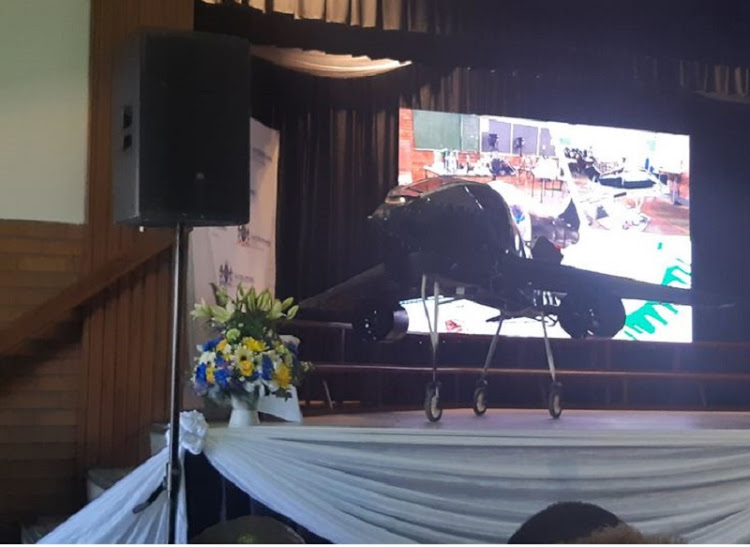
African-based global aerospace and defence company Paramount Group donated a Mirage V airframe  to mark the official launch of the  school which will now focus on aviation, engineering and maths.

The school curriculum will focus on core subjects and courses of specialisation linked to aeronautical and industrial engineering.

These learning opportunities will be provided through extended class times and after-school programmes.

Rhodesfield pupils also demonstrated an airplane that they built themselves. One of the  pupils, Nomsa Mboneli, spoke about what it takes to build an aircraft.

“I am truly honoured to say that we were selected for the Molo Africa project to build an airplane from scratch. That plane will take flight from Cape Town to Cairo (Egypt)  in December and it will be flown by teenagers from this school,” Mboneli said.

Education MEC Panyaza Lesufi said the department is bringing new opportunities to Rhodesfield. “We are planting the seed of aviation because we want you to contribute to the economy of the country,” Lesufi said.

Lesufi said the budget of RDP houses must go down while the budget for education should go up so that no pupil from this generation will queue for RDP houses.

He added that Gauteng will be the first province in the country to launch a school of maritime studies in two months’ time.

“Ocean economy is growing, and because we (in Gauteng) don’t have an ocean we will covert Vaal River into an ocean,” Lesufi said.

Zimbabwe on knife edge after deadly post-election violence

Clement Manyathela 

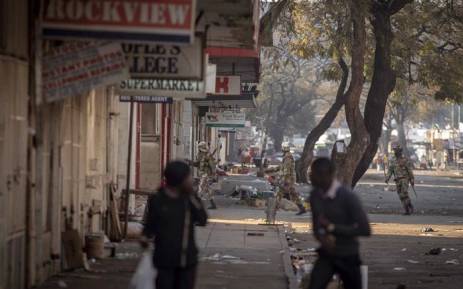
Zimbabwe remains on a knife edge on Thursday morning after post-election violence which saw at least three people dead, scores injured and police invoking the Public Order Security Act.

The act, which forbids public gatherings, was enforced after clashes broke out in Harare between soldiers and civilians who had been protesting the ruling Zanu-PF’s majority win in parliament.

Live ammunition was used to disperse the crowds, leading to pandemonium in the capital.

Army patrols continued into the night on the streets of Harare.

Wednesday’s the violence, which also saw the destruction of property and bloodshed, has been blamed on supporters of opposition leader Nelson Chamisa.

This is because on Tuesday, one of the MDC Alliance leaders, Tendai Biti, declared at a press conference that Chamisa had won the election, prompting celebrations outside the party’s headquarters.

But things took a different turn on Wednesday when the country’s electoral commission announced that Zanu-PF had in fact secured a two-thirds majority in Parliament.

The news did not go down well with opposition supporters who asserted that results were rigged in favour of the ruling party.

There was violent confrontation between them and the army.

The confrontation quickly escalated and soldiers carrying rifles could be seen assaulting civilians.

President Emmerson Mnangagwa addressed the nation last night, blaming the violence on Chamisa.

Police say they are viewing video footage to determine who incited the violence.

VIDEO: Zimbabwe army uses live rounds against protesters

POLICE DEFEND ARMY DEPLOYMENT

Zimbabwean police have defended their decision to call for army back up to deal with Wednesday’s violence in Harare, saying they did not have enough officers.

The US Embassy in Harare has urged the military to exercise restraint while diffusing tensions, saying it is deeply concerned about how it dealt with civilians.

The police’s Charity Charamba says the police chief requested the backup.

“It’s not a secret that our police officers are currently deployed throughout the entire country and the level of lawlessness in Harare has actually led to this decision.”

But it’s been argued that this decision led to the chaos and the subsequent deaths of at least three people.

Meanwhile, while the opposition MDC Alliance says it is not taking responsibility for the violence while in his address to the nation on Wednesday night, President Emmerson Mnangangwa called on political parties to accept that in any electoral process there are winners and losers.

Blood could be seen on the streets of Zimbabwe after police used live ammunition on civilians and protesters who accused the electoral commission of rigging results. Members of the media have also been assaulted and some had their equipment broken.

A man, who was bleeding from the mouth after being hit, said: “I was beaten by the soldiers, okay. I was hit during the demonstration.”

Protesters here have called for intervention from Southern African Development Community and the African Union, calling this a war between citizens and the Zanu-PF led government.

BRUTAL FORCE

Gunfire crackled in the streets while troops, backed by armoured vehicles and a military helicopter and some with their faces masked, cleared the streets.

One person was shot dead near a bus rank, witnesses at the scene told a Reuters photographer.

The deployment of soldiers and their beating of unarmed protesters is a setback to Mnangagwa’s efforts to shed Zimbabwe’s pariah status after decades of repression under Robert Mugabe, who was ousted in a coup in November.

Even before the violence, European Union observers questioned the conduct of the presidential and parliamentary poll, the first since Mugabe’s forced resignation after nearly 40 years in charge of the Southern African nation.

The violence started soon after opposition Movement for Democratic Change (MDC) leader Nelson Chamisa claimed he had won the popular vote.

Scores of his supporters who had been burning tyres in the streets then attacked riot police near the Zimbabwe Election Commision headquarters. Officers responded with tear gas and water-cannon.

“I was making a peaceful protest. I was beaten by soldiers,” said Norest Kemvo, who had gashes to his face and right hand. “This is our government. This is exactly why we wanted change. They are stealing our election.”

Justice Minister Ziyambi Ziyambi said the army had been called in to ensure “peace and tranquility”, although the legal basis for the move looks dubious, especially so soon after the military’s unconstitutional move against 94-year-old Mugabe.

Without the stamp of approval of the international community, Zimbabwe’s next leader will struggle to unlock the billions of dollars of international donor finance needed to get the shattered economy back on its feet.

The EU observers expressed concern about delays in releasing the results of the presidential contest, a two-horse race between Chamisa and Mnangagwa, head of the ruling Zanu-PF party.

As gunfire echoed through downtown Harare, Mnangagwa called for calm and urge patience while results were collated.

Many protesters accused the army of unprovoked brutality.

“We had no weapons. Why are the army here beating us? shooting us? This is not an election it is a disgrace on our country,” one young man, Colbert Mugwenhi, said.

A Reuters witness saw soldiers with sticks beat two people and counted at least five trucks full of soldiers.

“We are tired of them stealing our votes. This time we will not allow it, we will fight,” said one protester who wore a red MDC beret in central Harare.

“ONE-SIDED”

The electoral commission had said it would start announcing results for the presidential race from 10.30 GMT but that was then pushed back at least 24 hours.

With three seats yet to be declared in the parliamentary contest, Zanu-PF had 144 seats compared to 61 for the MDC, meaning the ruling party achieved the two-thirds majority that permits it to change the constitution at will.

Chamisa said the early release of the parliamentary results was a deliberate ploy to prepare Zimbabweans for a victory by Mnangagwa, a former national security chief nicknamed ‘The Crocodile’ and commonly referred to by the initials ED.

“The strategy is meant to prepare Zimbabwe mentally to accept fake presidential results. We’ve more votes than ED. We won the popular vote (and) will defend it,” Chamisa said on Twitter.

Before the violence, EU Chief Observer Elmar Brok said he did not yet know if the shortcomings would have a material effect on the outcome of the vote, but criticised the electoral commission for being at times “one-sided”.

The EU’s assessment is critical in determining whether Zimbabwe can repair its image and attract the foreign investors needed for an economic revival.

The EU did not understand why the release of the presidential result was taking so long, Brok said.

“The longer it lasts that the results of the presidential election is not known, the more lack of credibility it provides,” he said.

Zimbabwe was once one of Africa’s most promising economies but became descended into corruption, mismanagement and diplomatic isolation in the latter stages of Mugabe’s administration.

Its population of 13 million is struggling amid shortages of foreign currency, unemployment above 80% and lack of foreign investment. – EWN

Additional reporting by Reuters.

Unemployment statistics point to a generation failed by system

Nomphumelelo Runji

The prosperity and longevity of any society is inextricably linked to the investment it makes in its young people.

If the future is in the hands of the youth, as is popularly repeated, then the kind of environment, opportunities and skills that are extended to them must ensure that they’ll be able to realise the high aspirations and ideals of their forebears.

There is every indication that the youth in this country is being failed.

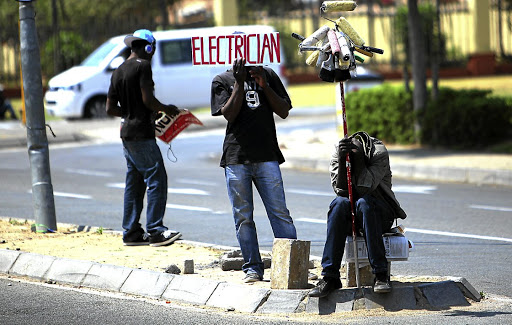
The labour force survey released by Statistics South Africa for the second quarter of 2018 shows a jump in the unemployment rate from 26.7% to 27.2% and it is highest among the youth.

Although an educational qualification does not guarantee employment, it places them in a better position to secure a job.

A comparison between unemployed youth graduates and their adult graduate counterparts shows that the adults fare better.

The labour force survey notes:

The unemployment rate for the youth was 38,8% compared to 17.9% for adults.

“The unemployment rate for the youth is higher compared to that of adults regardless of educational attainment.

“However, another noticeable fact is that the unemployment rate reduces as the level of education increases.

“Young graduates have an unemployment rate of 11.9%, which is more than two times higher than that of their adult counterparts at 4.4%.”

More concerning is the high number of young people who are not in employment, education or training who make up 39.3% of young people aged 15-34 years.

Even with the attainment of free higher education, which ideally should result in more young people accessing higher qualifications, the reality is that many young people are facing social pressures that prevent them from having the linear path to success.

High youth unemployment cannot be taken apart from the high school dropout rate. The trend in the 24 years of democracy has been that only half of the pupils who start grade 1 at a given point reach matric.

Even when you look at those who opt to take the school leaver’s certificate at grade 9, the picture does not change. Most young people are not dropping out to pursue further training at the country’s further education and training colleges or as artisans.

Young people are cutting their education short due to socioeconomic pressures such as having to find work to help support their families, being from child-headed households and other social ills like teenage pregnancy, alcohol and drug abuse.

Some find school difficult due to not having parental and social support that can assist them when they struggle academically.

In the context of an economy that has stagnated, growing at under 1% in recent history, and the shrinkage of labour absorptive sectors such as manufacturing, mining and agriculture, the prospects of these school dropouts are bleak.

There is little to no prospect for the unskilled and semi-skilled.

If this situation continues unabated, South Africa is headed for a social crisis of greater proportions.

The social welfare system, largely in the form of grants, will be overwhelmed.

It is clear that corporate South Africa prioritises capital-intensive growth with a focus on advanced skills and is unlikely to change.

And the labour movement will undoubtedly continue to fight for their employed members to get a better deal.

Perhaps there is a need for a national youth programme or service that would identify opportunities for youth to be empowered and skilled while contributing to communities.

In this way young people on the periphery of education and employment can be given the dignity of work.

The stipend they earn could alleviate social pressures and assist them to further their educational and entrepreneurial skills which could possibly lead to permanent employment.

Did UCT kill Bongani Mayosi?

Lukhona Mnguni

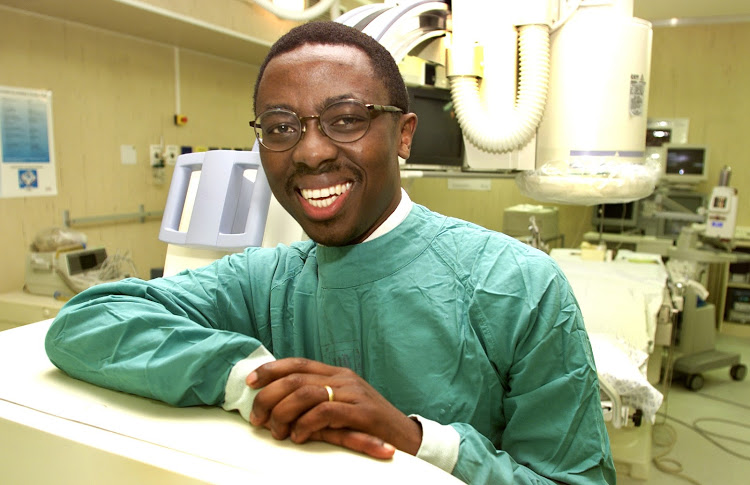
Questions surrounding the role of the University of Cape Town (UCT) in the death of Professor Bongani Mayosi may appear unnecessarily dramatic until you understand the perilous environment in which black academics operate in South Africa.  It is after all not the first time the passing of an academic has prompted such scrutiny.

A similar question was asked by Professor Jonathan Jansen following the death of Professor Russel Botman who was still serving as Vice-Chancellor at the University of Stellenbosch at the time of his death, just over four years ago.

Jansen wrote, then, movingly: “When the first black vice-chancellor of the University of Stellenbosch died suddenly last weekend, the question commonly asked by academics across the country was: “Who killed Russel Botman?”

Others, including senior black colleagues at this century-old university, were more direct: “They [white people of Stellenbosch] killed him.”

Jansen went on to qualify this “more direct” response asserted by some academics. He said, “Those who do not read the Afrikaans papers would be blissfully unaware of the role of gossip, rumour, insult, intimidation, sidelining and sheer slander this gentle theologian had to bear for the past few years.

“The more he pushed for transformation, the more he was mercilessly vilified by right-wing alumni, aided and abetted by the Afrikaans press, in blogger postings, in alumni associations, and in formal gatherings of the institution.”

The moment I heard of Mayosi’s death my mind went straight back to this piece by Jonathan Jansen. I wondered if academia in South Africa has become a deathtrap for committed trailblazing black academics. These academics build their careers in an environment that still frowns upon black success.

Once it became clear that Mayosi had taken his own life after suffering severe depression in the past two years, the rumour mill went into overdrive. We can never know the true facts but this does give a moment for us to talk about the plight of academics in general and black academics in particular.

Mayosi should be celebrated for his work, for the accolades he gathered, and the research breakthroughs he achieved.  He was a leader in his field and he handled himself with humility and grace.  His death has opened a flurry of conversation about the plight of depression and its stigmatisation among black people.

Thus, even in his death Mayosi has continued to be a force of moving society, teaching, forcing us to reflect and allowing us to own up to our inefficiencies and vulnerabilities as a society.

The greatest task for us in higher education is to confront the elephant in the room – the uncaring and untransformed nature of our institutions. The universities in South Africa are in serious need of an unburdening process, to open up space for frank conversations on how to turnaround conditions in these institutions.

The recently appointed Vice-Chancellor UCT, Professor Mamokgethi Phakeng, has come out to categorically state that “all of us at UCT failed him [Mayosi]”. This was in an interview on Cape Talk with Koketso Sachane.

She went on to detail that she has come to learn that a number of academics at UCT have had heart attacks, some are on all sort of pills and others are divorcing because they have changed. Phakeng herself admitted that she now walks around with anxiety tablets in her bag. Apparently she used to take these daily during the recruitment process for the current post she holds.

Of course some racist and anti-black forces at UCT had even questioned her academic credentials and the authenticity of her qualifications, all in an effort to discredit her and render her unworthy to ascend to the vice-chancellor position. UCT and many other spaces are still no places for black academics with agency and voice. To survive easily in these institutions you must be reticent, “see no evil and hear no evil” and pretend that you are happy while you die a slow gentle death inside.

What caught my attention the most is the revelation that Mayosi attempted to resign from his position as Dean of the Faculty of Health Sciences not once but twice: first at the end of 2016 academic year and secondly on the November 3 2017.

The university management refused Mayosi’s attempts to resign even though at the start of 2017 he had been off work for three months due to depression. In that moment the university should have done more for Mayosi, if indeed he was this treasured star they claim he was to them.

Administrative leadership in our institutions of higher learning is burdensome. Very few people actually aspire towards it, especially among black academics. Those that go into it do so because they have been convinced enough that “someone needs to put up their hand to change the system”. Often these words mean becoming the sacrificial lamb in pursuit of transformation — perhaps this is what Mayosi became.

READ MORE: Dear Professor Phakeng, you owe students an apology

Phakeng suggests Mayosi’s resignations were refused because it would not look good to have a black dean resign. No surprise here. Whiteness appreciates “good blacks” that help it sugarcoat its inadequacies and failures.

Black professionals are numbers for affirmative action scorecards and not human beings; hence even with severe depression UCT felt it needed Mayosi for its image and “prestige” at the expense of his health. Mayosi had to endure these disgraceful institutional logics.

What I find discomforting in Phakeng’s tracing of Mayosi’s trials and travails is tracing matters squarely to the “time of conflict” she refers to between 2015 and 2017. This is the moment wherein our universities were gripped by massive protests from students seeking decolonisation of universities and the working class seeking improvement to their working conditions and insourcing. Many deep dark things happened during this period and indeed people like Mayosi were at the heart of the crossfire. He decided to play a more active role, marshalling the faculty of health sciences to be on the side of students and even joining them during the protests.

Even though some students may have called him a coconut and a sellout, this did not stop him from siding with the injustice of institutional racism, patriarchy and discrimination felt majorly by black students. Mayosi must have understood well the plight of students.

By siding with the downtrodden in an institution of privilege, pomp and ceremony such as UCT, Mayosi was always going to suffer institutional backlash from colleagues that believed students were misbehaving and denigrating the good name of UCT.

That Mayosi was a leading cardiologist and clinician and therefore could be making rational decisions to highlight the plight of students in a positive manner would not matter to his colleagues. White privilege — at its most vile and punishing mode — cares not for the credentials of the black person seen as a transgressor.

All black people are the same deserving equal treatment. No doubt, for siding with students Mayosi earned himself equal disdain and disrespect as that which was meted out against students yet to earn an undergraduate degree. He must have been infantilised by some of his colleagues hell-bent at refusing that UCT should be decolonised.

Indeed Phakeng revealed that some colleagues would call Mayosi “incompetent and throwing them under the bus”. This is because many senior leaders in universities never got and still do not get the necessity for decolonisation of our public higher education institutions.

The protests have not died because change has happened, people have simply retreated out of need for some normalcy in their lives. It may not be too long from now before the next phase of protests.

However, to begin at 2015-2017 is to misdiagnose the beginning of institutional trauma experienced by Mayosi.

This can be seen on a social media post by one Joseph Raimondo who said, “In a medical tutorial with him [Mayosi] in 2004, I’m embarrassed to admit that his blackness initially made me doubt his ability. During the tutorial though, he quickly blew me away with his insight, knowledge and clinical acumen”. It is this kind of institutional racism that killed Mayosi.

It is this situation where a black academic, no matter how accomplished must continue to prove themselves to whiteness at every moment of encounter.

In 2004 Mayosi had been elected to the fellowship of the European Society of Cardiology and he had just completed his DPhil at the University of Oxford in 2003. Yet, here was a minion white student doubting his credentials and knowledge simply because he was black.

I have no doubt there are many others, senior academics, that made Mayosi feel that his brilliance and accomplishments were nothing but a fluke propelled by his collaboration with other scholars. I am certain that even in his death, some still doubt Mayosi’s brilliance. Such is the existential battle of black professionals in this country facing emboldened, enduring and resistant institutional racism.

When the decolonisation student movement said “we cannot breathe” referring to the oppressive and suffocating institutional cultures of many of our universities, what was not said is that black academics are worse off, suffocating while trying to eke out new life.

Many more will die of depression, heart failure, stress and many other chronic illnesses for enduring disastrous environments that appear rosy to the unsuspecting public.

In honour of Bongani Mayosi, a human being of outstanding intelligence and humility, black academics must find their voice and speak out in order for us to change the face, texture and substance of the South African academy.

Ulale ngoxolo Radebe, 
Ngelengele, ndlebentle’zombini

Lukhona Mnguni holds a Bachelor of Community and Development Studies (cum laude) and a Honours Degree in Conflict Transformation and Peace Studies (cum laude), both from the University of KwaZulu-Natal. Mnguni holds an MSc in Africa and International Development from the University of Edinburgh in November 2015 after having received the Commonwealth Scholarship to pursue his studies. He currently serves as a PhD intern Researcher in the Maurice Webb Race Relations Unit at the University of KwaZulu-Natal, South Africa. He believes in the promotion of dialogue as a tool to foster inclusive and sustainable solutions to development. Through various forms of writing and commenting in South Africa’s mainstream media, he contributes significantly to the national discourse on a range of issues from politics to sport to research-oriented subjects.


Western Cape education MEC calls for army to protect schools from gangs

Canny Maphanga

Cape MEC for education Debbie Schäfer has called for specialised gang units and the army to be brought in to protect schools, following an increase in gang warfare.

“The only solution to this ongoing gang violence that is negatively impacting the education and safety of our learners would be to increase the SAPS presence on the ground, and especially around our schools; bring back the specialised gang units, and deploy the army to gang-ridden areas on a temporary basis to stabilise the areas,” Schäfer said in a statement issued on Tuesday.

READ: WCape Education MEC demands answers on promised gang unit

The Western Cape education department has also issued a circular requesting all schools to review their safety plans.

“The safety of our learners and educators is paramount and we ask that all schools take the necessary precautions in order to prepare for any emergency,” Schafer said.

Schäfer said that a safety plan should, however, not compensate for the lack of police presence within the community.

“Last week in Scottsdene, shots rang out continuously around our schools. One police van arrived with one police officer who was unable to enter the area until backup arrived, which it never did,” Schäfer said.

The MEC reiterated that there was a chronic shortage of police in Western Cape.

READ MORE: Cele says no to army deployment for Cape Town’s crime-ridden streets

“We support the premier’s calls for the national minister of police to request the deployment of the army. This is necessary to support SAPS (South African Police Service) operations, as an interim peace-keeping measure in gang-ridden areas,” Schafer said.

“The reality is that without more police presence, gang violence cannot be brought under control,” she added.

The department said it saluted those officers in the Western Cape who are doing their best “under difficult circumstances”.

South African National Defence Force (SANDF) chief General Solly Shoke, speaking at a media briefing in Pretoria, said the SANDF would deploy when called on, but reiterated that “crime [was] not our domain”.

He said the military “skop en donner” when they go into a situation and they “don’t want to be seen in a position where we are fighting our citizens”.

Panyaza Lesufi: Language used as a ‘false shield’ for exclusion

Panyaza Lesufi

One of the basic tenets of racism is the notion that an individual is meaningless and that membership in a collective, particularly the race, culture and even language, are the source of identity and value.

To the racist, the individual’s moral and intellectual character is the product, not of his own choices, but of the genes he or she shares with all others of his race, language and culture.

This philosophy of racial division, and cultural and language individualism remain entrenched in our education system. That is why Hoërskool Overvaal’s legal victory in keeping out 55 grade 8 English learners from the Afrikaans school in Vereeniging was a major setback for transformation and the struggle for a non-racial society.

Believe me, I am the first to admit that there has been a huge transformation in schools since the dawn of democracy. Gone are those monochrome school classes, in are multi-coloured, multi-ethnic schools that reflect the changed composition of our society.

Of course, many schools reflect their catchment areas and their composition can be determined by patterns of settlement and housing policies over which schools have no control.

The Gauteng Department of Education (GDE) believes that in order to promote and encourage a truly multi-cultural, diverse education, the public education system must advocate an authentic multilingual curriculum with competent instructors and administrators committed to the agenda.

This includes an ethnic self-identification process that goes beyond the use of appropriate ethnic labels, but one that explores intrinsic idiosyncrasies of a non-racial society and a genuine, multi-cultural education that promotes ethnic constancy.

What our Rainbow Nation urgently needs is a ruling that recognises a language policy for what it is: a malignant policy that harms everyone and is the very essence of racism. Unlike the policy of racial integration, some language policies propagate all the evils inherent in racism.

The value of racially integrated schools lies entirely in the individualism it implies. It implies that the learners were chosen objectively, with skin colour, language or culture ignored in favour of the standard of individual merit.

But that is not what advocates of language policies want. They sneer at the principle of colour-blindness. They use language as a proxy for racism. They want admissions to some schools to be made exactly as the vilest of racists make them: by bloodline.

They insist that whatever is a result of your own choices – your ideas, your character, your accomplishments – are to be dismissed, while that which is outside your control – the accident of skin colour – is to define your life.

It is time our society identifies language policies as nothing more than crude forms of racism.

Racism is pernicious, a behaviour which some may like to dress up as language policy but is, in fact, too low to be accorded that degree of respectability.

Believe me, the job market and the educational field have influenced and altered societal trends. It is not a secret that professionals capable of mastering two or three languages have an edge in the job market. Paradoxically, our School Governing Bodies (SGBs) have been sending mixed messages through language policies.

On the one hand, multi-lingualism is seen as an asset for educators and business people. On the other hand, second-language education has been systematically suppressed by some SGBs in favour of mono-lingual education.

So, in the light of the recent court ruling on Hoërskool Overvaal, it seems appropriate to ask what our schools can do to ensure a more stable, diverse society with an inclusive ethos and robust anti-racism policies.

Our schools need an inclusive ethos and practice in both their formal programmes, a real inclusive practice as part of the school’s culture in all activities, including sports games, clubs and other extracurricular activities.

That is why the GDE supports the Department of Basic Education’s South African Schools Act of 1996 (Act No. 84 of 1996), and the Employment of Educators Act of 1998 to promote social inclusion, create social consciousness and foster a strong sense of belonging to all of us and seek to:

– Give the Head of Department the final authority to admit a pupil to a public school;

– A public school must take into account the diverse cultural beliefs and religious observances of the learners;

– Limit the powers of a School Governing Body in recommending candidates for admission;

– Empower the Head of Department to dissolve an SGB that has ceased to perform functions allocated to it in terms of the Act;

– Prohibit educators from conducting business with the state or from being a director of a public or private company conducting business with the state; and

– Require the SGB to submit the language policy of a public school, and any amendment thereof, to the Head of Department for approval.

As role models teachers should be involved in mentoring through open relationships between teachers and learners. Teachers need continuing professional development particularly in cultural and linguistic knowledge.

Learners need to be given the opportunity to socialise and learn in an open, tolerant and supportive environment where high standards are set and all and everyone is treated with respect and dignity.

Language cannot be viewed as an isolated construct but must be analysed as an extension of culture.

In this global world, the idea supporting the total suppression of one language against the other is inconsistent and detrimental to a non-racial society.

That is why no school should exclude a learner on the basis of language. The right to education is one of the most fundamental rights in the Constitution and if any school, in applying its language and admissions policy, acts contrary to the Constitution, that policy must be disregarded.

The Hoërskool Overvaal and other cases before have actually disregarded language rights. Language rights are protected in the Constitution and will be respected by the department, as they have in the past.

The issue is about access to education and the question of language is being used as a false shield to exclude those who are entitled to education at a school in which they qualify, in terms of the legislation.

At the centre of our non-racial crusade is how much equal opportunity we as a nation are willing to sacrifice as we pursue diversity and a non-racial culture. The point is, if we want the virtue of our kids being exposed to kids of different races and backgrounds, then we have to be willing to accommodate any pupil, irrespective of language, culture and race.

Protecting a language such as Afrikaans as the sole basis of communicating not only hinders progress, but places this country in jeopardy of losing its justified title as an emerging economic giant.

Few people of open mind and good heart would deny that social cohesion and non-racialism are not just an admirable goal but a necessary one for schools that aim to prepare learners for life in the real world.

Lesufi is Gauteng MEC for Education.

Nigeria: Lagos bans Hijab in schools, pending Supreme Court decision

Gboyega Akinsanmi

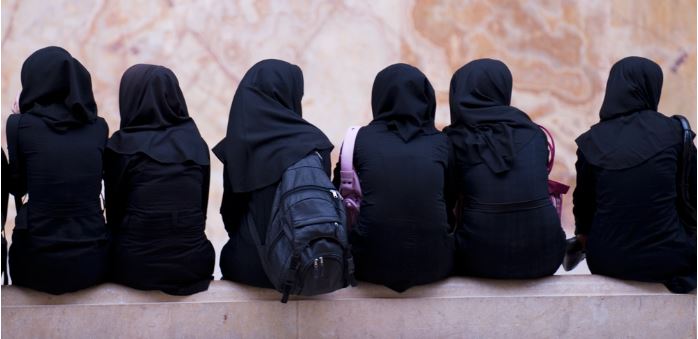
The Lagos State Government yesterday noted that it would not allow the use of Hijab in all its public schools until the Supreme Court “determines an appeal seeking to upturn the decision of a Court of Appeal.”

The state government equally clarified that religious institutions were exempted from paying taxes, according to the state laws, though any religious institution engaging in commercial activities was liable to pay taxes, accordingly.

The State Commissioner for Home Affairs, Dr. Abdulateef Abdulhakeem on a Television Continental (TVC) programme, ‘YourView’ yesterday, said the state government would not enforce the appellate court’s decision on the use of Hijab.

A Court of Appeal sitting in Lagos had in July 2016 unanimously set aside the judgment of a Lagos High Court, which banned students in public schools in the state from putting on the Hijab with their school uniforms.

The court presided over by Justice AB Gumel held that the appeal was meritorious and should be allowed. Gumel held that the use of the Hijab was an Islamic injunction and also an act of worship, hence it would constitute a violation of the appellants’ rights to stop them from wearing it in public schools.

Dissatisfied with the decision of the appellate court, the state government approached the apex court, challenging the court decision, which reinstated the use of Hijab in the state’s public schools on July 21, 2016.

Confronted with a question on the refusal of the state government to enforce the court decision on the use of Hijab, Abdulhakeem noted that the state government “firmly believes in the rule of law and will continue to uphold it.”

He explained that the state government did not enforce the judgment of the appellate court, which reinstated the use of Hijab in the public schools on July 21, 2016 until the state government had already appealed the judgment.

According to the commissioner, the state government is awaiting the decision of the Supreme Court on this matter. We cannot enforce the decision of the lower court until the Supreme Court determines the appeal before it.

He also clarified the position of the law that exempted religious institutions from paying taxes, noting that all religious institutions were exempted, though those involved in commercial activities was liable to pay taxes.

“Religious institutions are not taxable under the Lagos laws. If religious institutions engage in business transactions, they are liable to pay taxes. But as far as the institution is concerned, it is exempted from paying tax,” he said.

He explained that the law was not applicable “to those who convert their buildings into mosque to avoid paying taxes,” adding that we have made it abundantly clear that they are not allowed to convert residential premises into religious centres.

“So, people should just respect God the way the state government has respected God and do not come under that arena to avoid payment of taxes,” he said.

He debunked reports that it was planning to commence paying salaries to religious leaders in the state, saying the claim was totally untrue and misleading.

He said the reports did not contain any iota of truth, thereby urging the residents “to disregard it in its entirety. Contrary to the reports, we have no plan to employ imams and pastors. We are not willing to delve into a private realm.

“There is a symbiotic relationship between the state government and faith-based organisations. It is a mutually beneficial relationship which has contributed to the growth and development of the state,” the commissioner said.

Abdulhakeem had been quoted to have said the state government would soon place religious leaders on the State salary structure to encourage them to use their Pulpit and the Minbar to re-orientate citizenry to shun corruption and immorality.

He however clarified that he was misunderstood or misquoted, explaining how he encouraged religious leaders “to be advocates against corruption because religious leaders have millions of adherents and they enjoy the allegiance of millions of followers.

“We expect them to advocate good governance and selflessness so that they can influence their members positively. In Lagos State, our success is that we have cutting-edge approaches to relating with religious leaders.”

Read original article here.

Kenya: Schools ‘to close early’ as cash crunch bites

Collins Omulo and Faith Nyamai

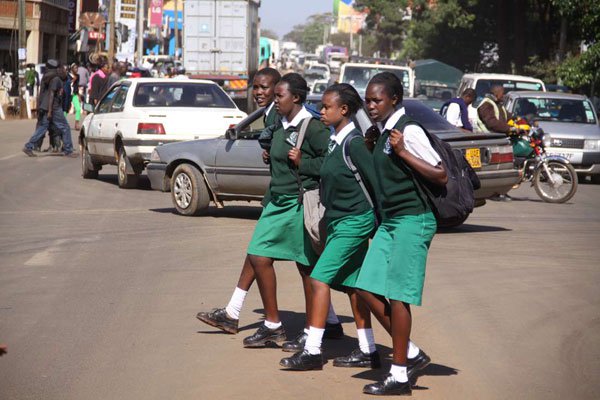
Public secondary schools are in a rush to close following a delay by the government in releasing funds. Some have already sent their students home despite the official closing date being August 2.

The government had promised to release the remaining Sh6.3 billion (63 million USD) for second term by Friday.

Last evening, Education Cabinet Secretary Amina Mohamed said the money had already been disbursed.

“The government has sent 30 per cent of the disbursement to school accounts. The ministry has cleared 11 per cent of the outstanding free day secondary education amounts out of the Sh22,240 owed to every student,” she said.

Delays

Related Content

The statement was echoed by the director of education in charge of secondary schools, Paul Kibet.

However, Kenya Union of Post Primary Education Teachers Secretary-General Akello Misori on Sunday said no school had received money by Friday.

He added that workers and teachers employed by school boards had not been paid.

Kenya Secondary School Heads Association chairman Kahi Indimuli said the delay in releasing the funds was worrying.

“I cannot confirm if the money was credited to school accounts. I will get a full report on Monday,” Indimuli said on Sunday.

He added that the most affected are day schools “which rely on the government for almost everything”.

Second Term
A principal told the Nation that his school had not got the money.

“We have not closed but creditors are on our necks,” the headteacher said, adding that the situation is more dire for recently transferred headteachers.

Primary schools have received all their funding for second term.

Schools are supposed to get 50 per cent of the government funding in first term, 30 per cent in second term and the rest in third term.

Early this month, Education PS Belio Kipsang told headteachers that the remaining Sh6 billion would be released before the end of last week.

It is not the first time schools are in a financial crisis.

In May last year, a union wrote to the ministry, saying the delay in releasing cash had inconvenienced school programmes.

Read original article here.