Home Blog Page 495

40-minute video to be used as evidence in EFF student activist’s trial

Kaveel Singh

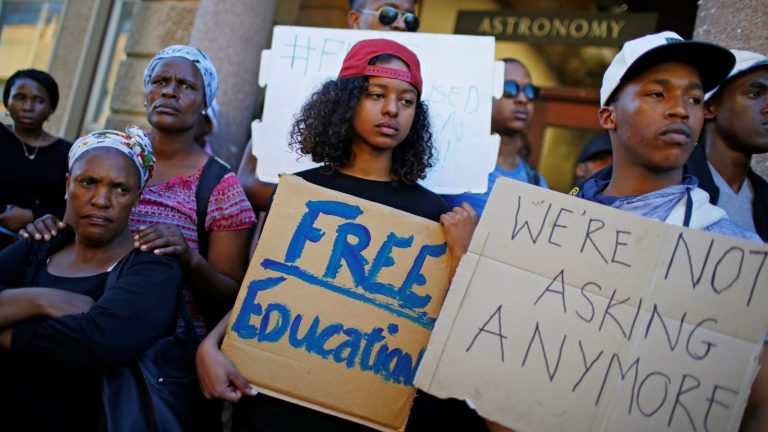
A 40-minute video that purportedly captured violence during the Fees Must Fall protest in 2016, will be used as evidence against Economic Freedom Fighters Students Command activist Bonginkosi Khanyile on Wednesday.

Khanyile appeared in the Durban Regional Court on Tuesday where his trial is set down for at least three days this week.

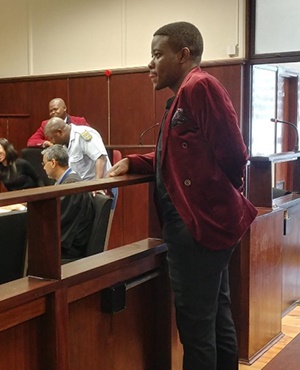
A smartly-dressed Khanyile, who appeared calm, faces a string of charges, including inciting public violence, possession of explosives, the contravention of the Gatherings Act, possession of a dangerous weapon, failure to comply with police orders, common assault and hindering traffic.

Warrant Officer Shaun Robins, a police videographer who works out of the Public Order Policing division in Marianhill, apparently recorded Khanyile and his cohorts performing acts of violence on September 27, 2016.

The video could not be played on Tuesday because court proceedings for the day had been completed. Instead, it is expected to be screened on Wednesday when Robins’ testimony continues.

Giving evidence, Robins described violence police were allegedly subjected to just outside the ML Sultan Campus at Durban University of Technology (DUT), where Khanyile studied.

“They pulled the main gate closed behind them and started pelting us with stones. There appeared to be building rubble and bricks that they threw at us. They were also using slingshots to attack police.”

Robins said he had recorded the mayhem in the 40-minute video.

Khanyile was previously denied bail on several occasions and was only released after he took his case to the Constitutional Court.

Despite spending six months in jail during this period, he graduated with a National Diploma in Public Management and Economics summa cum laude at DUT.

In May, he graduated with a degree of Bachelor of Technology in Public Management at DUT, following his suspension from the institution.

Read original article here.

A big moment for Africa: Why the MeerKAT – and astronomy – matter

Vanessa McBride

‘Students must learn science in a way that allows them to build their repertoire of transferable skills.’


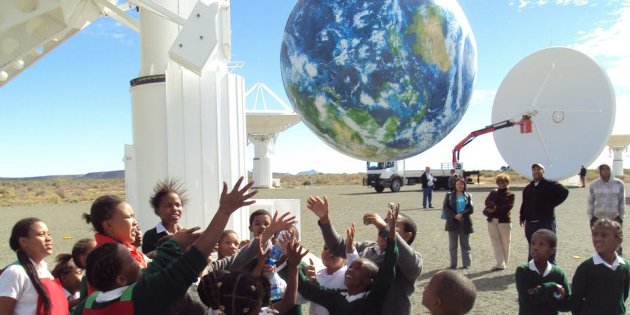
Astronomy in Africa will take a giant leap forward with the unveiling of the 64-dish MeerKAT array in South Africa on July 13. The MeerKAT will be the largest and most sensitive radio telescope in the southern hemisphere until the Square Kilometre Array (SKA) is completed.

Why is this such a big deal? After all, Africa has many challenges more pressing than exploring the universe. But, as my colleagues and I recently argued in an article for Nature Astronomy, astronomy occupies a special place among the many efforts to address development challenges. It has a unique ability to stimulate thoughts of “what is possible” in the minds of marginalised communities, women and children.

Astronomy connects philosophical, cultural and inspirational elements with the cutting edge of science and technology. This affords the discipline a unique advantage to foster socioeconomic development. For instance, astronomy has been used in Sierra Leone to improve middle school pupils’ literacy. It worked because they loved what they were learning.

Astronomy techniques are also used across sectors from conservation to medical imaging.

The International Astronomical Union’s Office of Astronomy for Developmentuses astronomy to drive positive developmental change. It has ten regional and language centres. Three are in Africa, in Ethiopia, Nigeria and Zambia. The global coordinating office is situated in South Africa.

Our challenge as astronomers is not only to grow the discipline in Africa. We also need to ensure that this growth is accompanied by the educational, technology transfer and societal engagement initiatives that can drive the continent’s development priorities.

Skills training

The funding we disburse has been used to run a number of programmes aimed at developing skills among school and university students.

One of these was the Madagascar Astronomy Python Workshop in 2017. It focused on practical coding in the Python programming language for university students and lecturers. The aim was to build on astronomy tools that participants can develop for their own research and teaching, not necessarily in the field of astronomy.

At school level the Girls Astronomy Camp was held in Abuja, Nigeria earlier this year. This not only dealt with education. It also tackled the large gender disparity in science, technology, engineering and math fields, which can be a complex, socio-cultural issue in many regions.

It’s crucial for educational interventions to address the fact that astronomy students often find employment outside the field. Students must learn science in a way that allows them to build their repertoire of transferable skills.

So the Office of Astronomy for Development has funded a number of Joint Exchange Development Initiative workshops in NamibiaMozambique and Mauritius. These workshops focus on the direct transfer of specific skills in an informal but intense learning environment. They’re also excellent for data science skills, which are particularly important for economic growth and jobs in emerging markets.

To support this need and bridge the data science and astronomy communities, the Office of Astronomy for Development hosts a repository for data science resources and code examples.

Beyond disciplinary boundaries

Astronomy can also be put to use in perhaps surprising ways to boost development.

One of our projects, Accessible Citizen Science for the Developing World, has married health issues with astronomy skills through running a proof-of-concept type intervention. Retinal defects are common but curable. Peek Vision, a social enterprise that works to bring better vision and health to everyone, developed a retinal imaging device that can be easily used, even in rural Kenya, with an Android phone.

But there weren’t enough qualified ophthalmologists at hand to use the app to diagnose retinal problems. So Peek Vision teamed up with astronomers at a citizen science portal called the Zooniverse. In the same way that the citizen scientists had previously worked to classify thousands of galaxies, they were called on to learn how to identify retinal problems on the Zooniverse portal. Such partnerships are quintessential examples of working together across disciplinary boundaries to achieve development outcomes.

Creating spaces

There are numerous other initiatives that contribute to development through astronomy. Large astronomical infrastructure investments like MeerKAT aim to stimulate the technology industry and advance the development of technical skills. International aid initiatives with a science focus like Development in Africa with Radio Astronomy (DARA) and its sister project, DARA Big Data, are using the momentum generated through the SKA programme to develop skills and train more astronomy students for the continent.

Of course, the few examples illustrated in this article hardly begin to address the myriad challenges facing Africa and the world. Technology and science can only do so much: these challenges have solutions that are, at least in part, driven by human values.

That’s why conversations that span natural and social sciences are key to making development progress on the continent. The Office of Astronomy for Development is one of the spaces hosting these conversations. We’re challenging astronomers and other scientists to reach across the disciplinary boundaries to explore how their skills can help Africa meet its development goals.

Vanessa McBride is an Astronomer, International Astronomical Union’s Office of Astronomy for Development

Author’s note: the article on which this piece is based first appeared in Nature and was co-authored by Ramasamy Venugopal, Munira Hoosain, Tawanda Chingozha & Kevin Govender.

Honour Mandela by improving the education system

Paul Herman

Political parties, Parliament and Archbishop Emeritus Desmond Tutu have shared their special messages this Mandela Day, marking former president Nelson Mandela’s centenary birthday celebrations.

On Wednesday, Tutu said good leaders knew when and how to say sorry.

“Madiba had this quality in abundance. During the Truth and Reconciliation Commission, I once had an occasion to be quite annoyed with him, but I found his honest apology quite disarming,” he said in a video message.

Mandela’s most important quality was his ordinariness, Tutu continued.

“He was just a particularly fine example of humanity. The principles by which he lived his life are universal principles of love, fairness and respect for others.”

He also praised Mandela’s sense of humour.

“We did not agree on everything. His dress sense for example: I once told him he should wear a proper suit and tie on important State occasions, rather than those colourful shirts.

“His retort was typical of the man: It was ‘rich criticism’ coming from a man who appeared in public in a purple frock!” he laughed.

Tutu’s wife Leah said Mandela had given people a sense of pride and made them feel special. She praised the “extraordinary, ordinary man”.

‘Education needs to be improved’

Democratic Alliance leader Mmusi Maimane on Wednesday said the best way to honour Madiba’s legacy was to “save our children from a failed education system”.

“Today, across the country, we remember the life and sacrifice of our first democratic president and the father of our nation, Nelson Rolihlahla Mandela,” Maimane said in a statement.

“But if we are to truly honour his legacy, then we have to go beyond our symbolic 67 minutes of service on this day. We must fight, every day, for the values he stood for.”

Maimane said one thing that mattered to Madiba more than anything else was looking after children and preparing them for a better future through education.

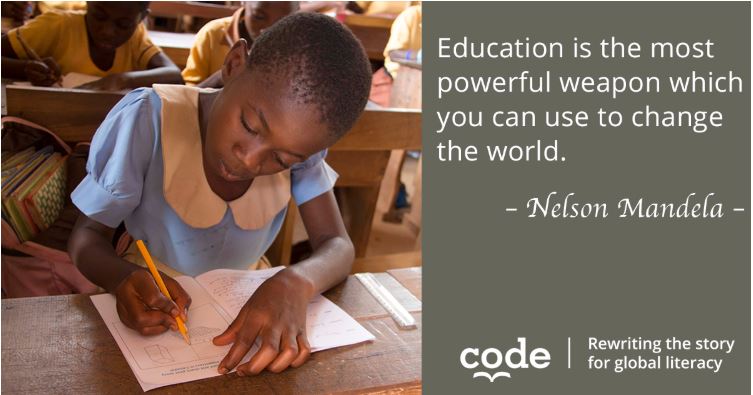
“We all know Mandela’s well-known quote where he said, ‘education is the most powerful weapon which you can use to change the world’. But if we are not prepared to arm our children with this weapon, we cannot claim to be upholding the Mandela legacy.”

Maimane hoped to see safer schools, better school-feeding programmes, scholar transport, and reduced classroom sizes, among other things.

‘Returning the land’

The Economic Freedom Fighters (EFF), meanwhile, said they were “delighted” that the Mandela Day centenary celebrations had coincided with the public hearings on amending the “property clause” in the Constitution.

Parliament’s provincial hearings on the emotive issue resumed in the North West and KwaZulu-Natal on Wednesday.

“The leadership of the EFF commemorates Mandela Day by listening to the people, many of whom are landless and still have no access to the means of production in this country. We are committed to doing everything to ensure our people get back the land.”

The EFF said it would hold up some of Mandela’s core values – freedom, service and dignity – by striving to achieve the economic emancipation of the people in their lifetime.

“The most urgent of all is to restore the dignity of our people by returning back the land. We call on all South Africans to mark this day by making their voice heard at the public hearings.”

Meanwhile, in Mvezo, former president Jacob Zuma and President Cyril Ramaphosa shared the limelight at a function hosted by the Royal House of Mandela.

Ramaphosa was due to address the event later on Wednesday, hosted by Mandela’s oldest grandson, Chief Mandla Mandela.

‘It’s in your hands now’

Parliament’s presiding officers acknowledged the centenary celebrations of both Madiba and struggle stalwart Albertina Sisulu.

“It was Ms Sisulu, who, on May 9, 1994, nominated Nelson Rolihlahla Mandela as democratic South Africa’s first President – at the inaugural sitting of the democratic Parliament.”

Parliament reaffirmed its determination to continue building an activist people’s Parliament, responsive to the needs of the people and driven by the ideal of a better life for all.

“Restoring dignity and redressing apartheid injustices are necessary for the healing of the wounds of a long and brutal past – to realise the freedom from want and discrimination, which our Constitution appeals we should work towards, for actual freedom.”

The presiding officers also acknowledged the public hearings on land currently taking place.

“The people are their own liberators and, through this process, they are making bold submissions to the legislature regarding how restitution of property… can be achieved.

“They are speaking out regarding how land reform and social justice can be speeded up, so that we truly heal the wounds of the past and build the national cohesion to free up factors inhibiting our common desire for economic growth and prosperity.”

They called on the younger generation, in particular, to rally behind achieving a common goal of building a better South Africa.

“As Madiba once remarked: ‘It’s in your hands now’.”

Read original article here.

In Mozambique, classes come alive in local languages

AFP

About 50 children sit on a bare classroom floor in front of their teacher in what could be any lesson in Mozambique, except that they are not learning in Portuguese, the country’s official language.

The class is being taught in Changana, a local language spoken in southern Mozambique and in the capital Maputo that is closely related to Tsonga spoken across southern Africa.

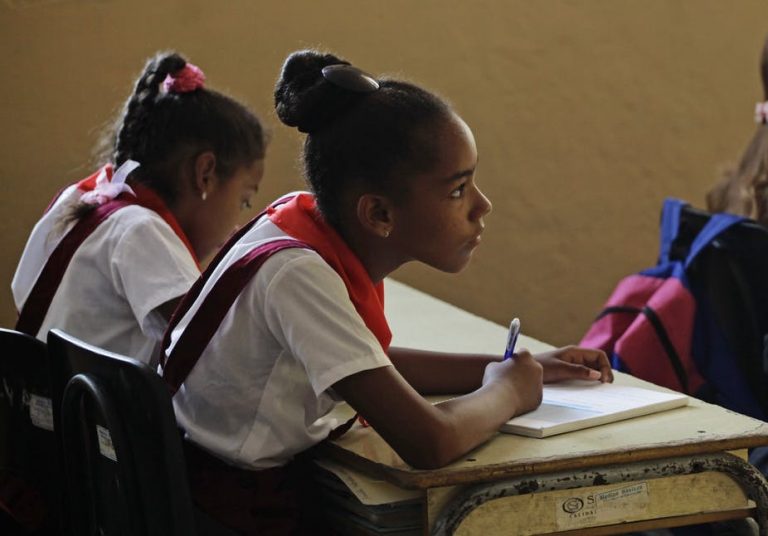
Wearing backpacks and surrounded by a pile of books, the children aged six and seven are gripped by the teacher’s every word – a concentration level almost impossible to achieve in Portuguese.

“Kids are breastfed by mums speaking Changana and grow up until the age of five speaking Changana,” Helena Joaquim Arguenha, their teacher at Mitilene primary school in the rural district of Manhica, about 80km from Maputo, told AFP.

“It is very important that the children learn in their native language because it opens up the kid to learn more.”

Arguenha has taught at the government school for six years, but only last year started teaching in Changana as part of a Food for Knowledge (FFK) project funded by US aid and the local action group ADPP Mozambique.

Almost all teaching in Mozambique is in Portuguese – a legacy of the country’s colonial era before independence in 1975 – but the majority of Mozambicans speak one of more than 40 local languages.

The ministry of education told AFP that only 10% of children start school knowing Portuguese but now around 1 300 primary schools out of 13 000 offer some bilingual teaching.

Shy and scared to speak

In Arguenha’s class, only one child spoke Portuguese at the start of the year.

But speaking in Changana, communication between teacher and pupils is fast and lively, with children throwing their hands up high to answer questions.

“In Changana the students are more creative, they understand better and they are not shy. They speak freely, they express themselves,” Arguenha said.

“When it is in Portuguese they are very shy, they are scared to speak and hide themselves.”

The NGO Associacao Progresso, which works to improve literacy in the country, has first-hand experience of how much children struggle when they have to learn in a language they do not speak fluently.

“What often happens is that there is no communication because the teacher speaks Portuguese, but the student doesn’t understand,” said Alcina Sitoe, education officer at Associacao Progresso.

“If you don’t understand what is being taught, it is difficult to learn anything.”

Mother tongue instruction

The Mozambican government has acknowledged the problem and in 2017 introduced reforms aimed at having classes taught in local languages, although some parents often want their children to be taught exclusively in Portuguese.

They later switch to the official language at about the age of 10, after children have had time to learn it.

“We could see that these kids got better results than the kids who had monolingual, Portuguese teaching,” Gina Guibanda, the government’s director of primary education, told AFP.

“When the teacher in the class spoke a language that the kids had never heard spoken, for the kid that was horrible.”

The UN education agency Unesco has long encouraged mother tongue instruction in primary education, with research showing that it is the optimal language for literacy and learning.

In the developing world, children are more likely to enrol and succeed in school. In particular, girls and rural children with less exposure to a dominant language stay in school longer and repeat grades less often if they learn in their native language.

Specialist training needed

Guibanda said training is the major problem holding local-language teaching back.

Many rural schools have no trained teachers to give lessons in local languages or any translated books.

Government policy is for teachers to have three years of training, but that has been cut down to one year due to budget shortages and the nationwide shortage of all teachers.

“It is not enough. Teachers graduate while still having a number of problems,” said Francisca Samboca, education officer at Associacao Progresso.

“In reality, in all the rural areas these schools can only be found in the district capitals.”

For Arguenha, the new approach was made easier because ADPP and FFK provided specialist training and materials in both Changana and Ronga, the other local language spoken around Maputo.

ADPP and FFK now work with 101 schools in four districts in Maputo province, with more than 5 000 children taking part in the programme and more than 67 000 books have been distributed.

But the difficulties for teachers switching between languages can not be estimated.

“In the beginning it was a challenge,” said Arguenha. “I really needed to concentrate when using the material and I needed to use vocabulary I didn’t normally use.”

KZN Fees Must Fall leader’s trial starts almost 3 years after arrest

Kaveel Singh

The trial of Bonginkosi Khanyile, the controversial leading figure in KwaZulu-Natal’s Fees Must Fall movement, has officially commenced, nearly three years after his arrest.

Khanyile appeared in the Durban Regional Court on Tuesday, where Magistrate Siphiwe Hlophe will be presiding over the matter.

Khanyile, who this year graduated with a Bachelor of Technology in Public Management at the Durban University of Technology following his suspension from the institution, appeared calm during proceedings.

The State levelled several serious charges against Khanyile, including inciting public violence, possession of explosives, contravention of the Gatherings Act, possession of a dangerous weapon, failure to comply with police orders, common assault, as well as hindering traffic.

When asked to plea, an unhappy Khanyile told the court that his Legal Aid lawyer had advised him to plead guilty.

“I feel uncomfortable with the whole processes. My lawyer says I must plead guilty.”

Read: It may not be my last time in prison – Bonginkosi Khanyile

Hlophe insisted that he had to plead for himself. Khanyile again began his explanation. Hlophe interrupted, saying: “Once charges are put to the accused, they must plead. If you do not plead, a plea of not guilty on all counts will apply.”

The majority of charges against Khanyile relate to his leadership during protest action at DUT on September 27, 2016.

State prosecutor Roshiela Benimadho commenced proceedings with Metro Police Captain Luke Fernandez. Fernandez is responsible for special events within eThekwini Municipality.

He is expected to testify that neither Khanyile, nor other Fees Must Fall members, had protested legally.

Read more: #FeesMustFall protesters facing charges to be diverted to community service in schools

The State is also in possession of video evidence that is expected to implicate Khanyile on many of his charges.

Khanyile was previously denied bail on several occasions and was only released after taking his matter to the Constitutional Court.

Despite spending six months in jail during this period, he graduated summa cum laude at DUT. – News24

HUB approach could pay dividends for TSA

Mosibodi Whitehead

Kevin Anderson’s run to the semi-finals at Wimbledon after a thrilling victory over Roger Federer this week has got the nation excited about tennis again.

The Johannesburg-born US-based Anderson is the first South African man to reach the last eight at the All England Club since Wayne Ferreira 24 years ago. And while we have celebrated our countryman’s achievement, we must ask if we will have to wait another quarter century to witness a South African – Zungu, Ntuli or Sereo – perhaps reach the business end at the All England Club.

According to the data supplied by Tennis South Africa (TSA) to the Eminent Persons Group for the 2016/2017 financial year, only 606 of the 13 710 primary schools in the country play tennis and most of them are private and former Model C schools.

The EPG Report, which monitors the progress of transformation in South African sport, found that just 17 township primary schools play tennis when the total number of township primary schools is over 6 000.

It is no wonder then that Anderson carries the tennis hopes of an entire nation.

There simply aren’t enough professional tennis players in South Africa because not enough primary school kids are being exposed to the sport. 

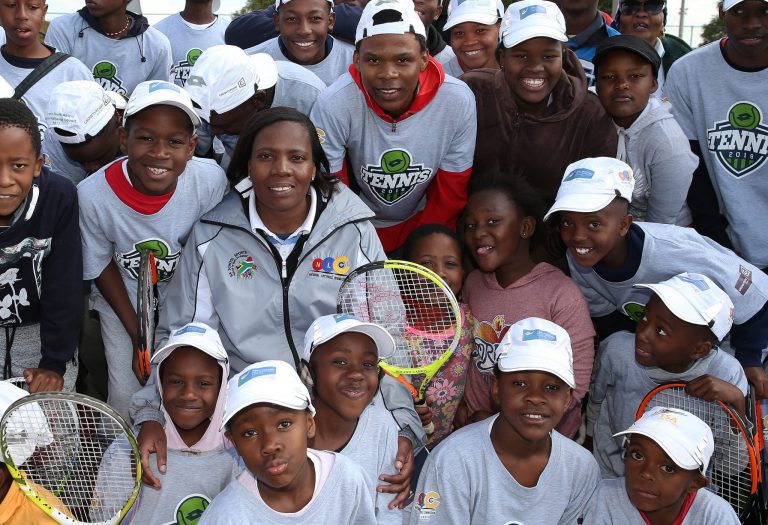
But the winds of change are blowing in tennis with TSA taking significant steps to remedy the status quo. On 6 July Tennis South Africa (TSA) celebrated the opening of a new tennis development centre in the Pretoria township of Atteridgeville.

The development centre which is sponsored by GrowthPoint Properties and under the direction of TSA Development Manager Mpho Makhoba and modelled on the success of the Arthur Ashe Tennis Centre in Soweto.

Makhoba’s love for the sport spans almost three decades, having started as a passionate junior player in Atteridgeville to end up as a top international tennis umpire.

“I started playing, enjoyed playing and one day we had an exhibition match in which international players came to SA in the late nineties. I was watching my coach calling the lines and I just told myself that this this something that I’d like to do,” says Makhoba.

Because she understands some of the challenges that township kids face in making a life out of the sport, Makhoba was an obvious choice when Richard Glover took over TSA’s CEO position in September 2016 and was looking for someone to head up the organisation’s development arm.

The idea is to create a hub resourced with technical and administrative skills which acts as a centre of excellence to identify and train talented youngsters from surrounding schools.

“We are aware that a whole lot of schools that don’t play tennis. So we have selected a head coach for every single development centre including this one in Atteridgeville. The coach must then go around to all the surrounding clubs and schools to scout for talent and we can train them here,” says Makhoba.

The additional benefit of the hub is that because it has attracted corporate sponsorship from GrowthPoint Properties the most promising youngsters will be supported with coaching, equipment and transport to tournaments as they build their fledgling tennis careers.

This Atteridgeville hub will service the surrounding townships of Mamelodi, Hammanskraal and Atterdigevile itself. The approach is a simple one which has found success at Cricket South Africa. It’s an excellent step taken by Tennis South Africa which if applied correctly should pay dividends in the form of a South African Wimbledon winner from Atteridgeville, Mamelodi or Hammanskraal in ten to fifteen years’ time.

Whitehead is a sport broadcaster and writer.

Top private and public schools in South Africa: cost vs performance

Staff Reporter

With the persistent perception that the quality of South Africa’s education is in perpetual decline, may parents feel that the only way to secure a future for their children is to turn to private education.

But such a move comes at a price. When looking at the performances of private schools in South Africa (matric results), it’s clear that parents see the results they want for the price they pay.

Many private institutions write the Independent Examination Board (IEB) exams instead of the government’s National Senior Certificate (NSC) exams.

In 2017, 11,464 full-time and 666 part-time candidates from 212 examination centres across SA sat the IEB exams, delivering a 98.76% pass rate (up from 98.67% the year before). Of these, 88.5% passed with bachelor’s entry.

By comparison, 629,155 full-time candidates and 173,276 part-time candidates penned the NSC examinations, delivering a 75.1% pass rate – though only 28.7%passed with bachelor’s entry.

Not a simple numbers game

According to Ruksana Osman, professor and dean of humanities at University of the Witwatersrand, comparing private and public schools isn’t a simple numbers game, however.

“In fact, there is a negligible difference between well-resourced public schools in middle and upper middle class areas and their counterparts in the private sector,” she said.

These high-performing public schools are the exception, not the rule, she said, with the data showing that the vast majority of publicly-funded schools are under-performing.

But that does not mean that quality education in the public sector can’t be found.

According to the school performance report for the 2017 matric exams, there are 115 exceptional public schools which have maintained a 100% pass rate for the past five years – and among these top-performers are some schools that push through a high number of learners that qualify for entry into bachelor’s degrees.

This is achieved at a fraction of the cost of South Africa’s most expensive private schools, that have similar track records and performances.

BusinessTech compiled data looking at the tuition costs, number of students and number of Bachelor entry passes attained from some of the most expensive private schools and top-performing public schools in South Africa.


How we got the data

Because all the the schools listed below had a pass rate of 100%, we looked at different criteria to determine the best performance – bachelor pass rates. Many of the schools listed have the same bachelor pass rates, so they were ranked by the actual number of students that achieved the passes.

Thus a school where 100 students wrote and 80% attained bachelor’s pass rates (80 learners) will rank higher than a school where 50 students wrote and 90% attained bachelor’s pass rates (45 learners).

For top-performing public schools

For most expensive private schools

  • The schools with the highest annual fees are considered;
  • Only tuition fees are taken into account (ie, no boarding);
  • Schools are ranked by the number of students that got a bachelor’s pass.

The purpose of the tables is not to compare the quality of a private or public education, but rather to show how the top performing public schools delivered bachelor passes compared to the most expensive private schools.

It should be noted that for many private schools, the costs account for facilities, location and other benefits (such as fewer students per class), as well as the history and prestige associated with the schools (ie, status). The analysis does not take this into account, nor does it seek to compare differences between IEB and NSC qualifications, the quality of teachers, or any other factors that may affect the pricing of an institution.

Top-performing public schools in 2017

Public schools have a much higher number of matrics going through their doors, so its understandable that many more students qualify for bachelor passes than their private counterparts.

On average, the rate of bachelor passes at the top performing public schools are far lower than at private schools – but the cost of sending learners to school there is also significantly lower.

School # Matrics 2017 Bachelor Pass # of BD Pass Annual Tuition
Hoërskool Waterkloof 339 88% 298 R26 880
Hoërskool Garsfontein 321 85% 273 Not available*
Durban Girls High 236 98% 231 Not Available*
Hoërskool Noordheuwel 285 80% 228 R24 970
Westville Girls High 220 98% 216 R30 330
Belville High School 221 84% 186 R22 220
Afrikaans Hoër Meisieskool 187 98% 183 Not Available*
Westerford High School 178 99% 176 R37 420
Rustenburg Girls High School 171 99% 169 R41 730
Hoërskool Nelspruit 231 70% 162 R19 650
Rondebosch Boys High School 161 98% 158 R49 000
Eunice Secondary School 165 95% 157 R24 000
Bloemhof High School 147 99% 146 R28 300
Clarendon Girls High School 141 98% 138 R19 960
Hoërskool Jim Fouche 169 78% 132 Not Available*
Average 211 90% 190 R29 500

* Not all school fee schedules were available at the time of writing, and the schools could not be reached to confirm the current rates.

How the most expensive private schools performed in 2017

The data below is not a comprehensive list of private school performance, taking from the pool of most expensive schools in the country.

School # Matrics 2017 Bachelor Pass # of BD Pass Annual Tuition
St Stithians 155 97% 150 R135 750
Bishops (NSC) 150 99% 149 R137 260
St John’s College 151 98% 148 R145 488
Kearsney College 128 98% 125 R166 650
Hilton College** 112 95% 106 R276 560
MichaelHouse** 107 98% 105 R265 680
St Mary’s Waverly 101 100% 100 R129 780
Somerset College 102 99% 101 R110 950
St Andrew’s College 103 97% 100 R113 085
Herschel Girls School 94 100% 94 R100 900
St Alban’s College 97 92% 89 R130 470
St Mary’s DSG 86 100% 86 R120 540
Roedean School for Girls 84 100% 84 R142 973
St Andrew’s School for Girls 76 97% 74 R126 110
The Wykeham Collegiate 74 99% 73 R105 920
Diocesan School for Girls 68 100% 68 R109 940
St Cyprian’s 62 100% 62 R110 000
Treverton College 59 86% 51 R93 280
St Martin’s 40 93% 37 R139 100
Average 97 98% 95 R140 020

** Boarding only | Kingswood College has annual tuition fees of R115,860, but did not publish enough data on its 2017 matric results to determine a place on the list above.


Read: How much it will cost to send your kids to school and university over the next 18 years in South Africa

Kenya: Education ministry forms team to assess new curriculum

Ouma Wanzala

The Ministry of Education has set up a special team to advise on where junior secondary school, which is part of the new curriculum to be rolled out next year, will be placed.

The team appointed by Education Principal Secretary Belio Kipsang is headed by Basic Education Director General Elyas Abdi and has members from various departments and parastatals from the ministry.

The team will determine whether junior secondary will be in primary school or secondary schools.

“The team will look at the infrastructure in school, recruitment and deployment of teachers, assessment of students and teacher preparation for pre-service,” said Dr Kipsang in a communication to Ministry officials.

The team will also look at the financial implications of the new curriculum. A student will take three years in junior secondary.

12 core subjects

At junior secondary, a learner will be required to take the 12 core subjects — including English, Kiswahili, Mathematics, Integrated Science, Health Education, Pre-technical and Pre-vocational Education, Social Studies, Religious Education, Business Studies, Agriculture, Life skills education, sports and Physical Education.

They will also take a minimum of one and a maximum of two subjects according to personalities, abilities, interests and career choices.

The optional subjects are Home Science, Computer Science, Performing Arts, Foreign Languages (German, French, Chinese and Arabic), Kenya Sign Language, indigenous languages and visual arts.

The curriculum will be rolled out next year in January from Class One to Class Four.

Competence-based curriculum

The new curriculum will be implemented in phases to cover the entire pre-primary, primary and high school syllabus by 2027.

Class One and Two will be referred to as Grade One and Grade Two as per the Competence Based Curriculum.

Grade One to Grade Six will constitute the current primary school, Grade Seven to Grade Nine lower secondary while Grade 10 to Grade 12 will be the equivalent of upper secondary.

Pupils will sit for national examinations in Grade Nine. The current Standard One to Form Four will be replaced with Grade 1 to Grade 12.

Read the original article here.

Teachers jailed for high school exam cheating in Senegal

AFP 

A Dakar court jailed a group of teachers for up to five years for cheating in high school exams, a lawyer for the defendants said on Thursday.

Forty-two people including a headmaster, teachers and students were accused of charges including “criminal conspiracy, fraud and fraudulently obtaining undue material benefits” after baccalaureate papers were leaked in July 2017.

The scandal resulted in the cancellation of French and history-geography tests after topics were circulated on social media, including WhatsApp.

A headmaster at a provincial high school was sentenced to five years in prison and fined 500,000 francs (760 euros) after the trial on May 24.

A teacher in Dakar was given two years, a fine of 18 million francs (more than 27,000 euros) in addition to a confiscation of property, according to the lawyer.

Other sentences handed down to pupils and teachers ranged from two months suspended to one year.

One student was released, while others walked free after spending several months in detention.

The education sector in Senegal has been hit by several crises in recent years, including repeated strikes by staff and students.

The recurring disruptions have led to a drop in the quality of education, according to specialists, forcing many parents to opt for private schooling.


Half of Ramaphosa’s salary will be donated to Early Childhood Development

Vuyo Mkize

In 1995, a year into his presidency, Nelson Mandela announced he would be donating a third of his presidential salary to the Nelson Mandela Children’s Fund.

Prompted by the sight of street children near Parliament in the Cape Town winter, Mandela aimed to improve the lives of children whose parents had died of Aids-related illnesses, children who had been abandoned on the streets, and the poor and disabled.

Fast-forward 23 years, and current president Cyril Ramaphosa has followed suit, announcing in May this year during his Presidency Budget Vote that he would donate half his R3.6m annual salary to a fund that will be managed by the Nelson Mandela Foundation, directing the proceeds to worthy community-based projects.

After being presented with options, Ramaphosa has also chosen children. The fund will be launched on Mandela Day on Wednesday.

Early childhood development

However, the foundation has already made some headway through The Mandela Initiative in earmarking some development areas to prioritise, one of which is early childhood development (ECD).

The foundation roped in the expertise of dialogue analyst Sumaya Hendricks, who helped set up its new poverty and inequality unit, which also encompasses early childhood development in its key focus areas.

“Research has shown that the cognitive, emotional and social development of children all happens before the age of six,” Hendricks says.

“According to the South African Early Childhood Review from last year, if a four-year-old child is in one of the 20% of poorest households, there’s only a 50% chance of them attending some sort of education programme.

“Universal access to schooling in South Africa unfortunately only starts in Grade 1 with free schooling. That means a child from a poor family would already be entering at a disadvantage,” she says.

“Schools assume a child will come in with a form of basic competency, but many children are entering at a disadvantage.”

The Mandela Initiative Report, which will also be launched next week, states that while some early childhood services, notably in the areas of health, are mainly provided by the government, others have relied heavily on not-for-profit organisations (NPOs) for childcare and group learning programmes.

NPO sector ‘overstretched’

The NPO sector delivering services to young children is, according to the report “overstretched and under-resourced”, and even where subsidies are available, there are problems with registration and compliance.

Hendricks and her team have been conducting research in Diepsloot, an informal settlement in northern Johannesburg, and in Bekkersdal in Westonaria, western Gauteng. There they have met with ECD forums representing informal crèches in childcare centres to access the needs on the ground, and their barriers to accessing registration and funding to create more conducive areas of learning and development for children.

“Our focus is answering how we give children from poor and working class families the best chance at a prosperous future,'” Hendricks says.

“Our five objectives are highlighting the field of ECD as a tool for fighting intergenerational poverty, advocating policy changes that need to happen, improving the conditions at the centres, bringing exposure to the challenges that informal centres experience, and increasing awareness with parents and caregivers on the importance of early childhood development.

“A key part of what we want to do is elevating the voices of grass roots and community organisations, and connecting them with government. We have ECD practitioners who will be recognised by our chief executive, Sello Hatang, in the Nelson Mandela Annual Lecture for active citizenship. Both are from Diepsloot, and both saw a need in their community to create centres to stimulate children during the day.”

Registration

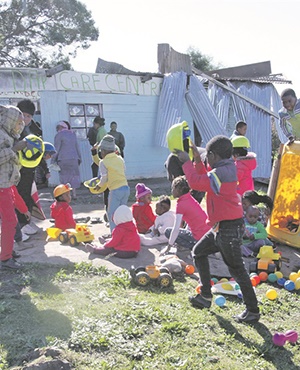
But it is hard going for most of these centres. They struggle to become registered because they don’t have title deeds to the land on which their centres are built, and they therefore cannot receive funding from the department of social development. In addition, most of these creches do not meet the regulation standards for space, without features such as designated “sick rooms”, for example.

“Some of the centres are small and really cramped. They’re really not getting any support,” says Hendricks.

“If one gets funding from the state, it’s R15 per child per day but it’s unlikely those centres will get that registration and funding because of the stringent requirements.

“Obviously, the requirements are important to make sure the children are safe, but if you know, as a caring government, that informal settlement centres have no way to meet the requirements, particularly from a space point of view, why not create an enabling environment?”

Hendricks said it was significant that Ramaphosa will be investing his earnings in the early childhood development programme.

“If the president can say, ‘Early childhood development is important to me and I’m willing to put my money towards it’, we’re hoping it shows leadership in the sector and inspires others to also give it priority.”

Read original article here.