Home Blog Page 496

Zimbabwe: A shortage of engineers alarming

Leonard Ncube

Zimbabwe has only 1 500 civil, mechanical, architectural and scientific engineers out of about 6 000 accredited professionals in the field.

This emerged during the Zimbabwe Infrastructure Development Conference here on Tuesday where delegates raised concerns about shortage of engineers in the country, as some have left the country for greener pastures.

Zimbabwe Institution of Engineers president, Engineer Israel Rwodzi said the conference was meant to position engineers in the country’s economic revival drive towards a “Built Environment”, an economy based on infrastructure development.

Eng Rwodzi said the role of engineers was critical in the context of a Zimbabwe that is open for business.

“As investors are coming into the country, we can’t sit and not benefit the country.

“We want to recall those who are outside in the region because the shortage we have is a result of brain drain,” he said.

“We have 1 500 engineers in the country out of a possible 6 000 who are outside the country.”

Eng Rwodzi said the country has trained enough engineers across all sectors and these can return back to the country once the economy picks up.

He said under normal circumstances the country should have about 18 000 engineers but was OK with the 6 000 if they all return home.

About 300 engineers including engineering consultants from a cross section of the economy attended the conference, which was officially opened by President Mnangagwa yesterday.

About the conference he said: “This is a special investment conference where we have all Built Environment engineers and those whose roles are related to the field. This comes after realisation that the country is going into a new phase and that engineering plays a pivotal role hence we need to walk together with government”.

Among topical issues was the need to bolster training amid concerns that the calibre of students coming out of tertiary institutions were failing to make the grade in the industry.

Engineers appealed for revival of the apprentice programmes, which they said were towards effective training.

The conference ran under the theme: “Accelerated Infrastructure Investment, Development and Delivery”.

Read original article here.

Pupils feel the heat of arsonists

Bongekile Macupe

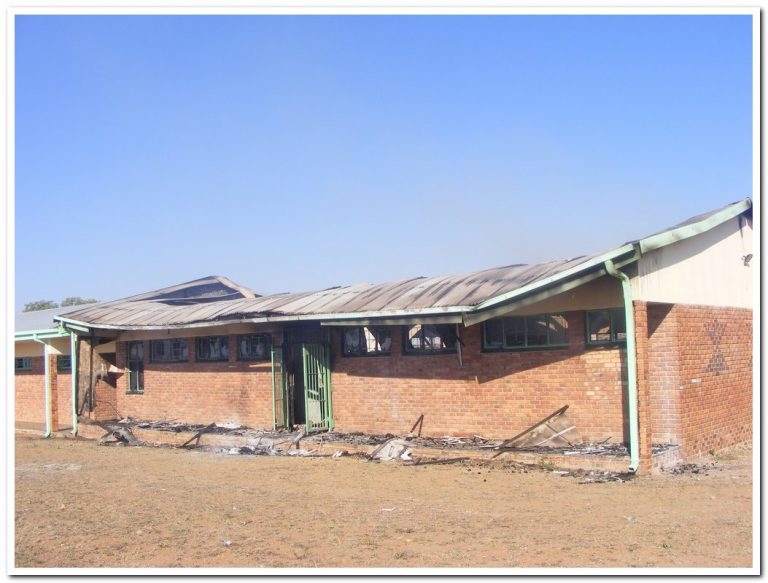
With budget cuts and an infrastructure backlog at the basic education department, it may take a while before the schools that were burnt during protests are rebuilt or refurbished.

In Mpumalanga six schools have been burnt since April — four of them in one week in June. The estimated cost of fixing the six schools is R10.2-million, which has not been budgeted for, according to a report prepared by the Mpumalanga department of education.

The situation is exacerbated by the fact that the national basic education department does not have money put aside to fix these schools.

“The basic education sector does not keep money to replace schools which have been deliberately damaged,” said the department’s spokesperson, Elijah Mhlanga. “We have never had to operate in that manner. The burning of schools is a new phenomenon … and it is very disturbing.”

In 2016, the South African Human Right Commission held national investigative hearings into the effect of protests on the right to a basic education.

In its report the commission said it was apparent that some protesters deliberately target schools with the intention of drawing attention to a problem unrelated to basic education.

“Undermining basic education through the disruption of schools appears to be an effective mechanisms to elicit immediate high-level government reaction. In terms of this reasoning, undermining the right to a basic education is seen as ‘fair game’ and as a result the trend is on the increase,” reads the report.

Mhlanga said rebuilding or refurbishing schools would be a lengthy process. “We have already been told that there will be a budget cut in terms of school infrastructure allocation over the next three years. So this means the schools will remain in their present condition for a lot longer while we scramble to find the money to rebuild them, especially where the damage was extensive.”

A R3.5-billion cut for school infrastructure was announced in February by Malusi Gigaba when he was finance minister.

The cost of rebuilding or refurbishment, which run into millions, does not include the furniture, textbooks and stationery lost in the fires.

Last year the Mpumalanga education department spent R7 269 290 — an unplanned expense — on fixing five schools burnt in Bushbuckridge, Mpumalanga, when residents protested for a tarred road.

Mhlanga said schools had been burnt in Mpumalanga, the Eastern Cape, the Northern Cape, Limpopo and North West in the past three years.

Freddy Sepeng, the spokesperson for North West’s basic education department, said nine schools in the province were destroyed by fire in the past three years. This includes classrooms, laboratories, libraries, offices, toilets and even mobile classrooms. He said the costs of repairing the schools was estimated at more than R100-million.

As a remedial action, the department had provided mobile classrooms at the schools. The cost of doing so was difficult to determine because enrolment at each school differed.

The provincial department does not have a contingency budget for rebuilding the schools but Sepeng said doing so had been prioritised for the mid-term budget of 2018-2019.

In the Northern Cape only two had been burnt in the past three years but even that has not come cheap.

Eleven classrooms at Sonskyn Intermediate School in Marydale were burnt down in May.

Geoffrey van der Merwe, the spokesperson for the provincial department of education, said the school was waiting for the delivery of 11 mobile classrooms the department had procured for R10-million.

In the meantime, pupils are being taught in community and church halls. In 2016, six classrooms, an administration block, storerooms and toilets were burnt down at JJ Booysen Primary School in Loxton. The school is using mobile classrooms, which cost the provincial department R1.5-million. Van der Merwe said a new school would be built during the 2019-2020 financial year, at a cost of R46-million.

Twenty-five schools have been damaged by fire in the Eastern Cape in the past three years. The provincial department spent R42 464 000 on fixing nine of them, providing mobile classrooms and erecting fences.

Malibongwe Mtima, the spokesperson for the provincial department, said some of the schools had not been fixed because they had been merged with other schools as a result of already dwindling enrolment numbers.

Mtima said that, in instances where the damage was minor, the schools had used their maintenance budgets to do the repairs.

In Limpopo, in 2016 alone, 31 schools were burnt down during violent protests in Vuwani and Malamulele about changes to municipal demarcations.

The Limpopo department of education did not respond to questions sent last week.

Speaking about the situation, Mhlanga said that one school in the area, VhaFamadi Secondary School, had been rebuilt from scratch by a private company in the area.

He added that the treasury had given the Limpopo basic education department R188-million to repair the schools.

Limpopo’s provincial basic education department had spent R22-million on 76 mobile classrooms, transported from Gauteng.

“Learners and teachers will be exposed to the elements for a much longer period. What is troubling is that people burn schools where their own children go. It is always the children of the very community who suffer as a result of the damage to the property,” Mhlanga said.

He said the wish is that people found guilty of burning schools be given long jail sentences.

“It would be better if there were to be specific sentences for these people, say a minimum of 10 years, for somebody found guilty of destroying a school on purpose. This madness has to stop and we hope the justice system will be adjusted somewhat to help us clamp down on this behaviour of targeting schools during protests.”

It has not been easy to make arrests, let alone secure convictions. The spokespersons for the provincial education departments said that police fail to make arrests because the schools are usually burnt at night or during protests. And when suspects are arrested, they are released because of a lack of evidence.

The human rights commission report said that the police do not have a clear or uniform approach for dealing with protests that threaten schools. – M&G

 

Burundi: School ban on expectant teens ‘skewed’ against girls’ education

Nita Bhalla

Burundi’s ban on pregnant girls and expectant teen fathers attending school is not only a violation against children’s right to education, but also unfairly discriminates against girls, campaigners said on Wednesday.

The ministry of education in Burundi last week issued a directive to provincial authorities saying pregnant teens and young mums, as well as the boys who made them pregnant, no longer had the right to be part of the formal education system.

In a letter dated June 26 to the country’s provincial education directors, Minister of Education Janvière Ndirahisha said that these students would however be allowed to attend vocational or professional training courses.

But rights groups said preventing children from attending school would have a devastating impact on their education in a country where 11 percent of girls aged 15-19 years are sexually active, according to the United Nations Population Fund (UNFPA).

The east African nation’s ban is geared towards curtailing the rights of girls more than boys, said campaigners, adding that it would be easy to notice pregnant girls, but more difficult to identify the boys involved.

“This ban disproportionately affects girls and it is skewed towards an abuse of the girls’ rights to education,” said Naitore Nyamu-Mathenge, a lawyer from the campaign group Equality Now.

“How does the government intend on proving that Boy A impregnated Girl B? How about cases where the perpetrators are teachers, adults in the community, will the government go after them too?”

A government official confirmed the ban, but told the Thomson Reuters Foundation on the condition of anonymity that it was unlikely to be enforced.

“I think this decision will not be implemented since it contradicts other programs which promote education for all and are endorsed by the government and its partners,” said an education ministry official.

According to the UNFPA, 40 percent of victims of physical or sexual violence are teenage girls in Burundi. Around 7 percent of girls aged 15-19 years have had at least one child, and one in five women are married below the age of 18 years old.

Human Rights Watch (HRW) says tens of thousands of girls in Africa are ostracised or shamed for becoming pregnant every year, despite most having no sex education, and in many cases have not given consent and are raped.

Yet some countries such as Tanzania, Sierra Leone and Equatorial Guinea, they have been expelled from school in a bid to discourage adolescents from being sexually active.

Other countries such as Morocco and Sudan, for example, apply morality laws that allow them to criminally charge adolescent girls with adultery, indecency, or extra-marital sex, it added.

“Every year, thousands of girls become pregnant at the time when they should be learning history, algebra, and life skills,” said a report by HRW last month.

“All girls have a right to education regardless of their pregnancy, marital or motherhood status.”

Thomson Reuters Foundation


Kenya: Free internet for Nairobi public schools from next term

Staff Reporter

All public primary and secondary schools within the Nairobi City County will be supplied with computers and have internet connection, Governor Mike Sonko has said.

Sonko said by next term, all students in public schools will be enjoying free internet connectivity for research and computer studies.

He said this is in line with ensuring quality modern education to the millions of Nairobi children.

“We will from next term have internet connectivity in all public primary and secondary schools within Nairobi. We are committed in ensuring the project succeeds,” he said.

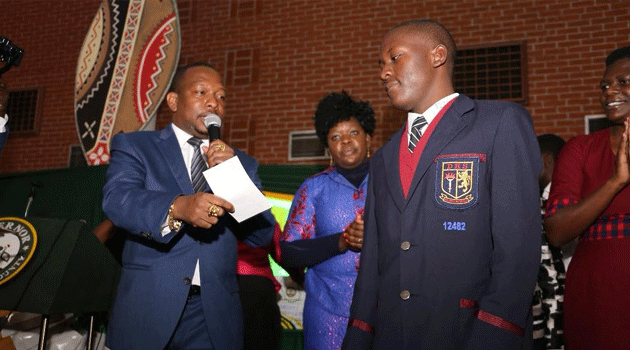
Over 70,000 poor, bright children from Nairobi have benefited from over Sh300 million disbursement of executive bursary cheque by Governor Sonko at City Hall on Wednesday.

Sonko said to fix the problems of Nairobi, he must first begin at fixing the education sector.

He said his government has increased the allocation towards the ward bursaries from Sh3million, which that was not honoured fully by the previous administration, to the current Sh3.5 million per ward.

He said each of the 85 wards received the Sh3.5 million fully.

“I have also paid in full for the 1,000 children who joined Form One this year,” said Sonko.

He said all the 70,000 students, who will benefit from the Sh200 million bursary scheme, have been vetted, and only the genuine ones will benefit.

The previous administration, which had begun the bursary scheme, failed to actualize the programme because of corruption and favoritism.

Last Friday, Sonko launched the Free Early Childhood Development Education programme. He became the first governor in the country to implement such programme.

The programme is expected to increase the enrollment of students in the ECD from the current 15,295 children to about 17,000 children by the close of the year.

“To demonstrate the seriousness with which my government takes the responsibility of ECDE, Sh3,815 grant per child is already in the respective school accounts,” said Sonko.

To maintain high quality standards of Education, Sonko’s government has also finalised the advertisement for the employment of 520 ECDE teachers to be deployed to the 205 ECD centres.

On the issue of street children, the Governor said, it has continued to bother him seeing children within the streets of Nairobi and he’s committed in ensuring that they are taken back to school.

“Since taking over office, I have rehabilitated over 500 boys and girls who have now been enrolled in various schools in and out of the city,” said Sonko.

He thanked the heads of schools who have continued to support the Nairobi government by admitting these children unconditionally.

Over 1,200 youth are also expected to benefit from scholarships to equip them with skills in order to tackle the issue of unemployment.

Read original article here.

Zimbabwe: Government vows to proceed with public exam despite teachers’ concerns

William Milasi

Government has vowed to proceed with the November Zimbabwe School Examinations Council (Zimsec) final Science practical examinations as scheduled despite demands by a teachers group to suspend sitting due to inadequate preparation among candidates.

Primary and Secondary Education Minister Paul Mavima said Zimsec is prepared to administer not only science but all the examinations.

Last month, the Amalgamated Rural Teachers Union of Zimbabwe (Artuz) called on Zimsec to suspend the final science practical paper arguing that some schools were being forced to go ahead without even a single laboratory.

The vocal teachers group said there was a shortage of competent personnel to teach the practical subject while citing inadequate science laboratories and basic shortage of learning materials amongst other hiccups.

The union has, therefore, “recommended that Zimsec suspend combined science practical exams for November 2018 and revert back to the alternative practical paper.”

The basic education minister however thinks otherwise.

“Such fears are unfounded that the science examination practical paper is not well catered for. Such kind of talk that the examinations must be suspended is only aimed at sowing despondence,” Mavima said.

The cabinet minister however admitted that there are some schools in the rural areas where laboratories were non-existent.

“It is true that in some schools in the rural areas laboratories might not exist in the physical form but science material will be available. As government, we have disbursed science kits in schools which contain all the requisite science apparatus.

“We are also going to avail all the needed material to all the schools during the times of examinations. Every school, especially those in the rural areas, will be given science kits.

“Examinations are therefore going ahead as scheduled. We sat down with Zimsec and some technocrats and we mapped the way forward on how the examinations will be administered,” he said.

Permanent Secretary in the Ministry of Primary and Secondary Education was this week quoted in a national daily saying pupils were appealing to President Emmerson Mnangagwa for the suspension of the 2008 November public examinations.

The pupils are arguing that they had not fully prepared due to disturbances caused by electoral processes.

Read original article here.

Students tell of “deplorable” accommodation at Nelson Mandela University

Joseph Chirume

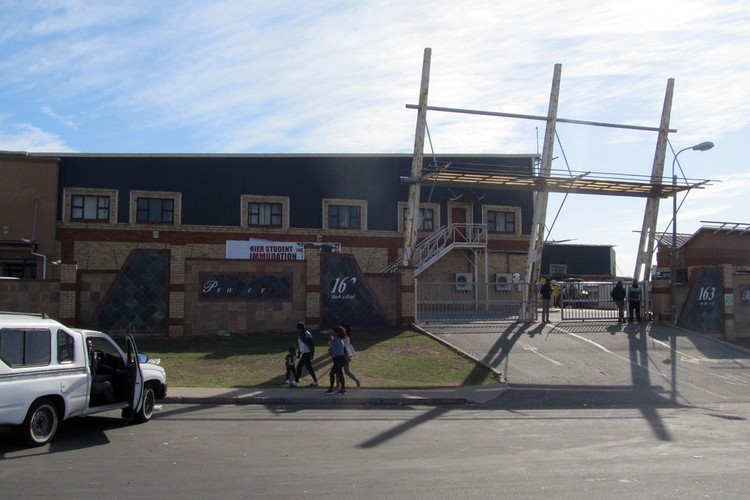
Student leaders at Nelson Mandela University in Port Elizabeth have spoken out against what they call “deplorable” living conditions.

They were among nearly 600 students living at the Premier Student Accommodation (PSA) residence. Students say the National Student Financial Aid Scheme (Nsfas) pays a monthly fee of R2,750 per student.

Students say have to share five stoves and a single washing sink in the kitchen. There are a few fridges, but they don’t always work. The WiFi connection is poor and the shuttle service is unreliable, they said.

Student leader Sihle Moya moved into the residence in January. He said they were excited when management told them that there would be unlimited WiFi, warm bathing water and a huge dining room and “other things that make student life easier”.

Moya said less than a month later, students started complaining because these promises were not fulfilled.

“We had a meeting on 26 February about WiFi services being unavailable on the second and third floors. Our bath water was cold and there were only two working stoves. There was one rusty microwave that was not working properly. We were also charged R50 for laundry.”

He said many students also complained that they were forced to throw food away after the fridges stopped working. They also had issues with accessing the front gate and some rooms.

“Nsfas money was being deducted from our accounts to replace lost [access] cards. We demanded pin codes instead of cards. There was also money deducted from each student if there were any damages, like a broken window,” he said.

University spokesperson Zandile Mbabela told GroundUp that most of the problems raised by the students would be addressed.

“Three students raised these issues with the previous director of Student Housing and the current director. Attempts were made to remedy the situation at a meeting, but some of the affected students did not confirm their availability. This was shortly before recess and will be picked up again when they return.”

Mbabela said students will no longer be charged for laundry fees. She said students have also been given the option to use the university’s canteen to alleviate the problem with cooking facilities at the residence.

She added that more vehicles have been added to the shuttle service to accommodate the increased demand for transport between campuses and off-campus accommodation sites.

But student leaders said, “several emails were sent to university management which were never responded to”. The students are worried they won’t have a place to sleep when they return to university at the end of July.

Read the original article here.

The long and short of South African school commutes: a case study

Julia de Kadt and Alexandra Parker

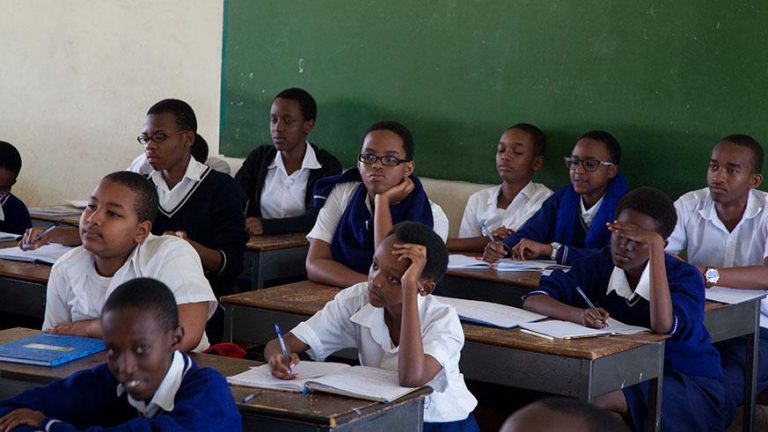
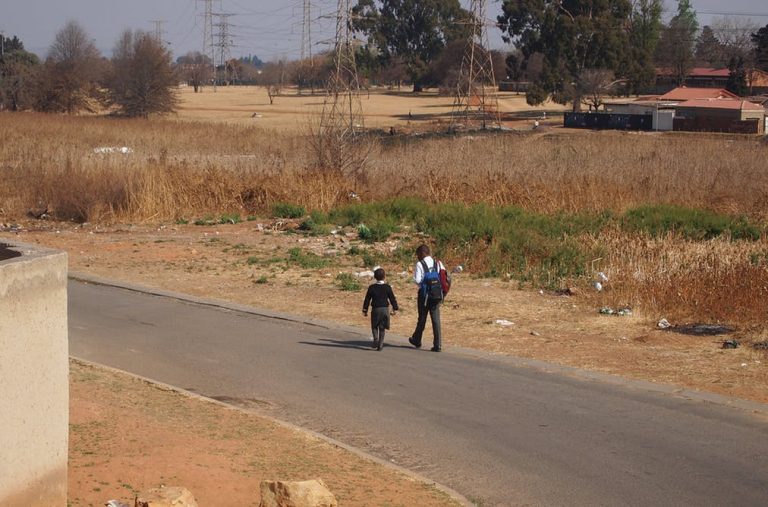
Education enables social mobility. This is particularly true in a context of high inequality and high unemployment, such as South Africa. This is one reason why some parents choose to send their children to schools further away from home – often at considerable financial and social costs.

Research about pupils’ commutes in Africa is still limited. But we do know that the journeys young people make to urban schools on the continent – and elsewhere in the world – can be quite long and complicated.

In research we’re doing at the Gauteng City-Region Observatory, which works with data to inform policy, we’re working to understand pupils’ daily commutes in Gauteng, South Africa’s most populated province. Apartheid’s legacy entrenched inequality in the geography of Gauteng, meaning that poorer families typically live further from high-performing schools.

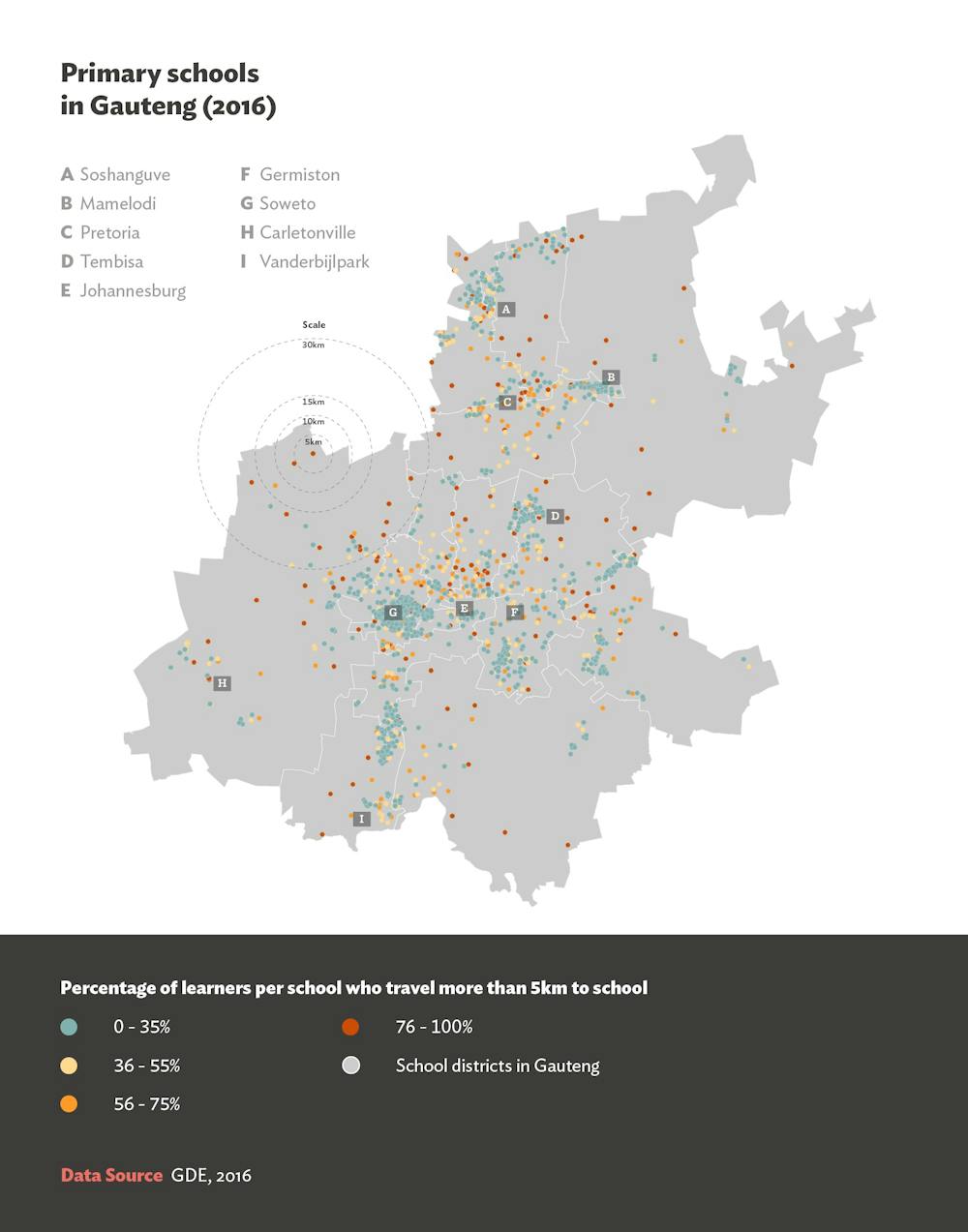
Using 2016 data from the Gauteng Department of Education, we mapped the percentage of pupils at each public school (primary and secondary) in Gauteng who travel more than 5 kilometres to their school. We foundthat pupils’ commutes were highly variable across schools.

Among our findings were that over a third of pupils still travel more than 5 kilometres to school. And the province’s peripheral areas have the highest percentage of children per school who are travelling long distances.

Unpacking key findings

Gauteng has an admissions policy which demarcates a default feeder zone of a 5 km radius around each school. The policy, which is currently being reworked and reviewed, prioritises pupils who reside within the 5 km zone or those whose parents’ place of work is within the feeder zone.

But the quality of education – both actual and perceived – is highly variable across the province, and remains strongly shaped by the geography of apartheid. The current default 5 km feeder zones substantially replicate apartheid geography.

These maps show that the proportions of pupils travelling more than 5 km vary greatly across schools, ranging all the way from 0% to 100% of a school’s student body.

GCRO

Some of this variation certainly relates to population density in the areas around a school. For example, outlying areas around Carletonville and Vanderbijlpark feature a number of schools where almost all pupils live more than 5 km from the school. By contrast, in densely populated areas, such as Pretoria, Tembisa, central Johannesburg and Soweto, schools have large numbers of pupils living within the 5 km radius.

These are the key trends we identified from our mapping:

  • There is extensive and interesting variation within residential areas, and in many instances neighbouring schools appear to draw pupils from very different areas.
  • Over a third of pupils (37%) still travel more than 5 kms to school. For some pupils on the outskirts of the city-region their nearest school is more than 5 kms from where they live. For others this suggests the ability to exercise a level of school choice.

GCRO
  • Many schools in more affluent suburban areas have high proportions of pupils travelling further than 5 km to reach school, but it’s in peripheral areas where the highest percentage of children per school are travelling long distances. In lower-income township areas, most schools draw their pupils from the surrounding community.
  • At the provincial level, there is no clear relationship between schools with high proportions of learners travelling more than 5 km, and measures parents may use to assess school quality, such as matric pass rate, historical department of education, or school fee status.

Many factors at play

There are complex dynamics behind these patterns. They reflect decisions being made at many different levels by families and schools.

Families weigh multiple factors when choosing schools, and often do so in the face of incomplete or imperfect information. These factors include a school’s teacher-pupil ratio, its ethos and reputation, its facilities, the language of instruction, racial composition, and its proximity to their home or work.

And of course, different families may weigh the same factors differently. A school’s ethos may be more important for some parents and learners, while for others the language of instruction is more significant. The reality is that we simply don’t know how Gauteng’s parents make these crucial decisions – and what this means for the provision of equitable access to quality education.

That’s one of the questions we’re asking in our new research project, in which we’ll gather data from parents and pupils around Gauteng about their reasons for choosing particular schools.

There are many costs to travelling further to school. However, the disadvantages of not accessing quality education may be greater. For many families in Gauteng there is much at stake.

Parents and pupils in Gauteng can send messages or voice notes about their school choices and commutes via WhatsApp on 078 047 7272. All stories will remain anonymous but may be quoted in research related publications in the future.

This article was co-authored by Christian Hamann, a junior researcher at the Gauteng City-Region Observatory.

Alexandra Parker is a Researcher of urban & cultural studies, Gauteng City-Region Observatory

Julia de Kadt is a Senior Researcher, University of the Witwatersrand.


Private, private partnerships: Transforming lives through sport

Mosibodi Whitehead

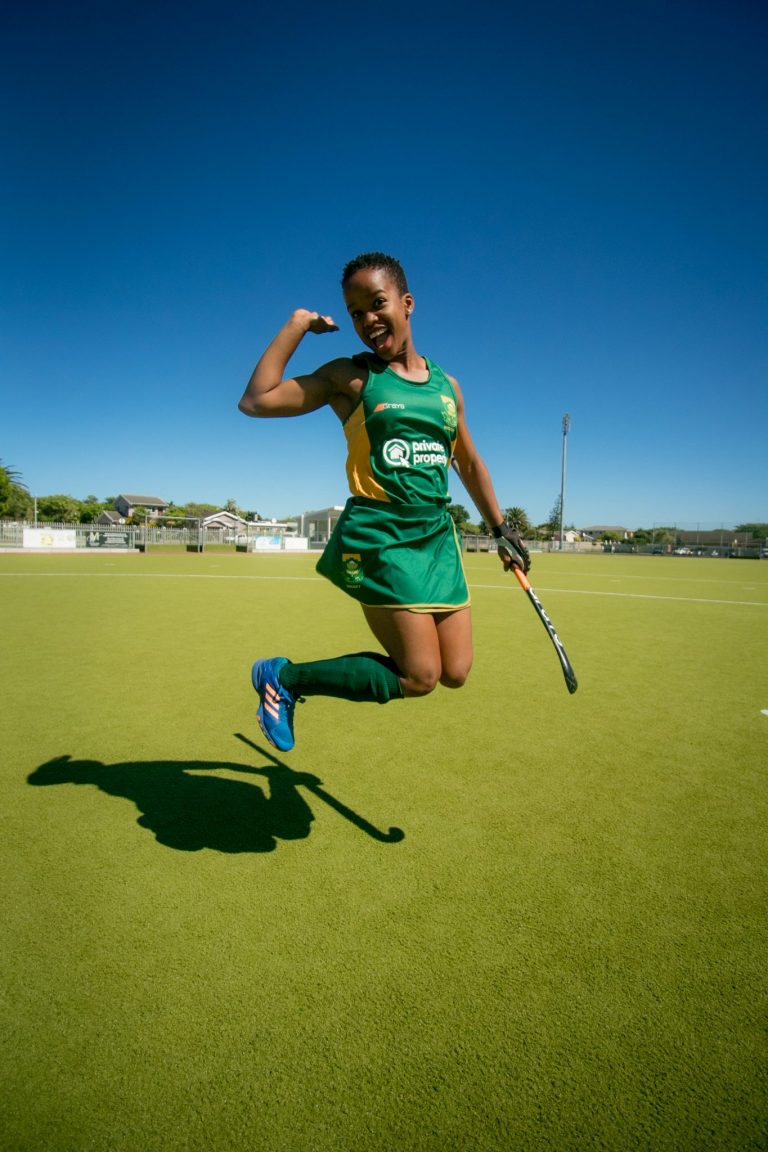
Ongeziwe Mali was introduced to hockey after visiting a friend. She was 10 years old and in grade 4.

“A friend of mine invited me to play and her mom gave me the equipment. I started making the Eastern Province teams,” says the 19-year old from Zwide Township in Port Elizabeth.

Mali would go on to win countless awards including the junior player of the tournament at the Premier Hockey League (PHL).

The turning point in her life came in 2016 when the 16-year-old shone at the St. Mary’s Hockey festival. She was voted player of the tournament earning a bursary to the Investec Hockey Academy.

One might say Mali’s success in Hockey was in part a result of the 2013 White Paper on Sport and Recreation detailed the Department of Sport and Recreation (SRSA) policy.  A central part of the vision was supporting grassroots sport through a functioning school sport programme and transforming representative national teams at all levels to more accurately reflect the demographics of post—Apartheid South Africa.

In making this vision a reality, SRSA under the leadership of Minister Fikile Mbalula adopted priority sporting codes. The argument was that many of the historically white sporting codes required targeted intervention to make the sports more accessible at grassroots level and to produce more players of colour that could one day play for South Africa.

Hockey was one of those initial 16 sporting codes and in 2016 the Premier Hockey League was launched. The four week tournament in September was comprised of six men’s teams and six women’s teams who converged on the Randburg Astroturf in Johannesburg for R50 000 and the right to be crowned national champions.

Mali who was at  Pearson High School in Port Elizabeth at the time played in the PHL.

The bursary she received from Investec Hockey Academy placed Mali under the mentorship of Proteas Shelley Russell.

Mali improved and was a surprise addition to the national team that took part at the Commonwealth Games in Australia earlier this year.

“I got an email telling me that I made the SA Women’s hockey team to play at the CWG. I wasn’t expecting the call-up at such a young age but I thank God for the talent and it was an amazing experience,” said Mali.

She has now been selected for the SA team that will take part in the Hockey World Cup in London in July. Mali has also earned a hockey scholarship to further her studies at James Madison University in Virginia in the United States.

Mali’s rise gives us an example of a model that can be used to unearth talent in some of the less well-resourced sports. Because hockey is not a professional sport, the targeted government intervention through the creation of the PHL provided an enabling environment for players to hone their skills. Skills that then attract private funds in the form of corporate sponsorship. This is simply an example of a public private partnership without a contract.

Government has created an environment for talent to shine and for that talent to then attract sponsorships from the likes of Investec and Brutal Fruit. This was done by government’s ability to articulate and implement their vision for a transformed South African sporting landscape and targeting sports such as hockey and netball,

This model provides a blueprint on how we can move South Africa forward to create generation of Mali across all of the country’s sporting codes.

Listen to Mali’s PODCAST.

Whitehead is a sports broadcaster and writer.

Ashwin Willemse receives master’s degree

Staff Reporter

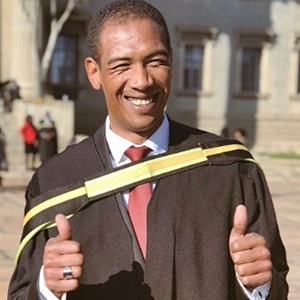
Former Springbok rugby star Ashwin Willemse graduated with a Masters of Management in Entrepreneurship and New Venture Creation, with Distinction on Wednesday.

His wife Michelle Willemse also graduated with a Philosophy degree on Tuesday

Speaking at the Great Hall stairs of Wits University on Thursday, Ashwin emphasised the importance of education.

“Our human dignity is embedded in education because, through education, we get to know ourselves. Once you know yourself, you can give the world your authentic self.

“Education is the path to wherever your heart desires, to wherever your courage will take you; it is the path to the true liberation,” said Willemse.

He spoke of the transformative power of education, following his and his wife’s graduations at the University of Witwatersrand.

The university tweeted a photograph of the couple outside the Great Hall, along with hashtags including “#CoupleGoals”.

Meanwhile, Sport24 reported on Thursday that Naas Botha was set to return to the SuperSport studio for the first time since an incident in May, when Willemse walked off a live Super Rugby production.

Willemse walked off of the SuperSport set last month after he accused co-hosts Mallett and Botha of patronising him. SuperSport initially denied that there was significant animosity between them, but announced that all three would be pulled off the air while an independent mediator looked into the issue.

Willemse said at the time, he had “consistently told SuperSport about the behaviour of the two individuals” adding that the idea to refer the SuperSport matter to the Human Rights Commission was theirs

Willemse said he was “undermined” and “patronised” by Botha and fellow pundit Nick Mallett.

An independent investigation, ordered by Supersport, did not find evidence of racism in the matter, but Willemse has said he will take the matter to the Equality Court.

Read original article here.

Rwanda’s pre-school reading programme improves reading culture

Jean d’Amour Mbonyinshuti

They sat under a tree, hurdled in a group, book pages making flapping sounds, thanks to the breeze that morning.

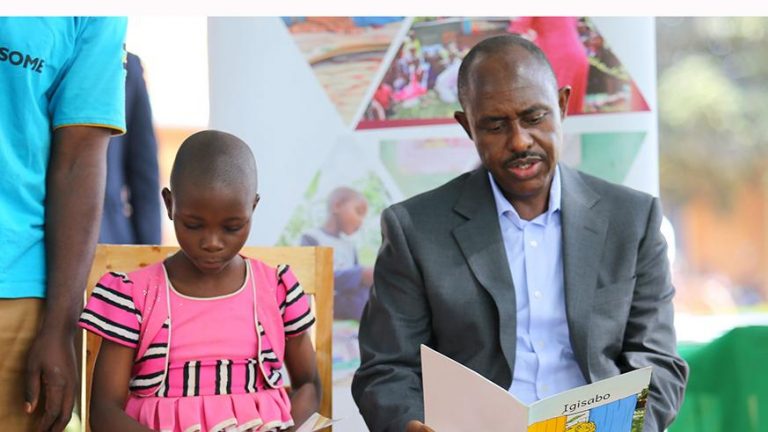
When we arrived at Karenge in Rwamagana District, it was business as usual. Some children were busy in classrooms while about thirty others sat under the tree in the nearby Nyabubare Cell also reading.

A man and a woman sat beside them on the mat helping the young ones read from Kinyarwanda books, a normal routine where at least twice a week, children are taken outdoors and taught how to read in their local language.

Experts urgue that it is scientifically proven that children can do better in various subjects when they learn how to read in their native language.

Seraphine Nyirabagenzi is one of the reading facilitators at the school. She says that this routine has yielded positive results.

“As parents, we joined hands with schools to train our children how to read early enough. We have got books and other materials and there have been positive changes since we started,” she says.

Nyirabagenzi is contributuing to the Early Grade Reading project; ‘Mureke Dusome’,a community project started by the ministry of education in partnership with USAID’s strategy to establish and support a culture of reading throughout the country.

The programme builds school-community partnerships and family engagement in children’s education.

It is being implemented by Save the Children throughout the country benefiting over one million children, according to the officials.

It is part of the three USAID funded early grade reading programmes.Others are ‘Itegure Gusoma’ which is a pre-primary programme and ‘Soma Umenye’ which targets P1 to P3 children.

All the projects work together to ensure that children are reading in Kinyarwanda in and out of school.

‘Mureke Dusome’ also works to increase the quality and quantity of Kinyarwanda children’s books and increase opportunities for students to read outside of school.

Nyirabagenzi, a mother of two says that since the project started, parents in the area have seen a positive impact from it.

“We teach twice a week, engaging children between three and nine years. We teach them how to read in Kinyarwanda and ensure that they learn something new every time we meet. This really helps because they are likely to learn other languages easily and since we encourage them to take books home, parents are happy that the children are not idle,” she says.

She added that despite not having any higher education qualification as reading trainer, she has acquired training that helps her with other colleagues to perform better.

Schools upbeat

According to the Headmaster of GS Karenge; Jean Bidugu, thanks to the programmes; children are prepared from the pre-school level and can be able to read all Kinyarwanda materials as early as in Primary Three.

“Children are prepared from nursery to get ready to read. Thanks to this programme, we have received over 500 books that are going to significantly improve the reading culture here. Besides teachers, parents and head teachers were trained and we hope that a lot will change,” he said.

The programme should sustain

The US Ambassador to Rwanda, Peter Vrooman, who officially handed over the first-edition copy of a new Primary One level textbook, said USAID and its partners support the culture of reading Kinyarwanda books adding that it’s important for young children to study in a native language since this helps them to grasp English and other languages a lot easier.

The first-edition copy of a new P1 level textbook created by the Rwanda Education Board, in partnership with USAID, will be distributed to all public school students countrywide.

He also commended the initiative by parents to promote a reading culture in their communities.

“Parents are very important in this exercise because it is them that will encourage children to pick up books and read. It is important that at home, school and in general life for children to know how to read and this will help Rwanda to become a knowledge based country,” he added

The Minister of Education Dr. Eugene Mutimura, hailed the programmes for complementing each other expressing optimism that they will prepare the children to become future leaders.

“If children are trained to read, it helps them know more and keeps them busy and away from unnecessary distractions. We will keep working with our partners to ensure the programme becomes successful and sustainable,” he said.

Read original article here.