Home Blog Page 497

Sindisiwe Buthelezi: From rural poverty to PhD graduate

Pertunia Mafokane

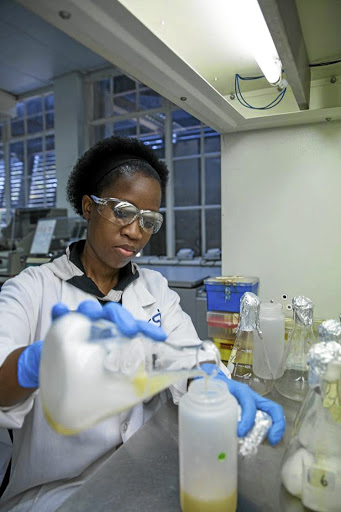
Despite starting her education at a rural school in eMondlo, 30km south of Vryheid northern KZN, Dr Sindisiwe Buthelezi was so determined to reach her dreams that she knocked on every door to move forward.

Buthelezi, who holds a PhD in protein engineering, researches medical treatment options that will see people receiving safe and effective medicine at the Council for Scientific and Industrial Research (CSIR) in Pretoria.

She said the desire to become a role model to the youth in her community has kept her going.

“I want young people in my community to look at me and see that it is possible to go beyond what is in front of you. The world is big and full of possibilities. Hopefully [I can] inspire them to dream big,” she said.

Buthelezi began her schooling at Silindekahle Primary before she was later accepted into a private Catholic missionary school that was dedicated to rural learners.

“I worked extra hard throughout my high school years and got elected as head girl and Grade 12 prefect.” After completing her matric, the mother of one registered for a BSc in microbiology and biochemistry at the University of KwaZulu-Natal.

“My parents could not afford the fees [but] I was fortunate enough to get financial aid from the university. Coca Cola also contributed towards my tuition.

“Having completed my degree, I got accepted at Wits University for honours in biochemistry and cell biology. My parents helped me apply for a loan to pay for registration. I later got a bursary from NRF. It helped supplement my fees.”

After completing the honours degree, Buthelezi worked for four months at SA Bioproducts before scoring a one-year internship at the CSIR- Biosciences.

In 2010 she got a CSIR studentship for an MSc degree, in medical biochemistry, at the University of Cape Town.

On completing in May 2013, she went on to receive the National Research Foundation professional development program grant. She then enrolled for a PhD in biochemistry at Wits University, completing in November 2017. She began her stint as a post-doctorate fellow at CSIR-Biosciences in January this year.

“I am currently working on a breast cancer project that aims to identify new drug targets for the South African population. I also mentor students and our group also supports various projects focusing on protein analysis, so I find myself also involved in other projects,” she said.

Buthelezi said a career in science had unlimited possibilities but admitted as well that getting funding for projects was among the challenges in her field. She encouraged the youth to work hard on their dreams despite challenges.

Her dream is to lead her own research group in future. Apart from her hectic professional life, she still finds time to have fun with friends.

“I love dancing, so I usually go out with my girls. I am [also] obsessed with superhero movies so, yes I am one of those people who are always waiting for the next Avengers movie. I [also] love writing.”

Read original article here.
Nigeria: Only 1% of Nigerian population in universities

Azeezat Adedigba

The National Universities Commission (NUC) on Tuesday said only one percent of Nigerian population form the total enrollment of students in the 164 universities across the country.

The Executive Secretary of the Commission, Abubakar Rasheed, said this while fielding questions from journalists in Abuja.

According to Rasheed, the 75 private universities in the country account for 5.31 per cent of the total enrollment in the universities across the country.

He described the situation as “unhealthy”, saying there is need for more access either by creating more universities or expanding existing ones.

‎”If you look at the population of 198 million which is close to 200 million and bear in mind the total enrolment in our universities today, all the 164 universities, is slightly less than two million. It is 1.961 million, which translates to roughly 1 per cent of the population.

“One percent of the population are in the university and I think it’s not healthy,” he said.

Rasheed said it will be difficult for the commission to regulate the fees of private schools.

Director of the civil rights group Socio-Economic Rights and Accountability Project (SERAP) Adetokunbo Mumuni said the authorities must ensure that indirect costs do not become a barrier to access university education

He said while expanding access to university education is a good thing, it’s absolutely important that the authorities ensure that quality is not compromised.

He said every initiative must aim to improve quality in our universities across the country.

Similarly Public Affairs Analyst Ola Adeosun said there is a need for the emergence of new universities in the country.

“The question to ask in the present circumstances is this: How do you start building new universities when there is not a single one amongst the existing universities that is up to the standard of a university in the real sense of it,” said Adeosun.

He said the existing ones lacks the infrastructural, material and manpower deficit while noting that no single university in Nigeria that is amongst the world’s best 800.

He said it is important for the government to position the existing universities in what “universities” are, globally, before building or approving more universities.

“Instead of continuing with the ideas of building glorified secondary schools and branding them about as universities, just like we currently have across the country,” he said.

But National Coordinator of the Education Rights Campaign Hassan Soweto said the statistics confirms that government investment in public education sector has been declining at an alarming rate.

“Despite the increase in population, the provisions for education is relatively low at all levels, primary, secondary and tertiary,” he said.

Soweto said the Nigerian government has not been able to meet the huge demand of education despite the proliferation of private universities.

“It is essential for the vast majority of the population regardless of the status and economic conditions to be able to access free quality education. Moreover most Nigerians can’t afford to pay the tuition fee for private universities,” he said.

Presently, there are 164 universities in Nigeria, 42 are federal universities, 47 are state owned while 75 are privately owned.

Read original article here.

Tanzania: Remove VAT on sanitary pads to improve girls’ health, education

Staff Reporter

For a long time, non- governmental organisations (NGOs), activists, some Members of Parliament and government officials have been campaigning for tax exemption on sanitary towels.

Tanzania Gender Networking Programme (TGNP) is among NGOs that have been in the frontline to campaign for tax exemption and safe learning environment for girl students.

According to United Nations Educational, Scientific and Cultural Organisation (Unesco) report, it is estimated that one in ten girls in sub-Saharan Africa misses school during their menstrual cycle.

By some estimates, this equals as much as twenty per cent of a given school year. Many girls drop out of school altogether once they begin menstruating.

Young women miss 20 percent of school days in a given year due to a lack of facilities or a lack of information or a lack of sanitary products.

Most girls end up not going to school, because they cannot afford to buy sanitary pads. Some schoolgirls, especially in poor rural areas, miss their studies every time during their menstruation period.

Girls from poor families cannot afford sanitary pads, and lack of decent changing washrooms contributes to their poor class attendance during their monthly periods. Last week, the government scrapped Value Added Tax (VAT) imposed on sanitary towels.

According to Minister for Finance and Planning, the move aimed at enabling women to access sanitary towels at affordable prices.

The government decision to scrap VAT on sanitary towels means a lot to women across the country .The decision is a remarkable step that has been appraised by many stakeholders.

Activits said they will continue to press for towels as it is the case for (free)condoms, contraceptives and other stuff.

As a starting gear towards availability of free materials, Tanzania Women Parliamentary Group (TWPG) advised the government to issue incentives for investors to make majority introduce sanitary towel factories in the country.

The Group Chairperson Margaret Sitts said the move will lead in to quantity of the products and enables manufacturers and suppliers to reduce prices in the name of competing for the markets while at the same time favouring the girls.

On the other hand, TWPG is holding talks with the government and other stakeholders on the possibility of conducting a survey to identify girls in schools who deserve free sanitary materials.

Sitta went on that the time will come for Tanzania to offer free sanitary materials because all countries which have already embarked on free provision of sanitary towels started with tax exemption.

She added that apart from tax exemption and free towels, girls also need special toilets and rooms for changing. Ms Sitta affirmed that TWPG members have embarked on public campaign to advocate for availability of model toilets in every constituent.

Special Seats MP (Chadema) Catherine Ruge commended stakeholders who initiated the towel tax exemption campaign saying they have contributed a lot in convincing the government to make right decision. She mentioned TGNP as among vibrant NGOs that have tirelessly campaigned for the matter.

She said TGNP provided supporting materials to TWPG which helped MPs to table and defend the idea in the August House.

She said that TGNP offered materials that showed how other countries have managed to help girls through tax exemption on sanitary towels. She mentioned some of the countries as South Africa, Kenya and Rwanda.

The activist from TGNP Grace Kisetu commended the government for the positive response to the matter. She said the government decision will help girls especially those in school to attend classes and record good performance without problems.

According to Kisetu, TGNP has already initiated the programme for free sanitary materials through awareness and capacity building campaigns in some areas.

The idea, according to Kisetu has already materialised in Mbeya, Kisarawe and Kishapu districts. It is in record that some town councils have been setting aside budget for free sanitary towels in schools.

She affirmed that TGNP will continue with capacity building programmes county-wide, to make sure all girls are reached.

Soon after the government 2018/19 was tabled in the House, TGNP Mtandao through the Kijiwe cha Kahawa 2018, was caught in celebrations after the Minister Mpango announced the scrapping of VAT on sanitary pads.

TGNP Executive Director, Lilian Liundi commended the government’s effort in ensuring girls are safe and cared during their monthly periods.

“From the minister’s announcement, this is a huge result for TGNP Mtandao and other human rights actors since the issue of sanitary pads and menstrual hygiene management has been a cry for a long time.

We are glad to see our government addressing issues of women and girls, she said.

Read original article here.

Student who received R14m Nsfas payout case postponed

Jenni Evans

Sibongile Mani, a student who was arrested after about R14m worth of National Student Financial Aid Scheme (Nsfas) money was accidentally paid into her bank account, made a brief appearance in the East London Magistrate’s Court on Monday.

Sibongile Mani’s case was postponed to July 24, National Prosecuting Authority Eastern Cape spokesperson Tshepo Ndwalaza said.

At her next appearance, the case could be transferred to a regional court.

Mani, who is out on bail, blew around R810 000 of the money over about three months until the Walter Sisulu University got wind of it.

She faces charges of theft and so far, is the only person charged. The university also considers her liable for any of the money she spent that was not due to her.

READ: WSU student to start career with R818k ‘loan’ debt

In September last year, News24 reported that Walter Sisulu University, the NSFAS and student cash payment service IntelliMali told MPs on the Portfolio Committee of Higher Education that no error had been made on their side.

IntelliMali CEO Michael Ansell said their systems showed that the right transaction of R1 400 was made to Mani on the date in question, and there was no “oversight, error or negligence” on their par.

Read original article here.


Namibia university appoints youngest Vice-Chancellor ever

Albertina Nakale

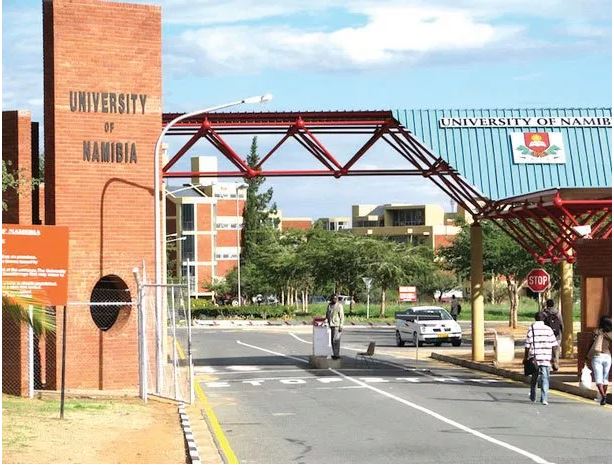
The University of Namibia (Unam) council has appointed Associate Professor Kenneth Matengu as the university’s new Vice-Chancellor, who in history also becomes the youngest person to occupy that top job.

Matengu, 40-years-old was appointed on Friday, following the retirement of Professor Lazarus Hangula, who served the institution for 25 years in various academic roles.

Matengu emerged the successful candidate among the four candidates who last week provided – in front of a curious and likely interrogative mob of public members – their vision for the University of Namibia.

The other two candidates that are all currently employed at Unam who contested the top job are Associate professors Elizabeth Amukugo and Frednard Gideon, as well as Professor Lucius Botes, a South African citizen.

New Era was unable to get hold of Matengu yesterday, to engage him on his new appointment as he is currently out of the country.

Unam’s Director for Communications and Marketing Edwin Tjiramba, on Friday said Unam council has unanimously appointed Matengu as the university’s third vice chancellor.

He said Matengu’s appointment is effective from August 1 and is set for a period of six years.

Matengu who previously served as Unam Pro-Vice Chancellor for Research, Innovation and Development succeeds Hangula whose office tenure ends on July 30.

Hangula took over as Vice-Chancellor of the university in 2004 at the age of 56. He replaced the current Speaker of the National Assembly, Prof Peter Katjavivi, who served as Vice Chancellor at the age of 51 from 1992 to 2003.

Tjiramba described Matengu as “a Unam alumnus, and Associate Research Professor at the university as well as honorary visiting Professor at Cardiff University in Wales, a distinguished researcher with global interrelations and a wide experience of leadership in academia.”

The core responsibility of the vice chancellor is to provide executive leadership and implement the policies of the university council and to ensure the university’s resources are used in ways that most effectively advance the approved mission and the strategic plan of the university.

Tjiramba said the entire selection process from an eight-week applications invitation that ended on December 8 last year, eligibility and contacting of only shortlisted candidates, undergoing psychometric assessments, conducting interviews, public presentations and recommendations are handled by a search committee as prescribed by council.

The final point in recruitment process, Tjiramba added, is that the university council appoints the vice-chancellor after consideration of a report by the search committee.

The search committee members were Sam Shivute, Dr Maggy Beukes-Amiss, Kadiva Hamutumwa, Professor Maruis Hedimbi, Dr Christina Swart-Opperman and Dr David Uirab.

Read original article here.

Pupil pregnancy: So rife we need a policy on it

Matthew Savides

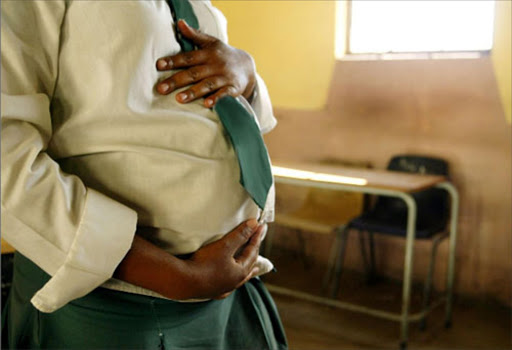
A classroom in a suburban KwaZulu-Natal school last month unexpectedly became a maternity ward when a teenage pupil went into labour.

“The school immediately called the emergency services, but the baby arrived before the medical services did,” said Tim Gordon, CEO of the Governing Body Foundation. “You had a young teacher in class, with 30 to 40 pupils, while a girl is giving birth.”

As if this wasn’t enough, given the risks of teenage pregnancy, it wasn’t a straight-forward delivery.

“As it happened, there was a slight complication. The umbilical cord was wrapped around baby’s neck. The teacher did her very best, and her best turned out to be good enough. There was no damage to the mother or baby,” said Gordon.

He would not give the name of the school, but Gordon said the incident showcased the importance of how teachers and schools are handled as the Department of Basic Education receives the final round of comments of its Draft National Policy on the Prevention and Management of Learner Pregnancies in Schools.

The department this week extended the deadline for comments on the policy – which is available on the department’s website.

Department spokesperson Troy Martens told Times Select the policy was important “because of the high rates of early and unplanned pregnancies we see, as well as the rates of pregnancies of pupils of school-going age, in particular”.

According to figures released by the department, in response to DA questions, 18,357 pupils fell pregnant at schools across the country in 2014. This declined to 15,504 in 2015 and to 8,732 in 2016 (although this figure did not include KZN or Limpopo, as those stats hadn’t been compiled at the time of the response).

The draft policy document itself acknowledges that school pregnancies are a major problem.

“The rate of pupil pregnancy in South Africa … has become a major social, systematic and fiscal challenge not only for the basic education sector, but crucially, for national development in general and for the basic education system in particular,” the document states.

“Unintended pregnancy among pupils is not new to the basic education system, but its scale and impact have reached a point where it requires a systemic policy and structured implementation planning,” it continues.

Gordon welcomed the policy as a whole, particularly its focus on the rights and needs of the girls themselves. However, he cautioned that it did not pay enough attention to the schools and teachers who have to deal with the pregnant pupils – including in the case of last month’s classroom birth scenario.

“The policy is a step in the right direction. The stats from schools show the frightening extent … of the number of girls in our schools that have fallen pregnant, some of them as low as Grade 2. So, clearly there became a real need for policy, from legal and practical point of view to manage things better.

“But if we look at the policy itself, our slight misgiving is that it is overly focused on the rights of the pupil, without either taking into the account the prevention side of things or giving cognisance to the needs to the school, which run parallel, but could be very different to the needs of the pupil.

“There is insufficient guidance and protection for anyone who has contact with the girl. And, indirectly, this could be danger to the girl herself or the unborn or immediately-born child,” he said.

The Equal Education Law Centre – in a joint submission with Section27 – also expressed some misgivings.

“The draft policy is well-intentioned. However, in its current form it does not provide sufficient information for implementers to understand and to effectively implement the draft policy. In many respects, it does not serve the purpose of a policy, but instead appears to be a collection of broad policy statements in respect of the Department of Basic Education’s overall approach to school pregnancy,” the document reads.

Other issues were raised – including around specific terminology and that “pupil fathers” weren’t catered for – in their 27-page submission.

Martens said the department welcomed these submissions and, in fact, the number and nature of the submissions was one of the reasons for the deadline being extended.

“The reaction to the policy has been overwhelming. Obviously there will be differing opinions on a topic that is sometimes seen as taboo to talk about with young people. However, we are taking on board all views as we work to finalise the policy,” she said.

In terms of what the department hoped it would achieve once the policy was finalised, she said: “We hope to see fewer unplanned pregnancies, we hope to retain girls in school longer and see them go on to further education and training opportunities and enter the economy. We also hope to equip pupils with the knowledge to be able to make healthy and informed choices about their lives and lifestyle.” TimesLive

Report into medical degree corruption may warrant placing Limpopo University under administration

Belinda Bozzoli

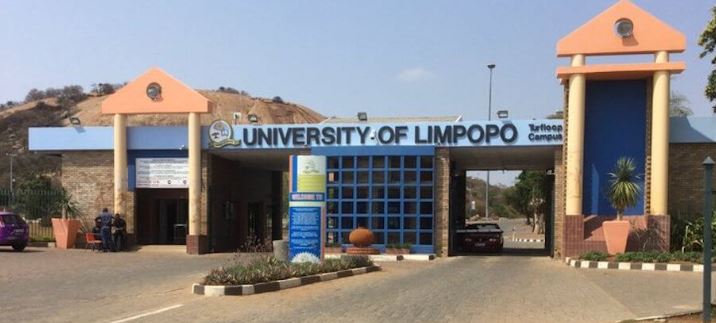
The University of Limpopo has been shamed by the Public Protector’s report into medical degree corruption.

In a report issued last week the Public Protector found that the University of Limpopo corruptly outsourced the construction and “management” of its new medical curriculum to an unqualified private provider, the “Dinamik Institute”, run by Helen Linky Molatoli; paid the institute over R2.3-million; by-passed its own procurement policies in doing so; deceived the Health Professions Council of South Africa and the Council on Higher Education; and harassed and persecuted the whistle-blower, Prof AJ Mbokazi, then the Director of the University’s new School of Medicine, who tried to expose the fraud.

It is also probable, the Public Protector found, that the university quality assurance officer, Dr MA Ngoepe, was paid R25,000 in order to facilitate the deal. She stipulates that this must be investigated by the police. But most shocking of all, she found that the Vice-Chancellor, Prof NM Mokgalong and the Executive Dean of Health Sciences, Professor Nonceba Mbambo-Kekana, colluded in the affair and that they are guilty of improper conduct.

The risk to students was enormous – they stood to complete a degree which would not ultimately allow them to practise as doctors, and to lose their financial aid, bursaries and the time spent fruitlessly on studying an illegitimate course.

The CHE withdrew the accreditation of the programme in 2016 and all students were re-registered under the University of Pretoria curriculum.

The University Council needs to consider seriously whether the University of Limpopo has the capacity to mount a medical degree. It must also take disciplinary steps against the Vice Chancellor, the Quality Assurance manager and the Executive Dean by 19 July, recover the R2.3-million paid to the private provider, construct a new curriculum committee to oversee proper quality assurance of the programme, and reimburse and apologise to Professor Mbokazi – all steps required by the Public Protector.

The Minister of Higher Education and the Minister of Health should require detailed reports from the CHE and HPCSA respectively on the part each played in this shameful matter. The chair of council should also respond publicly to the Public Protector’s report and reassure the public that the required steps have received the council’s urgent attention.

If there are no satisfactory outcomes from these processes then the Minister of Higher Education and Training might well have grounds to consider placing this university under administration once again.

Prof Belinda Bozzoli (MP), Shadow Minister for Higher Education

Employees takes most of the Gauteng education budget

Penwell Dlamini

About three quarters of the budget allocated to the Gauteng department of education will go to paying employees.

This was revealed in the 2018/19 budget vote‚ which was delivered by Gauteng education MEC Panyaza Lesufi.

In the 2018/19 budget‚ education received a total budget of R45.2-billion‚ which was an above-inflation increase of 10.7% or R4.3-billion.

Of the total budget‚ R33.7-billion‚ or 75%‚ went to compensation of employees. This reflects an increase of 11.5% (R3.4-billion) when compared to the previous financial year.

“This increase is mainly attributed to the filling of all key vacant posts and providing for inflation-related salary increases‚” said Lesufi in his budget statement.

‘Tree school’ must get classrooms and teaching support in 3 weeks

Staff Reporter

The Department of Basic Education has been instructed to deliver mobile classrooms to a remote Limpopo school where pupils are receiving erratic teaching in dilapidated structures.

Judge GC Muller made this ruling in an urgent application brought by public interest law centre Section27‚ which asked the court to ensure that the learners of Makangwane Secondary School at Nonparella in the Capricorn district are taught in safe and adequate school facilities‚ by the time the third school term begins on July 17.

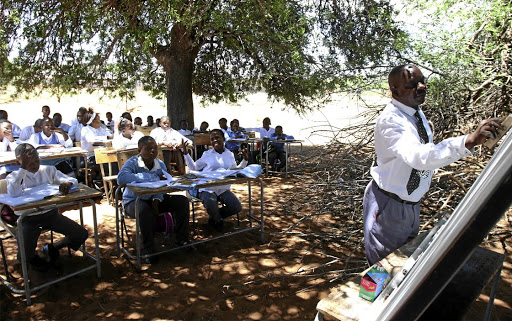
Earlier this year‚ Section27 highlighted how pupils at the no-fee school were being taught under trees since January.

School authorities had moved classes outdoors because they were concerned the damaged building posed a threat to the safety‚ with support beams having previously fallen down in class.

Consequently‚ lessons have suffered.

“To date‚ lessons at the school were irregular or did not occur at all because department officials refused to allow teaching to take place outdoors‚” Section27 said in a statement after the court ruling on Tuesday.

The court ordered the department to put in place short-term measures to allow proper and effective teaching and learning to resume by the start of the third school term.

According to Section27‚ these measures must include the delivery of at least five mobile classrooms; adequate school furniture to allow all learners to have their own space to read and write and a catch-up plan to compensate for the gaps in the curriculum as a result of the disruptions to teaching and learning in the first half of 2018.

A further interdict directed the department to develop and begin implementing a detailed and costed implementation plan setting out a permanent solution to the problem of inadequate and dangerous infrastructure at Makangwane School.

The judge also issued an order directing the department to report to the court at regular intervals‚ on the steps taken to comply with these orders.

Read original article here.

Nigeria: Girls need at least 12 years of education

Ernest Chinwo

Port Harcourt — The British High Commissioner to Nigeria, Mr. Paul Awkright has said that for any country to develop, girls must be given access to education, insisting that they need at least 12 years of education. This came as he commended Rivers State Governor, Nyesom Wike for investing in girl-child education.

Speaking while inaugurating Government Girls Secondary School, Rumuokwuta, Port Harcourt, which Wike reconstructed as part of activities marking his administration’s third anniversary, Awkright called for greater investments in girl-child education.

“There is no reason why we should neglect half of our population who can help ensure the prosperity of the country. That is why girl-child education is important. Without girl-child education, this country cannot thrive.”

While thanking the people of Rivers State for their warm reception, he said he is genuinely pleased to be in the state which is the heart of the Niger Delta Region.

“I am particularly pleased that I am here for the commissioning of a girls’ school. I have a daughter; I know how important it is to see girls educated: that they receive a minimum of 12 years of quality education.

“When they are educated, they marry later. When they marry later, they have fewer children. They can contribute to the economy. They can fulfil themselves.”

The joy in the air was contagious. Hundreds of students and old girls of the school celebrated Wike’s “golden touch” to their school. They sang pro-Wike songs, danced and urged the governor to sustain the delivery of quality education for all students.

In his remarks, Wike said his administration is committed to quality education, hence the transformation of selected schools. He noted that critical investments have been made to improve the quality of teaching and learning in the interest of the state’s development.

He announced that the school would return to its old uniform, while the primary school would be fenced off from the secondary section.

“We will contract the maintenance of this school to members of the host communities; they will cut the grass and clean the environment of the school. We shall provide security in the school. Beginning Monday, nobody is allowed to trek across the school premises. This is a girls’ school and their security is paramount.”

The governor warned the principal of the school against hiring out its facilities for conferences, saying that boys would no longer be allowed to play football in the school.

In a project description, the Commissioner for Education, Dr, Tamunosisi Gogo-Jaja said the school, which was established in 1972, was allowed to decay beyond measures by previous administrations.

He said all the structures in the school were dilapidated, pointing out that the Wike administration demolished them and built new ones.

He said the school has four new hostels, a major 960-seater assembly hall, sick bay, several science and other laboratories, sports facilities and new internal roads.

In a welcome address, the Chairman, Obio/Akpor Local Government Area, Prince Solomon Eke, said the people are proud of the transformation of the school with modern facilities, newly equipped laboratories, modern teaching and learning aids. – This Day