Home Blog Page 498

Protesting teachers detained in Sudan’s El Gezira

Staff Reporter

Teachers in Wad Madani, capital of El Gezira in east-central Sudan, carried out a sit-in on Sunday, in protest against the government’s decision to close more than 200 schools in the state.

The teachers also demanded a salary rise and payment of their delayed allowances since 2013.

Policemen, aided by agents of the National Intelligence and Security Service (NISS) arrested a number of protesting teachers.

According to the Sudanese Teachers’ Committee, Osman Hamad, Abdallah Hassan, Adel Babu, Ibtihaj Ahmed, Tawfig Khalil, Abubakr Mohamed Ali, Manal Ahmed, Mona Ibrahim, Hindi Mohamed Ahmed, Mutaz Atta, El Daw Mohamed Ahmed, Khalid Salah, Anji Mohamed Ahmed, Abubakr Mahdi and Raya Elias were detained.

The opposition National Umma Party (NUP) strongly condemned the decision of El Gezira state Ministry of Education to close more than 200 secondary schools at the beginning of the 2018-2019 school year that will start next Sunday.

In a statement on Sunday, the NUP held “the entire regime fully responsible for the consequences of the decision, which was taken “arbitrarily and hastily, and exposes the country to more tensions in addition to the difficult economic and living conditions”.

The party expressed its solidarity with the residents of El Gezira state and called on them “to continue their struggle and never give up the right to education”. – Dabanga

Uganda Catholic Church rejects sex education in schools

Frederic Musisi

The Catholic Church leadership in Uganda has slammed the government’s National Sexuality Education policy and said they will not allow it to be “introduced nor taught” in their Church-founded schools.

The bishops under the Uganda Episcopal Conference (UEC), the apex assembly of Catholic leaders in the country, said they have rejected the policy and shared their position with the Anglican and the Orthodox Churches.

“Contrary to what many people think, the Church is in favour of a positive, age appropriate, culturally and religious sensitive sex education which holds moral and Christian values. This is the task and shared responsibility of the family, Church, and the State through the schools,” Archbishop John Baptist Odama, the UEC chairman, said in a statement of the bishops’ resolutions.

The bishops made the resolution during a four-day plenary before travelling to Rome, Italy on June 12 to meet Pope Francis.

They said a team of experts from the Church was tasked to “contribute remarks and suggestions” to the policy but their “contributions have been substantially ignored”.
The clerics said the policy as it stands now contains “some valid ideas and guidelines” but “fails to answer some crucial questions in an adequate manner”.

Some of the critical issues they say were ignored include the vital role of family, children in early childhood (from three to five years) and in lower primary from (Primary 1 to 4) who will be exposed to content and life skills which are not appropriate for their age.

They say the policy contains information and life skills foreseen for higher levels being open to interpretation and practices contrary to Christian values and nonexistence of provisions or guarantees that the teachers are prepared to teach in a balanced and proper way on such emotionally charged topics.

The bishops also said they are currently waiting for their “experts to give a final evaluation of the document with further suggestions for its amendment by the competent authorities” but should it be unchanged, they will not allow it in Church-founded schools.
According to UEC’s website, there are more than 800 Catholic Church-founded schools in the country.

When contacted yesterday, the Ministry of Education Permanent Secretary Alex Kakooza said he has a private life and would not comment on office matters on a Sunday.

At the launch of the policy in March, Education minister Janet Museveni said she was “deeply disturbed to discover that sexuality education initiatives were unregulated”, exposing schools as recruitment grounds for homosexuality and other perversions.

Meanwhile, the bishops returned from Rome on Saturday. Lira Diocese Bishop Joseph Franzelli, who is on the UEC’s communications team, said most of what was discussed was “private” but said Pope Francis urged them to continue their service towards the faithful.

About Sexuality Education Policy

In March, the Ministry of Education approved the National Sexuality Education framework, which officials said was developed over two years through consultations with relevant stakeholders. The policy categorises sex education messages into five: early childhood group between the ages of three and five who will recognise forms of unacceptable body touch to develop self-awareness and refusal skills. Lower primary level of children between six years to nine will discover their talents and appreciate the changes in their bodies.

Pupils of upper primary aged between 10 and 12 are expected to be able to define their purpose and commit to sexual abstinence. The fourth category looks at lower secondary with students of 13 to 16 years old where they should be able to cope with risky behavioural vulnerability during puberty. The last category targets children aged 17 and above and emphasis is put on the role of gender and power in relationships. – Daily Monitor


Algeria goes offline to stop students cheating

AFP

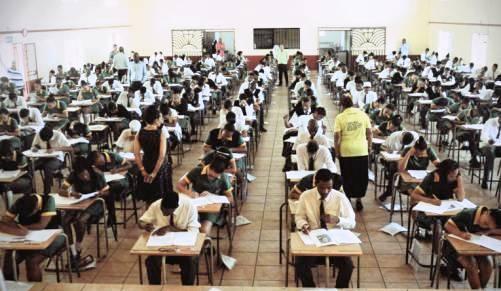
Algeria went offline on Wednesday for the start of high school diploma exams, the first in a series of internet blackouts to stop students cheating.

Mobile and fixed internet lines were cut across the country for a total of two hours, to coincide with the start of two separate school tests, AFP journalists in Algiers said.

A third hour-long internet shutdown was planned for later on Wednesday, according to a schedule issued by public operator Algerie Telecom.

Internet services were cut “in compliance with instructions from the government, aimed at ensuring the high school diploma tests run smoothly,” Algerie Telecom said.

The pre-planned blackouts are due to continue for the whole period of exams, until Monday, to combat cheating among more than 700,000 students.

Ali Kahlane, president of telecoms association AOTA, said operators were required to conform to the government’s demands.

The 2016 exam season was marred by widespread cheating, with exam questions published on social media before or at the start of the test.

Last year, authorities requested operators shut down access to social media, but the move did not entirely end the problem.

Latecomers were banned from taking the exam and instead had to attend a specially organised test.

Electronics with internet access, such as mobile phones and tablets, were this year banned from Algeria’s more than 2,000 exam centres.

Metal detectors have meanwhile been set up at the entrance to the centres, Education Minister Nouria Benghabrit said.

In a further move to prevent questions being leaked, the minister said mobile phone jammers and surveillance cameras had been installed in locations where the exam papers are printed.

South Africa: Teachers to be vetted for sex predation, violence and racism

Thuletho Zwane

“As a former Parktown Boy, the culture of Parktown Boys is very patriarchal,” said Max a caller on 702 on Monday morning.

“When I was in Standard six (Grade eight) in the 90s, part of the initiation, we would have to have sex on the school lawn,” said Max

“I was hung upside down from the first floor and shaken until all my tuk [tuck shop] money fell out.

“For one week I was put in a box during the entire break. Its impact on the psyche is profound,” said Max who was in tears as he recalled these school memories from his childhood.

Max had called into 702 FM on the Eusebius McKaiser mid-morning show. The MEC for Gauteng Education, Panyaza Lesufi, was in studio to discuss the issues faced by the Provincial Department of Gauteng Education.

Sexual predation, racism and violence at schools were some of the issues covered.

In April, Lesufi called the meeting in order to discuss the findings of a report by the department following the allegations of sexual assault, rape, racism and violence at Parktown Boys.

One parent, who had been given carte blanche by the headmaster and School Governing Body (SGB) to investigate the allegations, said that when her evidence was presented to the headmaster and the SGB, they allegedly tried to conceal the information.

The Rosebank Killarney Gazette reports that the woman said: “I was here from 2014 and I have witnessed first-hand what has happened to our boys. One child was too much. Thirty-two were evidenced, properly damaged, anally penetrated every night,” alleged the parent.

She added that the impact the abuse had had on the learners had been severe.

“We have suicidal boys, wanting to jump off of buildings because they have to smile and wave, put on the boater [hat] and uphold the Parktown way.”

Nine teachers were implicated in allegations of racism and sexual assault in the department’s report presented. Law firm Fasken Martineau compiled the report.

“There were nine teachers that were implicated‚ but four we’ve got evidence against them. Of the four‚ two are employed by the department and two are employed by the school‚” Lesufi said.

In 2017, the school’s assistant water polo coach appeared in the South Gauteng High Court in Johannesburg for sexually grooming more than 20 pupils. The 22-year-old, who was also an assistant boarding master, faced 160 charges, including sexual assault and attempted murder.

The complainants were all child victims, aged 15 and 16.

Max tells Lesufi and McKaiser that he had buried the memories of what happened to him very deep in his psyche.

[Max starts at time 21:42]

“They are only coming out now because of what has been happening over the last few months,” siad Max.

Lesufi says Max’s story is part of the reason his department has banned orientation programmes and initiations rituals at boy schools.

“We have instructed the SGB to ensure these don’t happen We have closed the mechanism that says, “boys will be boys and what happens in Parktown Boys stays in Parktown Boys,” said Lesufi.

This was in reference to the culture of silence at the school.

In May, Lesufi instructed Parktown Boys’ SGB to review the culture of silence and expressed the need for the establishment of a new code of conduct.

He declared in front of learners and educators that the code of silence no longer exists but a new code will be formulated.

“If anyone is aggrieved they have a right to complain,” Lesufi said.

During the 702 interview, Lesufi said the education system must make sure that our children are free from harm and violence.

He added that his provincial department just won a battle last week with the teacher unions.

“From 1 July, every teacher that becomes appointed must go through a vetting process. This is a four-step vetting process to vet: sexual conduct, violence, racism and issues that will not harm our children,” he said

Lesufi added that his department would work together with government institutions and agencies that deal with human rights, gender commissions, security and the criminal justice system to ensure the perpetrators are pegged before they get into the system as educators.

Mckaizer added that there was a designed and institutional cultural problem that has been going on for a long time at Parktown Boys and other boy schools.


Izikhothane task team acts against Uitenhage’s flashy spenders

Thamsanqa Mbovane

Ward councillors, residents and the police in KwaNobuhle, Uitenhage, have taken action against the cult of flashy spending by izikhothane which costs their parents enormous amounts of money.

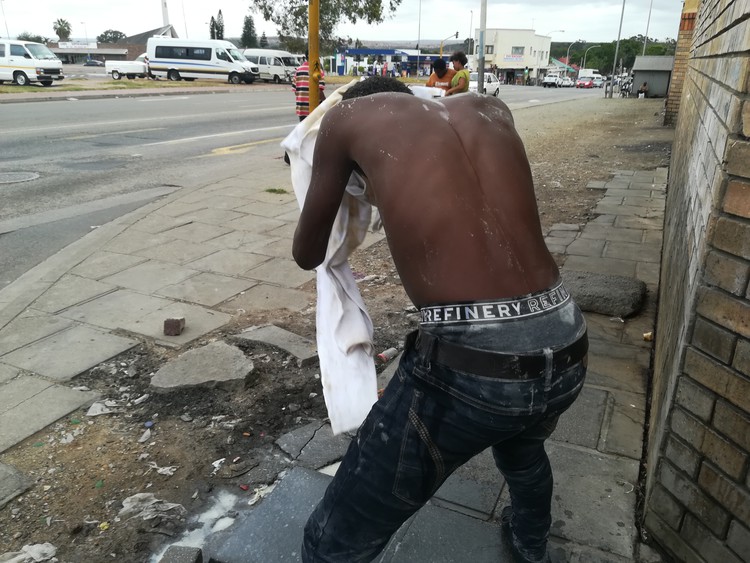
A task team was launched earlier this year by SAPS, metro police, the community policing form, church officials, teachers and ward councillors, to take action against the trend, which involves young people who buy goods such as whisky and clothes, spit whisky at each other, pour baking powder on each other, and even burn clothes or banknotes.

Some of the groups have names such as Smarttenders, Ugly Kids, Top Spenders.

The groups used to meet at the weekend on Mabandla Road in KwaNobuhle. Members of the task team say the situation has returned to normal. But some of the young people say they have just moved to new venues.

Fifteen-year-old Aviwe (name changed) who is in Grade nine at Nkululeko Secondary School in KwaNobuhle, said the izikhothane had been chased away from Mabandla Road by the task team every weekend.

“Our audience was getting smaller every weekend, because the police would come and threaten us. We are now doing it in parks far away from houses. We have people who often want to cheer us and we can’t let them down by quitting.”

He said he liked wearing expensive clothes. “My mom supports me by buying trousers that start from R700, shoes which are always Carvela that cost from R1,500, while my Uzzi jersey is R900 upwards,” he said.

“I love being isikhothana. It makes me feel like a celebrity.”

“We no longer burn clothes or money – we tear them! This is because when we kindle fire in public the flames attract the authorities and people who see fire at gatherings often report us to the police.”

Ward 50 councillor Lunga Nombexeza (ANC) said the trend was “satanic” and the team wanted to “wipe it off” the streets.

Another task team member, ward 44 councillor Nomsa Booi (ANC), said the township was quiet again on Saturdays. “The trend declined every weekend because the children knew we didn’t approve of this hobby. It was madness.”

“My own child was once an isikhothana but I beat him hard until he stopped it.”

She said attention would now be on soccer, netball and other sports and she would urge all councillors of Kwanobuhle to fund sport. “We will fund the activities to let children enjoy the games than wasting time torching money.”

CPF official Monica Mbatsha said awareness campaigns had been launched in schools and meetings had been held with parents warning them about the dangers of the trend. She said izikhothane caused a disturbance to other residents at night, and children under 18 drank alcohol.

Eastern Cape Provincial Department of education spokesman, Malibongwe Mtima said izikhothane was not a problem in schools, since the learners wore uniforms. – GroundUp


Bitter court battle looms over top UCT post

Msindisi Fengu

University of Cape Town (UCT) ‘s black academic community is challenging the appointment of associate Professor Lis Lange to the position of deputy vice-chancellor for teaching and learning.

Professor Elelwani Ramugondo and the Black Academic Caucus, a collective of academics at UCT, filed joint papers in the Western Cape High Court last month.

They are challenging Lange’s appointment, arguing that it was unfair, arbitrary, unreasonable and irrational.

Ramugondo is a professor at UCT’s faculty of health sciences.

They have asked the court to review and set it aside; order UCT to readvertise the post; declare UCT’s decision that Ramugondo was unappointable irrational, arbitrary and unreasonable; and declare that six members of council – including outgoing vice-chancellor Max Price – were conflicted and should have been disqualified when council discussed and voted on Lange’s appointment in December last year.

UCT spokesperson Elijah Moholola confirmed that UCT had been formally notified of the legal action.

“UCT believes that, although it is unfortunate, it is within the unsuccessful candidate’s rights to seek legal recourse if they believe that there were irregularities with the process. UCT reiterates that the appointment [of Lange] was a fair, transparent and above-board process.”

Moholola said claims that Lange did not meet equity requirements and other criteria were misleading.

He said the selection committee, senate and council supported and welcomed Lange’s appointment. UCT was confident about its decision and that the legal process would confirm this.

Ramugondo argues that:

Lange, a white Argentinian who is a permanent resident in South Africa, got the post instead of a black candidate familiar with transformation matters in higher education.

UCT abandoned the initial recruitment process after Lange withdrew her candidacy.

Ramugondo wants to know why the initial process was abandoned and why Lange pulled out of it. She argues that when Lange applied for the post, she claimed in her curriculum vitae that she was a professor, when she was in fact an adjunct professor.

Ramugondo says this title has not found full recognition in the country’s mainstream academic community.

UCT’s Centre for Higher Education Development granted Lange the status of associate professor after she was appointed to the post; and Lange lacked the required academic track record and experience in teaching and learning, innovative course and programme design and academic support and development.

Lange was appointed after a second selection process reconvened from July to November last year.

Ramugondo says that during the second selection process, she and four other applicants were shortlisted as A-grade candidates.

In her court papers, Ramugondo questions UCT’s explanation that she and other candidates were not suitable for the position because they “didn’t command respect of deans and other senior academics”. She says it is unclear on what basis this finding was made.

Ramugondo argues that she met the requirements of the post and had played a significant role in advising Price on transformation issues at UCT.

Ramugondo’s submissions include a report about the post, which the selection committee compiled for the senate and which is dated November 24 last year.

In it, committee chair Sipho Pityana states that the committee had agreed to prioritise a black South African candidate. However, he says the committee agreed to widen the pool of applicants, informed by the requirements of the institution, and by the candidates who had applied for similar jobs previously.

He says support for Lange’s appointment was based on her having been a deputy vice-chancellor for teaching and learning at the University of Free State (UFS) for three and a half years and her having done an excellent job there.

Before that, Pityana says Lange headed the Directorate for Institutional Research and Academic Planning at UFS for three years.

In addition, Lange was an executive director for the higher education quality committee at the Council on Higher Education, and occasionally acted as the council’s chief executive officer.

Pityana says Lange came across as a “strong and mature leader, with necessary authority and gravitas to lead a diverse group of faculties and staff”.

“Overall, the committee agreed that she had the necessary skills, competence and experience to lead the transformation of teaching and learning at UCT.

“In addition to her strong referees, she inspired confidence through her direct and thoughtful and sometimes out-of-the-box answers to questions,” Pityana states.

Read the original article here.

 

Zimbabwe: Minister slams Dokora’s new curriculum for producing “hopeless” graduates

Staff Reporter

Primary and Secondary Education Minister, Professor Paul Mavima has admitted the country’s education system was deteriorating after it has, in the recent past, allegedly been churning out a “generation of hopeless” citizens who could not positively contribute to their country’s economic progress.

Mavima was speaking while officially opening the National Association of Secondary Heads (Nash) conference in the resort town on Thursday.

He was responding to concerns by school heads about the new education curriculum which they said did not properly prepare learners for tertiary education or employment in the industry.

Mavima partly blamed the demise of the education system on school teachers as he implored them to play their own part in socioeconomic transformation of the country.

“I want Nash to spearhead better ways and make suggestions on the way we can unlock some of the problems we face in implementing the new curriculum.

“I am calling for transformation because the country lost a decade of economic development. We created a full generation of hopeless people who can only realise value in themselves outside and not here,” said Mavima.

He said government and the education sector had collectively failed the country, hence the need for closer cooperation.

Zimbabwe, under then Primary and Secondary Education Minister Lazarus Dokora, last year introduced a new schools curriculum.

The controversial learning regime was strongly resented by educators who saw it as overburdening them with extra responsibilities which had no relevance to the country’s learning environment.

The new education curriculum was introduced ostensibly to equip learners with lifelong skills and prepare them for the future.

However, the new Emmerson Mnangagwa administration has initiated a process of reviewing the same new curriculum.

Mavima said the kind of education had been outdated and producing people who cannot add value to the economy.

He said: “When you see a majority of Zimbabwe applying for birth certificates and passports, don’t think they want to get documents to visit and come back. They are trying to secure lives of their children outside the country.”

The Minister urged teachers to play a leading role in transformation of an education system tailored to produce pupils who are marketable to business and industry.

The three day conference ends this Friday. – New Zimbabwe


South Africa: Teachers’ union Sadtu concerned over school robberies

Jenni Evans

The SA Democratic Teachers’ Union (Sadtu) is “deeply concerned” about a spate of robberies at Cape Town schools over the past month. The Western Cape Education Department has offered a R10 000 reward for information that will lead to the arrest of the perpetrators.

“Schools are supposed to be a place of safety,” said Sadtu Western Cape secretary Jonovan Rustin.

Five schools have been hit since May 16, starting with Ummangaliso Primary School in Site B, Khayelitsha.

On May 24, Inthshayelelo Primary School in Lingelethu West was burgled and days later on May 29, robbers struck at Lwandle Primary School, also in Lingelethu West.

READ: 3 teachers hijacked outside Cape Town primary school

On May 30, Vukukhanye Primary School in Gugulethu was robbed and on Monday morning, June 18, three teachers from ACJ Phakade Primary School in Nomzamo, Strand, were hijacked at gunpoint as they arrived at school.

Western Cape Education MEC Debbie Schäfer said five armed men entered the school premises via the vehicle entrance and held the three teachers at gunpoint. The robbers stole three vehicles.

CCTV footage shows them slipstreaming into the gate behind the teachers’ cars.

“Thankfully, no one was physically hurt during the incident, however, the educators involved, as well as those who witnessed the incident, are deeply traumatised. Counselling is being provided,” said Schäfer.

Police probing the robberies

In the meantime, Police Minister Bheki Cele assured the department that police were investigating the robberies, and the Safe Schools Directorate had deployed security to the school, she said.

But Sadtu said that at the moment, teachers feel as though they are “sitting ducks”, waiting to become the next targets.

He called for visible policing outside schools, particularly during winter mornings, when pupils and teachers arrive in the dark.

Rustin said education department officials were well protected in their own offices, but that schools only have a gate which had to be opened to let pupils and teachers in.

He said none of the victims would be allowed to speak to the media, because it would be against department policy.

READ: Fear at schools after robberies

Paul Colditz, CEO of the Federation of Governing Bodies of SA Schools, said they were worried that schools were being targeted.

“Children may be affected and we are always very concerned about it,” he said.

Colditz added that schools were soft targets because they could not afford property security, and he echoed the call to make schools safer.

In the meantime, anybody with information on the robberies can send a tip-off to the toll-free number 0800 454 647.

The R10 000 reward is for information that leads to the arrest and conviction of the robbers. –News24


Nigeria: OAU sacks sex-for-marks professor

Joshua Dada

The authorities of the Obafemi Awolowo University, Ile-Ife has dismissed Professor Richard I. Akindele of the Department of Accounting, Faculty of Administration from the service of the institution for indulging in gross misconduct bothering on sexual harassment of female students.

Akindele, a senior lecturer was dismissed after he was found liable to all the allegations of sexually harassing his student among others, Miss Monica Osagie.

Addressing journalists at the institution yesterday, the Vice Chancellor, Professor Eyitope Ogunbodede disclosed that the university arrived at the dismissal option following the recommendation of the Joint Committee of Council and Senate constituted to probe the allegation.

The Vice-Chancellor disclosed that the erring professor had an inappropriate relationship with Osagie as established through their conversations in the audio recording.

According to Ogunbodede, Akindele acted in a manner that is seen to have compromised his position as a teacher and examiner, in that, his conversations with Osagie were about examination scores and inducement of favour for the alteration of examination scores.

“He offered to change Miss Osagie’s purported 33 per cent result to a pass mark in consideration for sexual favours, this was established in the audio recording which he admitted.

“His claim that Osagie knew that she had passed with a score of 45 per cent but was seeking to score an A and that this led to him being sexually harassed by Miss Osagie cannot be supported by any evidence.

“Professor Akindele’s action in requesting sexual favour from Osagie to change her examination score was scandalous behavior that has brought ridicule to the name of the University and have tarnished the reputation of the University, as it portrays the university as an institution where its teachers and examiners trade marks for sex,” said Ogunbodede.

Ogunbodede disclosed that the University is creating awareness and disseminating information on what constitute sexual harassment within the University and noting the veracity of sexual harassment concept which include sexual solicitation, sex exploitation among others.

According to the Vice Chancellor, OAU is fully committed to the eradication of sexual and any other harassment from tertiary institutions and will do all that is possible to nip the menace in the bud. – Leadership

Top referee Victor Hlungwani gives hope to rural kids

Tiyani wa ka Mabasa

Former Baroka goalkeeper Oscarine Masuluke has used his past life experiences to motivate schoolchildren in Limpopo over the past week.

Masuluke, 25, is trying to turn his life around after being dismissed by Baroka a few months ago.

Masuluke, Olaleng Shaku and coach Kgoloko Thobejane were shown the door at Bakgaga for allegedly drinking on duty earlier this year.

The 2017 Fifa Puskas Award finalist was part of the Limpopo Sports Wise team that visited a few schools last week.

The NGO was established in 2008 by PSL referee Victor Hlungwani and former top-flight players, Tonic Chabalala and David Mathebula, who also hail from the province.

“It was good to hear Oscarine relating to the learners how his contract was terminated by Baroka. He encouraged learners to stay away from alcohol as it can ruin your career like it did with him,” Hlungwani told the Sowetan.

Masuluke could be joining newly promoted National First Division side, TS Sporting. He couldn’t be reached for comment.

Other players who spoke to the learners included Justice Chabalala (Orlando Pirates), Nyiko Mobbie (Free State Stars) and Wiseman Maluleke (Polokwane City), as well as social worker Nyiko Mabunda.

The emphasis was on education and staying away from substance abuse under the theme “You are a star”.

The group visited schools such as Vuswayi Secondary and Jim Yingwani High around the Collins Chabane, Makhado and Greater Giyani municipalities.

“Players presented on topics under education and finance, drugs and alcohol abuse, teenage pregnancy and HIV/ Aids,” Hlungwani explained.

“I would like to thank my company Rand Water who donated school bags and presented on how learners can apply for bursaries to fill the shortage of skills in water industries.

He said the Premier Soccer League also providing T-shirts, caps, soccer balls and vuvuzelas that we used as prizes during the roadshow.

The show was concluded over the weekend with Youth Day celebrations at Giyani Stadium on Saturday. – Sowetan