Home Blog Page 499

Pupil pregnancy: So rife we need a policy on it

Matthew Savides

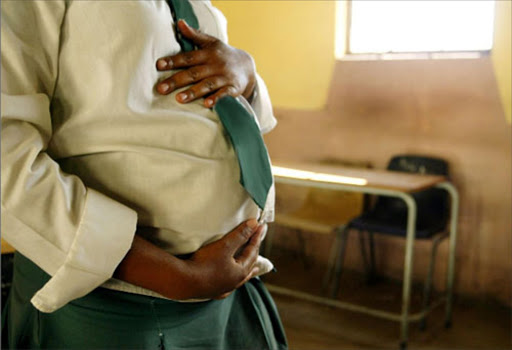
A classroom in a suburban KwaZulu-Natal school last month unexpectedly became a maternity ward when a teenage pupil went into labour.

“The school immediately called the emergency services, but the baby arrived before the medical services did,” said Tim Gordon, CEO of the Governing Body Foundation. “You had a young teacher in class, with 30 to 40 pupils, while a girl is giving birth.”

As if this wasn’t enough, given the risks of teenage pregnancy, it wasn’t a straight-forward delivery.

“As it happened, there was a slight complication. The umbilical cord was wrapped around baby’s neck. The teacher did her very best, and her best turned out to be good enough. There was no damage to the mother or baby,” said Gordon.

He would not give the name of the school, but Gordon said the incident showcased the importance of how teachers and schools are handled as the Department of Basic Education receives the final round of comments of its Draft National Policy on the Prevention and Management of Learner Pregnancies in Schools.

The department this week extended the deadline for comments on the policy – which is available on the department’s website.

Department spokesperson Troy Martens told Times Select the policy was important “because of the high rates of early and unplanned pregnancies we see, as well as the rates of pregnancies of pupils of school-going age, in particular”.

According to figures released by the department, in response to DA questions, 18,357 pupils fell pregnant at schools across the country in 2014. This declined to 15,504 in 2015 and to 8,732 in 2016 (although this figure did not include KZN or Limpopo, as those stats hadn’t been compiled at the time of the response).

The draft policy document itself acknowledges that school pregnancies are a major problem.

“The rate of pupil pregnancy in South Africa … has become a major social, systematic and fiscal challenge not only for the basic education sector, but crucially, for national development in general and for the basic education system in particular,” the document states.

“Unintended pregnancy among pupils is not new to the basic education system, but its scale and impact have reached a point where it requires a systemic policy and structured implementation planning,” it continues.

Gordon welcomed the policy as a whole, particularly its focus on the rights and needs of the girls themselves. However, he cautioned that it did not pay enough attention to the schools and teachers who have to deal with the pregnant pupils – including in the case of last month’s classroom birth scenario.

“The policy is a step in the right direction. The stats from schools show the frightening extent … of the number of girls in our schools that have fallen pregnant, some of them as low as Grade 2. So, clearly there became a real need for policy, from legal and practical point of view to manage things better.

“But if we look at the policy itself, our slight misgiving is that it is overly focused on the rights of the pupil, without either taking into the account the prevention side of things or giving cognisance to the needs to the school, which run parallel, but could be very different to the needs of the pupil.

“There is insufficient guidance and protection for anyone who has contact with the girl. And, indirectly, this could be danger to the girl herself or the unborn or immediately-born child,” he said.

The Equal Education Law Centre – in a joint submission with Section27 – also expressed some misgivings.

“The draft policy is well-intentioned. However, in its current form it does not provide sufficient information for implementers to understand and to effectively implement the draft policy. In many respects, it does not serve the purpose of a policy, but instead appears to be a collection of broad policy statements in respect of the Department of Basic Education’s overall approach to school pregnancy,” the document reads.

Other issues were raised – including around specific terminology and that “pupil fathers” weren’t catered for – in their 27-page submission.

Martens said the department welcomed these submissions and, in fact, the number and nature of the submissions was one of the reasons for the deadline being extended.

“The reaction to the policy has been overwhelming. Obviously there will be differing opinions on a topic that is sometimes seen as taboo to talk about with young people. However, we are taking on board all views as we work to finalise the policy,” she said.

In terms of what the department hoped it would achieve once the policy was finalised, she said: “We hope to see fewer unplanned pregnancies, we hope to retain girls in school longer and see them go on to further education and training opportunities and enter the economy. We also hope to equip pupils with the knowledge to be able to make healthy and informed choices about their lives and lifestyle.” TimesLive
Report into medical degree corruption may warrant placing Limpopo University under administration

Belinda Bozzoli

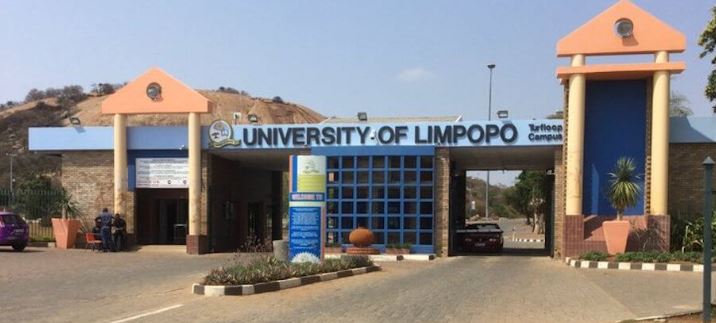
The University of Limpopo has been shamed by the Public Protector’s report into medical degree corruption.

In a report issued last week the Public Protector found that the University of Limpopo corruptly outsourced the construction and “management” of its new medical curriculum to an unqualified private provider, the “Dinamik Institute”, run by Helen Linky Molatoli; paid the institute over R2.3-million; by-passed its own procurement policies in doing so; deceived the Health Professions Council of South Africa and the Council on Higher Education; and harassed and persecuted the whistle-blower, Prof AJ Mbokazi, then the Director of the University’s new School of Medicine, who tried to expose the fraud.

It is also probable, the Public Protector found, that the university quality assurance officer, Dr MA Ngoepe, was paid R25,000 in order to facilitate the deal. She stipulates that this must be investigated by the police. But most shocking of all, she found that the Vice-Chancellor, Prof NM Mokgalong and the Executive Dean of Health Sciences, Professor Nonceba Mbambo-Kekana, colluded in the affair and that they are guilty of improper conduct.

The risk to students was enormous – they stood to complete a degree which would not ultimately allow them to practise as doctors, and to lose their financial aid, bursaries and the time spent fruitlessly on studying an illegitimate course.

The CHE withdrew the accreditation of the programme in 2016 and all students were re-registered under the University of Pretoria curriculum.

The University Council needs to consider seriously whether the University of Limpopo has the capacity to mount a medical degree. It must also take disciplinary steps against the Vice Chancellor, the Quality Assurance manager and the Executive Dean by 19 July, recover the R2.3-million paid to the private provider, construct a new curriculum committee to oversee proper quality assurance of the programme, and reimburse and apologise to Professor Mbokazi – all steps required by the Public Protector.

The Minister of Higher Education and the Minister of Health should require detailed reports from the CHE and HPCSA respectively on the part each played in this shameful matter. The chair of council should also respond publicly to the Public Protector’s report and reassure the public that the required steps have received the council’s urgent attention.

If there are no satisfactory outcomes from these processes then the Minister of Higher Education and Training might well have grounds to consider placing this university under administration once again.

Prof Belinda Bozzoli (MP), Shadow Minister for Higher Education

Employees takes most of the Gauteng education budget

Penwell Dlamini

About three quarters of the budget allocated to the Gauteng department of education will go to paying employees.

This was revealed in the 2018/19 budget vote‚ which was delivered by Gauteng education MEC Panyaza Lesufi.

In the 2018/19 budget‚ education received a total budget of R45.2-billion‚ which was an above-inflation increase of 10.7% or R4.3-billion.

Of the total budget‚ R33.7-billion‚ or 75%‚ went to compensation of employees. This reflects an increase of 11.5% (R3.4-billion) when compared to the previous financial year.

“This increase is mainly attributed to the filling of all key vacant posts and providing for inflation-related salary increases‚” said Lesufi in his budget statement.

‘Tree school’ must get classrooms and teaching support in 3 weeks

Staff Reporter

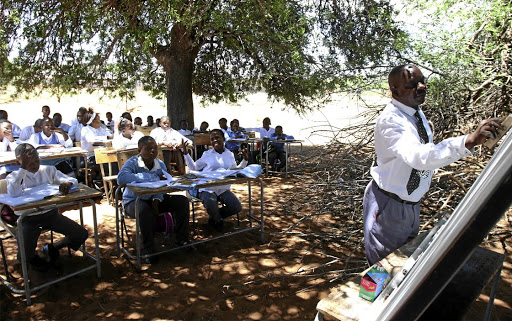
The Department of Basic Education has been instructed to deliver mobile classrooms to a remote Limpopo school where pupils are receiving erratic teaching in dilapidated structures.

Judge GC Muller made this ruling in an urgent application brought by public interest law centre Section27‚ which asked the court to ensure that the learners of Makangwane Secondary School at Nonparella in the Capricorn district are taught in safe and adequate school facilities‚ by the time the third school term begins on July 17.

Earlier this year‚ Section27 highlighted how pupils at the no-fee school were being taught under trees since January.

School authorities had moved classes outdoors because they were concerned the damaged building posed a threat to the safety‚ with support beams having previously fallen down in class.

Consequently‚ lessons have suffered.

“To date‚ lessons at the school were irregular or did not occur at all because department officials refused to allow teaching to take place outdoors‚” Section27 said in a statement after the court ruling on Tuesday.

The court ordered the department to put in place short-term measures to allow proper and effective teaching and learning to resume by the start of the third school term.

According to Section27‚ these measures must include the delivery of at least five mobile classrooms; adequate school furniture to allow all learners to have their own space to read and write and a catch-up plan to compensate for the gaps in the curriculum as a result of the disruptions to teaching and learning in the first half of 2018.

A further interdict directed the department to develop and begin implementing a detailed and costed implementation plan setting out a permanent solution to the problem of inadequate and dangerous infrastructure at Makangwane School.

The judge also issued an order directing the department to report to the court at regular intervals‚ on the steps taken to comply with these orders.

Read original article here.

Nigeria: Girls need at least 12 years of education

Ernest Chinwo

Port Harcourt — The British High Commissioner to Nigeria, Mr. Paul Awkright has said that for any country to develop, girls must be given access to education, insisting that they need at least 12 years of education. This came as he commended Rivers State Governor, Nyesom Wike for investing in girl-child education.

Speaking while inaugurating Government Girls Secondary School, Rumuokwuta, Port Harcourt, which Wike reconstructed as part of activities marking his administration’s third anniversary, Awkright called for greater investments in girl-child education.

“There is no reason why we should neglect half of our population who can help ensure the prosperity of the country. That is why girl-child education is important. Without girl-child education, this country cannot thrive.”

While thanking the people of Rivers State for their warm reception, he said he is genuinely pleased to be in the state which is the heart of the Niger Delta Region.

“I am particularly pleased that I am here for the commissioning of a girls’ school. I have a daughter; I know how important it is to see girls educated: that they receive a minimum of 12 years of quality education.

“When they are educated, they marry later. When they marry later, they have fewer children. They can contribute to the economy. They can fulfil themselves.”

The joy in the air was contagious. Hundreds of students and old girls of the school celebrated Wike’s “golden touch” to their school. They sang pro-Wike songs, danced and urged the governor to sustain the delivery of quality education for all students.

In his remarks, Wike said his administration is committed to quality education, hence the transformation of selected schools. He noted that critical investments have been made to improve the quality of teaching and learning in the interest of the state’s development.

He announced that the school would return to its old uniform, while the primary school would be fenced off from the secondary section.

“We will contract the maintenance of this school to members of the host communities; they will cut the grass and clean the environment of the school. We shall provide security in the school. Beginning Monday, nobody is allowed to trek across the school premises. This is a girls’ school and their security is paramount.”

The governor warned the principal of the school against hiring out its facilities for conferences, saying that boys would no longer be allowed to play football in the school.

In a project description, the Commissioner for Education, Dr, Tamunosisi Gogo-Jaja said the school, which was established in 1972, was allowed to decay beyond measures by previous administrations.

He said all the structures in the school were dilapidated, pointing out that the Wike administration demolished them and built new ones.

He said the school has four new hostels, a major 960-seater assembly hall, sick bay, several science and other laboratories, sports facilities and new internal roads.

In a welcome address, the Chairman, Obio/Akpor Local Government Area, Prince Solomon Eke, said the people are proud of the transformation of the school with modern facilities, newly equipped laboratories, modern teaching and learning aids. – This Day

Gauteng schools city region mini World Cup

Mosibodi Whitehead

It’s being hailed as the most entertaining World Cup in two decades. Many will watch 32 nations fight for the right to be crowned world champions. But it is the quality of football at the quadrennial competition that has captured the imagination of most football fans.

85 goals have been scored in the first 32 matches alone, making Russia 2018 a goal fest for soccer lovers around the world.

One of those goals was scored by 19 year-old France’s Kylian Mbappe, who wasn’t even born when Le Bleu won their one and only World Cup as hosts in 1998. The teenager’s meteoric rise from a schoolboy to an international star with his French club Paris St. Germain reminds me of South Africa’s Steven Pienaar back in 2002.

Skeelo, as Pienaar is affectionately known, was just 20 years and three months old when he was selected to represent South Africa at the World Cup in Japan and South Korea in 2002 making him one of the youngest players at the tournament.

At the time of his Bafana selection, the laaitie from Westbury was playing football for Ajax Amsterdam after joining them from PSL side Ajax Cape Town.

That Bafana coach Jomo Sono included Pienaar in his World Cup squad before he had made his international debut speaks volumes about the quality of the player. It is also testament to the excellent training Skeelo received as a schoolboy at the Transnet SAFA School of Excellence before moving to Holland.

South Africa has struggled to produce players of Pienaar’s calibre. However, there is a new drive to revive school football which was the foundation of a successful Bafana Bafana team that qualified for consecutive World Cups in 1998 and 2002.

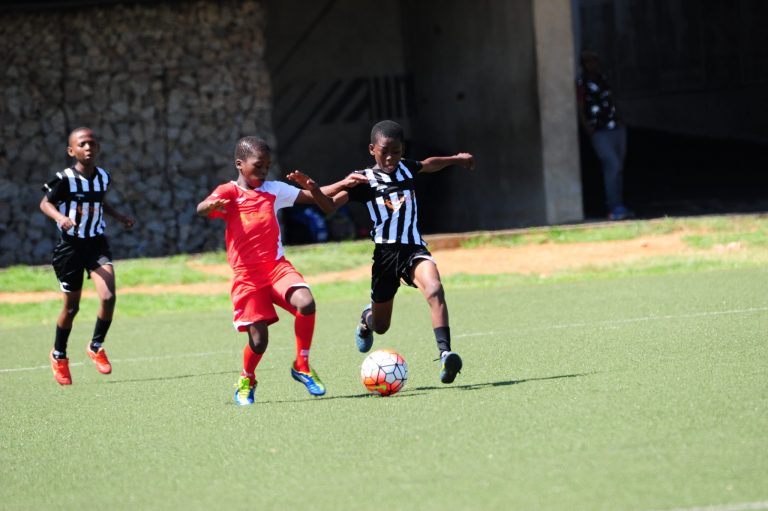
Last week a provincial 32-team 6 – a – side schools World Cup took place at The Balfour Park Alexander Football Club grounds. The mini-World Cup featured two host schools plus 15 u-10 primary school district champions and their 15 runners up all who qualified by way of a district level mini world cup.

The Gauteng Department of Sport, Arts, Culture and Recreation’s Thabang Ramaboya says they chose 8 year-olds and 9 year-olds to play in this tournament for a reason: “Your 10-year old now, if he’s not playing any sporting code right now, what are his chances of becoming an elite football player.”

Clearly the work begins at the school level.

Ramaboya says they have been working with the Gauteng chapter of the South African Football Association to upskill the teachers by sending them on biennial SAFA-instructed coaching courses.

“This is our biggest challenge when it comes to school sport, especially in townships. Our teachers have too much work. So what we do is that during the school holidays we call about 90 to 100 educators for a coaching course,” says Ramaboya.

SAFA Gauteng also provided referees for the tournament and deployed scouts to identify those talented boys who can follow Pienaar’s path from schools football to the World Cup. Perhaps the next Skeelo will come from WC J Mpengesi Primary School in Daveyton that won the mini World Cup.

Whitehead is a sport broadcaster and writer.

Ethiopia: Conflict disrupts school for tens of thousands

Sora Halake

Conflict in Ethiopia’s vast Oromia region has disrupted formal education for tens of thousands of youngsters, authorities there say.

Violent attacks on mostly ethnic Oromo communities have forced 159 schools in five regions to close at least temporarily in the past two years, said the Oromia Educational Bureau’s head, Tola Bariso.

He said about 65,000 students — at least half of whom fled to Oromia from Ethiopia’s neighboring Somali region — have been displaced, along with their families. He did not say how many of those youths were enrolled in other schools.

Fear of violence is keeping some students out of school, and even for those who do attend it compromises the ability to learn, officials and local residents told VOA’s Horn of Africa service.

“I can count many neighbour children who are staying home in fear for their lives,” said Abdule Jima, a 27-year-old local government employee living in the eastern Oromia town of Chinaksen. There, 27 schools have closed, with the acting mayor estimating that 22,000 youngsters have missed classes for at least six months.

“What kind of generation are we going to have?” Jima asked.

“You can imagine a kid growing up in a village where every day you hear shots and [see] people fleeing,” he said.

In a joint report issued last week, Ethiopia’s government and the United Nations said “inter-communal violence” along the winding border between Oromia and eastern Somali state region has displaced more than one million people since 2012. Most have fled since last September.

Bariso and other Oromia officials blame much of the violence on the Liyu police, a paramilitary force based in the country’s Somali region. As in the past, the Liyu police administration did not respond to repeated interview requests by VOA.

Sporadic attacks by the Liyu began at least five years ago, escalated in December 2016 and subsided before a renewed wave of attacks began in late May. Some officials and residents said the Liyu police are seeking territorial expansion and economic advantage on behalf of the Somali state government.

Its president, Abdi Mohamud Omar, also known as Abdi Illey, started the paramilitary force in 2007 when he was the state’s security chief, according to OPride, a website run by citizen journalists in the Horn of Africa diaspora.

Earlier this month, the rights group Amnesty International called upon Ethiopia’s government to “immediately disband the Liyu Police unit” based on what it alleged “may amount to extrajudicial executions” of at least 14 people in several attacks.

In Moyale, a major market town that straddles the Ethiopia border with Kenya, violence has left at least 20 people dead since March. But the tensions, which go back for years, feed anxieties in school-age children and their families.

“One day, they are in school. The next day, they are out,” Godana Bule said of students such as his 10-year-old son, who goes to Arbale Elementary School in Moyale.

Bule has four other children. “We, as a family, and the children themselves are so scared to go to school,” he said. “We used to take them to school on a motorbike. Now, the [Liyu] force is shooting people on a motorbike almost every day.”

Bule said he had sought help from the federal military command post in Moyale but was turned away. He and other residents said the military usually does not protect civilians from Liyu police, even though the force is operating outside its Somali jurisdiction.

Aschalewu Yohanis, Moyale’s mayor, estimated that more than 4,000 children in his town missed school this year because of violence. He said despite that disadvantage, “even the students who didn’t attend schools properly decided to take the [national university entrance] exam” earlier this month.

They’ve reasoned that even if they’re unprepared now, the situation could worsen in the future and they might be even less prepared for testing, he explained. Test results are expected later this summer.

In and around Gumi Eldallo, a town in the southern Oromia region, most youngsters from pastoralist or herding families have big gaps in school attendance, said the town’s mayor, Wario Golicha. He said seven schools have closed in the region as families fled conflict.

Bariso, the Oromia region’s education chief, said conflict also has driven ethnic Oromo teachers out of Somali region — including 437 from the regional capital of Jijiga. “They are assigned to various schools in Oromia,” he said.

Some students, too, have been reassigned. But that creates another challenge: overcrowding. After absorbing displaced students, a single classroom might have as many as 80 students, Bariso said.

The education chief said the regional government is working to reopen schools. But for now, many Oromo families feel vulnerable and inconsistently send youngsters to school.

“I wouldn’t call that an education,” said Bule, “but that is the only option we have.”

Story by VOA’s Horn of Africa service

Embrace fresh methods of learning for new generation

Yoliswa Sobuwa

Traditional approach to education needs to be revolutionised to ensure best outcomes for the current generation of school children.

Jenny Coetzee, career educator and founding member of the Crawford School La Lucia, said schools must adapt to the Generation Alpha approach.

Generation Alpha represents children born after 2010, who are at the beginning stages of their school careers.

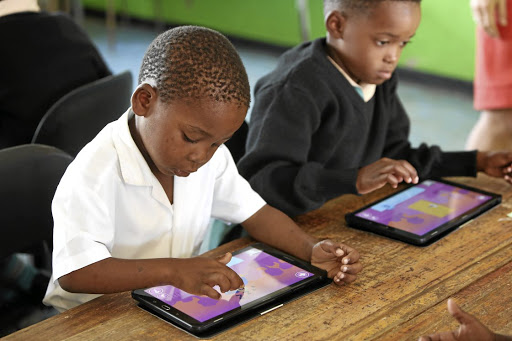
“It is imperative that schools nurture a global outlook and develop critical thinking and problem solving skills, while also focusing on entrepreneurship and new technological fields,” Coetzee said.

She said today’s generations lived in an open book environment a few clicks away from any information.

“They can connect in a border-less world across countries and cultures and they communicate in a post-literate community where texts and tweets are brief.”

“Schools should put special emphasis on developing critical thinking and problem-solving skills so that students are equipped to see problems from different angles,” Coetzee said.

She said even though technology must be embraced, what is important is that it should be effectively used to improve learning outcomes.

“In order to achieve this, schools must be equipped with high speed internet and embrace the value of social platforms. Students must also be exposed to new technologies such as 3D printing, drones and robotics,” she said.

She said teachers must be trained in the latest strategies.

“Children come to us naturally curious about their world and wanting to explore it. As teachers we need to continue to nurture them to develop their curiosity,” Coetzee said.

Coetzee said people may not know exactly what lies ahead for their children but at least they know what skills and tools they will need.

“They need to think critically, to work as a team but most of all to be curious and excited about learning in this world that is so different from the world in which we were raised,” Coetzee said. – Sowetan

Wits to have its first black female Chancellor

Nonkululeko Njilo

Wits University has confirmed that its next chancellor will be a black female for the first time in its history.

The announcement was made on Monday morning after the university made a call for nominations to fill the chancellor vacancy in April 2018.

Following the call‚ Dr Judy Dlamini and Dr Anele Mngadi emerged as the chancellor hopefuls to replace former Deputy Chief Justice Dikgang Moseneke‚ whose term ends in November 2018.

“Of the two candidates‚ it is guaranteed that one will be the next chancellor,” said Peter Maher who is the Director of Alumni Relations at the university.

Around 160‚000 graduates‚ full-time academic stuff‚ and retired academics with 10 consecutive years of service with the university‚ make up the university’s largest statutory body of persons eligible to participate in the election process.

This is according to Maher and Shirona Patel‚ a senior communications officer at the university.

Maher could not give a specific date as to when the new chancellor would be named‚ but revealed that she would assume duties in November 2018.

Dr Judy Dlamini is a businesswoman‚ entrepreneur‚ author and philanthropist. Her long list of accolades include: MBChB (Natal)‚ DOH (UFS)‚ MBA (Wits)‚ DBL (UNISA)‚ Stanford Innovation & Entrepreneurship Certificate (Stanford University)

Dr Anele Mngadi is an academic and renowned turn-around strategist. Her long list of qualifications include: BCom (Hons); Baccalaureus Legum; MCom‚ MBA‚ PhD. – TimesLive

Protesting teachers detained in Sudan’s El Gezira

Staff Reporter

Teachers in Wad Madani, capital of El Gezira in east-central Sudan, carried out a sit-in on Sunday, in protest against the government’s decision to close more than 200 schools in the state.

The teachers also demanded a salary rise and payment of their delayed allowances since 2013.

Policemen, aided by agents of the National Intelligence and Security Service (NISS) arrested a number of protesting teachers.

According to the Sudanese Teachers’ Committee, Osman Hamad, Abdallah Hassan, Adel Babu, Ibtihaj Ahmed, Tawfig Khalil, Abubakr Mohamed Ali, Manal Ahmed, Mona Ibrahim, Hindi Mohamed Ahmed, Mutaz Atta, El Daw Mohamed Ahmed, Khalid Salah, Anji Mohamed Ahmed, Abubakr Mahdi and Raya Elias were detained.

The opposition National Umma Party (NUP) strongly condemned the decision of El Gezira state Ministry of Education to close more than 200 secondary schools at the beginning of the 2018-2019 school year that will start next Sunday.

In a statement on Sunday, the NUP held “the entire regime fully responsible for the consequences of the decision, which was taken “arbitrarily and hastily, and exposes the country to more tensions in addition to the difficult economic and living conditions”.

The party expressed its solidarity with the residents of El Gezira state and called on them “to continue their struggle and never give up the right to education”. – Dabanga