Home Blog Page 501

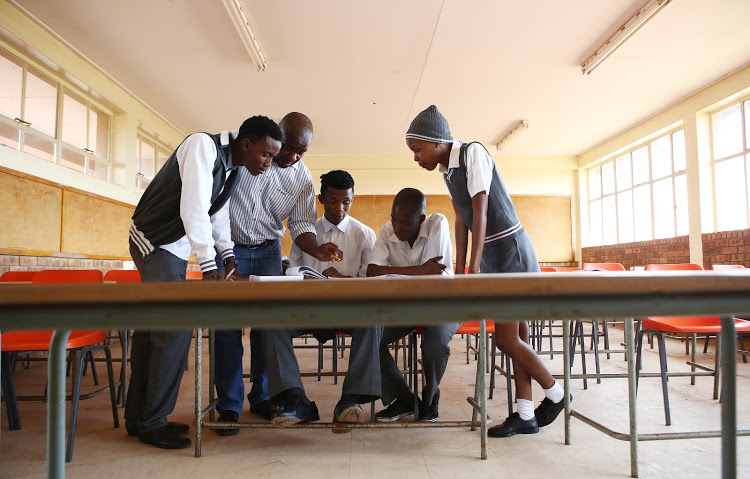
More Park Town Boys High School teachers accused of misconduct

Amanda Khoza

The Gauteng Department of Education has confirmed that four Park Town Boys High School teachers have been charged with committing misconduct in the form of racially inappropriate language.

Two were student governing body (SGB) teachers and two were employed by the department, spokesperson Steve Mabona said on Friday.

He said, as soon as the SGB was notified by the department, immediate action had been taken, and that the two SGB employees were no longer employed at the school.

“The two department employees were charged and attended a pre-hearing. The hearing was scheduled for the 30th May, 2018, but could not proceed as the witnesses (the learners) were not present and their parents did not want their identity to be disclosed to the employee representative.”

“Parents of the learners who were meant to testify brought forward allegations of victimisation of the learners and, as a result, have refused to allow the learners to testify. The parents indicated that they are still consulting their lawyers.”

He said Parktown Boys High School and the SGB had no evidence of the alleged victimisation at this stage.

“Letters of intention to transfer the two implicated educators to the district have been prepared. Upon receipt of the representation from the educators, the department will decide on the matter.

“Under normal circumstances, an educator facing disciplinary processes may be transferred if there is sufficient evidence of victimisation or interference with the witnesses as alleged in this case.

Culture of silence

“It is important that learners must be allowed to testify in a conducive environment so that they are afforded the opportunity to provide their evidence. The department, Parktown Boys High School and the SGB will deal with all allegations brought forward without fear, favour, or obstruction of any kind.”

Mabona said the department was also aware of the criminal case against a teacher who allegedly slapped a pupil in March. The teacher was still at the school and was undergoing a disciplinary process, the outcome of which would determine what action was taken, he said.

He said some of the parents also complained that they were not treated fairly during the investigation into the water polo coach.

They also raised their concerns about the reviewed documents given to Gauteng Education MEC Panyaza Lesufi, which contained matters dating back to 1985.

“The department has appointed a law firm to review the findings and will be conducting an independent review of all these matters raised at the school in general, not just the complaints raised by a group of concerned parents,” he said.

Lesufi said the culture of silence could not be condoned.

“This culture has had a severe impact on learners who have suffered tremendously. We will intensify our efforts to root out this culture of silence at the school.” – News24

South Africa: Former president Jacob Zuma speaks to black school pupils

Mxolisi Mngadi

Former president Jacob Zuma has encouraged black school pupils to follow fields of studies that will empower them to participate “fully” in the economy of the country.

“Be choosy in what you study. You must study serious things that are the pillars of the economy of this country. That’s where we must be empowered,” he said on Wednesday at the Durban City Hall, at an event organised by the Congress of South African Students (Cosas) to discuss free education.

Zuma said he had wanted to announce the decision on free education earlier in 2017, but that he had been forced to satisfy everyone who had an issue with it before he could make the announcement.

“I think it’s an historic decision we have taken. This decision, many years to come, people will appreciate it. I’m convinced, 20 years from now, South Africa will be at another level. It would have produced creators of work, rather than seekers of work,” he said.

Colonisers had started wars, grabbed the land, and brought in laws that made it difficult for black people to claim back the land, said Zuma.

“We need lawyers from you guys who will amend the laws on land. We need lawyers who must make the law according to the real challenges of this country. Many land claims fail because the laws on land claims were written by white lawyers. Whites study commercial law, while we study criminal law to defend criminals who stab people,” said Zuma.

Freedom Charter

He said the issue of freedom was “complex” if blacks were not participating in the economy of the country.

“If you’re only studying to be a good worker, and not to create jobs, then you are in trouble,” he warned the high school pupils who filled the ground floor of the hall to capacity.

He warned them that if they were not empowered educationally, they would be workers their whole lives.

“It’s difficult to open a bank when you’re black. The money stays in big banks, so that they can control you fully. The quicker we empower ourselves with education the better.”

Zuma said the issue of free and compulsory education had been an issue for a long time.

“In 1955, the people of SA, led by the ANC, drafted and adopted the Freedom Charter, which deals with clear specific issues that were to be addressed by freedom fighters in South Africa. Education was one of the issues that you find in the Freedom Charter,” he said.

Education was central in the control of the economy of the country, he added.

He suggested that if education was not free and compulsory for all, then “We’ve not completed what the Freedom Charter says.”- News24

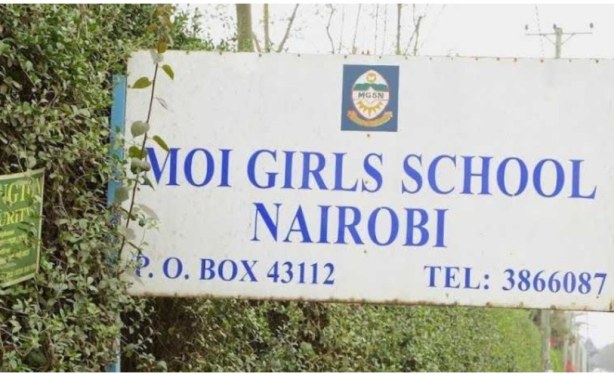
Kenya: Moi Girls School students return after rape saga

Ouma Wanzala

Students of Moi Girls School-Nairobi returned to school on Sunday after the institution was closed for a week following a rape incident last week.

A programme released by the Ministry of Education indicated that the students have to report at 14:00 and they will all be registered on arrival.

The students were required to be accompanied by their parents who would be allowed to access dormitories until 15:00.

On Monday, parents are to hold a meeting with the Ministry of Education and the Teachers Service Commission (TSC) on the state of affairs at the school. There will also be a guidance and counselling session for students.

Learning in the school will resume on Tuesday, according to the programme.

New Board

On Saturday, Education Cabinet Secretary Amina Mohamed appointed a nine-member interim board of management for the school.

The team is led by Nairobi Education Regional Coordinator John Ololtuaa and replaces the dissolved board.

The new board has representatives from the TSC and the Ministry of Education.

Other members include Rose Ombeva from regional education office, Lydia Mutegi (sub-country director of education) Benard Kimachas (TSC county director), Gichuhi Ndegwa, Rashid Mohamed and Fidhelis Nakhulo from Ministry of Education headquarters while officers from TSC headquarters are Lucy Mugambi and Cicely Musyoki.

The acting principal, Florence Omusula, is the secretary of the interim board while Kibra deputy county commissioner will be an ex-officio member.

Mohamed has set up a team to develop a policy to address sexual and other abuses in schools.

The advisory team comprise of sexual and gender-based violence experts, forensic, pathology and safety in education practitioners and will advise on the foundational process of putting in place a learner protection policy that will ensure that schools across the country become safe zones for children.

Read the original article 

Namibia: Need for minimum wage for graduates

Vilho Hangula

One way to address income inequality and poverty among the people is to put money into the pockets of the masses, giving them purchasing power and the ability to sustain themselves and their families as time goes by.

Which better people are there to start with than young people?

Statistics tell us that more than 60 000 graduates are roaming the streets without jobs as the economic crunch hits home and entry level jobs have been frozen in government ministries. This predicament leaves graduates who are mostly young people prone to underemployment, crime and other social ills.

There are a plethora of problems facing graduates today, but for now let us single out underemployment. Reality has forced people with qualifications to grab any job opportunity they can get as the adage ‘beggars cannot be choosers’ becomes more practical than ever.

We have qualified nurses, teachers and others taking on jobs as service ambassadors, cleaners, security guards, receptionists and administrative assistants, etc.

The government, through the ministry of labour, should intervene by passing a law that stipulates that a person ought to be remunerated as per their qualifications, regardless of the positions they hold. For instance, if a graduate has a master’s degree and takes on a job as a cashier, the proposed law will see to it that the said individual is not paid less than N$5 000 per month (just an example).

The current situation of graduates being underemployed and underpaid is an exploitative one that affects them psychologically and robs them of their skills of speciality.

If the government does not intervene to compel most, especially private companies, to put in place a minimum wage for underemployed graduates, it will create an impression that academic qualifications are of no value as those with and without qualifications end up getting similar salaries.

The benefits of having employers legally bound to pay graduates per qualification and not per position cannot be over-emphasised. It would not hold water to argue that a cashier who holds a degree and his/her counterpart without a degree can give the same service.

It is obvious that one with a degree is bound to give better service than the one without, but this is not so in most cases because cashiers with degrees are demotivated by the low wages they get, and hence end up giving substandard output.

Another benefit is that if a company finds out that it is legally bound to pay a cleaner more money just because he possesses a certain qualification, the employer will eventually expand the job description of that cleaner, making him utilise more of his brains and retaining knowledge of speciality.

If we leave our young people who have the skills needed to develop our country to be exploited by underemployment, we are shooting ourselves in the foot because these graduates are the ones who will catapult us towards Vision 2030, and if we abandon them, we might not realise our developmental goals and visions.

In the same vein, I should hasten to mention the need to decolonise our curricula of both secondary and tertiary education. Let us do away with learning about body parts of insects at secondary school level, and mainstream our curriculum with information that is compatible to our own affairs.

It is disturbing to note that we have Grade 12 certificate holders who do not know a thing about our Constitution. Let us integrate our supreme law into the curriculum, and teach our children about our own laws. Let us also teach our children about road rules to curb road accidents. We need to strategise our educational curriculum to offer solutions to our problems in a sustainable manner.

At tertiary level, our universities need to consult employers about the skills needed in the market so that we do away with producing graduates who end up roaming the streets and being underemployed, if not unemployed.

This article might not be the panacea to our unemployment and education challenges, but it is a contribution towards a debate that must be had so that we seek long-lasting and sustainable solutions to the problems facing us today.

Enough with public relations politics, the time for action and genuine intervention is now.

* Vilho Hangula works as an advertising proofreader at The Namibian.
Read original article here

South Africa: Two schools burnt allegedly over outcome of by-election

BALISE MABONA

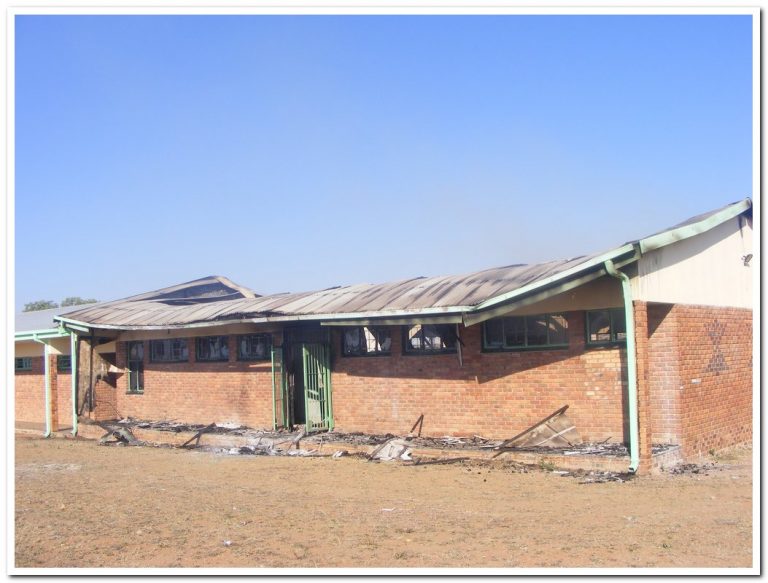
Two schools were burnt this weekend in Thabana village in Siyabuswa in Mpumalanga, allegedly by a crowd of community members who were dissatisfied with the outcome of a by-election in the area on Wednesday, Mpumalanga police said on Saturday.

“Siyathokoza Senior Secondary School and Thabana Senior Phase School were apparently set ablaze between yesterday [Friday] evening and this [Saturday] morning,” Brigadier Leonard Hlathi said.

“The situation is quiet now and the police are monitoring the area. No arrests have been made,” he said.

Mpumalanga education department spokesman Jasper Zwane said there was “no justification for this barbaric act”.

“What will happen with learners on Monday, considering the fact that they are currently writing their mid-year examinations? The department will deploy officials to the two schools to assess the damage and to further advise on other related teaching and learning processes,” he said.

African National Congress spokesman for the Nkangala region Sello Matshoga said violent protests in the area erupted on Thursday after the  Electoral Commission of South Africa (IEC) announced that ANC candidate Phumzile Mnguni beat independent candidate Lucky Ntuli.

“A crowd of people barricaded the streets and marched to the local offices of the IEC. The crowd claimed the outcome of the election was not the true reflection of the by-election. We say we won the ward 7 fairly and they must go to court if they are not satisfied,” Matshoga said.

Ntuli had been an ANC member but registered as an independent candidate in May and contested the by-election. He said on Saturday that he rejected the outcome of the by-election because “there were many bad things that happened during the voting process”.

“The burning of the schools is a criminal element and it has not been committed by the people who supported me,” said Ntuli. African News Agency 

Empowering women farmers in Zimbabwe

Project Syndicate 

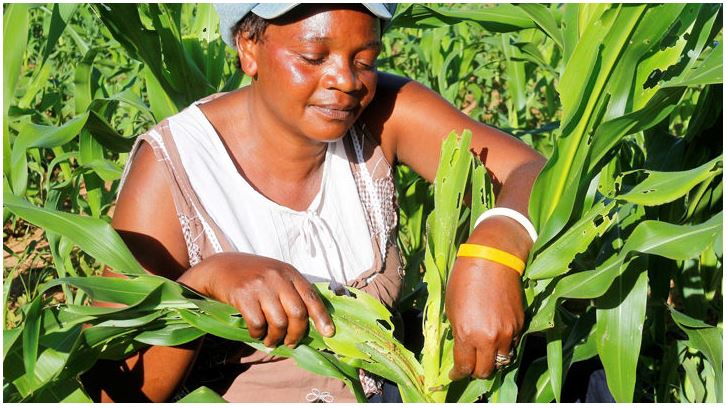
In Zimuto Communal Land, near Masvingo, southern Zimbabwe, VaMaNyoni walks long distances with maize or beans stacked high on her head, looking for buyers and facing stiff competition from already established vendors and sellers. She visits one house after another, offering her produce at a throwaway price, while would-be buyers extort her through hard bargaining.

But VaMaNyoni’s produce may not be of the best quality due to poor storage, which results in rotten produce or pest infestations, causing her family both food and financial shortages.

VaMaNyoni, like many other women in southern Zimbabwe’s densely populated villages, is vulnerable, dependent on subsistence agriculture to earn her living, cultivating maize, beans, sweet potatoes, and other vegetables.

A lack of technical agricultural advice on the right seeds and fertilizer and the unpredictability of rains, coupled with a lack of access to markets for produce, has left her impoverished.

The modest incomes generated by these livelihoods also mean that women like VaMaNyoni cannot afford to pay school fees for their children, forcing them to drop out of school, with girls taking jobs as housemaids or getting involved in sex work.

Three young Mastercard Foundation Scholars, students selected for the scholarship because of their academic talent, social consciousness, and leadership qualities, are up in arms and committed toaddressing this problem through a new social venture called ZAZI Growers’ Network.

Martinho Da Silva Tembo and Thabu Mugala from Zambia met Tanyaradzwa Chinyukwi from Zimbabwe at EARTH University in Costa Rica, where the trio is studying agricultural engineering and natural resources management. Tanyaradzwa grew up in Nago, southern Zimbabwe, experiencing the hunger, the loss of produce after harvest, and sometimes even difficulties saving for school fees.

“Traders and middlemen take advantage of the poor quality of produce to offer low market prices, creating a monopoly that does not favour the women farmers. A lack of marketing skills and information on current market trends and pricing weakens the negotiation power between these women and their clients. What’s more, there is a lack of support on market training and techniques, thus reducing women farmers’ access to markets,” says Tanyaradzwa.

The founders of ZAZI Growers’ Network won the Resolution Social Venture Challenge at the Mastercard Foundation Baobab Summit in Johannesburg in 2017, a competition that rewards compelling leadership and promising social ventures led by youth.

These young leaders earned a fellowship that includes seed funding, mentorship, and access to a network of young global change-makers to pursue impactful projects
in their communities. A collaboration between the Mastercard Foundation and The Resolution Project, the Resolution Social Venture Challenge provides a pathway to action for socially responsible young leaders who want to create change that matters in their communities.

Through membership registration, the women will be connected to the Zimbabwe Farmers’ Union, which will assist them in the acquisition of inputs like fertilizers and seeds at lower prices.

“The venture will work with 15 women with the objective of selling produce in bulk to control price fluctuations, reduce post-harvest losses as well as maintain a fixed market,” says Tanyaradzwa.

“We will accompany the women throughout the entire process and teach them how to improve the quality and quantity of their produce through training and workshops on crop production and on how to reduce post-harvest losses. We will also undertake soil analysis and teach the women how to use organic fertilizers.”

The women will be chosen based on need and their interest in agriculture.

“Most of them will be the underprivileged women in the community who have little or no say in activities that bring about both social and economic transformation,” he says.
On average, a household in rural Zimbabwe owns two hectares of land or less on which it grows a variety of crops. Butternut is one of the crops that ZAZI Growers’ Network has identified as high-yielding.

Teaching demonstrations will be conducted on half a hectare. Later on, the women will be encouraged to produce on their own and sell their produce in bulk.

Tanyaradzwa also said the produce will be branded, enabling the women to access and maintain their presence in more lucrative markets. By branding and selling produce in bulk, the women in Zimuto village will be able to access and maintain better markets. They will be able to earn more from their farming activities, manage to cover basic needs, like health care and education, and improve their livelihoods.

“It is estimated that six tons of butternuts are harvested per hectare and, considering that we will use half a hectare to produce butternuts, this will definitely enable the women to produce about three tons of butternuts, all of which will be included in the ZAZI Growers’ Network brand.

As the business expands, each woman will be contributing a certain number of tons for branding, earning more for the same contribution,” he explained.

In order to brand the agricultural products, ZAZI Growers’ Network will collaborate with different programs and organizations in Zimbabwe and elsewhere in the world that are working to empower women in agriculture.

“Mnandi Africa will help us in branding the women’s produce while also connecting them to ready markets,”

“The women have been failing to send their children to school because they cannot afford the tuition fees.

We believe that ZAZI Growers’ Network will give them the profits they need to better feed their families and pay for school fees. For women like VaMaNyoni and their families, the future is bright,” says Tanyaradzwa. – Project Syndicate


The way history is taught in South Africa is ahistorical – and that’s a problem

Natasha Robinson

History may soon be a compulsory school subject until Grade 12 in South Africa. A task team established by the country’s minister of basic education made this bold recommendation in a report released in early June.

The task team credits history education with three grand tasks. The first is developing critical thinking skills, particularly those relating to “evidence” and the unique concepts necessary to becoming an academic historian. The second is to develop identity, with a focus on pan-Africanism and nation building. The third is about social cohesion: the ability to transcend racial, class and ethnic barriers by recognising the problem of prejudice and the issues facing a multi-cultural society.

If history is taught correctly, the report argues, school-leavers should become capable of dealing with educational, social and political problems.

The task team isn’t unique in its position. It draws on decades of post-conflict literature which has argued that history education is important for memory and identity formation. Since history education equals social cohesion, the logic follows that more history education will equal more social cohesion.

The problem is that history education as it’s currently delivered may not achieve the desired outcomes. My ongoing fieldwork involves observing four racially diverse Grade 9 history classes in Cape Town, with learners who represent a range of social and economic statuses. The observations are taking place over the course of the academic year, interspersed by longitudinal interviews with the teachers and learners.

The findings suggest that even when students are knowledgeable about historical events, they struggle to explain how these events shape contemporary society.

History education needs a more explicit focus on historical consciousness if students are to become capable of dealing with South Africa’s social problems. This focus would help students to construct a relationship between past events and present-day reality so they can understand why we are the way we are.

Textbook tales

Developing historical consciousness would require a shift from what’s currently happening. Take for instance the contents of the Platinum Social Science Learner’s Book, which is prescribed for Grade 9 history pupils in South Africa.

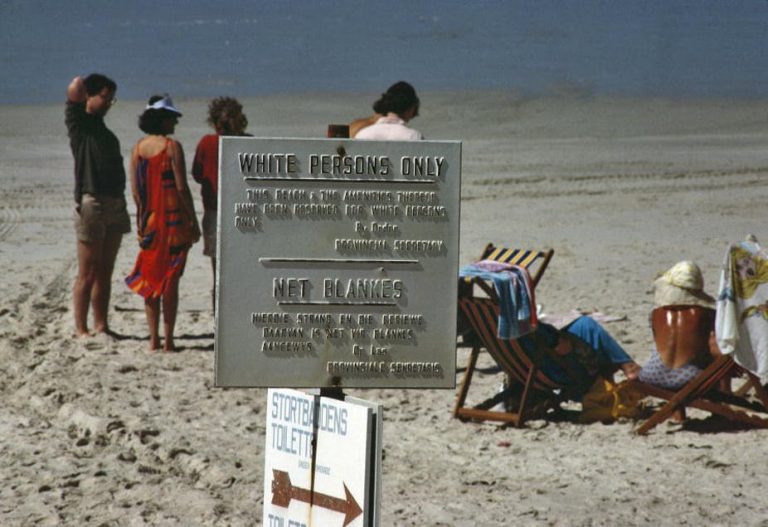
The history discussed in this textbook touches upon a number of important subjects including human rights, racism and legal discrimination. It explores some of the turning points in the history of apartheid: the Sharpeville massacre, the Langa march, the Soweto uprising, and the release of Nelson Mandela.

The chapters emphasise the causes and consequences of historical moments. Students are taught to understand not only the apartheid regime’s human rights abuses, but also the nature of the resistance to that regime – which after a long struggle led to democracy in South Africa. However, the textbook’s lessons on apartheid end with the “historic” election of 1994.

That election is undoubtedly an achievement worth celebrating. But the implication in the textbook is that when apartheid ended in 1994, so did the poverty, racism, discrimination and violence that were aspects of the apartheid regime. There is absolutely no discussion of the lasting impacts of apartheid, or any link between South Africa’s current problems and its recent past.

This means is that it is often left up to individual teachers to make those links between the past and the present. Unsurprisingly, the teachers that I observe construct an historical consciousness in very diverse ways even though they are all teaching the same set of historically accurate events.

For example, one teacher explained to his racially homogeneous class that their lack of diversity was a direct result of apartheid. Another compared the fascist approaches of Nazi Germany to that of the apartheid state and placed them both firmly in the past.

This is not a judgement on the historical consciousness these teachers present. But it’s worth interrogating the diverse contemporary meanings that are being created around historical events when historical consciousness is absent from the curriculum.

Students’ views

Even more interesting were the responses of the pupils, who are all around 14 years old, as they explained how they saw the relationship between past and present.

A number of students had a good understanding of apartheid events. But the only way they could explain the country’s continued racialised wealth discrepancy was to state that black South Africans were lazy. Many did not draw upon structural or historical explanations when interpreting their own social reality.

One Xhosa-speaking black student who lives in a shack argued that apartheid had no lasting effects – because the white family whose home his mother cleans often speak to him kindly. Most of the students that I interviewed believed that the colonisation of South Africa was ultimately a positive thing because now we have “clothes, food and technology”. None of the students of any race believed that white people had any historic responsibility to address past wrongs.

These students were neither stupid nor ill-informed. So how should we make sense of their responses? Perhaps this is what social cohesion looks like in 2018. For the most part they were not angry about the past, because they don’t see the past as having a particular impact on their present lives. The past is a lesson to learn from, not something which stands in their way.

The question, though, is whether they are capable of dealing with educational, social and political problems if they view these problems as ahistorical. And if we discover that they can’t, then maybe we need to include some historical consciousness in the South African history curriculum before we make more of it compulsory.

Natasha Robinson is PhD Candidate and research consultant, University of Oxford.

Read original story here

New school of thought: exit-level exam for Grade 9 planned

Prega Govender

High school pupils will soon be able to write an exit-level exam in Grade 9 which, if they pass, will get them a national qualification similar to the matric certificate.

The Department of Basic Education plans to implement the certificate to help pupils choose a “curriculum stream” for grades 10 to 12. They can opt to follow either the academic, technical vocational or technical occupational stream.

Technical vocational and technical occupational streams refer broadly to skills training for the labour market. Technical vocational includes construction, woodwork, electronics, automotive, fitting and machining, welding and metalworking.

The technical occupational stream includes agricultural studies, arts and crafts, office administration, hairdressing and beauty care, as well as hospitality studies. This stream, aimed mainly at disabled pupils, is being piloted at 74 schools this year, with plans to expand to more schools.

But Umalusi, which is responsible for the development of the general and further education qualifications sub-framework, has warned that the exam should not be regarded as a school-leaving certificate, but rather a chance for pupils to decide how they want to spend the last three years of their schooling.

The date for the implementation of the exam has not yet been confirmed.

Currently, most pupils choose the academic stream after Grade 9, which has led to a high failure, repetition and dropout rate.

Being awarded a certificate would also make it easier for Grade 10 pupils to seek admission at one of the country’s 50 Technical and Vocational Education and Training (TVET) colleges.

Although pupils who complete Grade 9 can enrol at a TVET college, this does not generally happen because the colleges insist on enrolling only pupils who have passed matric.

Basic Education director-general Mathanzima Mweli said the plan was to “activate” the implementation of the General Education and Training Certificate (GETC), which had always been in the department’s policy document.

“It will help guide parents and pupils. The GETC will be able to say to you, it’s better to follow the academic or technical vocational or technical occupational pathway. You will be able to see the subjects  you are good at.

“There are also critics who are saying this [exit-level exam] is going to discourage pupils from proceeding to Grade 10, but this is not true. I had a certificate in Standard 4 but I did not leave school; I went up to Grade 12.”

“There have never been public exams at the end of Grade 9 before. There are still discussions around when this public exam will take place because that requires resourcing. Running public exams is very expensive,” he said.

Philip Reddy, principal of Glenhaven Secondary in Verulam on the KwaZulu-Natal North Coast, applauded the department’s move: “It will augur well for education and future development. At the end of Grade 9 the pupil will receive a certificate, which has not happened before.”

Of the 737 pupils in grades 10 to 12 at his school, 600 are pursuing technical vocational courses.

A senior lecturer in the electrical electronics field at the Ekurhuleni West TVET College in Gauteng, who spoke on condition of anonymity, endorsed Reddy’s view and said South Africa’s 50 TVET colleges rarely enroll pupils who leave school after Grade 9.

“For the national curriculum: vocational (NCV) level two course, which is the equivalent of Grade 10 at school, we only take in pupils who have completed matric. We hardly ever take a Grade 10 pupil.”

Lara Ragpot, a professor in the department of childhood education at the University of Johannesburg, quoted the example of the German schooling system where pupils were offered the academic or vocational stream.

“It’s not seen as elitist if you’re going into the one stream or the other. It depends on where you want your future to be.

“There should be a future for these kids so they don’t just leave Grade 9 [and drop out]. The articulation into some other qualification needs to then be made much more accessible and available for them, like these TVET colleges, so that we can get a skilled workforce.”

Umalusi spokesman Lucky Ditaunyane said they would evaluate the GETC once it had been formally submitted by the department.

If it met the requirements of the qualifications on their sub-framework, it would be recommended to the South African Qualifications Authority for registration on the national qualifications framework.

“Umalusi is of the view that this common exit-level exam at the end of Grade 9 should not be primarily a school-leaving certificate but one designed to help 15- and 16-year-olds gain insights into how they envisage the last three years of their schooling and how they wish to proceed.”

Read original story here


Zimbabwe: Unlocking Potential for Girls Education in Zimbabwe

Project Syndicate

Glen View 8 is a community like any other in Harare, Zimbabwe’s capital.

It is a densely populated settlement, full of life and activity, where the sight of a girl accompanying her grandmother to market on a weekday, selling vegetables or serving customers in the family tuck shop, is not unusual.

Shantel Marekera was once one of these girls. The kind of girl whose grandmother struggled to pay for preschool fees while her mother was away finishing her college education — but also, a girl with a dream.

Raised in Glen View 8 by her grandmother until she was nine years old, Shantel intends to flip the script on the girls’ early education in her community. As the founder of The Little Dreamers Foundation, Shantel is determined to help girls in her native community go to school.

Shantel won the Resolution Social Venture Challenge at the Mastercard Foundation Baobab Summit in Johannesburg in 2017, a competition that rewards compelling leadership and promising social ventures led by youth.

These young leaders earned a fellowship that includes seed funding, mentorship, and access to a network of young global change-makers to pursue impactful projects in their communities. A collaboration between the Mastercard Foundation and The Resolution Project, the Resolution Social Venture Challenge provides a pathway to action for socially responsible young leaders who want to create change that matters in their communities.

In 2005, Zimbabwe’s government ushered in changes to its education system, making it compulsory for every child to graduate from preschool before enrolling in primary school.

The implementation of Statutory Instrument 106 of 2005 started this year, putting primary education out of reach for the daughters of poor families, who often favour the education of sons. In Glen View 8 alone, more than 40 girls are unable to attend preschool, and figures could be higher.

For most families, however, costs for a child to attend preschool are steep, and particularly prohibitive for families headed by single parents or grandmothers without steady sources of income.

Shantel is determined that these disadvantaged girls will have their chance at a primary education. “When I went home over the summer recently, I realised how preschools in Zimbabwe have become so pricey.

They are even more expensive than formal education itself,” she said. Shantel is a 20-year-old pursuing justice studies at Arizona State University (ASU) in the Mastercard Foundation Scholars Programme, which supports students chosen specifically because of their academic talent, social consciousness, and leadership qualities.

She said the idea to create the Little Dreamers Foundation came to mind after she realised that many children in Glen View 8 could not access primary education simply because they were being left out of preschool.

“This is when I realised that I needed to do something, but it remained only an idea. Then I won the Resolution Social Venture Challenge,” she said.

The Little Dreamers Foundation is expected to open in June 2018 with 12 children in a pilot that will prepare the ground for the whole country, allowing the children to attend preschool for up to two years.

“We are only starting with a cohort of 12 children, but we hope to increase the numbers over time and even spread to other high-density areas in Harare, and ultimately the whole country,” said Shantel.

Most preschools charge between $70-200 per month for each child, but Shantel’s program will see them paying less than US$30 for their tuition, meals, and scholastic materials. The parents or guardians will be allowed to pay the money in installments throughout the month. Reduced rates will be made possible through volunteers, fundraising, and a poultry project.

“The preschool is created to serve the community and it should be operated by the community,” explained Shantel. “Chickens will be sold in the community and other nearby communities to raise money for the preschool’s operations. Additionally, the Little Dreamers Foundation will partner with local companies and organizations to host four major fundraisers every year, with proceeds invested in the preschool.”

While the Little Dreamers Foundation will emphasise enrollment of girls, accepting one boy for every three girls, boys will not be left out. When families experience economic hardships, parents are often forced to invest in a single child, often preferring to educate a son over a daughter.

Daughters, some believe, can learn a skill such as sewing and wait for an early marriage. Yet, girls are falling behind, and the Little Dreamers Foundation wants to redress this gender inequity.

“I am passionate about empowering the girl child. Girls have so much potential, and with the right mentorship, resources, and efforts, girls can do anything,” said Shantel.

The news about the Little Dreamers Foundation has excited the community, especially grandmothers who have borne both the joys and burdens of looking after these children, many of whom have lost parents to Zimbabwe’s elevated rates of HIV and AIDS. Sixty-year-old Fairness Bechintein is one of the grandmothers in Glen View 8.

“In this country, we have a lot of children who do not attend preschool or primary education and I know they will benefit a lot from this program,” she said. “I am grateful for Shantel’s initiative and I know it will help a lot of other grandparents to provide an education to our grandchildren.”

Miriam Makanda, also from Glen View 8, agrees with Bechintein.

“Many families will benefit from this program. As a widow and grandmother, it is hard to provide food on the table every day, clean clothes, and still be able to send them to school. I do not work, so there is no way I can afford these expensive preschools,” she explained.

Already, Ntombizodwa Makuyana and Lovender Phiri, both Mastercard Foundation Scholars at ASU, as well as Tanyaradzwa Chauruka and Luann May Gwanzura at the University of Zimbabwe, have joined Shantel to run the Little Dreamers Foundation. Others are Chisamiso Tinorwirashe at Midlands State University and Yvette Muzhona, who is currently not in school.

Shantel believes she has found the right platform to give back to her community.

“I am where I am today because people believed in me. They believed in my dreams and aspirations — now, it’s my turn to be the person who believes in the dreams and talents of children,” she said. – Project Syndicate –The Source

Gauteng government urges youth to attend annual youth expo

LINDI MASINGA

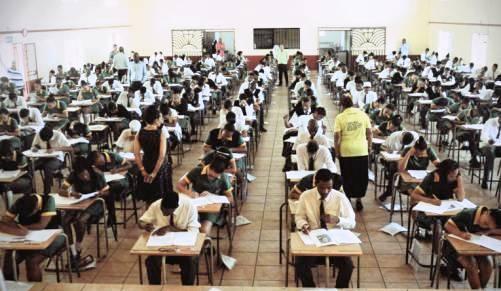
As part of Youth Month celebrations, the Gauteng provincial government has urged high school learners, unemployed youth and graduates to attend the fourth Annual Youth Expo in order to get connected to jobs and business opportunities.

The Expo will take place between 9-17 June at the Nasrec Expo Centre in Johannesburg.

“The Youth Expo is a multi-event with 140 exhibitors to provide information and live services to youth on careers, jobs and work exposure, as well as how to start, run and operate a business,” Gauteng Provincial Government spokesperson Thabo Masebe said during a briefing on Wednesday.

The governement said the expo will also have sports activities, including daily aerobics, football and netball, with popular soccer clubs, Orlando Pirates and Sundowns among the teams set to interact with the youth.

“The Expo forms part of commemorating the 42nd anniversary of June 16 which coincides with the centenary of struggle stalwarts, former president Nelson Mandela and Mama Albertina Sisulu. The Youth Expo is part of the provincial government’s commitment to respond to the development of young people in the province.”

The Gauteng province will also host the National Youth Day celebrations on 16 June, where President Cyril Ramaphosa will address young people at the Orlando Stadium after participating in the Thuma Mina Walk from Morris Isaacson High School to the Hector Peterson Memorial.


The government said other services and activities that can be expected at the expo include registering for jobs and skills development via the Tshepo 1 Million Programme, exposure to the film industry and screening of Inxeba (The Wound) and Black Panther.

“Some of the dialogues to be hosted include Premier David Makhura and Education MEC Panyaza Lesufi.” ANA

Ads Blocker Image Powered by Code Help Pro

Ads Blocker Detected!!!

We have detected that you are using extensions to block ads. Please support us by disabling these ads blocker.