Home Blog Page 502

Uganda: Makerere summons 332 former students over exam malpractice

Urn

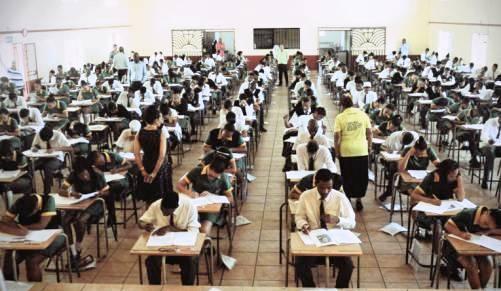
The central adhoc regularities and malpractices (alteration of marks) committee of Makerere University has summoned a total of 332 former students to defend themselves on allegations levied against them before the committee by week.

In a public document signed by the committee chairperson, Venny Nakazibwe, dated June 1, 2018, the released names of students are expected to appear before the committee in room 611 at the Senate Building at Makerere.

The cases date as far back as 1999 up to 2012 graduation years with majority cases, about 250 students from the College of Business and Management Sciences – CoBAMS followed by the College of Humanities and Social Sciences (CHUSS).

Other colleges with students whose marks were altered included Computing and Information Sciences- CoCIS with over 20 cases, School of Law with 10 cases, College of Engineering, Design, Art and Technology – CEDAT with 37.

The probe into the examination malpractice was commissioned on November 13 in 2014 after complaints from heads of departments and college principals that names of some students who didn’t meet the minimum qualifications had found their way on the 65th graduation list.

 A seven member investigation committee was headed by Venny Nakazibwe and others include: John Ngubiri, Bernadette Nambi-Karuhanga, Rose Nakayi, Frank Kitumba, and Tony Oluka.

According to the report, students engaged in the malpractice either with the help of their colleagues or in connivance with university officials.

In the list published to university noticeboards, a Bachelor of Quantitative Surveying Student in 2009, Isaac Martinson Ajum was allegedly the link to the person in Senate Building who changes marks.

Another candidate Sandrah Splendour Kayongo, a Bachelor of Architecture put in his missing marks complaint in 2002 and she was found to have scored 64 per cent but was not uploaded.

It is also indicated that some individuals hack into the results system by accessing rights for examination coordinators, school or college registrars.

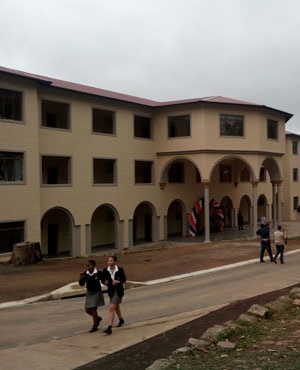
KZN education department investigates allegations of sexual abuse at historic Adams College

Mxolisi Mngadi

The allegations surfaced on social media on Monday when some of the victims posted on Twitter under the #AdamsCollege hashtag about their alleged ordeals while still at the school.

Some of the school’s alumni alleged that male teachers at the school sleep with pupils.

One of the school’s former pupils alleged that a teacher who had impregnated her, had forced her to abort her first child in 2014.

Another pupil alleged that one night she had to fight off a teacher until the morning. According to her, most pupils regarded the man as a father figure.

She said she had asked the teacher to tutor her and he invited her to his house. The teacher slept in the same bed with the pupil and tried to force himself on her, but she fought back, according to her.

KwaZulu-Natal education department spokesperson Scelo Khuzwayo told News24 that they only became aware of the allegations on Monday.

“A team was then put together, and it has already begun its investigation into the matter,” he said.

He said the department would only be in a position to take necessary steps once the team had concluded its investigation into the allegations.

“So, we are awaiting investigations results after which we will then take necessary steps in line with the law,” he said.

The department advised pupils to report their grievances immediately rather than waiting to report them later when they had left school.

“We’ve always said our doors are always open for pupils to report their grievances so that we deal with them immediately. If they feel there are important issues that the department should know about they must come forward so that the department would address them,” he said.

Khuzwayo reiterated that it was against the law for teachers to have intimate relationships with pupils.

Four former ANC presidents John Langalibalele Dube, JT Gumede, Pixley ka Isaka Seme and Chief Albert Luthuli were all pupils at the school.

The first president of Botswana, Sir Seretse Khama, and local politicians Nkosazana Dlamini-Zuma and Mangosuthu Buthelezi also attended the school.

Former president Jacob Zuma described the school as “an institution of presidents” during his visit there in September last year. – News24

Cuba to support Liberia’s literacy programme

Front Page Africa

Liberia’s Vice President Chief /Dr. Jewel Howard-Taylor has received in audience the Charge’ D’Affairs of the Embassy of the Republic of Cuba Carmen Maury Toledo.

The meeting which was held Monday, June 11, 2018 at the Office of the Vice President, centered on strengthening bilateral relations between Liberia and Cuba in the areas of Education and Health.

The Charge’ D’Affairs recounted that Liberia and Cuba has established bilateral relations since 1974, and over the last 20 years, Cuba has offered more than 30 scholarships to Liberia for medical students.

 According to a release from the VP’s office, Toledo indicated that Cuba has provided annual scholarships to five Liberians in the Medical field, which is being reduced to two due to financial difficulties experienced by the Cuban government.

The Charge’ D’Affairs further revealed that Cuba currently has 6,000 doctors in 29 African Countries providing training and health care delivery assistance.

He intimated that the Cuban government has a draft agreement with the previous government to provide employment for 16 Cuban doctors at the JFK Medical Center and other medical facilities across the country including the rural areas.

The Agreement has been forwarded to the Ministry of Foreign Affairs pending discussions and signing.

Toledo also disclosed that Cuba has a private arrangement with the Island Clinic in Liberia to provide eight medical doctors who will arrive in Liberia anytime soon.

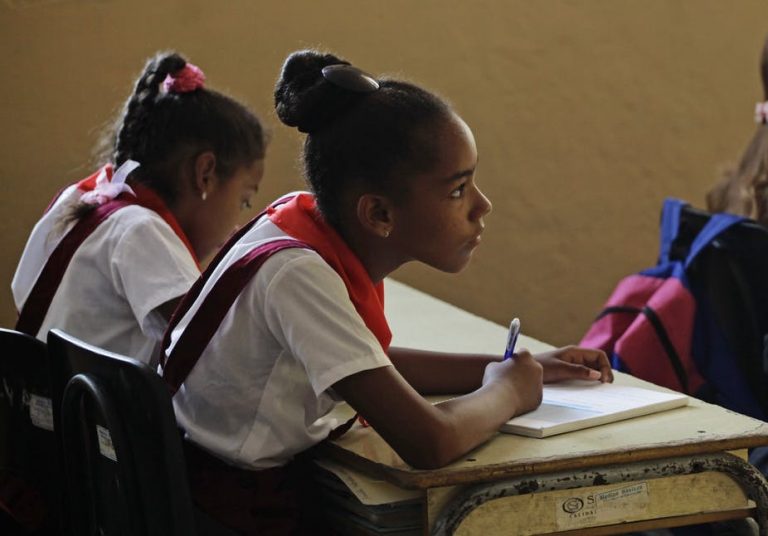
‘On the Educational front, Mr. Toledo also expressed the Cuban government’s willingness to support Liberia’s literacy program. This initiative has been implemented in 26 Countries and has impacted more than 9 million people.

The literacy program seeks to provide reading and writing skills to youth and adults who are disadvantaged or live in rural communities where there is no access to formal education.

These teachings can also be done in local vernaculars” the Charge’ D’Affairs averred.

Speaking earlier, the Vice President expressed delight about the role Cuba has played and continues to play in the Health and Educational sectors of Liberia.

Madam Howard-Taylor explained the Government of Liberia’s Pro-Poor Agenda and how Cuba can be a major partner in the actualization of the Agenda.

She committed herself to follow-up with the Ministry of Foreign Affairs on the draft agreement and the possibility of formalizing it, which will bring in Cuban Doctors to help Liberia’s Health sector through training and provision of services.

The Vice President on behalf of President George Weah extended profound gratitude to the Government and people of Cuba for their continuous support to Liberia.

Read original article here.

Exams postponed at Fort Hare university because of strike action

Christina Pitt

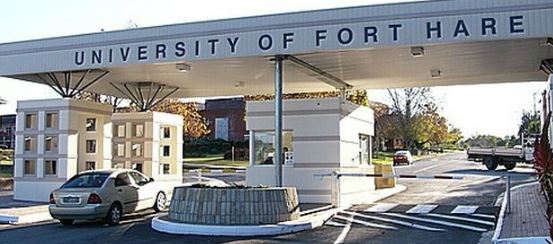
Students at the University of Fort Hare will have to wait until next semester to complete their exams after lecturers and other staff members embarked on strike action on Tuesday.

East London and Alice campuses were brought to a standstill when National Education, Health and Allied Workers’ Union (Nehawu) disrupted exam venues to demand a wage increase, said university spokesperson Khotso Moabi.

He said that negotiations between the union and the university reached a deadlock when Nehawu demanded a 12% wage increase and the university countered with a 6% increase.

Demands also included a notch increase of 5% and a housing allowance of R500, which were both rejected by the university.

“Fort Hare is currently not compensating workers in line with the national market like other 25 universities in the country, thus leading the institution to fail to attract the required quality talent,” Nehawu spokesperson Khaya Xaba said.

Xaba said that the relationship between the parties had already been compromised when the university deliberately postponed the bargaining forum since 2017 “without advancing tangible reasons”.

Moabi said that no meetings had yet been scheduled with Nehawu, however, the university is open to negotiations. – News24

Motshekga: ‘What we need is money’

Gemma Ritchie 

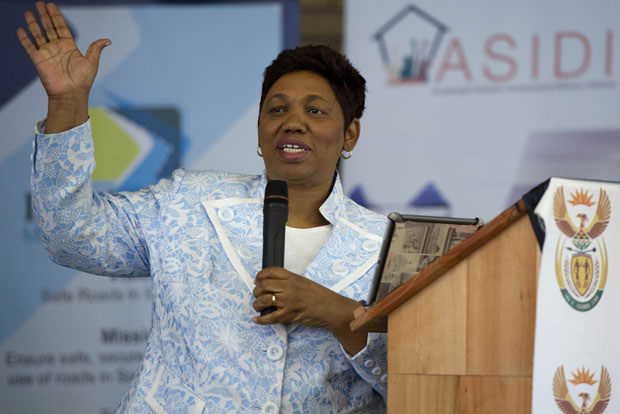
South Africa does not have enough resources to meet growing demands like the eradication of pit toilets, Minister of Basic Education Angie Motshekga told Eusebius McKaiser last week during his 702 radio talk show.

“What we need now is money,” said Motshekga.

Motshekga was speaking in a wide-ranging interview on the state of South Africa’s education system that traversed a number of issues including the education department’s move to make history a compulsory subject, the teacher-pupil ratio, violence in schools, and structural inequalities.

Motshekga told McKaiser that the education department will need R10-billion in order to fix the problem of pit toilets in rural schools. The minister has spoken about the department’s monetary constraints before and she emphasised the department’s difficulty to provide service delivery in her budget vote speech on May 9.

When it was pointed out by McKaiser that South Africa’s per capita spending on education is one of the highest in the world, Motshekga said South Africa was a developing country: “While we have to redress past inequalities, we have to cope with the current [situation].”

Despite not having enough resources, Motshekga said the department has focussed on teaching in township and rural schools for the last few years, which has led to “good passes”.

She added that the rollout of information technologies has been focused on township schools to “reduce the gap between the poor and the non-poor”.

“We are moving from a very low base, but we are moving in the right direction,” Motshekga told McKaiser.

History as a compulsory subject

Last week, a department of education task team announced that it had recommended that history should be a compulsory subject from 2023. However, the recommendation needs to be debated in public.

During her interview with McKaiser, Motshekga said the notion that history should be compulsory emerged during talks in 2012.

“Every child [should] be exposed to history as it is being conceptualised” because, Motshekga said,  “history is about identity and nationhood”.

Some of the recommendations that have been made to emphasise the importance of history would be to make the subject compulsory from grades 10 to 12 to separating history from geography in the social sciences in order to give teachers more time to teach history thoroughly.

Another recommendation would be to strengthen the teaching of history up to Grade nine.

According to Motshekga, history teaches the skills that are necessary for well-rounded individuals, like critical thinking and analysis, as well as identity, which makes it important subject for all learners.

When McKaiser asked Motshekga if making history was a strategic investment for South Africa, she answered that no subject was more or less important. However, she said that history was more strategic: “You want your kids to know who they are in relation to their peers.”

“I think at a national level, we stand to gain a lot if we have a better understanding of who we are and how we relate to the world,” Motshekga told McKaiser.

Sex-pest teachers

Motshekga said that she and her department have been “for the past week”, debating how schools will get information regarding teachers who have been charged with, or dismissed on the grounds of, sexual abuse.

“It is very disturbing,” said Motshekga.

According to Motshekga, all teachers should have been vetted for a criminal record and that would prevent them from finding teaching positions in other schools. However, Motshekga said, the problem lies with teachers who had enough evidence to dismiss them from a teaching post, but not enough evidence to charge them with a criminal offence.

There is a hope, Motshekga said, that schools will log the details of dismissed sexual predators to keep them from teaching.

45 pupils to a teacher — government standard

Despite criticisms that classroom sizes are too big, Motshekga said that the government ratio is 45 pupils to one teacher in a primary school with 35 pupils to a teacher in high school. This ratio, Motshekga said, is used by the government to fund schools and provide resources.

Although this is the legal ratio of pupil to teacher, she said that discrepancies were found in township schools. In Soweto, she said, the average teacher-student ratio is low with 35 pupils to a teacher. But in a growing area like Ivory Park, Motshekga said, there could be roughly 60 pupils to a teacher in a classroom.

Some schools have so few students that they face closure, said Motshekga, adding that parents “vote with their feet”. On the other hand, Motshekga added, schools were “overcrowded” because they were “very popular”. – MG

Zimbabwean children miss exams as Home Affairs sends them from city to city

Tariro Washinyira   

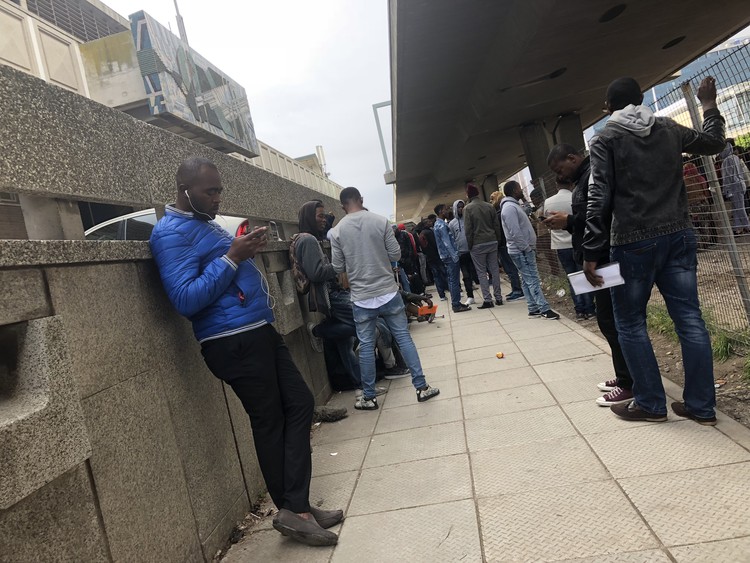
Three Zimbabwean refugee children aged 7, 12 and 14, have been out of school for two weeks and missed examinations because they had to travel from Johannesburg to Cape Town to renew their refugee status.

The Pretoria Home Affairs office refused to serve them because they originally applied for asylum in Cape Town. And their overnight trip to Cape Town became ten days, as they tried to navigate the Home Affairs bureaucracy.

Before the family left for Cape Town on 22 May, their school threatened to deregister the children because they had been absent for two days trying to get their documents renewed at Pretoria Home Affairs.

“If they are not back to school within ten days, we will deregister them,” the mother was told.

On Wednesday, 23 May at about 4am Nyarai (not her real name) arrived at Home Affairs on the Cape Town Foreshore.

An official told her that Zimbabweans are only served on Mondays, Tuesdays and Fridays. But the official also said that Friday, 25 May was not an option because the building was going to be fumigated.

Nyarai tried to negotiate with the official, explaining that she needed help urgently.

She explained that she didn’t have family in Cape Town, nor money for food and accommodation for such a long period of time. But, she says, the official refused to listen to her story.

“We don’t care about your story that you are from Joburg. It’s not our problem … we don’t want to hear it,” Nyarai says the official told her.

She also told the official about the school’s threat to deregister the children, hoping that he would offer her a formal letter for the school. But the official said the document she was going to be issued was her proof.

“I became emotional and burst out in tears. Why are these people not considerate? Why work with refugees when they do not have refugees’ interests at heart?”

Nyarai had to hitchhike to Cape Town because she didn’t have enough money for bus fare. “I am a single parent. I work as a hairdresser and the only days I make money are the last three days of the month, which I already spent here in Cape Town. I rent a hairdresser’s chair for R2,500. I need to pay for our [home rent], buy food and pay school fees,” she said.

When she returned on Monday, 28 May at about 4am the queue was already long. The official then said there were too many people and gave them appointment dates. She was given an appointment for 31 May.

On 31 May at about 2pm she was finally served, but with a notice of intention to withdraw her refugee status. She has 30 days to appeal.

“This means I have to travel back to Cape Town again at month end. I was told that because I travelled to Zimbabwe in 2007 I invalidated my refugee status.”

Nyarai fled persecution in Zimbabwe.

“Before the 2005 parliamentary elections, ZANU PF leaders would come and recruit young girls and boys, forcing us to sing liberation struggle songs and do slogans. Youths in the same area were also forced to join a national youth service. When I refused to join the national service I was shamboked. I then crossed to South Africa through Beitbridge border. My wounds were still fresh when I sought asylum.”

Last month Home Affairs spokesperson Thabo Mokgola said children are prioritised at the Foreshore office. He also said that applicants who can show proof that they are travelling are prioritised.

Anthony Muteti of Voice of Africans for Change said, “It is an unfortunate incident that clearly shows how insensitive Home Affairs officials are. This runs contrary to their principle of Batho Pele.”

Home Affairs has been taken to court a number of times over its policy of only serving asylum seekers and refugees in the centres where they originally applied. – GroundUp

Ethiopia: Research urges university-industry linkage

Mussa Muhammed

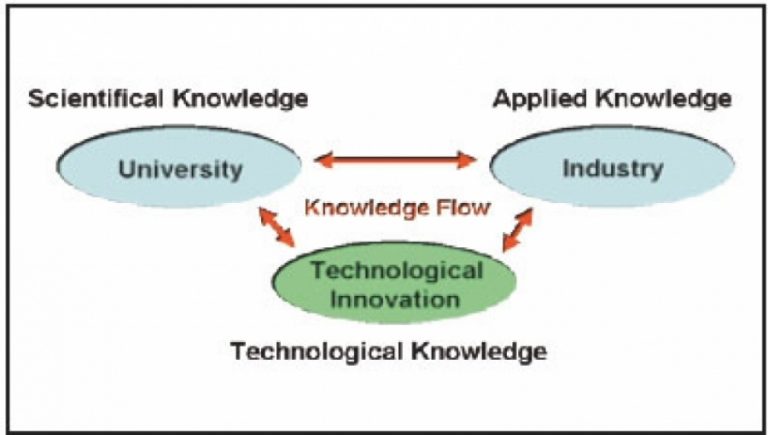
Universities need to scale up linkage with industries in order to increase graduates chance of securing employment, a research by one of the public universities indicated.

Research by Professor Deniel Kitaw from Addis Ababa Science and Technology University (AASTU) School of Mechanical and Industrial Engineering indicated that “individual running” would not prove effective.

The research indicated that universities have to work in close collaboration with each other to strengthen the university-industry linkage.

According to Daniel, creating strong university-industry linkage  (UIL) leads to create entrepreneurship and promote economic development of the country.

Parallel relationship between industries and universities has an advantage to properly utilize human resource. It will also create an opportunity for industrialists and technologists to come up with innovations that in turn support the nation’s endeavor to achieve middle level economy, noted Daniel.

During the last 28 years, Ethiopia has built more than 33 universities in all regions. Despite the increase in number, the linkage among them is weak. Failure to share experience is one of their manifestations.

AASTU President Nurelegn Tefera said in order to bring about the expected economic development universities should not only be mere research centers but have to apply their research in a tangible way.

 Universities should lead the industry in creating internship by producing skillful graduates from both public and private higher learning institutions and TVETs.

To get strong entrepreneurship and to bring about economic development scholars and researchers should apply their knowledge to respond to the nationwide demand for internship.

Minister of Science and Technology, Getahun Mekuria told researchers on the occasion that scholarly knowledge would not have any meaning either to the scholars or the country unless it is put into practice. This is the main problem of most scholars in Ethiopia”.

Entrepreneurship and strong UIL are vital to accelerate the country’s fast and sustainable development. UIL, science, technology and innovation must be given due attention and researches should be practical to realize efficient and effective economic shift in short time, said Getahun.

“In addition to benefiting from UIL and bringing about structural change the industrial sector should ensure competitiveness in the areas of enterprises, higher education institutions, research centers, TVET and others.”

Strong linkage among universities has a significant role to the industrial sector for it will ease the process of accessing and identifying basic inputs for the sector. This will in turn avoid unnecessary spending of hard currency, Getahun added. – Ethiopian Herald.

Somalia: Puntland students in Somaliland in fear after Warabe called for their deportation

Radio Dalsan

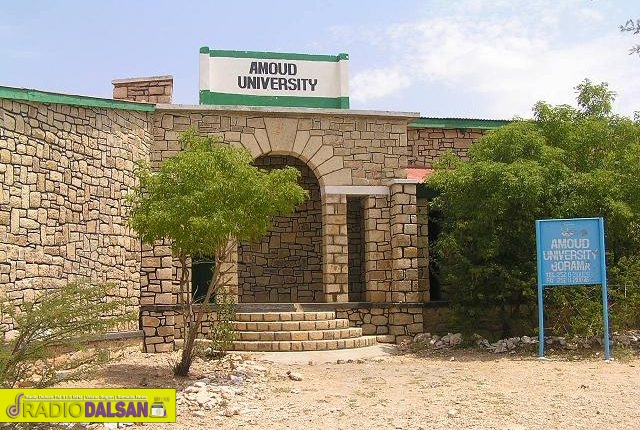
Puntland students studying in Borama town’s Amoud University are living under fear after a Somaliland opposition leader demanded their deportation following the Tukaraq conflict, Radio Dalsan reports.

Outspoken politician Feisal Warabe told journalists that the Somaliland administration should send home atleast 500 Puntland students at the university.

The Amoud University however rubbished the calls by Warabe pledging to ensure a safe stay and study environment for the Puntland students.

The administration is now seeking an official apology from Warabe over his remarks, Radio Dalsan reporter in Hargeisa said.

Some of the students are reported to have been planning to leave Somaliland for Puntland.

Amoud University and Borama town has been an academic center since pre-civil war era and attracted students from across Somalia.

The conflict over the disputed Sool region town of Tukaraq has been on off since January 2018 .

Read original article here.

More Park Town Boys High School teachers accused of misconduct

Amanda Khoza

The Gauteng Department of Education has confirmed that four Park Town Boys High School teachers have been charged with committing misconduct in the form of racially inappropriate language.

Two were student governing body (SGB) teachers and two were employed by the department, spokesperson Steve Mabona said on Friday.

He said, as soon as the SGB was notified by the department, immediate action had been taken, and that the two SGB employees were no longer employed at the school.

“The two department employees were charged and attended a pre-hearing. The hearing was scheduled for the 30th May, 2018, but could not proceed as the witnesses (the learners) were not present and their parents did not want their identity to be disclosed to the employee representative.”

“Parents of the learners who were meant to testify brought forward allegations of victimisation of the learners and, as a result, have refused to allow the learners to testify. The parents indicated that they are still consulting their lawyers.”

He said Parktown Boys High School and the SGB had no evidence of the alleged victimisation at this stage.

“Letters of intention to transfer the two implicated educators to the district have been prepared. Upon receipt of the representation from the educators, the department will decide on the matter.

“Under normal circumstances, an educator facing disciplinary processes may be transferred if there is sufficient evidence of victimisation or interference with the witnesses as alleged in this case.

Culture of silence

“It is important that learners must be allowed to testify in a conducive environment so that they are afforded the opportunity to provide their evidence. The department, Parktown Boys High School and the SGB will deal with all allegations brought forward without fear, favour, or obstruction of any kind.”

Mabona said the department was also aware of the criminal case against a teacher who allegedly slapped a pupil in March. The teacher was still at the school and was undergoing a disciplinary process, the outcome of which would determine what action was taken, he said.

He said some of the parents also complained that they were not treated fairly during the investigation into the water polo coach.

They also raised their concerns about the reviewed documents given to Gauteng Education MEC Panyaza Lesufi, which contained matters dating back to 1985.

“The department has appointed a law firm to review the findings and will be conducting an independent review of all these matters raised at the school in general, not just the complaints raised by a group of concerned parents,” he said.

Lesufi said the culture of silence could not be condoned.

“This culture has had a severe impact on learners who have suffered tremendously. We will intensify our efforts to root out this culture of silence at the school.” – News24

South Africa: Former president Jacob Zuma speaks to black school pupils

Mxolisi Mngadi

Former president Jacob Zuma has encouraged black school pupils to follow fields of studies that will empower them to participate “fully” in the economy of the country.

“Be choosy in what you study. You must study serious things that are the pillars of the economy of this country. That’s where we must be empowered,” he said on Wednesday at the Durban City Hall, at an event organised by the Congress of South African Students (Cosas) to discuss free education.

Zuma said he had wanted to announce the decision on free education earlier in 2017, but that he had been forced to satisfy everyone who had an issue with it before he could make the announcement.

“I think it’s an historic decision we have taken. This decision, many years to come, people will appreciate it. I’m convinced, 20 years from now, South Africa will be at another level. It would have produced creators of work, rather than seekers of work,” he said.

Colonisers had started wars, grabbed the land, and brought in laws that made it difficult for black people to claim back the land, said Zuma.

“We need lawyers from you guys who will amend the laws on land. We need lawyers who must make the law according to the real challenges of this country. Many land claims fail because the laws on land claims were written by white lawyers. Whites study commercial law, while we study criminal law to defend criminals who stab people,” said Zuma.

Freedom Charter

He said the issue of freedom was “complex” if blacks were not participating in the economy of the country.

“If you’re only studying to be a good worker, and not to create jobs, then you are in trouble,” he warned the high school pupils who filled the ground floor of the hall to capacity.

He warned them that if they were not empowered educationally, they would be workers their whole lives.

“It’s difficult to open a bank when you’re black. The money stays in big banks, so that they can control you fully. The quicker we empower ourselves with education the better.”

Zuma said the issue of free and compulsory education had been an issue for a long time.

“In 1955, the people of SA, led by the ANC, drafted and adopted the Freedom Charter, which deals with clear specific issues that were to be addressed by freedom fighters in South Africa. Education was one of the issues that you find in the Freedom Charter,” he said.

Education was central in the control of the economy of the country, he added.

He suggested that if education was not free and compulsory for all, then “We’ve not completed what the Freedom Charter says.”- News24