Home Blog Page 503

Zimbabwe: The nightmare of menstruation for poor girls

Mirirai Nsingo

Fifteen-year-old Belinda** from Highfield, Harare misses school every time she goes through her menstrual cycle. Apart from the dysmenorrhea (also known as painful periods, menstrual cramps), her grandmother cannot afford to buy sanitary wear for her.

So she was trained to improvise and use old cotton cloths.

She has faced many struggles since she started her menstrual cycles. Apart from the lack of understanding the changes her body is going through, she has had to miss school for five days every month due to dysmenorrhea and lack of sanitary wear.

Her cycle lasts for almost seven days, and for those days she uses cloths that she has to wash. Due to her heavy flow, she sometimes messes her uniform hence cannot take chances to go to school.

Compounded by the erratic water supplies, the local authority’s failure to consistently provide the basic human right need has further worsened her misery. For better hygiene, she needs water to wash her cloths.

Since she started menstruating at the age of 14, the Form three pupil says the seven days are a nightmare.

She was taught not to talk about her cycle to anyone especially men. So she suffers the dysmenorrhea, amid other myriad of challenges in secrecy. She would rather stay at home and miss school.

18-year-old Lorraine, an Upper Six student from Mount Darwin in Mashonaland Province believes lack of comprehensive knowledge towards boys of their age has not made life any easier for them. She adds that lack of sanitary wear is the biggest challenge most girls face.

“Some have had to use the inner part of the mattress and sometimes recycle it, given such circumstances, there is no way we can talk of menstrual hygiene,” she said.

“While we have organisations that have come in the area and tried to assist with sanitary wear to vulnerable girls, this is not enough. Some girls have had to have sex with older men in exchange for money for sanitary wear.”

“Some pads in shops were found to be causing infections like rashes and upon investigation, it was discovered that the pads would have long been on the shop shelves as they are expensive and out of reach for many girls,” she said.

Lorraine believes comprehensive education about menstruation can also help boys understand and treat girls differently.

“Most teenagers from my school lack awareness such that they tend to feel out of place during their menstruation days. For some of us, this is the worst time to be at school as we are sometimes harassed by boys when they suspect one is menstruating. They will even tease you about it,” she said.

The myriad of challenges these girls face mirrors that of the majority of impoverished girls around the country who like Belinda and Lorraine, miss school during their menstrual cycle days.

Ministry of Health and Child Care Director for Family Health, Dr Bernard Madzima believes the solution lies in the provision of free sanitary wear for these girls especially those from disadvantaged communities while also emphasising on Comprehensive Sexuality Education that provides information and guidance about the physical and emotional aspects of growing up.

“Menstrual hygiene is a critical component for any women let alone the adolescent girl. In a country like Zimbabwe, menstrual hygiene remains a mammoth task due to economic hardships.

“Most girls do not have access to proper sanitary wear and they have had to make do with unhygienic materials like cotton cloths, newspapers, we have heard of cases where they have had to use cow dung.

“The girls have also been affected by critical water shortages especially in urban areas as we all know that during menstruation, a women needs water to keep clean” said Madzima.

Madzima added that parents, teachers, community and religious leaders also have a role to play to impart comprehensive sexuality educational skills so that girls and boys can better understand menstrual health.

While some donor organisations have tried to help the situation by providing girls from disadvantaged communities with free sanitary wear, there is still a huge gap that he believes can only be bridged through Government subsidising.

“Advocacy to have sanitary wear provided for free should continue.”

The cheapest pack of sanitary pads costs more than a dollar.

According to a 2014 survey by the Ministry of Women and Youth Affairs, 20 percent of girls miss school due to menstruation while 62 percent miss school due to lack of sanitary wear.

Tag a Life International director Nyari Mashayambombe also reiterated that girls especially in rural Zimbabwe have no access to menstrual information and the resources they need to enjoy their menstruation cycle.

“Many of the girls reach menstruation time without the slightest of knowledge of what it is and what it means. When it happens they do not have sanitary wear to use.

“Many of them discover it as a shock and something they do without support to go through it. It has been made taboo such that girls can’t discuss this with their male relations including their fathers.

“As we commemorate this day, we call on all males and females to take part in ensuring that girls have a happy flow in their lives.”

She added that it was a positive move that the world was beginning to pay attention to issues of menstrual hygiene.

The Amalgamated Rural Teachers’ Union of Zimbabwe (Artuz) noted with a heavy heart that menstrual hygiene management remains a challenge for girls and women in Zimbabwe, where clean water and toilet facilities are often inadequate.

“In most rural areas some young girls resort to using weeds and leaves in place of sanitary pads thus compromising their Reproduction Health.

“It is against this background that Artuz is appealing for free sanitary wear in our schools. Most rural learners come from very poor backgrounds and they cannot afford them.

“Female teachers bear the burden of counselling these kids who are traumatised by their want of pads that at times force teachers to donate pads to the disadvantaged learners.”

The union believes sanitary wear should be prioritised than condoms since sexual intercourse is by choice.

“Artuz advocates for free sanitary pads instead of free condoms since sexual intercourse is by choice.

“We also advocates for the provision of refreshing rooms in our schools so the girl child can freshen up during the course of the day and remain confident of themselves. In addition, we urge Government to ensure there are free painkillers for period pains in all schools.”

The union added that the adverse attitude towards menstruation can negatively impact on the girl’s self-image noting that more health education to male counterparts to respect this natural cause especially in schools, tertiary institutions and other public spaces where some women are considered unclean when they have menstruation is of paramount importance.

In her research titled, “Can better sanitary care help keep African girls in school?”, University of Cambridge’s Elizabeth Tofaris on behalf of the Impact Initiative for International Development research posits that for young girls in developing countries, not knowing how to manage their periods can hinder access to education.

The research further asserts that provision of free sanitary products and lessons about puberty to girls may increase their attendance at school.

Gender Links, a non-governmental organisation advocating for equality and justice believes if the Government and donor partners could invest as much as they are doing in condoms towards sanitary wear, this could change the lives of girls living in poverty and are forced to miss school every month.

While the Menstrual Hygiene Day marked annually on May 28 seeks to highlight the importance of good menstrual hygiene management, for girls like Belinda, Lorraine and majority of women and girls in Zimbabwe, this remains a pipe-dream.

This story was pursued in support and solidarity with women in the wake of Menstrual Hygiene Day held on May 28. Saturday Herald advocates dignity and respect for women, the custodians and givers of life.

**The girls names were changed.
The Herald

Vuwani threatens shutdown (again)

Russel Molefe

Vuwani in Limpopo is again on the edge after the collapse of a deal brokered last year by former president Jacob Zuma and Vhavenda King Toni Mphephu-Ramabulana to resolve a municipal boundary dispute.

As a result, the Pro-Makhado Task Team – a group of leaders at the forefront of the protest – is now pushing for another “total shutdown” of the area. Hundreds of residents are expected to gather at a mass meeting today to take a decision.

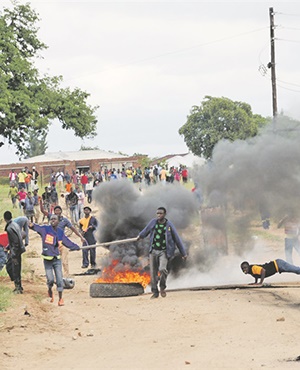
In the past the area experienced an unprecedented form of violent protests. This was after the Municipal Demarcation Board (MDB) decided, before the 2016 municipal elections, to incorporate the area into the newly constituted Lim345 municipality, now known as Collins Chabane, in Malamulele.

The residents staged violent protests demanding they remain under the jurisdiction of the Makhado municipality.

More than 10 schools, several government buildings and business properties were set alight.

The task team now believes the deal reached during a visit by Zuma in May last year is being ignored by provincial authorities for political reasons. The deal included the Vhembe district municipality taking over the delivery of services while the municipal boundary dispute was being sorted.

Task team spokesperson Nsovo Sambo said the area was on the edge of slipping into another chaotic situation.

“The deadly politics within the government left the instruction by Zuma being implemented selectively and at a slow pace. The community has become impatient. The leadership is very much intact and people could become angry because of the government’s arrogance.”

Sambo said people were feeling uncertain: “The government should speak to and answer the people.”

He said the government needed to keep the promise to solve the problem by effecting a provincial executive committee resolution or redetermining the boundaries before the 2019 national general elections.

Sambo said certain provincial departments, such as cooperative governance, human settlements and traditional affairs, were reluctant to provide services to Vuwani.

He cited the example of an access road project which had since been stopped: “The money was given to Lim345 [Collins Chabane] municipality and was used for something else.”

He said schools and clinics were now under the jurisdiction of the Collins Chabane municipality. Residents have rejected this move because they do not want to fall under that municipality, but rather under Makhado.

“The only service being rendered per the deal is a traffic station run by the transport department,” Sambo said.

City Press was reliably told by some officials involved in the matter that the Vuwani issue was being complicated by the blurring of lines of competency between the national and provincial authorities.

However, this was denied by provincial government spokesperson Phuti Seloba, who insisted the solution “lies with all the stakeholders, not a particular stakeholder”.

He said the provincial government was never part of the municipal boundary demarcation: “That was dealt with by the MDB. Our involvement was mainly on the basis that we need to work with people to make sure we solve the problem.”

However, Seloba said provisions of the law cannot be ignored.

“We need to look at what are the provisions of the law that empower us to move forward. On the basis of that, our understanding is that there are provisions that allow us to do certain things. There are certain things that will tie our hands.

“You cannot disregard the involvement of the duly constituted municipality of Collins Chabane. As much as they [Vuwani residents] are rejecting it, you work towards a solution with them,” Seloba said.- City Press

History subject to be made compulsory and more Africa-centred

Tammy Petersen

A ministerial task team has recommended that history be made a compulsory school subject, according to a report released by the Department of Basic Education on Thursday.

It also recommended that Grade 12 pupils write two final exam papers on the subject – one focusing on African history and the other on world history.

The task team was established in 2015 and given terms of reference to conduct a comparative international study on how to best implement the introduction of history as a compulsory subject up until matric.

It was also tasked with reviewing and improving the content.

In its report, the group concluded that “good history education promotes sympathetic and informed understanding of humanity and the human condition”.

Phased approach

The task team recommended a phased approach and that compulsory history be introduced after five years to allow planning.

It recommended that “Africa-centeredness” become a principle in revisiting content, specifically that both ancient and pre-colonial African history be brought into the curriculum for Grades 10 to 12.

“This is critical to understanding the layered history of South Africa and the continent of Africa at a more developed conceptual level,” the report reads.

“We recognise that certain aspects of pre-colonial history are taught [in Grades R to 9]. However, this tends to be portrayed as a ‘happy story’, appropriate to that level, but fails to provide the nuanced and complex history which should be taught at a higher level [in Grades 10 to 12].”

Problematic and controversial issues and themes, such as class, social stratification and the status of women and workers in ancient and pre-colonial history, must be included, the team recommended.

The task team also found strong circumstantial evidence that many schools avoided teaching apartheid history, although it is included in the current curriculum, the report reads.

“The historical content offered in schools should not avoid areas of conflict facing our divided country. We run the risk that we will return to the pre-1994 era when the African past was left out of the curriculum and past events were fabricated, exaggerated or evaluated by dated standards devoid of historical understanding.”

It endorsed that history remain independent and not be incorporated with Life Orientation, as it would then not be taught by trained subject professionals and would become a “hybrid subject” not recognised for university entry.

The subject should be taught by trained professionals while prospective teachers should have history as one of their majors at undergraduate level, and teacher development should be done together with universities and should not be the sole responsibility of the national and provincial education departments, the task team found.

Teacher development

History teaching in the general education and training band – from Grades R to 9 – needed “urgent attention and strengthening”, the report reads. The task team recommended that history and geography be separated, and that content be revised.

It warned that it could not be assumed that any qualified teacher was able to teach history satisfactorily and that funding and teacher development would be important.

The report was launched by Minister of Basic Education Angie Motshekga on Thursday.

Spokesperson Troy Martens explained that the report would be processed by the Council of Education Ministers, which would then be followed by consultation, before a policy development process took place. -News24

Students left hungry, destitute due to non-payment of Nsfas allowances, MPs told

Jan Gerber

Without their allowances, many students on tertiary campuses across the country are left destitute and hungry, Parliament’s Portfolio Committee on Higher Education and Training heard on Wednesday.

Student organisations, the South African Further Education and Training Student Association (Safetsa) and the South African Union of Students (Saus), told the committee of a range of logistical problems which hampered students who were dependent on Nsfas to fulfil their academic potential, with the failure to pay out allowances being a major concern.

This was fueling a lot of frustration on campuses, which sometimes resulted in the burning or destruction of property, Safetsa president Yonke Twani said.

“You’re not justifying the destruction of property?” asked Higher Education and Training Minister Naledi Pandor.

“Because this is no justification.”

She said destroying property did not bring allowances or facilities.

Twani agreed and said they always told their members not to destroy property.

Nsfas chairperson Sizwe Nxasana admitted there were still problems.

‘We understand universities and colleges are not banks’

Referring to former president Jacob Zuma’s decision on December 16 last year to expand free higher education to students from poor and working class families, Nxasana said the financial aid scheme “literally had a few weeks to put systems in place” to distribute the funds.

“We are doing everything from our side.

“Yes, we had very limited time, from when the announcement was made, until the implementation,” he said.

For the 2018 academic year, Nsfas has received more than 417 000 applications. Thus far, they have made funding decisions for about 358 000 of those.

Nxasana said the biggest problem was integrating Nsfas’ system with the different systems of the universities and colleges.

He said many institutions did not have the systems to administer allowances.

“Yes, we understand universities and colleges are not banks,” he added.

Thus far this year, Nsfas had paid out close to R6.5 billion to institutions. All institutions had received what was due to them, Nxasana said.

Addressing the problem was like “fixing a plane while it is flying”, he added.

Universities South Africa’s CEO Ahmed Bawa said it was not in the interests of universities to keep the money. He said universities were subject to the same financial regulations as other state entities. He agreed that a “breakdown in systems” seemed to be the problem.

“The last thing universities want is demonstrations – it is the worst thing for universities,” Bawa said.

‘Hasty, crowd-pleasing promises made to the poor’

After the meeting, committee chairperson Connie September, in a statement, called on Nsfas to kick-start the process of redesigning the student-centred funding model, so that all other stakeholders could make an input.

“The system is designed to benefit students, and we expect no less. The delays in payments being made to institutions should be dealt with expeditiously, we cannot have students waiting for meal and book allowances for longer than five months,” she said.

“These challenges are not insurmountable, they just need a collective effort. The committee welcomes the willingness of the stakeholders to collectively support a process to ensure that students are not disadvantaged in furthering the much-needed education.”

DA MP Belinda Bozzoli said, during the committee meeting, that “ex-president Zuma and the party that supported him brought Nsfas to its knees”.

After the meeting, she said in a statement that the DA was calling for an “emergency fund to be set up to assist students in dire need and for extraordinary efforts to be made to bring this crisis to an end”.

“Once again the hasty, crowd-pleasing promises made to the poor by the ANC-led government and the actual reality of what is delivered at the grassroots are poles apart. This is shameful, the result of a mismatch between the populist instincts of the ANC and its capacity to deliver,” said Bozzoli. – News24

Criminal complaint laid against Sace for failing to vet teachers against sex offenders register

Christina Pitt

Democratic Alliance (DA) MP Sonja Boshoff and fellow party members have laid a criminal complaint against South African Council for Educators (Sace) board members for failing to vet teachers against the sex offenders register.

The party says one of Sace’s core functions was to vet teachers against the register before issuing licences, in terms of section 47 of the Criminal Law (Sexual Offences and Related Matters) Amendment Act.

On Sunday, City Press reported that the council had no access to the register for 10 years.

“Sace has failed our children and, as Child Protection Week draws to a close, it is imperative that the teacher-vetting body’s leadership is held accountable,” Boshoff said.

READ: ‘Our teachers want sex’

Sace spokesperson Themba Ndhlovu said the issue was slightly more complicated.

“For us to have access to the sex offenders register, we have to go through the director generals,” he said.

He said meetings over the matter had recently taken place, but concurred it was a “concern”.

Boshoff also took aim at Basic Education Minister Angie Motshekga for not ensuring that Sace, which is an entity of the Department of Education, was not breaking the law.

“Minister Motshekga should now prove that her department is committed to ensuring children are safe at schools and support the call the DA has repeatedly made for this through our #SafeSchools campaign,” she said.

The DA also urged President Cyril Ramaphosa to end sexual and physical violence at schools through a collaborative effort with the South African Police Service, Basic Education, Social Development and Justice departments.

“Our children cannot achieve their full potential when schools are unsafe. The government needs to take swift action to make sure our children are safe at school,” Boshoff said.  – News24

African countries want to accelerate the 4th industrial revolution, what about the first three?

Thuletho Zwane

One of the more pertinent questions asked at the African Development Bank (AfDB) 2018 annual meetings was whether African states could strategically and successfully implement plans for the continent’s fourth industrial revolution.

The question, and it needed to be asked, was how do African countries talk about accelerating the fourth industrial revolution when they have not completed the first, second or third revolutions.

The question was asked again by Sung Soo Eun, Chairman and President of the Korea EXIM Bank. Sung said South Korea has gone through the first three industrial revolutions and this is why the country was ready for a forth industrial revolution.

He added: “Africa wants to go to the fourth [industrial revolution], but has it already gone through the first three?”

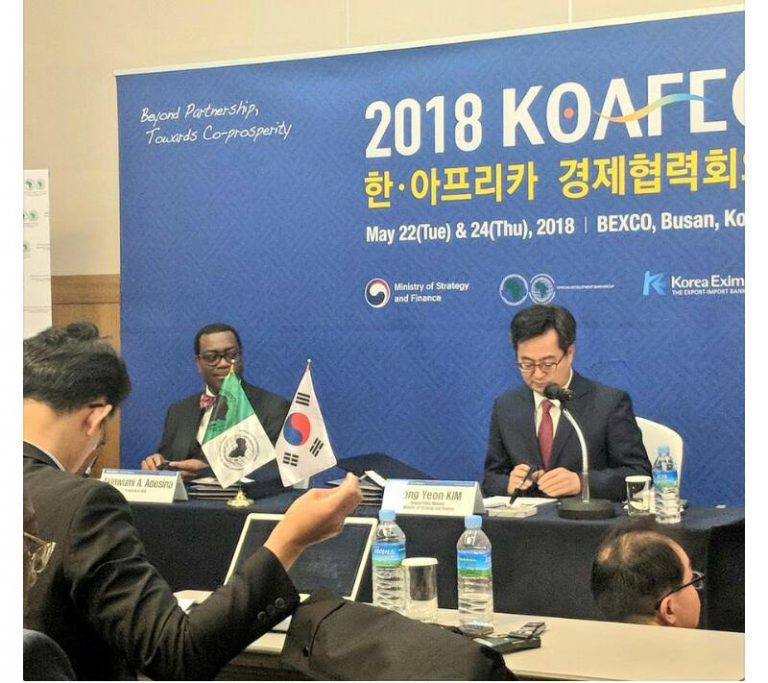
Sung spoke at the “Pathways to Industrialisation” session that took place at the AfDB 2018 annual meetings in Busan, South Korea.

The question sparked major debate as analysts and social media commentators asked if there was indeed the “right way to industrialise”.

The theme for this year’s meetings was Accelerating Africa’s Fourth Industrial Revolution and it was no coincidence the meetings were held in South Korea.

Everyone agreed that the industrialisation of South Korea was a good example for the world but wondered if its model could be applied to African countries.

In just one generation, the country managed to move from a largely rural economy with high levels of poverty and inequality to what it is today, a first-world country with a Gross Domestic Product (GDP) per capita of $39 276 (PPP. IMF 2017 est). This economic miracle in known as the Miracle of Han River, the period of rapid growth following the Korean War (1950 – 1953).

The former president of Ghana, John Dramadi Mahama, said: “There has been three industrial revolutions [in the world]. Africa has missed a lot.” And he asked the pertinent question, “How is Africa going to take advantage of the fourth industrial revolution to improve the lives of its citizens?”

AfDB President Akinwumi Adesina called the history of South Korean development “amazing”. This statement was made in one of his interviews during the 2018 annual meetings.

“This [Korea] is a country that is smaller than Liberia, smaller than Benin, smaller than Mali, in fact one third of the size of a country like Algeria.

“When they started out, they started with heavy industries; then they went to light manufacturing; then they moved up into more high-tech, value-added industries we see today. You have the Samsungs of the world, the LG, Hyundai. The question is, what did they do and how did they do it,” said Adesina.

What Adesina does not mention in the interview is that the AfDB, in partnership with African government agencies and South Korea, are already in the process of implementing this accelerated industrialisation in Africa – all four stages of industrialisation at the same time.

How they made it work: A history lesson

South Korea’s heavy industrialisation caused major inequalities in the 1960s which led to country-wide riots. Professor Do Hyun Han of the Academy of Korean Studies writes that there was absolute rural poverty in the 1960s in South Korea as the income gap between urban and rural areas increased.

Most rural areas suffered from seasonal starvation every year. During the long winter season, farmers did not have work, so most farmers spent their time drinking and gambling, writes Do.

This aggravated rural poverty during the winter season.

Because of severe rural poverty, there was a great deal of rural migration to cities, which resulted in serious over-urbanization. Slums were quickly formed within major cities.

“One urban riot in 1971 was clear evidence of the acute urban problems in Korea which resulted from the rural-urban mass migration,” writes Do.

He adds that unsatisfied farmers who were excluded from the benefits of industrialization became a potential social problem.

“These factors pressured the government to come up with a broad-based and inclusive growth policy. The South Korean government launched its Saemaul Undong model in the rural areas while heavy industrialisation took place in urban areas.”

The AfDB follows the same process of development across different countries on the continent. Adesina says heavy investment in science & technology, innovation, robotics, biotechnology and nanotechnology should be part of African economies’ industrialisation strategy.

At the same time African countries are rich in natural resources.

“We have lots of oil; we have gas, we have minerals, we have arable land, we have all this raw material. We need beneficiation and value-addition.

“We have to manage the resources well. This is why the bank has launched its own industrial strategy called, Industrialise Africa. It is one of our High Five priorities. We want to support countries to have very good industrial policies and to help them invest more in infrastructure to enable industrial clusters and special industrial zones.

“We are also supporting the development of capital markets. We want to invest $35 billion dollars over the next 10 years, $3.5bil every year. We want the continent to raise its industrial GDP from where it currently stands, at around $700 billion, to $1.7-trillion by 2030,” said Adesina.

Even though these projects are great and could very well lead African economies into the fourth industrial revolution, they have a way of increasing extreme inequalities which lead to poverty, formal economy exclusion and an unskilled labour force. Industrialisation, without inclusivity, does not work.

If African countries and the AfDB only focused on big industrial projects, the majority of African citizens will be left behind.

This is why the knowledge transfer taking place between African states, the AfDB and South Korea is critical.

Some African countries are already ensuring rural development takes place at the same time as major industrial projects.

This is why the AfDB, Korea-Africa Economic Cooperation Trust Fund (Koafec) and African government agencies are working together to implement the Saemaul Undong Model across villages in different African countries.

The words Saemaul Udong, translated into English, mean the New Community Movement or the New Village Movement.

This model focuses on local community development with ethos of diligence, self-help and cooperation at the centre.

When this model was implemented in South Korea in the 1970s, it achieved equitable distribution of income, improvement of the environment and agricultural infrastructure.

The first project was successfully implemented in Ethiopia in Turi Goda Village, the Becho District in Oromia Region.

The results were tangible: a youth centre and a school library; a four-kilometre long road to facilitate transport for people and products; ten domestic water supply wells which had a positive effect on health and gender; solar power to 300 domestic households; domestic farm animals for produce and village credit.

The N’gbekro village and Zatta village of Yamoussoukro, Cote d’Ivoire

The drive to N’gbekro village and Zatta village in Yamossoukro, Cote d’Ivoire was simple. The road was good and there were no police “stop and gos” on the way.

At the corner of one village was a community centre painted in yellow with the words: “Diligence, Auto-Assistance, Cooperation” on the side.

These words were the village’s motto for collaborative work and engagement.

Both villages are under a chief, and the Saemaul Undong model understands the importance of getting the go-ahead of the chief for the project to be a success.

The advisor to the chief said the difference with this model is that it was not the usual top-down approach forced by governments and international organisations onto communities but rather, a collaborative and horizontal approach was followed where the villagers were asked what they wanted.

The villagers wanted: a community centre where they could have meetings; a primary school and a child-care centre; teachers’ housing; a medical centre; cassava farm, tomato farm and a poultry and pork farm. In the N’gbekro village, the villagers also asked for a youth centre with an office where the the operations of the village’s micro finance would run.

The Agence Nationale d’Appui au Developpement Rural (Anader) was the Cote d’Ivoire government agency that worked closely with these villages and made sure the necessary training took place. And as a result, Anader, Koafec and the AfDB have transformed economies of the two villages – impacting 2,961 inhabitants.

One of those inhabitants is Zounon Sylvie who received $500 (US) loan from the Saemaul Undong through AfDB and technical support from Anader.

In her first year, she made a 70% profit.

“I am a single mother of four. Thanks to this project and the loan, I got 70% of the profit in my first year. My farm business has helped me to take my children to school.

My eldest is currently in university. And I alone, am able to pay for this,” she said.

Current projects in different African countries depicting different levels of industrial revolutions. Main photo is Zounon Sylvie with her business partner, Kowadio Kan.

She has since been able to expand her vegetable farm and has partnered with a another young farmer, Kowadio Kan. She said it was the only way the local chief would allow them to get more land.

“Land is a big issue in Africa. Collaboration has made this possible. It has also facilitated a lot of work and significantly increased our market,” said Sylvie.

They have expanded from growing only tomatoes and now include aubergines. The two of them have employed five full-time farm labourers. They need $5 000.00 to expand their capacity and grow.

In an interview with Dr. Miaman Kone, head of the Saemaul Undong projects and Economist at Anader, he said the major factor for the success of these projects was the fact that the villagers selected their priorities and were actively involved in its implementation.

“They have complete ownership of the project and as such, are invested in its sustainability,” said Kone.

“The key lesson learned is that the change of mentality of actors based on the Saemaul Undong philosophy of diligence, self-help and collaboration is permanently engraved in the villagers’ approach to improve the quality of their living standards,” said Kone.

He said continuous training was necessary to ensure the maintenance of constructed facilities and infrastructure such as, buildings, road, irrigation dams.

What is also important to realise is that, through collaboration with community members, mutual interest and the want so sustain the community, most farmers have moved from subsistence farming to agro-preneurs. They have created their own markets and networks out of their own villages into the greater Cote d’Ivoire.

The challenges that remain are the safe transportation of goods and proper logistics to ensure the goods arrive at markets on time.

But the project works.

This was further cemented by the AfDB president who superimposed the importance of big projects, while at the same time ensuring development takes place in rural areas.

Adesina explained why the change in mindset was critical.

“While major projects are taking place in bigger industrial areas, smaller ones in villages are also taking place. The mindset matters. When you are tired of being poor, and you decide to not be poor… that’s where is starts,” said Adesina.

From rural villages to aerodynamics

While basic agriculture takes shape in villages of Yamoussoukro; the Turi Goda village of Ethiopia and the Kibueya village in the Democratic Republic of Congo, other projects, that show Africa is indeed ready to accelerate its fourth industrial revolution, are taking place across the continent.

We will focus on Liberia, Kenya, Morocco and Tanzania.

Lorna Rutto, a Kenyan young banker, presented on the “Bridging Innovation Industries: African Youth Solving Continental Challenges” session at the 2018 annual meetings.

Rutto quit her job to co-found EcoPost. She said her social enterprise was created in response to the need, that was prevalent in Kenya, to find alternative waste management solutions to the country’s huge plastic waste problem.

In 2009 she founded her company, which collects plastic waste and manufactures commercially viable, highly durable, and environmentally friendly fencing posts, used widely across Kenya.

Since then, the social enterprise has created thousands of sustainable jobs for people in marginalized communities, in addition to conserving the environment.

“Trees were being cut down and plastic waste was all over the place. It was very scary for me to resign a good bank job, but I had to fulfill my calling as an entrepreneur. That was when I developed the idea that waste was a resource and not a thing to throw away,” said Rutto.

Another entrepreneur, full within the fourth industrial revolution, is Moroccan tech entrepreneur Badr Idrissi. He co-founded ATLAN Space, a start-up that uses artificial intelligence and drone technology to fight illegal fishing.

Environmental and ecological threats such as illegal fishing, poaching and deforestation faced by many African countries are what inspired Idrissi to establish his software start-up. He said these issues lead to a large percentage of fishing activities, especially those off the West African coast, resulting in huge economic losses. These countries do not have the capacity to have satellite surveillance on the sea for each square-kilometre.

“The Overseas Development Institute shows that even though illegal fishing is a worldwide phenomenon, it is much more dramatic for African countries.

For West African countries, illegal fishing costs governments US$1.4bn every year and destroys 300,000 jobs, ” said Idrissi.

Another presenter was Abigail Urey, CEO and co-owner of Edgail, a scrap metal exporter. They manufacture and export recycled waste oil, initially to customers in China. Their factory is located 60 km inland off the Kakata Highway, one of just a few critical but badly broken roads connecting inland Liberia to the port.

This is the challenge.

Urey said: “With the new business we won’t get second chances with our customers, so every improvement helps [referring to the infrastructure gap]. We will depend on the shipping lines and the port to perform as expected, so we don’t break our promises.”

“Closing infrastructure gap” has been identified by AfDB Predisent Adesina as the most critical issue for the successful industrialisation of African states.

“How do we industrialise when we have no power? When we have no logistics. There is nothing more important than closing the infrastructure gap. We have created an equity vehicle called Africa 50. This vehicle was created by the AfDB and I am the chairperson. So far we have mobilised $853 million dollars and want to grow it to $3 billion,” said Adesina.

He said African governments needed a new way of thinking and emphasised the importance of long-term planning as well as having clear industrial policies.

Adesina added: “Africa cannot industrialise when we don’t have the right productive capacity and human capital – the skills necessary for industrialisation.

We live in a world where artificial intelligence is going to rule. Bio-technology, robotics, nano technology, quantum physics and mechanics, these are the things that will dominate the world. I want us to start investing in young people,” he said.

Adesina said it was possible: “Samsung in the past, in the 1960s were exporting human hair. The Korean women cut off their hair and gave it away to be exported. They started with exporting human hair, today they dominate the digital economy, why can’t African countries do that?”

Currently on the continent, small and massive projects are underway.

The President of the AfDB bank believes that African countries can go through all four industrial revolutions at the same time.

Photo credit: Thuletho Zwane (RSA), Andualem Sisay Gessesse (Ethiopia), Ulrich Janse van Vuuren (RSA)


Malawi: rising number of needy students overwhelm government

Yamikani Sabola

Ministry of Education, Science and Technology (MoEST) has expressed concern over rising number of students failing to access or struggling with tertiary education due to financial problems.

Director of Higher Education in the ministry, Samson Machese Mbewe, raised the concern on Saturday when he presided over the launch of Parents Association for University of Malawi Students (PAUS) in Lilongwe.

He said government has been increasing annual budgetary allocations to Students Loans Board (SLB), which provides loans to needy college students but said such funds are not enough due to growing demand for tertiary education.

Mbewe said: “More students are graduating from secondary schools than was the case in the past.

This has created huge demand for tertiary education which has also increased the number of needy students requiring loans and scholarships.”

He said government is encouraging other players to complement its efforts in supporting needy students.

Mbewe, however, bemoaned an alleged tendency by some college students from well to do families who are also accessing the loans at the expense of deserving needy students.

“Such students are adding undue pressure on the loan facility and are even crowding out real needy students.

“Some of them secure the loans or scholarships and continue collecting money from their unsuspecting parents on the pretext of fees only to spend it on luxuries,” he said.

According to Mbewe, the country has about 26 000 students in public colleges and a recent survey by the World Bank found out that only 20 percent of them are needy.

Chairperson for PAUS, Paul Chikwekwe, said the association is having a long list of college students who are on the verge of dropping out due to lack of finances and urged people of goodwill to give their support.

He said they have introduced an initiative called “Adopt a Student” which is aimed at linking up needy college students to well-wishers who can bankroll their education.

Chikwekwe said they have secured about K17 million from a well-wisher to go towards scholarships for eight needy students drawn from various public colleges.

Read original story here.


Namibia: Increase in Drug Abuse Among Koës Learners

Matheus Hamutenya

Koës — Keetmanshoop Rural Constituency Councillor Elias !Kharuxab is disturbed by drug activities in his area saying school learners are being turned into drug dealers.

A worried !Kharuxab said that he was made aware during community meetings that many school learners, especially at Koës and Aroab, are being used by drug dealers in their illegal dealings, and this he said, exposes these teenagers to drugs which they end up using themselves.

He said the use of drugs amongst the youth is a problem in his constituency, adding that while the drug dealers get an income through their illegal businesses, the future of many young people is being destroyed.

“The biggest problem I learned from the community is that school children are drug dealers, they spend most of their time involved in these illegal activities and they do not have time to concentrate on their school work,” he said.

He said, while he understands the reasons that might push young people into illegal dealings, he does not condone any illegal activities, and he blamed parents for the actions of their children, saying some parents are not doing enough for their children’s welfare.

“I have observed and learnt that most of our parents do not take responsibility of their children, these children start smoking at six and seven years of age, and they are exposed to drugs, and this must come to an end,” further elaborated the councillor.

The outspoken councillor said that parents need to get their acts together, and take full responsibility of their children, so that they can focus solely on their school work, which will open many doors for them, saying without an educated people will remain poor.

“We must make sure our children study hard, if not we will keep on crying that people are coming to take our jobs, and poverty will always be in our households,” he stated.

He said there are plans to have an operation, where all school learners found roaming around the streets late at night will be taken to the police station, so that their parents can explain why their children were out in the streets late at night before taking them home.

Read the original article here.

Student who received R14 million Nsfas payout in error appears in court

Jan Bornman

Sibongile Mani, the Walter Sisulu University (WSU) student who accidentally received more than R14m from the National Student Financial Aid Scheme (Nsfas) and went on a spending spree in 2017, appeared in the East London Magistrate’s Court on Tuesday morning.

Hawks spokesperson Captain Anelisa Feni confirmed that Mani, 28, was arrested on Tuesday by the Serious Commercial Crime Unit of the Eastern Cape Hawks, after it requested that she hand herself over.

She has been charged with theft.

Mani accidentally received the Nsfas payment of R14.1m and went on a three-month spending spree.

“She allegedly spent just over R810 000 of this amount on personal items over a period of three months before the anomaly was detected by the scheme,” Feni said.

News24 last year detailed how Mani, who studied accountancy at WSU, spent the money hosting parties for her friends, buying Peruvian wigs, designer clothes, handbags and expensive smartphones. During this time, her grandmother who raised her continued living in poverty.

She was the branch secretary of the Pan Africanist Student Movement of Azania at East London’s Potsdam campus, when her life transformed overnight, from that of an ordinary student to a socialite.

Mani was released on a warning and was expected back in court on July 2. – News24

These SA universities have banned Apple watches during exam time — here’s why

Timothy Rangongo , Business Insider SA

As technology becomes increasingly sophisticated, so has the ease of cheating in exams. With the exam season approaching, several South African universities have banned smartwatches from exam rooms to crack down on cheating.

Tertiary institutions across the globe are updating exam rules to ban smartwatches as they’ve essentially become wrist computers that can be used to record, transmit, receive, or play back audio, photographic, text, or video content.

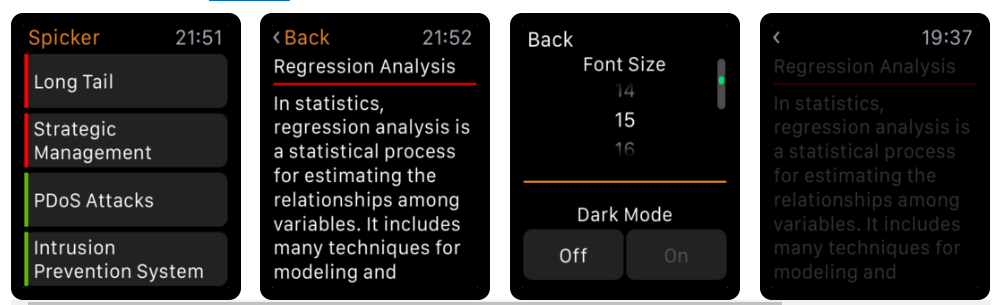
Apps are also being developed to make it even easier to download notes on their phones. One of the most popular, Spicker (the German word for “crib”) allows you to easily add notes to your iPhone, and you can even mark different notes with different colours.

A digital watch app like Spicker is one of the ultimate cheating aids for students — allowing them access to notes on their wrists. (YouTube)

Students can quickly swipe left to a clock screen if an invigilator approaches. The app also allows you to dim the light on the watch, making the text fainter.

How a student could view notes from a digital watch app like Spicker. (App Store)

This is how SA universities are managing smartwatches in exam rooms

University of Cape Town (UCT)

UCT’s exam policy clearly stipulates that “no student in [an exam] venue shall have on his or her person or desk, any device capable of the storage, retrieval, transmission, or reception of data including (but not limited to) watches.”

Stellenbosch University

The university concedes that electronic communication devices are “becoming increasingly sophisticated and communication to the outside without speaking is becoming easier and easier.” Stellenbosch requests students to switch ‘all’ electronic devices off but allow them to be placed on tables, albeit face down.

University of Kwa-Zulu Natal (UKZN)
UKZN says cheating includes having “a device or instrument capable of storing, sending or receiving information, or any other article containing information, the use of which is not authorised by the examiner or the examinations officer” on-person, in an exam room.


University of Pretoria (UP)
UP’s examination policy requires that digital watches be switched off and placed on the floor, under a chair and out of the student’s line of sight.


Rhodes University
The academic administration department of Rhodes tells Business Insider SA that students are warned against the use of any electronic devices including smartwatches before the start of tests and/or exams. A student found to be wearing a questionable electronic device during an exam may also be asked to clarify its function or to remove it.


Monash University
The SA arm of the Australian university located in Johannesburg also has an explicit ban on smartwatches. Monash says if a student brings a smartwatch into an exam, they must turn them off (including the alarm) and put them in a bag on the floor.