Home Blog Page 505

Learners deserve free access to internet, a basic human right

Joseph Chirume

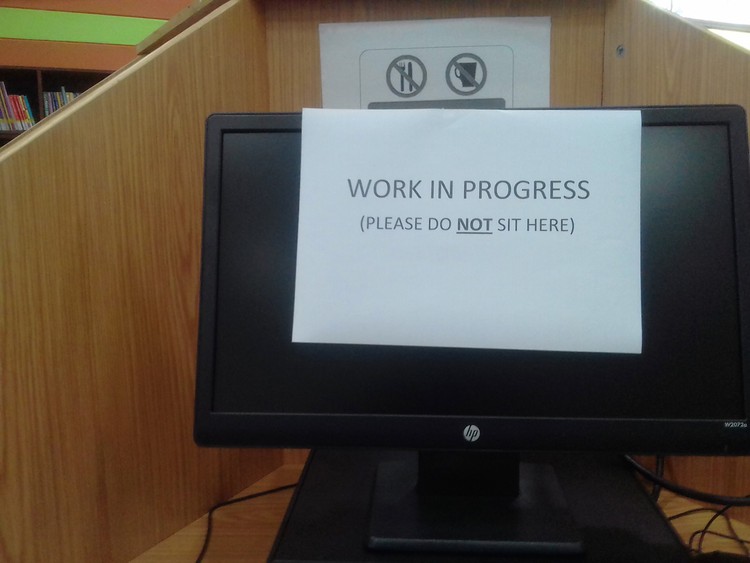
There provision of free access to the internet in the Eastern Cape has been cut by province’s department of sport, recreation, arts and culture as well as the National Library of South Africa.

The department claims the tender for internet provision is still in progress and will only be completed end June.

In the mean time, learners and students who depend on free internet provided by public libraries find themselves without access to information.

Onica Makwakwa of the Alliance for Affordable Internet World Wide Web Foundation once said access to the internet was a basic human right.

Makwakwa was part of a panel discussion on closing the digital divide at the World Economic Forum in Durban last year.

 “When I am online, I no longer live in a shack,” Makwakwa said who called for internet access to become more accessible and affordable for people across the African continent.

“Access to internet is a basic human right, the same as access to water and electricity. We need real policies around competition to drive prices down,” she said, adding that some young people in Africa would spend up to 80% of their income on staying connected.

People who depend on free internet access in public libraries in the Eastern Cape say they have been struggling since last year August when the service stopped.

The National Library of South Africa and the Eastern Cape department of sport, recreation, arts and culture used to pay for the service.

One of the department’s strategic objectives is the provision of a free, equitable and accessible library and information service,

Many library users, especially high school learners, say they cannot afford the high costs of data and the fees charged by internet cafes.

Abongiwe Sayman, a matric learner in Motherwell, said: “I used to be the best in my grade when the free internet service was available at the library. I am now struggling with my work. I am afraid I will fail my final examination.”

Noluthando Thondlana, who frequents the Uitenhage library, said in the past she used the library computers and the free internet access.

“Internet cafes charge anything between R15 to R20 an hour,” she said. As she does not have a laptop she is also charged for the time she spends typing up her assignment on the cafe’s computer even if she isn’t using the internet. Thondlana is trying to complete a diploma in Transport Management by correspondence.

Sabawu Mlanjeni from Motherwell is studying for a degree in Public Management through a Cape Town university. He said the librarians had been helpful and showed him how to do new things on the internet. “I wish the municipality would bring back the service again.”

The municipality does offer free internet through Always On, but only 100BM per day and only on a personal laptop or mobile phone.

“Many people don’t have computers, and most of the work needs a computer not a cellphone. And the data bundles get quickly used up,” said Mlanjeni.

Spokesperson for the Eastern Cape Department of Sport, Recreation, Arts and Culture Andile Nduna said: “The department is in the process of finalising the contract for a new tender to supply free internet to all the province’s [200] libraries. This should be done by the beginning of June this year.”

Read the original article here.


R 50 billion not enough to improve KZN schools

Nompendulo Ngubane

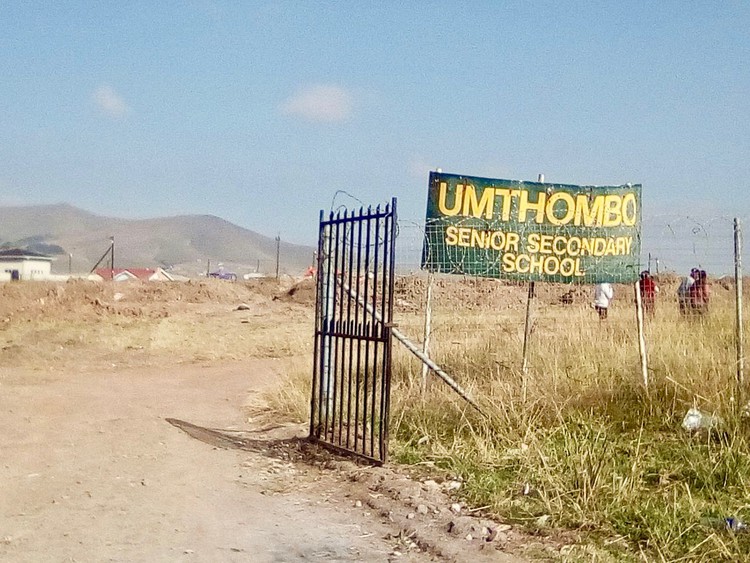
Protests by learners and parents at Umthombo Senior Secondary School in Mpophomeni, Pietermaritzburg, have entered a third week. Teaching stopped on 24 April.

Last Tuesday, learners locked up officials from the Department of Education in an office at the school. Public Order Police had to use teargas to disperse angry protesters and free the officials.

Learners, supported by their parents, want the school’s quintile ranking to be lowered from four to two.

South African schools are ranked in five categories (quintiles) according to the socio-economic status of the community. Parents say that although Umthombo is near a suburban area, most learners are from poor families.

“We are from Korea, Nguqa, Hhaza, Ebumnandini and Mafakatini. We live in RDP houses not in flashy homes,” said a grade 12 learner.

“We can’t even afford R200 school fees. There is a class that has 96 learners. If we are lucky to have textbooks, it’s only two per class. We sit in threes on desks. How can a school faced with so many challenges be ranked quintile four,” said the leaner.

Mzwakhe Zondi, a parent, said the department had promised to change the quintile to a lower level back in January 2016.

“The school is a mess. The teachers have no chairs. They have no staff-room. … Learners move desks from one class to another. Other learners are left standing. Yet the school is ranked on quintile four,” said Zondi.

Teaching has stopped at Umthombo High School for three weeks. Photo: Nompendulo Ngubane


School governing board member Mbali Ngubane said the board had been liaising with the department since 2016.

“All they are telling us is that there is no money. We requested that at least they change the quintile,” she said.

Provincial spokesperson for the Kwa-Zulu Natal department of education Sicelo Khuzwayo said: “We are appealing to the parents and learners to calm down. This is not a permanent situation.”

The allocated budget for 2017/2018 financial year the KwaZulu-Natal department of education was close to R 50 billion of which close to R 40 billion was allocated to public ordinary school education.

Khuzwayo said, “The department is currently faced with a challenge of funds. We made them aware of that. We will commit ourselves to solving the matter. Currently there is no money.”

Ngubane said that matrics struggled to further their education after qualifying.

“They cannot get grant funding [bursaries] because of the [school’s] quintile. Learners are very angry. They are fighting for their rights and we can’t stop them. The department must intervene,” said Ngubane.


Learners use field as toilet

Yamkela Ntshongwana

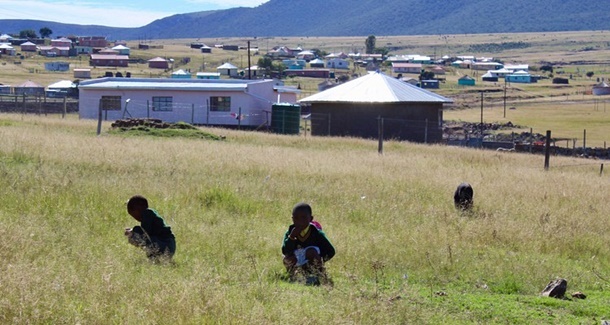
Young children are forced to use a field as a toilet at Ntshingeni Senior Primary in the Eastern Cape school, while teachers turn to neighbouring houses.

“We feel abandoned by the government. Most of us went to school here using these [same] old toilets, and even our grandchildren are forced to use them,” said Phumla Sitetho, a parent from Ntshingeni village near Cofimvaba.

Malixole Dliso, a teacher at the school, said the toilets were built in the 1980s. The zinc toilets are some distance from the classrooms and in a poor condition. The seats are broken and there is only rough stone and concrete to sit on.

“Since a five-year-old pupil fell into a school pit toilet in Mbizana in the Eastern Cape, we feel our children are not safe in these toilets,” said Sitetho.

The school has 254 pupils from Grades R to 7.

One teacher, Khanyiso Twala, said in his three years at the school, he has never used its toilets “because of the condition they are in”.

Spokesperson for the Eastern Cape Department of Education Malibongwe Mtima said at the beginning of the year, each school is given a maintenance budget.

If it is insufficient, the principal may apply for “top-up” funding. He said the department had not received an application from the school.

But school principal Trom Antoni said he had written a letter to the department in 2015 asking for new toilets. He was told to send photographs of the toilets, which he said he did. He said he never heard back.

Antoni added that the maintenance budget was not enough. They needed to start afresh with new toilets.

“We plead to the department to hear our cry … for the sake of the young [pupils] that are at risk,” said Antoni.

Mtima said the department will send a team to the school to survey the toilets.

Read original article here

Rural community development central to Africa’s industrialisation

Thuletho Zwane

Victor Oladokun’s grandfather was a cocoa farmer. His grandfather lived in a small village in Nigeria.

“But all through his life, my grandfather never tasted chocolate,” said African Development Bank (AfDB) Director of Communications Dr Victor Oladokun.

Many years later, the continent is still faced with the same challenges. Africa remains an exporter of raw materials and an importer of finished goods. He added that if his grandfather were to come back to life and go to this village, he would see that nothing had changed.

“If we are going to change Africa, we must first change the rural areas. We need to ensure rural areas become sustainable,” said Oladokun.

Government institutions, the private sector and civil society all agree that Africa needs to industrialise in order to change the fortunes of many lives on the continent. However, the point of contention is how industrialisation should take place.

Economic analysts argue that Africa relies too heavily on agriculture and the export of raw commodities. They say the continent should focus more on manufacturing, beneficiation, and infrastructure development while others make the argument that this would cause too much debt; and that debt-dependent industrialisation is another form of neo-colonialism.

Professor of Economics at the University of Ouagadougou in Burkina Faso Justine Coulidiati- Kielem was one of the proponents of development away from big agricultural projects, financialisation of African economies or infrastructure development. She said structural programmes through grassroot community projects were what was needed for Africa’s development.

“Look what Thomas Sankara did for Burkina Faso. He rejected debt offered by foreign institutions in the form of aid. What Burkina Faso managed to achieve in that short space of time shows that for African states to truly develop, this kind of plan should be followed,” said Coulidiati- Kielem.

Thomas Sankara, the former president of Burkina Faso, introduced the concept of endogenous or self-centred development in his country between 1984 – 1987. Self-centred development  refers to the process of economic, social, cultural, scientific and political transformation, based on the mobilisation of internal social forces and resources and using the accumulated knowledge and experiences of the people of a country.

The model allowed citizens to be active agents in the transformation of their society instead of remaining spectators outside of a political system inspired by foreign models.

Endogenous development looks at “own strength”. Sankara mobilised the masses to take responsibility for their own needs, with the construction of infrastructure, (dams, reservoirs, wells, roads and schools) through the use of the principle ‘relying on one’s own strength.’

He was assassinated in 1987.

Coulidiati- Kielem was part of the audience in a panel discussion that took place at the African Development Bank (AfDB) in Abidjan, Côte d’Ivoire in May under the theme Engaging Civil Society in Accelerating Africa’s Industrialisation.

Coulidiati- Kielem’s argument was a counter to views made by AfDB’s Jennifer Blanke who is the vice-president responsible for  agriculture, human and social development.

Blanke said agriculture and agro-processing will be the main drivers of industrialisation on the continent.  She said agriculture projects needed to be bankable and incentivised to attract private investors and create employment opportunities.

“Right now Africa exports raw materials and imports finished products. This means we are exporting jobs. We export cotton and buy back clothing. We should be thinking about how we can capture whole value chains so that Africans can have these jobs and so that we can have a generation of agro-preneurs,” said Blanke.

Blanke used cocoa farming as an example. She said Ghana and Cote d’Ivoire together produced 60% of cocoa globally. The two countries, together with Cameroon, produce 70% of cocoa globally.

“We should be talking about these three countries creating an oligopoly power where they do not only set the price of cocoa but also add value to cocoa and sell finished goods. We have to start talking about moving up the value chain,” said Blanke.

Development economics cannot be separated from geo-politics

Honorary President of the Network of Farmer Organisations and Producers of West Africa (Roppa) said African countries already attempted to industrialise when they gained independence. However, this failed as a result of interventions by the World Bank and the International Monetary Fund (IMF) who put pressure on African states to “privatise, liberalise the economy and open up our borders”.

“The first act of structural adjustment was to reverse this [industrialisation] and bring us to our knees. It was a revolution that could not be accepted. This bank [AfDB] is an example. This was an African bank, now we have non-Africans as shareholders,” said Mamadou.

Mamadou added that multinational companies come together and remove what Africa creates. He said it was not normal that west Africa produced cotton yet it  buys material from China.

“At start of independence, we made everything here. We are in global partnerships and our partners do not want us to succeed. We should be producing, processing and selling finished products,” he said.

He said African economies have to move focus from commodities and beneficiation because those resources are close to depletion but should rather focus on growing SMEs and developing them.

“We must focus on local development and create  territorial markets. They are putting robots in the factories, we need to put young people in the factories,” said Mamadou.

Coulidiati- Kielem was in agreement.

She said like Europe after World War II, Africa needs a programme like the Marshall Plan that allowed Europe to develop itself.

She said structuring programmes such as the development of small and medium enterprises and industries (SMMEs/SMMIs) were essential and would enable communities in African countries to develop organically, in the way they should.

The Marshall Plan was the post-World War II reconstruction of Western Europe where U.S President Harry Truman assigned $13 billion (approximately $130 billion in 2017/2018)  to Europe in the years 1948-51.

Economic historians James Bradford De Long and Barry Eichengreen explain how the Marshall Plan helped restart Europe’s economy after World War II. They say the plan “significantly sped Western European growth by altering the environment in which economic policy was made”.

A project carrying these ethos is already being implemented in Côte d’Ivoire after successful implementation in the Turi Goda village of Ethiopia and  the Kinseki II, Mbungu, Menga and Kinsendi villages of the Democratic Republic of Congo.

A development community project

In his paper, Saemaul Undong (New Community Movement): Korea’s National Community Development for Rural Modernization,  Professor  Do Hyun Han explains the Saemaul Undong model, also known as the New Community Movement, as a political initiative launched on April 22, 1970 by South Korean president Park Chung-hee,

Chung-hee wanted to modernize the rural South Korean economy, which in 1970 was in absolute poverty. The movement was based on communism and initially sought to rectify the growing disparity of the standard of living between the nation’s urban centres and the small villages.

Han wrote that the Saemaul Undong fundamentally transformed rural South Korea in the 1970s.

“The average income of farm households increased by more than 8 times from 1970 to 1979. The rate of absolute poverty dropped from 27.9% in 1970 to 9.0% in 1980.

“The straw-thatched roofs – the symbol of rural poverty – were replaced with tiles or slates.

“The rural electrification rate increased from 20% in 1970 to 98% in 1977. Drinking water supply system was substantially improved.

Most notably, with the expansion of village roads and bridges built by themselves, villagers saw buses or cars coming into their villages for the first time,” said Han.

The same results are beginning to show in Yamoussoukro, Côte d’Ivoire.

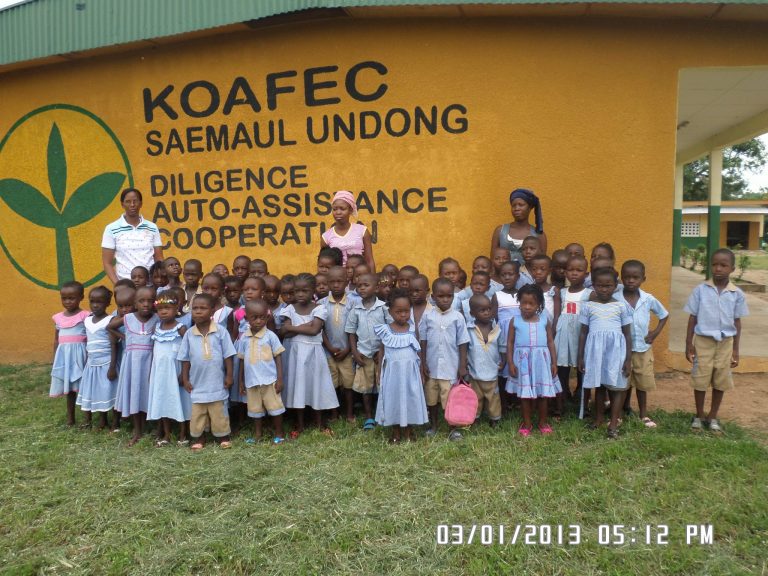
A partnership between the AfDB, the Korea-Africa Economic Cooperation Trust Fund (Koafec) and Agence Nationale d’Appui au Developpement Rural (Anader) has transformed two villages in Yamoussoukro: N’gbekro village and Zatta village.

In N’gbekro village, an irrigation dam has been built; a primary school with 12 latrines; a medical centre; four hectares of cassava farms and a poultry farm. Zatta village also has its own primary school, cassava and tomato farms and houses headquarters for the village microfinance operations.

“It took us two years to start and finish the projects in Yamoussoukro. People have moved from mud houses to brick houses. They sell their own produce to the greater Côte d’Ivoire. They have access to new markets. Their children go to school,” said Oladokun.



Mother bought fake permit to get her child into school

Bernard Chiguvare    

Zimbabwean families caught between the departments of Home Affairs and Education are resorting to buying fake documents in order to register their children at schools in South Africa.

Some schools will not accept immigrant children without a study permit from Home Affairs. But Home Affairs will not issue a study permit without proof of acceptance from a school, say immigrants.

Stuck between the two departments, families are buying fake study permits for about R300.

Jessica Shelver, spokesperson for Western Cape Education MEC Debbie Schafer, said schools were required to issue a letter to foreign learners who had been provisionally accepted. This letter should be sufficient for Home Affairs to issue a study permit.

But some schools are not doing so. “I visited four schools in Retreat trying to register for grade 1 for my child but I could not,” said one Zimbabwean mother, who has been in South Africa since 2008.

“All the schools required the child’s study permit or asylum seeker’s document. The two government departments are ruining our children. The requirements are pushing our children out of school,” she says.

The mother, who is on a Zimbabwe Special Permit, which she renewed last year, says she bought fake asylum-seeker documents for her child, and used these to get a document from the school. Now she is planning to visit Home Affairs with the legitimate school documents, get a study permit, and throw away the fake documents.

“Though I am planning to get a proper study permit it will take time because again I have to produce R1,350 for the study permit. I need to work for months for that money. I could take my child back home to Zimbabwe, but I cannot stay separated from my child,” she says.

She works as a childminder.

Another Zimbabwean mother, who did not want to be named, tried to register her child for grade R, without success, though she has been in South Africa since 2009 on a Zimbabwe Special Permit.

Her five-year-old was born in South Africa but has no birth certificate.

“After visiting several schools I resorted to a fake study permit which I submitted to one of the schools,” she says.

She is planning to apply for a visitor’s visa for her child.

Thabo Mokgola, media liaison officer at Home Affairs, said parents should apply for study permits for their children while they are still in Zimbabwe. The parents of Zimbabwean children born in South Africa should get a birth certificate from the department, then a passport from the Zimbabwean Embassy, and then apply for a study permit.

Parents should contact the District Office for assistance if schools are not complying, said Shelver.

Read original article here.

School sport at the heart of correcting inequalities

Mosibodi Whitehead

When I decided to write about the importance of school league football for the overall development of South African football, I could not have known that the Minister of Sport and Recreation, Thokozile Xasa, would be presented with the fifth annual Eminent Persons Group (EPG) on Sport Transformation in South Africa report.

The report revealed that school sport in our country is broken. It shows that less than 10% of the 25 000 schools in South Africa participate in an organised sports programme. The EPG on Sport Transforma in South Africa, led by Happy Ntshiingila, was borne out of the 2011 Sports Indaba at which the Transformation Charter was adopted.

It is responsible for the monitoring and evaluation of how different South African sporting codes perform relative to their transformation targets.

Cricket, football, netball, rugby and tennis were the five pilot codes which would form the basis of what has now become an annual report on how well South African sport can better reflect the current demographics of the country.

In collecting the data, the EPG soon realised that school sport is at the heart of correcting South Africa’s history of unequal access to opportunities.

The logic is simple.

The reason why sports such as tennis, rugby and to a lesser extent cricket remain largely white and male – all the way from players to administrators to coaches. This is primarily because the recruitment strategy is focused on a few private and former Model C schools whose demographics are very different from the greater South Africa.

Data supplied by Tennis South Africa (TSA) to the EPG for the 2016/2017 financial year shows that only 606 of the 13 710 primary schools in the country play tennis and most of them are private and former Model C schools.

Just 17 township primary schools play tennis when the total number of township primary schools is over 6 000.

It is no wonder then that South Africa’s Davis Cup team remains lily white with Raven Klaasen as the only player of colour. There simply aren’t enough black children playing tennis at the primary school level.

Having said it, it would be unfair to point the blame at TSA alone. One of the main challenges they face in bringing tennis to townships is access to facilities. Many township tennis courts have become derelict and the only time you will hear the bounce of a tennis ball is when it is being chased by aspirant footballers in their afternoon kickabout. Not the intended purpose.

However, there are successes.

The Arthur Ashe Tennis Centre in Soweto is one such example where the facility is owned by the municipality, the City of Joburg,  and allows local children to play tennis through the federation (TSA).

The results have been encouraging with a number of talented players coming out of TSA’s development programme at Arthur Ashe – most notably Amukelani Mokone.

The 15 year old was selected to be part of the SA Schools U15 team that toured the UK last year and is now a pupil at the prestigious girls school St. Mary’s in Waverley.

She was  recruited by St. Mary’s coach and SA Fed Cup captain Rene Plant who recognised her considerable tennis potential. It all started at Arthur Ashe under coach Oupa Nthuping.

Many more Amu’s would be produced if all of the surrounding primary schools were involved in a regular, organised tennis programme using the city’s facility and the TSA’s coaches.

The Department of Sport and Recreation (SRSA) realizes the need for this sort of partnership focussed nodal approach to school sport where the municipality provides the facility; the federation the technical expertise and the Department of Basic Education (DBE) the children. These children would be from townships and rural areas.

There’s already in place a memorandum of understanding (MOU) between SRSA and DBE going back  to 2011. However, even by Xasa’s own admission, the MOU need be reviewed because it has only been partially implemented. The main stakeholders: SRSA, DBE and its provincial departments, and national and provincial federations currently operate in uncoordinated and non-aligned silos.

The 2016/2017 EPG report concludes that a complete overhaul of the school sport system in South Africa is long overdue.

However, before that can be achieved we first have to understand the magnitude of the problem because while the EPG has started the process of transforming school sport, it is far from complete. There are major gaps in the data, especially for federations such as basketball where data is almost completely lacking.

If we concede that unlocking the potential of school sport is the key to transformation then we need to understand the current status of sport at every single one of the 25 000 schools in South Africa.

To that end we urgently need a School Sports Indaba whose first order of business must be to inform the terms of reference for a comprehensive audit of school sport on a national scale.

SRSA, DBE, SASCOC, SADTU, civil society and all South Africans with a vested interest in sport must come together under one roof to chart a course whose first step must be to collect the necessary data to help us understand the problem.

For just as the Transformation Indaba provided direction and gave birth to the Eminent Persons Group in 2011, so too will the School Sports Indaba guide our thinking on how to fix school sport and ultimately level the playing fields.

Mosibodi is a sports broadcaster and writer.


Skeem Saam actor Cornet Mamabolo opens village library

Julia Madibogo

Skeem Saam actor Cornet Mamabolo has achieved his dream of building a library in his village, Maripathekong, in GaMolepo, Limpopo.

Mamabolo, 28, who plays the role of Thibos on the popular SABC1 youth soapie, said it was all systems go as he and the team from the Cornet Mamabolo Foundation are set to launch the library on Friday.

Mamabolo and his team are adding the final touches, such as shelves for books they have received. He said the library would be ready by tomorrow.

The library is at Boshega Primary School. Mamabolo said it took about three years to bring the project to life.

“We needed books that will speak to the youth and will be fascinating for the actual community, because we are dealing with a community that is not used to reading, or used to going to the library.”

Mamabolo said he partnered with the University of Limpopo, the National Library and generous individuals to find books that would be fitting for the library.

“Education is the basis of everything. I don’t think I would be where I am and speak the way I am speaking if it was not for education. The idea is for them to get a taste of it,” he said.

This article was first published here.

Budget cuts for the department of basic education

Inside Education

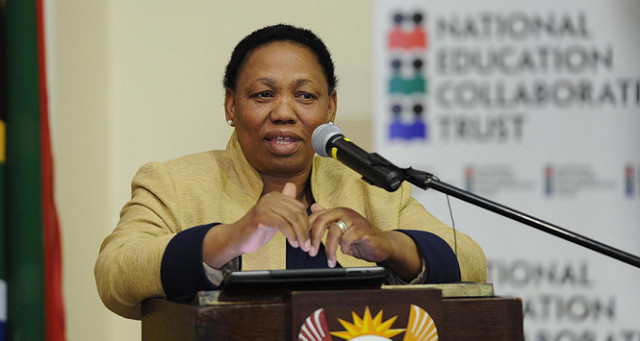
Basic Education Minister Angie Motshekga on Wednesday tabled her department’s budget where she spoke of budget cuts, funding for infrastructure and the change in current curricula.

The overall 2018/19 budget allocation for the Department of Basic Education is just under R23 billion, 3% lower than the previous year.

Motshekga said her department only received a one percent increase over the previous financial year’s total allocation.

“In inflation-adjusted terms, this means that we are seeing a decline in the overall budget allocation for the basic education sector,” she said.

Motshekga said the budget vote took place in the context of “financial constraints” which had led to a reduction in basic education sector funding.

“I must state upfront that budgetary constraints in the sector have rightfully attracted a lot of attention over the last year, largely because of the weak economic growth.

“The basic education sector, like most other service delivery areas, has had to reduce what it purchases,” she said.

However, despite the budgetary cuts, the administration budget has increased by 8.2% to about R450 million.

The grant for learners with severe learning disabilities receives R185.5 million, almost three times the R72 million allocation in the last financial year.

Infrastructure delivery, which continues to be funded through the Education Infrastructure Grant and the Accelerated Schools Infrastructure Delivery Initiative (ASIDI), will receive an allocation of R9.9 billion and R1.5 billion respectively. This is a decrease of 44.8% from the 2017/18 allocations.

Criticism came from Equal Education and Section 27, both non-governmental organisations, that have placed the department of basic education uder pressure to fix schools in South Africa and fix the norms that apply to all schools.

The norms are laws which requires school infrastructure to meet minimum Norms and Standards.

Amanda Rinquest, the Co-Head of Equal Education Eastern Cape, said the minister has made many excuses for failing to fix schools. Some of these excuses include budget cuts announced by National Treasury.

“It is crucial to bear in mind that neither provincial education departments nor the national DBE effectively spend the funds that are already available. In 2015, the Eastern Cape underspent its education infrastructure grant by R530-million. In 2017, the national DBE underspent its budget to build schools in the Eastern Cape (via the ASIDI programme) by R415-million,” said Rinquest.

Regarding  department of basic education’s want to  phase in a new-look curriculum on history over seven years, Motshekga said:

“We will phase it in, we will make the necessary adjustment but we will also take the paradigm – the paradigm can’t be a Eurocentric paradigm, which teaches about the French revolution only. They have to know about the French revolution but they have to also know about Haiti just to have an Afro-centric perspective about the rest of the world.”

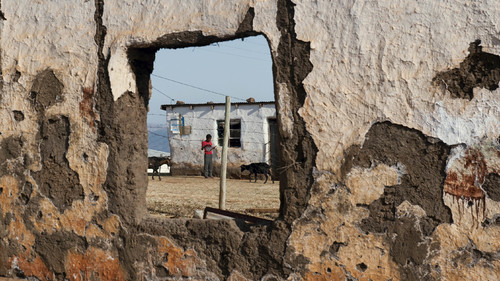
Eastern Cape mud schools progress stalls

Bongekile Macupe 

The Eastern Cape education department predicts it will have eradicated all mud schools in the province by 2022 — six years later than promised by the national minimum norms and standards set by the national education minister, Angie Motshekga.

Schools built out of mud, wood, zinc and asbestos should have been fixed or replaced by November 2016, according to the standards for public school infrastructure released by Motshekga in November 2013.

But, in a written reply to the Eastern Cape legislature in Bhisho last month, education MEC Mandla Makupula said there were still 436 mud schools in the province, which he said should be phased out by 2022.

Even this date is not certain: “It is dependent on the circuit school landscape plans to identify if the schools in the plan are viable, and the availability of budget,” Makupula said.

He said the cost of eradicating all such schools was estimated at R19.9‑billion but that the amount could drop to R16.9‑billion through efforts such as the “rationalisation” of some schools — merging smaller schools and closing others.

Makupula said 367 of the mud schools had been allocated to the Accelerated Schools Infrastructure Delivery Initiative.

The programme was launched in 2011 to deal with the school infrastructure backlog in the country. The other 69 mud schools were allocated to the province to be dealt with through a conditional grant.

The spokesperson for the national department of basic education, Elijah Mhlanga, said that because the province included two homelands — the former Ciskei and Transkei — its issues were “peculiar”.

“In the Eastern Cape, the eastern part of the province [the former Transkei] had no schools at all,” he said. “The majority of the schools there were built by communities using their own hands, using mud and water. The western part had schools that were built by the former regime.

“So when you allocate funds now, how do you do it? Do you favour the one part over the other? You can’t be seen to be favouring one part, which means then the part that was historically worst off will continue to be worst off and the one that had some level of resources will continue to benefit.

“You have to catch up but, even in catching up, you are also perpetuating a problem — because where you could do more, you are forced to do the same as the other part and you end up with long periods of time continuing with not much of a difference,” Mhlanga said.

The province needed strong political leadership to ensure that areas with persistent problems were focused on trying to address the imbalances, he said, but the responsibility for this lay with the provincial premier, and not with Motshekga.

Another difficulty was that senior managers did not stay in positions for long enough to carry out projects.

“You did not have a CFO [chief financial officer]; you did not have a finance manager; you did not have an HOD [head of department] staying for an extended period.

“The infrastructure [in the] department did not exist and that is why monies were returned to treasury because there was no one to plan, finalise plans and commit monies and deliver. So those were the challenges,” Mhlanga said.

The fact that the province was large had also complicated management issues, he noted.

“Delivering on school infrastructure was a big, big challenge in the Eastern Cape … There was [a lack of] scholar transport, which had been stopped at some point; school nutrition, which had also been stopped at some point; and in that same process schools had also not been built at the rate that was required,” he added..

This was why the Accelerated Schools Infrastructure Delivery Initiative programme was so concentrated in the Eastern Cape, Mhlanga said.

Of the estimated 180 schools that have been built by the programme so far, 141 are in the Eastern Cape.

“Even with that, if you go to the Eastern Cape it looks like we have done nothing and [the programme] is just a small project, which is supposed to supplement what the province has already been doing.”

Mhlanga said things would soon start to take a different turn, as a new provincial education department head had been appointed and a new infrastructure team was in place.

But education advocacy group Equal Education said the provincial department did not meet the 2016 deadline for eliminating mud schools because it had failed to plan properly and its database was inaccurate.

Co-head of Equal Education in the province Luzuko Sidimba said: “Our understanding is that the backlog is about 800 inappropriate schools in the Eastern Cape and not 400 … they don’t even know some of these schools … So that’s why we are skeptical about trusting the figures they present in public. Are those figures accurate? Because we have made it clear to them that their data is not accurate.”

Equal Education is counting on a judgment to be delivered in the Bhisho high court after it took the basic education department to court to compel it to meet the infrastructure targets it had set to fix schools.

In the case heard in March, the organisation alleged that there were unconstitutional loopholes in the norms and standards, which the department used to sidestep its responsibility to fix schools.

The group also wants what it calls “inappropriate wording” in the law to be fixed. It claims  this is also preventing the department from doing what it is supposed to do.

Sidimba said if the organisation won its case, it would mean that each school could take the department to court for failing to build appropriate structures for teaching and learning.

This would be seen as a violation of a pupil’s rights to proper schools and dignified sanitation.

Read the original article here.

Late payday highlights plight of grade R teachers

Bongekile Macupe

Grade R teachers in KwaZulu-Natal were paid several days late this month — highlighting the fact that these foundation-phase educators have yet to be fully absorbed into the basic education system.

The teachers were meant to be paid their monthly stipend on April 30 but received it on Thursday.

It may still be a year or two before grade R teachers are fully absorbed into the country’s basic education system. Until then, they have to live with the anxiety of sometimes not being paid their stipends on time, not being paid at all and not receiving any annual increases.

According to teacher unions in KwaZulu-Natal, the provincial education department claimed that these teachers were not paid because their contracts had not been renewed on time. Because grade R teachers are not permanent employees of provincial education departments, they are required to have their contracts renewed every year.

But the spokesperson for the province’s education department, Muzi Mahlambi, did not confirm that this had been the reason behind the delayed payments. In response to detailed questions, Mahlambi would only confirm that the affected teachers had since been paid.

Grade R teachers in the province are paid a stipend of R6 500 a month but — as with all grade R teachers in the country — this does not come with any of the benefits such as medical aid, housing allowance and annual bonus that are enjoyed by other public school teachers.

Teacher unions in KwaZulu-Natal — the South African Democratic Teachers’ Union (Sadtu) and the National Teachers’ Union (Natu) — have been at loggerheads with the provincial education department over a salary increase for grade R teachers.

Recently, the Mail & Guardian reported on several issues raised by the two unions about the state of education in the province, including the need to boost what grade R teachers are paid.

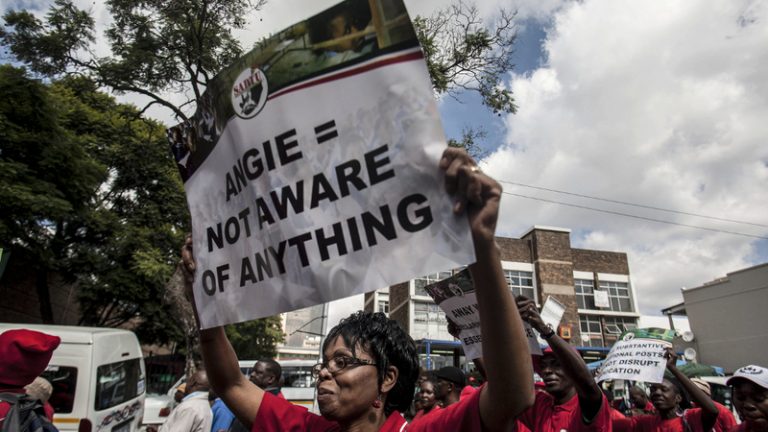
The unions have called for Basic Education Minister Angie Motshekga to intervene in the affairs of the provincial education department, warning that it was in crisis.

Following the nonpayment of the grade R teachers’ stipends on April  30, Sadtu in the province said these were “symptoms of a collapsing department”.

The executive director of the National Professional Teachers’ Organisation of South Africa, Basil Manuel, said, until grade R was made a formal part of the schooling system, teachers would continue to experience problems — which were not, incidentally, unique to KwaZulu-Natal. “We have been arguing and fighting about this for a very long time. As teacher unions, we have been saying that the people are doing the job. Many of them have qualified themselves or got the minimum qualification, so we can’t continue paying them [only] the stipend.”

He said grade R was “not recognised for staffing purposes and salary purposes as being part of the schooling system, but it is part of the schooling system.

“It is a problem that is not going to be solved if our budgets are not catering for it. All provinces have the budget for the stipend but some provinces are paying more than the others, because they have more money,” said Manuel.

The spokesperson for the basic education department, Elijah Mhlanga, agreed that there was currently no uniformity in how grade R teachers were paid and what their conditions of service were. As a result, each province dealt with them differently.

“It is an issue we are attending to … And it is because a large number of them are not qualified; they don’t have that minimum qualification in grade R teaching … they are doing the work but they are not formally employed. The grade is formal, it is recognised in the education system, but there is no formal assessment.”

He said the curriculum and the minimum qualifications for grade R teachers needed to be agreed on for them to be fully integrated into the education system. “It is one of those things that is taking long to be finalised,” said Mhlanga.

He acknowledged that grade R teachers who had the right qualifications were remunerated the same as those who did not. The government was working on formalising grade R but this process would not be finalised any time soon, said Mhlanga.

“An announcement might be made next year after the elections, but the work is continuing. I think it’s one of those things that the new minister — when that person gets to the office next year — will have to attend to.

“Because it is something that has been brought to the table, not just by education but even the ruling party itself wants to know what is happening,” said Mhlanga.

Read the original article here.