Home Blog Page 505

Namibia: Increase in Drug Abuse Among Koës Learners

Matheus Hamutenya

Koës — Keetmanshoop Rural Constituency Councillor Elias !Kharuxab is disturbed by drug activities in his area saying school learners are being turned into drug dealers.

A worried !Kharuxab said that he was made aware during community meetings that many school learners, especially at Koës and Aroab, are being used by drug dealers in their illegal dealings, and this he said, exposes these teenagers to drugs which they end up using themselves.

He said the use of drugs amongst the youth is a problem in his constituency, adding that while the drug dealers get an income through their illegal businesses, the future of many young people is being destroyed.

“The biggest problem I learned from the community is that school children are drug dealers, they spend most of their time involved in these illegal activities and they do not have time to concentrate on their school work,” he said.

He said, while he understands the reasons that might push young people into illegal dealings, he does not condone any illegal activities, and he blamed parents for the actions of their children, saying some parents are not doing enough for their children’s welfare.

“I have observed and learnt that most of our parents do not take responsibility of their children, these children start smoking at six and seven years of age, and they are exposed to drugs, and this must come to an end,” further elaborated the councillor.

The outspoken councillor said that parents need to get their acts together, and take full responsibility of their children, so that they can focus solely on their school work, which will open many doors for them, saying without an educated people will remain poor.

“We must make sure our children study hard, if not we will keep on crying that people are coming to take our jobs, and poverty will always be in our households,” he stated.

He said there are plans to have an operation, where all school learners found roaming around the streets late at night will be taken to the police station, so that their parents can explain why their children were out in the streets late at night before taking them home.

Read the original article here.

Student who received R14 million Nsfas payout in error appears in court

Jan Bornman

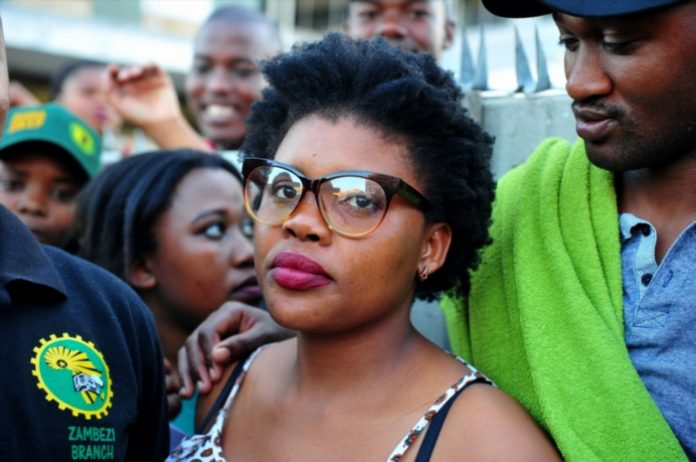
Sibongile Mani, the Walter Sisulu University (WSU) student who accidentally received more than R14m from the National Student Financial Aid Scheme (Nsfas) and went on a spending spree in 2017, appeared in the East London Magistrate’s Court on Tuesday morning.

Hawks spokesperson Captain Anelisa Feni confirmed that Mani, 28, was arrested on Tuesday by the Serious Commercial Crime Unit of the Eastern Cape Hawks, after it requested that she hand herself over.

She has been charged with theft.

Mani accidentally received the Nsfas payment of R14.1m and went on a three-month spending spree.

“She allegedly spent just over R810 000 of this amount on personal items over a period of three months before the anomaly was detected by the scheme,” Feni said.

News24 last year detailed how Mani, who studied accountancy at WSU, spent the money hosting parties for her friends, buying Peruvian wigs, designer clothes, handbags and expensive smartphones. During this time, her grandmother who raised her continued living in poverty.

She was the branch secretary of the Pan Africanist Student Movement of Azania at East London’s Potsdam campus, when her life transformed overnight, from that of an ordinary student to a socialite.

Mani was released on a warning and was expected back in court on July 2. – News24

These SA universities have banned Apple watches during exam time — here’s why

Timothy Rangongo , Business Insider SA

As technology becomes increasingly sophisticated, so has the ease of cheating in exams. With the exam season approaching, several South African universities have banned smartwatches from exam rooms to crack down on cheating.

Tertiary institutions across the globe are updating exam rules to ban smartwatches as they’ve essentially become wrist computers that can be used to record, transmit, receive, or play back audio, photographic, text, or video content.

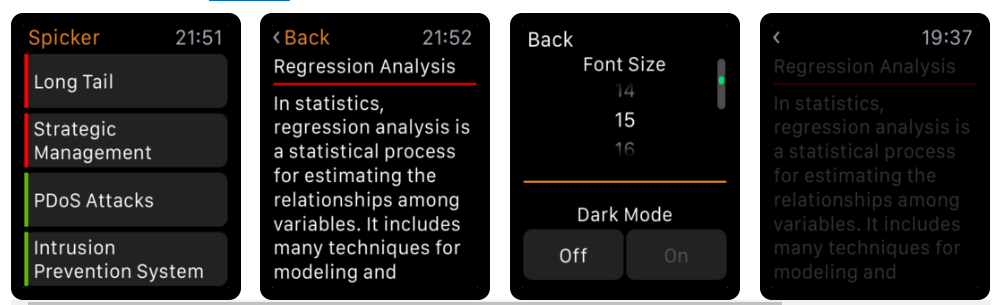
Apps are also being developed to make it even easier to download notes on their phones. One of the most popular, Spicker (the German word for “crib”) allows you to easily add notes to your iPhone, and you can even mark different notes with different colours.

A digital watch app like Spicker is one of the ultimate cheating aids for students — allowing them access to notes on their wrists. (YouTube)

Students can quickly swipe left to a clock screen if an invigilator approaches. The app also allows you to dim the light on the watch, making the text fainter.

How a student could view notes from a digital watch app like Spicker. (App Store)

This is how SA universities are managing smartwatches in exam rooms

University of Cape Town (UCT)

UCT’s exam policy clearly stipulates that “no student in [an exam] venue shall have on his or her person or desk, any device capable of the storage, retrieval, transmission, or reception of data including (but not limited to) watches.”

Stellenbosch University

The university concedes that electronic communication devices are “becoming increasingly sophisticated and communication to the outside without speaking is becoming easier and easier.” Stellenbosch requests students to switch ‘all’ electronic devices off but allow them to be placed on tables, albeit face down.

University of Kwa-Zulu Natal (UKZN)
UKZN says cheating includes having “a device or instrument capable of storing, sending or receiving information, or any other article containing information, the use of which is not authorised by the examiner or the examinations officer” on-person, in an exam room.


University of Pretoria (UP)
UP’s examination policy requires that digital watches be switched off and placed on the floor, under a chair and out of the student’s line of sight.


Rhodes University
The academic administration department of Rhodes tells Business Insider SA that students are warned against the use of any electronic devices including smartwatches before the start of tests and/or exams. A student found to be wearing a questionable electronic device during an exam may also be asked to clarify its function or to remove it.


Monash University
The SA arm of the Australian university located in Johannesburg also has an explicit ban on smartwatches. Monash says if a student brings a smartwatch into an exam, they must turn them off (including the alarm) and put them in a bag on the floor.

Namibia: First Lady rejects Curro Holdings school deal link

Shinovene Immanuel

First Lady Monica Geingos says the company that wants to build a N$200 million private school in Windhoek misinformed the education ministry in claiming that she facilitated talks between the firm and the President to support the project.

Geingos made these remarks in two letters sent to The Namibian through her lawyer Sisa Namandje on Saturday.

Even though Geingos admitted that she advised the company to write their concerns to the President, she rejected claims by the company that she initiated talks.

The Namibian reported on Friday that the education ministry turned down a proposal by a private company – which is supported by President Hage Geingob – to surrender a plot worth over N$20 million in exchange for a free school in a Windhoek low-income area.

This transaction involves a South African company called Curro Holdings, which owns the Windhoek Gymnasium Private School.

The land (Erf 350) that measures around seven hectares (equal to seven average football fields) is in Rietfontein Street, Kleine Kuppe.

Windhoek Gymnasium Private School managing director Colette Rieckert wrote two letters to education permanent secretary Sanet Steenkamp last month regarding their plans to get land which is reserved for the education ministry.

Rieckert explained in an 11 April 2018 letter that their plan to build a school was delayed by the City of Windhoek.

Rieckert said Geingob helped them when the City of Windhoek delayed in processing their application.

“We have had many frustrations in the application process of land for our junior schools,” Rieckert wrote to Steenkamp. She added that in December 2017, First Lady Geingos requested to see her about their land applications.

“After my discussion with Geingos, she discussed it with her husband, who immediately took action and sent a letter of support for our school, plus the request that the City of Windhoek starts actively to help me in my search for land,” Rieckert said.

She added: “After issuing this letter, we did feel some action being taken (by the municipality)”.

“Our President and his wife appreciate the quality education that we provide in Namibia, and wish for us to build more schools in our country,” she said.

Namandje, representing Geingos, wrote to Rieckert on Saturday, saying her letter to Steenkamp was misleading.

“Our client finds the content of your letter unfortunate, and a distortion of what occurred,” Namandje told Rieckert.

He said Rieckert contacted Geingos on 27 July 2017, explaining their frustration about their plan to build a school.

“You informed our client that you desperately needed to speak to her “for advice” in respect of your frustration and unhappiness [in] what you considered as the unfair handling of your school’s land application by the Windhoek municipality,” Namandje said.

The lawyer said Geingos advised Rieckert that if she was aggrieved, she can write a letter to the President.

“Our client’s involvement in the matter was therefore limited to you approaching our client, seeking advice on how to handle your frustration in respect of your land application, and her advising you how you could address your complaint,” Namandje said.

The attorney said Geingos did not discuss the matter with Geingob, and did not push for the support of the school from the President as Rieckert appeared to have implied in her letter.

“Your letter further appears to suggest that our client initiated contact between yourself and her. That is wrong, as our client did not request to see you,” Namandje said, adding that text messages exchanged on this matter between Geingos and Rieckert are still available.

“We, therefore, kindly demand that you correct the above factual misrepresentation,” he asked Rieckert.

Namandje said the President and the First Lady regularly receive complaints from the public over poor service delivery from public offices.

“When they alert the concerned public functionaries of complaints received by them, it would be unfair to interpret their action as some sort of inappropriate bid to influence the decision-making,” the lawyer stated.

Namandje also complained that Geingos was not given an opportunity to comment on the article.

The Namibian emailed questions and all the quotes attributed to Rieckert to State House on Thursday, but presidential spokesperson Alfredo Hengari referred the queries to the education ministry.

Rieckert issued a short statement on Friday, saying they did not agree with the article, and that they would not comment on the matter.

Curro Holdings want to build a N$200 million primary school to accommodate about 1 000 pupils and be a feeder to the nearby Windhoek Gymnasium, which currently offers both primary and secondary education.

The land where they want to build was reserved for the education ministry in 2012, although it is yet to be paid for. Curro Holdings is now asking the education minister to inform the City of Windhoek that the ministry does not want the land any more. Once that is done, Curro would then buy the land from the municipality.

In exchange, Curro offered to build 24 classrooms and other facilities at Monte Christo School in the Havana informal settlement for N$14,6 million. The school uses containers and tents as classes.

The decision by the education ministry, led by Katrina Hanse-Himarwa, to block the proposal by the private company effectively goes against the wishes of the project supported by Geingob, adding to the suspicion that the two political leaders are not on good talking terms as before.

People briefed about this issue said a relative of a senior official in the Presidency is part of the company subcontracted to build the proposed Windhoek Gymnasium Primary School.

However, other people said officials in the education ministry are using that link as a way to dismiss a legitimate proposal to build a school on land that the ministry is not using.

Read the original article on Namibian.

Education to prepare young minds for 4th & 5th industrial revolutions

Lesetja Malope

Sizwe Nxasana has embarked on a mission to prepare young minds for upcoming industrial revolutions.

Nxasana is former FirstRand CEO and the sixth black person to qualify as a chartered accountant in the country.

He serves on a few boards, including the National Student Financial Aid Scheme and the National Education Collaboration Fund. He left the corporate world two years ago, having earned his stripes as a respected executive.

However, what many people do not know about the humble, Newcastle-born executive is that he is passionate about education and since exiting the corporate world, he has embarked on a mission to improve the education system through Pan-African methods.

“It was quite a natural step that when I left corporate life I would do two things; the first is to start a business in the education sector as a social enterprise and second I would, as part of my national service, work with government in the area of education to try to improve the quality at both basic and higher education levels,” Nxasana said at Sifiso Nxasana House, head office of the Sifiso Learning Group in Sandton this week.

As the executive chairperson of the group, an entity he co-founded with his wife Judy Dlamini, Nxasana said through Future Nation Schools, a subsidiary, he plans to change the education landscape, improve the quality and introduce a new culture of excellence.

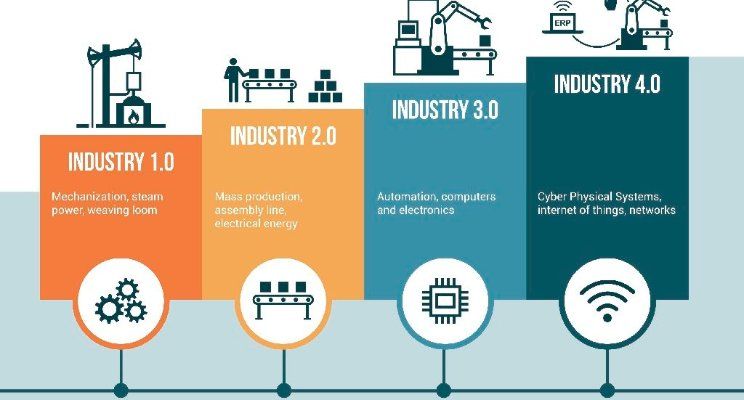
“We are now preparing young minds for the fourth and fifth industrial revolutions and education has a key role to play in that regard. As a country we have a number of challenges.

“And, even though as a country we have done very well in improving access to education we are still battling to improve the quality of education,”
he said.

Future Nation has seven schools and Nxasana said there are ambitious plans to ensure the brand grows beyond regional borders.

“We have ambitions that are more Pan-African. We have ambitions of making sure that Africans are part of the fourth and fifth industrial revolutions.

“These are not African problems but continental problems. We have ambitions of growing the footprint continentally, even globally,” he said.

Nxasana said the group has also opted to expand slowly with the establishment of its teaching culture rather than faster acquisition of schools.

He likened the education group to a “laboratory”, examining and researching internationally progressive ways of learning and teaching.

He pointed out that another differentiating factor of the group is the emphasis of development and promotion of indigenous languages.

“The development and promotion of the mother tongues need to be accelerated. If you consider that it’s been proved time and again that our children don’t read for comprehension, we need to invest a lot more in our languages,” he said.

The group has a publishing subsidiary that promotes indigenous writers for both academia and trade books.

Through Sifiso EdTech, another subsidiary, Nxasana said the aim is to use technology to improve education.

Late last year the group donated 36 000 books to the Walter Sisulu University.

Nxasana said the 30 000-plus students at the institution do not, as with most of its peer institutions, have sufficient resources and that disadvantages whoever enrols there.

Asked if he thinks there would be free higher education in the foreseeable future for all, Nxasana said: “The ANC and government are clear on this topic that higher education will be free to those people who need financial aid.

“It’s very clear – in fact even section 29 [of the Constitution] is clear on that – where it says the state within its reasonable means will make higher education available.

“As a developing country that has fiscal constraint I think the state has done as much as it can to make sure it meets that constitutional obligation,” he said.

Read original article here.

Last day for Gauteng school admission applications

Jenna Etheridge

Parents only have until today midnight to apply online for Grade 1 and Grade 8 placements, the Gauteng Education Department has said.

The department’s online system will shut down at time 00:00 as we enter into the new day.

Department spokesperson Steve Mabona said parents who had already applied were reminded to urgently submit the required documents to schools.

“As a special concession, schools will accept documents only up to 14:00 on 5 June 2018. Failure to submit documents will lead to applicants forfeiting their positions in the queue.”

A total of 535 064 applications have been processed since applications opened online on April 16.

Most of the decentralised admission centres were flooded on the first day of applications.

‘High-pressure’ schools

Mabona said the few errors that were encountered were resolved immediately.

In some cases, people had applied for the wrong grade, entered the incorrect addresses or lost/forgot their login credentials.

At this stage, the demand seemed to exceed the number of available spaces at almost 600 schools.

Nine of the top 10, “high-pressure” schools are high schools.

The top high-pressure schools are Alberton High School, Boksburg High School, Sir John Adamson High School in Winchester Hills, Mondeor High School, Pretoria High School for Girls, Hoërskool Akasia in Heatherdale, Hoërskool President in Ridgeway, Northcliff High School, Hoërskool Gerrit Maritz in Pretoria North and Laerskool Akasia in Pretoria.

Schools which have low numbers of applications were all in poorer suburbs.

“It is concerning that in the last two years, many parents in townships waited for the late application period and flooded [Gauteng Department of Education] offices in January to apply for their children,” said Mabona.

Parents were warned that those who did not meet the deadline were at risk of having their children out of school in January 2019.

The placement process will take place between July 18 and October 31.

“Parents should note that availability of space is the key determinant of how many children can be placed in a school. Placement will be conducted in compliance with admissions criteria and on a first-come-first-served basis.”

Parents will receive SMS notifications regarding the status of their applications.

Schools will send offers of placement to parents between July 18 and August 3.

These offers have to be confirmed within seven working days of receipt thereof, or the space offered will be forfeited.

From August 6 to October 31, districts will help place pupils who cannot be placed by schools.

“We are indebted to all parents who have heeded to our call and applied in numbers, the response from the public was indeed overwhelming. We encourage those that have applied to conform to the stipulated deadline,” said Gauteng Education MEC Panyaza Lesufi.

Read the original article here.

South Africa: Sexual offenders are in our schools

A shock to the system: how new teachers in Zimbabwe learn to do their jobs

Nhlanhla Mpofu and Lizette J de Jager

There’s a big difference between what prospective teachers learn at university and what they find when they enter the world of work. Some scholars have called this a “reality shock”, and pointed out that it could “account for the frustration, anxiety and self-doubt many early career teachers are thought to experience”.

Other researchers have found that early career teachers who are just starting out often lack the subject knowledge that’s needed for effective teaching. There’s a discrepancy between the content they’re taught and the curricula they find already in place at schools.

And, in perhaps the grimmest description of all, some researchers have called teaching an occupation that “cannibalises its ‘young’ and in which the initiation of new teachers is akin to a ‘sink or swim,’ ‘trial by fire,’ or ‘boot camp’ experience”.

Yet despite these very real challenges, some early career teachers have managed to effectively teach their subject and have remained in the profession. Given that their university training alone didn’t seem to be setting them up for this work, we wanted to know how early career teachers obtained the knowledge they really needed to succeed and even thrive.

Working with early career high school English language teachers from Zimbabwe, we found that teachers obtained their knowledge about their work from three sources. First, they drew from theories of education they’d learned at university. They also explored the nature of their subject and built up knowledge from that. And they identified problematic areas in how their subject is usually taught, then found new and different ways to tackle these difficulties.

These findings emphasise teaching knowledge as emanating from personal, practical, reactional and contextual experiences. This means teacher preparation programmes might better prepare pre-service teachers by exposing them to multiple contexts which have the potential to develop their professional practice.

Different ways of learning how to teach

We worked with a group of early career teachers in Zimbabwe’s Bulawayo East district. They work at schools which we once reserved for white students before Zimbabwe gained independence in 1980 and the education system was desegregated. Today the district is largely occupied by middle-class black people and a few white families.

We collected data using semi-structured interviews, conducted our own observations and had the participants keep reflection diaries. Then we analysed this material to identify common areas of knowledge and the sources of that information.

University study is not entirely without value for early career teachers. The participants in our research said they sourced some information from their academic courses and activities. This included general knowledge about psychology, sociology, learning and communication. They then reconstructed this knowledge into their personal philosophies and teaching styles.

The second source of knowledge was the very nature of English language as a subject. For example, when it came to the literature component of the subject, teachers said it was important to know about the history of literature since this informs its nature. This knowledge made them more aware of the scaffolds their pupils required to perform well in the subject. This knowledge was not easily accessible through comprehension of the university curriculum only. These teachers reinterpreted their theoretical knowledge into their contexts as means of enhancing effective learning.

The knowledge of the history and nature of their subject motivated these teachers to embrace specific teaching methods that facilitated problem solving, critical thinking, competencies, skills and values synonymous with someone who has studied in that area. They were aware of the robust ways in which knowledge is acquired in English learning.

Through this continuous process of refining their ability to teach a subject by paying attention to their context, the pupils and the curriculum objectives, the early career teachers become more than subject teachers: they were subject knowers.

Finally, the participants in our study learned to be better teachers by understanding which areas their pupils struggled to grasp. They reached this point by really getting to know what each of the pupils in their classes needed to be academically successful. Then they created teaching strategies that motivated their learners and boosted their self-esteem and efficacy.

Implications for teaching

Our study offers a deeper comprehension of how early career teachers develop and gain knowledge. It also highlights the symbiotic relationship between theoretical knowledge in teaching and the role of teachers in the construction of their teaching knowledge from classroom-based experiences.

Simply put, it’s not enough for teachers to get a degree and believe they’re prepared for life in a classroom. There should be more chances for teachers to develop skills as professionals on how to teach. This development process occurs only when teachers are nurtured in supportive school communities.

Nhlanhla Mpofu is a Senior Lecturer at Sol Plaatje University and Lizette J de Jager is a Senior lecturer at the University of Pretoria.

Read original article here.

Science in Africa: homegrown solutions and talent must come first

Alan Christoffels

It’s been a recurring refrain: Africa still lags woefully behind the rest of the world in generating new scientific knowledge.

As figures collated by the World Bank in 2014 show, the continent – home to around 16% of the world’s population – produces less than 1% of the world’s research output.

These are painful admissions to make as the continent prepares to celebrate Africa Day on May 25. But there are several projects and initiatives that offer hope amid all the bad news.

One is a major funding and agenda setting platform, the Alliance for Accelerating Excellence in Science in Africa based in Nairobi, Kenya, which was established by the African Academy of Sciences in partnership with NEPAD. It will award research grants to African universities, advise on financial best practice and develop a science strategy for Africa. It also offers an opportunity for African scientists to speak with one voice when it comes to aligning a research and development agenda for African countries.

Another is the US’s National Institute of Health and Wellcome Trust’s commitment to invest nearly US$ 200 million into Africa-led genomics projects, biobanks and training of bioinformatics personnel. This investment targets diseases that affect the African continent and gives African scientists the opportunity to set priorities with regard to health interventions and skills development.

And some countries on the continent are starting to realise just how important it is to retain talent and skills. They are investing in human capital development and building infrastructure to keep African scientists in Africa – or to attract them back home once they’ve studied elsewhere. All of this will help to shift the continent’s economies towards becoming knowledge-based.

These are all promising steps in the right direction. But more work and focus is needed across the continent.

Political will lagging

The underlying reason for the dispiriting figures shared by the World Bank is multifaceted but simple: Africa does not produce enough scientists.

The continent currently has only 198 researchers per million people. That’s compared to 455 per million in Chile, and more than 4,500 per million in the UK and the US. If it’s to match the world average for the number of researchers per million people – around 1,150 – the continent needs another million new PhDs.

Political will is desperately needed to achieve that goal. It is sorely lacking in most African countries. In 2006, members of the African Union endorsed a target for each nation to spend 1% of its Gross Domestic Product on research and development. Yet as of 2017 only three countries – South Africa, Malawi and Uganda – have reached this goal.

And while more African authors are producing research and being published in international journals, a great deal of this work is being conducted in collaboration with international partners.

The vital role of international partnerships in driving innovation in Africa is unquestionable. But at the same time, the dependence on international collaboration and investment without any pan-African framework for increasing and sustaining local funding, limits Africa’s ability to drive a scientific agenda that is aligned to its specific needs.

Homegrown initiatives

That’s why African-led initiatives like the Alliance for Accelerating Excellence in Science in AfricaHuman, Heredity and Health in Africa Programme and the Global Emerging Pathogens Treatment Consortium– through which genomics programmes on the continent are being funded – are so important.

For instance, the funding the National Institutes of Health and the Wellcome Trust are channelling through the Human, Heredity and Health in Africa Programme has catalysed regional efforts to establish guidelines for biobanks in South Africa, Ivory Coast and Sierra Leone.

Genetic material of African origin is key to the development of more effective vaccines or understanding disease mechanisms. Biobanks provide both the infrastructure and protocols to accurately store these biological samples, and in the context of pandemics like Ebola scientists have access to the biological material to find vaccines.

In supporting biobanks and more generally genetics laboratories, my team has built the open-source Baobab LIMS through European Union funding to track the lifespan of a biological sample in a laboratory. This means a researcher can trace what happens to a biological sample or where it is located. Currently this technology is being used at labs in South Africa, Uganda, Kenya, Ivory Coast, Sierra Leone, The Gambia and Tunisia.

But building laboratories isn’t enough. To keep growing and improving its scientific output, Africa needs to pay urgent attention to retaining talent.

The continent’s unstable research funding streams mean that scientists tend to be employed only on short-term contracts. As a result, 48% of researchers in Southern Africa are spending less than two years at any one institution. This number drops to 39% for East Africa.

The impact of short-term contracts will be felt in the research and development space where we do not have sufficient time to build critical mass. This results in continuous initiation of new projects without building on existing knowledge and seeking interventions that are sustainable.

This short-term thinking also means that brilliant African thinkers and scientists are lost to the continent. And there is no doubt that retaining such scientists makes a difference. Take the case of Professor Abdoulaye Djimde. The continent needs more like him.

Djimde, one of my collaborators, is chief of the Molecular Epidemiology and Drug Resistance Unit at the Malaria Research and Training Centre University of Bamako, Mali. He returned to Mali in 2001 after completing his PhD in genetics in the US.

Over a period of 17 years, he has rolled out a research development strategy that attracted millions of dollars in investment to build infrastructure in his home country. He’s also obtained funding to develop the next generation of African scientists through the Developing Excellence in Leadership, Training and Science (DELTAS) Africa programme. The continent needs to keep more of its Professor Djimdes at home if it’s to keep growing.

Alan Christoffels is DST/NRF Research Chair in Bioinformatics and Public Health Genomics, University of the Western Cape.

Read original article here.

Footballer turned philanthropist gives back to community

Mosibodi Whitehead

One of the most serious challenges in delivering sporting opportunities to all South African children of school going age is the lack of facilities. This is especially so in the townships and rural areas.

It’s a problem that has plagued post-Apartheid South Africa since 1994 and there seems to be no end in sight.

In 2014 Antoinette Muller wrote in the Daily Maverick: “Facilities are a massive problem across both primary and secondary school level. Rugby has over 1,300 primary schools in jurisdiction participating, while cricket has just over 1,500. Playing facilities available to those schools are badly lacking, though. Rugby has just 813 while cricket has 905.”

The data was taken from the Eminent Persons group report which measures the extent to which different South African sporting codes meet their transformation targets paints a bleak picture.

And while there has been improvement in the number of primary schools playing both cricket and rugby in the last four years, the facilities challenge remains. Be it cricket, rugby, netball, tennis or lawn bowls the challenge remains the same; how to provide township and rural school children with access to well-maintained sporting facilities? Particularly when one considers that there are over 25 000 schools in the country.

The solution comes from an unlikely source.

A footballer turned philanthropist who has chosen to use his profile to plough back into his rural community.  In a country where soccer players are infamous for squandering their riches to return to their communities as paupers, SuperSport United’s Aubrey Modiba is different.

Modiba rose to prominence as one of the success stories of the Nedbank ke Yona team search. The Ke Yona Team Search which started in 2013, is a nationwide talent search programme that has seen over 25 previously unknown players secure professional contracts.

The coaches scour all corners of South Africa searching for hopefuls and one of those was Modiba. After getting his opportunity, The Postman (they call him the postman because his passes are always delivered on time like the snail mail of years gone by) then played for Mpumalanga Black Aces, SuperSport United and Bafana Bafana.

He also continued his relationship with Nedbank and earlier this year he teamed up with the bank to build a multi-million rand multi-purpose sports facility in his rural home town of Mentz Matshelapata, just outside Polokwane, Limpopo.

But more importantly, this facility is to be used by his former primary school, Makgefola. The new R1,2 million multipurpose sports which is funded primarily by The Nedbank Sport Affinity accommodates several different sporting codes including football, basketball, netball, volleyball, cricket, scouts and indigenous games.

“I hope learners in my former school will utilise this facility to their own advantage and help them to achieve their goals. I’m not saying they should all be soccer players, but they can also partake in other sports,” said The Postman.

Makgafola will share the facility with its neighbouring schools and communities for tournaments, competitions, events, wellness days and sports-related activities. This public-private partnership then, provides an example of how the stubborn challenge of lack of sporting facilities in South African schools can be addressed.

Minister of Sport and Recreation Tokozile Xasa graced the opening of the multi-purpose sports court heaping praise on Nedbank for answering government’s battle cry for business to bear arms in the battle to provide access to sporting facilities.

“We 100% affirm this initiative by the private sector and we can only hope that all of them can come to the party and alleviate the plight of lack of sport facilities within our communities,” said Xasa.

Although the success of the facility can only be determined by how well Makgafola, the neighbouring schools and the surrounding community use and maintain it, the model is one which has potential for success because can be duplicated.

Corporates can adopt a school, build or refurbish a derelict facility and that school can then become the nucleus around which a thriving community of school sport can grow.

In difficult economic times where national government has competing priorities including providing quality education and healthcare, the provision of sporting facilities understandably falls very low on President Cyril Ramaphosa’s to-do list.

It’s a Herculean task which cannot be accomplished without willing partners. So in order for South Africa to unearth sporting talent from Grabouw to Ga-Mphahlele and Upington to Umlazi partners such as Nedbank that are willing and able to invest in school sport are priceless.

Whitehead is a sports writer and broadcaster.