Home Blog Page 506

South Africa’s apartheid schools

Francois Cleophas

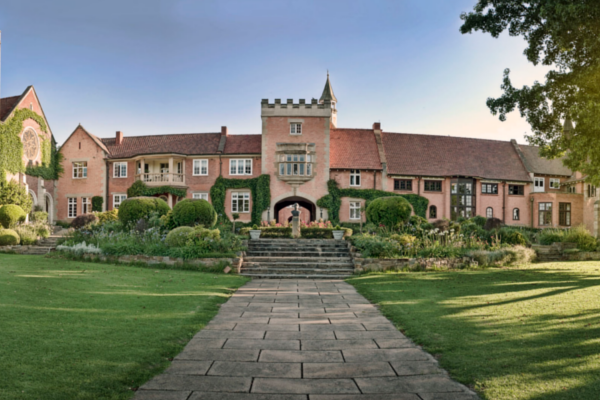
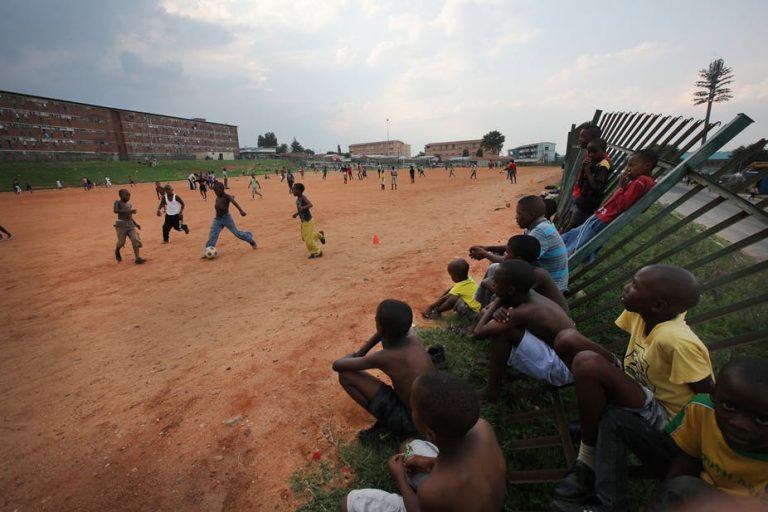
South Africa’s history of segregation has left its footprints in many places. Take the case of semi-rural Franschoek in the country’s Western Cape province. In one part of the town, which draws tourists from around the world to enjoy award winning wine and food, is a private school that boasts excellent sports facilities.

There’s an indoor sports gymnasium where tennis, hockey, netball and soccer are played. There are two swimming pools – one for beginners who are just learning and one for water polo and senior swimming. Elsewhere on the school campus are six tennis courts and two cricket ovals with turf wickets. New sports fields, including two more cricket ovals, are being developed.

A few kilometres up the road is a public school that caters for pupils from an informal settlement. It has no sporting facilities.

This scenario is repeated across South Africa; a modern echo of the country’s history of racial segregation. Patterns of neglect, established in the 19th century when formal schooling was introduced in South Africa, persist.

An understanding of and reckoning with segregation history is important in coming to grips with the current state of poor school sport provision in black and coloured communities. South Africa will not address the great inequalities that still exist in school sport if it keeps ignoring history.

The mission years

Formal schooling was introduced in South Africa during the 19th century. Black pupils were largely educated at mission schools run by a wide range of denominations.

Most mission schools had no decent sporting facilities. They practiced and played sport separately from white organisations and schools. For instance, when the Western Province Rugby Football Union created the Junior Challenge Shield League in 1898, the competition was open only to learners of “European extraction” – that is, white.

This exclusion stretched across sporting disciplines. When the Good Hope Education Department organised the Physical Training Coronation Competition in 1902 at the Green Point Track, a separate division was organised for “coloured” or mission schools. The winner of the 1902 Coronation competition in the Mission School division was the St Cyprian’s School in Ndabeni Location.

This location, as living areas for black Africans were called, was established for families who were forcibly removed from District Six in Cape Town in 1901. The school was a zinc structure with no playing facilities.

In 1928 mission schools set up the Central School Sport Union. Its first athletic meeting was held at the Mowbray sports ground, the home ground of the City and Suburban Rugby Union. Newspapers from the time, which I’ve studied, reported that the grass was knee high. This situation existed by design: the South African Institute of Race Relations reported regularly on how much more money was spent to provide sporting facilities for white schools.

At a national level, the first inter-varsity athletic meeting was held in 1921 at the Wanderers Club in Johannesburg between the Transvaal University College (later Pretoria University), Grey University College (later Free State University) and the Johannesburg University College. These were all white colleges in the northern parts of the country. When institutions from southern regions were included the following year, black colleges were excluded.

These black colleges established the Ciskei Bantu Amateur Athletic Association in the Eastern Cape under the auspices of the South African Bantu Amateur Athletic Association.

Apartheid school sport

Then came formal apartheid, and the situation worsened.

During the 1950s and the decades that followed, the education department wouldn’t provide black and coloured schools with decent facilities like rugby fields or athletics tracks. This was because, according to the influx control laws, Africans could not obtain permanent residence in cities. Why, apartheid authorities reasoned, spend money on people who legally weren’t allowed in certain areas?

The colleges playing in the Ciskei Bantu Amateur Athletic Association, meanwhile, received no support for sporting facilities while the nearby prestigious St Andrew’s College and Rhodes University benefited from excellent fields and tracks.

Apartheid legislation closed the Mowbray sports ground, leaving the Central School Sports Union without a place to play. A whites only school was built on the facility. The sporting past of this lost facility is largely unknown; no commemoration plaque, for instance, exists to mark its history. Another example of history forgotten and heritage ignored.

Few shifts after democracy

With the arrival of democracy in 1994 some organisations dedicated to championing non-racial school sport, like the Western Province Senior Schools’ Sports Union, closed their doors. But while desegregation in school sports was introduced in theory, the reality was rather different.

Many historically white schools appear reluctant to compete with township schools in mass competitions. They continue to hold closed inter-school derbies and athletic meetings catering for other similarly resourced schools on their well maintained sport fields.

But ironically, former whites-only schools have realised the potential of black and coloured pupils to shine on the sports field. A cursory overview of the senior national rugby and cricket teams in 2018 shows that more than 90% of black and coloured players attended historically white schools. Such players were often “poached” from township schools with scholarships and bursaries.

This “poaching” has benefited individual players but it’s happened at the expense of township schools.

Addressing history

The colonial and apartheid education project still echoes in South Africa’s post-1994 school system. For real change to start happening, it’s important for administrators, school authorities, parents and pupils to look to and understand the imbalances of history – and start working to set them right.

Read original article here

Nigerian university graduates find it tough in job market

Daily Trust

Minister of State for Education Professor Anthony Anwuka last week proposed a one-year post-graduation training to be offered in some specialized institutions in order to make Nigerian graduates employable.

He spoke at a retreat organized by the National Universities Commission [NUC] for members of Governing Councils of federal universities. The retreat, which took place in Abuja, had the theme “Elements of Statutory Governance, Procurement and Financial Accounting in Nigerian Universities.”

Anwuka said many university graduates were not good enough to be employed by industries.

The minister partly blamed the un-employability of graduates on the failure of the Students Industrial Work Experience Scheme [(Siwes) in Nigerian universities.

He said Siwes is not playing its role in bridging the gap between universities and industries.

The proposed one-year re-schooling, Anwuka said, would serve as a training ground for graduates to be well equipped with the rudiments of the course studied in the university.

The Siwes programme, which was introduced in Nigerian universities, provides for undergraduates in all science and applied courses to go for industrial attachment in industries and companies relevant to their courses of study.

The minister buttressed his suggestion this way: “Law students attend Law School for one year before going for NYSC and medical students go for one-year housemanship before they are allowed to practice. So, it will be necessary for other courses to go through this process.”

He said, “the universities are producing products that are not matching the needs of the industries” and that Lagos Business School could be used to provide the proposed one-year post-graduation training.

The minister also urged the Committee of Pro-Chancellors (CPCs) and the Committee of Vice Chancellors (CVCs) to end the decline in the standards of education.

Professor Anwuka’s assertion on the un-employability of Nigerian graduates is controversial and it is open to two different interpretations.

It is not clear from his statement which between two factors makes Nigerian graduates unemployable. Is the minister saying that the quality of education or training received by students in the universities is so poor that graduates are not employable or that Nigerian graduates are otherwise proficient but do not fit smugly into the needs of industries?

The minister’s argument that Nigerian graduates are not employable because they do not fit the needs of industries suggests that there are jobs without competent graduates to employ.

This, given the deplorable state of the country’s industrial sector, is not true.

The viewpoint which blames the un-employability of graduates on the failure of Siwes programme in universities is also a controversial position. Many of the challenges confronting Siwes programmes have more to do with the industries than with the universities.

This is because the practical training expected to be received by students through the Siwes programme is the exclusive responsibility of industries. Regrettably, many of the industries that will provide students with the desired industrial experience are either operating at very low capacity or not operational at all.

As a former vice chancellor, the minister should know better than many Nigerians that the problem with some Nigerian graduates being unemployable lies more with the fallen standards in the quality of teaching and learning at nearly all levels of the country’s education system.

The one-year post-graduation training proposed by the minister isn’t, therefore, a viable solution to the problems associated with the low quality of Nigerian graduates.

A functional education system supported by value-added Teacher Education is one sure way of making Nigerian graduates globally marketable. While we encourage the CPCs and CVCs to re-think the Siwes programme in universities given the uncertain state of Nigeria’s economy, we also remind the Minister of Education, Malam Adamu Adamu, that it is time to declare the state of emergency that he promised Nigerians earlier this year.

Read original article here.

Youths to play a part in South Africa regeneration

Mthulisi Sibanda

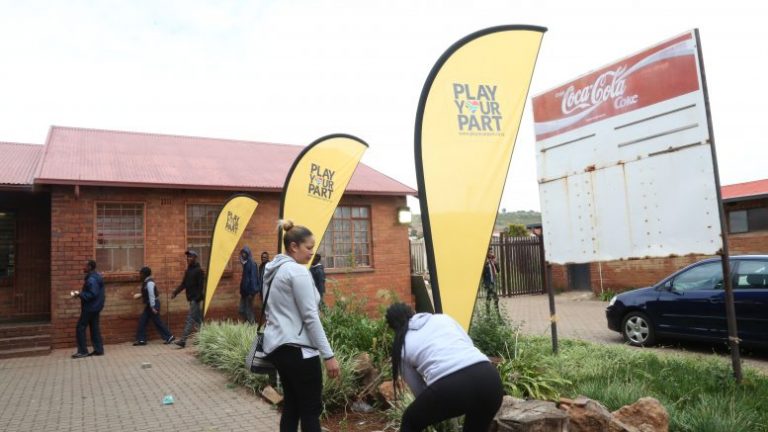
South African youths are set to play a crucial role in the much-anticipated campaign Play Your Part launched to promote active citizenry and ensure locals contribute to positive change.

Play Your Part, a scheme of Brand South Africa which also aims to spearhead social cohesion, has been launched for schools nationwide.

The official activation has been held at the Dr William Frederick (WF) Nkomo

Secondary School in Atteridgeville, west of Pretoria.

This has paved way for more activations at schools around the country.

Brand South Africa, in collaboration with the renowned comedians Goliath and

Goliath, have arranged a series of masterclasses aimed at Grade 11 and 12 learners. The objective is to promote innovation and entrepreneurial culture under the theme “Play Your Part, turn your ideas into currency.”

Goliath and Goliath are also Play Your Part ambassadors.

In an interview with CAJ News, Brand South Africa’s General Manager of Marketing, Sithembile Ntombela, said it was essential to get youth involved in Play Your Part.

“South Africa is a very young country, with almost all of our population being youths,” she said. She pointed out the scholars Brand South was targeting would in the coming years be active in the economy.
“We are talking to tomorrow’s leaders. It is in these youngsters that we are

culminating the spirit of starting something. There is more you can do and start that demanding a job after competing studies,” she said.

Youths are worst affected by unemployment in South Africa.

Donovan Goliath said the current generation of scholars urged the youths to make the most of technological advancements to empower themselves, uplift their communities and subsequently enhance the country’s development.

“The current generation has access to a lot more information and access to the world essentially with the development of smartphones, social media and the internet. They won’t really have an excuse not to be educated in certain topics. It’s all out there for them. It’s only how they mobilise it,” Donovan Goliath said in an interview with CAJ News.

Nare Salmina Rankale, Principal of Dr WF Nkomo Secondary School, expressed pride after the school was chosen to host the launch of nationwide school activations.

“It is befitting that the school will be 50 years this year as well as our high pass rate in national exams. Last year, we achieved a matric exam pass rate of 91,22 percent, and we were the best performing school in Attredgiville,” said Rankale.

The next activation will be held in Mpumalanga later this month.

“Our objective is to go nationwide, with our focus on township and semi-rural schools, which we believe are hungry for information and need motivation,” Ntombela said.

She expressed encouragement at the launch in Attredgeville.

“It was overwhelming! We reached over 1 000 youngsters. This is just the beginning. We intend to reach a whole lot more. These learners are enthusiastic. They are willing to play a part they just don’t know how to start,” Ntombela concluded.

South Africa’s reading crisis: Focus on the root cause

Ingrid Willen​berg

Nearly a quarter of a century into democracy, four presidents and several curricular revisions later, South Africa has made little headway in its reading crisis.

Calling it a crisis is no overstatement. South Africa ranked last out of 50 countries in the 2016 Progress in International Reading Literacy (PIRLS) study which tested reading comprehension of learners in their fourth year of primary schooling. The study found that 78% of South African pupils at this level could not read for meaning.

South Africa’s reading crisis is a topic of ongoing debate and several strategies for improvement have been proposed: promoting a culture of reading; encouraging parents to read to their children; making books accessible in schools and improving initial teacher education.

Addressing the problem by increasing access to books and developing a reading culture is helpful but only to a limited extent. Ultimately the buck stops with the Department of Education. Inadequate instruction is the root cause – the rest are peripherals.

No reading culture

Without a doubt, South Africa needs a stronger culture of reading. A survey of adults’ reading behaviour found that most spent an average of four hours per week reading compared to 7.5 hours per week watching TV or DVDs.

In response to these figures and children’s consistently poor reading performance, the Department of Basic Education has introduced the Read to Lead Campaign. This aims to “make reading fashionable” by encouraging teachers and parents to “drop all and read”.

Promoting a culture of reading is a highly worthwhile enterprise. But it does presuppose that older children and adults are able to read. Reading campaigns and better access to libraries will benefit those who are already able to read for meaning by providing more opportunities to practise the skills they already have.

Individuals who have difficulty reading – either because they cannot identify words or comprehend what they read or both – will be less motivated to read more or visit the library. And with good reason. If you’re a swimmer who uses incorrect techniques, easier access to a swimming pool will not improve your swimming. Instead it will allow you more opportunities to practice your incorrect strokes.

Strong research evidence suggests that parents’ involvement in children’s literacy is highly beneficial. This has given rise to family literacy programmes worldwide which aim to support and encourage parents in supporting their children’s literacy development. One such South African example is the Family Literacy Project in KwaZulu-Natal, which has implemented a range of projects to ignite a love of reading in poor communities.

Helping families to support their children’s literacy development is important and worth doing, provided that the burden of responsibility does not become theirs. There is a strong tendency to blame the literacy crisis on parents not reading to their children. Many teachers lament: “If only parents would read to their children.” And it must be conceded that this is frequently the case: my own body of research has found that many parents with low but not poverty level incomes and lower levels of education did not always read to their children or visit the library regularly.

This was not due to parents’ lack of concern about their children’s literacy development. Instead it stemmed from a lack of awareness about the importance of these activities and because reading and library visits had usually not been part of their own childhood experiences.

Family literacy intervention is an appropriate strategy. But it must be acknowledged that because an estimated 55.5% of South Africans live below the poverty line, survival concerns rather than literacy may be uppermost in many parents’ minds.

Also, many parents may either not be literate or have low levels of literacy despite having completed grade 7, which is considered to be an indicator of literacy achievement. Although parents with low literacy levels are still able to provide literacy support for their children, they are limited in how much they can do.

Family literacy initiatives, then, should be viewed as a complement to early childhood and foundation phase education, not as a substitute. Placing the responsibility or blame on parents takes the responsibility away from public education.

Access to books

Increasing access to books is another popular response to the literacy crisis. A survey found that six out of ten South Africans older than 16 years lived in households without a single book present. One initiative to increase access to books is the Read to Lead Campaign which aims to create 1000 school libraries by 2019.

While the strategy aimed at making books accessible is commendable, there are two provisos: quality and mediation.

Children need access to high quality books. But they also need access to skilled readers who can mediate their encounters with books by, for example, pointing out print concepts such as reading from left to right and encouraging their awareness of speech sounds. Skilled readers can also help children to use books as resources for enriching vocabulary, and asking questions that facilitate comprehension of the story. Children need skilled adults to scaffold their encounters with books.

This leads to the issue of initial teacher training, arguably the most critical strategy for addressing the literacy crisis.

Schools’ responsibility

While the above strategies have their place, the ultimate responsibility for educating South Africa’s children lies with the school system. The PIRLS results and recent investigations have provided incontrovertible evidence that initial teacher education programmes are not producing graduates sufficiently equipped to teach reading.

Processes are under way to support more effective initial primary teacher education in literacy by developing curriculum frameworks and resources for university courses and building university academics’ capacity to deliver higher quality teacher education. But this will take time and will not help the learners currently in the foundation phase of schooling. So it is crucial that in-service teachers have access to ongoing professional development to support reading instruction.

It is critical that accelerated efforts be made to equip teachers for their task of teaching children to read. South Africa’s children deserve no less.

Ingrid Willenberg, Senior Lecturer in Education, Australian Catholic University

Read the original article.

Dad takes on private school over son’s financial exclusion

Tania Broughton, Correspondent

The father of a private primary school pupil, who was prevented from writing exams because of unpaid school fees, has challenged the constitutionality of this policy.

On his side are two Durban-based advocates, appointed to represent the boy who was aged 10 and in Grade five at the time, who say the effect of the policy is “calculated simply to pressure parents” and punish the child.

“Independent schools can sue parents for fees, rather than victimise and humiliate learners,” advocates Laurence Broster SC and Camilla Du Toit said in their written argument handed in to court.

While other courts have acknowledged the “contractual rights” of private schools and ruled that pupils can be excluded for non-payment of fees, the matter before Judge Mokgere Masipa in the KwaZulu-Natal High Court in Durban is believed to be the first to focus on the rights of the affected children.

If Judge Masipa rules in favour of the father – a teacher at a government high school who cannot be named to protect the identity of his son – it will affect all 760 private schools in South Africa.

When the matter was set down for argument recently, lawyers acting for John Wesley Primary School in Pinetown argued that it was “moot”, because the fees had eventually been paid and the child had written the exams a few weeks later.

Evidence was that the family had short-term financial problems at the time and were in arrears of about R3 800. Their offer to pay off what they owed in installments was rejected by the school.

After the boy was excluded from writing exams in May 2016 – and forced to sit by himself in the art centre – they cashed in a funeral policy and settled what they owed.

‘Breathtakingly offensive’

But the dad, who represented himself, insisted that he wanted the matter heard “on an issue of principle”.

The judge asked that the advocates come on board as “friends of the court” to represent the child.

At the heart of the application, they say, is the best interests of the child, and “his parents’ trauma at not being able to pay his school fees on time should not under any circumstances be visited on him”.

“The conduct of the school, on its own version, influenced by Independent Schools Association of South Africa (Isasa), was appalling and it cannot pass constitutional muster.”

They labelled the Isasa’s policy as “breathtakingly offensive”.

The advocates said the fact that the policy affected so many schools, and about 160 000 pupils, was reason for the matter to be properly ventilated and, if necessary, curtailed.

“Judging from the jurisprudence thus far on the difference between public and independent schools, the effect of the contractual arrangements between the school and the parent have not been properly examined. Only the interests of the school, and not the child, are taken into account.

“Isolating the child in the art room while he should be writing an exam is not only victimising, but also extremely humiliating. His co-learners would be curious to know why he did not write the exam… confessing that his parents had not paid the fees must be excruciatingly humiliating.

“In this case, the child had done absolutely nothing wrong. He was a well behaved diligent learner.”

‘No one is obliged to remain at a private school’

In his written argument, advocate Warren Shapiro, for the school, questioned how a private school, whose sole source of income is school fees, could be expected to educate “on risk”, and wait for a litigation process to unfold.

“This ignores that the parents elected to have the child educated as a private school and undertook contractually to pay the fees, and accepted the consequences of failure to do so.

“If this court finds those contractual limitations are unconstitutional, the court removes a significant and recognised difference between private schools and public schools.

“To add to this, is the consequence of an inability of the school to fund its operations, which is prejudicial to all of its learners and staff.

“No one is obliged to remain at a private school.”

He questioned what rights of the child had actually infringed and what harm had been caused.

“There is nothing on the papers to suggest that the temporary exclusion was anything but that. It was no more than a proportionate means of securing payments for amounts agreed to be due.”

Arguing that the issue remained moot, he said the court should not be determining “these weighty issues” when there was no need to do so.

Judgment has been reserved. News24

Pandor: Private sector can pay for post-graduates

Tamar Kahn

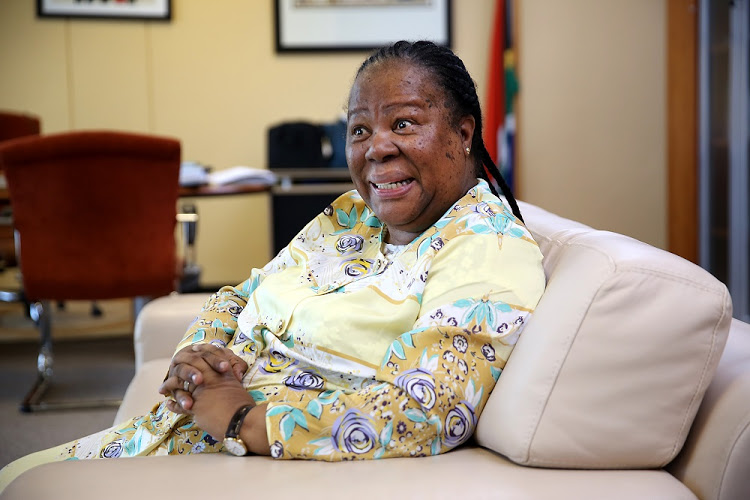
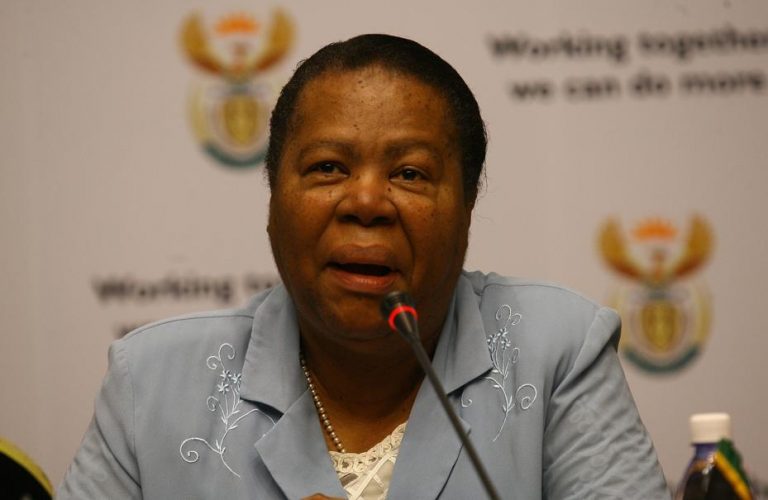
Higher Education and Training minister Naledi Pandor on Thursday conceded the government’s new free higher education policy had not made provision for post-graduate students‚ and suggested the private sector could help fill the gap.

The policy‚ announced by then-president Jacob Zuma last December‚ provides tertiary education bursaries for people from households with an annual income of less than R350 000. It covers the full cost of study‚ but only at undergraduate level‚ posing a headache for universities seeking to increase their pipeline of researchers.

“There has to be attention [paid] to the improvement of funding post-graduate students. We need to ensure we provide adequate resources‚” Pandor told reporters ahead of her budget-vote speech to parliament.

“My sense is that it is one of the domains in which there is significant possibility for partnership with the private sector. Other countries have done this well. I think it is an area we could explore‚” she said.

Pandor acknowledged that the demand for university places was to some extent driven by the poor reputation of South Africa’s Technical and Vocational Educational Training colleges‚ but said work was underway to improve the sector.

“The interventions are to ensure they increasingly become the institution of first choice for young people. My hope is that we are gong to have a very good set of relationships between TVET (colleges) and industry that will allow lecturers to spend time in industry and for industry leadership to teach in the TVET colleges‚ so you have an understanding and collaboration that does not exist at present‚” she said.

Pandor said the department of higher education and training expected that this year 84 000 first-time entry university students would be fully funded under the new policy. A further 190 000 students in all other years of study were to be funded at the ’average full cost of study’.

“This massive injection of student funding support under the new bursary scheme is also combined with a government commitment to increase the core funding for universities and TVET colleges to 1% of GDP over a 5-year period‚” she said.

Read original article here.

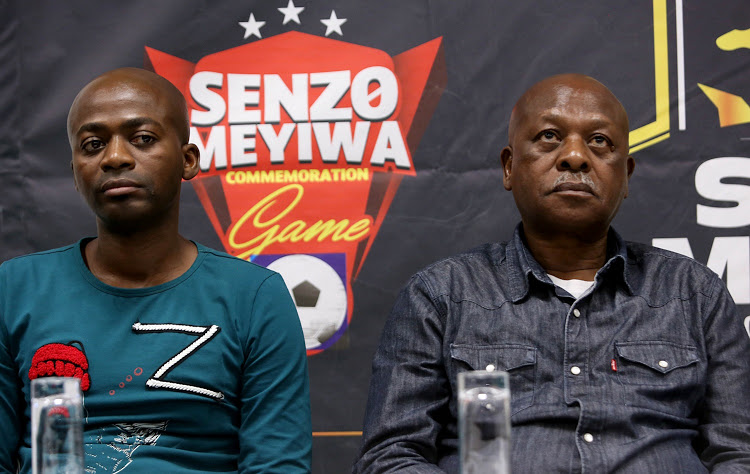
Senzo Meyiwa Commemoration Games launched in honor of the slain Bafana captain

Bongani Mthethwa

Slain Bafana Bafana and Orlando Pirates captain Senzo Meyiwa’s father has recounted how he got a chilling telephone call that his son had been shot and killed after he had watched him play against Ajax Cape Town a few hours earlier.

At first Sam Meyiwa did not believe the news he had just been told.

He then realised that he had tried to call Senzo after the Premier Soccer League (PSL) game between Pirates and Ajax‚ but he did not answer his phone as he usually did.

He was told that after the match when all players went to the change-rooms to change their clothes‚ Senzo had sat down alone in the corner with his head down before other players told him they were leaving.

This was revealed by Meyiwa on Thursday during the launch of the Senzo Meyiwa commemoration game in Durban to honour the legacy of the talented goalkeeper.

The game‚ which will involve former and current PSL players‚ will take place on June 9 at King Zwelithini Stadium in Umlazi.

The commemoration game is spearheaded by Ntokozo Sikhakhane of Youth Camps and Nathi Ngwenya of the Nathi Ngwenya Holdings‚ who said they had received the family’s blessing to host it in memory of the later goalkeeper.

The proceeds from the game‚ which the organisers hope will become an annual event‚ will be channelled towards assisting Senzo’s family to unveil his tombstone and to set up the Senzo Meyiwa Foundation.

Senzo’s younger brother‚ S’fiso Meyiwa‚ said he was “humbled and excited at the same time for this great initiative and that all soccer loving people in South Africa are as excited as I am”.

He said the Senzo Meyiwa Foundation was at an advanced stage of being set up and that it will become the mouthpiece of the Meyiwa family.

“The foundation will look after Senzo Meyiwa’s legacy as a soccer player‚ starting with the commemoration game‚” he said.

The foundation will also include programmes such as driving development of soccer talent in Senzo’s home province of KwaZulu-Natal‚ tackling the welfare of soccer players and looking after the family‚ especially Senzo’s children.

S’fiso said other programmes may be included depending on funding and sponsorships.

He thanked the eThekwini Municipality‚ the KwaZulu-Natal provincial government and other stakeholders for their keen interest in supporting his late brother with a big send-off during his funeral.

“But now looking into the future as a family‚ we would like to call upon all possible stakeholders‚ partners and supporters to continue shining the light on my late brother.”

He also appealed to soccer supporters to come in their numbers and fill the stadium as they had during his brother’s funeral‚ which was held at Durban’s Moses Mabhida Stadium.

Meyiwa senior said he still woke up at night and looked at Senzo’s sports kit — a painful reminder that as family they never got a chance to celebrate his elevation as Bafana Bafana captain.

“It was painful because Senzo had been appointed as Bafana captain but we did not celebrate that as a family because he never got a chance to come back home and they killed him. But we’re leaving everything to God‚” he said.

Earlier in the week‚ Meyiwa said he had sent an sms to Police Minister Bheki Cele shortly after his appointment‚ expressing the hope that he would expedite the investigation into his son’s murder.

In March‚ Cele instructed national police commissioner General Khehla Sitole to give him a “thorough briefing on whether the new task team is doing a proper job”.

Cele was not available for comment on the latest developments in the investigation.

The Pirates goalkeeper tragically died aged 27 when he was killed during a suspected botched robbery at his girlfriend‚ pop singer Kelly Khumalo’s home in Vosloorus‚ east of Johannesburg‚ on the night of October 26‚ 2014.

He was killed in the presence of Khumalo‚ her mother‚ her sister Zandi‚ Zandi’s boyfriend‚ Longwe Twala‚ Meyiwa’s friends‚ Mthokozisi Twala and Tumelo Madlala‚ and Khumalo’s four-year-old son Christian.

But four years later‚ police are yet to make an arrest in connection with the murder that sent shockwaves throughout the local and international soccer community. There have been mounting allegations of “a cover-up” on the police investigation.

In February Longwe Twala‚ the son of music veteran Chicco Twala‚ and Zandile Khumalo took to media platforms to air their side of the story.

Twala appeared on Metro FM to address allegations that he was the triggerman after a parody account‚ @AdvBarryRoux‚ made the claim on Twitter.

Zandile told Ukhozi FM that Senzo‚ her sister Kelly‚ her mother‚ and the others were eating at the table when “people stormed the house”.

Read original article here.

Free higher education an opportunity for change and empowerment – Pandor

Jan Gerber

Fully subsidised bursaries for students from poor and working-class backgrounds present an opportunity for all South African universities and colleges to be at the forefront of change and empowerment, Higher Education and Training Minister Naledi Pandor said on Thursday as she introduced her department’s budget to Parliament.

“Our universities and TVET (technical vocational education and training) colleges can ensure we overcome the legacy of the past and create a much more equal, empowered and productive society in the future,” she said.

The department’s budget for 2018/2019 is R89.9bn and its major components are university transfers of R38.6bn; R20.5bn for the National Student Financial Aid Scheme (NSFAS); R16.9bn for skills development; R10.7bn for TVET colleges and R2.3bn for community education and training colleges.

Over the medium-term expenditure framework, the combined total of additional funding for the post-school system amounts to R67bn, of which R33bn is the additional allocation to NSFAS for the introduction of the department’s new bursary scheme for first-time students in universities. There will also be an additional R10.3bn for TVET bursaries, Pandor announced earlier on Thursday at a media briefing before her budget vote speech.

This constitutes funding increases of 30% for universities, 100% for NSFAS and 45% for TVET colleges.

“The 2018 budget marks the beginning of a ‘new dawn’ for post-school education and training. It’s a decisive response to calls for free education. It honours the call by the Congress of the People that the doors of learning and culture shall be opened,” Pandor said in her speech, referring to the 1955 gathering in Kliptown.

“Through this funding, we signal that universities and colleges are expected to make a radical contribution to South Africa’s development.”

Free higher education decision ‘hasty’

She said for the first time there would be fully subsidised bursary funding for poor and working-class students in public universities and colleges.

“As honourable members know, first-time entry students from families with an income up to R350 000 per annum are eligible to apply for the new DHET (Department of Higher Education and Training) bursary. The scheme will be phased in over five years. The bursary conditions will include academic performance requirements as well as future community service. Very significantly, government has converted NSFAS loans of returning students to grants.

“Honourable members will be aware we have had teething problems with the administration of this new scheme. I wish to assure honourable members that we are working closely with NSFAS to iron these out.”

DA MP Belinda Bozzoli noted the budget increase and that there was a new minister at the department.

“But does this mean higher education will improve? The answer is no,” she said.

“There are two reasons for this: The ANC is incompetent, and the ANC is conservative.

“Jacob Zuma’s hasty decision to grant free higher education for all new students for families earning less than R350 000 a year couldn’t be implemented in the time given,” she said.

Pandor’s deputy, Buti Manamela, said Bozzoli had come with a “suitcase of nightmares” and that the decision for free higher education wasn’t made by an individual, but by the ANC.

“This is a policy we will see through to the end,” he said.

Pandor said in her reply: “I have never been called incompetent by anyone, and I’m not incompetent by any means.” – News24

Why do so many South Africans die of TB?

Ashleigh Furlong

Listeriosis has killed about 200 people since January last year.

In the past six months, the outbreak has generated many headlines.

There was a huge investigation to identify its source and once identified, large amounts of meat and other produce were destroyed as a precaution against new infections.

In the last 14 hours about the same number of people died of another bacterium –Tuberculosis. The World Health Organisation estimates that 124,000 people died of TB in South Africa in 2016 (about 330 daily).

It is the country’s leading cause of death, and has been made much worse by the HIV epidemic: over 80% of people who died of TB in 2016 were also infected with HIV. People with damaged immune systems are at much greater risk of becoming ill with TB.

Most TB deaths are preventable. It is usually quite an easy disease to cure – if you are given the right drugs and complete the standard six-month course.

Less than 4%of TB deaths in South Africa are caused by drug resistant forms of the bacteria that are much harder to treat.

Worldwide, TB caused 1.7 million deaths in 2016, with 10.4 million people becoming infected.

(All these statistics need to be treated with a bit of caution. Estimating TB deaths is complicated, and beyond the scope of this article.)

In this series of three articles, published over three days, we try to answer three questions: (1) Why do so many South Africans die of TB (today’s question)?
(2) What research is being done on new medicines and diagnostics?
(3) Why do so many South Africans get sick with TB?

So why are so many people still dying from a disease that is easily treated?

Minister of Health Aaron Motsoaledi said in March that despite TB being the country’s biggest killer, “People don’t take TB seriously, they are not scared of it, they don’t talk much about it, even at leadership level”.

About 5% of people with active TB haven’t been tested. Another 13% have had a TB test but never received their diagnosis. And many patients aren’t even started on treatment, despite testing positive for TB.

Estimates show that only about 14% of patients who receive a positive TB diagnosis begin treatment. Finding these missing patients is vital in the battle to end TB, said a recent article in the Journal of Infectious Diseases.

Then there are the patients who begin treatment. Over 75% of them are treated successfully. But that still means one in four patients who begin treatment are not being cured.

Dr Helen Cox, an epidemiologist at the University of Cape Town Institute of Infectious Disease and Molecular Medicine, said that patients stop treatment for many reasons.

“I think we don’t do treatment literacy and counselling as well as we do for HIV. We know lots of people stay on antiretrovirals for life. But for TB I don’t think we ever really do that. We say to people, ‘You’ve got TB, here are your drugs and you need to take them for six months’.”

She said people’s lives are complex and once patients start to feel better it often isn’t a “high priority” for them to continue taking their drugs. The problem is that if patients don’t finish their treatment course there is a high chance of them getting sick again.

“We need to focus on the patient much more,” said Cox. “It’s what we call patient-centred care, which we haven’t done at all in TB. There is a lot of blaming of patients and stigma and discrimination.”

The South African stigma index survey conducted by the Human Sciences Research Council in 2014 found that over a third of people with TB said that they had been teased, insulted or sworn at because of their TB status.

Drug that causes deafness

Keeping patients on treatment is much harder with drug resistant TB.

“The drugs we are using now are horrible and they have enormous side effects that are very debilitating. I would struggle to stay on them,” said Cox.

The current drug regimen for drug resistant TB also includes an antibiotic called kanamycin which is injected. Not only is it painful but it can cause deafness.

And while the evidence that the standard TB regimen, for patients who are not resistant, is very good, the evidence for most of the drugs used to treat drug-resistant TB work is quite poor.

Of the all the patients with drug-resistant TB who begin treatment, about half have treatment success.

It need not be like this. In the past decade a number of new drugs have emerged for treating TB. Some of them are promising and are better tolerated by patients than kanamycin, such as bedaquiline. There are clinical trials running at the moment which will tell us by the early 2020s whether we have a whole new treatment regimen for TB that includes bedaquiline.

But the evidence for bedaquiline is already better than for kanamycin and many activists and doctors believe it should replace kanamycin. In fact, that is de facto already happening in the Western Cape, where all patients with drug-resistant TB who are unable to tolerate kanamycin injections are offered bedaquiline.

Another promising development is that the time it takes to treat many patients with drug-resistant TB has been shortened from the two years it used to take.

A study, called STREAM-1, of a nine to twelve month treatment regimen found an 80% success rate. Known as the Bangladesh regimen — because that is where it was first studied — it has been rolled out across South Africa.

When the system fails patients

Sometimes, despite a patient’s best intentions, accessing their TB drugs is impossible. StopStockout’s 2015 survey found that about one in four health care facilities were affected by stock outs of antiretroviral (for treating HIV) or TB medicines.

“When stock outs occur, patients may lose their trust in the health system, or be unable to afford to return to a clinic on multiple occasions to collect medication,” said the report.

A patient from Mpumalanga said in the report, “I’ve been diagnosed with MDR-TB in September 2015. The facility where I get my medicine is always out of stock and I’m concerned that I will default on my treatment. I try to go to the clinic seven to ten days before my medicine is finished to inform the clinic, but this has not helped and I’ve been told to go somewhere else to get my medication. I’m unemployed and cannot afford to go there.”

Many patients with drug-resistant TB are only able to access their treatment at central hospitals, rather than their local clinic.

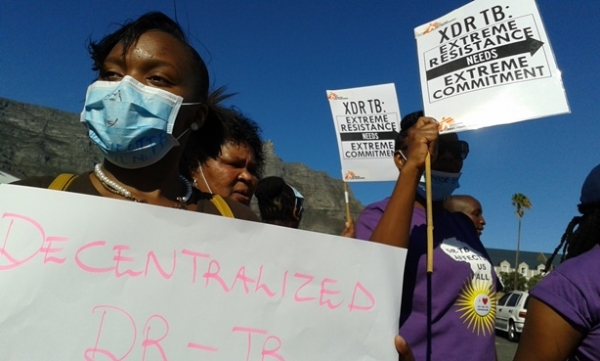
“Unlike HIV patients who have many options to collect their treatment close to home, TB patients lack choices. Long and costly journeys to overcrowded central hospitals, sometimes daily, cause many to simply give up on TB treatment,” the Nobel Peace Prize-winning organisation Médecins Sans Frontières has said.

Exceptionally long waits to access healthcare facilities are also common, as GroundUp has previously reported. Patients reported arriving at 4am in the hope that they would be seen four hours later.

According to data from one clinic which is part of the health department’s initiative to implement “ideal clinics” across the country, nearly 70% of patients waited two to five hours to be seen, sometimes as long as seven hours.

An “ideal clinic” is one that has good infrastructure, enough staff and medical supplies, including medicines, and good administration processes.

The South African Health Review reported that 322 clinics were given “ideal clinic” status in 2015/16. But this is less than 10% of the country’s 3,477 primary health care facilities. “This leaves much to be desired,” said the review.

“National and provincial health departments, with the assistance of national and provincial treasuries, must speed up infrastructure and staffing improvements and correct the procurement processes that see many clinics functioning without the required medication, consumables, equipment and furniture,” said the review.

For this series we emailed questions to Popo Maja, spokesperson for the Department of Health. We also sent him an SMS and tried to call him. We received no response.

More about TB


Eight years for striking one match

Bongekile Macupe 

Khaya Cekeshe badly wanted to study law at the University of the Witwatersrand but his parents couldn’t afford the fees.

After doing one year of law at Unisa, where the fees were cheaper, he dropped out. In 2016, he was a first-year media studies student at Foot Print Media in Auckland Park, Johannesburg.

The 24-year-old had ambitions of studying media law when he completed his media studies course.

At the height of the #FeesMustFall protest, he joined a protest by Wits students in Braamfontein in October 2016, even though he attended a private college. It didn’t end well for him. He was arrested.

“He had been wanting to go to Wits for a very long time. So when the #FeesMustFall protest started I think it triggered something in him that led him to join and support the students from Wits in their cause,” Khaya’s father, Ntanda Cekeshe, said at the family home in Haddon, in the south of Johannesburg.

Cekeshe is serving a five-year jail term in Leeuwkop prison. On December 4 last year the Johannesburg magistrate’s court sentenced him to eight years, with three years suspended, for his involvement in the protest, a sentence described as unduly harsh.

Advocate Motebang Ramaili, who represented Cekeshe, said he was charged with public violence and malicious damage to property.

Ramaili said Cekeshe was caught on CCTV footage bending down next to a police car trying to light a match — seemingly to burn the car. But it didn’t catch fire. The video footage was shown in court.

 A probation officer testified that he should not get direct imprisonment because he was still a student, a first-time offender and that the car didn’t burn. But the magistrate believed that it was a serious offence, said Ramaili.

The magistrate also questioned why Cekeshe was part of the protest, because he was not a Wits student and it was not his fight. Cekeshe was denied leave to appeal the sentence.

Nongovernmental organisation the South African Native Forum has taken up Cekeshe’s fight and will go to the Johannesburg magistrate’s court on Tuesday to apply for a review of Cekeshe’s sentence, said the NGO’s director, Khathi Dikopo.

Dikopo said they would argue for the sentence to be reduced to a year of house arrest or community service.

[Ntanda Cekeshe (Oupa Nkosi)]

“He fought for free higher education and the former president [Jacob Zuma] last year passed it as law that students will get free higher education,” said Dikopo. “So because it was passed into law it shows that he was fighting for something right. He should not be punished for what is right. He was a first-time offender, the court should have shown leniency.

“We have already started with the process; we have been looking at what the previous legal team had done. On the 15th [of May] we are going to go and ask for a postponement and then we are going to come back with our strategy after that.”

Ntanda said that, since police came to his house in October 2016 with his son handcuffed, life has been “hell” for the family.

He said the police came to get the clothes Cekeshe had been wearing on the day of the protest. The police tried to force Ntanda to open Cekeshe’s room but he refused to do so because they did not have a search warrant.

An argument between Ntanda, his wife and the police ensued, and his wife filmed it. Later, said Ntanda, about 15 police stormed his yard and started assaulting him and his wife. His wife was arrested for obstruction of justice. She spent three days at the Hillbrow police station and had to attend court for about six months until the matter was thrown out. At the same time Cekeshe was appearing in court.

“On a Tuesday we would be attending my wife’s court case and two days later we would go to Khaya’s case. It was just chaotic,” said Ntanda.

Cekeshe was released on R5 000 bail after spending six days in the Johannesburg prison, also known as Sun City.

Ntanda said that when Khaya was sentenced to eight years’ jail it was a blow for the family, because they had not anticipated such a harsh sentence.

“We were certain that this thing would not turn this bad — there was no indication that he would get eight years. The social worker working on the case wrote a report that he was a first-time offender and had no criminal record, and there was no basis that he was a violent person.

“We were not in court on the day of the sentencing, because it was not even the day of the sentencing, it was a normal court appearance. The lawyer called and told us what happened in court,” he said.

The family visits Cekeshe twice a month.

Asked how he is faring in prison, Ntanda lets out a faint laugh before saying: “It is so funny because we were there on Sunday and he was asking us how we are holding up.”

His voice cracks and he begins to cry. In between sobs he says: “He is strong, he is surviving.”

He pauses, takes off his glasses, and wipes away the tears.

Five months after Christmas, the Cekeshe family has still not removed the Christmas tree in their living room.

“My kids don’t want us to move it. They say it will stay there until Khaya comes back,” he says.

Cekeshe’s bond with his siblings “was great, because they could relate to him. Especially the little boy, they had a very special bond,” Ntanda says, and starts crying again.

“There are a lot of kids who were in the protest who have done even worse than what he did but he had to take the fall — maybe for all of them who were not caught. He is in jail because he made a mistake.”

Ntanda says the family is focusing on getting Cekeshe out of jail and back home so that he can start his life afresh.


#FeesMustFall activists waiting for their day in court

While Khaya Cekeshe — featured in the story above — is serving time in jail for participating in a #FeesMustFall protest, other students still have charges pending.

Mcebo Dlamini

The former Wits University student representative council president faces charges of public violence, theft, assault with intent to cause grievous bodily harm and malicious damage to property. He spent weeks in jail before being released on R2 000 bail. He was represented by advocates Dali Mpofu and Tembeka Ngcukaitobi. His trial date is set down for July 30 and 31.

Masixole Mlandu

The University of Cape Town student faces charges of public violence, intimidation and malicious damage to property. News24 reported that his trial, which was supposed to have started in the Wynberg regional court last week Thursday, was postponed to next month.

Amla Monageng

The former University of Pretoria student was sentenced to a year’s house arrest in February after being found guilty of malicious damage to property, incitement of violence and assault.

Bonginkosi Khanyile

The Durban University of Technology student is out on bail after he was arrested on charges that include inciting violence, participating in an illegal gathering and public violence. He spent five months in the Westville Prison and was refused bail until his case was taken to the Constitutional Court, which ordered that he be released on bail. His trial date has yet to be set. — Bongekile Macupe

Read original article here.