Home Blog Page 508

Varsity rankings for bragging rights are useless

Jonathan Jansen

Which is South Africa’s top university? Is it UCT or Wits? It depends who you ask, when you ask and which ranking system you use. Universities slide up and down the rankings from one year to the next and, with more than 30 such systems in place, take your pick. And yet the question is real for we live in a competitive society and a competitive world.

Parents want to know which university is the best for their child or which law school offers the best legal education. Alumni take great pride in the institutions where they studied and want to know if their university is still among the best.

Students like to brag among their peers that their university is top-ranked in the country, on the continent and in the world.

So as much as university managers might say “we don’t really care about rankings”, all the top South African universities work very hard behind the scenes to position themselves favourably on the ShangaiRanking Academic Ranking of World Universities or the Times Higher Education (THE) World University Rankings or even the online Webometrics Ranking of World Universities which measures the “web presence” (web content, density, impact, visibility) of universities.

These global rankings were the subject of the first Presidential Roundtable of the Academy of Science of South Africa (ASSAf) in which four leading higher education scholars shared their assessment of the value of ranking systems in general and for South Africa/Africa in particular.

The problem, argued Professor Robert Tijssen from Leiden University, is that the designers of the ranking system often struggle to answer the question about purposes. Why is this being done in the first place?

Professor Lis Lange of UCT had a blunt answer – rankings are simply one part of the new global system of knowledge production which has built a formidable industry around the ranking business. And yet, as Professor Zeblon Vilikazi of Wits argued, university leaders invest in this industry with the result that “rankings are here to stay, whether we like it or not”.

Perhaps the most inventive work on rankings in Africa has been led by Professor Nico Cloete of CHET (Centre for Higher Education Transformation) in Cape Town.

His approach is more developmental and seeks to rank African universities in relation to each other on metrics that can direct internal resources and advance growth (such as number of staff with doctorates); the results are not surprising — South Africa’s universities dominate the continental rankings especially in relation to the sheer volume of research publications.

But the question could of course be asked — what is the point of international rankings if not to measure yourself against the best in the world?

To use a sporting comparison, there would be no point in measuring South African cricket against Zimbabwe or Kenya; a more valid comparison is against India (a sore point given the current ODI series), Australia and England. In other words, you never really know how good you are until you are ranked against the best.

Which brings us back to purposes. My own view is that rankings can reveal areas in which a university can grow and improve on its scholarly work.

For example, ranking criteria might show that too many academics in African universities publish in low-quality journals with weak peer-review systems and therefore produces knowledge of limited scientific or social value.

Clearly the next step then is to strengthen the capacity of these universities to produce top-quality scholars who publish in learned journals of significance to science and society.

But ranking for the sake of claiming bragging rights or boosting national egos is a problem for then the practice of rank-ordering universities serves simply as a hurtful reminder of the academic inequities embedded in the global system of knowledge production — in other words, a ranking that pits Harvard University (whose private endowment of $35.76-billion far exceeds the national budgets of most African countries) against Makerere University is patently unfair.

It glorifies Harvard and humiliates Makerere simply on the basis of the massive advantage of resources held by the Cambridge, Massachusetts, institution. As I argued in the ASSAf Roundtable discussions, it’s as if Europe (or the West for that matter) never underdeveloped Africa — in the terms of the Guyanese historian, Walter Rodney.

That said, playing the victim in the face of these very influential and global ranking systems will leave South/Africa marooned on its academic islands of mediocrity. The best response is to ask the practical question — how can African institutions leverage the ranking system in ways that strengthen our universities?

What are the fields in which we have strength (like tropical medicine at Makerere or HIV/Aids research at UKZN) that must be extended, and areas in which much work needs to be done to raise the quality of research or teaching?

I advise parents to relax. There really is little difference in quality between a degree from UCT or Wits or Stellenbosch or Pretoria and other leading South African universities. You may want to think of other criteria not well-captured in the global rankings — which university will teach my child well, offer adequate personal security and instill a sense of compassion for those on the underside of history. There are no rankings that measure these vital attributes of a 21st-century graduate.

Jonathan Jansen is a public intellectual and former vice-chancellor of the University of the Free State
School sport: Disabled children and able-bodied children should compete

Mosibodi Whitehead

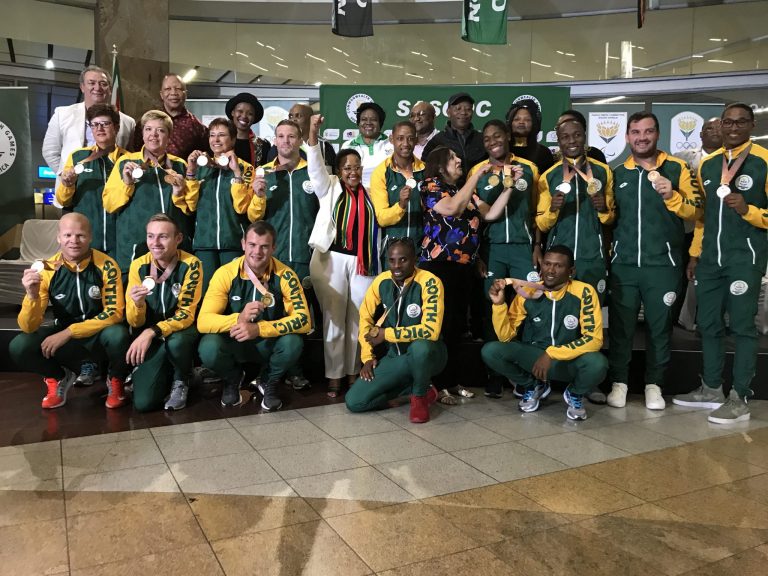
Team South Africa recently returned from a successful campaign at the Commonwealth Games in Australia. The team won 37 medals: 13 gold, 11 silver and 13 bronze to finish in sixth place out of the 39 nations that took part.

Seven of those medals were won by para athletes many of whom began their sporting lives by competing alongside able-bodied athletes.

One of those athletes was Dyan Buis who won silver in the men’s T38 100m.

Buis is from Riversdale in the Western Cape.

He has mild cerebral palsy and bases his success to having competed alongside able-bodied athletes from his formative years.

“And if you look at how Athletics South Africa have done at their nationals as well at provincial level, including us and allowing disabled athletes to run in their races, it has been phenomenal,” says South Africa’s 2017 disabled sportsman of the year.

This is true for many disabled athletes who, in competing both alongside and against their able-bodied counterparts, have been able to raise their game.

The best example is probably that of Natalie du Toit and Oscar Pistorius.

The pair has won over 20 Paralympic medals and broke down barriers by competing against able-bodied athletes at the Olympic Games. What Pistorius achieved in the 400m as a disabled athlete in qualifying for the semi-final of the 400m in London will remain as an inspiration to many athletes – disabled and non-disabled.

Although Pistorius later undid much of this good work when he shot and killed his girlfriend Reeva Steenkamp on 14 February 2013.

Like Buis, both du Toit and Pistorius competed against able-bodied athletes growing up. Buis believes that in making the para sports part of the Games and not separating the championships.

The Paralympics typically take place a few weeks after the Olympics. Organisers of the Commonwealth Games have taken the lead in ensuring the integration of sport across the disability divide.

“I’m a forerunner for inclusion. I’m busy doing my master’s degree in inclusive education policy and I think the Commonwealth Games presents an excellent example of inclusion,” says the teaching graduate.

What Buis is talking about is stigma.

Inclusion is key not only to producing athletes that will go on to win Paralympic medals, but also to bringing disabled children into mainstream education because many are still kept at home.

Dana Donohue and Juan Bornman correctly state in their 2014 article in the Journal of Education: “In South Africa, up to 70% of children of school-going age with disabilities are out of school. Of those who do attend, most are still in separate, “special” schools for learners with disabilities.”

When we put children in special schools and give them their own races to run, we stigmatize them as different.

By so doing we forget the transformative power of sport. One of the best examples of this transformative power can be seen in the achievements Paralympic medallist Ntando Mahlangu.

The teenager grabbed headlines when he took silver in the 200m at the 2016 Rio Paralympics. Mahlangu competed in the T42 category, above the knee amputees.

His rise was meteoric.

He only got his prosthetic limbs when he was 10 but by the time he was 14, he was winning medals on the world stage.

Mahlangu says he got his first pair of legs in 2012 he immediately started playing football with other kids. He attributes his success to this.

“I always wanted to be a soccer player. I was always wanted to be like Cristiano Ronaldo and I’m going to be the best player.”

And like du Toit and Pistorius, because he didn’t see himself as different, he enjoyed success in able-bodied sport.

In April 2016, Mahlangu won bronze at the South African Sub-Youth, Junior and Under-23 Championships in Germiston.

Imagine home many more Ntando Mahlangus South Africa could produce were it to completely transform school sporting structures and physical education programmes.

Imagine if school sports accommodated all children and allowed them to compete together.

The United Nations Division for Social Policy and Development makes the argument that, “By improving the inclusion and well-being of persons with disabilities, sport can also help to advance the Millennium Development Goals (MDGs).

For example, sports-based opportunities can help achieve the goal of universal primary education (MDG2) by reducing stigma preventing children with disabilities from attending school.”

The logic is undeniable and Mahlangu’s success is a powerful example.

Even in inclusive schools roughly a third of disable children are physically active, while only two thirds of non-disabled children participate in physical activity.

Therefore, in the drive to build a more understanding and compassionate society, we must allow children from Primary school level to participate in sport regardless of their physical and/or mental disabilities.

There are obviously certain practicalities that may prevent the more seriously disabled from participating in sport, but very effort should be made to accommodate the differently abled.

It is time to add sports inclusion in our schools in a more prescriptive way. This will encourage more disable children to go to school and escape poverty, and for those that show sporting ability, competing against their able-bodied counterparts will allow them to make the best of their talents. Talents which could see them grace the Commonwealth or Olympic Games one day.

Whitehead is a sport writer and broadcaster 


Shortage of beds at universities

Msindisi Fengu

The government is planning to build at least 300 000 beds for universities and colleges in the next eight years, amid growing concerns about student accommodation shortages.

The department of higher education and training has estimated it would need a whopping R50bn to meet this demand.

In the past weeks, Higher Education Minister Naledi Pandor approved a R1.1bn infrastructure and efficiency grant for 17 universities in 2017/18 to kick-start the construction of student residences where a target of 200 000 is for universities and 100 000 is for colleges by 2026.

Pandor’s spokesperson, Lunga Ngqengelele, said the number of students who needed residences was higher for rural universities, where there was usually very little private accommodation close to campuses.

 “The same applies to rural campuses of urban universities. There may be plenty of private accommodation close to the urban campuses, but little in the vicinity of the rural campuses.”

North-West University (NWU), for example, had plenty of private student accommodation near its main campus in Potchefstroom, but hardly any extra beds close to its Mahikeng campus.

Ngqengelele said it was not government’s intention to fund this development alone, but would partner with development finance institutions and the private sector.

The department allocated R1.3bn to 16 universities for student housing projects in 2015/16 and 2016/17 financial years.

For 2018/19 to 2020/21, it would allocate money once Pandor’s office had assessed and approved applications from universities. However, the department would need to increase the funding to at least R6.25bn per year for the next eight years to reach its R50bn budget projection.

Ngqengelele said the department had developed a macro infrastructure framework, which would require universities to develop detailed plans for all infrastructure development, including student housing, and also help other partners provide enough money for student housing projects.

He said universities in the country were never designed to accommodate large numbers of students in on-campus residences.

“The need arose through the opening up of access to public higher education post-1994, especially through enabling access for poor students using National Student Financial Aid Scheme funding.

“The public system has seen unprecedented growth in enrolment rates over the last 15 years. The only universities that were designed from the outset to accommodate large numbers of students are the two new universities opened in the 2014 academic year (the University of Mpumalanga in Mbombela and Sol Plaatje University in Kimberley).”

He said they had developed norms and standards for student housing projects to regulate the size of rooms, the type of fixtures and fittings and minimum services to be provided. These were published in the Government Gazette in 2015, as a first step towards ensuring that private landlords provided decent and affordable accommodation.

University of Fort Hare spokesperson Khotso Moabi said they had not calculated how many beds would be provided from their R122m grant funding.

“We acknowledge that there will always be a need for more beds. We currently require about 10 000 beds for Alice and 5 000 for East London. The rural set-up and slow development in Alice do not help the situation as we could not find extra space for students to rent.”

Walter Sisulu University spokesperson Yonela Tukwayo said they would start building 700 beds from this year’s R100m grant. There would be 360 beds for the Mthatha campus and 340 for the Butterworth campus.

Ideally, the university wanted to provide accommodation for 80% of its 31 370 students, but due to constraints, it could only provide 5 292 beds on campus and 6 621 off campus.

University of Johannesburg spokesperson Herman Esterhuizen said their R80m grant was for the Soweto campus student housing development plan.

In parallel, the institution was providing “collaborative funding” towards the project. This would provide 500 on-campus beds. The project was scheduled to commence mid-2018.

University of Free State spokesperson Lacea Loader said their R78m funding would provide 250 beds at the university’s South campus in Bloemfontein, to be completed in 2019.

This would increase the total number of beds on the South campus to 520 and the total number of beds across the three campuses to 5 942.

She said the university currently accommodated 15% of its students in residences on the campuses. Private off-campus accommodation-accredited suppliers collectively provided 3 122 beds.

Nelson Mandela University spokesperson Zandile Mbabela said the R50m grant, together with the university’s contributions and loan funding, would add 2 000 beds.

NWU spokesperson Louis Jacobs said the university would build about 200 beds from their R45m grant allocation.

He said they received R65m in the previous year for the Mahikeng and R55m for the Vaal Triangle campus. They needed almost 10 000 beds to accommodate at least 50% of the enrolled students.

Jacobs said with the department and the Development Bank of SA, NWU was working on a financial plan to combine other funding sources to build additional accommodation on the Mahikeng campus.

This could add between 1 000 and 1 700 additional beds.

Other universities had not responded to requests for comment by the time going to print.

‘Why did we take over 20 years?’ – Zuma on free education

Thuletho Zwane

Former President Jacob Zuma gave a lecture in Umlazi, KwaZulu-Natal on Thursday where he took the opportunity to slam South Africa’s governing party, the African National Congress, for taking 24 years to implement free higher education for poor and working-class students.

Zuma said his main concern was that he made the decision to introduce free education “three years too late”.

“Why did we take three years to implement it? Free education has been guaranteed in the Freedom Charter decades earlier,” said Zuma.

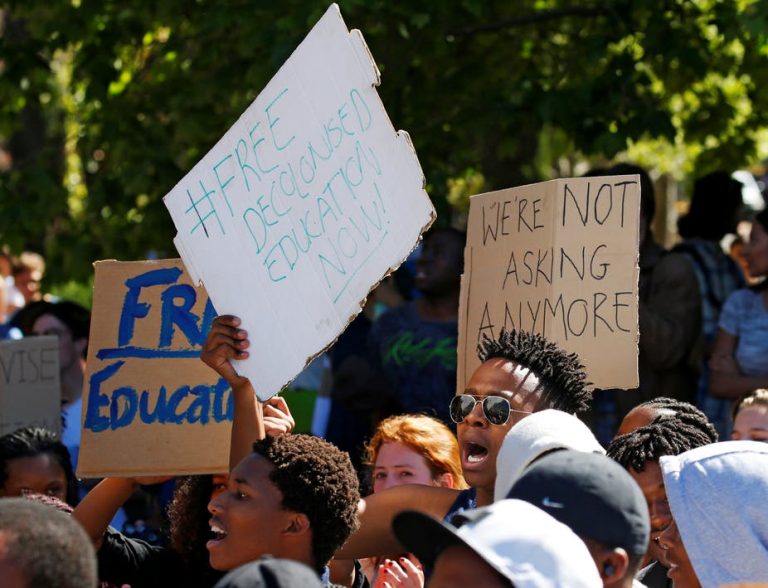
In 2015, South African students marched the streets demanding free education; the decolonisation of South Africa’s institutions of higher learning; the underfunding and administrative inefficiencies of the NSFAS; lack of adequate student accommodation and hunger on campuses.

The protests turned violent. Students at different universities were arrested with some still in jail and others attending trial.

In 2016, Zuma established a commission of inquiry into higher education and training to look into higher education and training challenges.

The Commission was chaired by the Honourable Justice Jonathan Arthur Heher, assisted by Adv. Gregory Aly and Ms Leah Thabisile Khumalo. The terms of reference of the Commission was to enquire into, make findings, report on and make recommendations on feasibility of making higher education and training fee-free in South Africa.

Zuma’s decision to implement free education went against the Heher Commission recommendations.

At the Umlazi lecture on Thursday, Zuma said he had been unimpressed with The Commission’s final report. He said the commission focused too heavily on viewing education as a business transaction and not as a social good or a force for transformation.

This is why he introduced the implementation of free higher education in December 2017.

The former president made the announcement that free higher education would be provided to all new first year students from families that earn less than R350,000 per year starting from the 2018 academic year.

To explain his decision, Zuma said the National Student Financial Aid Scheme (NSFAS) ‘s definition of “poor and working-class students” was outdated. He said this definition had remained stagnant despite higher education full cost of study and living becoming significantly higher in past decade and half.

“This leaves thousands of poor and working-class students unfunded,” said Zuma at the time.

Analysts do not seem to agree on the feasibility of free education.

Senior Lecturer in Economics and Research Associate at the University of Johannesburg (UJ) Seán Mfundza Muller called Zuma’s proposal for free higher education “the worst kind of populism”.

Muller, who participated in the 20-year review of South African higher education in 2013 and advised parliamentarians on different funding proposals in 2015, believes free education has been sold as a radically progressive policy that can be achieved with no negative consequences.

“But it will actually do very little for the neediest South Africans. And it could have negative consequences for the stability and progressiveness of public expenditure,” said Muller.

Others disagree.

Director of the Centre for Emerging Researchers Mukovhe Morris Masutha, explains that free education is not a cost to the state but necessary for a developmental state.

He makes the argument that the feasibility of free higher education goes beyond affordability.

“Free education is something that should not be interpreted through a narrow budgetary lens. When free education is invested in youth coming out of marginalised communities, it becomes an investment with well-known economic, social, cultural and even political returns,” said Masutha.

This consideration was at the core of Zuma’s lecture.

The former president said his decision to implement free education was aimed at breaking the cycle of deserving black matriculations unable to continue their study at universities or colleges due to lack of funding.

He said the introduction of free education would work in reversing the apartheid ideology of “keeping black people as subservient providers of manual labour alone”.


Ramaphosas’ primary school received upgrades

CAJ News 

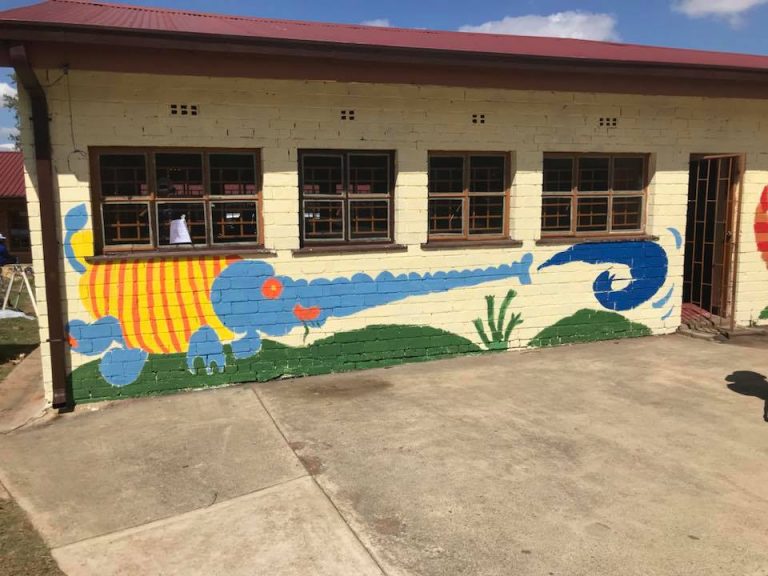
A Soweto school that boasts among its alumni, President Cyril Ramaphosa, has received an upgrade.

The renovation of Tshilidzi Primary School by the Volkswagen Group South Africa (VWSA) employees will benefit 665 learners from Grade R to Grade 7.

It was one of the first schools to be adopted by the Adopt a School Foundation, chaired at the time by Ramaphosa, almost ten years ago

VWSA’s Show of Hands Employee Volunteer Programme has decided that a much needed upgrade to the Grade R classrooms and playground, sickbed room and the schools vegetable garden was required.

Over 160 VWSA Employees and their loved ones gave of their time and skills to upgrading the facilities at the school.

“Our Show of Hands Volunteer programme continues to improve the lives and education of those less fortunate – one school at a time,” said Nonkqubela Maliza, Director: Corporate and Government Affairs: VWSA.

VWSA volunteers also collaborated with Rise Against Hunger and packed 25 000 meal packages to supplement the school’s feeding programme.

It brings the total meals packed by VWSA volunteers to 50 000 for 2018.
CAJ News

IAAF wants Semenya to lower her testosterone levels or quit, says report

Agency

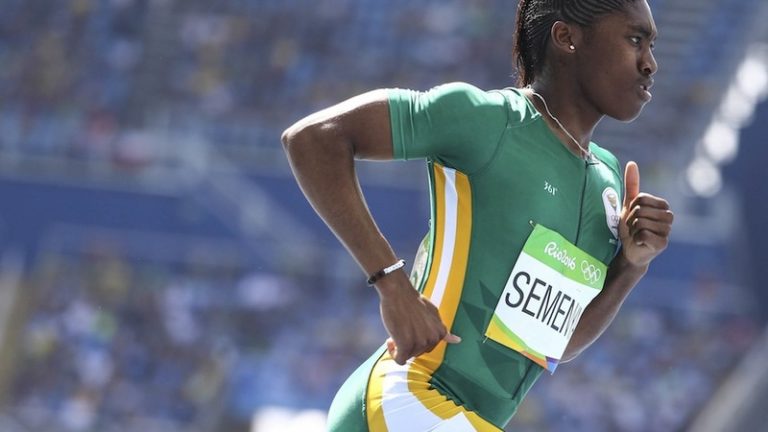
South Africa’s queen of the track Caster Semenya may be forced, once again, to lower her testosterone levels. If she doesn’t, she will not be allowed to compete in her specialist 800m and 1 500m events.

According to the Daily Mail, the International Association of Athletics Federations (IAAF) will on Thursday announce a new set of rules for athletes with hyperandrogenism.

The report says that, once the rule changes have come into effect, Semenya, 27, will be forced to take daily medication to lower her testosterone levels.

If she doesn’t, she will be forced to compete in longer distances – or, effectively, quit the sport.

The new rule will apply to distances between 400m and a mile and it is expected to be operating by November this year.

READ MORE: Caster runs into trouble again

The IAAF introduced a similar rule in 2011 after Semenya’s dominant victory at the 2009 IAAF World Championships, and it had a major impact on her pace.

Thursday’s announcement will not come as a surprise after the IAAF council last month approved a proposal to limit natural testosterone levels in women athletes in the above-mentioned distances.

It will also sidestep the Court for Arbitration of Sport’s (CAS) 2015 decision to suspend regulations on hyperandrogenism in women’s athletics.

 While that decision was a major win for Semenya, it is not likely to count for anything moving forward given that the CAS is not a regulatory authority for world athletics.

Semenya’s dominance was on show for all to see at the Commonwealth Games in Australia, where she cruised to gold in both the 800m and 1 500m.

She is also a double 800m Olympic gold medallist. — Sport 24

Teachers feel excluded from South Africa’s schools by race and culture

0

Nuraan Davids

Emotions ran high  at a high school south of Johannesburg in 2017 when the largely coloured community rejected the appointment of a black principal. A group of black teachers were also removed from the school because coloured parents didn’t want them there.

The apartheid system delineated people using racial categories – white, black, Indian and coloured – and these continue to influence post-apartheid South African society.

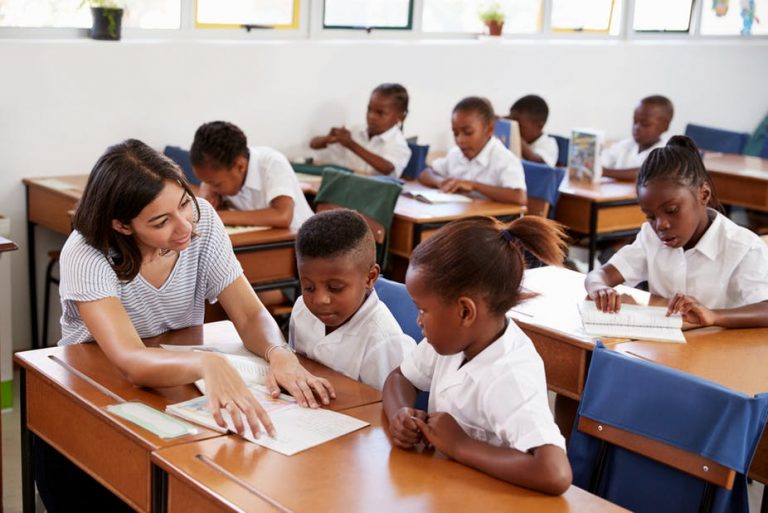
This high school’s story is just one example of the many types of exclusion teachers face regularly. The problem is that debates about exclusion focus almost exclusively on the experiences of learners as they try to overcome barriers of race, culture, gender, sexuality, class, disability and language.

Yet teachers also have difficulties around inclusion, participation and belonging in post-apartheid schools. Many have migrated from historically black to historically white schools because these tend to be better resourced, classes are smaller, safer school environments, more learning support services and in some cases higher salaries.

But being employed by a school doesn’t automatically guarantee inclusion. A study I conducted with my colleague Professor Yusef Waghid showed that even when black teachers are hired at historically white schools, they have to deal with constant questions about their “competence” and whether their work is in line with a school’s stated “standards”. Education experts argue that the term “standards” is often used to justify profoundly racialised conceptions of a diametrically opposed “white competence” and “black incompetence”.

The ongoing exclusion of particular teachers from schools – whether on the basis of race, religion, culture, or sexuality – has serious implications for learners as well as the curriculum. On the one hand, learners do not encounter the life-worlds of diverse teachers. On the other hand, learners from minority groups struggle to find points of resonance. This leaves them with no option but to assimilate into the dominant way of thinking and being.

Learners benefit from being exposed to multiple and unfamiliar teacher identities. They begin to experience those they previously might not have encountered. They enter life-worlds which they otherwise might not have known.

It’s time that policymakers paid serious attention to the problem of teacher exclusion.

Teachers feel excluded

One of the people involved in our study – a black woman – was appointed as a maths teacher at a school that taught predominantly coloured children. She was only allowed to teach Mathematical Literacy (a subject that involves basic problem-solving). The school said this was because she required “mentoring”, even though she was qualified and had prior experience as a maths teacher.

Another participant in our study, a South African of Indian descent, was appointed at a school of mostly white learners. He faced continuous complaints from parents whose children apparently couldn’t understand his accent. The teacher left the school after only 10 months. His decision was prompted by the principal asking whether he would be taking leave to celebrate the Muslim festival of Eid. The principal had seemingly failed to realise that he was in fact not Muslim, but a practising Hindu.

But these issues aren’t being addressed. Perhaps one of the reasons is that South Africans are preoccupied with trying to adhere to what can be measured in an employment equity framework as set out in the country’s laws.

As American political theorist and feminist Marion Iris Young, however, points out these frameworks don’t necessarily equate to inclusive processes of recognition, participation or respect. Teachers might be employed at a particular school but their presence doesn’t equal participation.

Humans are caught up in a world of perception and cannot extricate ourselves from it. Consequently, in a country whose history is so marred by racism and colonialism, many South Africans can’t imagine that a “black” teacher is a “competent” teacher anymore than they can imagine that they might be able to learn from a teacher with an “Indian” accent.

What’s needed is a different way of looking at the world. Schools offer spaces where learners can be exposed to difference and diversity through employing teachers from across racial, cultural and religious lines. Policy is insufficient in cultivating these spaces. The onus rests on both school leadership and governance structures to realise their responsibility in preparing learners for what it means to participate in a pluralist society. One way of cultivating a more inclusive and diverse school environment for learners is through including diverse teachers.

Solutions

Tackling teacher exclusion can create an environment where teachers and learners remain conscious that there’s more to know and more to include. This is because the exclusion of any individual or group within a teaching space is, in fact, a shutting down of the imagination and uncertainty. Exclusion instils a smaller world. It promotes sameness, and defuses dissonance. It diminishes people’s capacity for critical engagement.

Beyond government taking action to remedy the situation, teachers also need to assert their authority and contest historical apartheid-era images of power through race and culture or ethnicity. It’s only through questioning that others can be drawn into deliberative engagements and debates. This affirms people’s presence and is an opportunity to see them as they are. South Africa’s classrooms will be better places if these perceptions begin to shift.

Nuraan Davids is Associate Professor of Philosophy of Education, Stellenbosch University

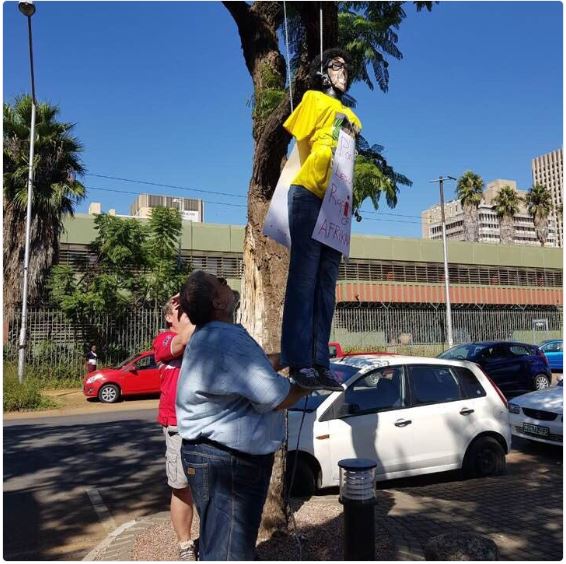
Lesufi Slams Effigy In His Likeness: ‘These Morons Came To ‘Hang’ Me!’

Inside Education

Gauteng Education MEC Panyaza Lesufi sent a tweet with the following words last night.

“These morons came to our offices to “hang” me! We defeated your racists grandparents, you are nothing!”

This was in reference to an effigy, a roughly made model of a person that is made in order to be damaged or destroyed as a protest, was made in his likeness.

This effigy was paraded in Tshwane on Tuesday and then later hanged on a tree at the Department of Basic Education offices.

Lesufi said this was done because of the work Gauteng Education has done towards equalising education.

Lesufi tweeted: “These morons came to our offices to “hang” me! We defeated your racists grandparents, you are nothing! (sic).”

READ: Panyaza Lesufi: ‘Language Policies A Crude Form Of Racism’

These morons came to our offices to “hang” me! We defeated your racists grandparents, you are nothing!

“They have upped it now to this level,” said Lesufi

He said he has reported the incident to the police.

Lesufi added that the attack was “an insult, not to me, but to those who want equal education for all kids in the country.”

He said some people were unhappy that he wanted schools to be open for all children, but would not just leave it at that.

 Lesufi also tweeted that his children have also been intimidated. They have been told to tell their father “to stop doing what he is doing”.

To this he replied: “I am not worried. I went through worse things during those worse days of apartheid. It (the effigy) is an insult to anyone who believes in non-racial education for all.”

“They have been threatening me, and my children in particular, for quite some time,” said Lesufi, who went through something similar in February.

Ex UCT SRC President found guilty of abusing SRC resources

Vernac News 

The University of Cape Town’s Student Governance Court has found former SRC President, Karabo Khakhau, guilty of abusing SRC resources to defame other student leaders and that she brought the SRC into disrepute following a mass email she sent to the UCT student community after the 19 March SRC reshuffle.

Background

On the 19 March, the UCT SRC sat to decide on portfolio reassignments following a binding recommendation by the Student Parliament. The meeting was attended by all 15 members including the new member, Loyola Nyathi, who came in after the resignation of Emma Johannson who was the Treasurer General. At this meeting Mthobisi Mngomezulu (DASO) was elected the President of the SRC after Karabo Khakhau declined her nomination. Christopher Logan (DASO) was elected as the new Treasurer General at this meeting. The portfolios of Vice President, Labour, Secretary General, Deputy Secretary General, International Students and Undergraduate Students were shared among the EFFSC and PASMA. The rest of the portfolios: Student Advocacy, Sports & Recreation, Societies & Day, Social Responsiveness, Postgraduate Students and Residence and Housing were left vacant after six DASO members declined nominations.

Cracks within the DASO party were, at this stage, wide open with Logan and Mngomezulu in one faction, while six others, including Khakhau, constituted the other faction.

The mass email

Following this meeting, a disgruntled Khakhau sent a scathing letter to the student populace rejecting the reshuffle on behalf of the DASO UCT caucus. In her email, Khakhau blamed the reshuffle on the actions of two ‘delinquent DASO UCT members’ Logan and Mngomezulu aided by PASMA and EFFSC. Khakhau added that “Logan and Mngomezulu, despite getting the least number of votes amongst the DASO caucus during the SRC elections, have for a long time terrorized the DASO-UCT caucus and branch in their quest for power, and executive positions.”

Khakhau also mentioned that she and the rest of the DASO UCT would submit a complaint to the Constitutional Review Committee which in response gave the opinion that the meeting was constitutionally valid.

We understand that the matter is currently under the University’s Student Tribunal. This is a separate matter from the complaint laid by Logan and Mngomezulu to the Student Governance Court accusing Khakhau of abusing the mass email system for her own personal use and defaming them.

The ‘delinquents’ go to court 

The two complainants, Logan and Mngomezulu, represented by Sinoxolo Booi sought a declaratory order stating that the actions of the respondent (Khakhau) harmed the character, dignity and public image of the first and second complainant’s as student leaders. The relief sought was as follows:

a) A declaratory order stating that the actions of the respondent harmed the character, dignity and public image of the first and second complainant’s as student leaders.

b)  A declaratory order stating that the actions of the respondent brought the office of the SRC into disrepute.

c)  An unconditional apology by the respondent, retracting her statement contained in the email concerned, as per the wording of the apology letter drafted and supplied by the first and second complainants.

d)  A termination of the respondent’s membership to the SRC, suspended on several conditions.

The order

The SGC ruled that Khakhau had defamed  Logan and Mngomezulu as student leaders and that she had brought the reputation of the SRC into disrepute as both complainants were members of the student body thus tarnishing their names and characters through the mass email which has an impact on public perception of the SRC  as a whole. Khakhau was ordered to send another email, this time an apology to Logan and Mngomezulu no later than 17h00 of the fifth working day of the deliverance of the judgment.

Commenting on the verdict , Logan said that “the judgment is a victory for student leadership and accountability at UCT”.

Mngomezulu and Khakhau had yet to respond to our requests for comment at the time of publishing.

Read the full SGC judgment here.

Private schools in Rwanda close down as public schools become more attractive to parents

Newspeak

Private schools in Rwanda are on the verge of closing down due to low patronage. A report by Daily Nation says desperate proprietors who face closure of their institutions are now asking the government to sponsor students in private schools at public rates.

But the government has rejected the idea.

The “problem” started with the government’s twelve-year basic education policy which made public schools affordable and preferable.

According to the report, the Ministry of Education invested hugely in expanding capacity and teaching infrastructure at public schools across the country; introduced the school feeding programme and abolished school fees.

More than 30 private schools are said to have closed indefinitely this year, while others are struggling to stay afloat after losing students to public schools.

School owners told Rwanda Today that even those that had managed to stay open were struggling to meet their operational costs.

“We’ve suffered a sharp decline in the number of students enroled, yet the school has accumulated debt, unpaid salaries and owes arrears to suppliers. It is not clear if the school will re-open,” said Samuel Batamba, the head teacher at College Nkunduburezi in Gakenke District.

Mr Batamba said the school used to have 900 students but now has only 80 students after it failed to attract new students while others enrolled in public schools.

According to statistics from the Ministry of Education, the government owns 460 out of the more than 1,575 schools in the country.

The rest are run by religious bodies with the Catholic church owning 620 schools, the Anglican church 279, Adventist church 22 and Muslim schools are at 16. Another 178 schools are run by parents’ associations and individuals.

The most affected institutions are private boarding schools.

Figures show that students in private schools decreased from 101,510 in 2012 to 79,076 last year while enrolment in public and government-aided schools almost doubled in the same period.

According to John Gasana, the Vice chairman of the Private Schools Association, competing with public schools requires huge capital investment to improve infrastructure, equipment and hiring skilled teachers, something many private schools cannot afford.

Read the original article here