Home Blog Page 51

Oxford tops world university rankings for 10th year

0

The University of Oxford has extended its record-breaking run at the top of an international league table to a 10th year.

The university, which is the oldest in the English-speaking world, topped the Times Higher Education World University Rankings 2026.

It is joined in the top 10 by Cambridge, which has risen to joint third from fifth place in last year’s edition, and Imperial College London, which is in eighth.

Overall, 11 UK universities made it into Times Higher Education’s (THE) top 100 institutions worldwide.

Prof Irene Tracey, Oxford’s vice-chancellor, said the institution was “honoured” to be top-ranked for a 10th year.

“This achievement reflects the dedication of our academics, professional services staff and students, but it comes at a time of real strain for UK higher education,” she said.

“Sustaining a dynamic and globally competitive sector requires renewed investment and support, so that universities can continue to drive discovery, opportunity and economic growth for future generations.”

BBC NEWS

South African students still don’t feel safe on campus: how protection can be stepped up

0

Students at South African universities have to deal with a disturbing reality. They face the threat of violent crime, in particular gender-based violence. They also battle with substandard infrastructure – some of it life threatening. And institutions aren’t ready to respond.

We are academics in environmental health and public health. Our work examines occupational health and safety in educational environments.

We recently completed a review of health and safety challenges in South African universities. We looked at public records, police reports, campus press statements, and national media coverage of violent incidents. We also noted infrastructure hazards reported at South African universities from 2015 to 2024.

Our study covered 10 of South Africa’s 26 public universities to identify campus safety trends.

Our findings reveal persistently high levels of danger, including murder and bad student housing conditions.

Rather than declining over the 10-year period studied, incidents appear to be occurring with greater frequency and severity. This suggests that interventions have not done enough about systemic safety challenges.

Campus safety crisis and evidence-based solutions

South Africa has some of the world’s highest crime rates. In 2024, the country had a crime index of 75.4, which is to be considered high. Over the observed period, the value fluctuated between 75 and 77. The same index ranks the country as the fifth most dangerous in the world.

Our findings show that this pervasive violence has entered higher education institutions. It has created unsafe learning environments that compromise student welfare and academic achievement.

Violence on campus

Over the 10-year review period, we found repeated and widespread reports of violence involving students and staff.

Fatal violence was concentrated in certain provinces, notably Gauteng and KwaZulu-Natal. Gender-based violence and student murders occurred in both formal university residences and off-campus areas.

Between January 2023 and September 2024, for example, at least 17 students were murdered across South Africa, based on police and media reports.

In 2023, the vice-chancellor of the University of Fort Hare, Professor Sakhela Buhlungu, was the target of an assassination attempt. During the attack, his bodyguard, Mboneli Vesele, was shot and killed while waiting for Buhlungu outside his home.

Women students were subject to rape and other forms of gender based violence. Our review recorded dozens of reported cases of rape and sexual assault in universities. Between 20% and 25% of female university students in South Africa report being sexually victimised during their studies. In 2017, South African university campuses recorded 47 cases of rape and sexual assault. The University of Cape Town had the highest number, nine cases. South Africa has 1.2 million students in its universities in 2025.

Gender-based violence cases are often under reported because of stigma and fear. Some universities lack support systems or clear procedures for handling complaints. Despite national policy pressure, the sector remains far behind in offering consistent protection and care.

Dangerous infrastructure and unsafe residences

Our findings show widespread problems with student housing.

Much of it is overcrowded, under-maintained and structurally unsafe. For instance, the University of Johannesburg’s 2022 occupational health risk assessment identified 11 high-risk sites on campus. These were linked to hazards such as poor ventilation, roof leaks and chemical exposure. An additional 33 areas were classified as moderate risk due to biological hazards, poor sanitation and inadequate waste management systems.

We also found that security in student accommodation was a concern. At some institutions, residences have unsecured entry points, making them easily accessible to intruders. Our research shows that lack of control has contributed to serious incidents, including killings and assaults inside residence rooms.

Substandard living conditions directly affect academic performance. Research shows that poor housing environments increase anxiety, illness and dropout rates.

Many universities rely on third-party providers to supplement campus housing. Oversight and safety standards in these accredited residences vary.

Poor response rates

Most universities lack clear protocols to respond to safety incidents.

In several high-profile incidents, including fatal attacks, university leadership delayed communication with students or failed to implement follow-up safety measures.

A few institutions have introduced safety initiatives like SMS alert systems, gender-based violence offices, and campus safety audits. These appear insufficient to address the systemic nature of campus safety challenges.

Violent incidents continue to rise. This suggests that the sector needs coordinated measures.

But there is no universal safety standard or consistent oversight to enforce safety requirements across institutions.

Safety and student success

This is more than a security problem.

Our research demonstrates that campus violence directly undermines academic achievement. Others show that unsafe student housing conditions have a negative impact on academic success. Students living in unsafe environments can’t focus on their studies.

Our analysis points to five critical intervention areas:

  • annual safety audits with external verification and public reporting
  • real-time campus alert systems integrated with security and law enforcement
  • survivor support units staffed by professionals offering psycho-social care and legal advice
  • safety-linked funding mechanisms
  • interdisciplinary safety committees.

Universities must be legally required to conduct comprehensive annual safety audits through independent, accredited assessment bodies. They should evaluate physical infrastructure integrity and student housing conditions. Similarly, campus crime patterns, emergency response capabilities, and compliance with occupational health and safety standards. Audit reports must be publicly accessible within 30 days of completion.

The Department of Higher Education and Training should tie funding to campus safety performance.

Expertise in criminology and victimology should be part of safety planning processes at universities. They would bring evidence to the design of safety measures.

Students must also be involved in designing and overseeing safety strategies. Student committees, peer-led awareness campaigns, and direct input into campus policy are essential for building trust and driving action.

Written by Maasago M. Sepadi, PhD in public health, Tshwane University of Technology and Martha Chadyiwa, Associate Professor of Public Health , Sefako Makgatho Health Sciences University

THE CONVERSATION

School football teams win at 2025 Kay Motsepe Schools Championship

0

By Levy Masiteng 

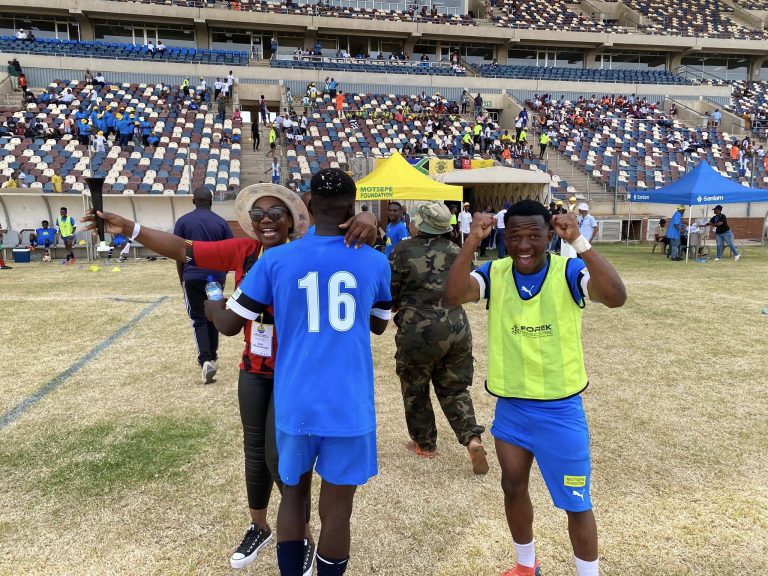
The Kay Motsepe Schools Championship concluded its 2025 football tournament at the Giant Stadium in Soshanguve over the weekend, with three teams walking away with R5 million that included cash and infrastructure upgrades.  

The tournament is a premier annual event that brings together over 13,000 school teams from across South Africa to compete in various sports, and is sponsored by Sanlam in partnership with the Motsepe Foundation.

“This initiative aims to empower young athletes by providing a platform to showcase their talents and develop essential life skills,” the Sanlam Group said in a post. 

The St. Marks Academy from Mpumalanga in the Under-19 Boys category defeated Fumana Under-19 Boys from Gauteng 1-0. 

The Academy took home a trophy and R3 million in prizes and infrastructure upgrades.  

Lungile Mokone, the coach of St. Marks Academy, told the media that the win was for Mpumalanga.

“It was a hard-fought final. Thanks to the boys for their efforts. I’m happy and proud of my players. This is for you, Mpumalanga.” 

In the Under-13 Boys category, Queenswood Laerskool from Gauteng crushed Madika Under-13 Boys from Limpopo 5-0, winning R1 million worth of prizes and upgrades in the process. 

In the Under-13 Girls category St. Anne Primary School from Free State won 5-4 on penalties after a 1-1 draw at full-time, and took home R1 million in prizes and upgrades for their efforts. 

“This is a great day for me, the players, and the people of Free State. I have been coaching the team for the past four months, and I’m still learning about them,” said Kadi Monyane, coach of St. Anne Primary School.

The Kay Motsepe Schools Championship said they have consistently produced top football talent, and this year’s event was no exception. 

The head of Sanlam, Nkazimulo Sokhulu, said:  “We continue to invest in young people. We believe sports open up a number of avenues and opportunities for young people.”

Bongani Zondi, Deputy Director of Sports and Enrichment at the Department of Basic Education, emphasised the importance of sports in academic success.

“Sports instils values such as discipline, teamwork, social cohesion, and timekeeping, which contribute to academic success,” he stated. 

The Motsepe foundation said that the prize money won by the schools will be used to improve their football facilities and benefit their communities. 

INSIDE EDUCATION

Eastern Cape and Mpumalanga schools crowned champions at national moot court final

0

By Charmaine Ndlela

Learners from Ndamase Senior Secondary School in the Eastern Cape and Kopanong Senior Secondary School in Mpumalanga have been named joint winners of South Africa’s 14th Annual National Schools Moot Court Competition.

The final round of the competition was held on Sunday at the Constitutional Court in Braamfontein.

The two teams argued before Constitutional Court and High Court judges in a mock appeal that tested their understanding of constitutional rights and the limits of language-based school admissions.

The 2025 case centred on the fictional learner Thando Khumalo, a gifted 12-year-old denied admission to two Afrikaans-medium high schools because she was not fluent in the language.

Deputy Minister of Justice and Constitutional Development Andries Nel, delivering the keynote address, praised the finalists as “constitutional custodians of tomorrow”.

He said the competition had evolved into “a national movement” since its launch in 2011 and had already produced lawyers, magistrates, activists and public servants across the country.

“You have not merely studied the Constitution; you have interrogated it and wielded it with conviction,” Nel told the courtroom.

“The Constitution is not something abstract and theoretical, but has a very real and very direct impact on the daily lives of people.”

More than 900 Grade 9 learners entered this year’s competition, which began eight months ago with essay submissions. From 180 teams that qualified, 36 reached the national rounds, culminating in Sunday’s final before Chief Justice Mandisa Maya and Gauteng Acting Judge President Audrey Ledwaba, and others.

Professor Tshepo Madlingozi of the South African Human Rights Commission opened proceedings by thanking the Departments of Basic Education and Justice for their long-standing partnership.

“It has not been easy, yet we persevere because we believe deeply in the cause of growing the next generation of social justice and human-rights warriors,” he said.

He hailed all four finalist schools – Brebner High (Free State), Kgomotso High (Northern Cape), Ndamase Secondary (Eastern Cape) and Kopanong Senior (Mpumalanga) – for their dedication.

Johanna Mashego of Kopanong Senior Secondary was named Best Oralist of 2025, while Ndamase’s Asisipho Sebeni and Sandisiwe Nompetsheni impressed judges with their arguments on equality and education rights.

Nel said the learners’ submissions showed “intellectual rigour and moral clarity”, invoking precedent and the Bill of Rights to defend inclusivity in schools

He linked the moot’s theme to the Basic Education Laws Amendment (BELA) Act, describing it as “an act of transformative constitutionalism” that promotes multilingualism and strengthens accountability. “Robust debate, public participation and active citizenry are features of a healthy democracy,” he said

Nel also urged ongoing investment in teacher development, curriculum reform and technology to build an education system that is “future-ready”.

“Education is not just a policy – it is a promise,” he said. “A promise to every learner that their potential matters; a promise to every teacher that their work is life-changing.”

Nel urged the students to carry the lessons of the moot into their communities. “The Constitution is not argued and defended only in courts – it is lived in every decision we make, in every policy we write, and every child we choose to include,” he said.

“There are many children like Thando in our country and we owe it to them to uphold the constitutional right to education and put the best interests of the child first.”

INSIDE EDUCATION

Gauteng ready for 2025 matric exams, 2026 school placements – Chiloane

0

By Johnathan Paoli

Gauteng Education MEC Matome Chiloane has declared the province fully ready to administer the 2025 National Senior Certificate (NSC) examinations and to begin placing learners for the 2026 academic year.

Speaking ahead of the exam season, Chiloane said the department’s preparations were “complete and credible”, with all 1,040 examination centres audited, compliant, and staffed with trained invigilators and monitors.

“Our systems are ready, our officials are prepared, and our learners have been supported through every possible intervention. We are confident that Gauteng will once again deliver credible results that reflect the hard work of our teachers and learners,” Chiloane said.

The NSC exams will begin next week Tuesday, and conclude on 27 November.

This year, a total of 192,745 candidates have registered to write, 144,246 full-time and 48,499 part-time, marking a six percent increase in full-time enrolments compared to 2024.

Chiloane said the rise reflected growing confidence in the public schooling system and a commitment to ensuring that every learner has the opportunity to complete their basic education.

The MEC praised the Class of 2024 for achieving an 88.41 percent pass rate, with 66,979 bachelor passes, the province’s highest number since 1996, and expressed confidence that this year’s cohort would go even further.

“We have set ourselves a target of reaching a 90 percent pass rate, and preliminary assessments show that we are on course. The Class of 2025 has shown resilience and discipline, and we believe they will rise to the occasion,” he said.

Chiloane attributed the province’s continued academic improvement to a mix of targeted support programmes and innovative digital learning platforms. Initiatives such as the Secondary School Improvement Programme (SSIP), High Flyer interventions, and live broadcast lessons have provided learners with extensive academic support.

“Through these programmes, we ensure that no learner is left behind, especially those in underperforming schools and communities facing service delivery challenges,” he said.

He noted that the department would continue to offer daily revision sessions under the Just-in-Time programme during the examination period to help learners consolidate their knowledge before each paper.

Turning to exam integrity, Chiloane said additional chief invigilators and monitors had been deployed to large examination centres, while new security mechanisms were in place to prevent irregularities, including paper leaks.

He urged candidates to arrive early at their centres, follow all screening procedures, and avoid bringing prohibited items such as cellphones or smartwatches into exam rooms.

“Cheating is not only unethical, it can destroy your future. Learners found guilty of dishonesty face having their results nullified and being barred from writing for up to three years,” he warned.

All candidates will sign the NSC Pledge next week Friday, committing themselves to the Examination Code of Conduct.

Chiloane also appealed to parents and communities to create a peaceful environment for learners during this period.

“We urge parents to provide emotional support and to ensure learners have quiet spaces to study. Communities must avoid protests or disruptions near schools, as even a single missed paper can set a learner back an entire year,” he said.

The marking process will take place between 16 November and 12 December, with the national release of results set for 12 January 2026 and the provincial release the following day.

Learners will be able to collect their statements of results from their schools on 13 January.

Chiloane reminded learners who missed the Life Orientation Common Assessment Task in September to attend the rewrite scheduled for 14 October, warning that those who do not complete it this year will only qualify to write again in September 2026.

The MEC also confirmed that the department is ready to begin the placement phase for the 2026 online admissions cycle on Thursday, 16 October.

During the application period between 24 July and 29 August, the GDE received more than 820,000 applications from over 358,000 unique users.

Chiloane explained that placement offers would be issued via SMS on a rolling basis from 16 October and urged parents to accept offers within seven school days to avoid losing their preferred placements.

He emphasised that placement decisions are guided by proximity and family connections to schools rather than the order in which applications were submitted.

To accommodate high demand, the department has deployed 786 mobile classrooms to 223 schools across the province, particularly in high-pressure areas such as Johannesburg South, Tshwane and Ekurhuleni.

He encouraged parents to resolve any placement disputes through the established objection and appeal processes, which the department has pledged to handle within prescribed timeframes.

Chiloane ended with declaring his department’s confidence and pride as the province enters this critical period for both examinations and admissions, calling on the class of 2025 to stay focused, disciplined and believing in their potential.

INSIDE EDUCATION

Fort Hare unrest ‘criminal, not protest’ – Manamela

By Akani Nkuna

Higher Education Minister Buti Manamela said on Saturday that the violent incidents at the University of Fort Hare in Alice, Eastern Cape, were acts of criminality, not protest.

This follows violent demonstrations at the university’s Alice campus on Wednesday when ‘protesters’ burned several administrative and staff buildings.

The unrest stems from a range of grievances, including calls for the Vice-Chancellor Professor Sakhela Buhlungu’s resignation, delays in National Student Financial Aid Scheme (NSFAS) payments, and demands for immediate student leadership elections.

Addressing the media in Hatfield, Pretoria, Manamela outlined his department’s intervention measures following the week’s events, saying the destruction of property and intimidation of staff could not be tolerated.

He also emphasised that students who allegedly committed “such atrocious acts” ought to be classified as criminals and be subjected to the full might of the law.

“This is criminality even if these people are students. They are basically unleashing crime. We need to make a distinction between people who are students and also people who are criminals. Criminals who are also in the process endangering the lives of other students,” Manamela added.

He said that his department was working closely with the South African Police Service (SAPS), the Eastern Cape provincial government and the university’s security teams to restore calm and protect students and staff.

“A university should be a space of learning, hope and progress, not one of fear and destruction,” he said.

“The burning of buildings, the intimidation of staff, and the disruption of teaching and learning can never be justified.”

Manamela said the priority was to ensure that the academic programme resumes within the coming week.

“I met with the University Council yesterday and directed management to implement all necessary measures to reopen safely — including temporary online learning where required.”

He stressed that students must be able to complete their studies in peace and safety.

“That is non-negotiable. The university must ensure that the academic year is not put in jeopardy.”

Manamela said he had also instructed the University Council to reflect on several critical issues during its Sunday meeting, including governance and leadership, the role and status of the SRC, institutional culture, concerns about the Vice-Chancellor’s contract, and the in-sourcing of workers.

“In the coming week, I will respond in greater detail to the feedback from the ministerial team led by Professor Ahmed Bawa, which has been engaging students, staff, and other stakeholders over the past several days. Their work is central to shaping the next phase of our intervention,” he said.

INSIDE EDUCATION

Less talk, more action, youth tell NYDA

0

By Lebone Rodah Mosima

South Africa’s young people have called on the National Youth Development Agency (NYDA) to move “beyond consultation into coordinated action” during a national dialogue aimed at shaping a shared vision for the country’s future.

The gathering – the Youth Consultation 2025 – was hosted by the NYDA this week in partnership with the South African Youth Council (SAYC), youth-led movements, political formations, and civil society organisations. It was described by the agency as the first of its kind since its establishment at the dawn of democracy.

According to the NYDA, the consultation “marks a historic new chapter in South Africa’s youth development trajectory where the Consultation is not only making space for reflection, but for collective renewal and reminding them of that, the future of this nation must be co-authored by its youth.”

Delegates debated critical issues such as youth unemployment, education and skills alignment, disengagement, inclusivity and access. Their discussions produced a common demand for change, and that policies should not just be discussed, but implemented.

“Across these discussions, there was a resounding call for the NYDA and its partners to move beyond consultation into coordinated action – transforming insights into policy, and policy into measurable impact,” the NYDA said in a statement.

The conference comes at a time when South Africa is grappling with youth unemployment of about 46%, often described as a “ticking time bomb” by politicians and policy experts.

NYDA Executive Chairperson Sunshine Myende said the agency hopes the event will help reignite the spirit of unity among young people.

“This is a platform that reminds us that our democracy is strongest when young people are at its centre – not as spectators, but as active participants in shaping its direction.”

“The NYDA is committed to taking forward every insight, every demand, and every idea that emerged from this gathering – ensuring that the voices of young people are not only heard, but reflected in the policies and programmes, that define our nation’s future,” Myende said.

The NYDA said it will use the outcomes of the consultation to inform both the Integrated Youth Development Strategy (IYDS) and the broader national development agenda.

It also pledged to ensure that “every young person across provinces to wherever they are, have a voice in shaping the policies that affect their lives.”

INSIDE EDUCATION

Can transferable skills be taught in distance learning?

Online learning in undergraduate and postgraduate education is ubiquitous the world over, but questions remain about whether it can effectively teach the transferable skills that are so important in a dynamic job market. 

With AI-integrated, hybrid workplaces becoming the norm, arguably these skills – compared with, say, knowledge recall – will be key to future graduate employability. 

Transferable skills, which include communication, teamwork, adaptability, self-motivation and self-management, as well as technical and digital skills, critical thinking and problem-solving, are already integral to employability and career path progression.

In face-to-face learning, technical skills are typically taught through a mix of theory and hands-on application to real-life scenarios and even work placements, while soft skills such as teamwork and oral communication are usually developed through presentations and tutorial sessions.

So, you might doubt that online learning can replicate that practice and experience. But, thanks to virtual learning environments (VLEs), many in academia see no reason why these essential employability skills can’t be taught effectively online. 

Moreover, the opportunity that online learning offers to build digital and distance communication skills is increasingly in tune with modern workplaces that are ever more technology-centred and global.

Almost five years after Covid-19, 28 per cent of working adults in Britain are hybrid working, according to Office for National Statics figures, and this type of working is a new norm in most English-speaking countries.

As more communication is done online, teaching these skills online can, in some cases, provide a more authentic learning environment. Even body language can be caught through a VLE.

Challenges and workarounds for teaching soft skills online

A prerequisite to teaching transferable skills online, and indeed a key challenge, is ensuring that students engage with the learning. So far, relatively few studies have compared student engagement and outcomes between face-to-face classrooms and distance learning.

It is important also to bear in mind that distance learning takes many forms, including synchronous – for example, online tutorials and live guest lectures – and asynchronous, which can range from students watching a recorded lecture to participating in interactive forums and workboards. 

A 2022 study from the University of Bordeaux found little difference in average knowledge acquisition and student interaction with their educator and peers when comparing face-to-face and synchronous distance learning, but it did suggest lower cognitive engagement and reduced social presence (meaning the sense of feeling present as part of a community) in the case of the latter.

This feeling of student detachment is heightened if, as online educators often report, students are reluctant to switch on their cameras or even to use their microphones.

Possible reasons for this, among many, include student anxiety, cultural or social sensibilities, or fear of being recorded without consent.

Online “invisibility” (such as that which might take place during a “relaxed tutorial”) can be an advantage if it attracts less-confident or neurodivergent students who might otherwise not have attended a class at all, whether in person or online.

However, student satisfaction tends to increase with higher engagement.

A range of opportunities and strategies can be deployed to improve online engagement in synchronous distance learning. Educators can foster a relationship with students by: 

  • having their own camera on
  • spending the first part of a session on informal exchanges to help build community
  • being open to a wide range of communication, including chat and emoticons
  • using interactive digital tools such as polls and whiteboards to prompt responses
  • building in small-group activities using breakout rooms. 

All these options are readily available in VLEs. In an asynchronous setting, too, active learning will promote genuine engagement with the module materials. Interactive forum activities and discussions can be a useful tool to develop teamwork and allow students to practise their written communication skills at the same time as learning from their peers.

The opportunity to design activities based on real-world events, using news articles and other media, can help engage students with module content in forums. Educators can also ask students to draw on, and connect module concepts to, their own experiences to prevent forum fatigue. 

Online curriculums also need to embed and integrate the teaching of transferable skills alongside discipline-related knowledge in interesting and creative ways and scaffold these so that skills are developed to higher levels as students proceed through their studies.

For example, introductory social science modules might develop numeracy and digital skills through teaching students how to solve problems using Excel and later hone these skills with training to use more advanced statistical software such as SPSS or STATA, or how to prompt and critique AI when used for these types of task.

Designing online assessments and activities that authentically replicate work-based activities is also key to ensuring students have the appropriate adaptable employability skills – for example, designing assessments that require students to compose social media posts and blogs reviewing policy developments can replicate the type of work that professionals do in many industries.

Also, asking students to reflect on how they would use the transferable skills they are acquiring in a future career can raise engagement.

It goes without saying that no two learners are the same. And, for the foreseeable future, work environments will likely be a combination of on- and off-site interactions. It is thus key to aim for a blended, flexible and mixed learning environment wherever possible. 

Emilie Rutledge is head of economics and senior lecturer at The Open University and managing editor of the Journal of Gulf Studies. Jonquil Lowe is senior lecturer in economics and personal finance at The Open University.

Timeshighereducation

EFF calls for an intervention as Fort Hare crisis deepens

0

By Thapelo Molefe

The Economic Freedom Fighters (EFF) have called for an urgent multi-stakeholder meeting to address what the party describes as a “catastrophic and escalating crisis” at the University of Fort Hare (UFH), where violent student protests have plunged the institution into turmoil and forced the suspension of all academic activities.

The call follows a wave of destructive protests that worsened this week, leaving parts of the historic university in ruins.

Angry students, protesting over student representation and alleged governance failures, torched several buildings, including the main administration building, which was burned to the ground in scenes that have shocked the higher education sector.

The unrest caused destruction estimated at R500 million, crippling critical facilities such as the exams department, staff centre, faculty of agriculture, and the HR building.

In a letter dated 9 October, addressed to the Chairperson of Parliament’s Portfolio Committee on Higher Education, EFF MP Sihle Lonzi urged swift and coordinated intervention by the Department of Higher Education and Training (DHET), university management, student representatives, and law enforcement agencies.

“The crisis at the University of Fort Hare has reached a level that demands urgent and coordinated intervention,” Lonzi wrote.

“The continued destruction not only threatens the university’s immediate functioning but also its long-term survival as an institution of national and historic significance.”

The EFF attributes the unrest to unresolved disputes over student governance, allegations of abuse of power by management, the refusal to hold democratic elections, and poor residence conditions, issues that have fuelled anger and mistrust between students and university leadership.

The letter also raises concerns of possible third-party interference, alleging that “actors with interests beyond those of the student body” may be deliberately escalating the violence.

Lonzi warned that prolonged instability could be exploited by private security and construction companies seeking financial gain from rebuilding contracts, calling for such allegations to be urgently investigated.

“These allegations warrant serious and immediate investigation,” Lonzi said.

“If left unchecked, such interference risks turning legitimate student grievances into a tool for profiteering and institutional sabotage.”

The EFF cautioned that the ongoing turmoil threatens to erode its legacy and symbolic importance in South Africa’s history.

“The University of Fort Hare is not only an academic institution. It is a symbol of South Africa and Africa’s intellectual heritage and liberation archive,” Lonzi stated.

“To allow its continued destabilisation would be a national catastrophe for generations to come.”

The EFF urged Parliament’s Portfolio Committee on Higher Education to urgently convene a multi-stakeholder meeting that would bring together DHET, the Council and executive management of the University of Fort Hare, student and academic representatives, as well as relevant oversight and investigative agencies.

The party said such a gathering is essential to restore institutional order, de-escalate tensions, and develop a credible recovery plan that addresses the governance, safety, and accountability failures that have plunged the university into crisis.

“The academic year is at risk of total collapse,” Lonzi warned.

“Further acts of violence, injury, and potential loss of life will follow if leadership fails to act now.”

INSIDE EDUCATION

Teaching Awards: Gwarube vows to cut admin load, give teachers more classroom time

0

By Akani Nkuna 

Basic Education Minister Siviwe Gwarube has pledged to introduce measures aimed at reducing teachers’ administrative workloads, allowing them to focus more on their core mandate of teaching and ensuring their energy is not diverted to non-instructional duties.

Speaking at the 25th National Teaching Awards (NTA) on Thursday at the Birchwood Hotel in Boksburg, Gwarube told delegates — including some of the country’s top educators, government officials, and learners — that consultations were underway with the relevant council to reassign certain administrative tasks to teaching assistants and school administrative staff.

“Yet too often their time is consumed by non-instructional administrative tasks that divert energy away from teaching. Reducing non-instructional admin is not about lowering accountability – it is about respecting teachers as professionals and giving them back the time to teach our learners,” said Gwarube.

The minister emphasised the point of streamlining reporting and removing “low value” tasks.

She further advocated for thorough use of technological innovations to enable faster and smarter compliance that is not prone to disruptions. 

Gwarube also underscored the importance of strengthening foundational education to foster the culture of literacy and numeracy, saying that the government has undertaken to expand the Early Childhood Development (ECD) programmes to accommodate children within a larger scale.

This comes after the Thrive by Five Index showed that children who were excluded from the programme “fell behind with their cognitive and physical development,” she said, and that the department has set itself an ambitious target to register 10 000 ECD centres by 31 December 2025.

“We are moving decisively on compulsory Grade R. Provinces are doing what they can with the resources available, while we work with the National Treasury to secure additional funding, to ensure that we roll out Grade R to all learners who require it,” Gwarube added.

During the awards ceremony, the Western Cape emerged as the top-performing province, claiming four Excellence Awards — in Special Needs Teaching, Life Skills (Grades 1–6), the My Teacher Ministerial Special Award, and Excellence in Teaching Physical Sciences.

Limpopo ranked second, taking home three awards, including Excellence in Teaching Mathematics, Excellence in Secondary School Teaching, and Excellence in Grade R Teaching.

The Eastern Cape was the only province without a top-spot winner, while KwaZulu-Natal, Gauteng, Northern Cape, and Mpumalanga each secured one first-place position.

Motseki Mofokeng, long-serving teacher from Free State, was honoured with the Kader Asmal Lifetime Achievement Award in recognition of more than three decades of dedicated service to education.

However, Mpumalanga’s Thulani Sibiya stood out as the overall winner, being crowned the 2025 National Best Teacher Award recipient.

Following his crowning, Sibiya told Inside Education that he was ecstatic to see his lifelong efforts finally recognised at a national level.

“I am so excited. And this is [belongs] to the whole province of Mpumalanga whom I am really proud to be their pride. This means so much to the province that they produced the best of the best educators in the whole country,” he said.

Sibiya expressed gratitude to his support structures, including Sophungane Secondary School, where he currently teaches, and Shinyukane Secondary School, where his teaching journey began.

INSIDE EDUCATION