Home Blog Page 511

Lack of proper nutrition a key obstacle to learning for SA kids

Thabo Molelekwa

A study found a link between poor nutrition in early childhood and educational outcomes later in life.

Poor nutrition in early childhood has a number of negative consequences for people later in life, according to Professor Daniela Casale, from Wits University’s School of Economic and Business Sciences.

Prof Casale analysed data from the National Income Dynamics Study (NIDS) and found a link between child health and education outcomes.

The NIDS is a longitudinal survey that collects detailed information on the health status of children, including anthropometric data (body measurements), and on their progression through school.

Stunted cognitive function

“Using South Africa’s first national longitudinal study, which follows participants over time, this work highlighted how children who were stunted in early childhood had poorer educational outcomes later on,” said Prof Casale. “The likely mechanism is through poorer cognitive function in malnourished children.”

She analysed the sample of children aged between six months and seven years in 2008. She then followed their outcomes in in 2014/15, when the children were aged seven to 14 years.

The children who were initially stunted had completed fewer years of schooling by 2014/15 compared to non-stunted children, both because they started school later and were more likely to fail the grades they were enrolled for.

Prof Casale’s analysis suggest that the timing of good nutrition is key in the child’s development, and global research shows that the first 1 000 days, from conception to the child’s second birthday, are critical.

“Policy-makers need to find more creative ways of accessing children and their caregivers in the early childhood period,” said Prof Casale.

“This is a largely under-researched area of analysis for South Africa, and much more work needs to be done on the biological and socio-economic factors that determine malnutrition in the first instance and subsequent recovery,” she said.

Importance of mother’s education

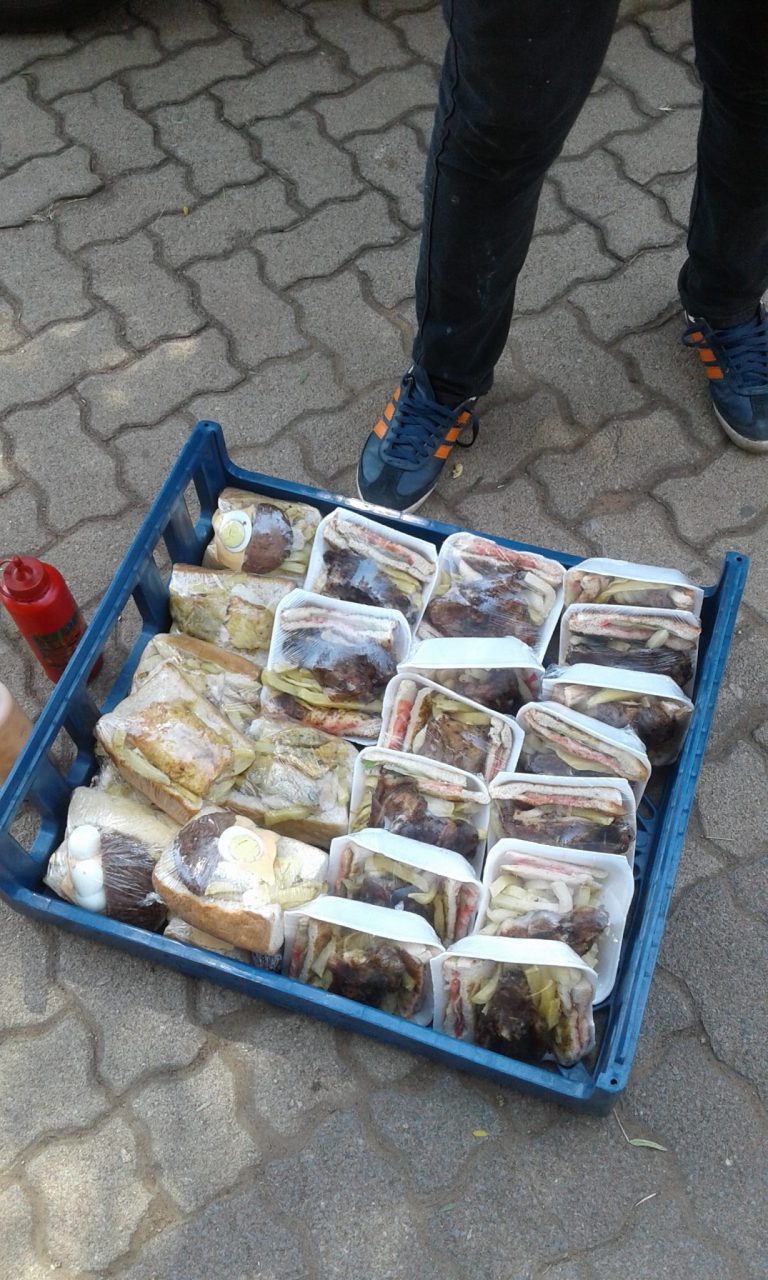
Even though school feeding scheme plays an important role in the child’s nutrition, the prevalence of stunting reaches a peak between two and three years of age, before a child gets to school.

“So clearly something more needs to be done to reach children and their caregivers earlier on. While the child support grant is an important policy intervention, and it has been shown to have many benefits, it appears not to be sufficient to prevent stunting,” said Prof Casale.

Research suggests that, in addition to economic resources, mother’s education is an important protective factor in reducing the chances of stunting

“Policy-makers will need to find ways of reaching mothers early on to ensure that they are well nourished during pregnancy and that they know how to care for and feed their children appropriately,” she said.

According to Prof Casale, clinic interactions during the antenatal and postnatal periods may be one area where policy could be strengthened. “Mothers, and of course fathers, need to be educated and supported, and children’s weight and height need to measured repeatedly in the early period to monitor progress.”
News24

TVET Pietermaritzburg college campuses shut down

Nompendulo Ngubane   

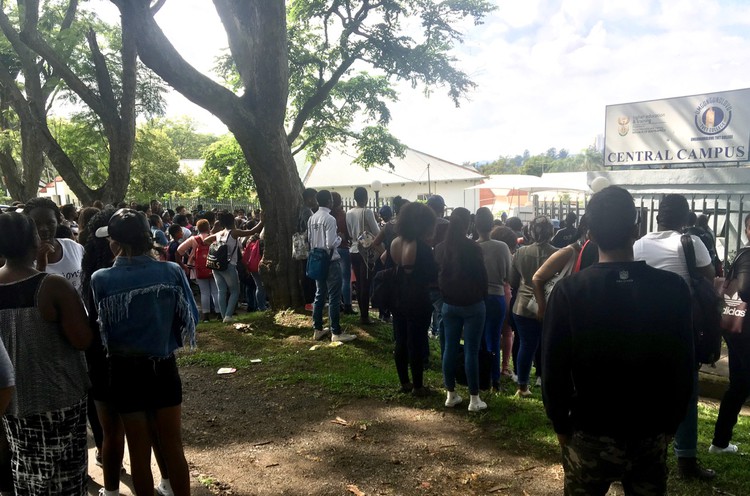
Last week, students barricaded Burger Street, in Pietermaritzburg with rocks and burning tyres, demanding that the college pay their accommodation fees from the National Student Financial Aid Scheme (Nsfas).

The issue led to the closure of all the Pietermaritzburg campuses.

On Monday morning, students marched to the central administrative offices.
“We want our money,” students demanded at Msunduzi campus of Umgungundlovu TVET College in Pietermaritzburg.

About 30 students said they have been evicted from Ikhaya boarding house on Friday. They said the college had not paid the landlord their accommodation fees since last year. The students come from Msinga, Nquthu, Ixopo, Richmond and Umkhambathini.

“We don’t have any place to go,” said a business student.

“On Monday we were evicted and taken to some dodgy hostel. There were no beds. We slept on the floor. The landlord said he cannot accommodate us anymore. The college has not paid him since last year.”

“I’m from Msinga and it’s far [145km]. Since last week we have been having problems. The college management does not care … Instead the principal, Ntombi Ntshangase, is running away from us … We are stranded and we have no place to stay,” said the student.

President of the student representative council, Cleo Ntombela, said they had met with the college management on Tuesday and Thursday. “It transpired at the meeting that they used the money for tuition fees in 2017,” said Ntombela.

But Ntshangase said it was not true that the money was paid and used by the college. She said, “All campuses were paid late. We know that there are some students without accommodation. It’s not the college’s fault for the delay. We are waiting for Nsfas to approve their bursaries. Once their bursaries have been approved, students will be paid. We are not to blame. They will have to wait for the approval.”

A student from Ixopo, who had been evicted from Ikhaya were supposed to have a meeting with the landlord.
“They have not met with him. We have been evicted. We came here to study. They are not helping us. Where do we go from here? We have no relatives. Our homes are far from here. What do we tell our parents at home,” said College management.

“They [management] don’t care about our education. We need this money to pay for our accommodation. Currently, we are not studying. This is our future,” said the student.

Protesting students have vowed not to leave the administrative offices until they are answered.

We are still waiting for comment from Nsfas. Emails, messages and phone calls have gone unanswered.

This article was first published by GroundUp.

Gauteng 2019 online registration system for public schools goes live

Inside Education

MEC Panyaza Lesufi launched the 2019 Online Learner admissions registrations for grades 1 and 8 on Monday at 8am.

Gauteng department of education will work with the department of Home Affairs for the online applications.

On Friday, Lesufi said the Gauteng Education Department has modernised the system which now allows parents less than five minutes to complete the application.

“As soon as you punch your ID number your details will load automatically,” Lesufi said.

Last year, the process was marred by a number of issues including applicants being allocated schools far from their homes.

But the department says it has now improved the system and that it can take up to 35,000 hits per second.

Other improvements include parents being able to apply at four schools instead of only three.

Parents also have a wider preference.

They can apply for schools close to their homes, work place or where other siblings are already attending and a school of choice.

“Parents can apply to any school regardless of the language. If the numbers are convincing we will go back to the school to tell them to change their language. We encourage parents to apply now to avoid disappointments,” Lesufi said.

Lesufi said the registration process also considers the fact that many households do not have access to computers and laptops and as such, parents of grade 1 and 8 can apply online using a mobile phone.

“Parents should know that they can’t migrate grade R pupils to one every parent needs to apply. For those parents who are computer illiterate or don’t have data we have provided three areas of registration. They should go to the nearest libraries in their communities, the nearest district offices and we will also identify schools that will do registrations,” Lesufi said.

Lesufi said the system can take over 30 000 parents registering at the same time.  The system will be shutdown next month on the 18th. The placement will start on July 18 and the process will be completed on October 31.

A more flexible curriculum approach can support student success

Delia Marshall

Financial access is extremely important for poor and working class students wanting to get a foot in the door at universities. But on its own this isn’t a guarantee of success.

South Africa has very poor student throughput (that is, from enrolment to graduation) and low retention rates in undergraduate education. Only 30% of students complete a three-year bachelor’s degree in three years. And less than two-thirds complete within an additional two years.

recent study of students’ experiences in BA and BSc degree programmes found that curriculum structure and flexibility can play a crucial role in students’ progression and success.

The study traced the influence of higher education on the lives of 73 young people who had registered for a BA or BSc at one of three South African universities. In-depth interviews were carried out with them six years after their first year at university.

We found that most students didn’t enter university with fully formed ideas of their interests and strengths. The experience of knowing exactly what they wanted to do, coming to university and seamlessly doing it, was rare.

Our study found that flexibility in the structure of BA and BSc degrees was important. It helped students to find their strengths and passions, and to allow them to change direction during the degree if they needed to. This in turn helped them complete their studies.

In narrowly specified programmes with limited choice or flexibility, students could be left feeling trapped in programmes that no longer matched their interests or strengths.

Different experiences

Curriculum structure in the formative science and arts degrees varies substantially across the country’s universities. Some universities offer flexibility of subject choice within the BA and BSc degree structures (taking into account prerequisites for senior courses), or even the choice of a few electives in other faculties.

In at least one university in South Africa, students can select a mixture of BA and BSc subjects, in a very flexible, liberal arts type approach.  Including Philosophy in a Science degree, taking Zoology with Psychology, or Law with Geography, allows students to engage with a broad spectrum of concepts and ways of thinking.

Other institutions have more highly specified offerings – for example, a BA in Tourism, or a BSc in Biological Sciences. These sort of programmes were introduced in some South African universities in the early 2000s, in response to a policy move away from the traditional bachelor degree.

This was intended to make undergraduate degrees more “relevant” and to lead more directly to particular employment options. In these rigid degree programmes, subjects are tightly specified with little room for choice of elective modules or for curriculum flexibility.

Our study found that flexibility really helped students. This is not surprising, considering that most of the young people we interviewed came from schools that offered limited career guidance. Also, many are first in their families to enter university; they have limited family experiences of higher education to draw on.

Change in direction of study was easier for those in BA programmes, since the BA rules of subject combination allowed for more wrong choices and changes in direction without leading to an extra year of studying.

This is to be expected as the sciences have hierarchical knowledge structures: senior BSc courses have junior courses as prerequisites. Failure in key first year science courses meant that students could be barred from progressing to the second year of study. If there was no chance to retake these courses during the year, a whole extra year of study was required.

So what can universities learn from these students’ experiences?

Rethinking structure

There has already been one significant proposal around curriculum restructuring in South African universities; it suggested lengthening the three-year bachelor’s degree to four years. This is unlikely to be adopted given the current financial pressures on the country’s higher education sector.

But we do think there is still scope to address some curriculum issues our study has highlighted within the current BA and BSc structures.

Universities should know that students don’t enter higher education with a full sense of their strengths and interests. A curriculum needs to make some trial and error possible. Professional degrees such as medicine or engineering may need a more specified curriculum, but the relative flexibility in the formative BA and BSc degrees is important. This allows students to try out different disciplines and find their passions.

In a degree with limited choices and, at some universities, very fixed prerequisites, many students fall by the wayside and can’t easily get back on track. For these students, mounting debt tends to compound the challenge of academic progression.

The academic year could also be better structured to enable flexibility. Vacation periods could be used for students who need time to resit assessments, repeat prerequisite modules or attend credit-bearing summer schools. This would support students’ progression through the curriculum.

Flexibility matters

A more flexible programme, coupled with strong academic advising structures, allows young people to find their strengths and interests – and to change direction, if need be.

It can also allow them to develop the sort of interdisciplinary perspectives needed to address the key issues facing society in the 21st century.

Universities will need to rethink curriculum structures to enable rather than constrain students’ success and progression through higher education.

This is an edited abstract from “Going to University: The influence of Higher Education on the lives of young South Africans” (2018) Case, J., Marshall, D., McKenna, S. & Mogashana, D. African Minds. Available for download here.

The other authors of the book from which this piece is extracted are Professor Jenni Case (Head of Department of Engineering Education at Virginia Tech), Professor Sioux McKenna (Head of Postgraduate Studies at Rhodes University) and Dr Disaapele Mogashana (student success coach and consultant at True Success Institute).

Delia Marshall, Professor, Department of Physics and Astronomy, University of the Western Cape

This article was originally published on The Conversation. Read the original article.

What universities can do to expand social entrepreneurship

Jackline Nyerere

Universities are at the forefront of any country’s economic development efforts. They play an invaluable role in passing knowledge on to the next generation and creating new knowledge through research. Both these endeavours can set graduates up to contribute to their country’s growth.

In this vein, more universities around the world are paying attention to entrepreneurship education. The idea is that graduates with entrepreneurial skills may have a high chance of creating work and livelihoods for themselves and their communities. Some universities combine this training with their community engagement projects. In this way, students learn to be social entrepreneurs: people who can set up and run community projects.

A number of institutions nurture social entrepreneurship by setting up incubation centres dedicated to this work. These centres provide a platform where ideas are nurtured into viable business through expert mentoring; some help students access initial funding for their ideas.

This training can benefit a multiplicity of people. The students learn skills and can go on to create social enterprises that help communities or vulnerable groups. Some universities in Africa and around the world are deliberately adapting their curriculum to nurture social entrepreneurs at various levels undergraduate and graduate. They don’t just offer entrepreneurship training to business students. Instead, they work with undergraduate students across diverse faculties.

My colleagues and I wanted to know whether Kenyan universities were taking this or similar approaches to social entrepreneurship training. So I conducted a study, whose results I’ll present at the Zambia Association of Public Universities and Colleges’ conference in late April 2018, with eight of the country’s public universities and three government institutions. These were the Commission for University Education, Kenya Vision 2030 Secretariat and the National Commission for Science, Technology and Innovation.

I conducted interviews and examined policy frameworks, priorities, agendas and strategies related to social entrepreneurship training. The study found that all eight universities were working to develop and encourage entrepreneurship as a means of diversifying access to livelihoods. But most of these programmes lean more towards business entrepreneurship and have a weak social orientation. This is a shortcoming that must be addressed.

Business trumps social enterprise

All eight of the universities we surveyed offer at least one course unit about entrepreneurship. This suggests that Kenya’s universities have recognised how important such skills are. These courses are also very popular; there is great demand among students for them. This suggests that students, too, can see how vital entrepreneurship skills could be for their future in the world of work.

The courses in question are offered in a variety of ways. Some are for undergraduates; others cater for postgraduates. Some are full degree programmes and others are just part of other courses.

What’s missing is a focus on social entrepreneurship. The courses we examined tend to focus on developing entrepreneurs who can handle self-employment and create their own work. They had little or no focus on social entrepreneurship. This makes sense when considering the country’s broader policies on job creation and entrepreneurship.

Kenya’s economic blueprint outlines the commitment to creating an environment suitable for entrepreneurship and innovation through training. The intention is to equip learners with knowledge, skills and competencies so they can work and earn a living. Tellingly, social entrepreneurship is never mentioned in the document.

It makes sense that universities are taking their lead from government policies. But Kenyan researchers have, in the past few years, started calling for universities’ entrepreneurship training to shift its focus from the purely economic to include social responsiveness.

This is because social enterprises have the ability to bring change for the better by tackling social problems and improving the lives of individuals and their communities. They enhance growth by facilitating the flow of resources to where they have the largest economic and social benefit. This makes social enterprises especially suitable for developing countries.

Making social enterprises a priority

There are problems even where universities do offer social entrepreneurship training. The teaching methods used aren’t necessarily fit for purpose. Most courses that we studied for my research involved lectures and no practical training.

This flies in the face of the methods suggested by researchers to make social entrepreneurial learning truly valuable. These methods include case studies, role playing, project based methods and guest lectures by people already working in social entrepreneurship. Peer assessment and reflective accounts are also useful tools, but are largely lacking at the universities we surveyed.

Such approaches are important because social entrepreneurship training should blend traditional economic and business lessons with real-world practical experiences and challenges.

This is where dedicated business incubation centres could be useful. There are about 7 000 such centres worldwide; they are not particularly widespread in sub Saharan Africa apart from in countries like Nigeria and South Africa. And university business incubators are only just becoming more common in Kenya, so it’s difficult to quantify their achievements and measure their performance.

However, most Kenyan universities have some kind of systems in place – at departmental, faculty or institutional level – to support business innovation ideas. These focus on intellectual property units, innovation databases and the allocation of budgets for innovation. The innovations incubated through these systems over the past decade have addressed everything from agriculture and energy to water and sanitation. My study found that around 50% of these interventions can be categorised as social enterprises.

We recommend that universities must deliberately prioritise social entrepreneurship training and innovations. This could happen through existing systems or by setting up dedicated business incubation centres. Training should include a variety of teaching methods rather than just lectures, to ensure real value for students.

Jackline Nyerere is Senior Lecturer of Educational Leadership and Policy, Kenyatta University.

This article was first published here

How inequality affects sports demographics in SA

Mosibodi Whitehead

South Africa’s sport industry suffers great inequalities. Just like the greater South Africa, the sports budgets of the “haves” by far outstrip those of the “have-nots”.

A recent World Bank report describes South Africa as the most unequal country in the world. We sit atop a list of 149 countries because the top one per cent of South Africans own over seventy per cent of the country’s wealth while the bottom 60 percent only holds less than ten per cent.

Worse still in the period between 2006 and 2015, South Africans have become poorer with more than half now living below the national poverty line of R992 per month. This means that there are poor South Africans today than there were at the end of Apartheid in 1994. It’s a crisis.

This phenomenon also impacts school sport. Only a few private schools have the resources necessary to produce national quality players in expensive sports such as cricket.

For example, as recently as 2014 a third of players that have ever played for the senior men’s national cricket team have come from just six private schools such as King Edwards, Selbourne College and Bishops.

Racial divisions are further exacerbated by class divisions with the poor, black majority sitting at the bottom of class and race politics.

Transformation of South Africa’s sport in our senior national teams is still slow and highly problematic as it does not reflect the demographics of the country. The schools that mould these young sportsmen and women still look as they did three decades ago and these schools become a sure measure of the demographics of national teams.

This becomes a double burden to a developmental state. In the most unequal society in the world, it is therefore no surprise that sport in South Africa is often the last consideration. When schools themselves are under-resourced, the government finds itself trying to deliver decent education to learners from marginalized communities instead of focusing on sports or transformation of sports at school level.

However, there is hope.

Prestige College provides as an example of what can be done to champion sport in schools with limited means. The college is situated in Hammanskraal, north of Pretoria.

Prestige College, although private, costs a fraction of what a parent can expect to pay at one of the country’s top private schools. However, even with lower costs, the school competes favourably against some of the more well-established traditional cricket schools.

Look at Thabo Motaung who matriculated from Prestige last year. Motaung impressed during both the 2017 Coca Cola Khaya Majola U19 Cricket week and the 2017 Coca Cola Schools T20 Challenge.

After matriculating, Motaung was taken by The Titans, the northernmost top-level cricket franchise in South Africa, and he is now on the cusp of a professional cricket career.

Prestige College able to provide the equipment, nets, cover the travel costs and all the other expenses that a serious high school cricket will incur?

Manus Hendriks who is the Head of the Sport department at Prestige explains how the school is able to provide equipment, nets, cover travel costs and all the other expenses associated with being a serious cricket-playing school.

Hendriks says they use a multi-pronged approach.

The school gets assistance from the Northerns Cricket Union; they get assistance from Cricket South Africa and they are also one of the Department of Sports and Recreation’s national focus sports schools.

Hendricks says the real key to their success is in the support they get from their school principal Mrs. Thana Pienaar and the passion they have for sport.

“She loves sports and she supports us in all the sporting codes and when we struggle to get funds she tries to fund some way or means. We started with this programme in 2004 and we are only beginning to realise the fruits now. What you need is dedication and passion. If you have a passionate teacher or coach, that person will always make a means,” explains Hendriks.

But it is not just in cricket where Prestige College are producing national champions.

Last year, the school produced six South African chess players and their provincial and national athletics champions are just as impressive.

When Retshidisitswe Mlenga won gold in the 200m at the world U18 youth Championships in Nairobi, Kenya in 2017.

He became the first South African to win a national sprint title. His achievements are just the tip of the Prestige-talent iceberg. Following hot on Mlenga’s lightning fast footsteps is Gontse Morake, who clocked 57.81 at last weekend’s SA Youth and Junior Track and Field Championships in Paarl to break Gezelle Magerman’s national youth 400m hurdles record.

Morake praised her coach Reneilwe Aphane saying he should take all the credit.

“Obviously when you have the best people behind you, you know you will prosper. My coach has been inspiring me. He’s there emotionally, he’s been like a father figure. He’s everything,” said Morake.

Aphane is a former national triple jump champion and world class coach who has honed his skills in the US and has now returned to coach at his alma mater.

Aphane’s skills are in high demand around the country. Hendriks reveals that they are only able to afford him because of a partnership with the University of Johannesburg (UJ).

“To keep them is difficult because they also get approached by other institutions, but we normally make agreements with the university. For example, our jumps coach is also coaching at UJ so we make it work.”

So there is hope for sporting success for the 30 million South Africans that live below the poverty line. We only need to use the example set by Prestige College. And that example focusses on partnerships and passion.

The two P’s are more important than money when the goal is to level the playing fields, correct Apartheid’s enduring legacy and produce equal access to quality sport opportunities in the most unequal country in the world.

Mosibodi Whitehead is a sports editor and broadcaster.

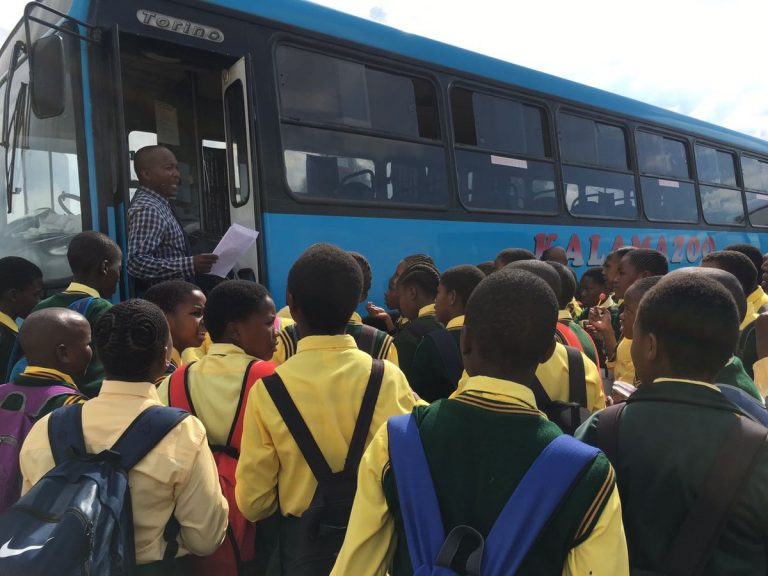
Safe transport arrives at two KZN schools following court order

Bongekile Macupe

Pupils in Nquthu finally have transport to and from school, a year after advocacy group Equal Education took the KwaZulu-Natal department of education to court.

At the start of the second school term on Tuesday, the department handed over buses and taxis to two schools in Nquthu following a high court order in November compelling the department to provide transport to pupils in the province.

The buses were delivered to Ngwane Senior Secondary School and Hlinzeka Primary School in Ngwane village.

In its court application, Equal Education represented 12 schools. However, “the agreement that was made an order of court in November 2017 was not just about the 12 Nquthu schools – it was also about the provision of education to learners in need throughout the province,” Equal Education said in a statement.

“We are now working to ensure that there is proper implementation of the commitments in the court order,” it added.

The advocacy group had campaigned for transport for two years before taking the department to court.

In the 2016-2017 financial year, the department of basic education said 521 711 pupils nationally needed transport but only 419 849 got it. The provinces with the biggest shortfalls were KwaZulu-Natal and the Eastern Cape.

In its answering affidavit to Equal Education’s application, the provincial education department said the country’s bleak financial situation hindered it from providing transport to all pupils who need it. Consequently the department couldn’t make the “constitutionally recognised right of access to education in all its facets a reality on account of this”.

Last year, Mail & Guardian reported on the plight of pupils who walked for about two hours to school in Nquthu. Other pupils, whose parents paid for private transport to school, dodged death after being involved in accidents. And pupils had been raped while walking to school, Equal Education said in its court papers.

 The National Learner Transport Policy, released in 2015, states: “The ability of learners to access education is hampered by the long distances they have to travel to get to school, threats to their safety and security and the cost of transport. Learners have difficulty accessing educational institutions due to the inadequacy of learner transport and insufficient schools in areas where they live.”

The policy leaves it up to provincial governments to determine which pupils, based on the distance they travel to school, would be provided with transport.

The KwaZulu-Natal education department’s draft policy on transport says pupils who have to walk more than 3km to school must be provided with transport.

Equal Education said in its statement that although it viewed the delivery of vehicles to the two Nquthu schools as a victory, all pupils in the country who walk long and dangerous distances to school should be provided with transport.

Read original article here

UCT to rename building after Chris Hani

Iavan Pijoos

The University of Cape Town (UCT) is expected to honour struggle icon Chris Hani by naming one of its buildings after him.

The New Science Lecture Theatre is to be renamed the Chris Hani Lecture Theatre in honour of Hani’s contribution to South Africa’s democracy.

Tuesday marks the 25th anniversary of Hani’s assassination.

The official renaming ceremony will be held on April 25, which is expected to be attended by the Hani family. Deputy Minister of Public Works Jeremy Cronin is to give the keynote address.

Outgoing UCT vice-chancellor Dr Max Price, UCT chairperson of the naming of buildings committee, advocate Norman Arendse and other dignitaries are also expected to attend.

UCT spokesperson Nombuso Shabalala said the institution regarded the naming of the building as a historic moment.

“The renaming of buildings is just one part of a multifaceted transformation project committed to overcoming the legacy of apartheid and colonialism in the university system – and to make UCT a home to all.”

Shabalala said it was a change that would not just linger in the name boards on the side of buildings, but that it should also be a definitive break with South Africa’s painful past.

“It is symbolic of a transformation not only on the UCT campus, but more importantly of our attitudes and values.” – News24

Gauteng government bypasses laws to build school

Yoliswa Sobuwa

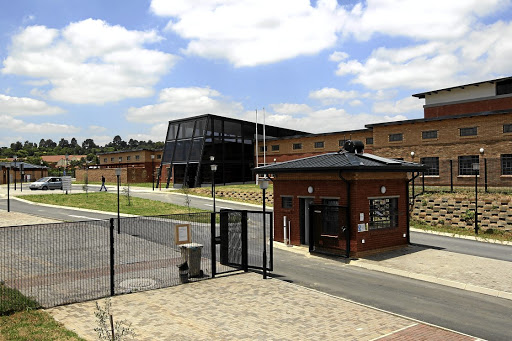
A multi-million rand Gauteng school for children with special needs was built illegally, bypassing town planning and building bylaws.

This, Sowetan has established, is the reason why the opening of the school has been stalled. More than 560 pupils were set to move into the Nokuthula LSEN (Learners with Special Educational Needs) school in Lyndhurst, north of Joburg, in January.

The school was launched in October by Gauteng premier David Makhura and education MEC Panyaza Lesufi.

However, it has now emerged that the Gauteng department of infrastructure development (GPDID) built the school without meeting the city’s town planning and bylaw regulations.

In fact, Sowetan has established that the building plans for the school are yet to be submitted to the City for approval.

An official said part of the school was built on a flood line.

“This is a school for children with disabilities and we need to be very careful. We don’t want buildings collapsing on them because proper procedures were not followed,” he said.

Poppy Cynthia Louw, stakeholder manager at the office of the MMC for development planning, said it had been established that the GPDID had outstanding requirements for the Nokuthula LSEN school.

“The province failed to follow the proper process in the construction of the building concerned from the beginning of the project. Once the City was made aware of the construction, we duly notified officials from the GPDID of this, including the still outstanding building requirements,” Louw said.

She said the City was working with the GPDID to find amicable solutions that will fast track the issuing of the occupation certificate and ensure that the safety of anyone was not put at risk.

GPDID spokesman Theo Nkonki said they have been working closely with officials from the City and other government departments to resolve all the issues related to approvals of Nokuthula LSEN school project.

“The progress we’ve seen on this matter has resulted from the cooperation and collaboration by both teams. In fact, we are highly optimistic that the matter regarding the occupational certificate will be concluded soon,” Nkonki said.

Responding to legislature questions last week, Lesufi said the old Nokuthula School building in Marlboro near Alexandra was not conducive to teaching and learning, but he would not say when the pupils would move to the new building.

When Sowetan visited the Marlboro facility recently, parents said they had hoped their children would have been moved into a new facility soon.

“On rainy days the (rain) water flows into the school,” said Bukeka Mjindi, 45.

The Gauteng department of education did not respond to requests for comment.

Read the original article here

Kenya signs law on free sanitary towels for schoolgirls

Lynet Igadwah

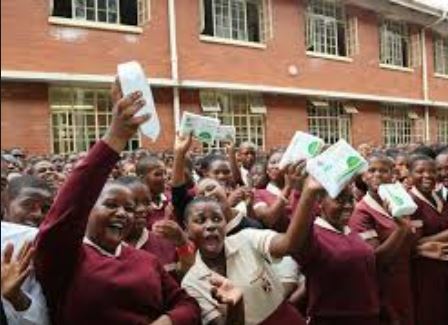
Schoolgirls who have reached puberty will now receive free sanitary towels from the government, a new law aimed at minimising absenteeism and putting them at par with their male counterparts says.

The Basic Education Amendment Act places the responsibility of providing free, sufficient and quality sanitary towels on the government in order to reduce the number of girls missing school during their menstrual cycle.

Kenya’s President Uhuru Kenyatta signed the Bill into law, which also compels the government to provide a safe and environmentally sound mechanism for disposal of the sanitary towels on Wednesday.

“The Basic Education Amendment Act amends Basic Education Act, placing the responsibility of providing free, sufficient and quality sanitary towels to every girl child registered and enrolled in a public basic education institution and has reached puberty, on the government,” it states.

A 2016 Unesco report estimates that one in 10 girls in Sub-Saharan Africa is absent from school during their menstrual cycle.

Data from the Ministry of Education indicates that a girl absent from school for four days in 28 days (month) loses 13 learning days equivalent to two weeks of learning in every school term. In an academic year (nine months) a girl loses 39 learning days equivalent to six weeks of learning time.

A girl in primary school between grades 6 and 8 (three years) loses 18 learning weeks out of 108 weeks. Within the four years of high school a girl can lose 156 learning days equivalent to almost 24 weeks out of 144 weeks of learning.

In November last year, the government removed duty charged on raw materials used in production of sanitary pads, giving manufacturers a shot in the arm.

Before the concession, raw materials used in the making of sanitary pads attracted value added tax (VAT) at 16 per cent and excise duties of 25 per cent.  This was despite sanitary pads being exempt from VAT and attracting zero excise duty.

Existence of the tax had effectively given an upper hand to non-resident manufacturers at the expense of the local producers.

The Basic Education Amendment Bill (2016) was among nine Bills that Mr Kenyatta signed to law yesterday. Others were the Division of Revenue Bill 2017, Finance Bill (2017), Supplementary Appropriation Bill (2017), Insurance Amendment Bill (2017), Health Bill (2015), Hydrologist Bill (2016), the Clinical Officers Bill (2016), and National Coroners Service Bill (2016).

The article was originally published by Business Daily Africa.