The Department of Basic Education has announced its decision to move matric supplementary exams.
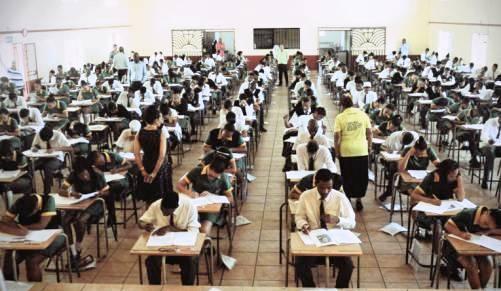
From 2019, the second national examination will take place between May and June.
The decision was backed by national education stakeholders to allow for more people to complete their matric qualifications. Many, however, have raised concerns that the decision may affect those applying to tertiary institutions.
This decision was passed last year in Parliament.
Elijah Mhlanga, spokesperson of the Department of Basic Education, said the decision was taken for many reasons, including that all of those who qualified to write did not register, and half of those who did, did not write the exams.
“This has resulted in loss of millions of rands to the department over the years. Extra costs include having question papers and answer sheets prepared, venue hire, and hiring invigilators; and markers. Regardless of whether people arrive, markers are paid according to the number of registrations,” he said.
Mhlanaga added that these exams are expected to take place between May and June because there are already exams in session during this time.
“The infrastructure already exists,” he said. “All we need to do is open it up for much larger use.”
The failure rate of supplementary exams are also higher, and this could be attributed to the short preparation period between end-of-year exams and the supplementary exams. Having the exams at the mid-year point will allow those writing to study longer, ensuring higher success rates.
Mhlanga also said that the second matric exam caters for other needs. Those who failed a subject may apply to rewrite it, but those who are not satisfied with their mark despite passing the subject will also be able to rewrite the subject.
The downside of this decision being passed is that those who have applied to write will have to wait for the following year to register for university courses. The Department of Basic Education, however, believes that this is better for the majority.
This decision was passed last year in Parliament. “In 2018, we want to concentrate on raising the matter more, to make the public aware,” said Mhlanga.
The National Professional Teachers’ Organisation of SA (Naptosa) supports the decision.
“For us, it is about creating access for more people to complete their matric. For better or worse, our (education) system is geared more for an academic child.
“Having a second sitting mid-year means we can afford people who’ve failed the opportunity to rewrite, and those who can only sit for some of their exams in December get an opportunity to sit for the rest in June – a six-month gap, as opposed to having to wait a year,” said Naptosa.
Ultimately, there is no way in which to avoid the six months to a year of lost time. This means that more pressure will be put on matric pupils to pass the first time around and to avoid these delays.
Sir Ronald Ross had just returned from an expedition to Sierra Leone. The British doctor had been leading efforts to tackle the malaria that so often killed English colonists in the country, and in December 1899 he gave a lecture to the Liverpool Chamber of Commerce about his experience. In the words of a contemporary report, he argued that “in the coming century, the success of imperialism will depend largely upon success with the microscope”.
Ross, who won the Nobel Prize for Medicine for his malaria research, would later deny he was talking specifically about his own work. But his point neatly summarised how the efforts of British scientists was intertwined with their country’s attempt to conquer a quarter of the world.
Ross was very much a child of empire, born in India and later working there as a surgeon in the imperial army. So when he used a microscope to identify how a dreaded tropical disease was transmitted, he would have realised that his discovery promised to safeguard the health of British troops and officials in the tropics. In turn, this would enable Britain to expand and consolidate its colonial rule.
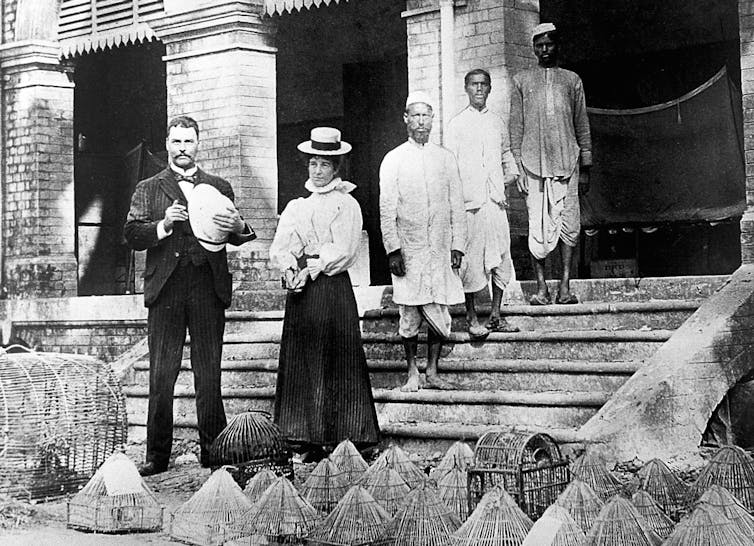
Ronald Ross at his lab in Calcutta, 1898. Wellcome Collection, CC BY
Ross’s words also suggest how science was used to argue imperialism was morally justified because it reflected British goodwill towards colonised people. It implied that scientific insights could be redeployed to promote superior health, hygiene and sanitation among colonial subjects. Empire was seen as a benevolent, selfless project. As Ross’s fellow Nobel laureate Rudyard Kipling described it, it was the “white man’s burden” to introduce modernity and civilised governance in the colonies.
But science at this time was more than just a practical or ideological tool when it came to empire. Since its birth around the same time as Europeans began conquering other parts of the world, modern Western science was inextricably entangled with colonialism, especially British imperialism. And the legacy of that colonialism still pervades science today.
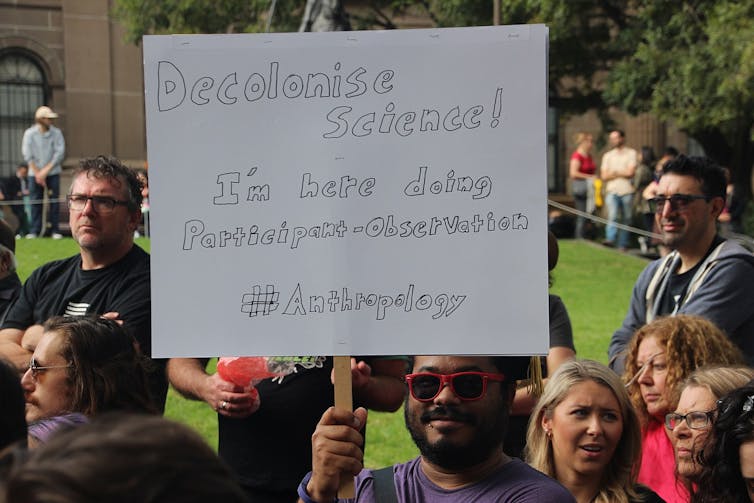
As a result, recent years have seen an increasing number of calls to “decolonise science”, even going so far as to advocate scrapping the practice and findings of modern science altogether. Tackling the lingering influence of colonialism in science is much needed. But there are also dangers that the more extreme attempts to do so could play into the hands of religious fundamentalists and ultra-nationalists. We must find a way to remove the inequalities promoted by modern science while making sure its huge potential benefits work for everyone, instead of letting it become a tool for oppression.
The gracious gift of science
When a slave in an early 18th-century Jamaican plantation was found with a supposedly poisonous plant, his European overlords showed him no mercy. Suspected of conspiring to cause disorder on the plantation, he was treated with typical harshness and hanged to death. The historical records don’t even mention his name. His execution might also have been forgotten forever if it weren’t for the scientific enquiry that followed. Europeans on the plantation became curious about the plant and, building on the slave’s “accidental finding”, they eventually concluded it wasn’t poisonous at all.
Instead it became known as a cure for worms, warts, ringworm, freckles and cold swellings, with the name Apocynum erectum. As the historian Pratik Chakrabarti argues in a recent book, this incident serves as a neat example of how, under European political and commercial domination, gathering knowledge about nature could take place simultaneously with exploitation.
For imperialists and their modern apologists, science and medicine were among the gracious gifts from the European empires to the colonial world. What’s more, the 19th-century imperial ideologues saw the scientific successes of the West as a way to allege that non-Europeans were intellectually inferior and so deserved and needed to be colonised.
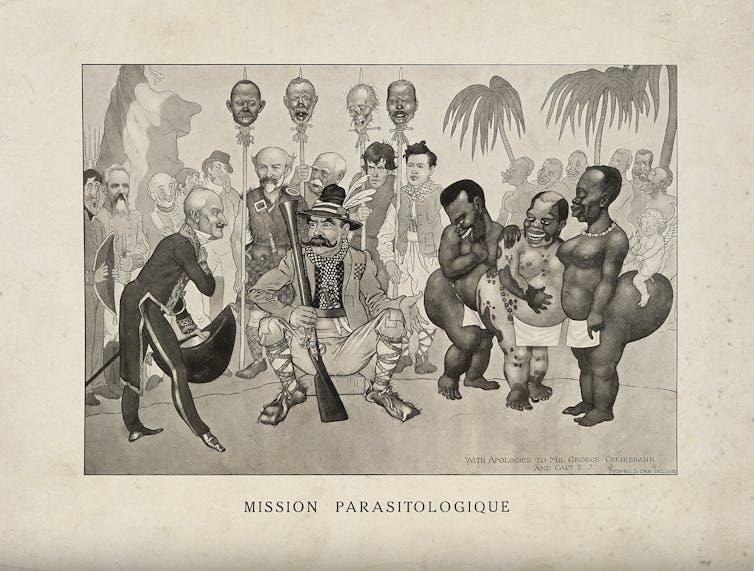
A racist caricature of European scientists visiting Africa. The severed head on the right is that of Ronald Ross. Wellcome Collection, CC BY
In the incredibly influential 1835 memo “Minute on Indian Education”, British politician Thomas Macaulay denounced Indian languages partially because they lacked scientific words. He suggested that languages such as Sanskrit and Arabic were “barren of useful knowledge”, “fruitful of monstrous superstitions” and contained “false history, false astronomy, false medicine”.
Such opinions weren’t confined to colonial officials and imperial ideologues and were often shared by various representatives of the scientific profession. The prominent Victorian scientist Sir Francis Galton argued that the “the average intellectual standard of the negro race is some two grades below our own (the Anglo Saxon)”. Even Charles Darwin implied that “savage races” such as “the negro or the Australian” were closer to gorillas than were white Caucasians.
Yet 19th-century British science was itself built upon a global repertoire of wisdom, information, and living and material specimens collected from various corners of the colonial world. Extracting raw materials from colonial mines and plantations went hand in hand with extracting scientific information and specimens from colonised people.
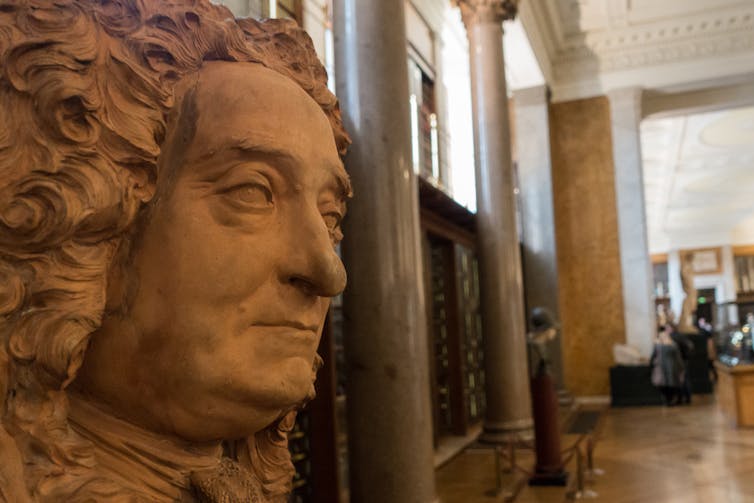
The British and Natural History museums were founded using the personal collection of doctor and naturalist Sir Hans Sloane. To gather these thousands of specimens, Sloane had worked intimately with the East India, South Sea and Royal African companies, which did a great deal to help establish the British Empire.
The scientists who used this evidence were rarely sedentary geniuses working in laboratories insulated from imperial politics and economics. The likes of Charles Darwin on the Beagle and botanist Sir Joseph Banks on the Endeavour literally rode on the voyages of British exploration and conquest that enabled imperialism.
Sir Hans Sloane’s imperial collection started the British Museum. Paul Hudson/Wikipedia, CC BY
Other scientific careers were directly driven by imperial achievements and needs. Early anthropological work in British India, such as Sir Herbert Hope Risley’s Tribes and Castes of Bengal, published in 1891, drew upon massive administrative classifications of the colonised population.
Map-making operations including the work of the Great Trigonometrical Survey in South Asia came from the need to cross colonial landscapes for trade and military campaigns. The geological surveys commissioned around the world by Sir Roderick Murchison were linked with intelligence gathering on minerals and local politics.
Efforts to curb epidemic diseases such as plague, smallpox and cholera led to attempts to discipline the routines, diets and movements of colonial subjects. This opened up a political process that the historian David Arnold has termed the “colonisation of the body”. By controlling people as well as countries, the authorities turned medicine into a weapon with which to secure imperial rule.
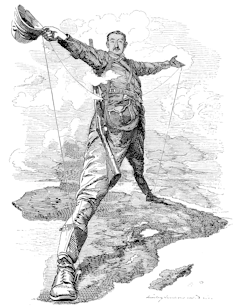
Imperialist Cecil Rhodes planned a railway and telegraph line to connect Africa.Wikipedia
New technologies were also put to use expanding and consolidating the empire. Photographs were used for creating physical and racial stereotypes of different groups of colonised people. Steamboats were crucial in the colonial exploration of Africa in the mid-19th century. Aircraft enabled the British to surveil and then bomb rebellions in 20th-century Iraq. The innovation of wireless radio in the 1890s was shaped by Britain’s need for discreet, long-distance communication during the South African war.
In these ways and more, Europe’s leaps in science and technology during this period both drove and were driven by its political and economic domination of the rest of the world. Modern science was effectively built on a system that exploited millions of people. At the same time it helped justify and sustain that exploitation, in ways that hugely influenced how Europeans saw other races and countries. What’s more, colonial legacies continue to shape trends in science today.
Modern colonial science
Since the formal end of colonialism, we have become better at recognising how scientific expertise has come from many different countries and ethnicities. Yet former imperial nations still appear almost self-evidently superior to most of the once-colonised countries when it comes to scientific study. The empires may have virtually disappeared, but the cultural biases and disadvantages they imposed have not.
You just have to look at the statistics on the way research is carried out globally to see how the scientific hierarchy created by colonialism continues. The annual rankings of universities are published mostly by the Western world and tend to favour its own institutions. Academic journals across the different branches of science are mostly dominatedby the US and western Europe.
It is unlikely that anyone who wishes to be taken seriously today would explain this data in terms of innate intellectual superiority determined by race. The blatant scientific racism of the 19th century has now given way to the notion that excellence in science and technology are a euphemism for significant funding, infrastructure and economic development.
Because of this, most of Asia, Africa and the Caribbean is seen either as playing catch-up with the developed world or as dependent on its scientific expertise and financial aid. Some academics have identified these trends as evidence of the persisting “intellectual domination of the West” and labelled them a form of “neo-colonialism”.
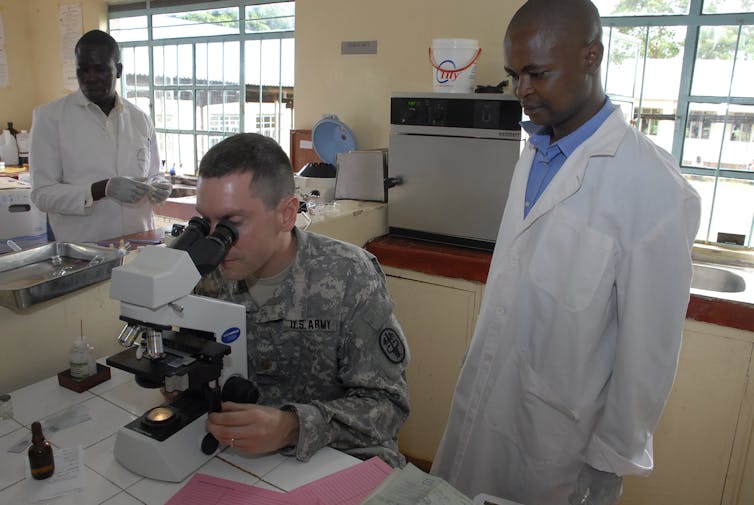
Not all international collaborations are equal. US Army Africa/Flickr, CC BY
Various well-meaning efforts to bridge this gap have struggled to go beyond the legacies of colonialism. For example, scientific collaboration between countries can be a fruitful way of sharing skills and knowledge, and learning from the intellectual insights of one another. But when an economically weaker part of the world collaborates almost exclusively with very strong scientific partners, it can take the form of dependence, if not subordination.
A 2009 study showed that about 80% of Central Africa’s research papers were produced with collaborators based outside the region. With the exception of Rwanda, each of the African countries principally collaborated with its former coloniser. As a result, these dominant collaborators shaped scientific work in the region. They prioritised research on immediate local health-related issues, particularly infectious and tropical diseases, rather than encouraging local scientists to also pursue the fuller range of topics pursued in the West.
In the case of Cameroon, local scientists’ most common role was in collecting data and fieldwork while foreign collaborators shouldered a significant amount of the analytical science. This echoed a 2003 study of international collaborations in at least 48 developing countries that suggested local scientists too often carried out “fieldwork in their own country for the foreign researchers”.
In the same study, 60% to 70% of the scientists based in developed countries did not acknowledge their collaborators in poorer countries as co-authors in their papers. This is despite the fact they later claimed in the survey that the papers were the result of close collaborations.
Mistrust and resistance
International health charities, which are dominated by Western countries, have faced similar issues. After the formal end of colonial rule, global health workers long appeared to represent a superior scientific culture in an alien environment. Unsurprisingly, interactions between these skilled and dedicated foreign personnel and the local population have often been characterised by mistrust.
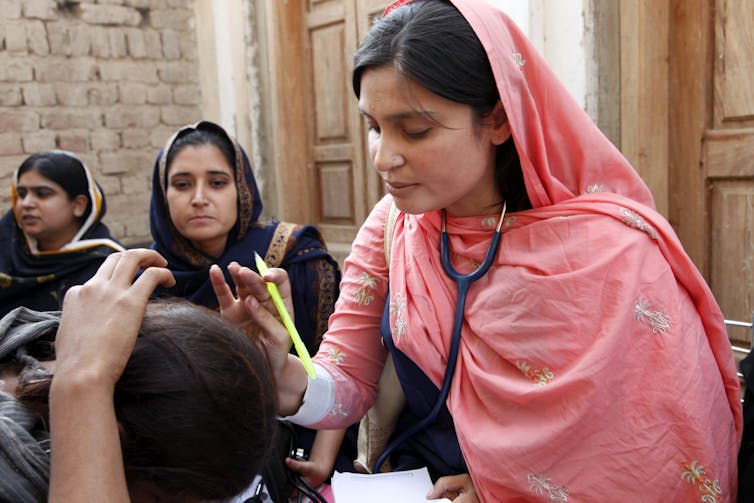
For example, during the smallpox eradication campaigns of the 1970s and the polio campaign of past two decades, the World Health Organization’s representatives found it quite challenging to mobilise willing participants and volunteers in the interiors of South Asia. On occasions they even saw resistance on religious grounds from local people. But their stringent responses, which included the close surveillance of villages, cash incentives for identifying concealed cases and house-to-house searches, added to this climate of mutual suspicion. These experiences of mistrust are reminiscent of those created by strict colonial policies of plague control.
Polio eradication needs willing volunteers. Department for International Development, CC BY
Western pharmaceutical firms also play a role by carrying out questionable clinical trials in the developing world where, as journalist Sonia Shah puts it, “ethical oversight is minimal and desperate patients abound”. This raises moral questions about whether multinational corporations misuse the economic weaknesses of once-colonised countries in the interests of scientific and medical research.
The colonial image of science as a domain of the white man even continues to shape contemporary scientific practice in developed countries. People from ethnic minorities are underrepresented in science and engineering jobs and more likely to face discrimination and other barriers to career progress.
To finally leave behind the baggage of colonialism, scientific collaborations need to become more symmetrical and founded on greater degrees of mutual respect. We need to decolonise science by recognising the true achievements and potential of scientists from outside the Western world. Yet while this structural change is necessary, the path to decolonisation has dangers of its own.
In October 2016, a YouTube video of students discussing the decolonisation of science went surprisingly viral. The clip, which has been watched more than 1m times, shows a student from the University of Cape Town arguing that science as a whole should be scrapped and started again in a way that accommodates non-Western perspectives and experiences. The student’s point that science cannot explain so-called black magic earned the argument much derision and mockery. But you only have to look at the racist and ignorant comments left beneath the video to see why the topic is so in need of discussion.
Inspired by the recent “Rhodes Must Fall” campaign against the university legacy of the imperialist Cecil Rhodes, the Cape Town students became associated with the phrase “science must fall”. While it may be interestingly provocative, this slogan isn’t helpful at a time when government policies in a range of countries including the US, UK and India are already threatening to impose major limits on science research funding.
More alarmingly, the phrase also runs the risk of being used by religious fundamentalists and cynical politicians in their arguments against established scientific theories such as climate change. This is a time when the integrity of experts is under fire and science is the target of political manouevring. So polemically rejecting the subject altogether only plays into the hands of those who have no interest in decolonisation.
Alongside its imperial history, science has also inspired many people in the former colonial world to demonstrate remarkable courage, critical thinking and dissent in the face of established beliefs and conservative traditions. These include the iconic Indian anti-caste activist Rohith Vemula and the murdered atheist authors Narendra Dabholkar and Avijit Roy. Demanding that “science must fall” fails to do justice to this legacy.
The call to decolonise science, as in the case of other disciplines such as literature, can encourage us to rethink the dominant image that scientific knowledge is the work of white men. But this much-needed critique of the scientific canon carries the other danger of inspiring alternative national narratives in post-colonial countries.
For example, some Indian nationalists, including the country’s current prime minister, Narendra Modi, have emphasised the scientific glories of an ancient Hindu civilisation. They argue that plastic surgery, genetic science, aeroplanes and stem cell technology were in vogue in India thousands of years ago. These claims are not just a problem because they are factually inaccurate. Misusing science to stoke a sense of nationalist pride can easily feed into jingoism.
Meanwhile, various forms of modern science and their potential benefits have been rejected as unpatriotic. In 2016, a senior Indian government official even went so far as to claim that “doctors prescribing non-Ayurvedic medicines are anti-national”.
The path to decolonisation
Attempts to decolonise science need to contest jingoistic claims of cultural superiority, whether they come from European imperial ideologues or the current representatives of post-colonial governments. This is where new trends in the history of science can be helpful.
For example, instead of the parochial understanding of science as the work of lone geniuses, we could insist on a more cosmopolitan model. This would recognise how different networks of people have often worked together in scientific projects and the cultural exchanges that helped them – even if those exchanges were unequal and exploitative.
But if scientists and historians are serious about “decolonising science” in this way, they need to do much more to present the culturally diverse and global origins of science to a wider, non-specialist audience. For example, we need to make sure this decolonised story of the development of science makes its way into schools.
Students should also be taught how empires affected the development of science and how scientific knowledge was reinforced, used and sometimes resisted by colonised people. We should encourage budding scientists to question whether science has done enough to dispel modern prejudices based on concepts of race, gender, class and nationality.
Schools need to teach the non-Western history of science.Wikimedia Commons
Decolonising science will also involve encouraging Western institutions that hold imperial scientific collections to reflect more on the violent political contexts of war and colonisation in which these items were acquired. An obvious step forward would be to discuss repatriating scientific specimens to former colonies, as botanists working on plants originally from Angola but held primarily in Europe have done. If repatriation isn’t possible, then co-ownership or priority access for academics from post-colonial countries should at least be considered.
This is also an opportunity for the broader scientific community to critically reflect on its own profession. Doing so will inspire scientists to think more about the political contexts that have kept their work going and about how changing them could benefit the scientific profession around the world. It should spark conversations between the sciences and other disciplines about their shared colonial past and how to address the issues it creates.
Unravelling the legacies of colonial science will take time. But the field needs strengthening at a time when some of the most influential countries in the world have adopted a lukewarm attitude towards scientific values and findings. Decolonisation promises to make science more appealing by integrating its findings more firmly with questions of justice, ethics and democracy. Perhaps, in the coming century, success with the microscope will depend on success in tackling the lingering effects of imperialism.
Rohan Deb Roy is a Lecturer in South Asian History, University of Reading
The Minister of Science and Technology, Mmamoloko Kubayi-Ngubane, yesterday participated in a ceremony to send off South Africa’s second nanosatellite to India, where it will be launched on 18 July.
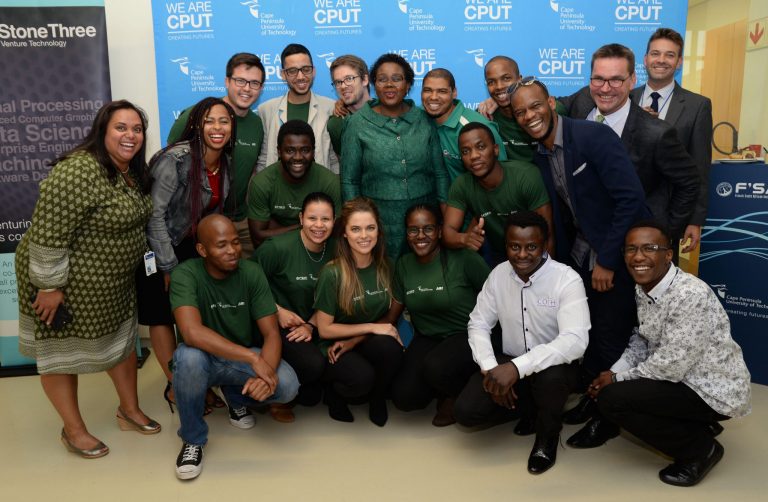
ZACUBE-2, described as the most advanced on the continent, will provide cutting-edge remote sensing and communication services to South Africa and the region. The 4 kg ZACUBE-2 was developed by the French South African Institute of Technology (F’SATI) at the Cape Peninsula University of Technology (CPUT).
F’SATI is a French South African postgraduate institute for teaching, research and development with two nodes – one at Tshwane University of Technology and one at CPUT.
The project was funded by the Department of Science and Technology (DST), and managed by the South African National Space Agency (SANSA), in close cooperation with the University of Montpellier, the French Embassy and the Paris Chamber of Commerce.
The primary mission objective of ZACUBE-2 is to demonstrate vessel-tracking services in the South African Exclusive Economic Zone in support of the Oceans Economy component of Operation Phakisa. Operation Phakisa is intended to fast-track the implementation of the National Development Plan.
The 10 x 10 x 10 x 30 cm satellite will track vessels along South Africa’s coasts, with its automatic identification system (AIS) payload providing information on their position, speed and registration. The AIS will also proactively detect forest fires through an imager payload developed by the Council for Scientific and Industrial Research (CSIR).
CPUT adopted Operation Phakisa as a key focus area, specifically using research and technology to innovate for marine protection and governance. The university has agreements with both the Department of Science and Technology and the Department of Environmental Affairs for the development of nanosatellite-based solutions for Operation Phakisa.
In June 2016, the university launched its Research Chair in Oceans Economy, cementing its overall contribution to Operation Phakisa. ZACUBE-2 is a precursor to a constellation of nanosatellites that will be developed to facilitate South African marine domain awareness. This will support international maritime communications, from the current AIS to the evolving VHF Data Exchange Service.
Speaking at the send-off, Minister Kubayi-Ngubane welcomed the successful development of the nanosatellite, as monitoring the continental shelf was a critical part of Operation Phakisa and required a dedicated low-cost solution.
“The Department of Science and Technology saw an opportunity to contribute to Operation Phakisa by ensuring that the country can monitor its 3 000 km coastline effectively,” said the Minister.
The Minister said space science and technology were capital-intensive, and the government had a role to play in creating an environment in which the local space industry could thrive. She said that projects like the development of ZACUBE-2 benefited not only the space industry, but also the manufacturing and downstream application development industries.
Ambassador of France to South Africa, Christophe Farnaud said his country was very proud to be part of this adventure. “Space is about science, economy, innovation and more than that. Space is also a dream – we dream together, we build together.”
SANSA CEO, Dr Val Munsami, said the agency strove to grow the local space industry through products, services and skills development. “Supporting such programmes as ZACUBE-2 enables the country to benefit from trained and experienced young space engineering experts.”
The Minister of Science and Technology, Mmamoloko Kubayi-Ngubane, yesterday participated in a ceremony to send off South Africa’s second nanosatellite to India, where it will be launched on 18 July.
ZACUBE-2, described as the most advanced on the continent, will provide cutting-edge remote sensing and communication services to South Africa and the region. The 4 kg ZACUBE-2 was developed by the French South African Institute of Technology (F’SATI) at the Cape Peninsula University of Technology (CPUT).
F’SATI is a French South African postgraduate institute for teaching, research and development with two nodes – one at Tshwane University of Technology and one at CPUT.
The project was funded by the Department of Science and Technology (DST), and managed by the South African National Space Agency (SANSA), in close cooperation with the University of Montpellier, the French Embassy and the Paris Chamber of Commerce.
The primary mission objective of ZACUBE-2 is to demonstrate vessel-tracking services in the South African Exclusive Economic Zone in support of the Oceans Economy component of Operation Phakisa. Operation Phakisa is intended to fast-track the implementation of the National Development Plan.
The 10 x 10 x 10 x 30 cm satellite will track vessels along South Africa’s coasts, with its automatic identification system (AIS) payload providing information on their position, speed and registration. The AIS will also proactively detect forest fires through an imager payload developed by the Council for Scientific and Industrial Research (CSIR).
CPUT adopted Operation Phakisa as a key focus area, specifically using research and technology to innovate for marine protection and governance. The university has agreements with both the Department of Science and Technology and the Department of Environmental Affairs for the development of nanosatellite-based solutions for Operation Phakisa.
In June 2016, the university launched its Research Chair in Oceans Economy, cementing its overall contribution to Operation Phakisa. ZACUBE-2 is a precursor to a constellation of nanosatellites that will be developed to facilitate South African marine domain awareness. This will support international maritime communications, from the current AIS to the evolving VHF Data Exchange Service.
Speaking at the send-off, Minister Kubayi-Ngubane welcomed the successful development of the nanosatellite, as monitoring the continental shelf was a critical part of Operation Phakisa and required a dedicated low-cost solution.
“The Department of Science and Technology saw an opportunity to contribute to Operation Phakisa by ensuring that the country can monitor its 3 000 km coastline effectively,” said the Minister.
The Minister said space science and technology were capital-intensive, and the government had a role to play in creating an environment in which the local space industry could thrive. She said that projects like the development of ZACUBE-2 benefited not only the space industry, but also the manufacturing and downstream application development industries.
Ambassador of France to South Africa, Christophe Farnaud said his country was very proud to be part of this adventure. “Space is about science, economy, innovation and more than that. Space is also a dream – we dream together, we build together.”
SANSA CEO, Dr Val Munsami, said the agency strove to grow the local space industry through products, services and skills development. “Supporting such programmes as ZACUBE-2 enables the country to benefit from trained and experienced young space engineering experts.”
Former ANC Youth League deputy president Ronald Lamola says the journey of getting education has been a difficult one.
Lamola, who is one of the youngest ANC national executive committee members,
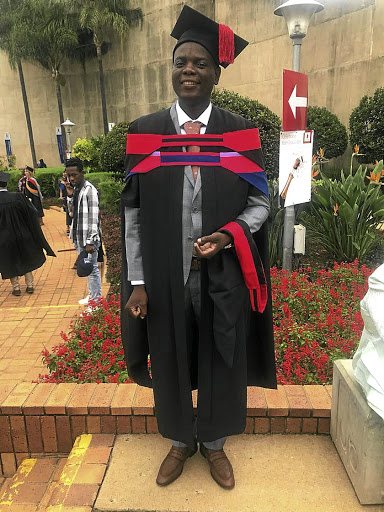
obtained his second master’s degree in law with the University of Pretoria yesterday.
“I am a product of a black tax, and this goes to my elder sister Constance, who used all her salary to take me to school,” Lamola said.
“This motivated me to work hard during my undergraduate years.”
Lamola said his “uneducated” mother used her farming products like maize in her village in Bushbuckridge, Mpumalanga, to ensure that he had something to eat at school.
“Both my parents are retired farmworkers, hence they could not afford to take me to school. My sister is my hero and I hope this will inspire the Fees Must Fall movement and all African children yearning for education.”
ANC spokesman Pule Mabe said Lamola who grew up from humble beginnings on a small farm in Mpumalanga was a living example of what Nelson Mandela said about education.
“We call upon our young people to emulate comrade Lamola and … acquire education,” Mabe said.
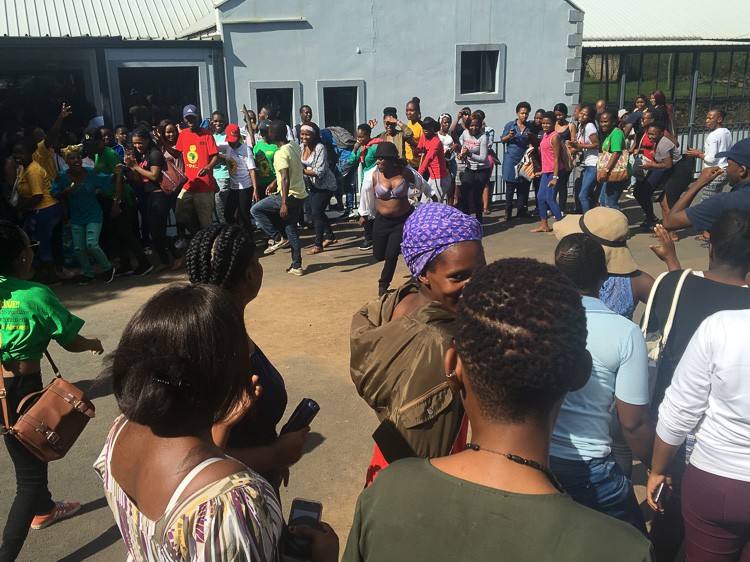
Police used rubber bullets and teargas to disperse students from Msunduzi Tvet College in Pietermaritzburg who marched to the administrative offices on Tuesday. Two students were taken to hospital. They were shot with rubber bullets.
Eight students were injured said SRC president Cleo Ntombela. Students have been protesting since last week, demanding their accommodation fees from the National Student Financial Aid Scheme (Nsfas).
On Tuesday students marched to the central office. They forced themselves into the administrative office where a fire was set. Workers locked themselves in the offices. The tyres of the principal’s car were damaged.
One student said they wanted to “send a strong signal” to university management which had been “ignoring” the students.
“Since last week there has been no solution from the management. They locked themselves inside their offices. They don’t come out. What are we supposed to do? “
Ntombela said students would force their way into the boarding house from which they have been evicted. “Students have no place to stay. They are carrying their blankets and their luggage. They have nowhere to go.”
“We were not armed,” said Nomfundo Shezi.
“They came with their big guns and started shooting. What we want is a solution. Many of us are from a poor background. We are not doing this for entertainment. We need accommodation. I’m from Nquthu [over 200km away]. I cannot sleep under the trees. They must tell us what we should do,” said Shezi.
Police spokesperson Nqobile Gwala said no incident of shooting had been reported to the police.
The principal, Ntombi Ntshangase, could not be reached for comment.
Facebook’s founder and chief executive Mark Zuckerberg faced two days of grilling before US politicians this week, following concerns over how his company deals with people’s data.
But the data Facebook has on people who are not signed up to the social media giant also came under scrutiny.
Maybe it was just the phrase “shadow profiles” with which Zuckerberg was unfamiliar. It wasn’t clear, but others were not impressed by his answer.
Tweet by @WillOremus
Facebook’s proactive data-collection processes have been under scrutiny in previous years, especially as researchers and journalists have delved into the workings of Facebook’s “Download Your Information” and “People You May Know” tools to report on shadow profiles.
Shadow profiles
To explain shadow profiles simply, let’s imagine a simple social group of three people – Ashley, Blair and Carmen – who already know one another, and have each others’ email address and phone numbers in their phones.
If Ashley joins Facebook and uploads her phone contacts to Facebook’s servers, then Facebook can proactively suggest friends whom she might know, based on the information she uploaded.
For now, let’s imagine that Ashley is the first of her friends to join Facebook. The information she uploaded is used to create shadow profiles for both Blair and Carmen — so that if Blair or Carmen joins, they will be recommended Ashley as a friend.
Next, Blair joins Facebook, uploading his phone’s contacts too. Thanks to the shadow profile, he has a ready-made connection to Ashley in Facebook’s “People You May Know” feature.
At the same time, Facebook has learned more about Carmen’s social circle — in spite of the fact that Carmen has never used Facebook, and therefore has never agreed to its policies for data collection.
Despite the scary-sounding name, I don’t think there is necessarily any malice or ill will in Facebook’s creation and use of shadow profiles.
It seems like a earnestly designed feature in service of Facebooks’s goal of connecting people. It’s a goal that clearly also aligns with Facebook’s financial incentives for growth and garnering advertising attention.
But the practice brings to light some thorny issues around consent, data collection, and personally identifiable information.
What data?
Some of the questions Zuckerberg faced this week highlighted issues relating to the data that Facebook collects from users, and the consent and permissions that users give (or are unaware they give).
Facebook is often quite deliberate in its characterisations of “your data”, rejecting the notion that it “owns” user data.
That said, there are a lot of data on Facebook, and what exactly is “yours” or just simply “data related to you” isn’t always clear. “Your data” notionally includes your posts, photos, videos, comments, content, and so on. It’s anything that could be considered as copyright-able work or intellectual property (IP).
What’s less clear is the state of your rights relating to data that is “about you”, rather than supplied by you. This is data that is created by your presence or your social proximity to Facebook.
Examples of data “about you” might include your browsing history and data gleaned from cookies, tracking pixels, and the like button widget, as well as social graph data supplied whenever Facebook users supply the platform with access to their phone or email contact lists.
Like most internet platforms, Facebook rejects any claim to ownership of the IP that users post. To avoid falling foul of copyright issues in the provision of its services, Facebook demands (as part of its user agreements and Statement of Rights and Responsibilites) a:
…non-exclusive, transferable, sub-licensable, royalty-free, worldwide license to use any IP content that you post on or in connection with Facebook (IP License). This IP License ends when you delete your IP content or your account unless your content has been shared with others, and they have not deleted it.
Data scares
If you’re on Facebook then you’ve probably seen a post that keeps making the rounds every few years, saying:
In response to the new Facebook guidelines I hereby declare that my copyright is attached to all of my personal details…
Part of the reason we keep seeing data scares like this is that Facebook’s lacklustre messaging around user rights and data policies have contributed to confusion, uncertainty and doubt among its users.
It was a point that Republican Senator John Kennedy raised with Zuckerberg this week (see video).
Senator John Kennedy’s exclamation is a strong, but fair assessment of the failings of Facebook’s policy messaging.
After the grilling
Zuckerberg and Facebook should learn from this congressional grilling that they have struggled and occasionally failed in their responsibilities to users.
It’s important that Facebook now makes efforts to communicate more strongly with users about their rights and responsibilities on the platform, as well as the responsibilities that Facebook owes them.
This should go beyond a mere awareness-style PR campaign. It should seek to truly inform and educate Facebook’s users, and people who are not on Facebook, about their data, their rights, and how they can meaningfully safeguard their personal data and privacy.
Given the magnitude of Facebook as an internet platform, and its importance to users across the world, the spectre of regulation will continue to raise its head.
Ideally, the company should look to broaden its governance horizons, by seeking to truly engage in consultation and reform with Facebook’s stakeholders – its users — as well as the civil society groups and regulatory bodies that seek to empower users in these spaces.
Andrew Quodling is aPhD candidate researching governance of social media platforms, Queensland University of Technology
Read original article here
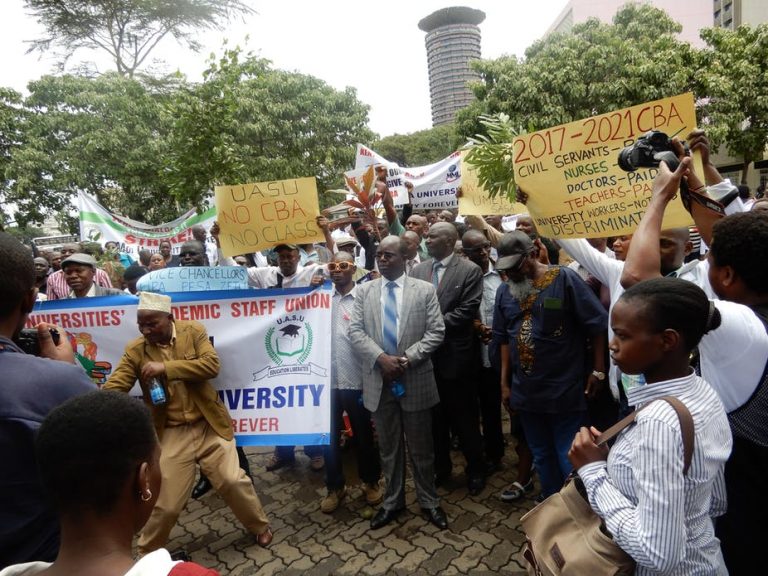
Kenya’s public university lecturers are on strike, barely three months after another lengthy work stoppage. Ishmael Munene spoke to Moina Spooner from The Conversation Africa about why the strike is happening and what can be done to stop the cycle.
What are the demands of the lecturers from public universities?
Academic staff from Kenya’s public universities have been on strike for over a month now. The issue: an agreement which covers salaries and benefits for 2017-2021 meant to have been negotiated, replacing the expired 2013-2017 agreement.
This new Collective Bargaining Agreement is between the University Academic Staff Union and the Inter-Public Universities Councils’ Consultative Forum, which negotiates on behalf of the state.
The current highest salaries for various academic ranks range from about Ksh 250,000 (USD$ 2,507) for a professor to Ksh 121,000 (USD$1,211) for an assistant lecturer.
Over a year ago, the University Academic Staff Union made its offer for the 2017 – 2021 period. The highest pay range was put at USD$15,626 for a professor and USD$4,704 for an assistant lecturer.
Since then, the Inter-Public Universities Councils’ Consultative Forum has promised to table its own counter offer four times but has failed to do so. The negotiations should have been finalised on 31 May 2017 so that implementation could begin in July 2017.
This has resulted in strikes. The most recent one ended in December after both parties agreed to conclude negotiations by 28 February 2018.
In view of the continued failure by the government to meet its end of the bargain, lecturers have rightly concluded that the state has failed to negotiate in good faith.
To what extent do these demands address the most pressing challenges facing public universities?
Staff wages are a huge challenge facing Kenya’s public universities. But they’re not the only one.
University worker salaries, unlike those of other public sector workers such as judges and legislators, have not kept pace with inflation or remuneration. This leads to brain drain from Kenya’s public higher education institutions. Academic staff departure in critical disciplines is a persistent problem. For instance, between 2004 and 2007, Moi University departures were 31% in law, 18% in information sciences and 14% for business and economics.
And now, due to deep shrinking revenues and an expensive budget, Kenya is slashing budgetary allocations to various sectors. That includes universities. In 2017 public university funding for capital assets was reduced by Ksh 6.7 billion (USD$ 67,000,000). Research allocation went down by Ksh 454 million (USD$ 4,540,000). These cuts put a strain on the maintenance and development of facilities, as well as on the production of academic research.
This financial crisis has been exacerbated by the Commission for University Education’s decision that universities only admit students with a minimum C+ grade. This means those with a lower score will not be admitted in the self-sponsored Module II (parallel) programmes that universities used to admit part-time students paying market rate tuition fees. These programmes have been a veritable cash cow for universities. Their elimination makes a serious dent in the universities’ bottom line.
Low enrollment is a serious challenge to the sustainability of universities. In the most recent enrolment, some universities had less than a quarter of their enrolment capacity taken up. Of the 615,773 candidates who sat exams last year, only 70,000 made the cutoff grade of C+ to join university.
Equally problematic for universities is the overall decline in quality. This is evident in the declining resources for teaching and infrastructure, poor governance and outdated approaches to teaching, curricula and assessment. All of this has left universities unable to maintain high quality teaching and learning.
Strikes by university professors aren’t uncommon in the country. What impact does this have?
A major impact is the disruption of learning. For maximum effect, faculty strikes occur during term time when students are learning. So far in this current strike, students have lost more than half a semester of instruction. This means students will take longer to complete their academic programmes; it will be more expensive for them and the institution.
Faculty strikes also heighten the divide between the academics on one hand, and the university administrators and government on the other. To resolve the numerous problems confronting universities, a cordial and collaborative relationship between the three stakeholders is paramount. However, in a climate defined by militant faculty unions and inflexible administration and government, it’s not possible to forge common ground to address institutional challenges.
Finally, frequent and prolonged strikes are detrimental to the development of industrial labour relations in universities. Labour unions for academic staff were only revived in 2003, having been outlawed in 1979. Since then the relationship between the union and the state has been adversarial. The union has defied court orders to call off the strikes. The government has also failed to honour agreements with unions concluded after protracted negotiations. These violations run counter to the development of good labour practices in universities.
What must be done to avoid future disruptions?
While academic salaries are contentious the world over, the current model of reviewing university salaries in Kenya is outdated. The Collective Bargaining Agreement award salary increases without regard to faculty productivity and market performance of their discipline.
I have suggested a model that takes into account the cost of living, productivity of academic staff, and the competition universities face in attracting and retaining academics in specific disciplines.
This approach requires that salary increases have three components:
a cost of living pay which increases salaries to cover the changes in the cost of living
performance pay that takes into account an academic member’s output based on an agreed matrix, and
the competition that universities face in attracting academics in specific disciplines.
If implemented, disruptions would be a thing of the past since academics would be able to seek salary increases based on performance and market conditions.
Ishmael Munene is Professor of Research, Foundations & Higher Education, Northern Arizona University
Read original article here
National Treasury has confirmed it is looking at making changes to the scholar transport funding model in South Africa.
This comes after inputs from Equal Education to the Select Committee on Appropriations on the 2018 Division of Revenue Bill which highlighted the dire need for a conditional grant directed at the transportation of pupils.
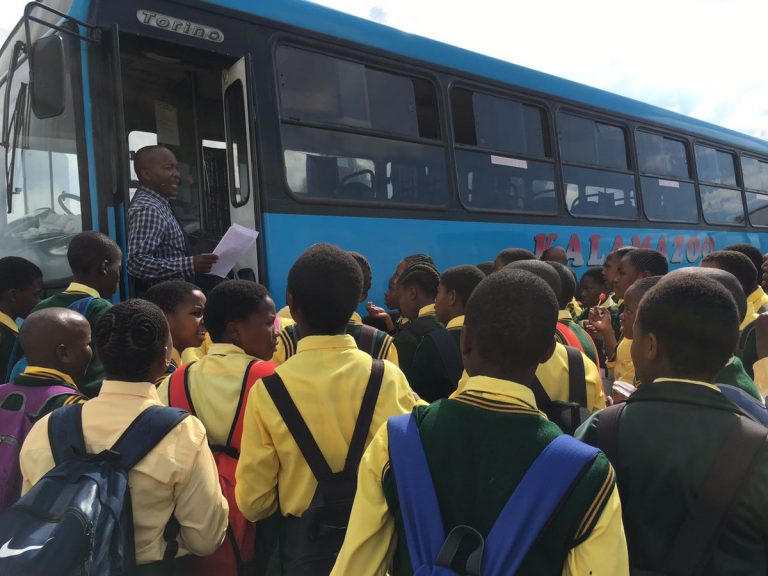
Equal Education said the lack of transport in rural areas was a serious barrier to education, with pupils often having to cross dangerous terrain and threatening situations to get to school.
Steve Kenyon, the director for local government and budget framework within Treasury, said the Department of Planning, Monitoring and Evaluation was leading a performance and expenditure review process on issues relating to scholar transport across all provinces.
Based on these outcomes, he said, the Treasury would look at the required changes to the funding model.
However, he said the belief that a conditional grant would solve the issues around the transportation of pupils was misplaced, highlighting the fact that Treasury had observed numerous challenges in the implementation of conditional grants.
Equal Education’s Philile Ntombela-Masson, who works as a researcher at the organisation, said provincial education departments usually cited inadequate funds as one of the main reasons for not providing transport to all pupils who qualify.
She said Equal Education had observed that budgets for scholar transport were often the first to be cut.
Ntombela-Masson urged National Treasury to provide conditional grants for scholar transport.
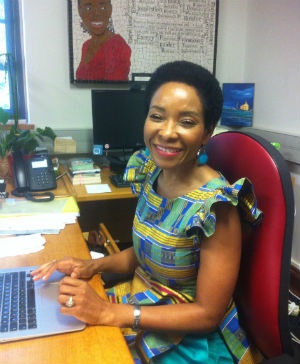
Professor Mamokgethi Phakeng started her education under a tree and had to walk up to 10km just to get to school.
Today, she is a full professor in mathematics education.
She is also preparing to take over from Max Price as the vice-chancellor of the University of Cape Town from July.
Perhaps foretelling good fortune, Phakeng was born still in her amniotic sac, in a Catholic clinic in Eastwood, Pretoria, on November 1, 1966.
Her mother, Wendy, was a domestic and factory worker, while her father Frank was a radio announcer at the SABC.
After giving birth to Phakeng and her siblings, Wendy went back to school and finished her studies so she could work as a teacher.
Eight schools in 12 years
Phakeng recalls being sent to live with her grandparents in Marapyane village in Mpumalanga where as a Grade 1 pupil, on days when it was not raining, she would make the trek with her cousin to a rural school. However, she did not stay there long. Her primary school journey also took her to Ga-Rankuwa.
In her 12 years of basic education she attended eight schools.
“Some of it (the moving around) was (because of) family, some of it was poverty and some of it was politics,” she told News24 in a sit-down interview on Monday.
“Even though my mother argues that I am an introvert, I had to get used to people quickly and speak to people that I didn’t know very well because that was just how life worked.”
She completed matric at a rural school in Hebron and enrolled at the University of Bophuthatswana (now part of North-West University) at just 16 years of age.
Her parents warned her that she had just four years to get her degree.
No time for partying
Phakeng, her brother and sister were at one stage all attending university at the same time.
“So there wasn’t much time, there wasn’t much money.”
Describing herself as nerdy and scared at the time because she was still so young, Phakeng says she did not party it up at university.
She threw herself into tennis, soccer and hockey. She was also well known for demonstrating ballroom and Latin American dancing skills that she picked up while in Ga-Rankuwa.
Phakeng said she was never a student leader but attended mass meetings.
She still has the scars from a protest she took part in to prevent then education minister Andries Treurnicht from speaking in Mafikeng.
‘I focused on what I can do’
“I was a conscious student but a conscientious student. I was committed to getting my degree.”
Phakeng obtained her PhD in mathematics education in 2002.
While she struggled with other subjects, she excelled at mathematics because nobody told her it was hard, she said.
“I just came to terms with what I want, what I can and cannot do.
“I focused on what I can do and I like, and I did it well. And all my life, that’s what I did.”






.jpg)
