Home Blog Page 514

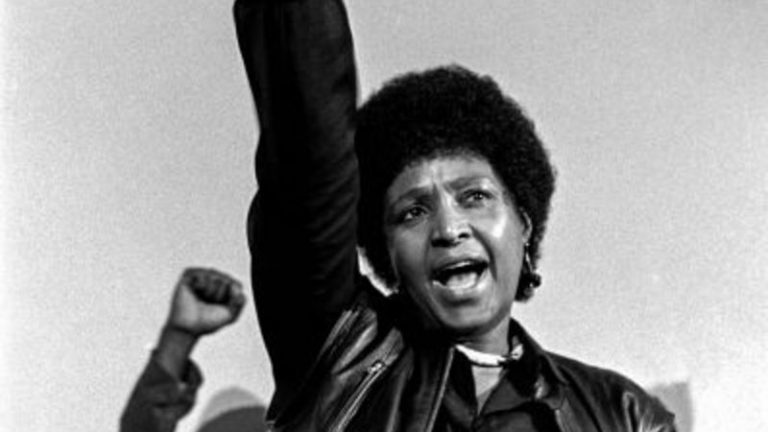
Tribute to Mam’ Winnie Madikizela-Mandela

Bathabile Dlamini

The current president of the African National Congress Wowen’s League, Bathabile Dlamini, has written a heart warming tribute for her friend, mentor and comrade, Winnie Madikizela-Mandela.

Nomzamo Winfreda Zanyiwe Madikizela became ANCWL president on 8 December 1993. The election came just a year after she resigned from all ANC leadership posts, including her post as Member of Parliament. She was re-elected in 1997.

Tribute by ANCWL President Bathabile Dlamini on passing of Winnie Mandela

The biggest tree has fallen.

A woman amongst women has fallen.

An icon of the struggle, iqhawe lamaqhawe lihambile!

Umaphuma efumbethe esiswini sikanina aze ahambe efumbethe ukuba yinkokheli yabantu.

South Africa has a long time to wait until she gets such a lioness who fought the apartheid regime as well as the oppression of women and patriarchy within the ANC with the might it deserved.

A real daughter of the soil. The rock of our nation is no more.

My heart bleeds but I know the hearts of many women celebrate because of what she did for them.

She fought tirelessly and defended the whole nation. Even when it seemed the enemy gained power in destroying her, she prevailed and stood the test of time.

I am so sorry that Queen Mother from the United States will not be able to see Mam’Winnie as she told our SG Meokgo [Matuba] in the UN recently that it was very urgent that she met Mama Winnie!

I am sorry to you SG that this happens whilst you were preparing for Queen Mother’s journey to South Africa.

I am sure that much as we are crying we are proud to be her products. We are proud because she gave us an opportunity to celebrate her life where women like Hendrietta Bokgopane-Zulu (is currently serving as the Deputy Minister of Social Development)  and Criselda Kananda-Dudumashe had an opportunity to wear the women’s league blouse in her presence.

Throughout that process of celebrating her life, she allowed us to show our small ability to honour her bravery, her love, commitment and ability of an unassuming daughter of the soil.

Nothing was ever able to shut her down!

When Bab’uGwala [Harry] told us that Mam’ Winnie never joined government but joined the ANC when she was fired from Cabinet. We were made better persons with Sis’ Thandi Modise and Lulu Xingwana.

We wanted to fight for her to remain in Cabinet and Bab’uGwala said no one can expel Winnie from the ANC and indeed no one expelled her from the her organisation, the ANC.

She and Bab’Gwala marshalled very angry forces who had numerously been attacked by the third force and the forces of darkness at the memorial service of Chris Hani in Pietermaritzburg’s former market square. It was during that period at a Stadium in Johannesburg where Bab’uGwala predicted that South Africa will never be the same.

I have known so many people in the ANC. I have come across many heroes and heroines of the struggle, but I have never come across such a fighter. A fighter who would fight without any support from even her own political party. She even fought when her own political party disowned her. Mam’ Winnie continued with the fight for liberation and her own personal freedom without any weapon.

Mama sent young people out of the country to train as freedom fighters for the liberation of the country.

Mam’ Winnie had love for everyone: her children, the children of the struggle and the soldiers of uMkhonto weSizwe. She even loved those that hated her with a passion.

She was a real soldier. She even welcomed the whites who were a symbol of apartheid and repression.

Touch the ANC and you touch her soul. Touch her kids, touch Shell house and Touch the youth league, you will know you have touched her.

Touch Chris Hani, Touch Harry Gwala, Tony Yengeni, Jeff Radebe, Peter Mokaba, Bantu Holomisa!

Touch Ace Magashule, Touch the women you will see her!

Mama would have been much satisfied if the struggle was won in the battlefield, but she accepted the decision of the leadership to negotiate.

She had respect for MaSisulu, MaTambo, Mme Matomela.

She had great respect for Charlotte Maxeke, Ida Mntwana.

She had great love and respect for Lillian Ngoyi, who was an orator much like her.

She loved Ray Alexander, Mam’Holo, MaBertha and Mme Ruth Mompati.

Mam’Winnie did not mind us meeting at Shaft 17 as long as there was progress and vibrancy in the women’s league. Women wanted to hear from her at all time.

Everyone wanted to surround her like the Queen she was.

She loved and had a soft spot for Peter Mokaba, Lulu Xingwana and Malusi Gigaba. She loved Fikile Mbalula and Julius Malema for their roaring voices and their ability to shake the youth and to defend the ANC.

A beautiful woman inside and outside. A beautiful woman who had her contest with the masses of the country. She had the toughest of contests. It was one of war meant to be fought by men and not just ordinary men but only brave men and women who participated in this struggle.

Her contest was not for the wicked but for those who had a very deep understanding of the freedom of the mind; freedom from the chains of apartheid and freedom from poverty.

Her spirit was never dampened by Brandfort, where she was banished, but instead she was more productive and she liberated herself from banishment

Mam’ Winnie never undermined the people of South Africa.

She reminded me that I was from the rural areas whenever she made us drink water or Amarewu.

A very neat woman who would serve us with her best cutlery and crockery. She kept reminding us who we were and where we came from through her actions not through her words.

She was a special leader who led by example.

She was able to keep the pain inside her beautiful heart. She never cried in the presence of those who were suffering. She would become a lioness and only cry during her private moments. You would only see her watery shining eyes when it was difficult. Never could shed a tear.

It is very heartening that a woman who was crucified by many goes during this period of Easter.

Mam’ Winnie refused to be confined!

She would come to an ANC rally draped in her John Wesley women’s Manyano uniform (The Methodist Women’s Prayer and Service Union as it appears on our pin- is commonly known as the Women’s Manyano ) for she knew the power of prayer.

Makhosikazi, let us all in our numbers pray for the spirit of Mam’ Winnie to Rest In Peace.

Let us pray for the Nation, let us for forgiveness. There was a lot of good that was done by Mam’ Winnie.

Hamba kahle Zanyiwe! Hamba Kahle qhawe lamaqhawe! 

Hamba Kahle Mangutyana!

Mama, you earned being Mother of the Nation and no one could take that away from you! We will always love you Mama.

Sohlala sikukhumbula! 

Thank you Zenani and Zindzi for sharing your Mom with the Nation. Thank you to Mama’s grandchildren for sharing your grandmother with the Nation. Thank you to the Madikizela and the Mandela family for sharing your daughter with us. Thank you to the people of Mbizana and her family especially her siblings for sharing Mama with us.

Thank you Mama for being a visionary and sharing your medical social work with the Nation.

Thank you to Sis’ Zodwa and everyone who did the work of the Nation by looking after Mam’ Winnie with love and excellence.

Thank you for you love and patience. Thank you for your accepting everyone and opening your hearts to each and everyone of us.

Amandla!

Malibongwe!

Roar young lions roar!!!

Bathabile Dlamini is President of the ANCWL

 

The Fin.Lit Corner: Lesson 4 for ages 14-18

Mduduzi Luthuli

Ask parents about their biggest financial worries, and a majority will cite education costs. Unfortunately, a shocking number of parents shield their children from the reality of high tertiary education costs.

Millions of teens are walking around with the mistaken impression that their parents will fully fund whatever tertiary institution they choose regardless of the costs and logistics. A frank conversation in advance can clarify and simplify your family’s experience or expectations of applying and paying for tertiary education. This can even prevent financial or emotional crises.

In my fourth lesson about educating children about money, we focus on how to prepare them about the realities of the cost of tertiary education. We look at cost, affordability and options.

Only through understanding our options can we work towards meeting them. Discuss how much you can contribute to your child’s tertiary education each year.

Every parent should start the tertiary cost conversation by ninth grade the latest. Tackling the subject early and being honest about what your family can afford will help kids be realistic about where they may apply. It is also important to remember that there are many ways to finance tertiary education other than with your own money.

Together with your teenager research financial aid offers at different institutions. Find out how much of this financial aid is “free money” and how much of it is money that should be paid back. Free monies are grants, scholarships and some bursaries. Loans are considered “pay back” money because your child will be expected to pay back those loans.

Get your DUCKS in a Row

Before talking to the kids, calculate your own realistic household and savings budget, and agree on how much you can reasonably fund for each child.

It is crucial to make sure you’re in agreement before talking to your children as kids are very good at “divide and conquer” strategies. I recommend showing your teenager your household finances and demonstrating why the money for their tertiary education is limited. It is not a kindness to a child to let them live a fairy-tale. Your job as a parent is to prepare them to be an adult in the real world.

As a parent you need to take the time and have an honest and real conversation about student loan debt. Part of the discussion should include the impact on the family’s financial plans and possible plans and solutions to address the gap.

You must speak to your children about funding tertiary education. This is further complicated by choosing subject majors, financial exclusions as well as academic exclusions.

There is also the very real issue that your children might be the first in the family to attend university. Another major problem is the under estimation of current university fees. For parents who attended university, they find that current fees are much higher than when they studied. University fees at their time were highly subsidised and as such, we have a generation that knows how to qualify for tertiary but cannot give proper guidance about how to responsibly pay for higher education.

Globally, we have a growing generation buried in unprecedented debt. We don’t want it to be worse for the next generation and this is why these lessons are so important.

How should we talk about Tertiary Education costs?

Conversations should not be limited to one face-to-face meeting. Parents and teens should frequently talk about education savings, spending and potential debt.

Start thinking about which institutions your teen may want to attend and consider a range of cost for attendance. Sit down together with an education cost calculator and insert the amount you’ve saved or will save together. This will help you figure out how much student-loan debt you or your teen may have to realistically take to pay for tertiary education. This will help you all identify what type of tertiary institution your family can afford.

You may be able to factor in potential scholarship or grant money but be careful not to overestimate the amount your teen may receive. It is better not to factor scholarships or grant money into the equation so that your savings and tertiary education cost plans don’t dependent on them.

Your teen should treat applying for scholarships and grants like a part-time job. They should know to dedicate time and resources for this in order  to limit the amount of student loan debt that would be necessary and to alleviate other higher education costs.

A holistic approach to understanding tertiary might begin as early as primary school. This time would be an ideal period to go to local campuses for sporting events, camps, and other activities that might spark excitement in your youngster.

Most tertiary institutions have some fantastic facilities such as art galleries, science museums, and cultural events. Visiting them is a really great way to introduce students and get them in there as members of the community and let them see that such institutions have a special role in the community.

As your child approaches high school, parents can also start to gradually introduce the idea of a tertiary education by sharing their own past experiences, or those of a relative, neighbour, or friend.

The key message here is to let children expect that tertiary education is a possibility for them.

If your child is already well into high school and you haven’t begun to talk about tertiary options, don’t panic. Instead researching programs, realistically calibrating your financial options, and find faculties that will best meet your academic needs and long-term goals.

It is never too late to get started. It’s just a more pleasant process if you get started earlier.

Mduduzi Luthuli is an investment banker. He is CEO and founder of Luthuli Capital.


Winnie Madikizela-Mandela has died

Thuletho Zwane

Struggle stalwart Nomzamo Winifred Zanyiwe Madikizela Mandela has passed away at the age of 81. She will receive a state funeral in just under two weeks’ time‚ President Cyril Ramaphosa said on Monday night.

The African National Congress (ANC) refer to Madikizela-Mandela as a “titan of the liberation struggle, a revolutionary and a stalwart of our glorious movement”.

In a statement released after the passing of Madikizela-Mandela, the ANC said it will lower their banner in honour of the memory of a great woman.

“Such an impact as an activist and revolutionary around the world, that until her very end of life, she was lauded and  acknowledged for her contribution to the struggles of all oppressed people of the world,” reads the statement.

The Secretary General of the African National Congress,  Ace Magashule, addressed the nation Monday evening on the untimely passing of ANC Stalwart.

Mam Winnie, as she was affectionately called by those close to her, was conferred with an honorary Doctrate of Laws by the internationally renowned Makere University.

Her passing is said to signal the end of an era, the loss of a freedom fighter who served as the public face of an imprisoned Nelson Mandela for 27 years.

The African National Congress’ Women’s League (ANCWL) said Madikizela-Mandela was one of the prolific leaders our country has had and will never be forgotten.

Madikizela-Mandela was elected President of the women’s league on 8 December 1993. The election came just a year after she resigned from all ANC leadership posts, including her post as Member of Parliament. She was re-elected at the next conference in Rustenburg in 1997 and replaced in the 2003 election by her successor, Nosiviwe Mapise-Nqakula.

“A selfless fighter of the unjust laws of oppression against the poor and working class who earned herself a title of ‘Mother of the Nation,'” read the ANCWL’s statement.

Family spokesman Victor Dlamini told the media that Madikizela-Mandela “succumbed peacefully in the early hours of Monday afternoon surrounded by her family and loved ones” following a long illness, which had seen her go in and out of hospital since the start of the year.

The Mandela family also issued a statement on Monday, stating, “It is with profound sadness that we inform the public that Mrs Winnie Madikizela-Mandela passed away at the Netcare Milpark Hospital, Johannesburg, South Africa on Monday 2 April 2018.

ANC’s alliance partner, Congress of South African Trade Unions (Cosatu), issued a statement following the passing of Madikizela-Mandela. The trade union is concerned with the material conditions of the working people as a whole, something Mam’ Winnie cared deeply about.

Cosatu said Mam’ Winnie was a fearless voice and a staunch defender of the working class interests. She spoke against the perpetuation of apartheid’s separate development, growing inequality and deepening poverty.

“She championed economic transformation without fear or favour and spoke out consistently against social injustice,” said Cosatu.

Madikizela-Mandela was one of the greatest icons of the struggle against Apartheid. She fought against the Apartheid state and sacrificed her life for the freedom of the country.

Her activism and resistance to Apartheid landed her in jail on numerous occasions, eventually causing her banishment to the small town of Brandfort in the then Orange Free State.

She experienced early exposure to apartheid in the Village of Mbongweni, Bizana in the Transkei, where she was born on 26 September 1936.

Her early exposure to apartheid inspired in her a lifelong hatred of injustice and racism. It was this early exposure that inspired her to become a social worker.

She completed university, a rarity for black women at the time, and became the first qualified social worker at Johannesburg’s Baragwanath Hospital.

It was her political awakening, especially her research work in Alexandra township on infant mortality, which found 10 deaths in every 1,000 births.

“I started to realise the abject poverty under which most people were forced to live, the appalling conditions created by the inequalities of the system,” she said in an interview.

While in Johannesburg, she set her lifelong path, joining the ranks of celebrated freedom fighters of the ANC and the broad liberation movement in the 1950s.

She had a deep and passionate aversion to injustice in all its forms and it was through her social work at the then Baragwanath Hospital in Soweto that she became moved by the plight and living conditions of the black majority. This motivated her to use her learning and skills to uplift them.

She faced imprisonment, banning, harassment, house arrest and solitary confinement.

Due to her unwavering leadership in the struggle her home became a pilgrimage site for many leaders and members of various communities.

Madikizela-Mandela tirelessly campaigned for the release of Nelson Mandela and other political prisoners; gave refuge to those running from the police; harboured combatants of Umkhonto we Sizwe returning to or leaving the country, always an active part of whichever community she found herself in.

“She was an activist in her own right, and will be remembered for having stood at the forefront of the struggle for women’s rights in South Africa – taking part in a number of demonstrations against the unjust pass laws,” said the ANC.

She was first arrested in 1958 and over the years would face many more such detentions and banishment including solitary confinement. Despite all these attempts to break her spirit, she remained steadfast and refused to cease with her political activism, displaying exemplary courage that made her a role model for many young women activists in South Africa..

There she was given the option of leaving South Africa for Swaziland or the Transkei homeland. She opted to remain in South Africa, living in Brandfort for eight years where she continued to spread political ideology among local residents.

In 1985, she defied government orders and returned to her Soweto home after her Brandfort house was firebombed.

Upon her return to Gauteng, an area which fell under the Transvaal province at that time, Madikizela-Mandela’s message of resistance spurred the youth in Soweto, many of whom she took into her own home. She established the Mandela United Football Club, whose members served as her bodyguards.

In the years to come, Madikizela-Mandela would later appear before the Truth and Reconciliation Commission (TRC) to answer to allegations of torture, abduction and the killing of Stompie Moeketsi Seipei, for which her former bodyguard Jerry Richardson was convicted.

Madikizela-Mandela was known to have been opposed to the reconciliatory approach that Mandela and his leadership collective had assumed post-apartheid.

In 1995, The New York Times reported on Madikizela-Mandela’s decreasing tolerance for the reconciliation project which culminated in her dismissal from Cabinet.

She was accused of defying presidential orders and sowing divisions through her constant criticism of government.

The New York Times spoke of Madikizela-Mandela’s significant power base in the ANC and how she promised to fight from within for the soul of the party.

Repeatedly she railed against Nelson Mandela’s Government for ostensibly catering to affluent whites at the expense of the oppressed black majority.

Madikizela-Mandela would constantly mock the Government for spending generously to entertain white South Africans while black South Africans go hungry.


In an interview published in the London Evening Standard this week in 2010, Madikizela-Mandela was recorded saying the ANC and Mandela have failed the people of South Africa.

She said Mandela had become “corporate foundation” who was being “wheeled out to collect the money”.

Madikizela-Mandela also called Archbishop Emeritus Desmond Tutu a “cretin”, in the interview with Nadira Naipaul, who visited her with her husband, the writer VS Naipaul, in Soweto.

“Mandela let us down,” said Madikizela-Mandela.

She constantly reminded the nation and the world that the South African economy was a bad deal for blacks.

“He agreed to a bad deal for the blacks. Economically, we are still on the outside.

“The economy is very much ‘white’. It has a few token blacks, but so many who gave their life in the struggle have died unrewarded,” said Madikizela-Mandela, in the interview published on www.standard.co.uk.

She said Mandela had no control over the ANC anymore and was just being used by the Nelson Mandela Foundation to get funds.

The South African Communist Party (SACP)  said its alliance partners, the ANC together with South Africa’s liberation movement  and government, should document the institutional memory of Madikizela-Mandela.

“South Africa will lose without a detailed historical account of the contribution and sacrifices made by each one of our veterans to the course of freedom. This is important for young people and future generations.”

“An accurate account of where our society comes from is crucial to out national vision for a non-racial, non-sexists, democratic and prosperous South Africa based on social emancipation,” said the SACP.

Hamba kahle Mkhonto!


Hard work pays off: Twitter celebrate township graduates

Kgaugelo Masweneng

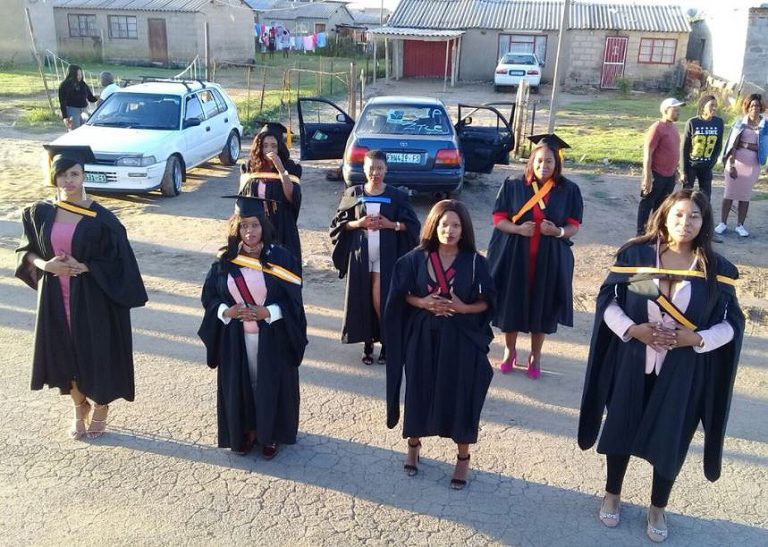
Seven women from a small mining town in Welkom celebrated their graduation. Their photographs became an internet sensation.

Photographs of their celebration were shared on Twitter by Motlhanka WaMorena‚ who wrote: “In a slowly dying small ‘mining’ town Welkom‚ a township called Thabong‚ girls from not so desirable (hopeless) backgrounds took it upon themselves that they’ll get educational qualifications no matter what‚ through hard work. RT to inspire other girls in hopeless situations.”

One of the women‚ Refilwe Mofokeng‚ had to juggle being a mother to her seven-year-old son‚ a student and working simultaneously.

“It’s challenging doing it all in one. I am a single mother and I live alone. I have to do everything for myself and my son. I paid for my studies and pushed myself to get this far‚” said Mofokeng.

At times‚ Mofokeng had to walk to school because she could not afford a taxi. She said Motaung’s pictures silently captured different stories of hope for her.

“We may not be from the same backgrounds but we shared common struggles as people who live in this area. The stories of hardships are different. Sometimes it’s difficult for one to place a simple thing such as food on the table‚” she said.

Mofokeng‚ who graduated with a BTech degree in language practices‚ is currently enrolled for a masters degree at the Central University of Technology. Since she started working as a part-time lecturer at the university‚ her life has changed for the better.

“I am able to fetch my son on time from school now because I bought a car. My life has really changed. My parents help me a lot with him and I am able to get a chance for marking‚” Mofokeng said.

Mamoya Tshabalala was one of the few people on her street who managed to complete their higher education.

“There is no hope in this place. The only thing thriving is gangsterism and crime. People are always getting stabbed or robbed. Nothing else is happening. I think I am the third person to graduate‚ another being my brother‚ so you can imagine‚” Tshabalala said.

In order for her to complete her studies‚ her domestic worker mother encouraged her to move to a school residence so she could focus on her studies away from the township distractions.

“I had no one to look up to in my neighbourhood. At some point I wanted to drop out because I did not understand. It was not easy; sometimes I would use my NSFAS allowance to buy things in the house‚” she said.

The National Student Financial Aid Scheme (NSFAS) is a government-backed initiative to help students from poor and working class families who would otherwise not be able to afford to study.

Tshabalala has completed a Diploma in Language Practice and is currently studying towards a Postgraduate Certificate in Education (PGCE).

Read original article here

Durban university shut down…again

Suthentira Govender

The embattled Durban University of Technology – fresh from a protracted staff strike – suspended lectures on Wednesday‚ this time because of a student protest.

The institution issued a notice to staff and students saying: “In view of the violent protest by students today‚ management has decided that on-campus lectures in Durban will be suspended.”

Angry students downed pens over not receiving their National Student Financial Aid Scheme (NSFAS) funding.

Last year‚ former president Jacob Zuma announced that deserving students would receive free higher education in the form of NSFAS funding.

DUT said following a meeting with student representatives it was gravely concerned that a significant number of our students have not received any allowances from NSFAS as expected‚ with some dating back to 2017.

The institution added that the disbursement of funds was handled solely by NSFAS.

Lectures in Durban are expected to resume on April 3.

However‚ lectures in Pietermaritzburg would continue as normal‚ the university said.
Read original story here

Cheating in sport, an old problem

Mosibodi Whitehead

This week the world of sport was thrown into a tailspin by the disgraceful actions of the Australian cricket team in the third test against South Africa in Cape Town.

Under the direction of his captain, Steve Smith, Cameron Bancroft tried to cheat by tampering with the match ball but was caught on camera. What followed was an incredible fallout.

Smith and his vice-captain David Warner face life bans from Cricket Australia while Coach Darren Lehman, who looked to have some foreknowledge of the pre-planned cheating attempt, will surely fall on his sword and resign.

But just what frame of mind led to the now infamous #SandPaperGate saga?

What was going through Smith’s mind when he instructed Bancroft to take a piece of yellow tape onto the field to try and scuff up the ball in order to illegally extract reverse swing?

Admittedly with South Africa 129/2 in the second innings and adding to their first innings lead of 56 runs, The Baggy Greens were in a desperate situation. Especially because the 4-match series at that point was locked at one all and a loss for Australia would have put paid to any hopes they entertained of winning the series. But surely winning isn’t everything? Or is it?

Sadly, the era of professional sport with all its rich financial rewards has brought with it an attitude that cheating to win is acceptable so long as you don’t get caught.

Age-cheating is particularly rife in South African age group football. I’ll take you back to November 2012 when reigning ABSA Premiership champions Orlando Pirates shut down their youth development operation because of age cheating.

“Unfortunately, we are extremely concerned to have recently learned of instances of age cheating at our youth development programme. It appears to be of a magnitude that calls for an immediate, and extensive, investigation,” said the Buccabeers.

Orlando Pirates is therefore suspending the programme in order to ensure that its investigation into age fraud does not disrupt the schooling of the youth in its academy,” explained the Buccaneers.

The problem was big enough to warrant serious action from one of the biggest professional football clubs in the country. And school sport is not immune to this disease.

In October 2016, The South African Schools Football Association was inundated with complaints about over-age players being fielded in the McDonald’s U/14 Schools League. SASFA described age-cheating as a ‘cancer’ saying they are doing everything in their power to rid South African Schools Football of this scourge. And yet it persists.

Moeketsi Moroosi has the answer.

Moroosi, who has produced players such as former Kaizer Chiefs star Jabulani Mendu, Bafana Bafana’s Musa Bilankulu and the Gordinho brother is the head of football at Farramere Primary School in Benoni, East of Johannesburg.

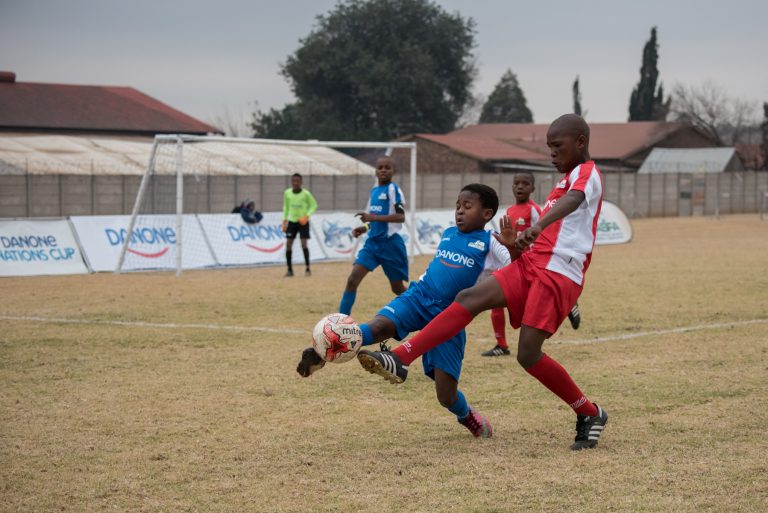
In 2014 he led their team to the Danone U12 National Finals where it was only the lottery of a penalty shootout that prevented them from representing South Africa at the global Danone National finals in Brazil. Moroosi says it’s because of all the coaches that want to win at all costs.

Moroosi says that big sponsors and prize money in school football is contributing to the problem.

“Doctor Khumalo only realised when he was seventeen years old that he can actually be a professional player, before that he was just playing for fun. We need to look back and see how our football succeeded in the past. There was no prize money in anything in school level and there were no academies as well. Kids played football for fun,” said Moroosi.

It is for this reason that FIFA do not award prize money at their junior football tournaments. The sole purpose a tournament such as the FIFA U17 World Cup is to develop the sport across the globe and give budding footballers the opportunity to take part at the highest international level. It’s not about prize money. It’s not about winning.

The logic is undeniable.

Age-cheating in schools football shows a bigger problem in the world today that was on display when Bancroft tried to hide the now infamous yellow tape in his underpants. We have forgotten that sport is ultimately meant to be enjoyed and enjoyment comes regardless of the result. When the result itself supersedes everything else to the point where we are willing to cheat, then the victory is Pyrrhic.

The love of the game is what we should be teaching our learners because once that ethos has taken root, cheating can never be an option.

Mosibodi Whitehead is sports editor and broadcaster. 


How South Africa can align its development plan with the SDGs

Willem Fourie

Creating coherent national policies is a challenge for most countries. And now the adoption of the UN’s 2030 Agenda and its sustainable development goals (SDGs) has presented governments with an additional challenge: aligning national policies with expansive global development goals.

Both developed and developing countries are faced with this challenge. This is exacerbated by the SDGs’ integrated nature and the related challenges of measuring, monitoring and communicating progress. In Africa, a plethora of home-grown development goals, encapsulated in national development plans and visions, have emerged during the last decade.

Kenya, for example, adopted its Vision 2030. And at a continental level the African Union adopted Agenda 2063. In most cases these national or continental development plans are accompanied by detailed implementation plans.

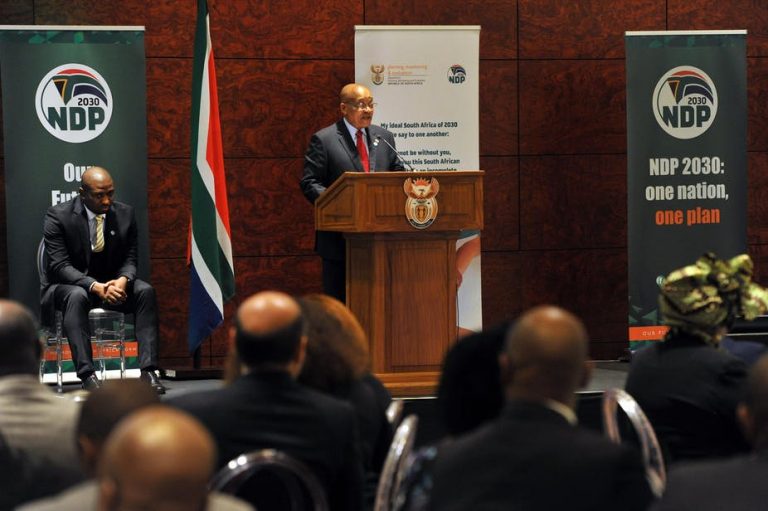
In South Africa, policymakers need to align the country’s National Development Plan (NDP) with the SDGs. The NDP is South Africa’s long-term development plan. It expresses consensus on societal challenges, focuses the national planning system and has the potential to implement development priorities in a more effective way.

The plan is primarily implemented through five-year Medium-Term Strategic Frameworks. The current one prioritises 14 outcomes, ranging from quality education and health care to an effective public service and rural development.

But aligning South Africa’s national development plan and the sustainable development goals will have its fair share of complications.

South African policymakers must consider how best it can be done. One possible route is to turn to the Policy Coherence for Sustainable Development movement which is regarded as the industry standard for creating policy coherence. It initially focused on creating policy coherence for countries receiving foreign aid. But this weakness, namely using policies of developed countries as point of reference, has being corrected in the post-2015 development era.

The approach provides a few useful guidelines.

Obstacles

A number of challenges face South Africa in aligning its domestic development plan and the SDGs.

Firstly, the plan was adopted before the 2030 Agenda. Superimposing the global agenda onto the local plan is politically problematic because it can’t be changed without seriously damaging its legitimacy.

Secondly, the 2030 Agenda does not – and cannot – respond to national development challenges. The 2030 Agenda expresses global commitments reached by the United Nation’s 193 members states. There’s of course very little space in the core text of such an agenda for national development challenges.

This is certainly the case in South Africa. The country’s development plan explicitly and understandably seeks to address injustices resulting from its apartheid past. This includes improving the poor quality of education for black people, strengthening national infrastructure, uniting the country and creating employment.

The 2030 Agenda and its SDGs do not mention the peculiarities of the South African – or any other national – context.

The good news is that the Policy Coherence for Development movement can help as countries try and bring the two together.

Five guidelines

Developing countries have been wary of this approach given its genesis as a product of the Organisation for Economic Cooperation and Development’s Development Co-operation Directorate. In its early days it had a strong donor bias and impact was defined mostly in terms of the interests of donor countries.

But after the adoption of the 2030 Agenda in 2015, the donor-bias was addressed by emphasising sustainable development. This signified a sea-change in the movement itself.

At least five of the guidelines it uses could be helpful to South Africa.

The first is the movement’s emphasis on political buy-in without which policy coherence isn’t possible. It might be helpful for South Africa to rekindle the political momentum that was achieved when it was involved in negotiations for the global adoption of the 2030 Agenda. As joint chair of the G77 and China it played an important role in finalising the agenda.

The second guideline emphasises the importance of national development priorities and challenges. National ownership is key for development effectiveness. The fact that the national development plan was adopted before the SDGs should make it easier to safeguard the integrity of national priorities.

The third useful guideline is the emphasis on using existing institutional structures and processes. There’s no need to reinvent the wheel. Rather existing structures should be organised in the most efficient way. This should result in a coordinated effort to improve policy coherence that includes various government actors and stakeholders.

A number of institutions that could play a critical role. The Department of Planning, Monitoring and Evaluation, for example, is well positioned to champion policy coherence between the national development plan and the 2030 Agenda. This is because it’s already the custodian of the national development plan.

Another is the country’s statistical body as well as the Department of International Relations and Cooperation which coordinates South Africa’s international obligations.

The fourth guideline takes an issue-based approach to policy coherence by suggesting cooperation across government departments and across sectors. This is difficult but important. The notion that development priorities are interconnected is a defining characteristic of the sustainable development goals, and also characterises South Africa’s national development plan. But using an issue-based approach will be of no avail if it’s not coupled with making the best use of existing structures and processes.

The fifth guideline has to do with encouraging governments to look beyond the short-term. The effect of policies should be viewed beyond the present generation and beyond national borders. Many governments find it difficult to include long-term and transnational impacts into their policy making processes. But they should because issues such as climate change aren’t constrained by national borders and affect the flow of people and of goods.

No panacea

There isn’t a panacea to aligning national and global development goals. It will remain a difficult thing to do. Yet, its difficulty doesn’t mean that it’s not important or that it’s impossible. On the contrary: the policy coherence for development movement is based on the assumption that inclusive and sustainable development depends on coherent policies.

Willem Fourie is Associate Professor at the Albert Luthuli Centre for Responsible Leadership, Co-ordinator of the South African SDG Hub, University of Pretoria
Read the original article here

Over 5 million social grant beneficiaries to pay R10 “bank charge”

Barbara Maregele

Over 5.4 million beneficiaries who collect their social grants at ATMs and shops using their South African Social Security Agency (SASSA) cards will for the next three months incur a R10 “banking fee”.

This was revealed by the agency’s Dianne Dunkerley in Parliament on Wednesday. She also assured the portfolio committee on social development that grants would be paid electronically from 1 April and at cash pay points from 3 April.

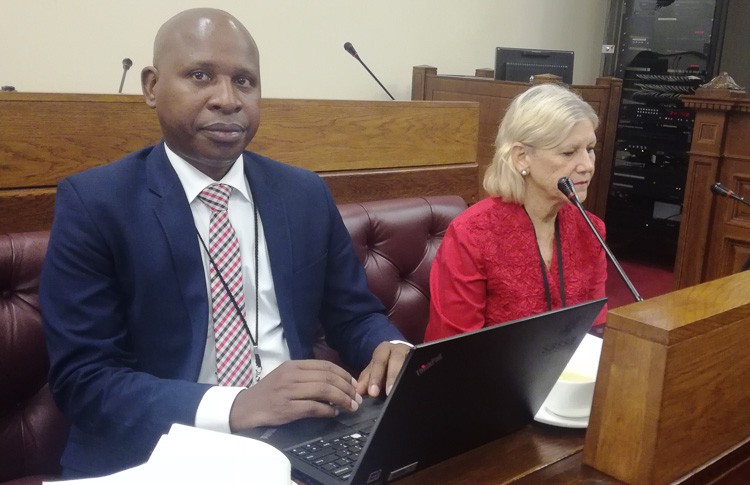
While MPs welcomed SASSA’s efforts to secure the payment of grants next month, many raised concerns about the additional R10 charge on the Grindrod Bank accounts of beneficiaries using the current SASSA card. Dunkerley explained that the “banking fee” was a result of the Constitutional Court order on Friday which allowed the current service provider –Cash Paymaster Services (CPS) – to continue doing cash payments until September.

Dunkerley said Grindrod Bank would charge R10 to maintain the accounts.

“We have been given clearance from the Reserve Bank, for the next three months, to pay directly from our account into the Grindrod bank accounts. Because these accounts moved into the banking space there are bank changes that will be paid by beneficiaries. We are still discussing this with Grindrod,” she said.

Dunkerley said SASSA had advertised for a new contractor for cash payments and the tender was at the bid evaluation stage.

Only beneficiaries on SASSA’s cash payment file would be paid at cash points. All others would be required to collect their money at ATMs or stores.

Committee chairperson Rosemary Capa (ANC) said, “For a beneficiary to now lose R10 is too much. They will not be prepared for this loss. We need to work out how it will be refunded to them because they must not suffer; it’s not their fault this is happening.”

MP Beverley Abrahams (ANC) asked: “Why are we only hearing today about this R10 arrangement?”

MP Karen Jooste (DA) asked, “Do all grant beneficiaries know whether they are registered or not for cash payments? My concern is about small towns like in the Northern Cape where these facilities are far away.”

MP Liezl van der Merwe (IFP) said better communication to beneficiaries was needed. “I still find people don’t understand the process unfolding. Are we targeting them with SMSes and community meetings?”

Dunkerley said that over the next three months, SASSA would transfer beneficiaries from the Grindrod account to the SA Post Office Postbank accounts.

“We just have to wait for cards to be available from the post office. As soon as we can do card swaps, then beneficiaries will be moved. There are a number of things we are looking at to subsidise bank accounts,” she said.

Dunkerley said that over the coming weekend, the SASSA call centre would remain open on the public holidays of 1 and 2 April. “We will also be doing spot checks at bigger ATMs and additional staff will be at cash pay points from 3 April to assist. There is no clear plan for security at merchants and ATMs,” she said.

Read original article here


Alien – The imposter syndrome in the teaching and learning environment

Gugulethu .K. Radebe

I started my journey as an educator at an all-girls private high school in Durban. I was a former learner at the school and my mother was an old girl.

I had matriculated the year before with 6 Distinction and a high B.

Up until the very first staff meeting, I was quite excited about getting the opportunity to teach and learn even more from all the amazing teachers who had taught me all those years.

As the new staff orientation meeting began I started to get a shrinking feeling. I started to feel like there was nothing I could do to contribute to this environment which boasted serious academics and highly experienced and accomplished staff.  I felt like an outsider, like I didn’t belong in any of the spaces I was being pushed to fit into; I felt like an alien and most times, I still do.

The imposter syndrome is a term coined by two American psychologists Pauline Clance and Suzanne Imes. They describe it as the feeling of “phoniness in people who believe that they are not intelligent, capable or creative despite evidence of high achievement.”

In that staff room on that first day, that shrinking feeling came from feeling like I wasn’t worthy of sitting in a room full of other people who had the same passion for education as me. That feeling is that knot I’ve often felt when I am given the opportunity to educate teachers about topics I had great interest in and I spent hours reading about. That feeling was the dry-mouthed feeling I got as I stood in a class full of teenage girls for my first history lesson at school.

That feeling is the reason why so many young black teachers are finding it increasingly difficult to confidently teach in affluent and top achieving schools. There is a constant reminder, often from one’s own insecurities, that someone like you doesn’t deserve to be in the position in which they find themselves.

Having started teaching as an intern teacher, I have had to wrestle with my own fears and insecurities often. However, every place I had found myself as an intern teacher had in one way or another reaffirmed some of these fears which further isolated me in my attempt to build my confidence and to be able to fill my role as both an educator and a mentor.

There were often little reminders of my inadequacy first as a young teacher and later, in a different school environment, as young black teacher. I had learnt to doubt my ability because I had experienced being the invisible figure at the back of a teacher’s class who was never given an opportunity to even engage in discussion about my views and thoughts.

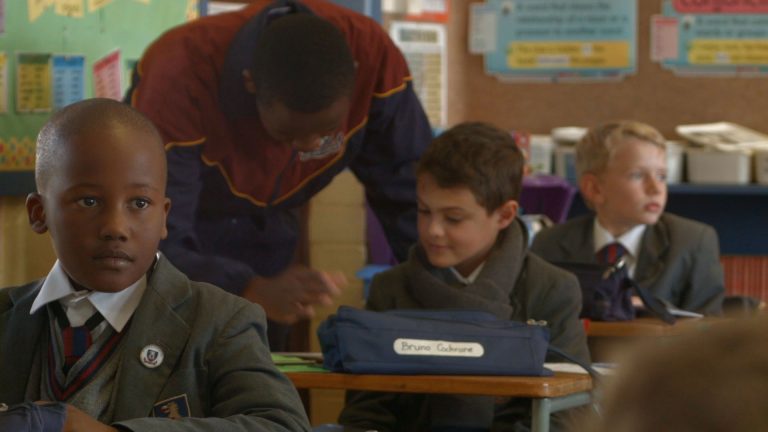
I had experienced being plunged into the deep end and being forgotten until someone came around to evaluate my class. Schools often take on internship programmes with the intention of empowering young teachers and encouraging young people to be teachers but often forget to allow their intern teachers the space they need to discover themselves, to reflect and to contribute to the everyday life of the school.

If we want to build a solid learning system that works for the emerging generation we need to be willing to empower younger people to contribute to the foundation process of their learning and their growth. We need to be creating spaces where young teachers and more experienced teachers are given an equal platform for learning, discovering and innovating.

Teachers who have been in the school system for over ten years have had a lot of exposure to the ins and outs of education and are able to deal with issues that are faced by both teachers and learners. They are a lot more sensitive to the needs of learners and understand the content with a depth that young teachers can only dream of.

Younger teachers are able to engage the learners easier; they’re often driven by a deep desire to give back and are still open to changes and innovations. Both young teachers and more experienced teachers have the power to create a learning experience that learners will never forget and can pass messages to their learners in ways that could rebuild the society their learners will help to build.

This is in no way a desperate plea to teacher to be nicer to interns but it’s a way of looking at intern teachers, not as needy weirdos sitting at the back of your maths class, but as a potential partner in helping you to get the best out of the time that you have with your learners.

It’s using your classroom space to teach not only future teachers but people who will pioneer a new way to learn and teach that not only captivates learners for 45 minutes but builds them for life.  I’ve often been tempted to pack up and give up on all things education. I’ve often been tempted to dismiss my desire to contribute to education as a naive ambition that I will never realise but often I am reminded that I chose to become a teacher because of my strong passion for human life and the fundamental human rights of every single individual I encounter.

I was driven to become a teacher, not to deliver curriculum but to shape society and I would have appreciated having mentors who cultivated that passion and dared to allow me to give off more of myself.

When I stand in a room full of teenagers, I still feel the knots in my stomach and constantly try to predict every single question they could ever ask me so that I feel better about my worthiness to stand before them. I still walk into rooms full of overqualified and way more experienced individuals and feel like ducking out and never coming back. It’s when I encounter individuals who ask me sincere questions about my passions and who allow me to learn more from them that make me feel more welcomed. It’s when I’m offered an opportunity to learn that I feel more valued and it’s when fellow colleagues are honest about their own ignorance and fault that I feel like I could get up each morning and dare to be a teacher.

Gugulethu .K. Radebe is a teacher, poet and social activist. 


Financial stress distracts university students from academic success

Subethra Pather

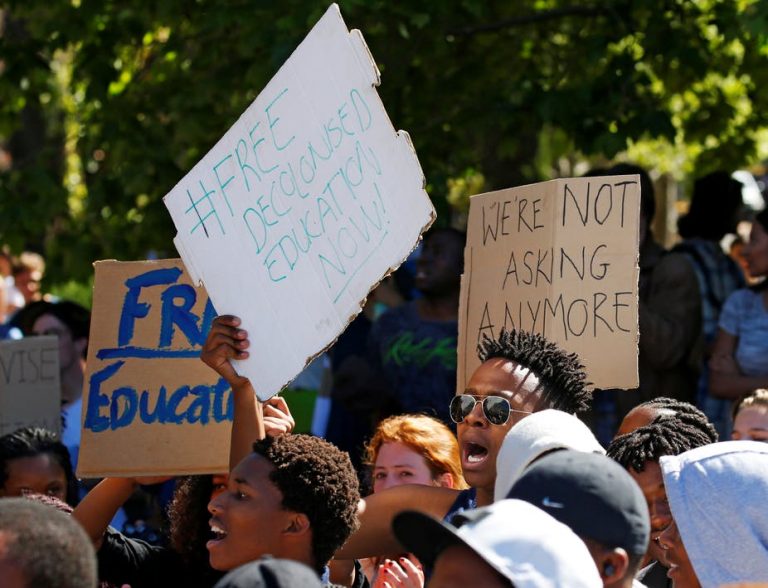
The #feesmustfall student movement in South Africa has garnered a great deal of popular support. It has its critics, too. They have suggested that the country’s government and its universities simply can’t afford the free tertiary education students are demanding as their right.

These critics and those who have proliferated on social media miss an important point. Students are not just looking for a free ride. For many, stress about money is a distressing and unwelcome distraction from their degrees – qualifications they hope can lift themselves and their families out of poverty.

Financial stress is a reality

I recently concluded research about the factors that influence first-year students’ experiences and academic performance.

The vast majority – 94% – of the students involved needed external funding like student loans, bursaries and scholarships to support their university life. Some had even enrolled for degrees without having funding confirmed – so their days were consumed by worries about finance. One said:

When I left my job to study full time it was not easy, my money saved paid for my registration fees and res [residence], yeah, but that was, like, it. I couldn’t pay for food, clothes, books, transport or anything and then I applied for [a bursary scheme] and [it] didn’t take me. So right now I’m not paying, literally. I am just staying at res. So I’m not paying there and I’m not paying my fees because I thought if I get the bursary, it’s gonna come through but it didn’t come through. I have to think of a way to pay for my studies!

Most of these students cannot rely on their families for financial support. Parents’ jobs influence the amount of financial support that they can offer their children. In the study sample, only 24.45% of fathers and 22.2% of mothers had professional occupations and could offer their children some help with money.

Students keenly felt this lack of support, with one saying:

If I had the financial support from my family I would have done much better in maybe some of the work [academic work]; it’s no excuse, I could do better if I had this support.

In total 41% of the participants received some form of financial support from their parents, 53% relied on external funding – 10% received student loans and 43% obtained student bursaries – and 6% paid for their own studies.

Across the board, the students’ main priority was to desperately secure financial aid before focusing on academic activities. Only once they were able to deal with this stumbling block did they shift focus to their studies.

Promoting social integration

Being at university is not solely about studying. Socialising is an important component, giving students the chance to meet new and different people.

However, many of the students I interviewed had picked up part-time jobs to try and keep the wolf from the door. This kept them off campus at times when other students were socialising or getting involved in university activities beyond the classroom. That, in turn, made these financially struggling students feel less like they belonged at university.

The study reveals that social disintegration with both academics and peers deprives students of a holistic university experience.

Universities need to proactively provide the space and opportunities to encourage social connection on campus. Social networking on campus would certainly help disadvantaged students who have limited social and cultural capital. Research shows that developing these students’ social connections can be an important factor in them becoming successful university students.

Universities have a role to play

Universities have an obligation to ensure that their students get the most out of the degree experience. This helps them to produce well-rounded graduates. How, then, should institutions rise to the challenge of helping students who are forced into employment as a priority ahead of their academic studies?

One suggestion is for universities to play a more active and aggressive role in ensuring that students don’t have to wait for money. Some existing funding schemes only pay out after the academic year commences. Others only confirm student funding once term has started. Many students are not even able to get past the hurdle of paying upfront registration fees.

So, policies and programmes are needed to make financial aid available from the very first day of study or even a few weeks before a course starts. In addition student fees should be determined by individual applicants’ economic and social circumstances.

Addressing students’ funding challenges as early as possible would mitigate the burden and stress of students trying to secure financial aid while also trying to cope with their academic and other commitments. These include finding a part time job and addressing personal issues such as accommodation, food and living expenses.

Towards great graduates

The best universities want to produce the sort of graduates who can do great things for their country and community. To do this, institutions must realise that financial stress is a terrible burden – one which distracts potentially excellent graduates from their academic goals.

Subethra Pather is an Academic Development Lecturer, Cape Peninsula University of Technology
Read the original article here