Home Blog Page 515

Cambridge Analytica, African Elections and Western Double Standards

Vito Laterza

recent article in The Conversation by British academics Gabrielle Lynch, Justin Willis and Nic Cheeseman, downplays the meddling of Cambridge Analytica (CA) in key African elections, such as the latest presidential elections in Nigeria and Kenya.

In the latter case, the recent Channel 4 undercover investigation records Mark Turnbull, managing director of CA’s political division, bragging about the company’s successful involvement in President Kenyatta’s 2013 and 2017 election campaigns.

It is surprising that a team of researchers with vast expertise on African politics should dismiss such worrying evidence as business usual. At this stage, we certainly need to know more, and push for rigorous investigations into these matters.

The arguments put forward are weak: the authors claim that their research into the latest Kenyan election shows that there is no evidence of Facebook targeted ads. But Cambridge Analytica is not just about targeted ads, it’s about a total strategy of voters’ manipulation, from fake social media profiles and negative videos to highly sophisticated big data, from entrapment and blackmail to old school PR advice.

Mark Turnbull himself doesn’t talk about targeted ads in the Kenya case in the Channel 4 video, but a number of activities, including research and surveys, to understand voters’ perceptions. His explanation of CA general approach in the same recorded meeting is particularly troubling:

“The two fundamental human drivers when it comes to taking information on board effectively, are hopes and fears, and many of those are unspoken and even unconscious. You didn’t know that was a fear, until you saw something that just evoked that reaction from you.

And our job is to drop the bucket further down the well than anybody else, to understand what are those really deep-seated underlying fears, concerns… It’s no good fighting an election campaign on the facts, because actually it’s all about emotion.”

In a context like the Kenyan one, these are matters of life and death. According to the Kenya National Commission on Human Rights, 37 people died in post-election violence last year, and many analysts pointed to ethnic divisions playing a role. Post-election violence in 2007–2008 claimed more than a thousand lives, and displaced several hundreds of thousands.

The authors also point out that the majority of Kenyans don’t use facebook, and hence any online operation by CA could not swing the wider electorate.

It’s well known that Facebook reaches far and wide and can certainly affect people who in turn influence their urban and rural communities. As the 2016 American presidential election shows, a focus on a small number of swing voters can be decisive, you don’t need to target the whole voting population to have a significant effect. While so much is made of the swing vote in three key states in Trump’s victory, the article implies that in Kenya these considerations don’t apply.

In a BBC radio interview, Nic Cheeseman liquidates CA as a company that exaggerates the value of their services “to get big contracts that are very lucrative with governments that are desperate to stay in power”. The image that emerges here is that of just another PR firm gone rogue, dealing with unethical African politicians.

But Cambridge Analytica is far from that, and operates within the remit of Western states. CA and SCL, their parent company, have close ties with US and UK government agencies. They have been providing services to military and intelligence agencies (see the SCL website here, and in-depth investigations into these links here and here).

Their personnel is linked to a much bigger PR industry that has spearheaded all kinds of corporate and political campaigns in Africa for decades. Before landing a job at CA, Mark Turnbull worked for a long time for British multinational PR firm Bell Pottinger — yes, the same Bell Pottinger that had to stop its activities when it emerged that they worked for the disgraced Gupta family in South Africa.

We do want to know more about the important research cited in this article. The authors have studied the impact of elections in Kenya, Ghana and Uganda, supported by public research funding from the UK — a foreign state that has its own national interest at heart. Is it really the role of researchers in such a position to reassure the public that Cambridge Analytica’s influence has been exaggerated, and Africa is not “the victim of European or American schemes”?

What we need is commissions of inquiries mandated in the affected countries, and possibly at the African Union level too, given the transnational nature of the companies involved.

We also need to start applying the same standards of analysis and judgement in Africa and the West. Russian influence in Western politics has become, rightly or wrongly, a central topic of concern. The recent Cambridge Analytica investigations provide alarming revelations about meddling into African elections. Why should African voters be treated any differently?

Vito Laterza is a visiting research fellow in the Centre for African Studies, University of Cape Town.
Equal Education calls for Education Minister Angie Motshekga’s dismissal

Thuletho Zwane

Equal Education has called for the dismissal of Basic Education Minister Angie Motshekga and Eastern Cape Education MEC Mandla Makupula.

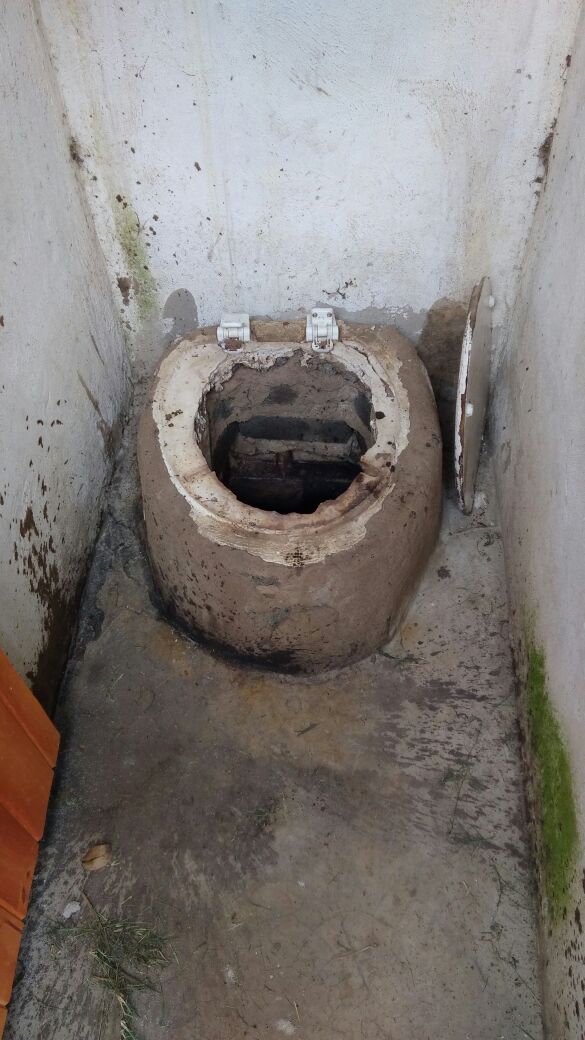
This comes after another child, Viwe Jali (Lumka Mketwa) died in a pit latrine on Monday, 12 March.

That Monday, loved ones and school staff looked everywhere for Viwe. Her body lay in a pit latrine overnight at Luna Primary School in Nyaka village, under the Mizize administration in Mbizana municipality, Eastern Cape.

She was only found on Tuesday.

Viwe’s father, Vuyani Mketwa, said the family was not coping. “We do not understand how this happened.”

Mketwa said they had last saw Viwe on Monday morning as she was leaving for school. He said her teacher told him she was last seen at 1pm just before school ended at 1.30pm.

At a press briefing on Thursday, Motshekga committed to abide by the Presidency’s instructions for an audit of school sanitation facilities within three months.

She was addressing the media after calling all education MECs, education department heads and infrastructure officials to attend an urgent Council of Education Ministers (CEM) meeting in Kempton Park, Gauteng on 22 March.

Motshekga’s intervention came after President Cyril Ramaphosa directed her to conduct an audit of all learning facilities with unsafe structures, especially unsafe ablution facilities, within a month and to present him with a plan to rectify the challenges, as an emergency interim measure while rolling out proper infrastructure, within three months.

“The plan to eliminate unsafe ablution facilities will be participatory, with civil society being consulted. To this end, he further welcomes input by civil society organizations who continue to champion the struggle for safe and decent school infrastructure,” said Ramaphosa.

The minister called a press conference to address this.

Motshekga said one of their biggest challenges, which affected half of their schools, was that old pit toilets remained on site despite the construction of alternative ablution facilities. The audit would include the schools which needed to have these pit toilets demolished.

“Other schools had inadequate sanitation, especially in Gauteng where overcrowding was being experienced. Where schools had Grade R pupils, the audit should establish if there were toilets that are fit for smaller pupils,” said the minister.

But Equal Education called this another delay tactic by the minister.

“It is outrageous that, in 2018, there is still a need to audit the status of sanitation at our schools. Or is this another delay tactic,” said Inside Education’s Amanda Rinquest.

Rinquest said it was shocking that, even now, the minister behaves as if the Norms and Standards law does not exist, and President Ramaphosa behaves as if he has no knowledge thereof.

“Motshekga’s media ignores the violation of the law. It makes no mention of how she is fighting in court to keep the loopholes in the law – loopholes that indefinitely lock learners in poor communities in undignified and dangerous schools. It makes no mention of the numerous annual plans and reports which each MEC should, in terms of the Norms and Standards law, have provided to her,” said Ringquest.

She added that if South Africans are to believe in President Cyril Ramaphosa’s “new dawn”, then government must adhere to the school infrastructure law, and the deadlines that it stipulates.

She refers to the  Regulations Relating to Minimum Uniform Norms and Standards for School Infrastructure document already recommended to the minister.

This document already sets out deadlines for fixing infrastructure in schools.

Ringquest said Motshekga has been bound by a law since November 2013 to fix infrastructure standards for each school. It says that by 29 November 2016, schools must have been provided with access to water, electricity and decent sanitation. By that same date, all schools built entirely from inappropriate materials (mud, asbestos, wood) ought to have been eradicated. The law explicitly says that plain pit latrines are not allowed at schools.

“Despite this, less than two months after the law came into existence, 5-year-old Michael Komape drowned in a dilapidated pit latrine at his school in Chebeng Village, Limpopo,” said Rinquest.

Michael’s lifeless body was discovered by his mother on January 20, 2014. His hand protruded from a pool of human excrement in one of the pit latrines at Mahlodumela Lower Primary School in Chebeng Village.

The school principal had written numerous letters to the Department of Education in Limpopo asking for new toilets to be built for safety reasons.

The letters went unanswered.

Equal Education wrote that over 9000 schools in South Africa use pit latrines. The organisation said that these were the only forms of toilets at these schools.

On 15 March, Equal Education and Basic Education for All (Befa) took the Department of Basic Education (DBE) to Bisho High Court challenging the school infrastructure law. They, represented by the Equal Education Law Centre (EELC) and Section 27 respectively, questioned the constitutionality of regulations put in place by DBE that removes the department from complete responsibility.

These regulations were put in place in November 2013 and only prescribe the minimum requirements for safe and adequate school infrastructure, in line with the learners’ right to basic education. However, Befa and Equal Education make the case that schools must have decent toilets, electricity, water, fencing, classroom numbers, libraries, laboratories and sports fields.

Advocate Chris Erasmus submitted court papers in the minister’s defence. The defence said it was common cause that the implementation of the norms and standards was subject to the resources and co-operation of other government agencies and entities responsible for infrastructure.

The defence held that other departments such as Water and Sanitation and Public Works should also be held accountable.

The minister’s defence read: “For instance, this will include some of the departments such as the Minister of Public Works being responsible for infrastructure of the State in general, the ministeries of Water and Sanitation bring responsible for infrastructure relating to water and sanitation and the Minister of Energy being responsible for the provision of electrical infrastructure. None of these entities have been cited as respondents, despite a list of other respondents having been identified as necessary parties.”

Legal counsel for Equal Education,  Advocate Geoff Budlender SC, said his client has issue with the way the law currently reads. He made note of the loopholes.

“The loopholes in the law mean that communities must accept that ‘some unspecified person, in some unspecified manner, at some unspecified time’, will fix schools,” said Budlender.

Ringquest said the released infrastructure reports by Education MECs brazenly state that the deadlines stipulated by the law would not be met.

In its report, the Eastern Cape Department of Education admitted that it did not have a grasp on the extent of its infrastructure backlog.

There are 1 945 schools with pit latrines on the grounds in the Eastern Cape alone.

In August 2015, school caretaker Mtundini Saphepha sunk into a two-metre deep pit of mud and human waste at Kalalo Primary, outside Mthatha. He struggled to escape for half an hour. “I’m just glad it was me, and not one of the learners. I was old enough to survive, but if it were one of the children – they wouldn’t have made it,” he said afterwards.

When Equal Education visited Kalalo Primary in November 2016, that same pit latrine had not been filled, and was not entirely sealed off to learners.

There are 4 358 schools in South Africa where the pit latrine such as the one that Mr Saphepha sank into, is the only form of toilet.

The crisis conditions in schools disproportionately affects rural learners.

Motshekga said she anticipates it would take less than three months to complete the investigation. The audit and costed plan would look at what was still outstanding and could be fast-tracked, she added.


Plans to fix infrastructure in schools aren’t being implemented

Amanda Rinquest

Dear Angie Motshekga

As learners of the Eastern Cape we are not happy about our toilets in our schools. They are unflushable and that is a big problem because we get infections and have diseases. Learners don’t go to the toilet because they don’t like the smell coming from the toilets and don’t want to breathe the dirty air. Keeping in urine is very, very dangerous, it can damage your kidneys and we can die. We don’t have sinks with soap to wash our hands. We are very hurt about the way we are in our schools and we are begging you to try very hard to give us better water and sanitation.

From Sinelizwi Blayi, a learner at Z.K. Matthews Senior Secondary School.

This letter was written by an EE member, on Women’s Day, last year. For two weeks thereafter we attempted to have the Eastern Cape Education MEC, and the Eastern Cape Education Head of Department, accept nearly 100 similar accounts from learners in schools in Dimbaza, Zwelitsha, Bhisho, and King William’s Town.

We again tried to hand these letters over to MEC Mandla Makupula on Tuesday morning. He refused to accept them – an MEC in whose province 5-year-old Lumka Mketwa died in a pit latrine a few days earlier.

In the Eastern Cape, there are 1 945 schools with pit latrines on the grounds. In August 2015, school caretaker Mtundini Saphepha sunk into a two-metre deep pit of mud and human waste at Kalalo Primary, outside Mthatha. He struggled to escape for half an hour. “I’m just glad it was me, and not one of the learners. I was old enough to survive, but if it were one of the children – they wouldn’t have made it,” he said afterwards. When Equal Education visited Kalalo Primary in November 2016, that same pit latrine had not been filled, and was not entirely sealed off to learners.

There are 4 358 schools in South Africa where the pit latrine such as the one that Mr Saphepha sank into, is the only form of toilet. The crisis conditions in schools disproportionately affects rural learners.

Last month, Equal Education was alerted that 425 learners of Mmababada Primary in Limpopo were forced to share four buckets to relieve themselves, because the newly-constructed ventilated improved pit latrines were bolted shut due to a dispute over payment. Yet, the latest publicly available National Education Infrastructure Management System (NEIMS) report, claims that there are zero schools in Limpopo where buckets must suffice as toilets.

The truth about Minister Motshekga’s duty, and budgets

Basic Education Minister Angie Motshekga has recently spoken of how the Accelerated School Infrastructure Delivery Initiative (ASIDI) has delivered 191 schools to date, and provided electricity to 372 schools. What she did not say was that the target of the ASIDI programme was to rebuild 510 schools by 2014! Or that in the 2016/17 financial year, zero schools – none – out of a target of 620 schools were provided with electricity.

Minister Motshekga’s many excuses for failing to fix our schools include budget cuts announced by National Treasury last month. While we continue to urge National Treasury to reverse the decreases, it is crucial to bear in mind that neither provincial education departments nor the national DBE effectively spend the funds that are already available. In 2015, the Eastern Cape underspent its education infrastructure grant by R530-million. In 2017, the national DBE underspent its budget to build schools in the Eastern Cape (via the ASIDI programme) by R415-million.

There is a law which requires school infrastructure to meet minimum Norms and Standards. Compliance with the Norms and Standards law is not possible without a properly costed budget – but it is also not possible without real and unwavering political will. Budgets must not be a shield behind which Minister Motshekga and the nine education MECs can continue to hide behind.

Government has a duty to lead society, and to marshal all the resources available, both public and private, to achieve quality education for all. This is especially true because the right to basic education is immediately realisable.  Unlike other socio-economic rights there is no internal limitation requiring that the right be “progressively realised” within “available resources” and subject to “reasonable legislative measures”.

An intervention on the part of National Treasury should then not be to reduce funds, but should rather be to incentivise transparent and effective infrastructure planning, including creating stronger financial mechanisms to monitor and sanction implementing agents – those entities that build schools on behalf of departments of education (such as the Department of Public Works, Coega Development Corporation, the Mvula Trust, or the Industrial Development Corporation).

Minister Motshekga has this week called an urgent meeting of the Council of Education Ministers (CEM) to discuss how to address the school infrastructure crisis, saying that maintenance and construction was a competence of provincial government. In the face of a grave breach of a constitutional duty, the language of “this is not my responsibility” cannot be allowed to continue – not while the lives of learners are at risk, everyday.

EE has long argued that a safe and dignified school environment is a component of the right to education. It is the collective duty of Minister Motshekga, each of the nine education MECs, and every member of the provincial and national executive to take measures to respect, protect, promote and fulfil the Bill of Rights. Intergovernmental cooperation is paramount: the right to education is a competency shared by national and provincial government.  The Constitution specifically requires the two spheres of government to cooperate with one another through co-ordinated action, and mutual assistance and support.

At the same time, there are clear lines of accountability. The Premier, as head of a province, has an obligation to hold MECs who fail in their constitutional duties accountable. Minister Motshekga must ensure that provincial departments are fulfilling their obligations. Yet, last week we heard arguments made on behalf of Minister Motshekga in the Bhisho High Court, that the fulfilment of her obligations and duties are entirely dependant on the cooperation of other organs of state. This is not so.

Our school audits have the facts

President Cyril Ramaphosa has instructed Minister Motshekga to conduct an audit of school toilets, and to develop an emergency plan to eradicate unsafe structures. But the audit and the plans already exist! Does the President not know that the school infrastructure law already exists? While the concern expressed by him is welcome, we are deeply concerned at a directive that undermines the existing school infrastructure law, and its specific timelines.

The Norms law required all the provincial education departments to produce implementation plans in 2014 that audited the infrastructure backlogs, and to annually submit provincial progress reports to Minister Motshekga. The plans and progress reports have not made public by her without sustained pressure from EE – the 2017 progress reports still have not been released. As for an emergency plan to eradicate the worst structures – that is (was) the purpose of the ASIDI programme.

We have handed our own school audits and budget analyses to provincial education departments – identifying schools that are desperately in need but that are not on government’s infrastructure project lists.

The full implementation of the Norms law is a blueprint for eradicating unsafe school infrastructure. Rather than work towards its fulfillment, Minister Motshekga chose to use public funds to fight EE’s legal challenge aimed at improving the law, and accountability.

An unforeseen consequence of President Ramaphosa’s intervention may be that provincial education departments who have persistently been recalcitrant to the infrastructure crisis, use the directive to neglect other concurrent infrastructure projects currently underway, or already planned. The risk is that schools with unsafe structures such as mud and zinc, that have for years been “next” on a provincial department’s infrastructure project list, will find themselves bumped down the queue as efforts are concentrated on toilets alone.

Our call on President Ramaphosa is to require Minister Motshekga to provide reasons for her dire failure to ensure that the existing Norms and Standards law is implemented. To ensure that no more children die simply for wanting to access their right to learn. To ensure that the basic dignity and humanity of our children is respected and fulfilled.

Amanda Rinquest is the Co-Head of Equal Education Eastern Cape.
Read original article here


No need for a camera: Nyanga artist uses a ballpoint pen just as well

Mary-Anne Gontsana    

Looking at a portrait by Themba Mkhangeli‚ you would probably not guess it was done with little more than a ballpoint pen — and a lot of talent. The self-taught 23-year-old artist who lives in Nyanga East is busy planning his first solo exhibition.

Mkhangeli says his love for drawing started when he was about ten years old back in Julukuqu village near Mthatha.

“Drawing was what my brother and I loved doing … We used to compete with each other. It was all about enjoyment‚” says Mkhangeli.

In 2007‚ he came to Cape Town to join his mother who had a meat stall in Nyanga.

“I only found out about art in Linge Primary School when I started doing Grade 5‚ here in Mau-Mau in Nyanga‚ [and] when my teachers kept asking me why I am not taking my talent further. I was so confused because I did not know what they meant‚” he says.

Later‚ Mkhangeli went to New Eisleben High School‚ but because art was not taught as a subject‚ he did mathematics and physical science. After matric‚ he enrolled at the Cape Peninsula University of Technology [CPUT] for a design course.

“I focused on drawing‚ so I failed my first year twice because of theory. After failing the second time‚ I dropped out [of CPUT]. But I did obtain substantial knowledge about art because we had a chance to visit galleries‚” says Mkhangeli.

He started uploading his drawings and paintings to his Facebook page. In 2016‚ he got a call from an art gallery‚ which then exhibited his work. Interest in his work increased after that.

Themba Mkhangeli’s portrait of his friend, Rwandan fashion designer Amza Eli Niyonzima.
Themba Mkhangeli’s portrait of his friend, Rwandan fashion designer Amza Eli Niyonzima. Image: Ashraf Hendricks

Mkhangeli uses an ordinary blue ballpoint pen. “When I start a drawing I use a brand new pen because as the ink goes down‚ the pen becomes darker. I prefer a blue pen because a black pen is too dark‚ especially when it comes to doing the finer details like a person’s eyes.”

Mostly he does portraits of people‚ usually from photos. He also paints in oils. He says when he was younger he liked to draw animals. He still always incorporates an insect or other animal in his portraits.

Mkhangeli does not have a studio but works in a tiny shack next to his mother’s house in Mpinga‚ Nyanga. Nine people live in her house.

“I can’t even fit a desk in this room. I work on my bed. It would be great to get a space somewhere to work in‚ and also to teach kids around the community about drawing‚ especially since they’ve been asking me to teach them‚” he says.

Mkhangeli was placed second in the national BIC Pen Art Master Talent Search competition in 2017.

He says at first his family didn’t care much about art. His mother would shout at him for locking himself in his shack all day and drawing.

“Now they see that this can take me far‚” he says.

This article was first published by GroundUp

Curriculum dynamics continues to fail teachers and learners in South Africa

Matthew Botsime

In my previous article I argued that the school did not prepare us for the future. I made the argument that, essential life skills such as financial literacy and entrepreneurship should be taught at school.

In this article I will speak to how changes in the education system continue to children in that, schools do not prepare them for the 21st century.

This article was triggered by one One Day Leader 2017 episode, the contestant debated about the education system and their focus was on the curriculum.

The topic of the debate was “Do schools offer curriculumn that meet the ever-changing needs of the world”.

As I watched the debate I posed the following questions to myself:
Am I preparing my students for the future?
Am I equipping them with the knowledge and skills that they will need in the future?

To answer this question, I will give a brief history of the dynamics in the education system of South Africa.

Since the dawn of democracy, the education system has changed at least four times: the was the Outcome Based Education implemented in 2000; this was followed by the Revised National Curriculum Statement implemented in 2002; then there was the National Curriculum statement of 2007 and the one currently in use, the Curriculum Assessment and Policy Statement implemented back in 2012.

When the Outcome Based Education was introduced I was in Grade 7. Our teachers were confused and stressed and did not know what to do.  They also found their subjects confusing with long acronyms i.e. MLMMS  (Mathematics Literacy Math and Mathematical Science), EMS ( Economic and Management Sciences) , LLC (Language Learning Culture).

In 2006 I started my high school career and this brought about even more confusion.  We had two teachers for every subject and they too did not know what to do.

In her article Continuous Change in Curriculum: South African Teacher’s Perceptions published in the Mediterranean Journal of Social Sciences, Nondwe Ngibe argues that constant change in South Africa’s education curriculum affected teachers in a way that teachers were not sure on how to implement the new curriculum introduced. They found themselves confused and stressed, which led to the underperformance of learners in some schools. She makes the recommendation that the South Africa Government should actively involve the teachers in formulating and/or drafting any policy that will affect curriculum since they are the custodians and implementers of the curriculum.

“Not only those changes in curriculum should not come overnight; there should a year or two for piloting any new curriculum so as to see the effect and its validity before being released for use in schools,” she says.

I concur with Ngibe’s theory. I experienced these changes both as a learner, a student and as an educator.

I completed my BA degree in 2009 at Nelson Mandela Metropolitan University (NMMU). I then I enrolled for a Post-Graduate Certificate in Education at Rhodes University in 2010.  Here, we were introduced to the Curriculum and Assessment Policy Statement (CAPS) curriculum which was still a proposed curriculum at the time.

I started my teaching career in 2011 and a year later, in 2012, CAPS was formally introduced. In 2013 I went for two days training.

At the time I taught Arts, Culture and Life orientation for Grades eight and nine. The subject was suddenly changed from Arts & Culture to Creative Arts.

We were now expected to teach four art forms: Dance, Drama, Music, Visual Art and Dance. My learning area manager and I came to a conclusion that we will only offer Drama and Dance because of the resources that would be required for each art form.

The point I am making is, after all these changes made to the curricula, and the two days training, I was not confident enough to impart the knowledge to the student.

The current curriculum is not doing justice to the teachers and learners. Teaching and learning are not occurring as much as they are supposed to occur.

I once read an article on how the CAPS curriculum is causing harm to the learners.

The article mentioned that the curriculum was too rigid and too assessment oriented. It made the argument that the curriculum also made no time for consolidation, and that there too much homework given to the learner.

I share same sentiments.  I taught for 8 years in South Africa and I was overwhelmed as a teacher.

I taught in both private and public schools.

The last school I taught in South Africa was private school which followed the Independent Examination Board (IEB) curriculum. However, the curriculum was also aligned to CAPS.

Still, I found that I enjoyed teaching at schools using IEB more than the state school because in the IEB there has flexibility.  Here, I was the curriculum designer for Life Orientation for grades nine and 10. I had the autonomy to choose what and how I want to teach unlike in the state schools where the teachers are restricted by pace setters.

In state schools, the pace setter forces you to teach and assess your students regardless of whether the concepts learned were understood or not.

The IEB curriculum is more flexible and it allowed us to stretch the learning unit to the following term. We used inquiry and simulation-based learning approach in our classes. We taught learners concepts and we would give them adequate time to inquire and simulate what they have learnt through presentations, role plays and reflections.

Another issue is that of assessments. We need to look at when it is necessary to assess our learners and change the current South African assessment age. For example, Finland is ranked number one in education. The country is said to have the best education system in the world.

In Finland, teachers have autonomy to choose what they want to teach and they are allowed to primarily focus on teaching and learning.

Learners in Finland do not write exams until age 16.

This may be one of the many issues with the education system in South Africa.

A grade one learner writes his or her first assessment in their first term of school. Have we considered what the long-term implications of this might be?

When we look at the pressure experienced by teachers caused by changing policies prescribed by the department of education; the pressure for teachers to adhere to a pace set by the department as well as early and excessive assessments, I firmly believe that a review of South Africa’s education system is much overdue.

Teachers should be given the freedom.

Matthew Botsime is an educationist and community developer.

Ghost students created to defraud university bursary system

Alex Mitchley

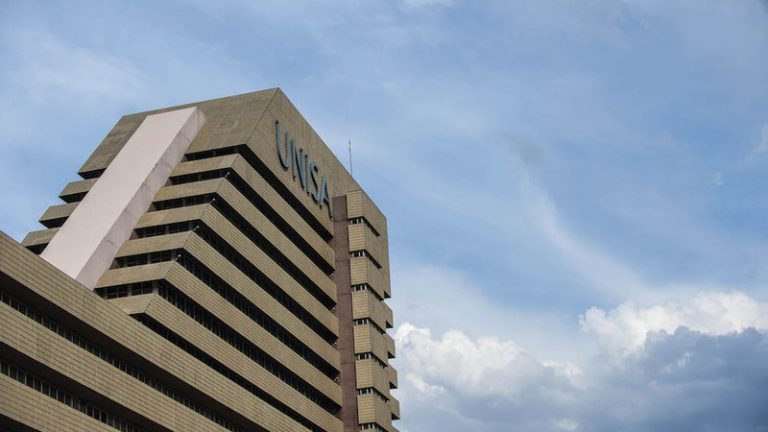
Six suspects appeared in the Specialised Commercial Crimes Court in Pretoria on Monday after allegedly manipulating a bursary system at the University of South Africa (Unisa) by creating ghost students.

According to the Hawks, a Unisa payroll administrator, Thandie Esbie, created ghost students and defrauded the South African Agency for Science and Technology Advancement (SAASTA), under the administration of the National Research Foundation of South Africa (NRF), to the tune of R1.7-million.

Hawks spokesperson Captain Ndivhuwo Mulamu said the syndicate has been operating with this modus operandi for the last two years.

 Group executive of corporate relations at the NRF, Dr Beverley Damonse, said one of the accused had been an employee at the research foundation, and allegedly defrauded the foundation by creating ghost workers at the SAAST.

This was uncovered by the SAAST after a forensic audit and the matter was handed over the Hawks.

The accused then resigned.

Damonse said she did not know if the accused then started working for Unisa.

“On Friday last week the Hawks team paid a visit to the university’s main campus in Pretoria and arrested Esbie whilst the other five syndicate members were picked up at their respective homes in and around Pretoria,” said Mulamu.

“The six spent the weekend behind bars and on Monday during their court appearance, they were granted bail.”

 Esbie was granted R3 000 bail while Florence Skhosana, Thembi Ndlovu, Matilda Mmotlana, Joy Skhosana and Clifford Banda were granted R2 000 bail respectively.

Gauteng Hawks head, Major General Prince Mokotedi, commended the investigation team and declared that the Hawks will stand firm in fighting corporate corruption.

He said the public also have a responsibility to act against any corrupt activities, and urged people to report any unlawful conduct to law enforcement authorities.

The matter has been postponed to May 16 for further investigation. – News24

Retired judge orders compensation, rebukes South African health officials

0

Mark Sonderup

Seldom is one moved emotionally when reading a legal document. But the opening paragraph of the arbitration award by retired Justice Dikgang Moseneke in the case of the deaths of 144 mental health patients in South Africa evoked strong feelings. It read:

This is a harrowing account of the death, torture and disappearance of utterly vulnerable mental health users in the care of an admittedly delinquent provincial government. It is the story of the searing and public anguish of the families of the affected mental health users and of the collective shock and pain of many other caring people in our land and elsewhere in the world. These inhuman narratives were rehearsed before me.

This represents a scathing indictment of government.

Moseneke was appointed to arbitrate a dispute resolution process after tragic events in 2016 when the Provincial Government Health authority in Gauteng cancelled a contract with a hospital group housing mental health patients. The patients were then sent to ill-equipped and underfunded NGOs. Within nine months 144 had died. Another 44 remain unaccounted for.

The arbitration hearings were between the Gauteng Department of Health and families of the patients. The alternative would have been for individual claims or class action suits that would have taken an inexorable amount of time.

It was an unprecedented way of dealing with a health tragedy of this magnitude. But it ensured that the families got redress efficiently and quickly – Moseneke took only five months before delivering his final report.

Moseneke ruled that the affected families should each receive R1.2 million (about US$ 100 000).

There are two aspects of the arbitration hearings worth examining: the compensation amount, and the question of culpability. This aspect is unique for an arbitration hearing and ventures into the arena normally seen in a medical malpractice claim where these two aspects are dealt with separately.

Compensation and culpability

Under the compensation set out by the retired judge each family has been awarded about R1.2 million. The principle of compensation is undisputed as it invariably forms part of a case of (medical) malpractice. In this instance the malpractice was medically but also socially abhorrent.

Under the circumstances, Moseneke argued that the individual awards were commensurate with the negligence. On an individual basis the amounts are perhaps not excessive. But considering the number of claims and the total amount to be paid, the monetary value is significant.

The second aspect that warrants comment is the question of culpability. In effect 144 people, perhaps more, died after being entrusted to the care of a provincial health department. Many of the officials responsible, such as the former local government official Qedani Mahlangu, claimed that she could not have foreseen the consequences of this decision. This was wholly rejected by Moseneke.

Culpability in this instance is made up of two components – professional and criminal. Professional culpability warrants full due process by the relevant professional bodies such as the Health Professions Council of South Africa and the South African Nursing Council. Why these bodies have been slow to act is inexplicable.

Moseneke alluded to criminal culpability in his judgment, suggesting that the South African Police Services should investigate the matter. A full record of the proceedings has been provided to the police and they should, along with others in the justice system, do their job and provide a docket to the National Prosecuting Authority for further action. Importantly, government should set aside resources for the justice system to expeditiously conclude its investigations.

What charges?

The intriguing question to consider is whether, given the rejection of the lack of foresight argument by several key individuals in the tragedy, would a charge of murder, dolus eventualis be appropriate? Intent, in the manner of dolus eventualis or legal intention, is considered when, objectively, the perpetrator can foresee the possibility of their act causing death, yet they persist regardless of the consequences. This question warrants consideration in court.

If South Africa fails to hold those responsible for the tragedy culpable, there’s every likelihood it could be repeated.

In one sense, South Africa has been here before. The death of Steve Bantu Biko in police custody on 12 September 1977 was another case of people, including doctors who examined him after he’d been tortured, failing in their duty. There was no culpability for the people who should have protected Biko, and did not.

Those entrusted with the care of the vulnerable must understand that there are consequences to actions that cause harm, suffering or death.

Finally, a common theme in the hearings from those who were responsible for what happened was that the plan to end the contract with the hospital and move the patients was executed to “save costs” or because they had pressure from “the auditor-general”.

But there’s a difference between cost cutting and cost efficiency. One affects quality. The other shouldn’t.

In the country’s current climate of austerity, South Africans should remind themselves of these victims of cost cutting. And practitioners need to remember that their only responsibility is to the well-being of their patients.

Mark Sonderup is Associate Professor and Hepatologist, University of Cape Town
Read original article here


Connecting the dots between the hike in South Africa’s VAT and inflation

Jannie Rossouw

South Africa is bracing itself for the first increase in Value Added Tax (VAT) in many years. The hike is part of the government’s efforts to contain a budget deficit. VAT is set to increase by one percentage point – effectively a 7.14% increase – from 14% to 15% on April 1st.

VAT is an indirect tax that is levied on goods and services traded in an economy. Governments sometimes zero rate basic items to reduce their prices. The current list in South Africa includes bread, maizemeal and rice. This is done to support the poor and protect them against higher prices.

The VAT increase has been criticised in some quarters on the basis that it affects poor people disproportionately. But over and beyond that argument, the biggest challenge is that any increase in indirect taxes affects the price of goods and services. This in turn affects a country’s rate of inflation.

The fallout of the VAT increase is particularly important given that South Africa’s Reserve Bank manages inflation by sticking to an inflation target band of 3% to 6%. The Reserve Bank increases interest rates when inflation exceeds – or looks as though it might exceed – 6% over a period of time. The corollary is that it drops rates when inflation stays below the upper level for an extended period of time, or approaches or drops below 3%.

The mechanism has worked well in the recent past. Prior to adopting it, South Africa went through periods of rampant inflation in the 1970s and 1980s. For example, inflation peaked around 20% per year in 1986.

Inflation above 10% per annum – as was the case in the 1970s and 1980s – impoverishes savers and pensioners which is why care should be taken to avoid it happening. Inflation targeting is designed precisely to do this.

There is no doubt that the rise in the VAT rate will affect the rate of inflation. The problem is that the South African Reserve Bank hasn’t made any firm policy statements on the subject. It should have because it has a duty to prepare South Africans for what its next steps will be. With the expected acceleration in inflation due to the increase in VAT, an interest rate increase might indeed be necessary if inflation increases sharply, thus retaining it within the inflation target band.

The inflation rate with and without the VAT increase

The rate of inflation over one year to February 2018 (compared to February 2017) stood at 4%, which is at the lower end of the inflation target range. This is the lowest level recorded since January 2016. Under normal circumstances, an inflation rate at this level would raise the question of whether there was scope for the central bank to ease monetary policy by dropping interest rates.

But these are not normal circumstances given the VAT increase. If the VAT increase of 1 percentage point results in a commensurate increase in the inflation rate, the result will be an inflation rate of 5% – possibly with an increasing trend. At this rate it will be approaching the upper limit of the inflation target, thus raising questions about a possible interest rate hike.

What this means is that decisions about interest rates over the next year will depend on how the VAT increase is treated in the measurement of inflation for monetary policy purposes. The South African Reserve Bank should communicate clearly on the issue in its next monetary policy statement next week.

Without clarity, businesses and the general public won’t be in a position to plan for the impact of possible interest rate movements. Clarification is necessary to bring more planning certainty.

Impact of the VAT increase

Any assumption about the inflationary pressure of the VAT increase is difficult to estimate. This is because the full impact will be affected by what businesses do.

They have a number of options, all of which will have a different impact on prices.

  • They could pass on the full 1 percentage point increase, which would affect prices on all goods except those on the exemption list.
  • They could pass on only some of the increase, which would mean that the impact on inflation is less.
  • Or they could use the hike in VAT to build in even higher prices increases. This would push inflation up even further.

Central bank responses to VAT increases

Conditions differ between countries and policy responses, but central banks in other countries have looked at the impact of VAT increases on inflation. The available evidence suggests they’ve factored in higher inflation as a result.

South Africa needs an explanation from its central bank on how it’s going to handle the situation.

In my view the most appropriate approach would be for the central bank to ignore any inflationary impact of the rise in VAT. For one year the inflation target specification of 3% – 6% should exclude the VAT increase to serve the best interests of all South Africans.

Jannie Rossouw is the Head of School of Economic & Business Sciences at the University of the Witwatersrand
Read original article here

The Fin.Lit Corner: Lesson 3 for ages 11-13, compound interest

Mduduzi Luthuli

Most parents excel when it comes to teaching safety and good manners, but with money few know where to start.

Money skills can be a blind spot because so many parents feel financially inept themselves. As a society in South Africa, we don’t talk about money – it’s a massive taboo.

Multiple parents have expressed that they feel money management is an imperative piece of education that needs to be taught while children are still under their care.

In my third lesson about educating children about money, we focus on how to educate children about compound interest. Referred to by Albert Einstein as the 8th wonder of the world.

He who understands it, earns it … he who doesn’t … pays it.

Compound interest is the most powerful force in the universe. The real secret to exploiting compound interest is the sooner you save, the better. As your children approach puberty, introduce the concept of compound interest. How you earn interest, year-on-year, on your investment account.

Compound interest is a difficult concept for even the most financially savvy adults to fully grasp — the idea of our money earning interest, the interest building interest, and so on, is hard to compute.

Now think how challenging it can be to explain compound interest to a child who’s just learning the basics of saving money and financial responsibility. If this puts you in a parental quandary, don’t worry: It doesn’t need to be as complicated as explaining the theory of relativity. It’s basically all about how time affects money’s value. So where do you begin?

First, Explain What Interest Is

“Interest” tends to be a word we take for granted, since we usually haven’t had to explain it to anyone. Keep it simple, especially if your kids are younger: It’s how your savings grow faster the longer you leave them alone. Whatever you save—whether it’s in an investment account, a savings account or a retirement annuity—earns interest not just on what you put in, but also on the money it picks up along the way. The big part about teaching them the value of compounding interest is first teaching them the importance of saving.

Saving over Spending

Once your children are old enough to count, your kids may become exposed to coins and notes in pre-school or primary school, learning that each one holds a numerical value. Take this as an opportunity to demonstrate the discipline of holding onto your money versus spending it. If you always spend your money, you’ll have none left. But if you save your money, you can earn more of it just by holding onto it. The ultimate lesson they should take away is that restraint equals reward.

Time

Compound interest needs time to gain power. And children have a lot of time. A whole lot of time.

The secret is to start your children learning these money skills early and with a simple, age-appropriate system.

Start now because the need for money has not yet arisen. Sure, your children have a lots of wants but their financial needs are not yet separate from yours. This is when you teach them how to make money and how to take care of business. And that means taking care of their money, so it can take care of them for many years to come.

Compound interest with a home piggy bank

Perhaps the easiest way to teach a child about compound interest is to set up a bank account at your home with a piggy bank. Ask them to put a R10 note in it and when he or she does, add R1 of your own. This creates an interest rate of 10%. You might not want to go higher than that, so your child doesn’t get an unrealistic expectation of what he or she will receive in the real world.

Keep track of the account balance on a sheet of paper and using a calculator. Every time your child makes a deposit, calculate 10% of the balance and add that in, rounded to the nearest 10 cents.

Show them the balance at the end of each week or month to illustrate the power of compound interest.

This is a great strategy to teach compound interest and saving for a goal. You can use this strategy to save towards their Christmas gift. Is there a toy or gift your child really wants? Make a deal.

Tell them if they save a certain amount of money, you’ll buy it. Establish at the beginning how much interest they’ll earn on their savings, such as 5% or 10%.

Keeping track

To help kids track their progress toward a savings goal and account for compound interest, keep things visual. Try drawing up a savings goal chart and putting it on the wall. At the end of each week (and especially at the end of each month), mark their progress. Write down how much they have in their savings, along with how much interest they’ve earned.

It is not just earned, it’s also paid.

Another exercise is to teach your kids that interest isn’t always earned; sometimes, it needs to be paid.

Say they want to buy a gift but have not earned sufficient money for the gift.

In this regard, you might want to lend them the money – say, R40 – and create a schedule for them to pay you back R10 over the next four weeks.

Introduce interest into the mix, too, even if it’s a Rand extra a week. If the debt goes unpaid, charge penalties, an extra R2 over and above the R1 per week interest.

This might cause confusion in a child’s perspective:
Why do I need to pay you money when you’re giving me money?
You might explain that when you borrow money from the bank, it’s not free money.
The bank earns its money by charging you extra for the money you borrow.

The workings of interest

Your teen son or daughter may know the basics of borrowing money – that it needs to be repaid – but they may be unaware about how interest works. Think of an example that applies to their life. If they want to save up for a phone, but they don’t have enough money to pay for it, they’ll need a personal loan from a lender. The lender doesn’t make any money by letting you borrow R10,000 and repay the same R10,000; by charging you extra money. They make money, which comes at a cost to you. But then, you also get the luxury of owning a phone before you’ve paid it off.

Create a payment calendar or chart to map the progress. Start lending them larger amounts to build responsibility. It teaches them about interest, and about trust: I’ll promise to lend you this money if you promise to pay me back. But remind them that a real lender or bank won’t be as forgiving if you refuse to repay the money they lend you.

Your children don’t have a credit card yet, but when they do, they will hopefully remember to stay out of debt.

They will one day thank you for this lesson. It’s a life-long lesson every parent should teach.

If you can explain and illustrate the power of compound interest to your children, you are endowing them with the real vision of why saving money is cool.

That when they put money away and leave it to its own mischief, it grows!

Mduduzi Luthuli is CEO of Luthuli Capital, a pan-African investment house that focuses on wealth management

The living conditions of Marikana workers

Zoë Postman and Ashraf Hendricks

Judge Ian Farlam’s Marikana Commission report was scathing about the housing conditions of Lonmin’s employees. He wrote: “Lonmin’s failure to comply with its housing obligations created an environment ‘conducive to the creation of tension, labour unrest, disunity among its employees or other harmful conduct.”

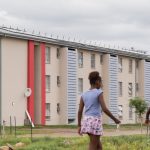
In 2006 Lonmin promised to convert 70 single-sex hostels to bachelor or family units. It also promised to build an additional 5,500 houses for its migrant employees. This wasn’t charity or optional; it was part of Lonmin’s Social and Labour Plan (SLP) submitted to the Department of Mineral Resources (DMR) when it first applied for mining rights in Marikana. But Lonmin failed to meet its obligations. By 2009 only three houses and fewer than half the hostel upgrades had been completed (see Lonmin’s dodgy housing record).

In 2014 Lonmin committed to a new SLP. It promised to convert 128 hostels and build 4,400 apartments (instead of the 5,500 houses in the 2006 plan). All the hostel upgrades were completed by May 2017. However, only 793 of the 4,400 apartments have been allocated as of February 2018. Lonmin estimates this will increase to 1,250 by the end of the year (which is the SLP target). An analysis by GroundUp in September 2017 estimated that only 19% of people eligible for the scheme had been housed. It has only increased marginally since then.

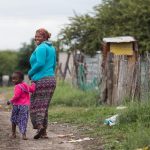
Nearly three years after the Commission, we visited Nkaneng informal settlement next to Lonmin’s platinum mine. Many of Lonmin’s employees live there. So too do some of the widows of those killed in the massacre.

Residents said that they have seen no improvement in their living conditions since the informal settlement was formed. Nkaneng has no formal electricity and no piped water or proper roads.

“Once it starts raining, no one, not even ambulances or taxis can come in or out of Nkaneng because the mud roads become so bad,” said Sindiswa Bandezi, a 58-year-old resident.

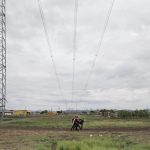
Residents use illegal electricity connections as shown in the photo above. According to Ward Councillor Wendy Pretorious two children died from electrocution last year.

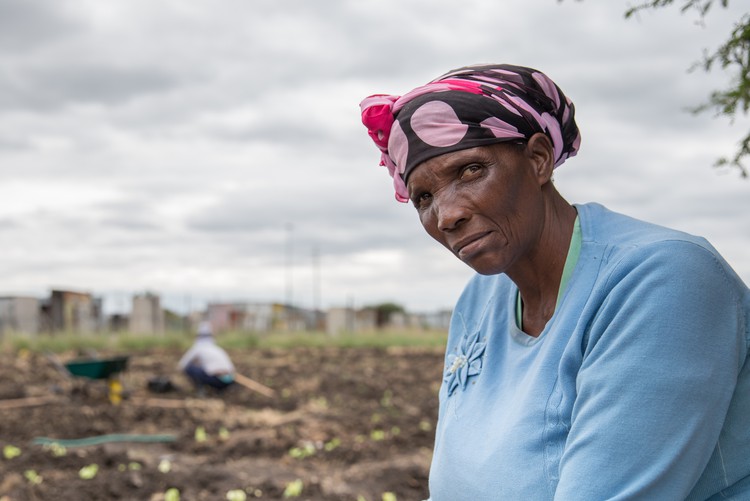
Sikhale Sonke is an organisation started by women living in Nkaneng after the Marikana Massacre. They grow and sell vegetables, chickens and pigs to sustain themselves and their families. They also opened a daycare centre for the children in the community.

Bandezi joined Sikhale Sonke in 2012, soon after the Marikana Massacre. “I was so traumatised by that incident because those who were killed were our brothers, fathers, sons and nephews,” she said.

Before the incident, she said the women in Nkaneng would depend on the men who worked in the mine. “I’ve realised now that to sit around and depend on the mines won’t get us anywhere. We, as women, must stand up so that we can get something to eat and help others in our community who are struggling.”

In 2015, a complaint was laid by Sikhala Sonke about the “social and environmental impacts” of Lonmin’s Marikana operation. The complaint claims that Lomin has failed to comply with its SLP. It says:

“… life in the informal settlements around the Marikana Mine is dire. There is an absence of proper housing, proper sanitation, proper roads, and accessible and reliable running water. The air and groundwater in the local communities are polluted by the operations of the mine. To the extent that the mine offers benefits in the form of employment, those benefits are offered least to women …”

The Compliance Advisor Ombudsman is investigating the complaint.
Read the original article here