Home Blog Page 515

Financially Literatacy, How to use a credit card

Mduduzi Luthuli

It is all too easy to slide into credit card debt. This can easily affect your credit history, which could make it difficult to buy a car or a home, or even to get a job.

Prospective employers check credit. In my fifth and final lesson about educating children about money, we focus on how to properly manage credit card debt.

Genetics are important.

A mother’s eyes or a father’s big feet are among the countless traits parents pass to their children. The same can be said about creating and managing debt.

Talking to your child about credit cards is as critical as teaching them to drive, instilling good work ethic, and teaching them about drugs and alcohol. No matter what your stance is on credit cards – whether you believe they’re good or bad – it’s your job to teach your children about credit cards before the credit card issuers send them one in the mail.

Many young adults are excited at the prospect of getting a credit card, but often for the wrong reasons. It is important to combat their misconceptions early so they become smart credit card users when the time comes.

Credit cards can be a great tool when they’re used correctly. However, they can destroy your financial life, making other aspects of life much more difficult.

Start with you

Most money lessons are not fun and easy, but credit card debt is an even more difficult conversation. This is especially if you’re struggling to manage your own.

When you’re in the process of getting out of such debt, you should be upfront with your kids. They most likely know something is upsetting you. I suggest you focus on the changes you’re making and how they can support you, rather than going into a detailed explanation of what debt is at this time.

“Mom and Dad bought more than we should have with our credit cards, which was our mistake. The good news is we’re fixing it, and we need your help.”

Subsequent conversations should focus on working together to find ways to save money and on starting good money habits by setting family goals.

Aren’t credit cards kind of a boring topic for kids?

 Not at all. You’re teaching them about money, and your child is interested in money for the same reasons you are. Money is great because you use it buy “stuff”. Tell your child you’re going to teach them how to buy goods and services and pay for them. It really is that simple. Credit cards are only boring when you frame them that way. Don’t start the conversation with, “Now we’re going to talk about important adult things because it’s good for you.” That’ll put anyone to sleep.

Credit costs money

You and I know that credit isn’t free, but children need to understand that borrowing money is not like borrowing a classmate’s pen — unless that classmate charges a fee for lending out pens. Teenagers need a different spin on this lesson. They may know intellectually that credit costs money, but the allure of a shiny card is strong. I’ve found a quick way to cool off a credit-dazzled teen: Have him or her read a card application’s fine print out loud to you — especially the sections about interest rates, late fees, and rate hikes. Now it’s not just you that’s saying that credit costs money. They’re getting it straight from the credit card issuer and hearing it in their own voice.

Real-life practice: Give your kid a loan

Whenever you hear, “Please! I swear I’ll pay you back!” you have an opening for a learning experience.

It’s one thing to talk about debt. It’s another to experience the feelings that come with paying month after month on a purchase. If you feel your kids are ready and their request is worthwhile, offer to spot them a loan — with an interest rate, payment terms, and a penalty clause if they miss a payment.

Show them how much the loan will cost compared to the cash price. Put the payment schedule on your calendar so you don’t accidentally teach your kids that repayment is optional. And lend only as much as they need.

Lending your kids money is not without risks.

They may decide to go on a chore strike or be stricken with borrower’s remorse.

You may even have to temporarily repossess a computer, video game, or other item. But they’ll be smarter consumers and better money managers because of the experience, and they’ll see debt as a tool to be used carefully and not just as a four-letter word.

Debit vs. Credit Card

 The most crucial lesson children and teenagers need to know about using a debit card is that it is attached directly to your bank account and the funds you have available at that time.

They need to know using a debit card means that the money will instantly be deducted from their cheque account. Teens need to know how much they have in their bank account before they shop.  It requires them to know how to maintain and balance a cheque account.

They should also learn how to monitor their accounts online. They should understand that if they use the card at an ATM to get cash, but they cannot get more cash out than they have available in the bank.

The most important lesson children need to know about the difference between credit and debit cards is that instead of the money coming directly from your account as it does with a debit purchase, credit purchases come with a bill at the end of the month. Young adults must understand that a credit card is not a golden ticket to just shop and buy anything they want.  They must realize that it is a temporary loan.  

Unfortunately, the personal finance lessons you teach may go in one ear and out the other.

For older kids, practice is the best lesson. Get them accustomed to using credit while they’re still under your roof. You can monitor their credit use first-hand and help modify bad habits.

Add your kid to your credit card as an authorised user. He or she will receive a credit card in their name, but you remain the primary accountholder. Give them a small monthly spending limit as you would with a prepaid debit card. If you like, make them responsible for their own monthly charges. This approach is slightly dangerous, and you’ll need to stay on top of their charges and make them accountable for their actions. If all goes well, your kid will not only receive hands-on credit card experience, but also establish a credit history.

Mduduzi Luthuli is an investment banker and CEO of Luthuli Capital.
No proof of birth, no education

Bongekile Macupe

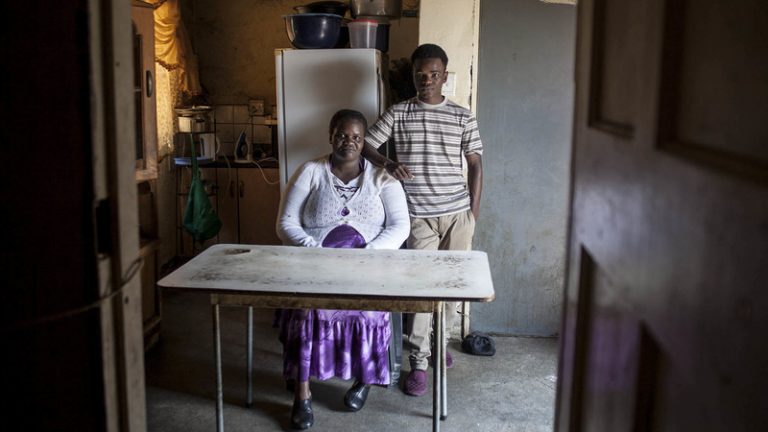
Sonia Sigauke was only 10 years old when she dropped out of school in Mozambique.

After seven years at home, aged 17, Sigauke came to South Africa to look for her mother. She had left Mozambique in 1986, leaving Sigauke and her younger siblings to be raised by their grandmother.

“I came to look for my mother because our clinic cards and birth certificates were with her — and the reason I dropped out of school is because I did not have those documents, which were needed at school,” Sigauke said.

“My grandmother tried to get us to school. But eventually we had to drop out because we could not produce the documents that were required. After dropping out, we lived in hope that my mother would one day come back and we could go back to school again, but she never did.”

Sigauke, now 38 years old, came to South Africa illegally in 1997 and the following year met the man who would become the father of her four children.

Even though he is South African and the children were all born in the country, like her they do not have birth certificates. Now Sigauke’s fear is that her children will also be deprived of an education because they do not have the necessary documents. Sigauke managed to get her three older children into school using their immunisation cards but, even as they progress, they face the risk of having to drop out because they have no other form of identification.

Her 17-year-old firstborn, Patrick,is going to matric next year and she fears that, without an ID, he will not be able to register to write his finals.

Her second-born, Bertha, is going into grade eight next year and will need to apply through the Gauteng education department’s online admission system, which requires the IDs of both the parent and the pupil. “All I would like is to see my children having their documents and going to school. I couldn’t go to school because I didn’t have documents but I want my children to have an education,” she said.

Sigauke’s other nightmare has been that of her eight-year-old son, Sipoho, whom she struggled to enrol in grade one last year because he does not have a birth certificate.

“I started applying for school for him in 2016. I went to the district office of the Gauteng department of education and they said they would call me but they never did.  I went again last year and they never helped me. He was supposed to have started school last year.

“There are many children in my area [Kaalfontein, Midrand] who do not go to school because they are undocumented. It hurts,” Sigauke said.

“It was hard seeing other children going to school and mine was not. He had even developed a habit of playing in the dumpsite because he had nothing to do — imagine! It was really hard.”

With the help of the Centre for Child Law, Sigauke’s son is in grade one — for now. But the school has made it clear that, if he does not produce a birth certificate soon, he will be kicked out.

According to the national admission policy for public schools, a pupil can be admitted conditionally if they don’t have a birth certificate but the parent must take steps to rectify the situation within three months.

Anjuli Maistry, a senior attorney at the Centre for Child Law, told the Mail & Guardian this week that, according to the Births and Deaths Registration Act, both parents have to provide valid proof of identity to register the birth of a child, but Sigauke and her partner cannot do so because she does not have any form of identification.

“The father is a South African with a valid South African ID but he is also prevented from being able to register [their children’s] birth because they are not married,” said Maistry.

This week, the Centre for Child Law went to the high court in Grahamstown to challenge the department of home affairs on these regulations. Judgment has been reserved.

“The court might say that those regulations are unconstitutional and home affairs needs to register children like [Sigauke’s son’s] birth,” Maistry said.

This week, the South African Human Rights Commission held a colloquium on undocumented children being denied an education and launched a position paper on the matter. In its paper, the commission said that all children, whether they have documents or not, have a “fundamental and undeniable right” to basic education.

The commission said there is no credible data on the number of undocumented children of school-going age. Although some pupils are helped to get into school, many others are not as fortunate.

“Although the lack of documentation may affect persons from all nationalities, racial and gender groups, as well as those from all geographic areas, the vast majority of learners adversely impacted by a lack of documentation are poor black learners from predominantly rural areas,” reads the paper.

“The effect of the exclusion of undocumented learners, therefore, has notable implications for the eradication of racial and socioeconomic disparities.”

Speaking at the colloquium, the director of legislative services at the department of basic education, advocate Charles Ledwaba, said no South African school is allowed to discriminate against any pupil, whether they are a citizen or not.

He said, however, that the admission of pupils has to be conducted within the confines of the law.

“It’s not a process that operates openly without reference to existing legislative instruments. So, mostly we are being guided by the department of home affairs with regard to immigrants and refugees. We are always in line with their legislative instruments when admitting learners in our schools,” he said.

In its paper, the Human Rights Commission made recommendations to the basic education department on how to handle undocumented pupils, including that:

  • It must issue a directive to public schools outlining the schools’ obligation to admit and retain all undocumented pupils;
  • It must review the laws and policies pertaining to access to public schools for undocumented pupils, and have a law and policy that states that no pupils can be excluded or removed from a school because of his or her status or documentation; and
  • All provincial education departments must review their admission policies and practices, including in online registration systems that exclude undocumented pupils.

Read original article here

Rwandans discuss how best to commemorate genocide

0

Samantha Lakin

Rwanda is commemorating the 24th anniversary of the 1994 Tutsi genocide. This claimed the lives of between 800,000 and one million Tutsis and moderate Hutus over 100 days.

This is a good time to reflect on the history of policy and practice of memory, justice, and recovery in the country over the past 24 years. Two questions are especially pertinent: how have Rwandans engaged in various forms of memory after genocide? How have these processes been meaningful?

From a series of nearly 60 interviews conducted in the country since 2015, I have learned from a diversity of perspectives about memory and justice.

The findings suggest that genocide memory in Rwanda is diverse and dynamic. The interviewees’ often offered surprising and unexpected perspectives. These could not have been assumed from reading secondary reports or by observing the commemorations from a distance.

For example many people – including genocide survivors and former perpetrators – have a more holistic concept of justice than punishing perpetrators. And there is a huge desire for spaces for dialogue about how memories of genocide emerge impact everyday life. These spaces would bring together survivors, perpetrators, returnees, and ordinary citizens. There is also a great desire for knowledge about how to use these memories to seek justice, validation, and promote coexistence, especially for future generations.

What we learnt

I interviewed genocide survivors, former perpetrators and ordinary citizens who were neither targeted for genocide but who did not take part in killing. Officials engaged in memory processes in Rwanda were also interviewed.

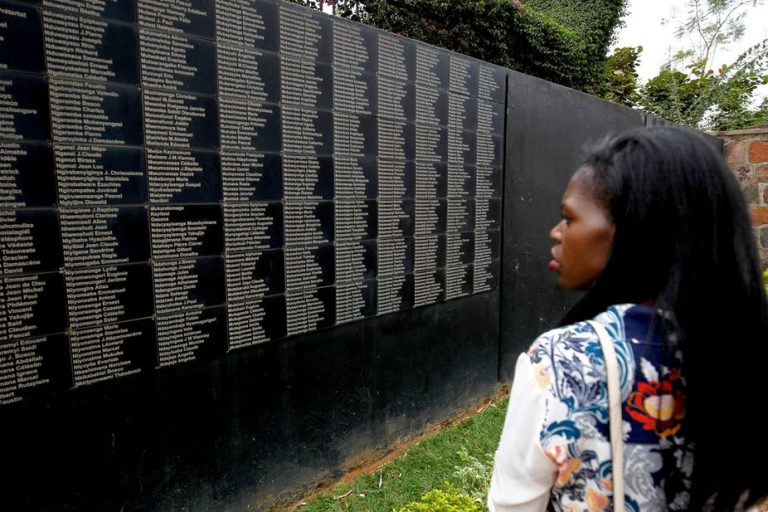
The commemoration ceremonies take place over 100 days, known as the Kwibuka period, beginning on April 7 each year. During this period Rwandans visit village, district, or national memorial sites known as urwibutso where genocide victims are buried. There they hold memorial ceremonies which include listening to survivor testimonies and representatives from survivors’ organisations. Local and national leaders relate the history of the genocide, and sometimes perpetrators give testimonies.

Bodies of victims are still being found to this day, in pits or on farms. These bodies are reburied in communal memorial sites during the kwibuka period. Sometimes icyunamo (time of mourning) is observed. This is the cultural practice of informal mourning that takes place throughout the night, usually around a fire.

Regardless of the programme of kwibuka, each process ideally pays respect to genocide victims and works to bring Rwandans together.

But not all acts of memory are necessarily guided by the intention of achieving peace and justice, unity and reconciliation. Some of this is because of individual differences in perspective and resilience. Simply put, some people cope better with the harms that they suffered for various reasons, among them faith, education and economic gains since the genocide.

Some individuals do not feel particularly connected to the memorial sites. Yet they still attend the ceremonies. This can cause conflicts of memory, especially when what is being remembered differs according to an individuals’s experience of the genocidal process. So it is important to ask Rwandans how urwibutso and kwibuka have or have not led to senses of justice, and what aspects of these processes are meaningful.

Local cultures of memory

It is also important to go back into the culture of Rwanda to inform the process of reflecting on and remembering the genocide. That serves to ensure that these processes are salient to Rwandans themselves, regardless of their backgrounds.

Achieving these goals is not an easy process. For example, proximity matters, as genocide survivors, genocidaires, returnees, and others still live together in close contact, in local communities and villages in Rwanda.

In addition, the genocide took place during a time of a civil war (1 October 1990-4 July 1994) and it was planned by a government that had abandoned its people. The government coerced many to participate in the killings. It used years of deliberate propaganda, hate speech and dehumanisation tactics to indoctrinate others into hate ideology.

Many of the survivors were born of so-called mixed marriages, with one Hutu and one Tutsi parent. This reality challenges the binary nature of victimisation and perpetration of genocide in Rwanda.

Meaning making and memorialisation

The interviews raise further questions: what are Rwandans empowered by and what do they find meaningful about memorial sites and kwibuka, in order to sustain these processes over time?

For example, the research shows that, although some survivors feel validated when former perpetrators join them at commemoration ceremonies, others fear that requiring former genocidaires to attend when they still don’t accept their guilt might result in a backlash.

Some individuals attend kwibuka to support their neighbours but do not consider it their “own story.” Others consider it to be one of the most significant and emotional days of their lives each year. Some embrace kwibuka as a chance to remember their loved ones among the comfort of friends and neighbours. Yet, others fear it, because of the retraumatisation, grief, depression, and anger they might feel.

These are some examples of the diverse perspectives of kwibuka, all of which are valid and coexist in the same physical and emotional space every April in Rwanda.

Eric Ndushabandi, Director, Institute of Research and Dialogue for Peace, Rwanda, co-authored this article.
Read original story here


The sport fraternity mourns Mam’Winnie

Mosibodi Whitehead

Madikizela-Mandela saw football as one of the tools for economic freedom. Her passing on Easter Monday leaves a significant void in South African society, including the sporting fraternity.

The anti-Apartheid icon died at the age of 81 after a lifetime dedicated to achieving the complete emancipation of black South Africans. Although it was her late former husband Nelson Mandela that was known for his love of sport, the mother of the nation also had an interest in sport.

In 2016, retired England and Manchester United defender Rio Ferdinand visited the country to partner with Mama Winnie on an initiative to uplift the youth of South Africa using football.

Although the details of the partnership remain sketchy, the principle was clear.

Statistics South Africa records the unemployment rate at 27% in the second half of 2017 and if one includes discouraged workers this could be as high as 36%.

The picture is even more alarming amongst our youth.

67% of South Africans under the age of 25 are unemployed. It is a crisis and Madikizela-Mandela saw this.

In an interview with Madikizela-Mandela at the time, she said unemployed youth was a ticking time bomb.

“So occasions such as these when we meet great young men from Manchester United provide an opportunity for us to exchange views. And we can learn from them on how they deal with the problem of unemployed youth,” said Mama Winnie.

Sadly the Mandela-Ferdinad partnership didn’t really get off the ground. South Africa didn’t get a chance to learn from Ferdinand’s success with his own foundation. The Rio Ferdinand Foundation (RFF) engages young people in sports, arts and media activities in some of the UKs most deprived communities with the focus being on preparing youngsters for the working world.

They use sport as a point of departure. The RFF’s BT work programme progresses young people from community-based youth development and training initiatives to vocational training and work experience with potential employers.

This approach has also found success at the Transnet SAFA School of Excellence.

The School of Excellence is a football focused high school based in Germiston East of Johannesburg, which has produced some of South Africa’s very best footballers including Steven Pienaar, Daine Klate, Keegan Dolly, Bernard Parker and more recently Phakamni Mahlambi and Sibongakonke Mbatha.

Like Mama Winnie and the Rio Ferdinand Foundation, The School of Excellence recognizes that for many children, sport is their only way out of poverty.

And like the RFF, the School of Excellence realizes that the path from high school to professional sport is littered with casualties and so they emphasise the importance of acquiring a quality education, which can open the doors of employment when the gateways to a professional football career is shut.

School of Excellence Principal Joseph Molele believes that his boys are constantly made aware of the brevity of a football career which is why they mature faster and make it in many different walks of life including professional football.

“You constantly coach the boys to make them realise that they do have god-given talent. You make them aware of the realities of football, that it is a short term career.

So before they set their sights on kicking that ball, they need to have what every child in the country needs to have, a Matric certificate.

This becomes the springboard to everything, says Molele.

So powerful is Molele’s message that when Mbatha was picked to travel to the FIFA U17 World Cup in Chile in 2015, he was more concerned about studying so that he could give the best account of himself when he sat for the Matric exams.

Mbatha who is now on the books of Platinum Stars went on to pass his matric and is now pursuing a Business Management degree through UNISA. He studies while playing professional football and says he learned this discipline at the School of Excellence.

“That’s where it started. They push football and education. It is important for a footballer to learn, it’s just like keeping fit. If you’re not playing and just sitting there you won’t develop. It’s exactly the same in football,” Mbatha told us.

Mbatha’s attitude toward education and sport inculcated at the School of Excellence and Ferdiand’s work with the youth is exactly the sort of vision Mama Winnie had for the youth of this country when she spoke of finding the cure for the cancer that is unemployment.

More South African schools must teach youngsters to pursue their sporting dreams alongside working towards acquiring a quality education.

So that in case of injury, a lack of talent or just plain back luck, the dream of being a professional athlete can be channelled towards work as a sports administrator, physiotherapist or a sport commentator.

With a decent education one could even become a sports journalist. This is if your dream to become a professional athlete takes a little longer to realise.

Mosibodi Whitehead is a sport broadcaster.

David Mabuza pays tribute to Winnie Mandela, calls for ANC to unite

Thabo Mohlala

The National Executive Committee (NEC) of the African National Congress (ANC) visited Winnie Madikizela-Mandela’s home in Orlando West, Soweto on Thursday.

The top six, led by their deputy-president David Mabuza, were there to commiserate with the family.

Mabuza gave a formal tribute to Madikizela-Mandela on behalf of the ANC. He officially opened the book of condolences which he said will be made available at selected places across the country.

In his address Mabuza expressed gratitude to the multitudes of people, particularly members of the ANC, who kept vigil outside Madikizela-Mandela’s house since the announcement of her passing.

Thousands of people came to provide moral support for the family. The list included politicians from opposition political parties, community figures, ambassadors and a Nigeria chief..

Mabuza reminded people that Madikizela-Mandela was a leader who is the embodiment of the fight against apartheid. He said Mam’ Winnie, as she is affectionately called, bore deep scars from our liberation.

“She is the torch bearer of our freedom and as the ANC we hold this name in high esteem. We respect this leader and we are saying to all of you; celebrate this life, learn whatever lessons you can from this life that was well lived,” said Mabuza.

Another message was that the ANC would not prevent other people and political parties from paying respect to uMama Winnie.

This is because she was a leader for all of us, said Mabuza.

“All political parties are allowed to come to this family to pay their homage. We hope everything that is going to be done here would be done with the necessary respect to honour the person we are here for,” he added.

Mabuza used the opportunity to appeal for unity among the ANC members in honour of Madikizela-Mandela’s memory and legacy.

“ANC members must unite, take over the spear and proceed. Unity within our ranks and the renewal of our movement must be our guiding principles as we continue with our struggle.  That is the best prize we can give to our fallen hero uMama Winnie,” said Mabuza.

Deputy Minister of Transport Sindisiwe Chikunga also paid respect to Mam’Winnie. Chikunga said the country, the ANC as well as the SADC region and the world have suffered a great loss with her passing.

Chikunga spoke to Inside Education. She described Madikizela-Mandela as a leader, a mother and a woman of integrity. She said Mam’Winnie lived a life characterised by unparalleled commitment, dedication and sacrifice.

“Remember she was a qualified social worker who was married to a practising lawyer? This means they could afford a better life for both of them and their children but instead they chose to fight for the poor and for those who cannot do anything for themselves.”

Therefore, we remember a person who was selfless,” said Chikunga.

She said she met Madikizela-Mandela during one of the government’s road safety events and felt particularly honoured to have interacted with her. Chikunga said what will remain etched in her memory is Madikizela Mandela’s humility.

Chikunga said she was overwhelmed by Madikizela-Mandela’s endorsement under the leadership of the then Minister of Transport Dipuo Peters.

“It is something that I would always cherish and I actually regard it as a blessing”, said Chikunga.

Minister in the Presidency, Nkosazana Dlamini-Zuma, held a press briefing to share latest details about the funeral arrangements of the late Madikizela-Mandela. She confirmed that the funeral will be held at the Orlando Stadium on Saturday, 14 April.

She said the venue for a memorial service has been moved from Regina Mundi Catholic Church but to a bigger venue whose name would be released at a later stage.

Nomzamo from Bizana: remembering Winnie Madikizela as a young woman

Vashna Jagarnath

Within hours of Winnie Madikizela’s death debates about her life began to rage. One of the key themes that began to emerge was her relationship with Nelson Mandela. As was the case during her lifetime, there’s still an overarching assumption that her politics were shaped by her husband.

Of course a partner of 38 years, even mainly in absentia as he was imprisoned for 27, would have some influence over a person’s life. But reducing Madikizela’s entire life and legacy to her relationship with Mandela has more to do with patriarchal narratives about powerful women than reality.

So who was Nomzamo Winifred Madikizela, and what shaped her?

She was born on 26 September 1936, the last in a family of four daughters in a part of South Africa – the Eastern Cape – that had already experienced several waves of subjugation, some more effective than others.

Forty years earlier the Glen Grey Act had been passed which led to the annexation of the Transkei and Pondolond under the control of the Cape Colony. It was the culmination of several attempts to seize the rich agricultural land of the Eastern Cape over more than 100 years.

The draconian measures put in place by the colonial state to bring the region under control were not completely successful. The indomitable spirit of resistance forged over centuries of conflict made it impossible to fully subjugate the people of this region.

By the time the Union of South Africa was established in 1910 it became clear that more controls were needed to smash resistance to land appropriation by white settlers. In 1913 the Union state passed the inhuman Natives Land Act. With this act, the South African state prohibited Africans from owning and renting land in 93% of the country. It laid the groundwork for massive segregation.

The various waves of subjugation from colonial wars, skirmishes and laws, missionaries, encroachments of settlers and the mass expropriation of land meant that even the lush bountiful valleys of the Transkei were made poor. Men were then forced into migrant labour on the golden reefs of Witwatersrand.

Madikizela was born into this contested space and into a family of accomplished women who encouraged open questioning about oppression.

Ancestors

Madikizela’s grandfather, Chief Mazingi, was a prosperous man who owned a trading store as well as a well-functioning farm. He held onto certain customs and social norms but was also open to change. The Methodist missionaries established in the area made a strong impression on him.

Madikizela was also descendent from a line of powerful women. Her paternal grandmother, Seyina, for example, inherited her husband’s vast land holdings after his death. She also continued running the trading post and leased land to white settlers.

Gertrude Mzaidume, Madikizela’s mother, was another accomplished woman. She was the first domestic science teacher in Bizana. An exceptionally beautiful woman, she was very particular about her appearance, a trait that Madikizela inherited. Gertrude was a disciplinarian and strictly adhered to her Methodist values. Madikizela called her mother “a religious fanatic” and attributed her teenage rebellion against the church to her mother’s religious discipline.

Madikizela’s father, Columbus, was a schoolteacher. He and his siblings embraced the various changes sweeping through their part of the world while also maintaining a strong connection to local traditions and customs. His relationship with Christianity was ambivalent.

This distrust of settler society, culture and religion meant Madikizela grew up in a space that was always open to questioning oppression. Madikizela’s father was her first teacher; he taught her history from textbooks as well as history that didn’t feature in the books.

In her biography Part of my Soul, Madikizela recalled her father using songs to teach her about the Eastern Cape’s colonial subjugation through a series of wars.

Political awakening

Madikizela’s young life was marked by two major events. When she was about 10, one of her elder sister’s died. Then her mother passed away. In an unconventional move for the time, Columbus refused to send his children to live with other relatives. Instead he kept his family together and, with significant help from Madikizela, ran his own homestead.

Eventually, after almost a year of staying at home, Madikizela returned to school in Flagstaff. Later she went to Shawbury College, a Methodist mission school, to complete her last two years of secondary school.

Her political education continued. Shawbury’s teachers were politically inclined, though this was more theoretical than practical in nature. Madikizela recalled that the teachers – despite being politically aloof – were still admired for introducing radical political ideas into the student body.

Madikizela’s interest in politics and liberation meant that she, like many before her – and many today – faced the difficult choice of entering into the political agitation at her school or persevering with her studies.

In 1952 people across the country were participating in the Defiance Campaign – series of coordinated strikes, mass action campaigns, boycotts, and civil disobedience. Madikizela desperately wanted to join the protests, but also keenly felt the sacrifices her family had borne to give her the opportunity to educate herself. She reluctantly sat the protest out and completed her studies.

In 1953 she moved to Johannesburg to study social work. She quickly realised that the city of gold was built on the severe exploitation and oppression of black South Africans. Through her work as a young social worker she was exposed to inhumane conditions faced by the black working class: uninhabitable homes, poor sanitation, a lack of security and high infant mortality rates.

Her commitment to their struggles saw her turn down a prestigious scholarship to study at a university in Boston. Instead she joined the staff of Baragwanath Hospital as the country’s first black woman social worker.

During this period she became more involved within the broad African National Congress (ANC) networks and the work of the ANC Women’s League. By the time she had qualified she had become involved in various political causes.

Remarkable achievements

As we recall Madikizela’s life it’s important to remember that in 1957 – by the age of just 21 and before she met Mandela – she was already extremely accomplished.

Her achievements weren’t rare just for a black South African woman in a racist society. They were highly unusual for any woman regardless of class and race in the society at that time.

Teaching academy in the backyard of a four-room house

1

Mary-Anne Gontsana    

For Neliswa Dludla from Khayelitsha,a township of Cape Town, teaching in the public school system was a bad experience.

However, Dludla did not want to give up teaching and so she started her own education centre – The Early Birds Lifestyle Academy.

“The well-being of a teacher is non-existent in the public schooling sector. I have experienced patriarchy, ageism and racism,” says Dludla.

“At the same time, I have always wanted to be a teacher,” she adds.

As a student at the University of Cape Town, Dludla was part of the Students’ Health and Welfare Centres Organisation (SHAWCO) programme, a student-run NGO based at the University of Cape Town, that seeks to improve the quality of life for individuals in developing communities within the Cape Metropolitan area. Her main role here was as a project leader in Khayelitsha for undergraduate students.

She became part of the Numeric Teaching Academy in Observatory, Cape Town in 2016. She holds a Bachelor of Social Science degree and a Postgraduate Certificate in Education from the University of South Africa. Dudla also has a Teaching English to speakers of other languages (Tesol) qualification which allows graduates to teach English abroad.

“I worked in a public school last year on a contract basis. As a new teacher I was handled really badly. My contract did not end well with the school, I was not even told that my contract had ended until the first day of the second school term,” she says.

Dludla says there was a high staff turnover, with learners seeing different teachers every three months.

When she left the school, she was unemployed for three months. She started tutoring children individually to make ends meet.

This led to her getting a contract at her former high school teaching English, life orientation and creative arts and running library sessions. She says she was not paid her full salary and started looking elsewhere.

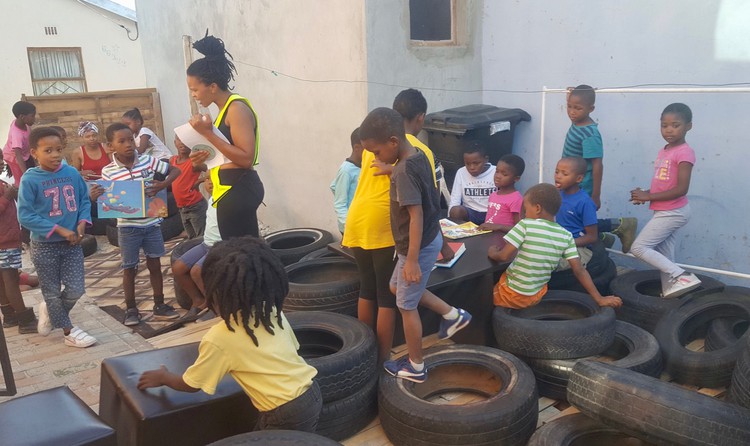
She had many books. Her love of reading and teaching saw her open a reading club with eight children in the four-roomed house  where she grew up.  More children came and parents started becoming more and more involved in their children’s extra mural activities.

The reading club became the Early Birds Lifestyle Academy. This year there are 60 learners of primary and high school age who come for lessons after school.

For the very young ones the curriculum includes English, writing, learning through play and physical exercise. For high school learners, Dludla provides support lessons in Mathematics and Physical Science. She also tries to focus on teaching things she feels are neglected in public schools, such as public speaking, fractions and counting.

“Some of my children did not even know how to count to 50. This is some of the neglect experienced at some of these schools,” she says.

The academy is closed on Wednesdays and on Sundays. Lessons are free and Dludla relies on donations.

At the moment, the academy only has shelves filled with books, a flat screen television, a printer and some computers; she uses the walls as a chalk board.

Some students at the academy also help teach and tutor the learners.

She needs help to register the NGO and to maintain it.

In Pictures: Winnie Madikizela-Mandela memorial

Thabo Mohlala

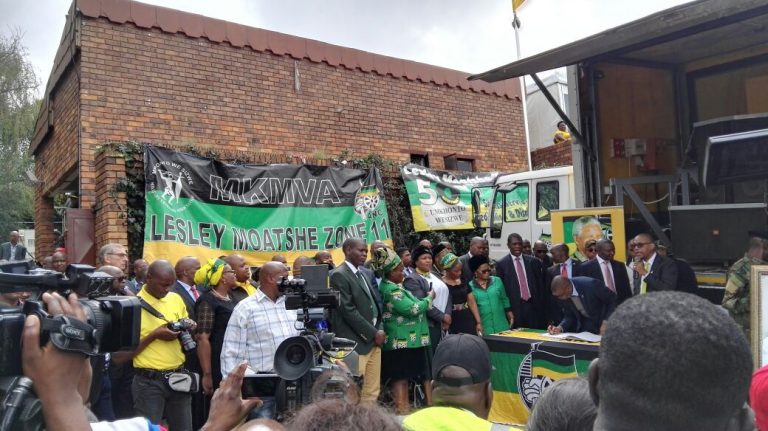
Multitudes of mourners thronged the home of late ANC stalwart Winnie Madikizela Mandela in Orlando West, Soweto on Wednesday. What stood out the most was the ANC Women’s League’s candle march. The women walked two from two historical landmarks: Hector Petersen Memorial Square and the Uncle Tom’s Hall.

Earlier in the day, former President Jacob Zuma visited the home and gave a tribute to Madikizela-Mandela. That afternoon, ANC Secretary General Ace Magashule also visited the house where he announced the party’s 10-day programme to commemorate the death of Madikizela Mandela.

MKVA members led by their Treasurer-General, Des Van Rooyen and President Kebby Maphatsoe also entered in a true military style.


Jacob Zuma tribute to Mam’Winnie Madikizela-Mandela: One of our pillars of the movement has fallen

Thabo Mohlala

Former president Jacob Zuma addressed the crowd outside Winnie Madikizela-Mandela’s house on Thursday. Zuma, whose speech was preceded by ululations from some of her admirers in ANC paraphernalia, said he was shocked to hear about Mam’Winnie’s death although he knew she was suffering from a long sickness.

“Death is a very painful experience to befall any family, but it is even more painful in the case of Madikizela Mandela because she was not just a mother for her own family or to the organisation, the ANC, but the mother to the entire nation.”

“One of our pillars of the movement has fallen, one of our leaders has departed,” said Zuma.

Mam’Winnie, as she was affectionately known, was a leader recognised not just within the ANC but by country and the world.

“This is not because she was the wife of our leader and a struggle icon, Nelson Mandela, but because in her own right she made an immense contribution to the struggle. She made a very remarkable and noticeable contribution to the struggle in many respects,” said Zuma.

He said Mam’ Winnie influenced the oppressed to fight for their freedom; That many people joined the struggle because they saw her fighting even though her husband was in prison and did not know when he would be released.

“She was brave and politically clear and could not be confused by anything that does not relate to the struggle. So, we have lost a leader and a mother. To us it is a big loss and we say our heartfelt condolences to the Mandela and Madikizela family,” added Zuma.

By all accounts, Nomzamo Winnifred Madikizela-Mandela was a complex, controversial woman. She was also an affectionate and charismatic political figure.

She became the face of the struggle for resistance against apartheid in South Africa.

She was a fearless, radical and fiery orator whose words stirred deep and intense emotions that galvanised activists to take their fight against the brutal apartheid government.

Mam’Winnie was loved and hated in equal measure by both her admirers and detractors.

But despite her flaws and missteps -which senior ANC official, Tokyo Sexwale, said were never committed for personal gain but were part of the broader of the liberation struggle – all concur that no one suffered as much as she did.

She survived several detentions, torture and beatings.

She has, against all odds, displayed a remarkable sense of stoicism, fortitude and inner strength that saw her withstand the emotional and psychological trauma visited upon her by the apartheid security forces. To most of her supporters, the epithets: ‘Mother of the Nation and uMama’ are fitting descriptions.

No amount of evil machinations hatched by the minority regime could break her. These included a subtle form of torture widely used by the apartheid government at the time, where activists were taken away from their familiar surrounding and banished to places they never heard of. In her case, she was banished to Brandfort in 1977, a desolate Afrikaaner dominated town in the Free State. It is also worth noting that the Orange Free State, known as this at the time, was largely a Sesotho and Afrikaans area. She was an umXhosa woman.

Madikizela-Mandela used her house as a sanctuary for activists who ran away from their homes including those in transit to go into exile. Among the first trained social worker, she was always available to provide counsel, moral and material support to the victims of the apartheid all the while she was taking care of her two daughters, Zenani and Zindziswa.

Perhaps, the most brutal torture she suffered was to raise the children by herself without the support of her late struggle icon and husband, Nelson Mandela, who was sent to life imprisonment in Robben Island in 1962.

Since the announcement of her passing, her Orlando West home turned into a political shrine. This is perhaps not a new occurrence in that her home has always been a centre and common place for ANC activists and members of the community.

Young, old, rich and the poor all converged to pay homage to the matriarch. They spoke fondly of her role, how she shaped their political outlook; the impact she had on their lives; how they would remember and preserve her liberation struggle legacy.

Some of the personalities who came to pay their respects included former speaker of the Gauteng Legislator, Trevor Fowler; Cosatu President Sdumo Dlamini; ANC stalwart Kgabisi Mosunkutu; former Springbok captain Francois Pienaar; Pastor Raymond McCauley who was part of a Church delegation led by Reverends Frank Chikane and Malusi Mpumlwana.

One of the comrades who was at Madikizela-Mandela’s house was Thandi Shezi.

Shezi, a staunch member of the ANC, from Ward 52 in Emden, said she knew Madikizela Mandela “since the 80s when the struggle was intensifying”.

“I remember when we were holding a funeral service of some of our comrades at Regina Mundi. Police gave us five minutes to disperse. But she came and told the police: ‘I am giving you the police five minutes to leave this place. She was such kind of a leader,” said Shezi, wearing ANC traditional colours.

Shezi said she admired her bravery and selflessness and reckons few people would have cracked under such harsh political situation. “What I would like people to celebrate and remember her for is for them to emulate her deeds.”

“They must be brave and always stand for the truth and the greater public good. She stood firm until she gave her last breath,” said Shezi.

What I like most about her, she added, was the fact that she loved her people and wanted to be within their midst. She never relocated to the leafy suburbs like most politicians did after 1994, Shezi said.

Methodist Church Bishop Gary Rivas said she knew Madikizela Mandela because she has been a member of the Methodist Church of Southern Africa for her whole life.

“As the bishop of the Johannesburg I have been involved in looking after her spiritually and pastorally. She was probably one of the strongest people I have ever met in my whole life. I have met so many strong people of all persuasions all over the world and she is without a doubt one of the strongest,” said Bishop Rivas.

As mourners in ANC colours sing and dance in front of the main gate leading into the Mandela house, Othaniel Sangweni sits on one of the giant rocks put along the driveway, a little distance away from the crowd.

He looks every part an ANC as he is clad in a coloured green and gold tracksuit top. He looks deep in thought and somewhat oblivious to his surroundings. It is only when you get to speak to him to understand why: he feels a deep sense of loss of her icon.

Sangweni mother’s home was next to the old Mandela family house though he spent his youth and adult life in Tembisa. He said he heard a lot about Winnie Mandela and only came to see her in a flesh during the UDF time when violence between ANC and IFP was at its peak in the Kathorus area.

“I knew Winnie as a fighter for the people. I remember when I was arrested after we burned trains and cars in the area I was sent to Modderbee Prison. She is the one who came to have released and since then I came to admire as a true fighter till today. She was fearless and a unifier who always fought on the side of the people. I wish people could embrace the values she espoused. Her death is a great loss, but we will never disappoint her, we will carry the baton,” said Sangweni as he suddenly jumps to his feet to join in the singing and dancing.

Madikizela Mandela died on Monday at Netcare Hospital in Milpark in Johannesburg aged 81. She will receive a state funeral next week Saturday, April 14 at Orlando Stadium. A Memorial Service will be held three days earlier on April 11 at Regina Mundi Church.

South Africa’s ‘mother of the nation’ who was never first lady

Mashupye Herbert Maserumule

Winnie Madikizela-Mandela – doyen of South Africa’s liberation struggle and the matriarch who was dubbed ‘the mother of the nation’ – took the apartheid system head-on, at the huge personal cost. Her life typified the courage to stand up against injustice. It inspired hope during moments of adversity and hardship. She personified tenacity to a just cause in the face of a political system that demeaned those she represented as sub-humans.

Hers was a struggle for humanity, often times waged in an inhuman way. Her legacy is that of antinomies. Profound because it was complex. It outstripped the simple narratives of villainy and righteousness. She was, after all, only human and therefore fallible. Her demeanour was that of a feisty Iron Lady with Thatcherite streaks, but immersed in the tradition of revolutionary pursuit.

She did not bask in the glory of her revered husband Nelson Mandela. She was never simply his wife. Instead she carved out her own political identity in the African National Congress. The outcome was that she was loved and loathed.

She kept the flame of the struggle inside the country burning while many in the leadership of the liberation movements were consigned to Robben Island or exiled. But her endorsement of violence to fight the brutality of the apartheid system did not go down well with the ANC leadership.

The apartheid state failed in its many attempts to break her. This included arrests, detentions, solitary confinements and banishment to a small town in the Free State called Brandfort.

Indiscretions and accountability

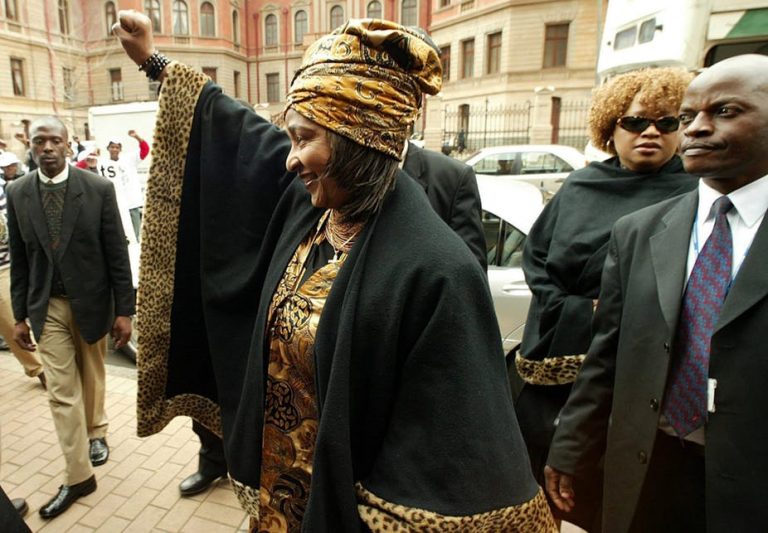
Etched in everyone’s memory is the historic picture of her – clenched-fist salute symbolising black power – walking alongside her husband Nelson Mandela who had just been released from prison after 27 years. It was a power couple whose travails personified a country at the brink of redemption, the moment marking the beginning of a new dawn.

As Mandela’s wife many thought that she would become South Africa’s First Lady – a title that had been appropriated to her for a long time in the mass democratic movement. Unfortunately, fate had its own way. Madikizela-Mandela was the mother of the nation who never became the first lady.

And residues of her indiscretions began to demand accountability. She had run-ins with the law. An indelible blemish in her biography is certainly her implication in the death of the 14-year-old child activist Stompie Seipei, who was a member of the Mandela Football Club, which she had established to disguise her political mobilisation of young people in the township. Jerry Richardson, the coach of the club who was later exposed as having spied for the apartheid government, apportioned some blame on her. Richardson was sentenced to life imprisonment for the abduction and murder of Seipei. He died in prison.

Madikizela-Mandela denied culpability in Seipei’s death and accused Richardson of lying. She was nevertheless convicted of abduction and assault. A six year prison sentence was commuted to a fine on appeal.

She later shouldered some responsibility for Seipei’s death in a grudging admission to the Truth and Reconciliation Commission (TRC) that

things went horribly wrong.

This followed a desperate attempt by the TRC’s chairperson Desmond Tutu to extract a confession – and remorse – from her. She apologised to the Seipei family, but maintained her innocence.

The TRC’s finding against her was that she was “politically and morally accountable for the gross violations of human rights committed” by members of the Club.

The TRC was established to promote unity and reconciliation, bore witness to, recorded, and in some instances granted amnesty to the perpetrators of human rights violations either in defence of, or fighting against, apartheid. It offered rehabilitation and reparations to the victims of violence.

Some people were uneasy about the TRC process as it related to Madikizela-Mandela. Did the ANC abandon her? The ANC took collective responsibility for the human rights violations during the struggle against apartheid. But Madikizela-Mandela was left to take personal responsibility for the atrocities related to the activities of the Mandela United Football Club.

Her troubles didn’t end there. She was charged with fraud and theft in relation to a bank loan. She was convicted and given a five-year jail sentence. But she appealed and the sentence was set aside.

Her biographer Anne Marie du Preez Bezdrop, in the book Winnie Mandela: a Life, writes:

In the worldwind of events following Mandela’s release from prison and the start of negotiations designed to ensure a peaceful transition rather than a bloodbath in South Africa…no one bothered to find out what Winnie needed and wanted, how her life had changed or what her aspirations might be…From the moment she was implicated in the serious crimes involving the football club, it was though her entire past had been erased from the public mind.

Unanswered questions

There are many questions that relate to the role of this colossal in the liberation struggle – and post-apartheid South Africa – that historians should critically examine. They go beyond simple biographical narratives.

For example, how would events have unfolded if she hadn’t taken the action she did? What lay behind her penchant for military inspired and violent approaches to the liberation struggle? Was it because she found the ANC too moderate relative to the violence the apartheid system was unleashing? Or was it because of the torture she endured at the hands of the apartheid regime?

And why did she continue to show preference for radical approaches to policy choices even in the post-apartheid South Africa, when her party was in charge?

In expressing her displeasure at what happened to her after Mandela’s release, it was as though, having fought bitterly against apartheid, she was fighting a struggle within a struggle.

Mashupye Herbert Maserumule is Professor of Public Affairs, Tshwane University of Technology
Read original story here