Home Blog Page 518

Professor Mamokgethi Phakeng appointed new UCT vice-chancellor

0

Christina Pitt 

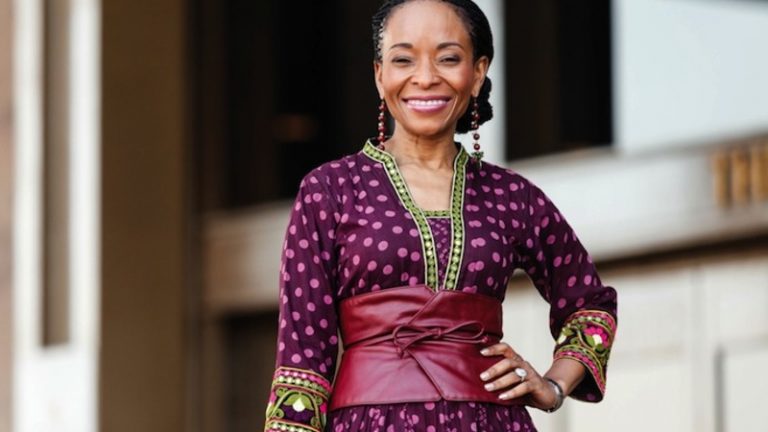
Professor Mamokgethi Phakeng is the newly appointed vice-chancellor of the University of Cape Town.

Outgoing Vice-Chancellor Professor Max Price and Phakeng addressed the media on Saturday after the university council made a unanimous decision.

Phakeng said she was “humbled” by the appointment, which takes effect on July 1, 2018.

“My goal is to transform the university while building on its excellence,” said Phakeng.

She said that she had always driven the transformation agenda in academic research.

She did not take her new position lightly.

“It’s amazing that my appointment is a possibility,” said Phakeng.

“There are so many poor, African people who have walked this journey so that this can be possible. I am honoured to continue this journey.”

Phakeng explained that she had not initially applied for the position.

“I wasn’t sure if UCT was ready for me. I’m a bit young, my earrings are too big – I’m too colourful,” she said.

“I wasn’t sure if this was the right time. The affirmation of senate was incredibly humbling. I didn’t think I’d get 75% of the vote.”

Price said he was excited by Phakeng’s appointment.

“This is exciting because this should be seen as a renewal. The university has come through a very stormy period over the last few years and the job of a vice-chancellor is difficult,” said Price.

“We are reaching a period of stability and Professor Phakeng’s appointment is appropriate in light of our renewal.”

Phakeng is a highly respected professor of mathematics and has published over 80 research papers.

She first joined UCT in July 2016 and took over from Professor Danie Visser as the deputy vice-chancellor of research and internationalisation in January 2017.

Before moving to UCT in 2006, she was vice-principal of research and innovation at the University of South Africa (Unisa).

Her long list of achievements includes becoming the first South African black researcher to be appointed to co-chair a study commissioned by the International Commission on Mathematical Instruction in 2008. – News24

Sports is critical for development, it is not a luxury

Mosibodi Whitehead

In the face of growing poverty, sports federations must partner with schools in order to unlock the potential of talented kids.

Poverty is on the rise in South Africa. The latest Statistics SA report Poverty Trends in South Africa shows in 2015 more than half of South Africans were poor. But the more troubling statistic is that over sixty percent of the country’s poor are children under the age of 17.

It is in this challenging environment that most of South Africa’s schools must function. Just about two thirds of the roughly 2000 primary and high schools in Gauteng are no fee paying schools. No-fee schools are quintile one to three schools.

The quintile rating of a school is based on the income‚ unemployment and illiteracy of the surrounding area.

In areas where you find quintile one to three schools, unemployment is high and children are sometimes forced to go to school on an empty stomach. In these areas, sport is often considered a luxury.

It is therefore encouraging to see that even amidst the most challenging of socio economic conditions there are a dedicated few that are finding solutions to the resource limitations faced in delivering quality sporting opportunities to some of South Africa’s most impoverished learners.

The Gauteng Department of Sports, Arts, Culture and Recreation rewarded those teachers, administrators, coaches and learners at the annual Gauteng School Sports Awards at the Birchwood Hotel last Friday.

Christina Ndlovu of Loratong Primary School in Hammanskraal is one such teacher. Her passion for both teaching and sport has kept her in the profession for three decades and she continues to produce excellent netball players.

Ndlovu says her secret to success is that she sees herself as more than just a teacher. “I’m not just a coach, I am also a mother. I make sure the children are happy and healthy. I do my best to support these children because I can see that they are talented. Sometimes the kids have no takkies and I have to go out and find shoes for them because I know that some of their parents can’t afford to buy them shoes,” says Ndlovu.

Her approach is clearly paying dividends because not only did her U13 netball team win the team of the year award at the Gauteng School Sports Awards, they also represented Gauteng at the 2017 National Primary Schools Netball Championships in Cape Town.

Sports require more than just sneakers and balls, we also need to continue to inspire youngers to excel in sports such as cricket and golf. Here, the schools would need resources and funding from partners to make this happen. These sports in particular have high resource demands for equipment and technical coaching.

Take wheelchair tennis as an example. An entry level chair costs in excess of R20 000 and one can expect to pay at least R500 for a racquet. It is clear that even before one considers the cost of coaching, transport to tournaments and physiotherapy, the barriers to entry in the sport are high.

At the same time, we know of success cases when children from disadvantaged backgrounds are introduced to these sports.

Alwande Skhosana, a 17-year-old matric learner at the Adelaide Tambo School for the Physically Challenged, is one such example. His success has come as a result of a partnership between the school and Wheelchair Tennis South Africa (WTSA).

Born disabled in KZN, Skhosana has been confined to a wheelchair for most of his life after a botched surgery to repair severe bow-leggedness left him wheelchair ridden. It was while at boarding school at the Adelaide Tambo School for the Physically Challenged that he discovered wheelchair tennis and rose to international heights that have seen him ranked as high as third in the world for boys.

Once again it is the nurturing approach of his teachers that has allowed Alwande to blossom.

“As the school’s sports convenor, I make sure that I tell the SGB there’s this and that. We make sure that transport-wise, we are there. Financially, we are there as well,” says Mzwakhe Dlamini, one of Alwande’s teachers. Just as it is with Ndlovu in Hammanskraal, Alwande’s success can in part be attributed to the mentorship he receives from his teachers.

Wheelchair Tennis South Africa has also supplied the school with very costly equipment and coaches. One such coach is Patrick Selepe who has worked extensively with Alwande.

Selepe believes that WTSA is finding success in unearthing talent because of their family-centred approach, an approach which allows talent to shine and that talent in turn attracts corporate sponsors. “Our federation is not just like any federation. We’re more like a family. It’s not like we’re just working for money. That’s the main reason why we have been able to retain the Airports Company sponsorship for so long,” explains Selepe. It comes as no surprise then that WTSA’s General Manager, Karen Losch, won the Administrator of the year at the 11th SA Sports in 2016.

These accounts paint a picture of the road to school sporting success in a challenging economic environment.

First, teachers, administrators and coaches must be committed and dedicated. Second, federations must bear the bulk of the equipment and coaching costs, especially in sports that are highly technical.

The onus is then on federations to find corporate sponsorship by leveraging the wealth of talent that exists in our schools because once these juniors progress to the senior ranks they will ultimately become the athletes that will represent the federations themselves and South Africa.

This partnership between schools, federations and the corporate sector could provide the solution to the endemic poverty that has continued to deny many South African children a sporting chance.

Mosibodi Whitehead is sports editor at Kaya FM

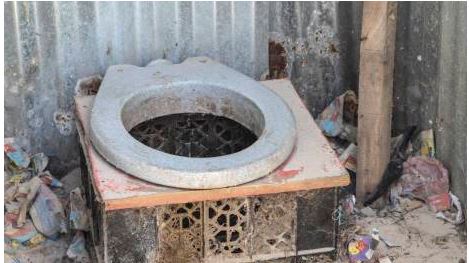
Another child dies using a pit latrine

Thuletho Zwane

“Viwe Jali, another 5-year-old who drowned in a pit toilet in Eastern Cape. The ANC government never learned from Michael Komapi. This is not a government of the people,” wrote Unathi Kwaza on her Twitter timeline.

On Monday, loved ones and school staff looked everywhere for Viwe. Her body lay in a pit latrine overnight at Luna Primary School in Nyaka village, under the Mizize administration in Mbizana municipality, Eastern Cape. She was only found on Tuesday.

Viwe is not the first child to die this way. Michael’s lifeless body was discovered by his mother on January 20, 2014. His hand protruded from a pool of human excrement in one of the pit latrines at Mahlodumela Lower Primary School in Chebeng Village, Polokwane.

The school principal had written numerous letters to the Department of Education in Limpopo asking for new toilets to be built for safety reasons.

The letters went unanswered.

Equal Education wrote that over 9000 schools in South Africa use pit latrines. The organisation said that these were the only forms of toilets at these schools.

They posed the following question to the Department of Basic Education: “For how long must we wait for you to demonstrate the urgency and commitment required to fix the Norms, and to fix our schools.”

On Wednesday, Equal Education and Basic Education for All (Befa) took the Department of Basic Education (DBE) to Bisho High Court challenging the school infrastructure law. They, represented by the Equal Education Law Centre (EELC) and Section 27 respectively, questioned the constitutionality of regulations put in place by DBE that removes the department from complete responsibility.

These regulations were put in place in November 2013 and only prescribe the minimum requirements for safe and adequate school infrastructure, in line with the learners’ right to basic education. However, Befa and Equal Education make the case that schools must have decent toilets, electricity, water, fencing, classroom numbers, libraries, laboratories and sports fields.

“The school infrastructure law is also at the moment being used to avoid responsibility. This court case is about fixing the unconstitutional loopholes and gaps in the Norms law,” said Equal Education.

The organisation said they have been trying to engage the Minister of Basic Education, Angie Motshekga, for two years.

“This matter did not have to go to court. For two years we attempted to engage directly with Minister Motshekga to #FixTheNorms. Why does government want to avoid clear timelines and plans for fixing schools,” said the organisation.

Now another child has died.

NGO Section 27’s head of education Faranaaz Veriava said incidents like these [the deaths of Viwe and Michael] were one of the reasons the country needs proper, binding infrastructure norms and standards.

Campaign Manager for #FreePadsforDignity Tumelo McXhanko places the blame squarely on Motshekga: “Ms Angie Motshekga should be accountable for the death of #ViweJali,” he wrote on his Twitter timeline.

Angry activist calls on Minister Angie Motshekga to fix school toilets before another child dies

Viwe’s father, Vuyani Mkhethwa, said the family was not coping. “We do not understand how this happened.”

Mkhethwa said he last saw his daughter on Monday morning as she was leaving for school. He said her teacher told him she was last seen at 1pm just before school ended at 1.30pm.”

This is why Equal Education said it wants government to commit to meeting the school infrastructure targets that it has set for itself. We want the State to deliver on the basic school infrastructure needed to fulfill the rights to dignity, equality, education, and the best interests of the child.

Motshekga and her department released statement of Viwe’s passing on Thursday. The minister said the death of a child in such an undignified manner is completely unacceptable, and incredibly disturbing.

She said the Eastern Cape had already exhausted its maintenance budget, however, counselling services were being provided to the school, and a case has been opened with the local police station, at the Mzamba Police Station.

“Investigations are proceeding into the circumstances surrounding Jali’s [Viwe] death. The department is doing everything in its capacity to address infrastructure backlogs in a timely manner by prioritising unsafe structures and those without decent sanitation, electricity and water,” she said.

Motshekga said her ministry holds bi-weekly meetings with implementing agents and the infrastructure team will ensure that infrastructure targets are prioritised.

Motshega said her department  introduced a 12% minimum budget for each province to be dedicated to maintenance. It took this step to compel provinces to set aside funding for maintenance because some provinces were not budgeting for it and letting schools become dilapidated over time.

Equal Education said the department’s response was not good enough.

“We still see too many schools with pit latrines, mud walls, and asbestos ceilings. And we still see schools with unreliable supplies of water and electricity. Schools must be properly fixed, and learners cannot wait indefinitely for basic infrastructure. That is why we are now back in court,” said Equal Education.


Ancient Tswana ruins: a lost African city recreated with laser technology

Karim Sadr

There are lost cities all over the world. Some, like the remains of Mayan cities hidden beneath a thick canopy of rainforest in Mesoamerica, are found with the help of laser lights.

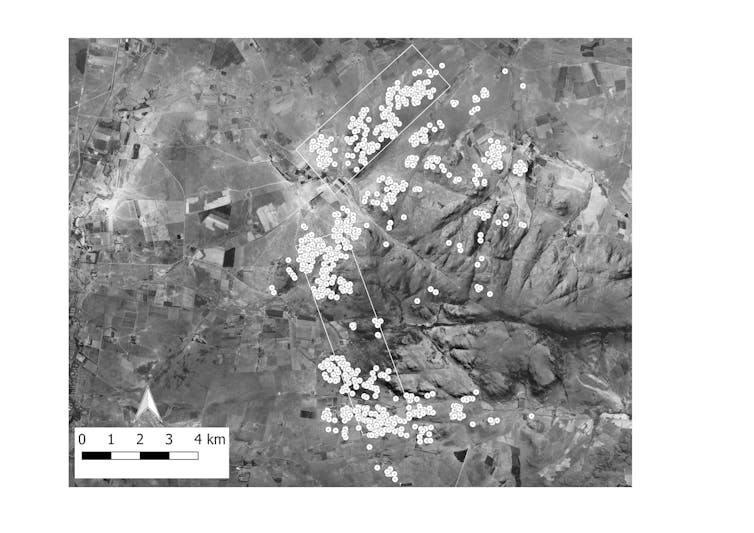
Now the same technology which located those Mayan cities has been used to rediscover a southern African city that was occupied from the 15th century until about 200 years ago. This technology, called LiDAR, was used to “redraw” the remains of the city, along the lower western slopes of the Suikerbosrand hills near Johannesburg.

It is one of several large settlements occupied by Tswana-speakers that dotted the northern parts of South Africa for generations before the first European travellers encountered them in the early years of the nineteenth century. In the 1820s all these Tswana city states collapsed in what became known as the Difeqane civil wars. Some had never been documented in writing and their oral histories had gone unrecorded.

Four or five decades ago, several ancient Tswana ruins in and around the Suikerbosrand hills, about 60 kilometres south of Johannesburg, had been excavated by archaeologists from the University of the Witwatersrand. But from ground level and on aerial photos the full extent of this settlement could not be appreciated because vegetation hides many of the ruins.

But LiDAR, which uses laser light, allowed my students and I to create images of the landscape and virtually strip away the vegetation. This permits unimpeded aerial views of the ancient buildings and monuments.

We have given the city a generic placeholder name for now – SKBR. We hope an appropriate Tswana name can eventually be adopted.

Bringing the city to life

Judging by the dated architectural styles that were common at SKBR, it’s estimated that the builders of the stone walled structures occupied this area from the fifteenth century AD until the second half of the 1800s.

The evidence we gathered suggests that SKBR was certainly large enough to be called a city. The ancient Mesopotamian city of Ur was less than 2km in diameter while SKBR is nearly 10km long and about 2km wide.

The ancient homesteads at Suikerbosrand are shown against an aerial photograph from 1961. The two rectangles show the footprint of the LiDAR imagery. Karim Sadr

It is difficult to estimate the size of its population. Between 750 and 850 homesteads have been counted at SKBR, but it’s hard to tell how many of these were inhabited at the same time, so we cannot easily estimate the city’s population at its peak.

Given what we know about more recent Tswana settlements, each homestead would have housed an extended family with, at the least, the (male) head of the homestead, one or more wives and their children.

Many features of the built environment at SKBR seem to signal the wealth and status of the homesteads or suburbs that they are associated with. For example, parallel pairs of rock alignments mark sections of passageways in several different parts of the city.

South African archaeologist Professor Revil Mason, who has carried out a great deal of research on stone walled ruins around Johannesburg, called these features cattle drives, built to funnel the beasts along certain routes through the city.

If these were cattle drives the width and location of these passageways would have signalled the livestock wealth of the ward or homestead that constructed them, even when the cattle were not present.

In the central sector of SKBR there are two very large stone walled enclosures, with a combined area of just under 10, 000 square meters. They may have been kraals and if so they could have held nearly a thousand head of cattle.

Monuments to wealth

Among the largest features of the built environment at SKBR are artificial mounds composed of masses of ash from cattle dung fires, mixed with bones of livestock and broken pottery vessels. All this material appears to have been deliberately piled up at the entrance to the larger homesteads.

These are the remains of feasts and the ash heaps’ size publicised the particular homestead’s generosity and wealth. The use of refuse dumps as landmarks of wealth and power is known from other parts of the world, like India, as well. Even the contemporary gold mine dumps of Johannesburg can be seen in this light.

Other monuments to wealth and power at SKBR include a large number of short and squat stone towers – on average 1.8 – 2.5 metres tall and about 5 metres wide at their base. The homesteads with the most stone towers tend to also have unusually large ash heaps at their entrance. The practical function of the towers isn’t known yet: they may have been the bases for grain bins, or they may mark burials of important people.

It will take another decade or two of field work to fully understand the birth, development and ultimate demise of this African city. This will be done through additional coverage with LiDAR, intensive ground surveys as well as excavations in selected localities.

Ideally, the descendants of those who built and inhabited this city should be involved in future research at this site. Some of my postgraduate students are already in contact with representatives of the Bakwena branch of the Tswana who claim parts of the landscape to the south of Johannesburg. We hope that they will actively become involved in our research project.

Karim Sadr is Professor Geography, Archaeology and Environmental Studies, University of the Witwatersrand

Read original article here

Stephen Hawking: Martin Rees looks back on colleague’s spectacular success against all odds

Martin Rees

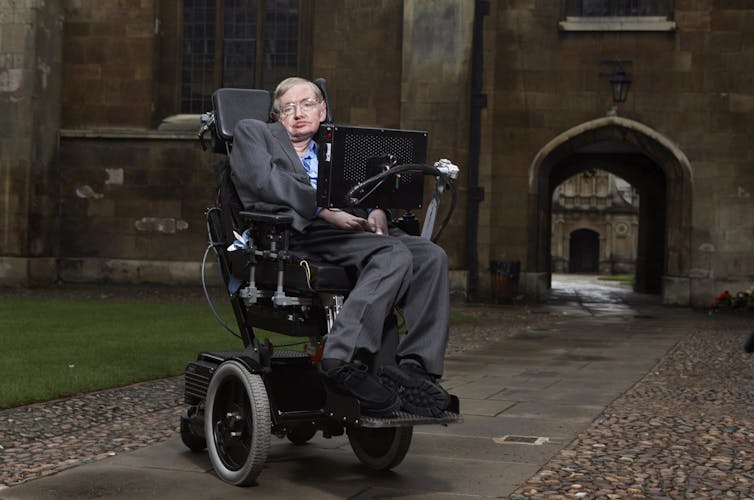
Soon after I enrolled as a graduate student at Cambridge University in 1964, I encountered a fellow student, two years ahead of me in his studies, who was unsteady on his feet and spoke with great difficulty. This was Stephen Hawking. He had recently been diagnosed with a degenerative disease, and it was thought that he might not survive long enough even to finish his PhD. But he lived to the age of 76, passing away on March 14, 2018.

It really was astonishing. Astronomers are used to large numbers. But few numbers could be as large as the odds I’d have given against witnessing this lifetime of achievement back then. Even mere survival would have been a medical marvel, but of course he didn’t just survive. He became one of the most famous scientists in the world – acclaimed as a world-leading researcher in mathematical physics, for his best-selling books and for his astonishing triumph over adversity.

Perhaps surprisingly, Hawking was rather laid back as an undergraduate student at Oxford University. Yet his brilliance earned him a first class degree in physics, and he went on to pursue a research career at the University of Cambridge. Within a few years of the onset of his disease, he was wheelchair-bound, and his speech was an indistinct croak that could only be interpreted by those who knew him. In other respects, fortune had favoured him. He married a family friend, Jane Wilde, who provided a supportive home life for him and their three children.

Early work

The 1960s were an exciting period in astronomy and cosmology. This was the decade when evidence began to emerge for black holes and the Big Bang. In Cambridge, Hawking focused on the new mathematical concepts being developed by the mathematical physicist Roger Penrose, then at University College London, which were initiating a renaissance in the study of Einstein’s theory of general relativity.

Using these techniques, Hawking worked out that the universe must have emerged from a “singularity” – a point in which all laws of physics break down. He also realised that the area of a black hole’s event horizon – a point from which nothing can escape – could never decrease. In the subsequent decades, the observational support for these ideas has strengthened – most spectacularly with the 2016 announcement of the detection of gravitational waves from colliding black holes.

Hawking at the University of Cambridge. Lwp Kommunikáció/FlickrCC BY-SA


Hawking was elected to the Royal Society, Britain’s main scientific academy, at the exceptionally early age of 32. He was by then so frail that most of us suspected that he could scale no further heights. But, for Hawking, this was still just the beginning.

He worked in the same building as I did. I would often push his wheelchair into his office, and he would ask me to open an abstruse book on quantum theory – the science of atoms, not a subject that had hitherto much interested him. He would sit hunched motionless for hours – he couldn’t even to turn the pages without help. I remember wondering what was going through his mind, and if his powers were failing. But within a year, he came up with his best ever idea – encapsulated in an equation that he said he wanted on his memorial stone.

Scientific stardom

The great advances in science generally involve discovering a link between phenomena that seemed hitherto conceptually unconnected. Hawking’s “eureka moment” revealed a profound and unexpected link between gravity and quantum theory: he predicted that black holes would not be completely black, but would radiate energy in a characteristic way.

This radiation is only significant for black holes that are much less massive than stars – and none of these have been found. However, “Hawking radiation” had very deep implications for mathematical physics – indeed one of the main achievements of a theoretical framework for particle physics called string theory has been to corroborate his idea.

Indeed, the string theorist Andrew Strominger from Harvard University (with whom Hawking recently collaborated) said that this paper had caused “more sleepless nights among theoretical physicists than any paper in history”. The key issue is whether information that is seemingly lost when objects fall into a black hole is in principle recoverable from the radiation when it evaporates. If it is not, this violates a deeply believed principle of general physics. Hawking initially thought such information was lost, but later changed his mind.

Hawking continued to seek new links between the very large (the cosmos) and the very small (atoms and quantum theory) and to gain deeper insights into the very beginning of our universe – addressing questions like “was our big bang the only one?”. He had a remarkable ability to figure things out in his head. But he also worked with students and colleagues who would write formulas on a blackboard – he would stare at it, say whether he agreed and perhaps suggest what should come next.

He was specially influential in his contributions to “cosmic inflation” – a theory that many believe describes the ultra-early phases of our expanding universe. A key issue is to understand the primordial seeds which eventually develop into galaxies. Hawking proposed (as, independently, did the Russian theorist Viatcheslav Mukhanov) that these were “quantum fluctuations” (temporary changes in the amount of energy in a point in space) – somewhat analogous to those involved in “Hawking radiation” from black holes.

He also made further steps towards linking the two great theories of 20th century physics: the quantum theory of the microworld and Einstein’s theory of gravity and space-time.

Declining health and cult status

In 1987, Hawking contracted pneumonia. He had to undergo a tracheotomy, which removed even the limited powers of speech he then possessed. It had been more than ten years since he could write, or even use a keyboard. Without speech, the only way he could communicate was by directing his eye towards one of the letters of the alphabet on a big board in front of him.

But he was saved by technology. He still had the use of one hand; and a computer, controlled by a single lever, allowed him to spell out sentences. These were then declaimed by a speech synthesiser, with the androidal American accent that thereafter became his trademark.

His lectures were, of course, pre-prepared, but conversation remained a struggle. Each word involved several presses of the lever, so even a sentence took several minutes to construct. He learnt to economise with words. His comments were aphoristic or oracular, but often infused with wit. In his later years, he became too weak to control this machine effectively, even via facial muscles or eye movements, and his communication – to his immense frustration – became even slower.

At the time of his tracheotomy operation, he had a rough draft of a book, which he’d hoped would describe his ideas to a wide readership and earn something for his two eldest children, who were then of college age. On his recovery from pneumonia, he resumed work with the help of an editor. When the US edition of A Brief History of Time appeared, the printers made some errors (a picture was upside down), and the publishers tried to recall the stock. To their amazement, all copies had already been sold. This was the first inkling that the book was destined for runaway success, reaching millions of people worldwide.

And he quickly became somewhat of a cult figure, featuring on popular TV shows ranging from the Simpsons to The Big Bang Theory. This was probably because the concept of an imprisoned mind roaming the cosmos plainly grabbed people’s imagination. If he had achieved equal distinction in, say, genetics rather than cosmology, his triumph probably wouldn’t have achieved the same resonance with a worldwide public.

As shown in the feature film The Theory of Everything, which tells the human story behind his struggle, Hawking was far from being the archetype unworldy or nerdish scientist. His personality remained amazingly unwarped by his frustrations and handicaps. He had robust common sense, and was ready to express forceful political opinions.

However, a downside of his iconic status was that that his comments attracted exaggerated attention even on topics where he had no special expertise – for instance, philosophy, or the dangers from aliens or from intelligent machines. And he was sometimes involved in media events where his “script” was written by the promoters of causes about which he may have been ambivalent.

Ultimately, Hawking’s life was shaped by the tragedy that struck him when he was only 22. He himself said that everything that happened since then was a bonus. And what a triumph his life has been. His name will live in the annals of science and millions have had their cosmic horizons widened by his best-selling books. He has also inspired millions by a unique example of achievement against all the odds – a manifestation of amazing willpower and determination.

Martin Rees is Emeritus Professor of Cosmology and Astrophysics, University of Cambridge

I had to repeat grade ten because of Metrorail

Tariro Washinyira

Cape Town’s Metrorail poor service is responsible for learners arriving late to school; the disruption of classes; learners missing and failing exams and even those very learners getting robed on their way home from school.

Last week, learners gathered at Thandokhulu High in Mowbray to share their experiences of using Metrorail trains to commute to school.

Youth groups of grade eight to eleven learners, known as equalisers, from Walmer, Oakland, Salt River and Thandokhulu high schools voiced their dissatisfaction with Metrorail.

A learner from Thandokhulu said she was angry.

“I used to take a train from Heideveld to Salt River on the Central line … Trains were always delayed, cancelled, and I was always late for school.”

“Even though I had bought a weekly ticket for R50 I sometimes had to take a bus. I was absent from school numerous times because there were no trains at all, ” she said.

The learner added that she even missed some of her exams or arrived very late to an exam venue. As a result of this, she failed the tenth grade and had to repeat it.

She also mentioned the issue of robberies on trains.

“I never took any valuables to school because trains are not safe; commuters get robbed on the train,” she said

A grade eight learner at Walmer High, who travels from Langa, said he was regularly late for school.

“The teacher doesn’t shout, but I have to pay a R5 fine. If I do not have it, I have to stay behind and clean,” he said.

The learner said Metrorail used to give them letters showing that trains were delayed but it soon lost meaning because they, the learners, were late every day.

“I feel like it’s not my fault that I am late. I do not deserve to be punished. I wake up very early but sometimes the trains are cancelled. When they do come they are too full. And they get stuck. Then I have to wait sometimes 30 minutes or an hour for it to move again. Then, when I am finally dropped off at Woodstock, I have to walk for about 30 minutes to reach my school,” he said.

A 13-year-old learner at Salt River High, who travels from Crossroads also shared their story.

“Teachers question why I am late every day, why I don’t get up early. They don’t believe my story that trains get stuck on the way. They ask why I then don’t use a bus or taxis, but my family can only afford the train,” said the learner.

The learner said: “The class teacher called my mother and asked to make a plan that allows me to be at school on time or find another school in the area where I live. My parents are very worried about me walking alone as early as 6 am to catch the train.”

Spokesperson for the Western Cape Education Department Jessica Shelver said the department had asked Metrorail to address the issues urgently.

“Metrorail needs to be questioned in terms of their plans to address these issues that are greatly impacting the lives of people in the Western Cape especially disadvantaging our learners,” said Shelver.

She said schools would accommodate learners as far as possible in terms of late coming and give catch up programmes as required.

A month agoe, Metrorail spokesperson Riana Scot said: “Like motorists, train users will unfortunately have to rise earlier to get to work or school on time.”

Equal Education Law Centre intends to build a case with the learners’ testimonies and take Metrorail to court.

Read the original story here

Equal Education in court against Motshekga over broken schools

0

Mary-Anne Gontsana

Learners and members of Equal Education gathered outside the Bhisho High Court on Wednesday with banners that read: “No more broken promises”.

They were demanding infrastructure plans to prioritise the Eastern Cape’s “forgotten schools”. A huge plastic doll satirised the Minister of Basic Education, Angie Motshekga, listing broken promises to fix schools.

The court case is part of Equal Education’s #FixOurSchools campaign.

The Department of Basic Education set out regulations for norms and standards for school infrastructure on 29 November 2013. These regulations set a deadline of 29 November 2016 for the replacement of schools made of inappropriate and often unsafe structures, and the provision of basic levels of water, sanitation and electricity in schools.

Equal Education had campaigned for these regulations and welcomed them: “For the first time, South Africa had a piece of law which said that a school must have decent toilets, electricity, water, fencing, classroom numbers, libraries, laboratories and sports fields. “

But the department did not meet the deadline. Equal Education says the regulations are now being used to avoid responsibility. It wants the court to address four problems:

  • An escape clause in the regulations says the education department “is only responsible for the fixing of schools to the extent that other parts of the State (such as Eskom or Public Works) cooperate and make resources available.” Equal Education wants this set aside.
  • The wording of the regulations apparently means that the department is only obliged to fix schools made entirely out of mud, wood, zinc, or asbestos. “This means that if an otherwise entirely inappropriate school has even one structure made of proper building materials, a brick toilet block, for example, government may ignore its duty. The law needs to be tightened so that these schools are fixed urgently,” explained an Equal Education statement.
  • The regulations do not allow for sufficient accountability, including making regular reports available to the public.
  • Some schools, already scheduled to be built, were excluded from the regulations.

Advocate Geoff Budlender for Equal Education began with testimonials from teachers and students from various schools describing dilapidated classrooms and appalling conditions under which children are expected to learn.

“If a child does not get basic education today, that is a breach of the Constitution,” said Budlender. He said the right to basic education includes the provision of furniture in school, transport to and from school. And if learners could not access services at school like toilets or water, then that undermined the importance of basic education.

“We make the obvious submission that there is one national government. The Minister bears a constitutional obligation as minister and also a representative of the national government to fix the norms and fulfil Section 29 of the Constitution,” he said.

Advocate Nikki Stein for SECTION27 representing Basic Education for All, which has been admitted as a friend of the court, told the court that there are thousands of schools across the country with infrastructure that is unsafe and inadequate.

“This case is not about the individual circumstances of each of these schools per se. It’s about the regulations that the minister has passed.”

Advocate Chris Erasmus for the state said Motshekga should not be second-guessed and that provinces had budgetary limitations.

He said it was “common cause” that the duty to implement the norms and standards was “subject to the resources and cooperation of other government agencies and entities responsible for infrastructure”.

Erasmus said Motshekga could not speak for other departments or ministers; these included the Minister of Public Works being responsible for infrastructure of the state in general, the Minister of Water and Sanitation being responsible for infrastructure relating to water and sanitation, and the Minister of Energy being responsible for the provision of electrical infrastructure.

“None of these entities have been cited as respondents, despite a list of other respondents having been identified as necessary parties,” said Erasmus.

The case continues on Thursday.

Read the original article here

#LearnerMisconduct: Is institutional racism at play at Three Rivers Secondary School

Thuletho Zwane

A short video made rounds on social media on Thursday. It shows a young learner sitting at her desk and looking at her book. She suddenly stands up, walks to the front of the class and hurls her book at her teacher.

This is followed by a mix of laughter and shock from her classmates.

The incident took place at Hoërskool Drie Riviere in Three Rivers, Vereeniging.

On Monday, the MEC for Gauteng Education, Panyaza Lesufi, told the media that the learner had been suspended.

“The school has issued the letter to suspend the learner. We have asked the SGB [School Governing Body] to meet with the parents to plan for the disciplinary hearing.”

“But the learner must not be disadvantaged with her academic studies,” said Lesufi.

He added that while the disciplinary hearing was is in progress, the student will continue to receive study material and support.

Lesufi went on to say, “If the learner is expelled [by the SGB], the parents have the right to come to me and appeal the decision.”

To him, the teacher was the victim, not the learner.

He shares the same sentiments with the South African Democratic Teachers’ Union (Sadtu). They also commented on the issue, condemning the learner’s behaviour as violent. In a statement released on Sunday, the union commended the teacher for having acted in a very professional manner against extreme provocation by the learner.

The union said: “It is our strong view that irrespective of whatever the circumstances that might have led the learner to react in that manner, she had no right to threaten the teacher and expose her to that kind of violence. Being an educator must never be viewed as a dangerous profession if we are to reach our developmental goals as a country utilising education as the main tool.”

Lesufi told the media he had met with the educator, whom he referred to as a “shy person”.

“I feel that she is committed to teaching and education. The mere fact that she is here and still teaching shows commitment. I salute her,” said Lesufi.

The MEC said the learner had committed a very serious offence.

He said he, together with his department,  Hoërskool Drie Riviere’s SGB and the school management, had had to act decisively but did so within the confinements of the law.

“We don’t need to prejudge and preempt,” he told the media.

However, the 17 seconds video clip does not show what happened before the incident nor does it properly capture learner experience at Hoërskool Drie Riviere in the Vaal Triangle.

For one, the sound in the video is not clear.

Soon after, another video made rounds on social media showing the young learner in tears and being consoled by her classmates.

Political commentator and analyst Siyabonga Hadebe said these kinds of quick talk shops aren’t enough to understand daily learner experience at these former Afrikaans schools.

“I have taken issue with the way this young learner in the Vaal has been portrayed. The teacher has been shown as the victim of an unruly and uncultured black child. People have said this is not a racial matter since it’s a black child attacking the teacher, but that is because race relations are complex,” said Hadebe.

“I went to the University of Pretoria where you are systematically oppressed and abused. And when you react, you become the problem,” he said.

Hadebe said learners at these former model c schools and former white Afrikaner schools are often left by their parents with the hope of a attaining better education for their children. These kids have had to fend for themselves and fight in order to survive.

In fact, these kids are not welcome in these schools. We saw with Overvaal and how the MEC [Lusufi] lost out to these enclaves that are the white school governing bodies who dictate to government what can and not be done, said Hadebe.

Hoërskool Overvaal witnessed several violent protests in January when the African National Congress (ANC) and affiliated teacher unions accused the Vereeniging school’s governing body of racism. The school refused an instruction by the Gauteng Education Department to accept 55 English-speaking pupils. The school said it had no capacity to admit the learners‚ and could not set up a parallel stream in the timeframe it was given by the department. Its decision was backed by the High Court.

The learner’s parents also feel the situation should be holistically considered. They believe that the recorded incident was a result of a culmination of events that have not been captured by those quick to condemn their child.

Lesufi told the media that even though the learner’s parents acknowledged that their daughter’s behaviour was wrong, they believe their child was provoked.

“They said their child was not fairly treated. They agreed that their daughter was wrong in attacking her teacher and welcomed the intervention by Gauteng Education, however, they said the provocation must also be looked into,” Lesufi said.

When asked if the department has evidence of racism and anti-black behaviour at the school, Lesufi referred the media to three videos he and the SGB have as evidence of the incident.

“We have access to three videos that filmed the event of last Thursday. You would not believe the kinds of words the learner said. I cannot go into detail or share the video with you,” he said.

Lesufi told the media that the department was making available their psycho social services to the learner, her classmates and the teacher involved.

He said his department had to meet with educators and assure them they are in charge of their classrooms.

“If we can’t assure them then there will be no learning in the province. When it comes to these kinds of areas we want to say, ‘If you do something right, we will cover your back’. We believe the teacher behaved well under extreme provocation. There must be no grey area of support,” he said.

There are others who do not have faith in SGB’s at these white schools. Hadebe does not believe the SGB will do justice to the learner’s case.

“The SGB consists of the same problematic voices that maintain the current status quo at these schools. A historical analysis of the situation would have to be made. It is important we know of former and current black learners experience,” said Hadebe.

The one thing that everyone seemed to agree on was the need to install cameras, CCtv security and biometrics at schools.

“I know schools should be a place where children should be free and not a military camp. But unfortunately, we can’t ignore the realities we are in: crime, violence, other things,” said Lesufi.

Three major mistakes Tiger Brands made in response to the listeriosis crisis

Ilse Struweg

Tiger Brands, the South African food giant at the centre of the listeriosis storm engulfing the country, is facing serious brand erosion as a result of the way it handled the unfolding crisis.

It could have responded better.

Tiger Brands was thrown into the centre of the listeriosis storm after South Africa’s National Institute for Communicable Diseases announced that its investigation had traced the origins of the disease to one of the company’s biggest meat processing plants. The culprit was identified as polony from the Enterprise Foods facility that produces a range of cold meats. Tiger Brands, a $2.5 billion Johannesburg Stock Exchange listed business, owns Enterprise Foods among other continent wide popular food brands.

South Africa has been struggling with the listeriosis outbreak for 14 months. Unable to find the source of the affected products, the outbreak developed into the worst case of listeriosis in the world. By the end of February 2018, health authorities had confirmed 948 cases with 180 fatalities.

The repercussion was always going to be unforgiving. But Tiger Brands has not helped the situation. It has overlooked a number of the accepted protocols of handling a crisis of this nature. As a result, the company’s brand equity is taking serious strain.

The brand erosion

Tiger Brands compromised its brand equity in three key areas.

South African retailers have had to remove processed meat from Enterprise Food to deal with the listeriosis outbreak. EPA/Nic Bothma

Response speed: An organisation’s survival in a crisis, particularly when lives are at risk, depends enormously on the speed of its responses.

Tiger Brands could have been more rapid in its responses. The source of the listeriosis outbreak was announced by South Africa’s Health Minister, Aaron Motsoaledi, at midday on Sunday 4 March 2018. He announced that Tiger Brands had been issued with safety recall notices. But the company only held a media briefing a day later. Given that the minister would have given the company advanced warning (even before the official media briefing), its response was far too slow.

Continued strategic engagement: Since the media conference, the company has engaged in very limited meaningful communication that would have helped it reclaim some brand equity. Organisations need to understand that in a crisis, they are competing with every form of media – including social media – to tell their story.

If organisations don’t keep engaging with stakeholders, others in the media fill the vacuum. It also leaves the door wide open for speculation and innuendo.

The lack of engagement inevitably raises concerns about how transparent the company has been in handling this crisis.

Compassion: In its scant communication Tiger Brands failed to show compassion – an essential ingredient for navigating a crisis of this magnitude. Unless the organisation acknowledges how its audience is feeling, which Tiger Brands failed to do, any organisation in crisis is fighting an uphill battle. The company’s lack of compassion meant that the company came across as cold and unsympathetic. By showing compassion, an organisation creates a bond and puts audiences in a receptive state, key components to any successful communication.

Tiger Brands will be remembered for trying to deny responsibility and refusing to apologise. This impression was created by ill-advised comments made by the company’s CEO Lawrence MacDougall when he was grilled by journalists. In one response he said:

There has been no direct correlation between our products and the deaths yet, so we are unaware of any direct link.

The fact that the crisis had led to 180 deaths called for a dose of compassion, not a defensive response.

What now for Tiger Brands?

Tiger Brands will have to embark on serious brand rehab. To achieve that it will have to be totally transparent in the management of the crisis, engage strategically with stakeholders and be mindful of the tone of its engagement. The company will have to become more visible and must be seen to be a critical part of solutions.

But it’s also important to point out that the listeriosis crisis goes beyond Tiger Brands. It isn’t just a crisis for the company. The outbreak has had a major impact on food outlets – big and small – in the country. It has also affected companies and consumers beyond South Africa’s borders, so much so that the crisis could do long lasting damage to the country’s cold meats industry.

All stakeholders related to the listeriosis crisis, including the South African government, the National Institute for Communicable Diseases and the processed meat industry, should step away from trying to face the crisis on their own. They should also stop trying to shift responsibility. Instead they should think of working together.

This calls for a completely different approach to brand rehab after a crisis. It calls for a systems approach that envisages all the affected parties understanding that they are inter connected. In a cooperative, integrated system like this the equity of the one organisation’s brand is linked with the equity of other brands and institutions in the system.

South Africa needs to take a more collective approach if it’s going to deal with the crisis effectively.

Ilse Struweg is Associate Professor in the Department of Marketing Management at the University of Johannesburg, University of Johannesburg

Find the original article here

Hungry children can’t concentrate in class

Tiger Brands Foundation

Breakfast remains the most important meal of the day. In a nation constantly plagued by lifestyle related illnesses such as obesity, heart disease, malnutriton and diabetes;  the importance of proper nutrition can no longer be ignored.

Children capture the most information during their school years. These are their formative years, and what is formed here goes on to create the grown up.

However, children in vulnerable areas often struggle to concentrate in class due to hunger and fear of food insecurity. Nutrition and a grasp on its importance during these years is a great stepping stone for health and a brighter future.

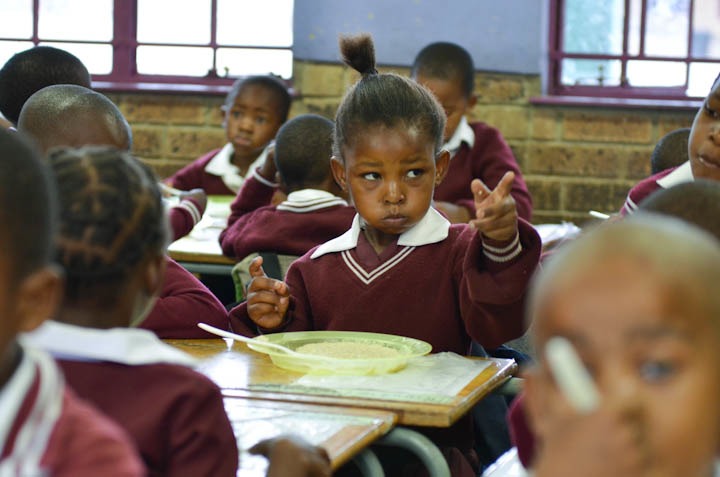
The Tiger Brands Foundation (TBF), through it’s nutrition drive; the in-school breakfast programme, has been serving hot meals at 92 beneficiary schools across the country since 2011 in partnership with the Department of Basic Education (DBE). This complements the department’s National School Nutrition Programme. These meals are prepared at school and served to learners in their classrooms before the start of the school day.

Our vision from the onset was to find a solution to the issue of poor nutrition and its impact on South Africans. The Foundation believes helping to tackle this issue has a positive ripple effect on health, education and the economy in the long-run.

The practical intervention, by means of a healthy and nutritious hot breakfast every school day makes learning enjoyable and impactful for learners who would otherwise be sent to school without any food.  A child who can concentrate on learning and not on their hungry stomach has the power to stop the cycle of poverty through education.

Today the programme feeds 64 080 plus learners daily. It  does not only put an end to a succession of  malnutrition but it also delivers life changing educational tools to schools, learners and parents.

In an effort to involve the family unit in nutritional education, once a year the Foundation takes the programme out of the school and into the home by distributing food hampers to families in various communities during school holidays.

“Many learners come back from the long holidays malnourished because of food insecurity in their community, so we provide food hampers that cover the most basic nutritional needs of a family of four to six people for two or three weeks,” says the Foundation’s executive director Eugene Absolom.

Absolom says the programme is continuing to change people’s lives across the nine provinces. “It has provided jobs for people in various communities; it has opened dialogue in schools, families and amongst learners around the importance of good nutrition; and most importantly it has transformed schools into dynamic and vibrant places of learning,” says Absolom adding that this creates safe learning atmospheres for the children.

The programme is bigger than the delivery of food to the learner, thus far it has built 33 school kitchens and repaired others in order for these meals to be prepared in a more hygienic environment. Five more kitchens are currently under construction. It also assists in the employment of over 360 food handlers at the schools.

Absolom says that the DBE-employed food handlers are parents from schools surrounding communities and their tasks include preparation, cooking and serving breakfast daily.

“In keeping with our education, the food handlers are provided with denim aprons and mop hats and they receive training in food storage, hygiene and preparation,” he says.

“We have also developed a risk management and quality framework that enables quality food products to move from the point of manufacture, to school kitchens, and ultimately into the stomachs of learners’, with minimal risk of non-delivery or food contamination.”

Independent studies done in collaboration with the University of Johannesburg have indicated that absenteesim in schools where the programme is active, has dropped. This has led to improved educational outcomes.

Law enforcement agencies have also reported that there is a drop in petty crimes in the areas where the programme has been implemented because learners are in school instead of roaming the streets, says Absolom.

Having identified nutrition as a major change agent for society Absolom says the programme’s vision has the learner at its centre.

“Ultimately, we would like to see every child receive breakfast so that their future is not compromised by lack of proper nutrition. We would like to see the complete eradication of stunting, obesity and other health challenges that are a result of poor nutrition. We would also like to see young learners perform well in school and where nutrition plays a role in improving educational outcomes.”

However, he says this needs other organisations to come to the party as TBF on its own cannot fulfill the needs of the entire nation.