Home Blog Page 522

How corrupt local officials kill decent education in Africa

Maty Konte

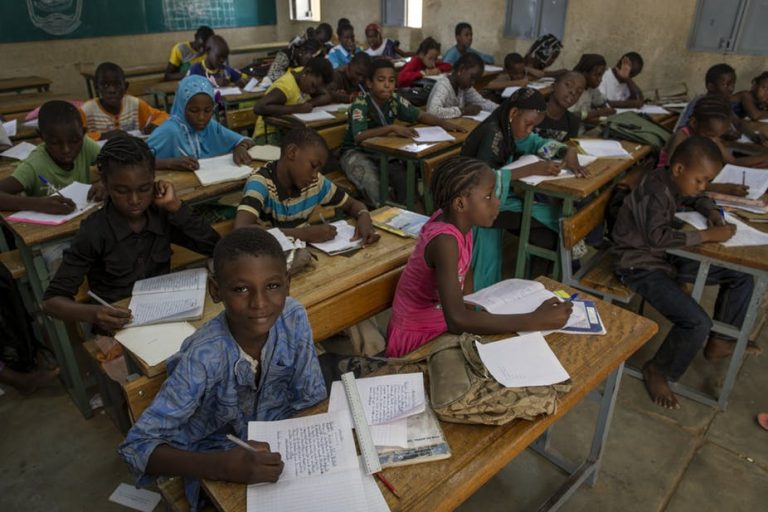
There’s no disputing that many African countries’ education systems are in trouble. Despite significant investment and some improvementslinked to the push to achieve the Millennium Development Goals, children in large parts of Africa are simply not being well taught or learning what is needed as they progress through the school system.

A lot of the discussion around this problem centres on resources: people argue that teachers must be trained better. More money must be spent. This is, of course, correct.

And governance is sometimes discussed, though mostly only as it relates to central governments and their responsibilities. But the quality of local governance matters, too. Local governments – those at a regional, provincial level, district or village level – are closer to communities. They are more likely to understand particular populations’ needs. At a practical level, they are often in charge of providing or distributing goods and services. In education this would mean textbooks, furniture and repairs to classrooms.

This suggests that local governance can have a real effect – positive or negative – on the quality of learning resources in a community and, by association, on how children perform?

I set out to explore this effect by using a series of surveys conducted by Afrobarometer in 33 African countries. This is an independent and non-partisan research network which conducts nationally representative surveys in Africa measuring public attitudes on economic, political and social matters. More than 50,000 citizens have been interviewed in the selected surveys I used for this study.

My study showed a strong link between the quality of local governance and the quality of the educational resources in Africa’s public schools.

In fact, I found that corrupt behaviour by local government councillors increased the likelihood that schools would lack textbooks, have poor facilities and overcrowded classrooms, have poor quality of teaching, and would record high levels of teacher absenteeism. This finding stands no matter how much money a particular country’s central government had invested in education.

If Africa is serious about improving its schooling systems (and meeting the Sustainable Development Goal related to education), it must tackle corruption among local councillors.

What the data shows

My research was based on survey data Afrobarometer collected between 2005 and 2013. Some of the questions related to education; others to people’s perceptions of their local government councillors’ performance and ability.

Among the questions about education, interviewees were asked whether they had encountered the following challenges in their local public schools: expensive school fees; lack of textbooks or other learning supplies; poor teaching; teacher absenteeism; overcrowded classrooms; and facilities that were in poor condition.
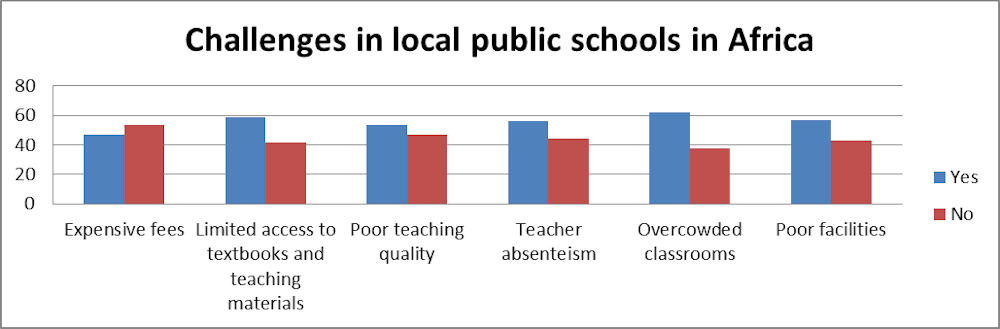
For almost each of the items listed, more than 50% of the respondents had encountered the challenge in the question.

Most interviewees complained particularly about a lack of textbooks and teaching materials; poor teaching quality and teacher absenteeism. These are all key determinants of what students can achieve by the end of an academic year.

A crisis of corruption

Corruption, like low-quality education, is a real problem across Africa. In its 2017 Ibrahim Index of African Governance, the Mo Ibrahim Foundation warned that the level of corruption on the continent had risen between 2007 and 2016.

This is borne out by what interviewees told Afrobarometer in the surveys I studied. More than 80% of those surveyed on the subject said that at least some of their local government councillors were involved in corrupt activities. Less than 10% of those surveyed believed that their local councillors listened to their communities.

Afrobarometer Round 5 (2011 – 2013)

The study shows that a 1% increase in the measure of local government corruption is associated with an increase of about 0.4% to 0.9% in the percentage of people who face poor human or physical school resources in local public schools. This statistical evidence suggests tackling issues in local governance can help education systems in Africa.

And it matters because good local governance can ensure that textbooks and learning materials are available and that they reach the students at public schools. The behaviours and attitudes of local government councillor’s may affect the way public sector employees, like teachers, are hired and treated.

The performance of teachers in public schools depends on many factors, and their degree of accountability depends also on the degree of accountability and responsiveness of those in charge of the management of the schools that include local government councillors.

Taking action

Improving the quality of education systems will have huge benefits for Africa’s present and future generations. Part of this improvement must involve tackling people’s negative perceptions about their local councillors, whether those relate to corruption, effectiveness or responsiveness.

Central governance remains important. It should be coupled with careful plans and actions to fix local governance, make councillors more accountable and ensure they’re providing the services schools need to thrive.

This article was first published by The Conversation Africa
How to encourage literacy in young children (and beyond)

Louise Phillips and Pauline Harris

How can parents best help their children with their schooling without actually doing it for them? This article is part of our series on Parents’ Role in Education, focusing on how best to support learning from early childhood to Year 12.

Literacy involves meaning-making with materials that humans use to communicate – be they visual, written, spoken, sung, and/or drawn. Definitions vary according to culture, personal values and theories.

We look to a broad definition of literacy as guided by UNESCO to be inclusive for all families. Children learn to be literate in a variety of ways in their homes, communities and places of formal education.

What research tells us

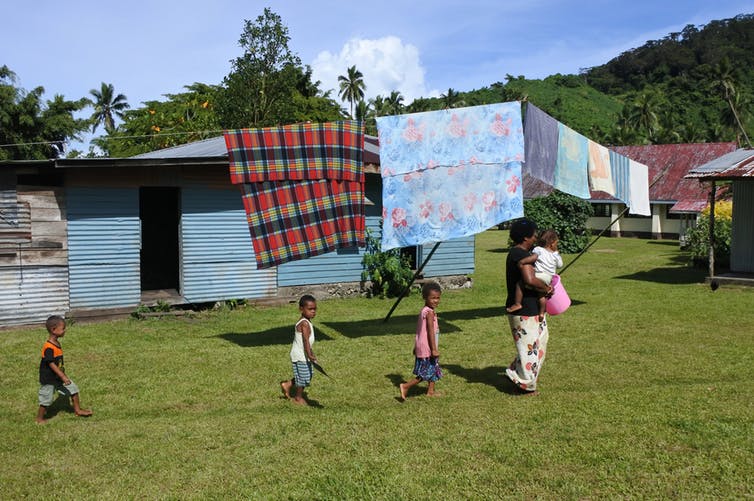
New research in three-to-five-year-old children’s homes and communities in Fiji, has revealed that children’s regular engagement in literacy across many different media has supported good literacy outcomes.

There were ten main ways of engaging in literacy-building activities. These included print and information, communication and entertainment technologies, arts and crafts, making marks on paper, screens and other surfaces like sand and concrete, reading and creating images, and talking, telling and acting out stories that were real or imagined.

Children also engaged with reading, recording and talking about the environment, reading signs in the environment, engaging in music, dance, song and, lastly, with texts and icons of religions and cultures.

These activities were enjoyed and valued by children and their families as part of their everyday lives, and were further bolstered by creating books with children in their home languages and English.

This research can be used to add to our discussions on how parents can help develop their children’s early literacy.

The Melbourne Institute of Applied Economic and Social Research found daily reading to young children improves schooling outcomes, regardless of family background and home environment.

The OECD Program for International Student Assessment (PISA) resultsalso indicate a strong correlation between parents reading and storytelling with children in the early years and reading achievement at age 15, with those students performing one to two years above their peers.

However, it is not just being read to that matters. The adult-child interactions are also very important.

These interactions need to be lively and engage children with the text-in-hand. Alphabet toys and phonics programs alone offer little to develop literacy, as they focus on a code without contextual meaning. Words, and their letters and sounds, are best understood when seen and applied in everyday experiences, driven by children’s motivations.

How to be a talking, reading, writing, viewing, and listening family

There are several practical things parents can do to encourage broad literacy and learning in early childhood years.

  1. Don’t wait. Read what you are reading aloud to your newborn. Children become attuned to the sound of your voice and the tones of the language you speak as their hearing develops.
  2. Share stories at mealtime. Provide prompts like: “Tell us what your teddy did today”. Alternatively, randomly select from ideas for characters, problems, and settings, for example: “Tell us about an inquisitive mouse lost in a library”. Oral storytelling provides a bridge to written stories.
  3. Record on your phone or write down your child’s stories. Turn them into a book, animation, or slide show (with an app). Children will see the transformation of their spoken words into written words. These stories can be revisited to reinforce learning of words, story structure and grammar.
  4. Talk about their experiences. For example, prompt them to describe something they have done, seen, read or heard about. Research shows children’s oral language supports their literacy development, and vice-versa.
  5. Guide literacy in your children’s play, following their lead. For example, help them follow instructions for making something, or use texts in pretend play, such as menus in play about a pizza place. Children will engage with various texts and the purposes they have in their lives.
  6. Books, books, books. For babies and toddlers, start with durable board books of faces, animals and everyday things with few words that invite interactivity (e.g., “Where is baby?”). Progress to more complex picture books with rhyming language. Talk about personal links with the stories and ask questions (such as “I wonder what will happen next or where they went to”) as these will support comprehension. Look to the Children’s Book Council for awarded quality children’s literature.
  7. Talk about words children notice. Be sure the words make sense to children. Talk about what words look like, what patterns, letters and sounds they make. This builds children’s word recognition and attack skills, and understanding of what words in context mean.
  8. Involve your children in activities where you use literacy. For example, if you make shopping lists or send e-cards, your children could help create these with you. Explain what you are doing and invite children’s participation (e.g., “I’m looking at a map to see how to get to your friend’s house”). Children can meaningfully engage with and create texts and see the place these texts have in their lives.
  9. Use community and state libraries. Most offer interactive family literacy programs. Early Years Counts and The Australian Literacy Educators Association has a range of resources for families.

Above all, be sure the experience is enjoyable, playful, and encourages children’s active involvement. Literacy should be engaging for your children, not a chore.

This article was first published on The Conversation Africa


Schooling: what Kenya’s history can teach South Africa

Brian Levy

“Weak governance” is a popular scapegoat for the poor results achieved by South Africa’s education system. And there is no doubt that many aspects of how the education bureaucracy operates are problematic.

But what about setting the scapegoats aside for a moment and seeking solutions? One way to do this is to look elsewhere for inspiration. So, in that spirit, consider Kenya. For much of the half-century since it became independent the East African nation had been an over-performer on the continent in its measured education outcomes.

To get a sense of Kenya’s historical overperformance, consider the 2007 results of standardised tests for sixth graders conducted by the Southern and East African Consortium for Monitoring Educational Quality. Kenya’s average score was 557 points. That’s well above South Africa’s average of 495 points. Kenyan children’s basic literacy and numeracy skills were stronger than South Africa’s.

Kenya has a much lower per capita income than South Africa. In part as a result, its public spending on education per pupil is only one-fifth that of South Africa. Its educational bureaucracy is relatively messy.

Despite all this, as the graph in a more extended discussion underscores, it has historically been an over-performer in southern and eastern Africa, both relative to South Africa and more broadly.

How did this happen? The answer lies with active civic engagement. Kenya’s first president of the independence era, Jomo Kenyatta, championed this in the form of a self-help ethos known as “Harambee” as the pathway to development, including a strong focus on educating the country’s citizenry. For years after his tenure as head of state ended, the principle remained deeply embedded in Kenyan society – and the country’s education system.

There could be valuable lessons here for South Africa. Kenyans believe that fixing education is not someone else’s task or someone else’s failure. It involves active citizenship and proactive engagement at all levels: public officials; principals, teachers and their unions; parents and communities.

Perhaps what South Africa needs now is not a top-down government policy of “education for all” – but rather, “all for education”.

Kenya’s history of Harambee

In an email exchange with me, Dr Ben Piper, a seasoned educational specialist and long-term resident in Nairobi, identified some key things that he finds remarkable in Kenya:

…[I]n rural Kenya there is an expectation for kids to learn and be able to have basic skills … Exam results are far more readily available than in other countries in the region. The ‘mean scores’ for the Kenya Certificate of Primary Education (KCPE) and its equivalent at secondary school are posted in every school and over time so that trends can be seen. Head teachers are held accountable; paraded around the community if they did well, or literally banned from school and kicked out if they did badly.

This sort of accountability and community involvement forms part of the “softer” dimensions of school governance. And the roots of this approach run deep. They were part of the foundational ideas that shaped modern Kenya.

Jomo Kenyatta was a powerful advocate for better quality education. His focus on education persisted during his activist days, through his years in the UK and in his role as director and principal of the Kenya African Teachers’ College, run by the independent schools movement.

He became independent Kenya’s first president in 1963 and immediately offered a vision of a nation imbued with Harambee (“let us pull together”). The country adopted the term as its official national motto. As numerous studies have underscored, engagement with education held pride of place within the Harambee movement.

Harnessing existing structures

The key to turning around South Africa’s education system may be to spend less time deciding who to blame and more seeking out renewed opportunities for engagement.

This wouldn’t involve reinventing the wheel. The country’s institutional framework for education, promulgated in 1996, creates multiple entry points for participation by a variety of stakeholders.

School governing bodies, which consist mostly of parents, can play a central role. These bodies are generally in the news for all the wrong reasons; as tools for elites to keep control of their schools, and as sites of corruption. Indeed, the South African government’s recent Basic Education Laws Amendment proposal, following an investigation of ‘jobs for cash’ scandals in schools, proposed scaling back the authority of school governing bodies.

But, as I’ve written elsewhere, research at school level also shows that school governing bodies can be a source of resilience, including in poor communities.

Perhaps the crucial lesson from Kenya’s history is that our current discourse has it backwards. Fixing education is not someone else’s task, and someone else’s failure. Active citizenship implies pro-active engagement at all levels – by public officials, by principals and teachers (and their unions), by parents and communities.

If South Africa is willing to learn from Kenya, what is called for now is not another top-down “education for all” target from government –- but rather “all for education”.

This article was first published on The Conversation Africa

Here’s why all parents should vote in the School Governing Body elections

Thabo Mohlala

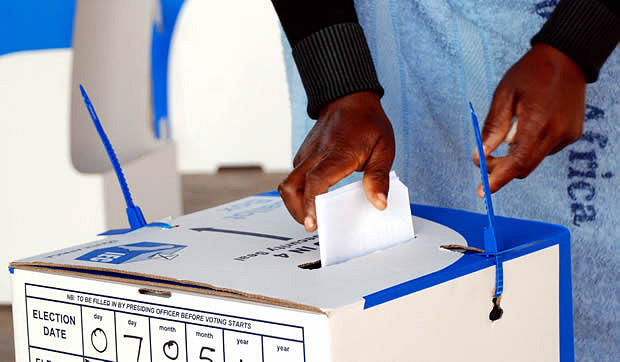
Thursday marked the start of the election of School Governing Body (SGBs) members across the country. Scheduled to take place until the end of March in over 25 000 schools, the elections take place after every three years.

Basic education minister Angie Motshekga assured the nation that all preparations were made to ensure the elections proceed smoothly. Briefing the Parliament Portfolio Committee for Basic Education on Wednesday on her department’s readiness, Motshekga said SGB elections were at the centre of the department and the provinces’ key priorities in terms of budget, planning and the allocation of both physical and human resources.

Why parents should get involved

SGBs are seen as the key component in the life of a school as they provide parents with a platform to get involved in how their schools are governed. They perform critical functions such as deciding on policies around school fees and uniform, language and religion, admission and code of conduct as well as the constitution.

Motshekga called on all parents to participate in the elections saying apart from democratically electing new leadership, they were also important levers that communities used to take ownership of their schools.

Motshekga said: “The performance of schools tends to improve when parents are actively involved and take an interest in the affairs of the schools.” She said it was important for parents to “turn up in their numbers” so the SGB could represent the school’s makeup adequately.

In February,  Western Cape education MEC, Debbie Schäffer urged parents in her province to vote “to ensure that the school serves the best interests of their children”. In Gauteng, MEC Panyaza Lesufi also appealed to parents to take part and added that SGBs encouraged parents and other school stakeholders to volunteer their services to schools.

Some thorny issues with SGBs 

In November 2017, the Department of Basic Education (DBE) provoked the ire of the SGBs when it published ‘Basic Education Laws Amendment Bill’ for public comment. SGBs across the board unanimously rejected the bill’s proposals saying they amounted to stripping them of their decision making powers in relation to learner admission, language and more crucially the appointment of staff.

But some parents complained about the lack of training to SGB members saying this limited their full participation in the affairs of the structure. They said some principals took advantage of their weakness and not only abused their powers but also mismanaged school finances.

SGB election procedure

Inside Education spoke to Cathy Callaghan, an executive member of Governors’ Alliance, one of the umbrella bodies of the SGBs. She shared her views in terms of the procedures and processes that should unfold for credible SGB elections to take place. She also encouraged parents to take part in the elections saying “functional SGBs means functional schools”.

Callaghan said SGB elections take place under the South African Schools Act No. 1996 (SASA) and they were elected in by the various stakeholders at the school with the intention to make schools the centre of the community. She said the office bearers of the elected SGB comprise chairperson, deputy-person, treasurer and secretary, adding that elected members are not paid for serving in the body.

Callaghan said, legally a public school had the capacity to perform its functions in terms of the SASA”, adding that SGBs also exercised a financial oversight on school funds that schools charge learners. She said people who qualified to be elected onto the SGB were parents of learners enrolled at the school, educators employed at the school, non-educators employed at the school and learners in the eighth grade or higher at the school.

Parents must ensure they appear on the Voters Roll, advised Callaghan, adding that they must also have an identity document for the purposes of both nomination and election. A parent who is eligible to vote must also ensure that he or she is not employed at the school, an un-rehabilitated insolvent, of unsound mind and convicted of any offence involving dishonesty.

Once all the requirements have been met, the process of nomination begins, said Callaghan. She said one of the first steps is for the principal to send out a notice to all parents they will then complete a Nomination Form ensuring the name of the nominee and the seconder appear on it.

Nominations are then dropped in the box the Electoral Officer will call for further nominations and after an allocated time will examine all the forms to ensure they comply with stipulated regulations.

DUT strike: So near, yet so far, but parties are upbeat they will sign

Thabo Mohlala

Durban University of Technology is on knife-edge as parties are under pressure to settle and bring to an end one of the longest labour disputes within the higher learning sector. Negotiations between unions and the DUT management collapsed several times but the mediation of the Deputy Minister of Higher Education and Training, Buti Manamela, saw the parties committing to a new framework to break the impasse.

Manamela told the media this week his biggest concern was that “there were no negotiations at all” between the unions and the management, adding “the parties were not talking to each other”.

Khaya Xaba, spokesperson for the National Education, Health and Allied Workers Union (Nehawu), reacted with both caution and optimism. He said they welcome the resumption of talks with DUT but also hastened to say it was only when the employer implemented the agreement that the strike would officially end.  

“We have suspended the strike action until we get what we demanded from the employer. Our members have gone back to work to allow the negotiations to proceed and we hope we would find a middle ground and end the impasse soon. But we have not reached a point where we could say the strike has ended,” said Xaba.

Xaba’s cautious optimism seemed to be fuelled by some of the issues reflected in the framework that the parties agreed to as part of their negotiations. These include, among others, three sticking points: across the board salary increase, once-off bonuses and housing allowances.

But Xaba, said Nehawu members were happy and supported the new developments particularly to help catch up with the students’ registration backlog. The strike affected scores of students who could not register online because didn’t have access to Internet.

“The intervention was long overdue and it came at the right time. That is what we needed and we are also positive that CCMA is also involved in the talks,” added Xaba

The university offered to pay 6.5% salary increases against the unions’ demand of 8.5%; on the once-off bonus, DUT proposed R7,500 while the unions demanded R9,000. The unions also demanded a R400 housing allowance while the employer offered R200 and finally, the potential deal breaker: no work, no pay principle, which the university implemented and docked workers’ salaries will also be on the agenda.

DUT’s vice-chancellor, Professor Thandwa Mthembu told the media on Wednesday that the institution is stretched financially to meet the workers’ current list of demands. He said their 6.5% across the board offer, which labour rejected, will cost DUT R12 million and if they were to accede to the workers’ demands, the university would have to fork out R62 million, which would bankrupt the institution.

Observers credit Manamela’s successful mediation saying his major coup was to get the strike suspended and allow students to go back to classes. Classes will resume next week Monday.

Universities South Africa (USAf), which represents all 26 universities, was anxious about the prolonged dispute. It said if the deadlock was not broken soon, the institution was going to be compelled to close its 2018/19 academic programme given the time lost. No lectures have taken place since universities reopened at the beginning of February this year.

Mqondisi Duma, Provincial Secretary of the South Africa Students’ Organisation (Sasco) also sounded positive about the negotiations. “We are happy that in the end the parties are talking. Remember, in the past there were no talks between the workers and the management.

We are optimistic that they will find one another and settle soon. We appeal to them that no party should be selfish but they must think about the interests of all the stakeholders of the university particularly the students who lost a lot of time without studying,” said Duma.

Why education is expensive in South Africa

Siyabonga Hadebe

Education is very expensive in South Africa. It costs a whopping R19,500 to R21,500 a year to attend an average government fee-paying school. Private schools charge anything between R50,000 and R500,000 per annum for one child. No wonder the likes of Curro and Advtech make so much money.

But who owns these private companies that are now charged with the responsibility of providing basic education in South Africa?

You must understand that the least spoken about topic in politics is the “commodification” of knowledge production in developing countries like South Africa. Access to free, quality and universal education has gained prominence in recent years following student protests at universities. However, these protests were limited in nature because they lacked a deeper understanding of the economic framework governing education as a whole, from kindergarten to tertiary level.

Young people comprise a large percentage of the South African population of just over 52 million. A huge proportion of youth go to crèches, schools, TVETs and universities. Although many people receive education from public institutions, private education is preferred by the rich and middle classes. The basic education system in urban South Africa is now practically a “servitude” for private companies. The implication of this is that most school-going kids from families that can afford go to privately owned schools.

Private companies like Curro Group, Spark, AdvTech, Pembury Lifestyle Group, etc. dominate private sector education in South Africa. All these companies promise “to address the shortcomings facing public education.” Census data indicated that only an estimated 48% of students who begin Grade 1 actually complete Grade 12, with most learners dropping out of school in Grade 10 and 11.

The JSE-listed Curro Group has schools across all nine provinces. University of Stellenbosch’s economics professor Johan Fourie says “In the past four years, its share price has tripled.” The company posted its 2016 financial year end results in March 2017, which showed a 69% increase in headline earnings to R169 million – up from R100 million recorded in 2015. Revenue saw a 27% increase to R1.76 billion whereas annual profits increased by 83% to R162 million. On the other hand, AdvTech, owner of the Crawford College and Trinity House schools posted significant growth in the same period, namely a 24% increase in revenue to R3.4 billion, with total enrolments increasing by 13%.

The profits mean that other firms are starting to notice and are entering this lucrative market.  As a result, these firms actively target the poor and the working class, which indicates that the entire South African basic education system is getting privatised.

Coronation Fund Managers, CitiGroup, Old Mutual Group, Government Employees Pension Fund (GEPF) are listed as some of the largest shareholders of Advtech. Professor Jonathan Jansen, former principal of the University of Free State, serves on a predominantly white board.

The subject of knowledge generation and at times consumption are heavily contested. The one who produces knowledge demands to be paid for his or her “work” – knowledge therefore has become a commodity like minerals, sugar or rice.

With the advent of economic neoliberalism, where markets are kings, knowledge appears to be also traded in the same space as other commodities. But the issue of the volatility of commodity prices draws so much criticism due to the impact they have on social outcomes.

For example, agricultural products are actively traded spot and derivative markets with dire consequences. In spite of the fact that this piece is about education and knowledge creation, economic madness and quest for huge profits in agriculture will be used to introduce problems of “commodification” of education and how education is currently being privatised before our eyes for the benefit of the wealthy. Under the pretext of poor public sector education, which is also privatised by school governing bodies, the private education system grows at a faster pace, and thus leaving the majority of the population destitute and without hope.

Fluctuations in the value of agricultural products lead to uncontrollable increases in food prices and gnawing hunger in the world. Hence, food security is now a great concern for many countries, both developed and under developed. In 2011, Nikolas Sarkozy commented that the French G-20 presidency prioritised food security by suggesting the removal of land and food production from the hands of speculators, and the mean machine of global corporations. In the end, the world’s leading economies dismally “failed to take the decisions needed to avert a looming global food crisis.”

Food price volatility and soaring food commodity prices remain a sad occurrence in our lives. Furthermore, rich countries cushion their agriculture and ensure sustainable food production through various economic mechanisms like subsidies to farmers and other types of “market protectionist” policies. However, poor countries do not have such capacities – hunger is on the rise because food production and land ownership are mostly under the control of foreign capital.

Large corporations are more concerned about servicing international markets and are not interested in local markets. The global economic infrastructure consisting of the World Trade Organisation and the Bretton Woods Institutions (i.e. World Bank Group and International Monetary Fund) ensure that the status quo is maintained.

The conclusion of this article is that the expansion of private education in South Africa and beyond is not so much an outcome of “poor” public education but forces of free market economics are at play. Both Advtech and Curro are presently spreading their wings to other parts of the continent, from Botswana to Kenya.

Commodification of education in Africa and elsewhere encourages entry of private capital, and growth of subtle privatisation of this important public good. Already, private schools are self-regulating through the Independent Examinations Board (IEB) and this is why Gauteng Education MEC Panyaza Lesufi expressed his frustrations by calling for a single examinations body in South Africa.


The case against free higher education: why it is neither just nor ethical

Sean Archer

South Africa’s just-ousted Minister of Finance committed another R57 billion to higher education and training over the next three years. In his first (and last – he was removed from the portfolio less than a week later) budget speech, Malusi Gigaba followed through on former president Jacob Zuma’s controversial promise in December last year of fee-free higher education.

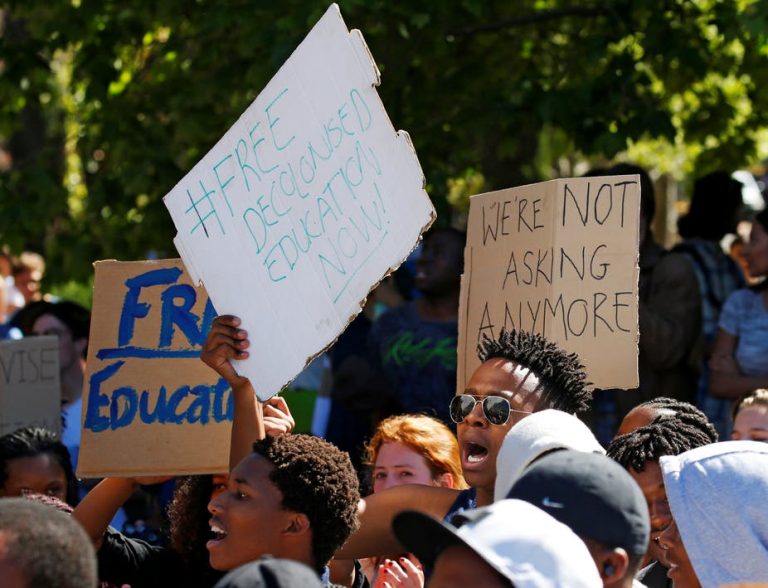
The minister’s announcement is likely to be well-received by those who have supported the demand by relatively small student groups that “Fees Must Fall”. Yet there is a major fault that is ignored by those who favour free higher education. It fails to provide a justification for increased allocation of resources to higher education on the grounds of equity or social justice.

There are persuasive arguments that free higher education will be unambiguously regressive. This is because it involves a transfer of resources from lower to higher income individuals within a national population.

This has been evident in certain other African and South American countries, as well as in Western Europe. Some countries do offer free tertiary education. Germany and Norway are current examples. But, first, they are rich in per capita income terms. And, second, “free” is ambiguous because it covers only selected components and not the full cost of this level of education.

Free higher education must be judged inherently regressive. It certainly will contribute to South Africa’s already high inequality by international standards.

From a social justice perspective

To understand the social justice dimensions of the question requires that attention be paid to the end of the process of higher education, the outcome, not the beginning when the focus is on costs and who bears them.

The bulk of graduates in every higher education system enter the labour force’s upper echelons. This places graduates well up in the top 10% to 15% brackets of the national distribution of earned income.

Most significant from a social justice perspective, university graduates receive considerably more income than the median taxpayer, or those within the median tax bracket, who inhabit the middle of the array of taxable income levels in every country.

This observation applies to direct taxation: personal income tax, company or corporate tax, wealth taxes and estate duty levied on individuals or corporate entities. But the regressive nature of the income transfer to university graduates is even more striking when attention is directed to indirect taxation. Examples include VAT, fuel levies, import and excise duties and a large set of user charges.

Indirect taxes are not levied directly on liable persons or their income generating entities like companies and corporations. Yet ultimately such taxes are paid by all consumers, irrespective of their levels of income, because they are paid by entities who are not individual consumers. This makes them regressive: everyone in South Africa will pay 15% VAT and a higher fuel levy from now on, in line with the 2018 budget speech.

Regressive transfers financed by the state – taking from taxpayers and giving to students in the form of free higher education – is the main reason why international examples of free higher education are so few and far between. That is why the international literature is generally sceptical – even hostile – to demands for free higher education.

One example widely cited is Australia where free higher education was decisively rejected in recent times. When a student loan scheme was under debate there about 20 years ago, the opponents of free higher education coined the slogan: Why should bus drivers pay for the education of lawyers? Why indeed? Today Australia possesses one of the world’s most successful national student loan schemes.

Social justice matters

In the real world of course, there are individual students who fall through the net and do not graduate. They miss out on becoming high-earning members of a national labour force. Consequently, a number of once enrolled students end up burdened by debt obtained while studying, either from private sector sources like banks or from the state under a tertiary education loan system.

But these individuals, together with entering higher education students from poor households who are eligible for subsidy from state sources in many countries, must be treated as personal cases. They are judged legitimate or not legitimate candidates for free higher education provided by government.

Each individual case has to be decided on its own merits. But when viewed as a group, usually small in number compared to total enrolment, they certainly do not constitute a justification for free higher education throughout a given national system.

Another issue that should be a serious concern is that fiscal authorities in a country short of revenue simply cut the allocation to post-school education – universities and technical and vocational colleges. This has been the case for many years in South Africa, and happens because universities and post-school colleges are not an important constituency in the competition for resources.

This has led to chronic underfunding, a fact which has not been recognised by “Fees Must Fall” and free education activists. This is highly likely to continue as a major problem in the future if higher education is held to be nominally “free” in publicly stated policy.

If there are circumstances specific to South African higher education which might justify a claim for more resources to be devoted to post-school education, then these circumstances must be explained upfront and in detail. Thus far no “Free Education Planning Groups” at universities appear to have done so.

Every university has a responsibility to clarify the values by which it functions. This is a responsibility to all its members, as well as to the concerned public outside. The neglect of social justice in South Africa’s ongoing free higher education debate is highly surprising. It is also undermining of the values that must be explicit in the public sector allocation of resources.
This article was first published on The Conversation Africa


Naledi Pandor asks the public to weigh in on improvements in higher education via Twitter

Bonile Khanyi

Newly appointed Minister of higher education and training Naledi Pandor posted a Twitter poll on Wednesday, asking South Africans which areas within the department they would like to see more changes.

At 1pm on Thursday, with just two hours left before the poll closed, 3046 people had participated. Most people wanted to see changes in skills development with 49% of the participants voting for changes in that area. 

The second-most voted for area for change, was the university sector with 23%. People who wanted to see changes in colleges made up 15% of those who took the poll while community education stood at 13%. 

Some people replied to the Minister’s poll and said they wanted to see changes in all the categories listed, while others reminded her not to forget about TVET colleges.

Some suggested the minister work together with the Department of Basic Education to ensure a high quality of education at primary level so learners could cope at tertiary level.

Meanwhile, some Twitter users commended her on her efforts to engage the public on a social media platform.

Pandor was appointed to the role of Higher Education and Training Minister on Monday after serving four years as the South African Minister of Science and Technology.

She was officially sworn in on Tuesday, replacing Hlengiwe Mkhize who was appointed to the position by former President Jacob Zuma on 17 October 2017.

South Africa’s reading crisis is a cognitive catastrophe

John Aitchison

When the late Black Consciousness leader Steve Biko published his seminal book, “I write what I like”, in 1978 it wasn’t about individual self-expression or even self-indulgence. It was a political statement with its origins in the work of Brazilian adult literacy activist Paulo Freire.

Freire identified the profound connection between reading, understanding the world and so being able to change it. Half a century after Biko was murdered by South Africa’s apartheid state, his country is no nearer being able to do this.

Instead, many of the country’s children are struggling to read at all. That’s according to the results of the international PIRLS 2016 literacy tests on nearly 13 000 South African school children. These showed that 78% of grade 4 children cannot read for meaning in any language. South Africa scored last of the 50 countries tested. Also worrying was that there were no signs of improvement over the last five years. In fact, in the case of the boys who were tested, the situation may have worsened.

A few weeks before these results were released, another study had found that 27% of children under five in the country suffer from stunting and that their brains are not developing as they should. Damage like this is largely irreversible. It leads to low school achievement and work productivity – and so to ongoing poverty.

These truly disadvantaged children are those of the poor; the 25% of South Africa’s population who live in extreme poverty. Given their dreadful circumstances, it might be understandable that 25% of children might not succeed in learning to read. But 78%? There has to be another explanation for that.

There are indeed reasons. They range from the absence of a reading culture among adult South Africans to the dearth of school libraries allied to the high cost of books and lastly to the low quality of training for teachers of reading.

No reading culture and bad teaching

Part of South Africa’s reading catastrophe is cultural. Most parents don’t read to their children many because they themselves are not literate and because there are very few cheap children’s books in African languages (and it must be remembered that English is a minority home language in South Africa).

But reading at home also doesn’t happen at the highest levels of middle class society and the new elite either. It’s treated as a lower order activity that’s uncool, nerdy and unpopular. And it’s not a spending priority. South Africans spend twice as much on chocolate each year than they do on books.

The situation doesn’t improve at school. Until provincial education departments ensure that every school has a simple library and that children have access to cheap suitable books in their own mother tongues, South Africa cannot be seen as serious about the teaching of reading.

Another problem lies with the fact that reading is taught badly. South Africa closed down its teacher training colleges between 1994 and 2000. This was done ostensibly to improve the quality of teacher education by making it the sole responsibility of universities. It backfired.

Previously, universities used to teach mainly high school teachers. Now they were expected to train foundation level teachers of the first three school grades. It was an area university’s education departments knew little about. They also inevitably incorporated only those training college educators who had postgraduate degrees. Sadly, these people generally had no great interest in the grunt work of teaching little children to read. So foundation level teacher training at universities is often a disaster.

There’s been some attempt to address this bungle. The latest of them is the Department of Higher Education and Training’s Primary Teacher Education project.

The teacher training curriculum is also problematic. Most teaching about reading instruction in South Africa’s universities is outdated. Faculties of education appear to have largely ignored modern scientific advances in understanding how reading happens.

What the science says

Over the last three decades, cognitive neuroscience has clarified and resolved a number of debates about reading. It has been proven beyond doubt that reading – becoming literate – alters the brain.

Learning the visual representation of language and the rules for matching sounds and letters develops new language processing possibilities. It reinforces and modifies certain fundamental abilities, such as verbal and visual memory and other crucial skills. It influences the pathways used by the brain for problem-solving.

Failing to learn to read is bad for the cognition necessary to function effectively in a modern society. The inability of South Africa to teach children to read, then, leads to another type of stunting: one that is as drastic as its physical counterpart.The ConversationThe country now has generations who have been cognitively stunted because of a massive failure in its culture and educational provision. All South Africans are implicated if they don’t do their utmost to help people learn to read.
John Aitchison, Professor Emeritus of Adult Education, University of KwaZulu-Natal

This article was originally published on The Conversation. Read the original article.

Naledi Pandor, a win for social justice and transformation

0

Thabo Mohlala

Thoughtful activism is needed in order to transform the higher education sector. This is what University of Witwatersrand (Wits) Vice Chanclellor Adam Habib said when President Cyril Ramaphosa announced Naledi Pandor as the new Minister of Higher Education and Training (DHET) Monday evening.

“Not only does she understand the higher education system very well, she is also committed to both transformation and other social justice goals like the advancement of women. If we are going to transform the system, we need her,” Habib told Inside Education.

The announcement came as a surprise to many. A statement was released by The Presidency on Monday that Ramaphosa was to reshuffle his cabinet. Pandor would replace Hlengiwe Mkhize who took over the department in October 2017 after the former President Jacob Zuma reshuffled Blade Nzimande.

Wits School of Education Professor Brahm Fleisch echoed Habib’s sentiments. He said Pandor is an experienced and respected politician and is familiar with current issues in the higher education sector, adding, he is confident Pandor will deliver on her portfolio. “I think Cyril did very well in appointing her in the position,” he said.

Pandor’s immediate task will be to ensure successful implementation of the fee-free higher education policy. In his 2018 Budget Speech, former Minister of Finance Malusi Gigaba allocated R324-billion expenditure for higher education over the next three years, including an additional R57-billion to fund all eligible students. Fleisch said the allocation of such resources to Pandor’s department would substantially change the higher education landscape.

There were others who were excited about the appointed. The Higher Education Transformation Network (HETN), a non-profit outfit catering for graduates and alumni from various higher and further education training institutions from across the country, said they looked forward to working with Pandor towards transforming the higher education sector.

The Network’s spokesperson Sibongile Malinga said they would like Pandor to continue with the programme of transforming the higher education sector. The Network also highlighted specific areas of concern including the low number of black PhD graduates in the country; and the low number of black professors employed in the sector.

“The pace of employment equity transformation in higher education workplaces need be increased; and the minister needs to ensure salary parity across race and gender is implemented,” said Malinga.

Pandor also has to ensure she raises the profile of TVET Colleges. Judge Jonathan Heher, who headed a Commission on free higher education, identified TVET Colleges as vital skills hubs that can cater for the growing number of youths who do not qualify to study at universities.

She also has to change the perception among industry experts who view the quality of qualifications from TVET Colleges as inferior with the result that most graduates struggle to find jobs.

Pandor served in the Thabo Mbeki and Kgalema Motlanthe’s administrations as the minister of education. This was before former President Jacob Zuma split the ministry into basic and higher education and training in 2009. The combination of her political experience in education policy planning and management and her array of qualifications in the fields of education and linguistics made her a shoo-in appointment.

Pandora holds a BA degree from University of Botswana and Swaziland and a Master’s degree in Education from the University of London. She went on to complete her second Master’s degree in Linguistics at the University of Stellenbosch in 1997, while serving as a member of parliament.

From 1995 to 1998 she served as the deputy chief whip of the ANC in the National Assembly. She then became the deputy chairperson of the National Council of Provinces in 1998, and as its chairperson from 1999 to 2004.

She was later appointed as Minister of Science and Technology and one of her greatest achievements was leading the bids for South Africa to host the Square Kilometre Array (the SKA), located in the vast expanse of the Northern Cape province. SKA is the largest radio telescope in the world, amongst a range of other cutting edge projects.