Home Blog Page 525

Panyaza Lesufi encourages parents to join school governing bodies

0

Bonile Khanyi

The Gauteng MEC for Education, Panyaza Lesufi, has urged parents and guardians to play an active role in local schools by becoming part of the school governing body (SGB).

Lesufi was speaking at the launch of the 2018 SGB elections at the Seshegong Secondary School in Olievenhoutbosch, in Centurion on Tuesday.

During his keynote address, he emphasized how important it was for a parent to play an active role in schools regardless of their background.

“Your role as a parent, regardless of your race or background, is critical because it will assist the department to improve learning outcomes and enable us to reach the goal of providing quality education in all our schools,” said Lesufi.

“Active participation by all parents will ensure that the principal, educators and other staff of the school receive adequate support in the performance of their professional functions. It will also encourage other parents, learners, educators and staff at the school to render voluntary services to the school.”

Lesufi said the three-year term of current SGB members ends on February 28 and announced that the elections will take place from March 1-31 in all public schools.

“This will be the ninth cycle of SGB elections since 1994.They are the third largest elections after the national, provincial and local government election,” said Lesufi.

Parents of learners at the school, educators at the school, members of staff at the school who are not educators, and learners in secondary school can be elected onto the SGB.

Lesufi also added that the department will host SGB Election District Dialogues to create awareness on the elections.

“The department will host SGB Election District Dialogues from 13 to 28 February 2018, to create awareness on the elections. Parents are encouraged to attend the dialogues to register their voice on the role of SGBs,” said Lesufi.

DUT resumes classes amidst worker protest

0

Bonile Khanyi

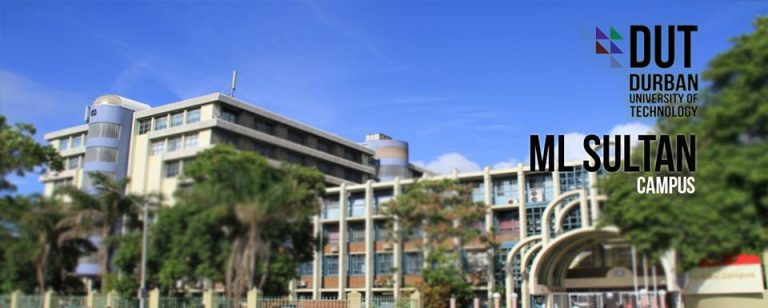
The Durban University of Technology (DUT) on Tuesday said lectures commenced without any disruptions despite the ongoing protests on campus.

This comes after the university’s management announced a decision on Monday to start the academic year on Tuesday amidst a wage dispute which has not been resolved.

Workers affiliated to the National Education, Health and Allied Workers’ Union (Nehawu), the Tertiary Education National Union of South Africa (TENUSA) and the National Tertiary Education Union (NTEU) have been protesting over wages for more than a month.

On Monday, protesters gathered at the Steve Biko Campus courtyard, chanting and dancing to revolutionary songs while waiting for their representatives to address them after talks between the university’s management and the parties reached a deadlock despite four days of mediation by the CCMA.

According to media reports, Milton Estrice, a spokesperson for the Crisis Committee appointed to facilitate the wage negotiations between the two parties, said the university refused to change its salary offer.  

“Management keeps coming with a fixed offer and telling us it’s their final offer, meaning there is no room for negotiation, whereas the staff has been willing to negotiate. Talks collapsed because of this lack of cooperation from the side of DUT,” said Estrice.

Workers are demanding a 10% increase on their basic salary, R400 increase on the monthly housing allowance and a R9000 once-off bonus (14th cheque).

However, the university is offering a 6.5% increase for both basic salaries and housing allowances and no once-off bonus.

In a statement issued on Monday, DUT’s spokesperson Alan Khan said that the university’s management is working with the student representative council (SRC) to ensure that they help students to register over the next few days.

He also said that despite the challenges of the ongoing strike, the University has registered more than 18 000 students for the 2018 academic year.

Meanwhile, students who have not yet registered have been urged to do so online via the DUT website www.dut.ac.za, or in person at the Riverside campus in Pietermaritzburg or at one of our registration venues in Durban.

How the continent’s languages can unlock the potential of young Africans

0

By H. Ekkehard Wolff 

Africa is the home of 2144 languages. Oddly, most development theoreticians consider this a barrier to economic and social growth. Sociolinguists and educationists know better: the African continent’s multilingualism is a powerful resource.

The problem begins at school, and continues right through the education system. This includes tertiary level.

I have watched South African university students’ call for “fees to fall”, and – coming as I do from a country that offers free primary through tertiary education and whose economy thrives partly for this reason – I fully support them. However, in terms of just and sustainable education, fees are only one side of the coin. Language is the other. As a linguist whose work has focused for decades on African language matters, I remain convinced what Africa needs are political campaigns that tackle language: #EnglishOnlyMustFall. #FrenchOnlyMustFall. #PortugueseOnlyMustFall.

The continent needs a new strategy for mother-tongue based bilingual education, from primary through to tertiary level. In this, it can draw from what many other emerging markets and societies, as well as developed countries, do very successfully. From South Korea through Japan and China, to Russia, all of Europe and North America, schools’ language of instruction is children’s mother tongue (also known as first or home language). They also learn “global” languages like English and French so they can later function and communicate all over the world.

Crucially in these countries, the mother tongue is not suddenly abandoned at university. That’s because research has shown the level of a foreign language acquired at school is not enough for the required “Cognitive Academic Linguistic Proficiency”, or CALP. So students continue to learn in their mother tongue, while also studying a global language – or two, or even three. They do this at a stage when their cognitive, creative and critical potential are reaching maturity. In this way, they come to fully grasp the complexities and applications of their own home languages and a foreign language.

Applying these lessons in postcolonial Africa means embracing truly multilingual education. Unfortunately too many African tertiary systems operate solely through a foreign language – English, French or Portuguese. This disadvantages mainly black African students and creates what South African educationist Neville Alexander called a kind of “neo-apartheid”.

Putting African languages first

Research has made it explicitly clear: if efficiency of learning and cognitive development is the target, the mother tongue should be the medium of instruction from primary school, through secondary and into universities. Other languages, like English, can be introduced as subjects from lower primary level.

There are several objections to introducing African languages into the education system. Cost is one. But this is a myth. Sociolinguist Kathleen Heugh has shown that “…investment in such programmes in Africa at the moment is usually less than 2% of a country’s education budget – and is recovered within five years”.

Another argument is that multilingualism is somehow difficult to achieve. Yet many African children learn two or more languages before they ever reach school, and often use such languages interchangeably. Sociolinguists are intrigued by the ways in which Africans communicate mainly in urban contexts – in what appears to be talking in two or more languages at the same time. The new academic terminology for this is translanguaging or polylanguaging.

Why not use this as a highly welcome asset to teach through both African and European languages across the educational system, since people freely apply this strategy outside classrooms and lecture halls anyway? Why should educational authorities insist on using only English rather than “translanguaging” when teaching content subjects?

Others have inferred that African languages are simply not fit for teaching and learning at university level. This argument combines ignorance with racism. And it’s not borne out by evidence. In fact, the reverse is true. A recent PhD thesis currently being submitted at Rhodes University in South Africa, where I am a visiting Fellow, found that students with a background in languages other than English profit immensely from being assisted with teaching materials, terminology and translation aids in their mother tongues.

At Rhodes, isiXhosa features as more than a language subject. It is used as a medium of instruction in support courses for Journalism and Media Studies. Pharmacy students are taught vocation-specific isiXhosa skills. Bilingual teachers in Politics, Commerce, Sociology and Economics are recognising the linguistic diversity of their classes by using students’ lived experience as an important aspect of teaching and learning.

There’s more. The University of Limpopo offers multilingual studies, including a BA in Contemporary English language studies in both English and Sesotho sa Leboa. Masters and PhD students write their theses in any official language of their choice – recent examples have included theses in Sepedi, Tshivenda and Xitsonga. Both Stellenbosch University and the Cape Peninsula University of Technology offer multilingual glossaries in English, isiXhosa and Afrikaans for various faculties. These are also accessible online.

Multilingualism opens doors

These and other initiatives work towards two outcomes. The first is to produce university graduates who are able to converse freely in both a world language like English and in one or more African languages. A good command of global languages will open a window to the world for all those who’ve come through such a tertiary system – and put an end to the marginalisation of Africa.

The second outcome is that ultimately, African societies can be transformed from merely consuming knowledge to producing it. Until today and exclusively, knowledge came to Africa from the North, wrapped up in the languages of former colonial masters. This one-way road must change into a bidirectional one. For this, universities are the hub.

One of the ways to ensure this happens is to upgrade teacher (or lecturer) training. Whatever language is used in teaching content subjects, when language is the subject it must be taught professionally and well. Good English, but likewise good isiXhosa, for instance, must remain the teaching goal. Teacher training is critical.

The ConversationAll of this work is a worthy investment in the quest to give African languages their rightful place in African societies. Re-empowering African languages is a way to contribute sustainably to societal transformation and economic progress by fully exploiting the cognitive and creative potential of all young Africans.

H. Ekkehard Wolff, Emeritus Professor of African Linguistics, University of Leipzig

This article was originally published on The Conversation. Read the original article.

2019 Sasol Bursary applications open

Bonile Khanyi

Grade 12 learners who excel in Math and Science and are interested in pursuing a career in engineering, science and accounting have been urged to apply for the all-inclusive 2019 Sasol bursary programme.

Manager of Graduate Centre at Sasol Corporate Bursary Services, Monica Luwes said the bursary programme was aimed at Grade 12 learners who want to study at approved South African universities and universities of technology next year.

“With our bursary, we aim to put ambitious young South Africans on track for great careers in STEM-related fields,” said Luwes.

She also said the bursary covered the students’ registration fees, exam fees, accommodation, food, and an allowance of R12 000 for books and pocket money.

“Students who receive our bursaries do not need to worry about their tertiary education costs, they can focus on achieving outstanding results. In addition to financial support, we give them career support as well as life guidance to help them succeed,” said Luwes.

The bursary also caters for postgraduate studies.

Students receive a monthly allowance of R10 000 for up to 2 years while they complete their master’s degree and up to 3 years for those studying towards their PhDs.

For more information, students have been urged to visit the Sasol website.

No school for Eastern Cape village children

0

Nombulelo Damba-Hendrik

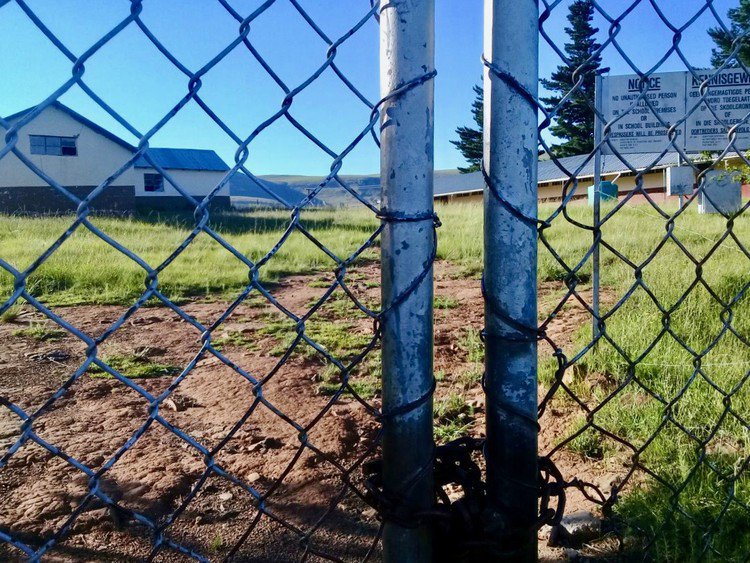
On Tuesday, about 15 parents from Elliot went to the Eastern Cape Department of Education offices in Ngcobo near Mthatha to demand their village school be reopened. The parents say 36 children are sitting at home and not in school after Mhlwazi Junior Secondary School was closed during a rationalisation of schools in the province. The education department has only provided sporadic transport to the nearest school 40km away.

School governing body deputy chairperson Tatoyi Mponzo told GroundUp that last year in March the department gave notice to close the school as it only had two teachers and less than 40 learners. Mponzo said parents tried to resist the closure but failed.

He said an education official, a Mr Malapa, promised them that the department would provide scholar transport to Ryno Primary, 40km away.

But the provision of transport has been sporadic. This year the scholar transport did not appear at all. Mponzo said the children also missed exams last year, but to the shock of their parents, the children passed anyway.

Mponzo said they contacted the school principal of Ryno to find out what was happening. “We waited for a week until we decided to go to the district office in Ngcobo,” said Mponzo.

They were told to find their own transport for February and March because the department could only provide transport from April.

“This is a poor community, most of us are grandparents raising our grandchildren,” said Mponzo. “I have four children … I’m not working. They are depending on my old age grant.”

A taxi from Mhlwazi to Ryno costs R70 for a round trip per child.

“There is no way that I can afford the transport money to take my grandchildren to school. I can add my old age grant and their child support grant and the money will [still] not be enough,” said Mponzo.

He said the parents have now been to the district offices more than three times, begging the department for transport.

Nolindile Deku said her five children are stuck at home instead of being at school. “This is very sad for us parents. Every day my children ask me the same question – when are they going to go back to school – and I don’t have answers.”

She is unemployed. The family relies on child support grants and her husband’s disability grant.

Deku said if the department cannot provide scholar transport it should reopen the village school.

Another parent, Nokhanyo Sombo, said, “Since January we have been in and out of department offices seeking help but no one is willing to help us. They are not feeling our pain because their children are at school.”

A spokesperson for the Eastern Cape Department of Education, Malibongwe Mtima, said the department would investigate the exam issue. He said parents should have applied for scholar transport last year for this year.

“We will arrange a meeting with parents and explain to them the process of scholar transport. Then, we will do a special appeal for them to be provided transport this year,” he said.

Parents said the need to apply for transport was news to them.

Published originally on GroundUp.

Western Cape education battles to clear learner backlog

0

Thabo Mohlala

The Western Cape Education Department (WCED) is making significant progress in placing learners who were still looking for space before the first day of school.

The Western Cape and Gauteng experience a huge influx of learners every year from other parts of the country. Most of them arrive well after plans have already been made in terms of budgets, teaching staff and accommodation making it difficult for them to cater for the new arrivals.

Speaking to Inside Education this morning, WCED’s spokesperson, Jessica Shelver said they are currently placing about 4,880 learners, down from 11,200 on the first day of school. She said of these, about 3000 were new arrivals.

She said so far a total of 1,041,494 learners in Grade 1 to 12 have been enrolled in the province’s public schools. She said this is based on their interim results of the 10-day snap survey her department conducted. Shelver said the survey provides the department with a “dip-stick” indication of learner numbers at the start of a school year.

She said compared to their annual survey last year, this represented an increase of 25,018 learners. She said with the inclusion of special schools, the total number of learners enrolled for Grades R to 12 now stood at 1,108,085.

She said the WCED ordered 231 mobile classrooms last year to accommodate extra learners and identified 35 schools with 60 available classrooms in all districts.

Of these schools, 25 are in metropolitan districts, while 10 are in rural districts, mainly on the West Coast, said Shelver, adding that they advised parents to accept places offered to them as they could not guarantee places at schools of their choice.

To ensure the new arrivals did not miss out, district officials were finalising catch-up plans for them as they did not have places at the start of the term.

But Shelver said they were still expecting more learners to arrive from other provinces this month in line with annual trends.

She said they were confident and positive that the officials would have placed every learner still looking for a school by the middle of February, with the balance by the end of the month.

World University Rankings ignore local contexts of universities, say experts

Alec Basson

The legitimacy of World University rankings is often questioned because they don’t consider the local contexts of higher education institutions, especially those in developing countries.

This was the gist of a presidential roundtable discussion of the Academy of Science of South Africa (ASSAf) held at the Centre for Research on Evaluation, Science and Technology at Stellenbosch University (SU) on Wednesday this week. Moderated by Prof Jonathan Jansen of the SU’s Department of Education Policy Studies, the discussion focused on the topic: University Rankings: Helpful or harmful?. This was the first of a series of sessions to be held across the country.

The ASSAf roundtables bring together experts in a particular field to address a critical issue percolating in society that requires the deliberation of the best minds on the topic.

Trying to offer a balanced view of rankings, Prof Robert Tijssen from Leiden University said despite the huge diversity of rankings and the robustness of the system, there’s still a lot of room for improvement.

“Some performance metrics are biased, some are less irrelevant and others are ambiguous. We don’t have a clear idea of what they represent. There is no rationale behind the weighting system and the choice of metrics is not transparent.”

“This is a major shortcoming.”Tijssen said it is important to spell out why certain metrics are picked and others ignored.

“I feel there’s not enough effort to help users in terms of educating them and making them aware of the advantages and limitations of rankings.”

Highlighting some of the advantages of rankings, Prof Lis Lange from the University of Cape Town said they give students more choice in terms of where they want to study and also provide information on the position of a country in terms of international competitiveness.

“The other thing that they do is to put, in a certain sense, some level of pressure on individual higher educations to shape or shift the strategy in a certain direction. They also change the way universities are managed.”

Lange pointed out, however, that one of the unintended consequences of rankings is that the idea of being in the top 100 becomes the strategy of universities.

“The whole being of the university is reduced to being one in the top 100 and this has very serious implications. Rankings become the gold standard.”

Regarding the relevance of rankings for Africa, Prof Nico Cloete of the Centre for Higher Education Trust and Higher Education Research and Advocacy Network in Africa said they’re completely beyond what institutions on the continent should be focusing on.

“We need a strategy to develop research and knowledge-producing institutions. Many of the rankings aren’t helping with this.” 

Echoing some of the sentiments of the other speakers, Prof Zeblon Vilakazi from the University of the Witwatersrand said he has his reservations about rankings.

Alec Basson works for the Corporate Communication Unit of the University of Stellenbosch

Protests by residents disrupt teaching and learning in the Free State schools

0

Thabo Mohlala

Schooling came to a complete halt on Tuesday this week in QwaQwa and surrounding areas in the Free State province as disgruntled residents shut down activities over service delivery concerns.

Although QwaQwa is the flashpoint of the protest, the communities of Kestrel and Harrismith were also affected, with schooling taking the hardest knock. The areas fall under Maluti-A-Phofung Local Municipality.

A school principal of a school in Kestrel, who did not want his name to be mentioned because he is not authorised to speak to the media, told Inside Education that the issues raised by the residents have nothing to do with education.

He said schooling had been disrupted since the protest started and by the look of things the chaos would continue until over the weekend.

“The provincial department of education has not intervened let alone said anything since then.  I went to speak to my district manager who advised me to take precautionary measures to ensure no one gets hurts during the protest. Only 5% of the learners pitched for classes as most feared for their safety,” said the principal.

He said yesterday one of the youth was shot dead by the police during the protest, adding this will undoubtedly escalate the residents’ anger.

“That is why I say I don’t see this protest coming to an end anytime soon, at least not this week. The impact of this will obviously be enormous on education in the affected areas.”

He said what made the situation worse was the way residents’ demands were responded to.

“The mayor was arrogant and very adamant telling residents it is only the ANC that can remove him because he was put there by it,” said principal.

Free State education MEC, Tate Makgoe responded via twitter appealing to the communities to allow schooling to proceed while they resolved their problems with the relevant authorities.

“We have lost two days thus far, no learning or teaching taking place there. We appeal to the communities of Kestrel, QwaQwa and Harrismith to allow schools to operate while they express their grievances over service delivery matters. It’s Day 2 and no schooling in the area,” Makgoe

The use of service delivery related grievances to shut down activities, including schools, is a strategy commonly used by communities to extract concessions from the government. In 2012 parents from a community in the Northern Cape forcefully closed 54 schools for nearly three months to back their demands for have a stretch of road between their villages tarred.

The recent and widely reported community protests took place in Vuwani where scores of schools were torched as residents demanded their own municipality.

UCT promises to provide student accommodation after housing crisis

Bonile Khanyi

The University of Cape Town said on Thursday that its Students Housing Department is working as quickly as possible to ensure that all students who have been offered accommodation on campus are placed as soon as possible.

Speaking to Inside Education, UCT’s spokesperson Elijah Moholola said that the university still needed to place 11% of students for the 2018 academic year.

“As off this morning (Thursday) 89% of our students were allocated a room. We still have to place 55 more of our students,” Moholola said.

Moholola said the university has increased accommodation capacity and that students would also be considered for an off-campus residence.

“UCT has increased accommodation capacity by signing leases with two private residences, which has added approximately 380 rooms,” the statement read.

“Students who have not yet been placed in residences for which they were made an offer will be placed in other UCT residences or one of the two leased off-campus residences.”

He urged students who encounter any problems with their accommodation to contact Student Housing on 021 650 2977 or email res@uct.ac.za.

He also said those who have not been offered residence on campus are being assisted with securing off-campus accommodation.

“Students who have not received residence offers are being assisted with securing off-campus accommodation through the university’s Off Campus Student Accommodation Services (OCSAS),” said Moholola.

“Students who still need assistance are encouraged to contact OCSAS on 021 650 4934 or email ocsas@uct.ac.za.”

Bonteheuwel school grounds used as illegal dumping site

0

Barbara Maregele

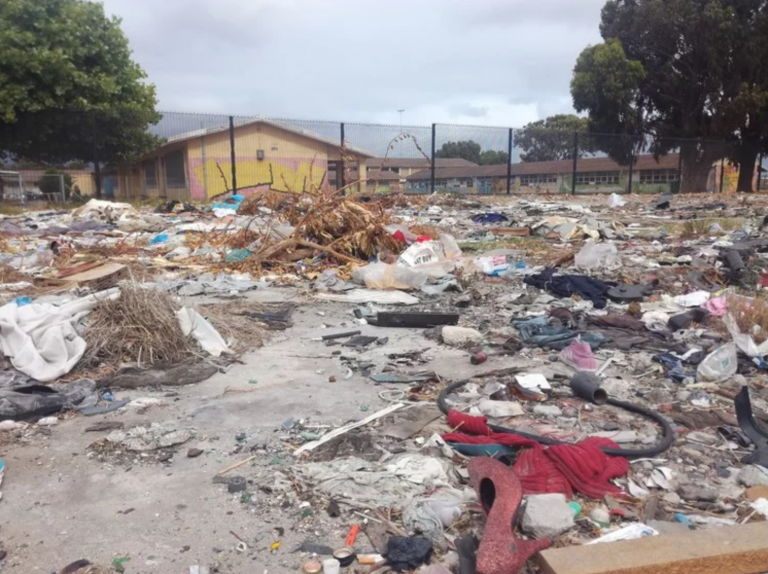
Charred rubble, shards of glass, tattered clothing and dirty nappies are some of the items dumped on an open strip of land belonging to Arcadia Primary School in Bonteheuwel.

Despite efforts by the Western Cape Education Department (WCED) and the local ward councillor, people continue to illegally dump rubble and vandalise the security fences around the area.

Deputy principal Suleiman Stanley says learners often have to walk through the dirt to get into the school grounds, which is a health and safety concern. “People burn scrap for copper right next to our gates and the smoke comes into the school on a daily basis. The City Council cleaned the area before school ended last year but look, the rubbish just piled up again, with people from around here using this as a dump site.”

Stanley, who has worked at the school since 1990, says it wasn’t until four years ago that they discovered that the piece of land belonged to the school.

“People have always used that space as a walkway. Whenever the WCED visited, they always asked why our grounds were so small for the amount of learners we had. Now we realise that the school grounds are actually bigger, so we can expand,” he says.

WCED spokesperson Millicent Merton confirmed that a fence erected in August 2016 had been vandalised during the school holidays four months later.

Stanley says new black fencing at a cost of R1 million was erected around the larger school perimeter in 2016. “The guys came and cut pieces of the gate so they could walk and drive their cars through again to the soccer field. The new motor on our front gate was also smashed and parts stolen.

“Law enforcement is based in Bonteheuwel, so they can’t say they aren’t aware of this. I saw the guys being fined when school started but that was it,” says Stanley.

He says because the school is situated where most of the gang shootings occur, it is important to use the space to make it safer for the learners at school. He says it is up to the community to take pride in the area.

Bonteheuwel ward councillor Angus McKenzie says he sometimes sent trucks and municipal workers to help the school clear the property, though that was not the City’s responsibility. “The City in most cases does not clean land that does not belong to it. There’s a privately-run dumping site a kilometre from the school and a City facility about 3 km away. It boils down to attitude. Our greatest challenge here is our attitudes,” he says.

Information about the City of Cape Town’s recycling and waste drop-off facilities is in its website.

Published originally on GroundUp.