
Home Blog Page 526

Protests by residents disrupt teaching and learning in the Free State schools

0

Thabo Mohlala

Schooling came to a complete halt on Tuesday this week in QwaQwa and surrounding areas in the Free State province as disgruntled residents shut down activities over service delivery concerns.

Although QwaQwa is the flashpoint of the protest, the communities of Kestrel and Harrismith were also affected, with schooling taking the hardest knock. The areas fall under Maluti-A-Phofung Local Municipality.

A school principal of a school in Kestrel, who did not want his name to be mentioned because he is not authorised to speak to the media, told Inside Education that the issues raised by the residents have nothing to do with education.

He said schooling had been disrupted since the protest started and by the look of things the chaos would continue until over the weekend.

“The provincial department of education has not intervened let alone said anything since then.  I went to speak to my district manager who advised me to take precautionary measures to ensure no one gets hurts during the protest. Only 5% of the learners pitched for classes as most feared for their safety,” said the principal.

He said yesterday one of the youth was shot dead by the police during the protest, adding this will undoubtedly escalate the residents’ anger.

“That is why I say I don’t see this protest coming to an end anytime soon, at least not this week. The impact of this will obviously be enormous on education in the affected areas.”

He said what made the situation worse was the way residents’ demands were responded to.

“The mayor was arrogant and very adamant telling residents it is only the ANC that can remove him because he was put there by it,” said principal.

Free State education MEC, Tate Makgoe responded via twitter appealing to the communities to allow schooling to proceed while they resolved their problems with the relevant authorities.

“We have lost two days thus far, no learning or teaching taking place there. We appeal to the communities of Kestrel, QwaQwa and Harrismith to allow schools to operate while they express their grievances over service delivery matters. It’s Day 2 and no schooling in the area,” Makgoe

The use of service delivery related grievances to shut down activities, including schools, is a strategy commonly used by communities to extract concessions from the government. In 2012 parents from a community in the Northern Cape forcefully closed 54 schools for nearly three months to back their demands for have a stretch of road between their villages tarred.

The recent and widely reported community protests took place in Vuwani where scores of schools were torched as residents demanded their own municipality.
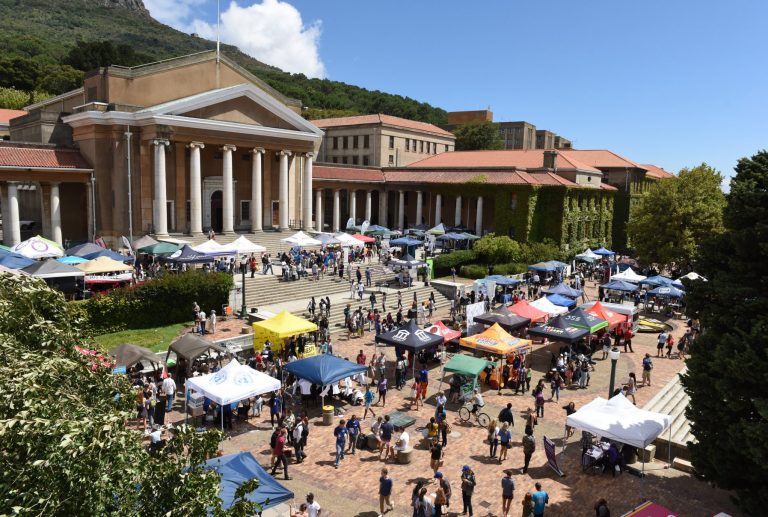

UCT promises to provide student accommodation after housing crisis

Bonile Khanyi

The University of Cape Town said on Thursday that its Students Housing Department is working as quickly as possible to ensure that all students who have been offered accommodation on campus are placed as soon as possible.

Speaking to Inside Education, UCT’s spokesperson Elijah Moholola said that the university still needed to place 11% of students for the 2018 academic year.

“As off this morning (Thursday) 89% of our students were allocated a room. We still have to place 55 more of our students,” Moholola said.

Moholola said the university has increased accommodation capacity and that students would also be considered for an off-campus residence.

“UCT has increased accommodation capacity by signing leases with two private residences, which has added approximately 380 rooms,” the statement read.

“Students who have not yet been placed in residences for which they were made an offer will be placed in other UCT residences or one of the two leased off-campus residences.”

He urged students who encounter any problems with their accommodation to contact Student Housing on 021 650 2977 or email res@uct.ac.za.

He also said those who have not been offered residence on campus are being assisted with securing off-campus accommodation.

“Students who have not received residence offers are being assisted with securing off-campus accommodation through the university’s Off Campus Student Accommodation Services (OCSAS),” said Moholola.

“Students who still need assistance are encouraged to contact OCSAS on 021 650 4934 or email ocsas@uct.ac.za.”

Bonteheuwel school grounds used as illegal dumping site

0

Barbara Maregele

Charred rubble, shards of glass, tattered clothing and dirty nappies are some of the items dumped on an open strip of land belonging to Arcadia Primary School in Bonteheuwel.

Despite efforts by the Western Cape Education Department (WCED) and the local ward councillor, people continue to illegally dump rubble and vandalise the security fences around the area.

Deputy principal Suleiman Stanley says learners often have to walk through the dirt to get into the school grounds, which is a health and safety concern. “People burn scrap for copper right next to our gates and the smoke comes into the school on a daily basis. The City Council cleaned the area before school ended last year but look, the rubbish just piled up again, with people from around here using this as a dump site.”

Stanley, who has worked at the school since 1990, says it wasn’t until four years ago that they discovered that the piece of land belonged to the school.

“People have always used that space as a walkway. Whenever the WCED visited, they always asked why our grounds were so small for the amount of learners we had. Now we realise that the school grounds are actually bigger, so we can expand,” he says.

WCED spokesperson Millicent Merton confirmed that a fence erected in August 2016 had been vandalised during the school holidays four months later.

Stanley says new black fencing at a cost of R1 million was erected around the larger school perimeter in 2016. “The guys came and cut pieces of the gate so they could walk and drive their cars through again to the soccer field. The new motor on our front gate was also smashed and parts stolen.

“Law enforcement is based in Bonteheuwel, so they can’t say they aren’t aware of this. I saw the guys being fined when school started but that was it,” says Stanley.

He says because the school is situated where most of the gang shootings occur, it is important to use the space to make it safer for the learners at school. He says it is up to the community to take pride in the area.

Bonteheuwel ward councillor Angus McKenzie says he sometimes sent trucks and municipal workers to help the school clear the property, though that was not the City’s responsibility. “The City in most cases does not clean land that does not belong to it. There’s a privately-run dumping site a kilometre from the school and a City facility about 3 km away. It boils down to attitude. Our greatest challenge here is our attitudes,” he says.

Information about the City of Cape Town’s recycling and waste drop-off facilities is in its website.

Published originally on GroundUp.

GDE needs to place 690 more learners in Gauteng schools

0

Thabo Mohlala

The Gauteng Department of Education (GDE) seems to be on course to conclude the placement of all Grade 1 and 8 learners in the province before the end of February. At the beginning of this week, the number of the unplaced learners stood at 3,366.

Yesterday the number was whittled down to 690 and GDE’s spokesperson, Steve Mabona, told Inside Education earlier this morning that in their estimation they should have wrapped up the process by next week.

“If all goes according to plan probably we would be done with the placement of learners before the end of next week,” said Mabona.

He said this was significant progress considering the number of learners they had to place in schools across the province when the academic year started in mid-January.

“The challenge we have is lack of space to accommodate all the learners who come to the province every year. Most schools are full but we have to try and find them space. We are trying to cope with the learner influx by opening a school every month. We have specifically targeted areas that show rapid growth such as Midrand and Fourways Corridors where parents who cannot afford to take their children to private schools turn to public schools,” said Mabona.

MEC Panyaza Lesufi said they would rather deal with overcrowding than deny kids a space to learn.

Mabona said the programme of building schools is ongoing and although resources are insufficient they try to make money available by reprioritising their budget.  In a press release last week, Mabona said the main cause of the learner enrolment backlog is due to the relocation of parents from other provinces to Gauteng.  

He said the highest number of relocation is from the Free State at 61, followed by KwaZulu-Natal with 56 applications and Limpopo with 51.

The department also said they received relocation of learners from countries such as Zimbabwe, Burundi and India.

Teacher unions blast PIC’s loan to the embattled power utility

0

Thabo Mohlala

Teacher unions have added their voice to the growing criticism of the Public Investment Corporation (PIC)’s recent investment decisions specifically pertaining to Eskom.

The PIC is the custodian of government’s employees’ pension fund and is also tasked to invest them in markets and entities that would add value to the pension fund.

The South African Teachers’ Union (SAOU) took a swipe at the PIC and the Government Employees Pension Fund (GEPF) for granting a R5bn bridging loan facility to the ailing state power utility. According to the union’s chief executive, Chris Klopper, the loan is not a sound investment and is also not in the best interest of the fund.

In a statement released earlier today, Klopper said they find no proof that suggests this loan facility is in keeping with prudence investment and that this is made worse by the fact that the State will provide a guarantee.

“We all know that State funds are depleted and should Eskom default on the loan the State will not be able to honour its commitment,” Klopper said.

The State has recently underwritten loans to specifically prop up operations of some of its parastatals, notably South African Airways, plagued by poor governance problems. We believe this particular loan, said Klopper, does not in any way comply with prudence and investment in the best interest of the Fund and they are convinced that the PIC should step away from it.

“We think that it is time for transparency and that the GEPF Trustees should state the criteria on which they based their decision to approve the loan. The Fund members have the right to know in what way the action serves the best interests of the Fund,” said Klopper.

National Teachers’ Union (Natu)’s Alan Thompson also expressed his organisation’s displeasure at the PIC’s loan transaction to the power juggernaut. “We are not happy at all. We believe the PIC has recently invested workers’ money in an erroneous manner. Look at the issue of Steinhoff, workers’ money disappeared because of the way the PIC poorly handled the workers’ investment money,” said Thompson.

What we want, he continued, is a full-scale investigation into what really happened in the Steinhof saga. “We also feel strongly that the PIC should use the workers’ pension money in such a way that they [government’s employees] benefit the most from the fund. One way of doing this is to create a facility that enables workers to draw on some portion of their pension money to buy essentials such as houses or pay for their kids’ education.

“It must be a customised facility that makes it possible for workers to repay the loan at a reasonable interest rate. If the workers don’t pay it back, obviously it will be a loss but a better loss because it is their money after all,” said Thompson.

The role of the PIC came under scrutiny since rumours started to swirl that the Gupta-family was eying to capture it because of the trillions it administers. Last year before he became the ANC president, Cyril Ramaphosa cautioned delegates at the South African Democratic Teachers’ Union (Sadtu)’s National General Council to guard against their money being used for “nefarious purposes”.

Attempts to speak to Sadtu and the National Professional Teachers’ Organisation (Naptosa) failed at the time of publication.

Time’s Up for Zuma

0

Ido Lekota

The dice are cast for President Jacob Zuma with the ANC wanting him to step down by the end of the week.

The ball is now in Zuma’s court. He can either resign and keep his benefits as a retired President or be impeached and forfeit all the benefits. His comrades in the party want him out even before the impeachment process and argue his continued stay would impact negatively on the party’s performance during the 2019 general elections.

On Wednesday, the party’s national executive committee is expected to endorse the national working committee [NWC]’s decision to recall Zuma as the country’s president. This after Zuma failed to heed appeals from his comrades on Monday that he must do the honourable thing and resign.

During a meeting with the ANC top six officials on Monday, Zuma stuck to his guns and refused to step down. According to ANC insiders, Zuma told the ANC delegation led by party president Cyril Ramaphosa that he had no intention of stepping down.

In the meeting, Zuma allegedly shot down the two centre of power argument advanced by ANC Treasure General Paul Mashatile, reminding him how well the system worked in Gauteng, where Mashatile was chairman and David Makhura was provincial premier. The embattled president also told the ANC leadership pushing him out would create serious divisions within the party because “people still loved him”.

But developments show that Zuma’s days as the head of the country’s government are numbered with National Assembly speaker Baleka Mbete on Tuesday announcing the postponement of the State of the Nation Address (Sona) after an urgent meeting with the ANC leadership.

The decision to postpone the Sona came amid calls from with the ANC and the opposition parties that he should not be the one to deliver. Opposition parties had even threatened to interdict Mbete to postpone the Sona.

During the Sona Zuma was expected to outline the implementation of his controversial introduction of free tertiary education.


Ongoing labour disputes at DUT and Sol Plaatjie delays academic year

Thabo Mohlala

Mangement at Durban University of Technology (DUT) and Sol Plaatjie University have not settled a  labour dispute between them and workers belonging to three unions, throwing the start of the academic year at both institutions into disarray.

While most campuses were described as calm on the first day of lectures, things remained tense at the two institutions as parties traded counter-accusations on who was to blame for the protracted strike action. The strike at DUT entered its 17th day on Tuesday.

The unions involved in the labour dispute are National Education, Health and Allied Workers’ Union (Nehawu), the Tertiary Education National Union of South Africa (Tenusa) and the National Tertiary Education Union (Ntewu).

Speaking earlier this morning about the DUT situation, Nehawu’s national spokesperson, Khaya Xaba said they had a mediation meeting with the employer yesterday. After the meeting, he said, DUT negotiators requested to go back to get a mandate from the council.

“Our understanding is that they would meet this morning and then revert back to us in the afternoon to report on the council’s response. We hope they would come with an offer to settle the strike,” said Xaba.

He said they bent over backward to accommodate the employer [DUT].

“Our original position was 12%, we then revised it down to 10% and we are now on 8.25%, which is our final offer. Their initial offer was 4% and they increased this 6.25%, which still falls far short of our final and revised demand,” said Xaba.

He said the unions were willing to settle so things could get back to normal as soon as possible particularly because students still had to register. He accused DUT management of pleading poverty while they knew they can afford to meet the workers’ demand for salary increases.

“We believe the university has the money to meet our demands considering that every year the university admit new cohort of students who pay for both registration and accommodation,” said Xaba.

He said at Sol Plaatijie the parties were also still far from one another. Workers are demanding 11% increases plus 100% bonuses and there is the issue around hiring new staff.  Inside Education attempted to speak to DUT’s senior director of corporate affairs, Alan Khan to no avail.

In his earlier statements, Khan put the blame on the union for not resolving the situation. He told the media last week that “despite the deadlock, DUT remains committed to continuously engaging with our labour representatives, in order to reach an amicable solution to the staff strike”.

It is not known if the meeting this afternoon would finally resolve the impasse and pave way for lecturers at DUT.


Excitement at universities as new academic year gets off to a smooth start

Thabo Mohlala

The start of the 2018 academic year seems to have gone well on Monday without any reports of incidences of disruptions across most campus. The University of the Witwatersrand (Wits), the University of Johannesburg (UJ)and The University of South Africa (Unisa) are some of the main institutions that commenced learning.

This was a far cry from the past years where students used the first day of the academic year to highlight their concerns around registration fees and other forms of exclusions.

Several factors seem to have largely contributed to calmness experienced today. These include the announcement of free higher education which will see most first-year students not paying registration fees as well as the National Students Financial Aid Scheme’s revision of the funding threshold that covered most deserving students from indigent households as well as the universities managements’ decision to allow walk-in registration after they initially objected to it.

Minister of Higher Education and Training, Hlengiwe Mkhize and her deputy, Buti Manamela also helped paved the way by holding several meetings with vice chancellors and registrars of all the 26 universities to resolve some of the potential bottlenecks to avoid a chaotic start to the 2018 academic.

The state’s late announcement of the free higher education was one of the biggest concerns vice-chancellors raised saying it gave them insufficient time to configure their systems to deal with the influx of students at the beginning of the year.

A Wits university-based Economic Freedom Fighters Student Command (EFFSC) leader, Koketso Poho, told Inside Education this afternoon that the situation is calm at most institutions. He said they were waiting for the student command to give a formal report back on what transpired on Monday and on what issues needed to be pursued.

“We are still judging the mood on the ground but overall the situation is calm. We have not received any reports so far about any disruptions from students in all the universities that opened today,” said Poho.

Universities South Africa’s chief executive Professor Ahmed Bawa also said no news is good news as they have not picked up any problem today.

“Except for both Sol Plaatjie University and the Durban University of Technology (DUT), which are embroiled in a labour dispute with unions, things went smoothly overall,” said Bawa. Wits and Unisa settled their disputes with the workers to avert possible disruptions.

Though generally positive about today’s proceedings, Bawa said he is worried this may be short-lived because returning students may feel aggrieved as they are not covered by the new funding dispensation.

He said this could be used as a basis to mobilise and may be escalated to cause disruptions,” he said. Bawa said as the university leadership they did all they could to deal with all potentially problematic areas that could ignite student unrest.

Why kids should be taught how to start a business at school

0

Michael Gaotlhobogwe and Adri Du Toit

The African continent is home to a large number of young people – and it simply doesn’t have jobs for them all. Youth unemployment is high across the continent.

Some countries, like Nigeria and Kenya have tried to tackle this problem by equipping children with entrepreneurial skills while they’re still at school.

This equips children with essential foundational knowledge and skills such as emotional intelligence and risk taking; it also develops their appreciation for self-employment opportunities. This means that when such children find themselves in a situation where they are unemployed, they don’t give up and succumb to self-pity. Instead, they are able to use their skills to create new opportunities as entrepreneurs.

Both have long made entrepreneurship training part of their schools’ vocational subjects and technology classes. For some years, teachers in these subjects have been trained in entrepreneurship education.

Of course, inculcating a culture of entrepreneurship can’t entirely eradicate the problem of youth unemployment. But it can reduce unemployment by giving young people the skills they need to create their own businesses and generate work for themselves or others outside the formal job market.

And a large body of research from around the world has shown that entrepreneurship education should start from an early age.

We set out to see whether Botswana and South Africa could make some inroads into their youth unemployment problems by introducing entrepreneurship into their schools’ curriculum. South Africa’s youth unemployment rate stands at about 55%. Botswana’s is around 34%.

Botswana offers an optional subject called Design and Technology from junior high school level (pupils in these grades are aged between 12 and 15). In South Africa, Technology is offered as a compulsory subject at various phases of the school curriculum.

We found that the current curricula in both countries do not include explicit entrepreneurship content. On top of this teachers in these subjects aren’t trained to pass on knowledge or information about entrepreneurship. This is a real missed opportunity given that in Nigeria and Kenya the subject of technology is a good vehicle for supporting and developing pupils’ entrepreneurial skills.

Entrepreneurship in schools makes sense

In Botswana and South Africa, entrepreneurship-related programmes are offered to people who have already left school. Botswana’s government has introduced initiatives like the Youth Empowerment Scheme and the Youth Development Fund to encourage and empower young people with entrepreneurial and survival skills such as interpersonal, risk taking, emotional intelligence, as well as being able to identify opportunities, and financial skills in general.

In South Africa, the National Youth Development Agency includes an entrepreneurship development programme. This aims to help young entrepreneurs access the relevant skills, knowledge, values and attitudes needed to develop and create their own businesses. But entrepreneurship programmes are not coordinated and often not managed well in South Africa. So very few young people actually benefit from them.

In principle, the programmes are good. But they haven’t worked because the people they’re meant to benefit don’t have the right skills to take advantage of what’s being offered. This could be addressed if entrepreneurial skills were being instilled at an early age – in the school curriculum.

Use existing resources

So why don’t schools in Botswana and South Africa simply introduce an entirely new subject that’s devoted to entrepreneurship?

The reason, as we point out in our research, is that the school curriculum is a hugely contested space in any country. Many subjects are competing for space and recognition, and it’s a long, complex process to introduce an entirely new subject.

That’s why we suggest that the southern African neighbours could learn from Kenya and Nigeria by merging entrepreneurship education with an existing subject. Technology, or Design and Technology, is the ideal home for this since these subjects already incorporate a number of skills any good entrepreneur needs. These include problem solving, critical thinking, teamwork and production or making skills, which learners develop in Technology when they design and physically make a product.

When learners can see the results of applying their knowledge and skills into actual products – which could be sold or somehow used to create an income – their learning immediately becomes more valuable.

Technology teachers will need to be trained in entrepreneurship education. But this is a worthwhile investment both for the individual teachers and their own skills and the value they’ll be able to add for their pupils.

Michael Gaotlhobogwe, Senior Lecturer in Curriculum and Instruction, University of Botswana and Adri Du Toit, Lecturer in Consumer Studies and Technology Education, North-West University

This article was originally published on The Conversation. Read the original article.

Teen girl and toddler kidnapped in Emalahleni on Sunday still missing

0

Bonile Khanyi

Mpumalanga police have appealed to members of the public to assist in finding a 13-year-old girl and her 15-month-old niece who were kidnapped from their home in Emalahleni.

A 13-year-old learner from Leonard Ntshuntshe Secondary School and her niece are still missing after they were allegedly abducted by three men who broke into her family home on Sunday.

According to a statement issued by the police on Tuesday, the trio broke a window and gained entry into the house, where a 50-year-old woman stays with her children and grandchildren.

“Upon hearing the noise of the breaking window, the woman and her 18-year-old daughter came out of their rooms to investigate what was happening. They reportedly met the barrel of a gun and were immediately ordered to be silent,” read the statement.

“The men then took two children from different rooms, a 13 year-old-girl and a one year three-month-old baby.”

Police said the three men managed to get away with the children and that a manhunt was immediately launched.

Speaking to Inside Education on Friday, Mpumalanga police spokesperson Sergeant Gerald Sedibe said that the suspects were still at large and the search continues.

Parliament’s portfolio committee on Basic Education has expressed shock and outrage to the abduction.

In a statement issued on Friday, the Committee said it learnt of the incident during a week-long oversight visit to the schools in the province.

“The Committee was busy with its week-long oversight visit to schools in the province when it was informed by the acting school principal, Mr T Nkosi, that a 13-year-old girl who had only been in the school for eight days and who has albinism, was abducted in the early hours of Sunday morning from the family home,” read the statement.

“The abductors also mistakenly took a small baby, which they mistook for another baby, who also has albinism. Both children are still missing.”

Committee Chairperson Nomalungelo Gina said; “This is criminal. It is ridiculous that in this day and age people with albinism are not safe.”

Gina also called on the community to help find the missing children.

“We call on the community to stand together to assist in finding these children. It is the responsibility of everyone to ensure the safety of all children and learners. Children have the right to safety and security,” said Gina.

“Mr Nkosi told the Committee that the school is doing everything in its power to assist the family during this difficult time.”