Home Blog Page 53

UCT leads Africa in two major international rankings

0

By Lara Dunwell

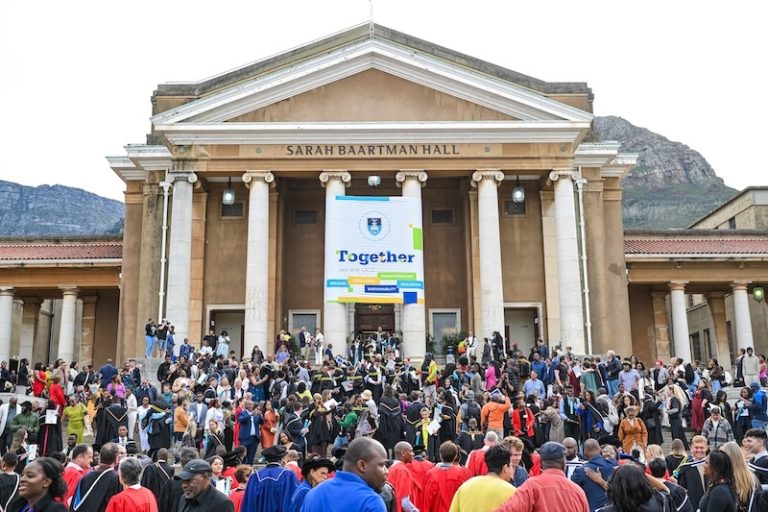
The University of Cape Town (UCT) has recorded strong performance in two major international rankings released in November  2025.

The ShanghaiRanking’s Global Ranking of Academic Subjects (GRAS) 2025 reported consistent results for UCT across several subjects, while the Quacquarelli Symonds (QS) Sustainability Rankings 2026 confirmed the university’s positive activity in environmental, social and governance-related indicators.

Top in South Africa in 10 subjects

Published on 19 November, the latest GRAS results place two UCT subjects in the global top 50 and four in the global top 100. All four subjects ranked first in South Africa:

  • Geography – ranked 47th (previously 43rd in 2024)
  • Public Health – ranked 49th (improved from the 51–75 band)
  • Oceanography – ranked 51–75 (up from the 76–100 band)
  • Mining & Mineral Engineering – ranked 76–100 (entering the top 100 for the first time)

Three of these subjects improved their positions compared to 2024. In addition, five other UCT subjects were ranked in the 101–150 band: Pharmacy & Pharmaceutical Sciences, Environmental Science & Engineering, Clinical Medicine, Atmospheric Science, and Ecology.

UCT had more subjects listed in the 2025 GRAS than any other university in Africa and ranked first in South Africa in 10 subjects, including Economics and Human Biological Sciences (both in the 151–200 band). Ecology was the only listed subject not ranked first nationally.

This year, GRAS evaluated nearly 2 000 universities across 57 subjects. The GRAS methodology is metrics-based, using indicators such as publication output, citation impact, international collaboration, papers in high-impact journals and major academic awards. GRAS rankings do not include reputation surveys.

Strong performance in QS Sustainability Rankings 2026

For these rankings, released on 18 November, UCT tied at 59th place globally with Queen’s University at Kingston, Canada. With 1 994 institutions included this year, UCT emerged in the top 3% worldwide.

UCT’s category positions were:

  • 55th in Environmental Impact
  • 111th in Social Impact
  • 38th in Governance.

In the previous edition, UCT tied at 45th place out of 1 751 universities, again in the top 3%. The QS Sustainability framework evaluates universities across environmental (45%), social (45%) and governance (10%) indicators.

Commenting on the two rankings outcomes, Professor Jeff Murugan, acting deputy vice-chancellor for Research and Internationalisation, said: “They reflect the commitment of our researchers, students and professional staff to advancing knowledge that prioritises academic excellence and social responsiveness.”

He added that universities are expected to incorporate sustainability into their core missions of education, research and outreach: “It is encouraging to see UCT’s subject-level research strengths recognised alongside our growing contributions to sustainability. We remain focused on deepening this work through strong partnerships and a clear commitment to societal impact,” Professor Murugan said.

Courtesy: UCT News
ECDOE releases R247m to keep school infrastructure projects on track

By Levy Masiteng 

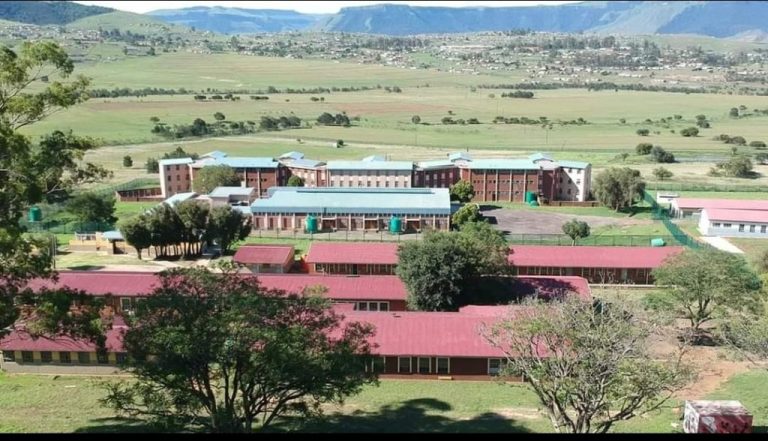
The Eastern Cape Department of Education has allocated R247 million of the R529 million Education Infrastructure Grant (EIG) fourth tranche payment, which is expected to ensure the continuation of construction work on school infrastructure projects in 2026.

In a statemen released on Tuesday, the department confirmed that the funds have already been paid to implementing agents to prevent work stoppages on critical infrastructure projects, particularly as schools prepare to reopen in January 2026. 

The department further said the other remaining payments owed to other service providers will be processed once the adjusted budget becomes available early next year.

“We would like to extend our sincerest apologies to the affected Service Providers for the payment delay experienced and will endeavour to process the remaining payments as soon as the Department is able to in January 2026,” the department said in a statement.

The latest payment follows earlier challenges linked to budgetary constraints and the phased release of national infrastructure grant funding, which had raised concerns about possible disruptions to school construction projects.

The ECDOE said the release of the R247 million demonstrates its commitment to safeguarding infrastructure delivery and ensuring learners are not negatively affected by administrative or financial delays.

INSIDE EDUCATION

130 schoolchildren and staff abducted in Nigeria last month have been released, police say

0

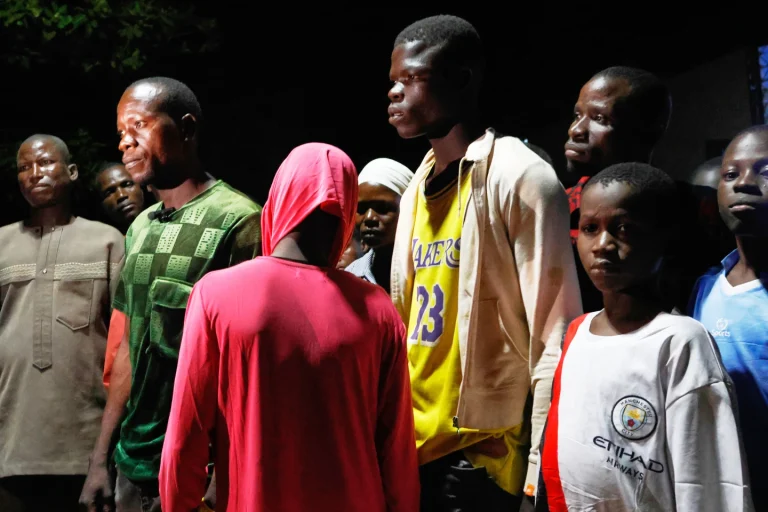
Some 130 schoolchildren and staff abducted from a Nigerian Catholic school last month by gunmen have been released, police said Sunday.

Gunmen seized at least 303 schoolchildren and 12 teachers in Nigeria’s north-central Niger state when they attacked St. Mary’s Catholic School in the Papiri community on Nov. 21.

Fifty escaped in the hours that followed and 100 schoolchildren were freed earlier this month.

Niger State police spokesperson Wasiu Abiodun said in a statement that “the remaining batch of the abducted students” has now been released.

“A total number of 130 victims including the staff have been released,” Abiodun said.

When asked about the 35 unaccounted for schoolchildren and missing teachers, Abiodun told The Associated Press: “Further details will be communicated.”

Presidential spokesperson Bayo Onanuga said in a post on X that the “remaining 130 schoolchildren abducted” have been released.

He said the released schoolchildren would arrive in Minna, the Niger state capital, on Monday and rejoin their parents for Christmas.

“The freedom of the schoolchildren followed a military intelligence driven operation,” Onanuga said.

Sunday Dare, another spokesperson for Nigeria’s President Bola Tinubu also said 130 schoolchildren were released and that none are left in captivity, in a post on X.

No group has claimed responsibility for the Nov. 21 abduction, but locals blamed armed gangs that target schools and travelers in kidnappings for ransoms across Nigeria’s conflict-battered north.

The Niger state attack was among a spate of recent mass abductions in Nigeria, and happened four days after 25 schoolchildren were seized in similar circumstances in neighboring Kebbi state’s Maga town. A church in southern Kwara state was also attacked around the same time and the 38 worshippers abducted in that attack last month were freed.

Bola Tinubu had been under pressure at home and from U.S. President Donald Trump, who has alleged that Christians are being targeted in Nigeria’s security crisis.

Nigerian authorities usually do not say much about rescue efforts and arrests in such cases are rare. Analysts believe that’s because ransoms are usually paid. Officials do not admit payment of ransoms.

AP

5 464 Grade 1 and 8 learners still unplaced for 2026 in Gauteng, says MEC Chiloane

By Johnathan Paoli

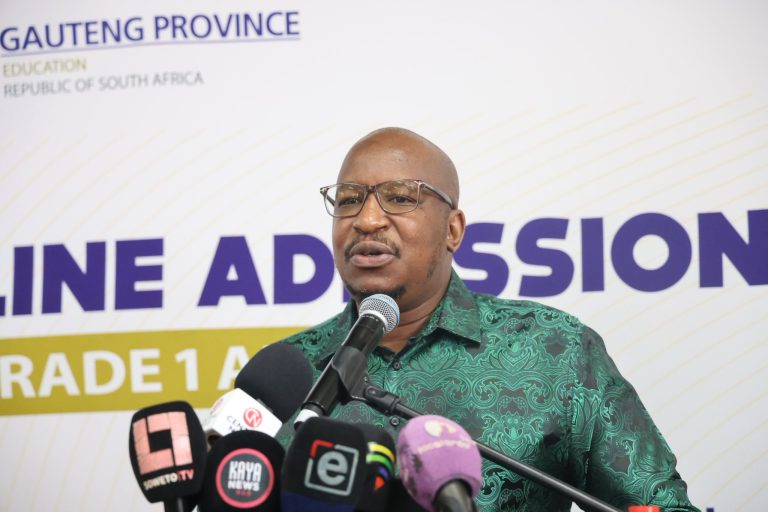
Gauteng Education MEC Matome Chiloane has announced that only 5 464 Grade 1 and Grade 8 learners remain unplaced in the province as part of the 2026 online admissions process, marking significant progress in preparations for the new academic year.

In a media statement issued on Monday, Chiloane said the reduced number of unplaced learners reflected sustained efforts by the Gauteng Department of Education to ensure that every eligible child secures a school place for 2026.

“We are pleased at the progress made in learner placements in Gauteng. We once again urge parents and guardians to exercise patience and cooperation as the Department continues to work tirelessly to ensure that every Grade 1 and Grade 8 learner is placed for the 2026 academic year, in line with regulated admissions criteria and available capacity,” he said.

The department confirmed that, as of the same date, the unplaced learners comprised 1 478 Grade 1 applicants and 3 986 Grade 8 applicants.

According to the MEC, the department continues to release placement and transfer offers on a daily basis through the 2026 Online Admissions system.

These placements are being prioritised in high-pressure areas where demand for school places traditionally exceeds available capacity.

The department has implemented focused interventions in these communities to ensure that the remaining learners are placed as efficiently, fairly and transparently as possible.

Chiloane also confirmed that late applications for Grade 1 and Grade 8 admissions remain open.

The online system has recorded a total of 7 118 late applications for the 2026 academic year, all of which are currently being processed in line with available school capacity across the province.

The MEC urged parents and guardians who did not apply during the main application window, or whose applications were left incomplete, to make use of the late application period while it remains open.

He emphasised that the online admissions system continues to accept late applications specifically for Grade 1 and Grade 8 learners.

Parents and guardians are required to register or log in to the online admissions portal to submit a late application.

During this phase of the admissions process, only schools with available space are displayed on the system.

Applicants are permitted to select only one school, and once the selection is made, the learner will be finally placed for the 2026 academic year.

The department has cautioned that placements made during the late application period are final.

Once a learner is placed, the offer may not be declined, and no objections or appeals will be allowed thereafter.

This, the department said, is necessary to bring certainty to the admissions process and allow schools to plan effectively for the start of the academic year.

In addition to placements and late applications, the department provided an update on the appeals process.

A total of 6 855 placement appeals have been lodged as part of the online admissions cycle.

Of these, 73% have already been adjudicated, placing the appeals process at an advanced stage.

The department confirmed that appeal outcomes are being communicated to parents and guardians as finalisation continues.

Parents were reminded that all appeal decisions are final and that no further recourse is available once an outcome has been issued.

Chiloane welcomed the progress made to date and appealed for continued cooperation from parents and guardians.

The department reiterated its commitment to completing the admissions process before the start of the 2026 school year, ensuring stability for schools, educators and learners across the province.

INSIDE EDUCATION

SaveUnisa calls for VC’s resignation after Professor Puleng LenkaBula reappointment

By Charmaine Ndlela

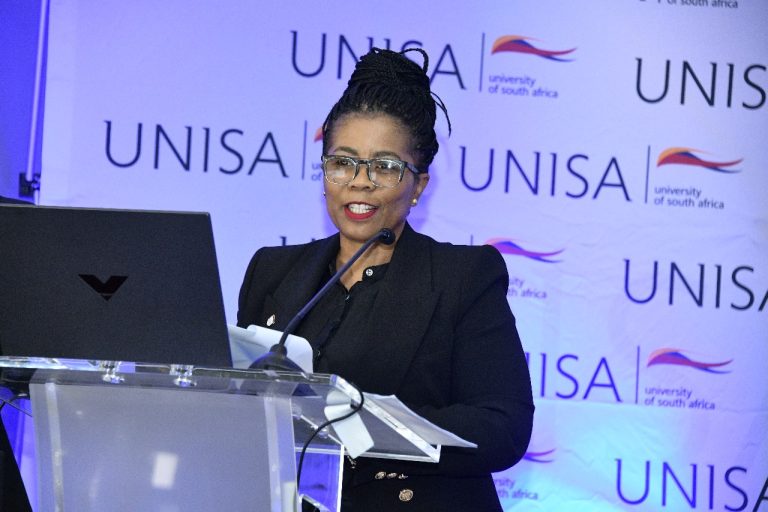
The SaveUnisa Forum has called for the resignation of University of South Africa (UNISA) Vice-Chancellor and Principal Professor Puleng LenkaBula, following the university council’s decision to reappoint her for a second five-year term, effective January 2026.

The forum is demanding a transparent review of leadership performance and institutional stability at the university. It argues that the timing of the reappointment has shifted the balance of power within UNISA’s leadership structures and accuses the council of failing to exercise effective oversight over executive management.

SaveUnisa further claims that the decision ignores what it describes as critical systemic failures within the institution, saying new leadership is needed to address deep-rooted governance concerns.

The group has also accused Professor LenkaBula of allegedly misrepresenting her qualifications to secure the vice-chancellor position. It claims she does not hold a recognised master’s degree or the required 10 years of executive experience, as stipulated in the 2020 advertisement for the post.

In response, UNISA dismissed the allegations, describing them as a “rehash of baseless and unfounded claims.”

In a statement, the university said the SaveUnisa Forum has, since 2021, repeatedly questioned the integrity of the institution’s leadership, particularly the council and the vice-chancellor.

Regarding Professor LenkaBula’s reappointment, UNISA said the council acted within its mandate after conducting a comprehensive performance review, based on performance contracts and annual assessments completed since her appointment.

“Having satisfied itself that she met the agreed performance targets, council resolved to reappoint her for a second term. The complaint by the SaveUnisa Forum regarding the timing of the reappointment is frivolous and without merit,” the statement said.

Professor LenkaBula assumed office in late 2020, becoming the first woman to serve as vice-chancellor of UNISA.

In recent years, the university has faced several controversies, including allegations of senior staff purges, financial maladministration and abuse of power.

UNISA added that it is under no obligation to provide evidence of its processes to the SaveUnisa Forum.

INSIDE EDUCATION

Maluleke moves to restore order at troubled NSFAS

By Charles Molele

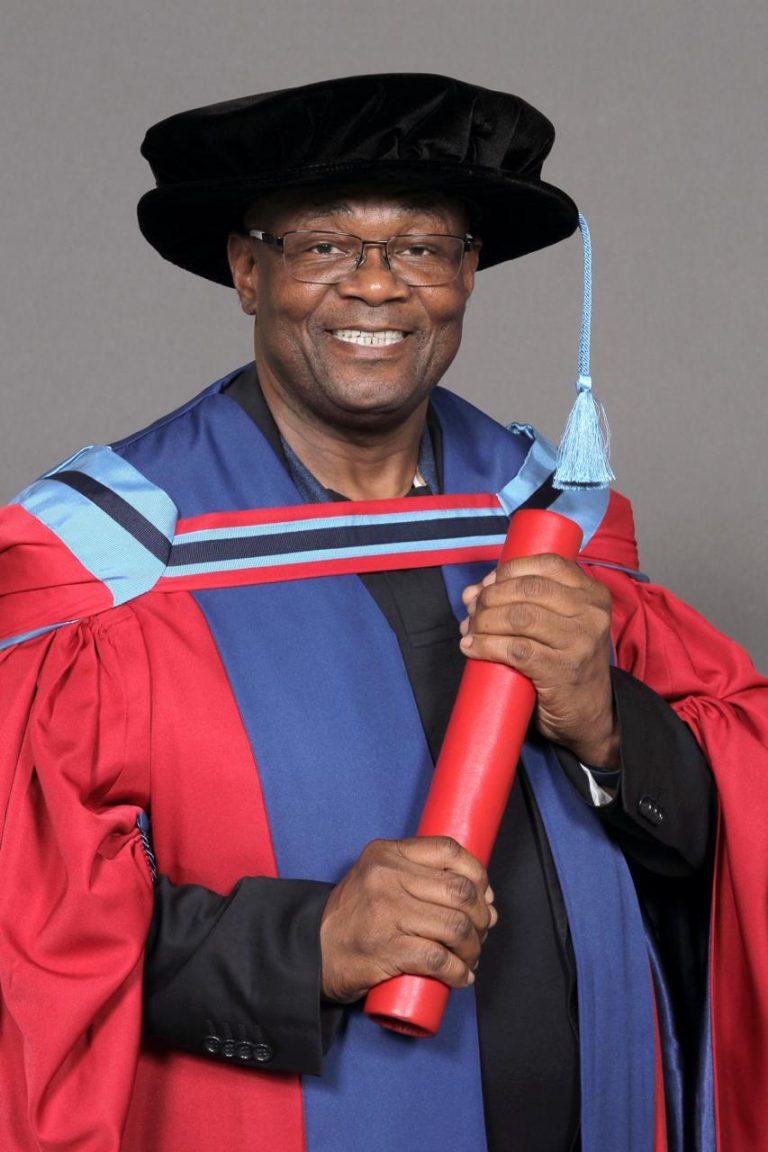
The new acting chair of the National Student Financial Aid Scheme (NSFAS), Dr Mugwena Maluleke, has vowed to deal decisively with the mismanagement, corruption, and administrative failures that have plagued the entity.

The problems that have led to late payments, academic exclusions, hunger, and operational chaos are undermining access to higher education for thousands of young people.

In an exclusive interview with Inside Education, Maluleke said stabilising governance and restoring operational efficiency will be his immediate priority as he steps into the role.

“Our immediate focus is to stabilise payment processes, secure cash flow for the current academic cycle, and urgently address ICT and payment system failures that have caused disruptions,” Maluleke said.

“We will implement a clear command-and-control structure to strengthen governance, enhance transparency, and ensure every
approved student receives their funding on time.”

He said the long-term vision is to rebuild NSFAS into a model public entity that delivers its mandate through efficient,
transparent, and accountable funding systems.

Maluleke stressed that accountability will be central to NSFAS’s turnaround.

“We are strengthening internal controls, enhancing oversight, and introducing more rigorous audit processes. We aim to foster
a culture of integrity and ethical conduct throughout the organisation,” he said.

“Working with the Department of Higher Education and Training, the Auditor-General, and other oversight bodies, we are committed to full transparency. Any irregularities will be promptly investigated and resolved. I am personally committed to disciplined, evidence-based engagement with the Minister, Parliament, and institutional leaders to support coordinated reforms.”

On the contentious issue of direct payment of student allowances, Maluleke said the system requires a balanced and evidence-based approach.

“While it offers efficiency and transparency, it also presents risks related to oversight, financial literacy, and potential misuse,” he said.

“The Board will commission a full technical evaluation of the platform. We are developing stronger monitoring systems, enhanced tracking mechanisms, and financial literacy support for students. Close collaboration with institutions is essential to ensure funds are used appropriately.”

He added: “Our ultimate goal is a transparent and accountable disbursement process that protects public funds and supports
equitable access to quality education.”

Maluleke said rebuilding trust in NSFAS is one of his top priorities as the new chair.
“We will do this through transparent communication, strengthened governance, and demonstrable improvements in
service delivery,” he said.

“We are engaging directly with students, universities, TVET colleges, and government stakeholders to rebuild trust.
Continuous improvement, responsible financial management, and adherence to best practices in public-sector governance will
guide this work.”

Maluleke was appointed by Higher Education and Training Minister Buti Manamela in November this year following the
resignation of the previous NSFAS board chair.

As a current board member, he brings extensive leadership and governance experience to the position.

Widely regarded for his commitment to education and social justice, Maluleke is a seasoned educationist, trade unionist, and academic.

He holds a doctorate in education and has contributed significantly to South Africa’s education transformation.

He currently serves as the General Secretary of the South African Democratic Teachers’ Union and has been a member of the union since its inception in 1990.

Last year, he was unanimously elected President of Education International at its 10th World Congress in Buenos Aires, a global recognition of his leadership and advocacy in the education sector.

NSFAS said Maluleke’s experience in policy development, stakeholder engagement, and organisational leadership will be key to strengthening the scheme and restoring confidence among students and institutions.

“He has contributed extensively to advancing educational transformation in the country,” said NSFAS in a statement.

“Dr Maluleke’s expertise in policy development, stakeholder engagement, and organisational leadership is well-regarded, and NSFAS is confident that his guidance will further strengthen the organisation’s commitment to supporting students in need. We wish Dr Maluleke every success in his new role and look forward to his leadership as NSFAS continues its mandate to provide financial assistance to deserving students across South Africa.”

INSIDE EDUCTAION

OPINION| A turning point for foundational learning – and a mandate for bold action

By Siviwe Gwarube
 
November marked a profound shift in global education diplomacy. From the historic G20 Leaders’ Summit held for the first time on African soil to the reaffirmation of cooperation at a general meeting of the Heads of State of India, Brazil and South Africa (IBSA) on its sidelines, the world has signalled a growing commitment to strengthening the early foundations of learning.

For South Africa, this shift aligns strongly with our own strategic direction. Early in my term of office, I announced a reorientation of our basic education system towards improving learning foundations from birth through the early primary grades — focusing on early childhood care and education (ECCE) and early-grade literacy and numeracy. 

This approach is grounded in clear global and local evidence: without decisive investment in the early years and the early grades, no education system can deliver equitable outcomes or close inequality gaps.

The signals emerging from the G20 and IBSA meetings affirm that South Africa’s strategic focus is timely, necessary and aligned with global best practice.
 
G20: A global mandate that reinforces South Africa’s reform direction
 
The G20 Leaders’ Declaration recognises ECCE as “a vital investment for a country’s social and economic future” and calls for strengthened teaching quality, improved pedagogical support and inclusive access to technology and safe learning
environments.

It also underscores the need to support teachers to strengthen early competencies, including literacy and numeracy — precisely the priorities at the heart of South Africa’s reforms.

In reorienting our basic education system, we are prioritising improved access to quality ECCE, strengthening early-grade literacy and numeracy, expanding structured pedagogical materials and practices, and supporting vulnerable learners early so that
gaps do not become entrenched.

The G20’s commitments show that these are not only national priorities — they are global ones. When the world’s major economies affirm the importance of early learning for economic growth, equality and long-term stability, it reinforces the evidence-based
path South Africa is taking.
 

IBSA: Global South leadership on early learning
 
In parallel, on the sidelines of the G20 Summit, the Leaders of India, Brazil and South Africa endorsed the progress made by the IBSA Ministers of Education toward establishing the IBSA Network on Quality Foundational Learning.

Their commitment strengthens our shared resolve to ensure that every child develops strong early foundations — from early cognitive and socio-emotional development to early literacy and numeracy.

President Ramaphosa welcomed the deepening of IBSA collaboration on this agenda, which aligns closely with the G20’s renewed emphasis on expanding quality early learning.

As South Africa prepares to assume the IBSA Presidency in 2026, we welcome the call for urgency and ambition in advancing this work.

South Africa stands ready to drive the next phase of cooperation, deepening the exchange of evidence-based policies and practical solutions across the Global South and beyond, and supporting early learning systems that work for all children.

The IBSA Network will serve as a platform for countries committed to improving children’s learning from the earliest years through the early grades. While its modalities will be determined collectively by India, Brazil and South Africa, we believe there is value in gradually creating space for wider international engagement with countries, organisations and partners that share this vision.
 
A growing global consensus on strengthening early learning

 
Across both the G20 Declaration and the IBSA meeting, one message is clear: a global consensus is forming around the strategic importance of strengthening ECCE and early-grade learning.

Evidence has long shown that strong early learning drives later success, that early gaps quickly become entrenched inequalities, and that investments in the early years deliver the highest returns. This is why South Africa’s basic education strategy is being reoriented to strengthen early foundations — and why global alignment around these priorities strengthens our resolve.
 
South Africa’s commitment

 
The convergence of global momentum and national reform creates a powerful opportunity. Our domestic priorities sit squarely within the direction reaffirmed by G20 Leaders and endorsed by IBSA Heads of State.

As Minister of Basic Education, I reaffirm my commitment — and that of my Department — to ensuring that South Africa continues to lead in championing the early foundations of learning as the cornerstone of human development and economic growth.

The world is recognising what evidence has long shown: the foundations laid in the early years determine the future. South Africa is acting on this truth – and we intend to lead from the front.
 
Siviwe Gwarube is the Minister of Basic Education.

INSIDE EDUCATION

Final NATED N3 results standardised as legacy programmes phased out

0

By Johnathan Paoli

The Department of Higher Education and Training has confirmed that the National Accredited Technical Education Diploma (NATED) Report 190/191 N3 examination results will be standardised for the final time, marking a decisive step in the phasing out of South Africa’s long-standing NATED qualification framework.

The move represents a major turning point in the country’s technical and vocational education system, bringing closure to the lower levels of a programme that has shaped skills training for decades.

The final standardisation follows the formal phase-out of N1–N3 programmes, which came into effect in January 2024 in terms of Government Gazette 49518.

As part of this process, the October/November 2025 examination sitting was the last opportunity for candidates to write N3 examinations under the NATED system.

Quality assessment institution, Umalusi, will issue certificates for these final results, after which no new N3 examinations will be offered.

Beyond 2025, the department has indicated that administrative services related to N3 will be limited to the re-issue or replacement of existing certificates.

This effectively brings the lower NATED levels to a permanent close, ending new enrolments and assessments while preserving the integrity of qualifications already obtained.

Both the department and Umalusi have emphasised that all NATED certificates already issued remain valid, and that learners who have completed N1–N3 qualifications will not be disadvantaged by the withdrawal of the programme.

Employers, training institutions, and other stakeholders are expected to continue recognising these qualifications as legitimate legacy credentials within the national education system.

The phase-out of N1–N3 represents the conclusion of a technical education model that has historically provided structured theoretical instruction in engineering, business, and service-related fields.

These programmes formed the foundation of vocational training at public and private TVET colleges and served as entry points into higher NATED levels and diploma pathways.

However, the department argued that the NATED framework, particularly at the lower levels, has become increasingly misaligned with the needs of a modern and rapidly changing labour market.

The department pointed to limited workplace exposure, outdated curricula in some fields, and uneven assessment practices as key reasons for restructuring the system.

The closure of N1–N3 forms part of a broader reform agenda that will ultimately see all NATED programmes from N4 to N6 phased out and replaced by Occupational Qualifications overseen by the Quality Council for Trades and Occupations.

While N4–N6 programmes remain operational for now, the department confirmed that the system is in its final years and that no long-term continuation is planned.

New enrolments into NATED programmes will still be permitted for a limited period, but colleges are expected to stop accepting new registrations around mid-2026.

Some institutions may close enrolments earlier depending on capacity, staffing, and readiness to transition to the new system.

Students who are already enrolled in N4–N6 programmes will be allowed to complete their studies, provided they do so within the prescribed transition timeframe.

Under the department’s transition plan, the National N Diploma pathway will close permanently in June 2029.

By that deadline, students must have completed all required theoretical subjects across N4, N5, and N6, accumulated the necessary 18 months of workplace experience, and submitted all documentation for the award of the diploma.

Learners who fail to meet these requirements before the deadline risk exiting the system without a completed qualification.

The department warned that partial NATED studies will not be transferable into the new Occupational Qualifications framework, as the two systems are structurally different and do not merge.

This has placed increased pressure on current NATED students to plan their studies carefully and avoid delays that could jeopardise completion.

Occupational Qualifications are being introduced as the primary replacement for NATED programmes and are designed around competency-based training rather than theory-heavy instruction.

These qualifications include compulsory work-integrated learning and are developed with direct input from industry to ensure relevance to current labour market needs.

Occupational Certificates are aligned to the National Qualifications Framework and linked more clearly to apprenticeships, artisan development, and employment pathways.

For prospective students planning to study from 2025 onwards, the transition presents a choice between committing to the remaining NATED pathway within its closing window or enrolling directly into Occupational Qualifications that will remain in place long term.

Standardisation is a quality assurance process that uses statistical and analytical methods to ensure that examination results fairly reflect learners’ knowledge, abilities, and aptitude, by minimising the influence of external factors that could distort performance outcomes.

INSIDE EDUCATION

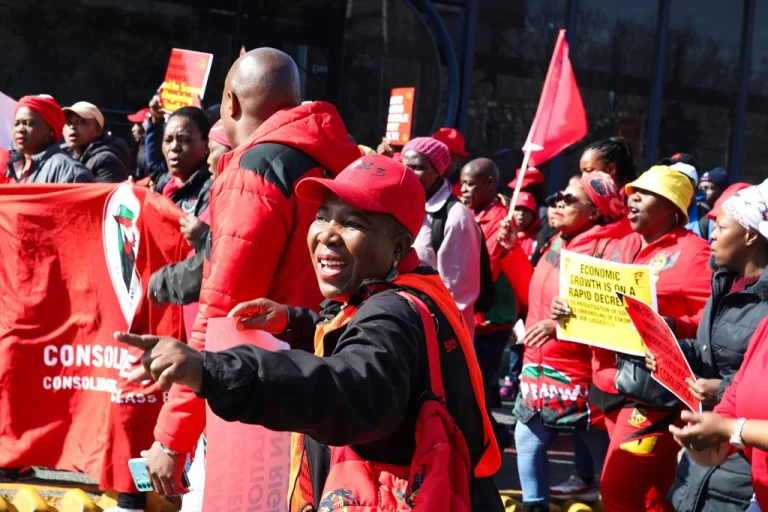
COSATU rejects proposed 4.1% pay hike for public office bearers

By Johnathan Paoli

The Congress of South African Trade Unions (Cosatu) has come out strongly against a proposed 4.1% salary increase for politicians and other public office bearers, describing the recommendation as “tone-deaf”, morally indefensible and dangerously disconnected from the daily struggles of ordinary South Africans.

In a statement issued on Sunday, Cosatu Parliamentary Coordinator Matthew Parks rejected the Independent Commission for the Remuneration of Public Office Bearers’ recommendation, which would see salary increases for members of Cabinet, Parliament, provincial legislatures, municipal councils, government commissions and the judiciary for the 2025/2026 financial year.

Parks said the proposed increase sends a damaging signal to an increasingly frustrated public, reinforcing perceptions of a political elite insulated from the economic hardship facing millions.

“It is beyond shameful that in the same year the government claimed it had no money and imposed a VAT hike on working people, this Commission could propose such a generous increase for politicians,” Parks said.

He further criticised the timing of the recommendation, noting that Finance Minister Enoch Godongwana had recently warned Parliament that further tax hikes may be unavoidable in 2026.

According to Cosatu, the proposed increase would cost the state an additional R536 million, a figure it described as unjustifiable amid deepening austerity and collapsing public services.

Parks was particularly scathing about the inclusion of more than 9,300 local government councillors, arguing that many municipalities are in financial distress and failing to pay salaries, pensions, medical aid contributions and statutory taxes.

“If the government has spare funds, these should be used to hire doctors, nurses, teachers, police officers and other frontline workers who are desperately needed in working-class communities,” he said.

While Cosatu rejected the overall proposal, it expressed support for Minister Godongwana’s differentiated approach.

The finance minister had reportedly suggested a 4.1% increase for judges and magistrates, while recommending a more modest 3.5% adjustment for public representatives.

Parks said judges and magistrates should be treated separately due to their specialised skills and experience, warning that failure to do so could worsen skills shortages and strain an already overburdened judicial system.

However, he argued that public representatives should receive no increase at all and said politicians should lead by example, particularly at a time when the government has failed to adjust income tax brackets for inflation for two consecutive years, effectively increasing the tax burden on low- and middle-income earners.

Cosatu also called for reforms to the remuneration-setting process, arguing that the Commission should be required to submit its proposals for public comment before they are forwarded to the President for approval.

Parks urged the government to link salary increases to the performance of public representatives and the institutions they oversee, calling on President Cyril Ramaphosa to reject the current proposal and instead approve an inflation-linked 3.5% increase for members of the judiciary, alongside a performance-based 0% increase for public representatives.

The controversy follows the publication of the Commission’s recommendation in a government gazette earlier this week.

If approved, the proposed 4.1% increase would see the President’s annual salary rise by approximately R137 000 to about R3.4 million.

The Deputy President would earn nearly R130 000 more, taking his salary to around R3.1 million, while Cabinet ministers could see increases of about R110 000, bringing their annual earnings to roughly R2.8 million.

The proposed hikes come amid mounting financial pressure on households, with rising debt levels, food insecurity, high interest rates and unstable employment leaving many South Africans struggling to meet basic needs.

INSIDE EDUCATION

Limpopo caps rising cricket stars ahead of national tournament

0

By Johnathan Paoli

Limpopo Impala Cricket (LIC) ushered in a new generation of provincial cricketing talent as dozens of the province’s most promising young players were honoured during a spirited capping ceremony ahead of Cricket South Africa’s annual national
youth weeks.

Held at LIC’s headquarters in Polokwane, the ceremony celebrated boys and girls selected to represent Limpopo in the U/13, U/17, and U/19 divisions at major tournaments scheduled across the country in December.

For many of the athletes, the occasion marked the culmination of years of dedication, weekend training sessions, cross-province trials, and an unwavering commitment to the game.

The squads were drawn from hundreds of aspiring cricketers across Limpopo’s schools and clubs, making selection itself a monumental achievement, according to LIC president Sakie Mabala Kwakwa.

Addressing the packed venue filled with players, parents, coaches, and administrators, Mabala praised the youngsters for setting the benchmark in provincial youth cricket.

“You were the chosen ones out of hundreds. Your hard work has brought you here, and we believe you’ll make us proud. Good luck. Carry our dreams and the pride of Limpopo onto the national stage,” Mabala said.

For LIC, the national weeks are more than just tournaments, but a platform for young cricketers to measure themselves against the country’s best, broaden their cricketing horizons, and potentially catch the eye of talent scouts.

The ceremony reflected that sense of importance, with players stepping up one by one to receive their provincial caps, symbolising their elevation to the Limpopo elite.

Among the U/16 girls’ players, Hoërskool Nylstroom’s Mpule Sebele said she felt driven to help the team reach new heights.

“I look forward to achieving something the U/16s haven’t achieved in a while. We want to surprise teams, showcase our talent, and show Limpopo we can do this,” Sebele said.

Her teammate from Mahwahwa High School, Pontsho Mopai, echoed that sentiment with infectious optimism.

“I look forward to winning all the games. Even if we don’t win, we must show off our talent and show Limpopo we’re the best. We should support one another, and we will represent the province well,” Mopai said.

For rising bowler Alicia Masela, also from Mahwahwa High School, the goals are both personal and collective.

“Individually, I want to take three wickets per match. As a team, we have to prove we were not mistakenly chosen and represent Limpopo well. We’re ready,” she said.

At the U/19 level, the stakes feel higher as players edge closer to potential senior provincial selection.

Hoërskool Frikkie Meyer all-rounder Mahlako Mamabolo said stepping onto the national stage is something she has dreamed of for years.
“I’m looking forward to representing LIC and making my province proud by working hard with my teammates. If we give everything, we can make our tournament a success,” Mamabolo said.

Mahwahwa High School’s Shelfa Mukhari said her ambitions extend far beyond the December fixtures.

“We want Limpopo to be proud of us and to improve our careers. We look forward to playing for the Proteas one day. This is another step toward that goal,” she said.

The U/13 boys, the youngest group heading to nationals, could hardly contain their excitement.

Many will be experiencing a major provincial tournament for the first time.

For Unicorn Preparatory School’s Tanish Patel, the call-up feels like the beginning of a lifelong cricket journey.

“I’m looking forward to the new challenge and playing at a high level of cricket. It’s a dream come true,” Patel said.

His teammate Ejnar Joubert, also from Unicorn, shared similar enthusiasm.

“I want to play at the highest level and make my team, my family, and the whole province proud,” he said.

Laerskool Julian Muller’s Mpho Matsetela said he is motivated by the chance to test himself against unfamiliar opposition.
“I’m looking forward to facing a new, tough challenge. I cannot wait for the experience,” he said.

While the focus of the morning remained firmly on the players, the event also offered a moment for LIC to reflect on its broader mission of nurturing cricketing excellence across Limpopo.

Founded in 2006, Limpopo Impala Cricket has long served as the beating heart of cricket in South Africa’s northernmost province. From its Polokwane headquarters, LIC has grown into a central hub of development, inclusivity, and opportunity for aspiring young players from rural villages, mining towns, and urban schools alike.

Its vision, as articulated by officials, is to cultivate a cricket culture that goes beyond on-field results — to inspire discipline, character, diversity, and unity among young athletes.

The organisation’s history is one of resilience: from securing first-class status in the 2006/07 season to making a triumphant return to top-tier competition in 2022/23 after a hiatus.

That legacy made the capping ceremony all the more meaningful, as the next generation stepped forward to carry Limpopo’s cricketing hopes into the future.

With the national tournaments now just days away, Limpopo’s squads will spend the coming week in final preparation.

Coaches say the youngsters are peaking at the right time, with balanced squads capable of competing with the traditional cricketing powerhouses.

For the athletes themselves, the months of training are over, the caps have been awarded, and the moment they have dreamed about has arrived.

If the passion, ambition, and confidence they expressed at the ceremony are anything to go by, Limpopo’s future in cricket is bright, and December’s national tournament could be the stage where some of these rising stars take their first steps toward greatness.

INSIDE EDUCATION