Home Blog Page 532

 Universities embrace walk-in applications to ensure smooth registration process

Thabo Mohlala

Management of the 26 member universities has been meeting regularly to avoid possible disruptions to the 2018 academic year. The most recent meeting was held on Monday.

The universities were strongly opposed to the idea of walk-in applications mainly to avert chaos and possible stampedes. In the meeting, however, universities decided to embrace the walk-ins as a reality of the time and adopted a more flexible approach to ensure the registration process continues smoothly.

It is projected that about 208,000 first-year students, will in the next three to four weeks, enter the system for the first time.

In a statement on Wednesday, Universities South Africa (USAf), the association representing the universities said it received feedback from a number of its member universities that had started to register students.

“In light of the broadly positive feedback received about the orderly manner in which registrations were progressing, it was decided that a more flexible approach would be adopted to address the question of walk-ins so as to ensure a successful registration period,” it said. 

It was also decided that institutions that do not have vacant academic seats available would, within the context of the available resources and facilities, provide support facility to walk-in students so they can use and access the Central Application Clearing House (CACH). CACH is the Department of Higher Education and Training’s dedicated system that provides students with access to vacant academics seats across the university and TVET colleges.

According to USAF, it was also decided that universities with available vacancies could process walk-in applications “where there is a match between the candidates’ chosen field of study and the vacant seats”. Universities may also make available “their institutional online application systems” to enable students to register.

Each institution made a commitment to, where possible, inform students on the academic programmes that would still accept new students. Each university will also make its position known to the prospective students and to the public at large through various forms of communication.
Hoërskool Overvaal vs Gauteng Education court battle set to resume on Thursday

0

Bonile Khanyi

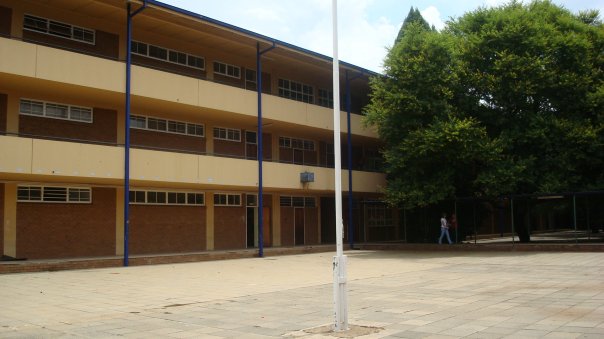
The Gauteng Department of Education (GDE) is expected back in court on Thursday after the case brought against it by Hoërskool Overvaal in Vereeniging was postponed.

The school, which is an Afrikaans-medium of instruction school, brought an urgent application to the North Gauteng High Court last year to prevent the department from forcing it to accept an additional 55 pupils.

In its affidavit, the school claimed it was full and could not accommodate the 55 pupils.

However, the department rubbished those claims and said there was evidence which showed the school had enough space to accommodate these learners and students were denied based on their language preference.

The department said the school had 21 classrooms, and the capacity to accommodate 840 learners, but currently only accepted 621.

According to media reports, the department’s spokesperson Steve Mabona said the postponement was fair as a late affidavit had been filed by the school from other schools.

Mabona also said it was sad to see that schools would resort to legal action when the department had proof they had space.

“We want access to education for all. We offered to give them an educator, learner material and as such we don’t understand the resistance to accommodate other learners. All we asked for was dual-medium,” said Mabona.

Meanwhile, Paul Colditz, the CEO of the Federation of Governing Bodies of Southern African Schools (Fedsas), said he was in full support of the school.

Colditz said the department’s failure to build more schools forced school managers to admit learners even when they did not have the capacity.

“School managers can’t act irresponsibly by pushing up the numbers all the time. This will endanger the health and safety of the learners”, said Colditz.

Stop the blame game and build more schools, says school governing body federation

0

Thabo Mohlala

Admitting learners beyond the school’s capacity amounts to an act of irresponsibility. This is what Paul Colditz, the chief executive officer of the Federation of Governing Bodies of Southern African Schools (Fedsas), said in an interview with Inside Education on Wednesday.

Colditz said while it was understandable that no learners be denied an opportunity to learn, the well-being and safety of learners should always come first. He said the current crisis of school shortages in Gauteng should be blamed on the province’s education department.

On Sunday, Gauteng MEC of education Panyaza Lesufi, said his department is working around the clock to accommodate over 31,000 grade 8 and grade 1 learners in schools across the province.

To add to the woes, several schools were damaged during recent storms. Lesufi admitted some of them would certainly not be ready when schools re-open this week.

“If you analyse the learner enrolment figures of schools in Gauteng and compared them with other schools elsewhere in the country, you will realise Gauteng schools enrol twice the number of other schools outside the province,” said Colditz.

He said on average most schools in Gauteng enrolled about 1000 learners, while the norm in other provinces was almost half the number.

“That in itself tells you there are not enough schools in the province,” he said. 

Colditz said the Gauteng Department of Education (GDE) has a backlog of 200 schools that need to be built to deal with the increasing demand every year. He said every year the national Department of Basic Education publishes a document which provides all the relevant information for the various departments to use and plan properly.

Colditz expressed his support to the management of a Vereeniging based Hoërskool Overvaal after MEC Lesufi headed to Pretoria High Court to challenge their refusal to admit 55 learners. The management said the school reached its full capacity and was not able to accommodate any more learners. But Lesufi said the reason for refusing to admit the learners was based on the Afrikaans language. The case has since been postponed.

Colditz said the department’s failure to build more schools forced school managers to admit learners even when they did not have the capacity.

“School managers can’t act irresponsibly by pushing up the numbers all the time. This will endanger the health and safety of the learners”, said Colditz.

He said what made the situation even more untenable was that the department instructed schools without any proper investigation or communication.

Kutlwanong Top maths and science matrics choose Wits and Tuks to pursue studies

0

Vicky Abraham

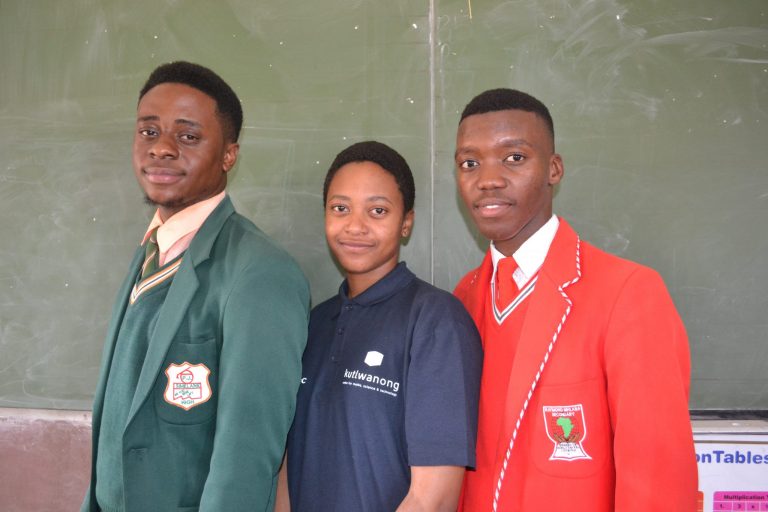
A Biblical adage that a man’s gift makes room for him and brings him before great men, proved to be true for some of the alumni from Kutlwanong Maths, Science and Technology Centre in Soweto who excelled in their 2017 matric exams.

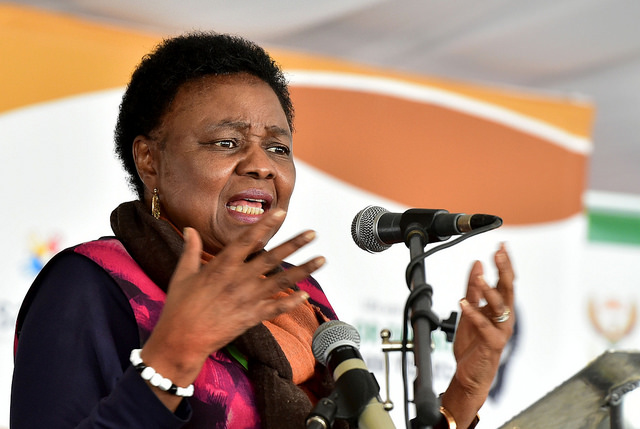
They were honoured by the Minister of Education Angie Motshekga and Gauteng Education MEC Panyaza Lesufi.

Siyanda Pikwa (17) from Raymond Mahlaba Secondary School in Tshepisong was among the top learners recognised by Motshekga for his outstanding results nationally in Quantile 2. In Physical Sciences he obtained 100%, Mathematics 99%, Accounting 98%, Life Sciences 97%, IsiXhosa 90%, Life Orientation 89% and English First Language 83%.  

“I did not expect to be recognised nationally. I was lost for words when I received the call from the Department of Education on Sunday. But then when I dropped the phoned, it sunk in, that I made it to the top nationally. I was picked up from home with a shuttle to Holiday Inn in Sandton. We had a buffet and breakfast with the Minister. It was a great honour to be under the same room with the Minister and the Deputy Minister. The results were announced on national TV. Lots of people saw me on TV. I received WhatsApp messages and phone calls even from those that I do not remember in Eastern Cape. My family is very proud of me,” said Pikwa.

He will be studying towards a degree in mechanical engineering at Wits University.

“I like working with machines and mechanical engineering deals with building, designing and maintenance of machines and engines,” said Pikwa.

David Sithole (18) from P.J. Simelane Secondary School in Dobsonville was honoured by Lesufi. Sithole obtained 100% in Physics and Accounting, 98% in Maths, 89% in Economics 85% in English, 84% in Life Orientation and 67% in IsiZulu.

“I studied and attended extra classes at school and Kutlwanong. I was honoured by the MEC at provincial level. He was shocked that I obtained 100% in Physics and Accounting. I cannot believe that I made it. The feeling is new. I was expecting this for accounting but physics I wasn’t sure,” said Sithole from Bram Fischerville.

He will be studying towards a degree in computer engineering at the University of Pretoria.

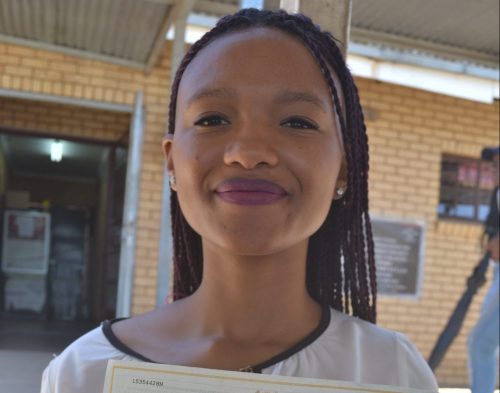
Although Itumeleng Leballo (18) from Bram Fischerville is among top achievers on the provincial level, she could not get an opportunity to receive credit from Lesufi. Leballo obtained 100% in Physical Sciences, 95 % in Life Orientation, 87% in Mathematics and Life Sciences, 86% in English First Language, 84% in Geography and 78% in Setswana.

Leballo from Kgatelopele Secondary will be studying towards BSc (Computer Science) at Wits University.

“I am happy that I got accepted at Wits University. I received the acceptance notification this morning before I got my results. I love computers. The whole concept about computer science is really interesting because you get to do programming, coding, software engineer and you get to develop something. I want to invent something great that can change this country because the world is moving really fast and I feel that South Africa is really behind with technology. I am hoping that my computer skills will help with that.”

Top 5 learners from Bhukulani Secondary School in Soweto seek funding

0

Vicky Abraham

Five top learners from Bhukulani Secondary School in Zola, Soweto who scored distinctions in their matric exams are seeking financial aid for their studies.

Babalo Gcobani 18, and his peers aged 17, Linda Zungu, Selby Tsatsa, Noluthando Kumalo and Sphiwo Maseko applied for financial aid from different organisations, but none have responded to their request.  

Babalo Gcobani 18, obtained six distinctions and one B. Source: Vicky Abraham

Kumalo is the highest achiever at Bhukulani Secondary School and scored 97% in Physical Sciences, 91% in Geography, 89% in Life Sciences, 88% in Life Orientation, 86% in English, Maths 84% and 70% IsiZulu.

“I am still deciding whether I should study computer science or actuarial science. I want to study at University of Cape Town (UCT), but I have not been accepted. I applied to five organisations for bursaries and I haven’t received sponsorship. I feel unsure about my future, but I have hope that I will get bursaries from the organisations that I have applied to,” said Kumalo.

Gcobani obtained 91% in Physics, 90% in Life Orientation, 86% Geography, 85% IsiXhosa, 82% Life Sciences and 77% in Maths. He wants to study medicine at UCT.

“I am anxious because I haven’t received any offers from universities that I have applied to, despite my good marks. I don’t have funds because there are not many organisations that fund first-year medical students. Those who are willing to sponsor, they require conditional acceptance which I did not get from any of the five Universities that I applied to. My mother will not be able to pay for my fees. I will be happy to receive sponsorship from someone who will be willing to assist,” said Gcobani.

Zungu scooped 98% in Life Orientation, Maths 85%, Physics 82%, Geography 81%, Life Sciences 77%, IsiZulu 73% and English 72%.

Sphiwo Maseko (17) obtained five distinctions. Source: Vicky Abraham

“I want to study BSc computer science with applied mathematics at UCT. I don’t have funds and I really need funds so much. I did apply for funding, but I have not yet received any feedback. I live with my mother and we are not really well-off,” said Zungu.

Tsatsa obtained 99% in Maths, 89% in Physics, 87% in Life Orientation, 86% in accounting, 82% in IsiXhosa, 75% in English and 69% in Geography.

“I have been accepted at Wits University to study actuarial science. I love maths. It is my passion,” said Tsatsa.

Tsatsa also hopes that possible funders will come to his aid.

Sphiwo Maseko obtained 95% in Life Orientation, 90% in Economics, 87% in Accounting, 86% in Business studies and English, 73% in IsiZulu and 69% in Mathematics.

“I am planning to study economics and econometrics at the University of Johannesburg (UJ). I am conditionally accepted at UJ. I have heard that it is one of the best universities in the financial and economics field,” said Maseko.

Linda Zungu 17, scored four distinctions. Source: Vicky Abraham
Selby Tsatsa 17, scooped five distinctions. Source: Vicky Abraham

2018 academic year: It is all systems go, says Universities South Africa

Thabo Mohlala

The management of the country’s 26 universities is working diligently to assist learners who qualify for financial assistance to ensure no one is left out before the academic year kicks off next month.

This is what transpired yesterday at a meeting between the department of higher education and training (DHET), National Student Financial Aid Scheme (NSFAS) and Universities South Africa (USAf). The troika is very crucial in ensuring the coordination of all plans and systems related to the implementation of the fee-free higher education

Among the prominent figures who attended the meeting were NSFAS’s chairperson, Sizwe Nxasana, DHET’s Diane Parker and USAF’s Professor Ahmed Bawa.

According to Bawa, the meeting was fruitful as it helped further clarify the role of each player to make sure every qualifying student receives financial support to realise his or her dream of studying at a university of their choice.

“We discussed in greater detail every aspect related to the funding issue so that we can guide and advise students and the parents how to go about registering without any glitches,” said Bawa.

He said their main priority was to assist students who have applied to universities but have not applied for financial aid.

For instance, NSFAS has revised its old family earnings threshold of R122,000 to R350,000 and it is crucial that this information is made readily available. Students who qualify will have to contact the Financial Aid Office at their university and ask to be considered for an NSFAS bursary.

The other crucial bit of information relates to students who failed to apply to a university. They will have to apply online or apply via the DHET’s Central Application Clearing House (CACH) system which would allow DHET, universities and TVET colleges to work jointly to place them across the system.

Bawa said even though he cannot predict the future with some measure of accuracy, he is optimistic all will go according to plan. “It is not like there is a looming crisis except the attempt to politicise the issue”, said Bawa.

He said the Economic Freedom Fighters’ (EFF) call for students to register in person at various tertiary institutions caused them some anxiety. However, Bawa applauded the organisation “for having identified that community of students” who are now being prioritised.  

No registration fee for students who cannot afford it

Ido Lekota

Students from poor and working class families with combined income of up to R350 000 per annum are not expected to pay any upfront registration fee at the country’s tertiary institutions as from this year, the Department of Higher Education clarified on Tuesday.

In a statement the department said there would be no upfront registration payment at TVET Colleges and universities for students who qualify for NSFAS funding. Students who do not qualify for NSFAS funding will be expected to pay upfront registration as has been the norm.

This is in line with the free tertiary education plan announced by President Jacob Zuma last December.

According to the department’s estimate, those expected to pay upfront registration fees currently make up to 55% of the country’s student population and come from high income families who can afford to pay for their tertiary education. It is also estimated that these high income households make up less than 3% of the country’s population.

The new free tertiary education plan is aimed at changing the current student population demographics at the country’s tertiary  instutions by ensuring that over 90% of the students from poor and working class families have access to higher education . These are students from families who make the 55% of the country population who, according to a Statistics South Africa 2017 report, live in poverty.

Panyaza Lesufi dares schools insisting on Afrikaans to take the GDE to court

0

Bonile Khanyi

The Gauteng Department of Education (GDE) has issued a stern warning against schools that use Afrikaans as the only medium of learning, saying that anyone who wants to take them to court over the matter should bring it on.

This comes after Hoërskool Overvaal served the department with an urgent court interdict last month to try and overturn a decision forcing the school to accept an additional 55 pupils.

“There’s a school that preferers Afrikaans speaking learners over other languages. On the waiting list, what they’ve done is, if you speak English, isiXhosa or isiZulu, they skip you and they look for somebody who speaks Afrikaans and pulls that person up, undermining people that have applied on time,” Lesufi said on Sunday.

“We told that school to stop and they’ve taken us to court. So, we’re saying bring it on, we’re not afraid of courts.”

The school maintains that it has reached its capacity while the department said the pupils were denied places based on their language preference.

In its affidavit, the department said the school’s capacity had nothing to do with the number of learners the school could occupy, and everything to do with language.

“It is unbelievable and/or unfortunate that even until today, in this constitutional democracy, we still have a society that sees nothing wrong with a language that was used as a tool of segregation and discrimination during apartheid which 90% of South Africans bemoan,” the affidavit read. 

The department also said that it had every right to place the pupils at the school as the school governing body plays no part in the process of admission of learners and does not declare a school full as that it the duty of the department.

The school has 21 classrooms, and the capacity to accommodate 840 learners, but currently only accepts 621.

The department said that additional furniture and textbooks were already procured and an English teacher would be provided to the school by the department.

The matter will be heard in the Pretoria High Court on Tuesday morning.


USAf commits to ensuring free higher education works

Thabo Mohlala

Universities South Africa (USAf) has taken a pragmatic view on the unfolding potential crisis that may threaten the start of the 2018 academic year across the country’s 26 universities.

The universities raised concerns about the short timeline for implementing President Jacob Zuma’s announcement of free higher education.

Economic Freedom Fighters (EFF) caused anxiety when it encouraged new students to report physically at the gates of the institutions of their choice despite university managements’ calls for online registration.

But USAf said in a statement after it met with Department of Higher Education and Training (DHET) and Students Financial Aid Scheme (NSFAS), that it decided to work towards a smooth start of the 2018 academic year.

It also welcomed President Zuma’s announcement of the new student funding model because of its “potential to address the question of affordability of higher education and post-school education and training more generally”.

USAf said it recommended to the Heher Commission that the NSFAS loan system should be converted into a grant (or bursary) system.

“The fact that young graduates from poor and working-class families won’t have to worry about student debt as they start their careers is very important,” it said in its statement.

The body said it would pull out all the stops to ensure the new system works as “it has enormously powerful positive ramifications for young South Africans, for the university system and for South Africa as a whole”.

It said one of the primary objectives of a university is to be a key social institution that must strive to work towards building equitable, just and democratic societies. Therefore, “any higher education system in the world that is unaffordable to the majority of people in that society is, by definition, in a state of continuous crisis.”

USAf said its member universities fully subscribed to the constitutional directive that “education be made progressively available to all South Africans. As such, any barrier to the realisation of this objective must be addressed”.

It hailed the role played by NSFAS for disbursing funds to deserving students but also said “it was deeply concerned by the spectre of runaway debt and the fact that the NSFAS loan system did not quite reach all students that were in need of financial support including some who qualified through the means test but who remain unfunded”.

It further undertook to “address the challenge of ensuring that no young South African who has been offered a place at one of our universities is prevented from taking up that opportunity for reasons of unaffordability”.

USAf said the meeting with NSFAS and DHET also resolved to take specific measures to “mitigate against any risks that may arise because of the short timescales involved”.

They prioritised three categories of students:

  • The first category — students who have applied to universities and to NSFAS, need not do anything further; their applications will be processed automatically.
  • The second category — students who have applied to universities but have not applied for financial aid because their family earnings extended beyond the old NSFAS threshold of R122,000. The new NSFAS threshold is R350,000 and the only step that these students need to take is to visit the Financial Aid Office at their university and ask to be considered for a NSFAS bursary. Appropriate application procedures will be explained to them.
  • And the third category — students who have not applied for entry to a university. They will have to apply directly to the DHET’s Central Application Clearing House (CACH) system which would allow DHET, universities and TVET colleges to work jointly to place them across the system.

The organisation said the enrolment plans for 2018 indicate an intake of about 208,000 new students by the 26 public universities, while the TVET colleges sector will open up the way for about 350 000 new students. It said its urgent challenge is to make sure that “every single place that is available is effectively taken up by students”.

Panyaza Lesufi urges learners to use Second Chance Matric Programme

0

Bonile Khanyi

Grade 12 learners who are not satisfied with the outcome of their 2017 National Senior Certificate exams (NSC) have less than two weeks to apply for re-marking, re-checking scripts, and to write their supplementary exams.

Gauteng Department of Education MEC Panyaza Lesufi, on Sunday, said learners should take note that the deadline for all of the above is 19 January 2018.

“The department will continue to provide support to learners that opted to write exams in December and June or modularised. In addition, the Second Chance Matric Programme is in place to afford those that seek to rewrite their matric another opportunity,” said Lesufi.

The programme aims to provide support to pupils who have not been able to meet the requirements of the 2017 NSC exams.

He also urged learners to submit any exam queries for investigation within 30 days after the release of the results.

Candidates should also report any inaccuracies on their statements of result before 30 June 2018.

In conclusion, the MEC reminded those who failed their matric exams that it is not the end of the world.

“The Gauteng City Region Academy and the Tshepo 1 million programme will automatically enrol 14 458 learners that did not pass the National Senior Certificate on their database. They will be assisted to find jobs, learnership and entrepreneur opportunities,” said Lesufi.

For more information, visit their website on www.tshepo.mobi.