Home Blog Page 533

Panyaza Lesufi: 31 000 unplaced learners will find a school by the start of the academic year

0

Bonile Khanyi

More than 31,000 grade 1 and grade 8 learners are waiting to be placed in schools but Gauteng education MEC Panyaza Lesufi is confident they will be placed come January 17, in time for the start of the academic year. 

“To date, about 17,000 learners whose parents applied on time have not yet been placed. Unfortunately, they have applied in high pressure areas where there is shortage of space. It should also be noted that many of these parents declined alternative offers of placement,” said Lesufi.

“In addition, 22,921 late applications were received towards the end of the year. To date, 8,865 learners from this group have been placed leaving a balance of 14,056.”

Lesufi said parents who still have admission challenges should visit the department’s district offices on 13 and 14 January to help allocate their children to a school.

“The centres will operate from 08:00 to 17:00. Officials from the department will assist to place the unplaced learners and attend to all parents applying for the first time,” said Lesufi.

State of Readiness for the 2018 Academic Year

Despite several schools being damaged by the recent storm and schools that were vandalised during the holidays, the Gauteng Education Department said it was confident that the first day of school would commence without any disruption.

“We have conducted an audit of these schools and they will be repaired in due course,” said Lesufi.

Lesufi said the estimated cost of repairing the schools was R140 million, and that their readiness would depend on the available funds.

He also outlined his plans to ensure that the first day of school runs smoothly.

“We have built and opened about 48 schools since 2014 and will provide extra classes using Alternative Construction Technology (ACT) and mobile classrooms. Learning and Teaching Support Materials (LTSM) have been delivered to schools,” he said.

“Furniture has also been delivered to 436 schools since April 2016 and we plan to provide daily meals to 1,4 million learners and transport 104,000 learners per day.”

Lesufi said all schools would have adequate educators too.

These are the admission centres parents can go to on 13 and 14 January 2018.

DECENTRALISED ADMISSIONS CENTRES
DISTRICT Name of Venue Area Address Admissions Coordinator Contact Number
EKURHULENI
Ekurhuleni North Ekurhuleni North District Office Benoni Ekurhuleni North District Office Munpen Building                                  78 Howard Ave Trevor Kalidheen 082 744 0537
Ekurhuleni South Ekurhuleni South District Office Alberton 2 Robun Close, Meyersdal, Alberton Ntsikilelo Mphela 082 466 5724
Gauteng East Gauteng East District Office Springs Corner 7th Street and 5th Avenue, Telkom Towers Springs Ncediwe Soga 082 333 9348
JOHANNESBURG
Johannesburg Central Johannesburg Central District Office Soweto Cnr. Modjadji and Old Potch Road, Pimville Fabian Kelly               Johan van Greune 084 550 8394           060 324 2734                            
Johannesburg East Johannesburg East District Office Parkmore Elizabeth Avenue, Parkmore, Sandton Dr Linda Khanye            Innocemnt Ngwenya 082 939 4922
Johannesburg North Bordeaux Primary School Bordeaux 4 Main Street, Bordeaux Peter Swart 082 520 2281
Johannesburg South Johannesburg South District Office Ormonde 100 Northern Parkway Street, Crownwood Building, Ormonde Mashudu Malingvha 073 199 6791
Johannesburg West Johannesburg West District Office Florida/Roodepoort ABSA Building, 20 Goldman Street Sekgora Mafora 071 873 9644
Meszodo Technical Centre Dobsonville Corner van Onselen & Elias Motsoaledi Roads, Zone 9 Meadowlands Aaron Modise 072-4798708
Thakhisa Teachers Centre Meadowlands Zone 9 2031 Zone 9 Meadowlands Victor Maseko 082-9977253
White House Tshepisong Corner Ruth First Phase 7 Tshepisong Joy Legodi-Zimba 082-4840986
SEDI-WES
Gauteng West Gauteng West District Office Randfontein 108 Maugham Road, West porges, Randfontein, 1759 Ms Nonhlanhla Ntshangase       071 573 5330
Fochville Secondary School Fochville 105 Kraalkop Street, Kokosi, Fochville, 2515 Mr. Edwin Ditsi 082 562 5943
H/S Wonderfontein Obelhozer, Carletonville C/O Vegkop & Bloukrans Street, Oberholzer Mr. Edwin Ditsi 082 562 5943
Hlangabeza Primary School Khutsong South, Carletonville 614 Nxumalo Road, Khutsong Mr. Edwin Ditsi 082 562 5943
Hoërskool Westonaria Westonaria 1 Van der Stel Street, Westonaria Ms Nomveliso Mpongo                 084 680 6423
Carleton Jones Westonaria Anna Road, Carletonville Ms Nomveliso Mpongo                 084 680 6423
Mohlakano Primary School Mohlakeng 274 Nqonyela Street, Mohlakeng, Randfontein 1756 Mr. Edwin Ditsi 082 562 5943
Khaselihle Primary School Kagiso 6447 Hadebe Street Ms Nonhlanhla Ntshangase       082 562 6066
Krugersdorp District Office Krugersdorp Cnr. Boschoff & Human Street, Krugersdorp Mr. Vusumzi Rajuile               082 562 6066
Sedibeng East Sedibeng East District Office 14 Joubert Streets,                S, L & M  Building Vereniging Moya Botha 083 961 7845
Sedibeng West Sedibeng West District Office 06 Samuel Street                   Zone 18                          Sebokeng Sebokeng Peter Rampa 011 387 8431
TSHWANE
Gauteng North Gauteng North District Office Pretoria toriaYorkcor Park Building, 86 Watermeyer street, Val de Grace, Pre Gladys Mphai 082 562 7489
Tshwane North Tshwane North District Wonderboom Junction Corner Lavender and Braam Pretorius Streets, Wonderboom Junction Mall, 1st Floor Onkarabetse Mankuroane 082 744 0537
Tshwane South Vodacom ICT Centre Sunnyside Lenahof Building Prudence Oliphant 012-8011651
Lemoshanang Teachers Centre Atteridgeville 189 Gerard Moerdyk 012-3734232
Mamelodi Teachers Centre: Mamelodi Cnr. Gerard Moerdyk & Justice Mohammed (Walker) Streets 012-3410091
Tshwane West Tshwane West District Mapopane/ Winterveldt Sunnyside Yvonne Mooke 082 415 7284


Dear Students: Be on high alert for fake private colleges!

Thabo Mohlala

With matrics results just released, most learners will be heading to various tertiary institutions to further their studies. Some will go to universities, others will go to TVETs and some will apply for spaces at private colleges. At this time of the year, there is a sudden mushrooming of private institutions claiming to offer quality academic programmes.

However, most of these institutions cut corners and do not follow the correct legal procedures, chief of which is to get a valid accreditation from specialised bodies such as the Council on Higher Education (CHE), registration with the South African Qualification Authority (SAQA) and registration with the Department.

The Department of Higher Education and Training (DHET) has consistently issued regular warnings to prospective students, urging them to be vigilant and ensure they ascertain the status of institutions before they can register with them. In some instances the department has even carried out physical visits to institutions that operated illegally.

Countless unsuspecting young people have had their academic futures derailed after being duped by unscrupulous owners of illegal institutions clearly set up to fleece them of their parents’ hard-earned cash.

Towards the end of 2017, the DHET published the names of four institutions that operated fraudulently. These are a Durban-based Oval International Computer Education (Pty) Ltd, Illovo Private College and Johannesburg City College, both operating from Johannesburg and Kingdom Fire Christian College based in Stellenbosch.

The DHET also highlighted an emerging trend of fake online universities where bogus institutions operate under the names of legitimate ones. According to the DHET’s own investigations, they discovered that there was a fraudulent University of the People using the acronym UoP, planning to market itself is South Africa. They cloned the real University of the People which uses the acronym UoPeople and does not operate in South Africa. UoPeople is a “duly registered and accredited institution by the relevant US authorities”. 

If the name of the institution that you would like to register with does not appear on the list below, then you know there is a problem.

Here is a list of accredited colleges. DHET also has this register of accredited private colleges 

This article has been amended to provide clarity on the fraudulent institution posing as the real and reputable University of the People based in the U.S. 

Granny praised as girl, 17, gets seven distinctions

0

Benson Ntlemo

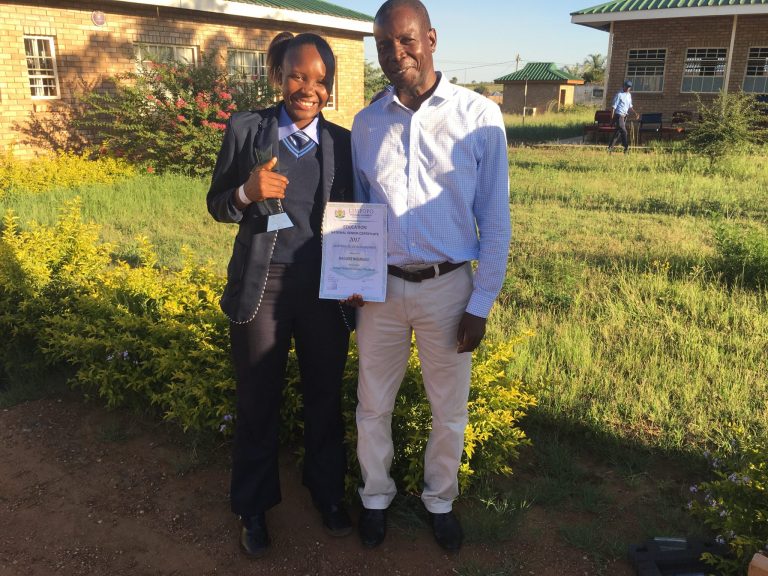
Sixty-seven-year-old granny Noria Sombhane was heavily praised after her granddaughter Masungulo Maluleke became the first learner at Ximunwani High school at Phaphazela village to attain seven distinctions and to be invited to the provincial awards ceremony.

Maluleke, whose school is in Malamulele in Limpopo province was in the provincial Top 30 highest achieving learners.

The 17-year-old girl has sent the school and the rural community into a frenzy after she attained distinctions in Physical Science, Mathematics, Geography, Life Orientation, Xitsonga, English and Life Science.

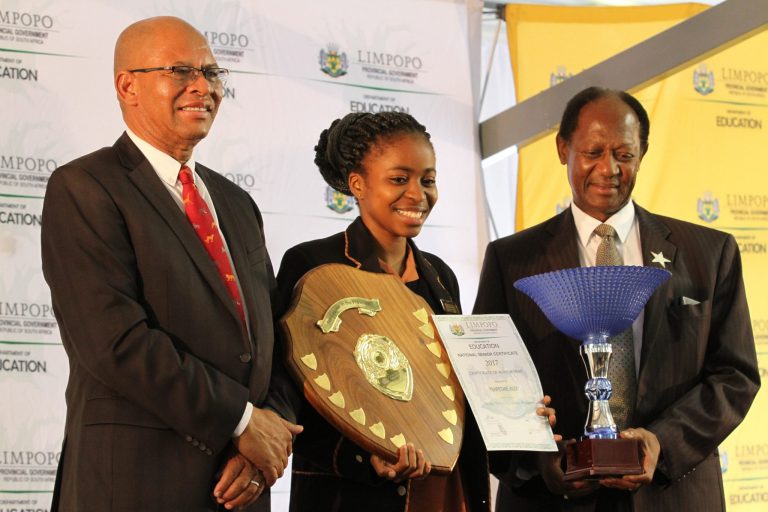
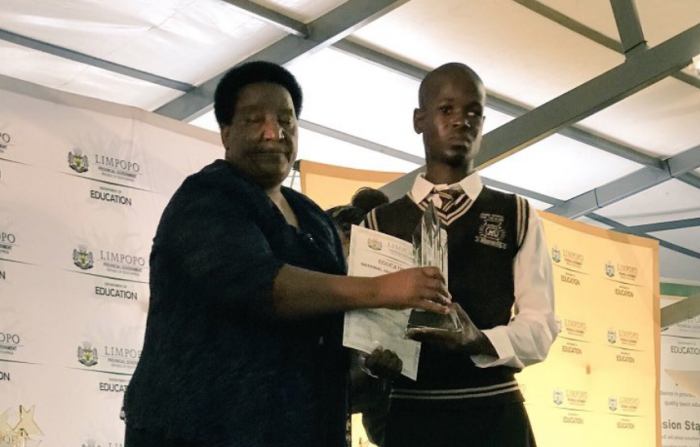
The school threw a party for her late on Friday afternoon after she came back from Polokwane where she was presented with a laptop, certificate and trophy by Limpopo premier Stanley Mathabatha for coming 25th in the province.

Maluleke, whose name Masungulo means the first, was praised for being the first in the community and the school for achieving such a feat. The school principal, Eric Baloyi, said she put the school on the map and they were considering starting a school’s hall of fame where they would inscribe her name in either gold or silver so as to inspire other learners to see their names up there too. 

“We also thank her granny Noria Sombhane who despite not having gone to school herself was the tower of strength behind her granddaughter and she used to come to school to collect the awards for the girl,” said Baloyi.

Baloyi described Maluleke as “disciplined, reserved, respectful and a hard worker.”

“There was no doubt she would make it because she combined her high IQ with hard work,” he said.

The school’s deputy principal Noel Manganyi who teaches Physical Science in which Maluleke notched 98% said if she failed to get distinction in any of the subjects, the blame would be laid at the door of the school.

Granny Sombhane was happy that Maluleke was not distracted by the poor background at home.

Her unemployed parents do not live together.

Selina Sithagu, who is the school governing body chairperson, and Phanuel Maluleke, who is the local ward 18 councillor at the local Collins Chabane municipality said Maluleke’s success would inspire others.

Maluleke who is heading to the University of Cape Town to do Chemical Engineering said everybody knew how she did it.

“All my friends knew that it was not easy to be my friend because it meant studying hard. I wanted to be invited to the national prize giving ceremony and although I did not succeed, I have tried because I have received provincial honours,” she said.

She said she knew that after her achievement at the high school she was starting a new life at university level.

“A new ball game has started and we will also need your support as we go to university to work for our future,” she told teachers and parents.

She said she knew it would not be easy and was ready for the task.

Ximunwana high achieved 67,2% pass in the exams after 122 sat for the exam, 30 received bachelor passes, 28 received diplomas, 82 received certificate pass and 4 failed.

Matric Results: Top Limpopo learner Anza Tshipetane says group study helped her succeed

0

Chester Makana

Anza Tshipetane, an 18-year-old a learner from Mbilwi High School in Vhembe district, scooped the top position when provincial matric results were announced on Friday.

The Limpopo learner says group study helped her succeed in subjects she was struggling with.

Until the end of the trial examinations, Tshipetane was studying in a group with fellow learners at school and at home.

However, three weeks towards the final examination she decided to go at it alone.

Limpopo MEC Ishmael Kgetjepe announced a 65.6 per cent pass results for 83 227 class of 2017.

The results showed an increase of 3.2 compared to 2016.

Tshipetane says although she wanted to be among the top learners she did not expect to be number one.

She believes that the support she received from other learners and educators boosted her confidence towards examination.

“I used to study in group with others, but towards the end of the especially trial I started to study on my own.”

“Towards the exams I was studying on my own because I wanted to practice the content, because it does not really help to absorb all the knowledge like a sponge, while you won’t be able to interpret it in the exam setting.”

She also thanked her friends who helped her understand and pass some subjects.

Tshipetane also urged the 2018 class to be determined so they could be counted among the best of the best.

Tshipetane beat the second best learner Daniel Swarts with three marks as she scored 1718, and third place Boitumelo Ngoepe obtain total marks of 1710.

Swarts from Hoerskool Pietersburg echoed Tshipetane’s view that team work and dedication helped reap positive rewards.

The 17-year-old Ngoepe from Dendron High School said he used past exam papers to test his ability to pass.

“I wanted to get exposed to how question I asked, and understand what I read.”

He said helping underperforming learners at his school was good for him too.

Kgetjepe thanked educators and learners for helping the province improve its results.

However, premier Stan Mathabatha said although they welcomed the improvement, it was not what they aspired to.

He appealed to stakeholders to help education back to its glory days.

Mbilwi, Dendron, Tshivhase, and Thengwe high schools remained the most celebrated schools in the province.

The schools managed to secure pass rates in mathematics and science inspiring the top fifty school’s club.

The club acknowledged schools that produced learners who passed with distinctions in Mathematics and Science.

This year results saw a change with Waterberg district overtaking Capricorn to be counted among top three districts.

Thulani Shikwambana an inspiration for special needs children

0

Chester Makana

Thulani Shikwambana from Rivoni School for the Blind outclassed dozens of learners in Xitsonga Home Language.

Limpopo MEC for Education Ishmael Kgetjepe says it is inspiring to see top achievers emerging from special schools.

The results announcement centre stood and applauded as Shikwambana walked in the company of his school official to collect a trophy.

Kgetjepe said Shikwambana put up a fight against a lack of resources as in many schools in the province.

He said Shikwamabana’s performance resembled a change and inspiration that against all odds it is possible to shine.

Kgetjepe and premier Stan Mathabatha committed to supporting learners who have a hunger and thirst to study like Shikwambana.

Mathabatha said he would procure braille featured computers for Shikwambane to make his learning experience easier.

He also honoured Shikwambana, who is planning to study Business Management at the University of Limpopo with a special trophy.

Speaking after his awards, Shikwambana said it was not easy but he was pushed by his school management to believe in himself.

“I was scared, doubting myself, but my teachers kept on telling me go on, don’t be afraid you will make it, they believe in me and I then believe in myself,” said joyful Shikwambana.

He said although he made it, his desire was to see other visual challenged learners empowered with learning tools.

“Our school does not have more resources, we shares materials and it was the effort of our teachers to ensure that we are counted,” he said.

Matric Results: Panyaza Lesufi says improved learning and teaching is reaping rewards in GDE

0

Bonile Khanyi

Gauteng Education MEC Panyaza Lesufi has hailed the class of 2017 for its hard work and obtaining a 85.15 percent pass rate across the province.

Speaking at an event at the Nokuthula Centre and Special School in Lyndhurst on Friday morning, Lesufi said Gauteng was the second largest provincial education system after KwaZulu-Natal, with 97,284 matriculants who wrote the National Senior Certificate examinations.

“The results of the National Senior Certificate of the Class of 2017 demonstrate that we are a maturing, stable and improving the provincial education system. This improvement in performance must be celebrated in the context of the large, unique and complex provincial education system that Gauteng has become over the last 23 years,” Lesufi said.

Lesufi said the provinces learners, parents and teachers had much to celebrate.

“What is more important, perhaps, than our 85,15% pass rate for 2017, are the detailed indicators showing the increasing quality of the teaching and learning in our schools in the province. It is the details of the 2017 results which show that the upward trajectory of the last seven years continues.”

Lesufi said the pass rate improved with 0.02% from 2016 but said he believed the province could do much better in the future.

He also said the province contributed the second highest number of candidates who qualified with university passes, after KwaZulu-Natal.

Referring to the number of progressed learners who passed Grade 12 last year, Lesufi said Gauteng has increased compared to the previous year in 2016.

“I am happy to announce that 68.7% of the progressed learners that wrote have passed‚ compared to 61% in 2016. These are learners who would have had to repeat Grade 11 in 2017. This is an amazing feat‚” Lesufi.

“What is even more amazing is the almost 7.3% of these learners who passed achieved a bachelor pass and more than 35.6% achieved a diploma pass.”

He also applauded the improvement in the province’s poorer township schools, saying that they’ve “turned the corner”.

We have increased the number of schools, including township schools that have achieved 90% and above pass rate.

“I want to congratulate the principals of the 25 township schools that achieved above 95%,” said Lesufi.

The MEC credited the work of educators toward the last year’s matric results and emphasized the support and guidance of teachers, script markers, the examination team and others.

“We could not have done it, and we cannot do it without our educators and principals. Thousands of you have again in the past year shown your dedication to your profession and to our children, attending courses, participating in our in-service development offerings, upgrading your management skills, and – most importantly – putting our learners at the centre of your efforts every day,” said Lesufi.

Here are Gauteng’s top achievers:

Top 3 overall performing learners

  1. Jacqueline Janse van Rensburg Hoërskool Oos-Moot
  2. Stefan Nel Hoërskool Florida
  3. Nelize van Schalkwyk Hoërskool Alberton

Top 3 performing township learners

  1. Sehlabelo Mapule Jessica Innqayizivele Secondary School
  2. Tshepo Motsoeneng Esokwazi Secondary School
  3. Nkosinathi Lucky Nkabinde Unity Secondary School

Top 3 LSEN Learners

  1. Jestus Fouche Destinata Skool
  2. Yandisiwe Yabona Zamakwayi Qubekile Hoërskool Suiderlig
  3. Ayodele Joy Morobi – Hoërskool Suiderlig

Matric Results: Top achievers hail from Limpopo

3

Ido Lekota

Limpopo has produced some of the country’s 2017 top achievers in matric, five of whom were among the 22 matric pupils who on Thursday received over R3 million in bursaries, laptops and sponsorships for their outstanding academic achievement.

According to the Matric results released by the Department of Basic Education, Limpopo has the highest number of top national achievers, followed by the Eastern Cape with four top achievers. KwaZulu-Natal, Gauteng and Western Cape came third with three top achievers each. Mpumalanga, Northern Cape, Northwest and the Free state have one top achiever each.

Included in the Limpopo top achievers are Takalani Bambela (18) from Tshivhase Secondary School in the Vhembe district who came out as the number one national achiever in Mathematics and Physical Science. He is followed by another Limpopo pupil -19-year-old Khodani Wonderful Nemalamangwa from Thengwe High School in Mutale. The area was previously part of the Vhembe district but is now part of Thulamela and Musina Local municipalities. Both schools are no-fee schools situated in poor rural communities.

The Vhembe district – a very poor rural area – has previously shown its resilience despite the problems it has gone through. In 2015 the area was swept by violent protests against the decision by the Municipality Demarcation Board to incorporate it into a new municipality including Malamulele. The protest saw the burning down of at least 24 schools and a complete standstill in learning. This led to the Limpopo Department of Education organising study camps for matric pupils in preparation for the final exam. A school in the area – Nesengeni Secondary School – then shocked everyone by attaining a 100 % matric pass that year.

Included in the top five achievers is 17-year-old Musiwalo Kutuma from Sinthumule Secondary School a rural no-fee school in the Makhado district.

Another top achiever from a poor rural school in Limpopo is none other than 17-year-old Boitumelo Ngoepe who the top national achiever from Dendron Secondary School – a no-fee school in the Capricorn district municipality.

The 17-year old told Inside Education before the matric results announcement on Thursday that her strategy for being a top achiever included using past question papers to revise her work and assess her readiness for the final exam.

With her favourite subjects being mathematics, Physical Science and Accounting, Boitumelo intends studying actuarial science at the University of Cape Town this year.

Included in the national top achievers from Limpopo is also Anza Tshipetane from the famous Mbilwi Secondary School – also in the Vhembe district. Mbilwi is well-known for its 100% passes in Maths and Science and has since been dubbed “the breeding ground for future scientists.”

Anza who loves Maths and Lifes Sciences intends to study medicine at the University of Cape Town. Her strategy for achieving high marks in her favourite subjects included ensuring that she completed all the tasks given to her as part of the syllabus and then consulting with the teacher to close any knowledge gaps that she may have discovered.

Representing Western Cape as top achievers in Physical Science are Matthys  Carsten (18)  from Durbanville High School and Janke Van Dyk from Belville High School. Not only is Matthys also a Maths and Accounting enthusiast – he also studied music. He intends becoming a rare soulful actuarial scientist from Stellenbosch University. Janke intends studying Chemical Engineering also at Stellensbosch University.

Representing the lush Mpumalanga province is the confident and lanky 18-year-old Thalente Ngobeni from Acorn Oaks Comprehensive High School. Thalente – who disclosed to Equal Education that his learning strategy was to wake up early in the morning and get stuck into his books.

“Many people believe in staying up the whole night reading. This does not work for me. I prefer studying early in the morning.”

Thalente also wants to move to Cape Town to study actuarial science at the University of Cape Town.

Matric Results: Angie Motshekga says her department is on track to meet its NDP goals

0

Thabo Mohlala

The 2017 National Senior Certificates (NSC) results improved slightly by 0.3% to 76.5%, compared to the 2016 pass rate of 76.2%, excluding progressed learners.  

The pass rate represents a total of 401 435 candidates, who had passed the 2017 NSC examinations.

The Free State province maintained its pole position by attaining 86%, a 2.2% decline from last year. Its fierce competitors, Gauteng and the Western Cape scored 85.1% and 82.7% respectively. The latter declined by 3.2% from its 2016 performance while Gauteng maintained its last year achievement.

But with the progressed learners included, the overall pass rate dips slightly and stands at 75.1%, a 2.6% improvement from the 72.5% achieved in 2016.

The department introduced progression policy in 2013 as a special dispensation to encourage provinces to pass or condone over-aged learners or those who repeated Grade 11 more than once to write NSC examinations. Alternatively, the learners were allowed to modularise their examinations.

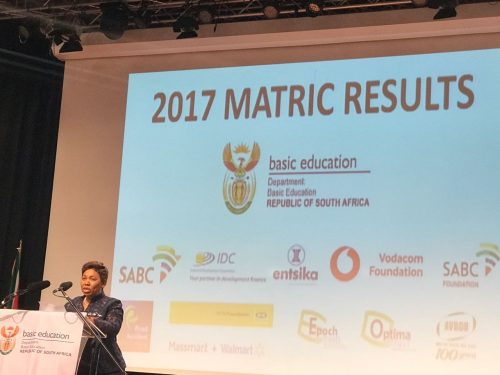
Delivering keynote address during the release of the results at the SABC studios in Auckland Park, Minister of Basic Education, Angie Motshekga, praised the Class of 2017 for consistently maintaining the pass rate above the 70% threshold.

Motshekga said the Class of 2017 is “the tenth cohort of learners to sit for the National Senior Certificate, and the fourth cohort to write CAPS-aligned NSC Examinations”, adding this was the third highest enrolment of Grade 12 in the history of the basic education system in the country.

The overall number of candidates, who registered for the November 2017 NSC examinations, was 802 431 and this included 629 155 full-time candidates and 173 276 part-time candidates. Of these candidates, Motshekga said, 534 484 full-time candidates, and 117 223 part-time candidates, wrote the examinations.

“We wish to thank all provinces, especially Gauteng, Free State, Mpumalanga, and KwaZulu Natal for the extra support and pointed interventions they gave to their progressed learners. If these provinces did not do this, some of the progressed young people, could have fallen through the cracks of the system, due to continuous repetition and ultimate drop-out from the system”, said Motshekga.  

She also stressed the important role of the district’s offices which are the key delivery vehicles nearest to schools. In 2017, 66 of the 70 districts attained pass rates of 60% and above, said Motshekga. She said 31 of the 70 districts attained pass rates of 80% and above.  

She said 4 of the 70 districts achieved pass rates lower than 60%, adding that for the first time, no district has performed below 50%.

Motshekga also applauded three most rural provinces, namely Eastern Cape, KwaZulu-Natal and Limpopo, which recorded an upward trend in their performances. She said 51.5% of the candidates, who wrote the 2017 NSC examinations, come from the three provinces.  

She said 68.7% of the candidates who wrote the 2017 NSC examinations passed and that the three provinces combined produced 44.8% Bachelor passes. This translates to almost 45 Bachelor passes per 100 produced anywhere else in the country, she said. Motshekga said the improved performance of the three provinces is a direct outcome of their targeted interventions.

She said the NSC results are very crucial because they serve as the barometer to assess progress government made in improving access, redress, equity, efficiency, and the quality of teaching and learning outcomes.

Motshekga said her department is prioritising early grade literacy in response to the recent international tests where South African learners fared badly in numeracy and literacy tests.

She said her department is making strides to accommodate learners with special education needs. “Providing learners with special education needs access to quality basic education programmes, is an imperative, based on the Constitutional principles of equity and redress, among others.  

“We have for the past few years included the learners with special education needs in tracking learner performance in the NSC.”

Of the 2 777 learners with special education needs, wrote 2017 NSC examinations, 906 and 789 of these learners achieved Bachelor and Diploma passes, respectively. Those who achieved Higher Certificate passes are 307; 2 achieved NSC passes; and 121 achieved endorsed NSC passes.

NYDA urges matrics to apply for Solomon Mahlangu Scholarship Fund

0

Bonile Khanyi

The National Youth Development Agency (NYDA) has encouraged those who cannot afford fees to apply for the NYDA’s Solomon Mahlangu Scholarship Fund.

“The NYDA will be available at all universities and TVET colleges to ensure the implementation of Fee-Free Higher Education,” NYDA Chairperson Sifiso Mtsweni said in a statement on Thursday night.

Mtsweni applauded the matric class of 2017 on Thursday, saying they wished them well in their future academic endeavours.

He said the matric class of 2017 did extremely well by achieving an increased overall national pass rate of 75,1% in the 2017 National Senior Certificate (NSC) Examination, up by 2,6% increase from the 2016 figure.

“As the NYDA, we commend the matric class of 2017 for achieving an outstanding overall national pass rate of 75,1% in the 2017 National Senior Certificate (NSC) Examination, from a previous figure of 72,5% in 2016 and 70% pass rate achieved in the year 2015 respectively,” said Mtsweni.

Mtsweni said he hopes learners who did not do well in their exams last year will take advantage of the Second Chance Matric Program which aims to give matric learners another opportunity to take their matric finals while equiping them with new learning skills. 

He urged learners who had not applied at an institution of their choice to make use of the Central Applications Clearing House (CACH) service.

“We also urge young people to make use of the Central Applications Clearing House service, for admission at various institutions of higher education,” said Mtsweni.

Applications for the scholarship fund closes on the 16 January 2018.

For more information about the scholarship visit their website on www.nyda.gov.za.

Matric Results Full Speech by Angie Motshekga: Freestate gets top honours for third year in a row

Good Evening Fellow South Africans!

Strategic direction in the basic education sector

Today we have gathered here to announce the 2017 National Senior Certificate examination results. The NSC examination results, are one of the most important barometers to evaluate progress made by Government in improving access, redress, equity, efficiency, and the quality of teaching and learning outcomes, through the implementation of the Medium-Term Strategic Framework and the National Strategy for Learner Attainment (NLSA).

As we implement our Medium-Term Strategic Framework and the NSLA, we have an obligation to ensure a seamless implementation of the regional, continental and international declarations, as well as the recommendations from regional and international assessment studies, in order to ensure that the critical principles of access, redress, equity, efficiency and quality, anchor our work, programmes, interventions, progress, and achievements.

Building a solid and foundation for teaching and learning

We should always remember that if we have to further improve the outcomes of the schooling system, we will have to continue to improve the fundamental quality of teaching and learning, well before Grade 12.

We are increasingly prioritising interventions and policies that target an improved quality of learning and teaching and implementing accountability systems to ensure that quality outcomes are achieved. More specifically, we have deliberately prioritised early Grade literacy. This is necessary to respond pointedly to the concerns raised in the PIRLS 2016, SACMEQ IV – 2013, and the TIMMS 2015 reports. These reports are available in our website.

2017 National Senior Certificate Examination Results

As we analyse the 2016 NSC examination results, we wish to remind the South African public about the main purpose of the National Senior Certificate examinations. The primary purpose of these examinations is to provide learners with an exit qualification. We, however, are able to also glean on the progress we are making as a country to provide access to an inclusive, equitable, quality and efficient basic education to our children. These results are intended to do exactly just that.

The effects of our interventions are beginning to result in improved teaching and learning outcomes. We have reported that the skills of learners have improved. Ambitious policy shifts by government, combined with the efforts and commitment of the thousands of people who work in our schools, especially our principals, teachers and parents, are paying off. Available scientific comparisons of the quality of learning outcomes over time indicate noteworthy improvements in recent years.

Profile: Class of 2017

The Class of 2017 is the tenth cohort of learners to sit for the National Senior Certificate, and the fourth cohort to write CAPS-aligned NSC Examinations. The Class of 2017 has recorded the third highest enrolment of Grade 12 learners in the history of the basic education system in South Africa.

The total number of candidates, who registered for the November 2017 NSC examinations, was 802 431; comprising 629 155 full-time candidates, and 173 276 part-time candidates. Of these candidates, 534 484 full-time candidates, and 117 223 part-time candidates wrote the 2017 NSC examinations.

2017 NSC examinations declared as “incident free”

Fellow South Africans, I am glad to announce that the Umalusi, the Council for Quality Assurance in General and Further Education and Training, has declared the 2017 NSC examinations as “fair, valid and credible“. Umalusi declared that the 2017 NSC examinations were “largely incident free”, with a few minor disruptions in some parts of the country. This, Umalusi said, is testament “to the success of the heightened vigilance and rigid measures put in place by the DBE”.

Performance of the progressed learners

The criteria for learner progression introduced in 2013, were streamlined in 2017. The South African public will recall the learner progression policy encouraged provinces to progress or condone over-aged learners, who have repeated Grade 11 more than once, and give them extra support to sit for the NSC examinations; or allow them to modularise their examinations. In the latter case, progressed learners wrote part of the 2017 NSC examinations in November 2017, and the rest could be written in June 2018.

The support provided to progressed learners by provinces is important, particularly for learners who come from poorer communities. You know that affluent communities arrange extra tuition for their children at extra costs. Provinces on the other hand, go out of their way to provide progressed learners with extra support; and this, provinces do without any additional budget.

Consequently, in 2017, we saw the second largest number of progressed learners, since the policy was promulgated in 2013. An analysis of the raw data on progressed learners paints, an extremely interesting picture, particularly for this year. For the Class of 2017, we had 107 430 registered progressed learners.

34 011 progressed learners wrote the requisite seven subjects during the 2017 NSC examinations. The rest of the learners, are modularising their examinations, as I had already explained earlier. Of the progressed learners, who wrote the 2017 NSC examinations, 18 751 passed; which represents 55.1% of all progressed learners, and 4.7% of all learners, who passed the 2017 NSC examinations. 5.6% achieved Bachelor passes; 25.2% achieved Diploma passes; 24.3% achieved Higher Certificate passes; and 10 achieved NSC passes. A total of 1 801 distinctions was attained, including distinctions in critical subjects, such as Accounting, Business Studies, Economics, Mathematics and Physical Science.

The significance of these achievements, is that the 18 751 progressed learners, who passed the 2017 NSC examinations – the would-be-high-school repeaters and dropouts if they were not progressed, now have a golden opportunity to access either university or TVET College.

This is positive indeed, especially when the NDP enjoins us to mediate the high drop-out rate of learners from the basic schooling system by increasing the learner retention rate to 90%, and allowing for an increase in the number of learners entering vocational and occupational pathways. The second chance programme, the learner progression policy, and the incremental introduction of the three-stream model – which include quality technical-vocational and quality technical-occupational programmes in the Basic Education sector, directly address this NDP directive.

I wish to remind South Africans that the second chance programme and the learner progression policy were introduced to redress the inequalities of the past, by creating a conduit through which young people could be afforded a second chance in life, rather than adding to the large number of young people, who are neither in education, nor employed, nor in any form of training – the so-called NEETs. These programmes were intended to improve the access and retention of learners in the system, and improve the internal efficiency of the system.

We wish to thank all provinces, especially Gauteng, Free State, Mpumalanga, and KwaZulu Natal for the extra support and pointed interventions they gave to these learners. If these provinces did not do this, some of the progressed young people, could have fallen through the cracks of the system, due to continuous repetition and ultimate drop-out from the system. We encourage the other provinces to take a leaf from these four provinces, which supported the progressed learners to the extent necessary.

Learners with Special Education Needs

We strongly believe that an Inclusive Education system, makes an immense contribution towards an inclusive economy to serve an inclusive society. Providing learners with special education needs access to quality basic education programmes, is an imperative, based on the Constitutional principles of equity and redress, among others. We have for the past few years included the learners with special education needs in tracking learner performance in the NSC.

2 777 learners with special education needs, wrote 2017 NSC examinations – an increase of 42.8% from 2016. 906 and 789 of these learners achieved Bachelor and Diploma passes, respectively. 307 achieved Higher Certificate passes; 2 achieved NSC passes; and 121 achieved endorsed NSC passes.

This means that 77.2% of the learners with special education needs, who wrote the 2017 NSC examinations, passed. Gauteng and KwaZulu-Natal should be congratulated for their combined contribution of Bachelor passes of 80.2% – an increase of 3.5% from 2016; and the combined contribution of Diploma passes of 70.1% – an increase of 4.1% from 2016.

1 956 distinctions were achieved by the learners with special education needs, including distinctions in the critical subjects, such as Accounting, Business Studies, Economics, Mathematics and Physical Science. The Western Cape’s contribution, is the largest with 1 599 distinctions.

The benefits of the “pro-poor” policies of Government on the Grade 12 examination results, with progressed learners included

In the 2017 NSC examination results, the poverty ranking of schools in terms quintiles 1 to 5, revealed the following interesting trends. The NSC passes for quintiles 1 to 3 schools (“no fee” schools) combined, stand at 243 260; compared to 138 525 for quintiles 4 and 5 schools (fee-paying schools).

The Bachelor passes achieved by learners in “no fee” schools, stand at 76 300; while fee-paying schools produced 67 867 Bachelor. This implies that in 2017, “no fee” schools produced 53% of the Bachelor passes (compared to 52% in 2016, and 51% in 2015); while fee-paying schools produced 47% Bachelor passes (compared to 48% in 2016, and 49% in 2015). The significance of this, is that the gap between the Bachelor passes produced by “no fee” schools versus those produced by fee-paying schools in 2016 of 4%, has increased to 6% in 2017.

This is poignant, as it points to a remarkable shift in the balance of forces. From 2015 to date, greater equity was observed despite the reality that inequalities still remain in the system. Government must be applauded for its pro-poor polices, which in the Basic Education arena, alleviate poverty through a variety of interventions – among others, the pro-poor funding of schools; the provision of nutritious meals on a daily basis; and the provision of scholar transport to deserving learners on daily basis.

These interventions, called the “social wage” by the Statistics South Africa, continue to improve access to schools, increase the retention of learners in schools, promote equity immeasurably in the Basic Education system; and improve substantively the quality of educational outcomes in our system. What a great story to tell!!!

The 2017 NSC examination results are also telling us that, for every fee paying school, which achieved at 60% to 79.9% pass rate, there are more than five “no fee” schools achieving at the same level. Similarly, for every fee paying school, achieving at the 80% to 100% pass rate, there are almost two “no fee” schools achieving at the same pass rate. An exactly 100% pass rate, was achieved equally by fee paying as well as “no fee” schools. This is indeed a good story to tell!!!

In February 2017 I tasked the National Education Evaluation Unit in the Department to conduct a study on Schools that Work, and particularly lift the characteristics of both primary and secondary schools that work across the system. You may recall that the NDP enjoins us to “recognise top-performing schools as national assets”. It further directs that “the support of these schools should be enlisted to assist [in uplifting] underperforming schools”.

The Schools that Work study, affirmed that there are schools that are doing exceptional work, and these schools include “no fee” schools. An example that has been identified, is a quintile 1 school in Limpopo, which serves the poorest of the poor in that province. This school continues to achieve within the top 1.5% of all public schools, and performs better than 87% of the best resourced schools in the country. There are similar schools that were identified in other provinces, which are universally serviced by teachers who go to extraordinary measures to help their learners to achieve, despite their circumstances. These schools, principals, teachers, parents and learners are definitely our national assets, and their selfless efforts must be celebrated.

Learners receiving social grants

79.7% of the learners, who were recipients of some form of social grants, who wrote the 2017 NSC examinations, passed. 5 016 of them achieved Bachelor passes; 5 997 achieved Diploma passes; 2 863 achieved Higher Certificate passes; and 2 achieved NSC passes. These learners also achieved 500 distinctions, including distinctions in critical subjects such as Accounting, Business Studies, Economics, Mathematics and Physical Science.

Clearly, the Government’s pro-poor policies have made an indelible contribution in these young people’s lives. It is indisputable, that without such assistance and support, these young people could have been lost to posterity. We must commend the Department of Social Department for the “social wage” and support they provided.

Performance of the Districts

The NDP recognises districts as a crucial interface of the basic education sector in identifying best practice, sharing information, and providing support to schools. The continued growth in the performance of districts is closely monitored by both the provincial and national education departments. In 2017, the Eastern Cape has rationalised the number of districts from 23 to 12; which has reduced the number of districts from 81 to 70 nationally.

In 2017, 66 of the 70 districts (94% of our districts) attained pass rates of 60% and above; and 31 of the 70 districts (44.3%) attained pass rates of 80% and above. Regrettably, 4 of the 70 districts (5.7%) achieved pass rates lower than 60%. For the first time, no district has performed below 50%.

The top 10 performing districts in the country, in the descending order, with the progressed learners included, are as follows –

  • First, is Fezile Dabi in the Free State with 2%;
  • Second, is Thabo Mafutsanyana in the Free State with 90%;
  • Third, is Tshwane South in Gauteng with 8%;
  • Fourth, is Ekurhuleni North in Gauteng with 1%;
  • Fifth, is Tshwane North in Gauteng with 9%;
  • Tied at sixth, are Gauteng West and Johannesburg West in Gauteng with 6%;
  • Eighth, is Sedibeng East in Gauteng with 9%;
  • Ninth, is Johannesburg East in Gauteng with 8%; and
  • Tenth, is Overberg in the Western Cape with 7%.

The top-performing districts in their respective provinces, in the ascending order, with progressed learners included, are as follows –

  • Nelson Mandela Metro in the Eastern Cape with 6%;
  • Vhembe in Limpopo with 6%;
  • Ehlanzeni in Mpumalanga with 8%;
  • Umgungundlovu in KwaZulu Natal with 5%;
  • Ngaka M Molema in the North West with 5%;
  • Namaqua in the Northern Cape with 83%;
  • Overberg in the Western Cape with 7%;
  • Tshwane South in Gauteng with 8%; and
  • Fezile Dabi in the Free State with 2%.

Performance of the Provinces

The Council of Education Ministers had agreed that the reporting on the NSC examination results, should first, exclude the performance of progressed learners; and second, include their performance.

First, a glimpse is given, in an ascending order, on how provinces performed, with progressed learners excluded

  • Eastern Cape attained 8%, an increase of 2.5% from 2016;
  • Limpopo attained 4%, a decline of 0.8% from 2016;
  • KwaZulu-Natal attained 6%, an increase of 4.1% from 2016;
  • Mpumalanga attained 6%, a decline of 4.7% from 2016;
  • Northern Cape attained 6%, a decline of 4.6% from 2016;
  • North West attained 1%, a decline of 4.1% from 2016;
  • Western Cape attained 4%, a decline of 3.3% from 2016;
  • Gauteng attained 86%, a decline of 1% from 2016; and
  • Free State attained 8%, a decline of 3.4% from 2016.

We must applaud the four provinces that retained their 80% plus pass status.

Now, let me announce the results achieved by the provinces with progressed learners included. Two provinces attained lower than 70%, and these are –

  • Eastern Cape achieved 65%, improved by 7% from 2016 – the second largest improvement in the country; and
  • Limpopo achieved 6%, up by 3.1% from 2016.

Four provinces achieved above 70%, and these are –

  • KwaZulu-Natal achieved 8%, improving by 6.4% from 2016 – the largest improvement in the country;
  • Mpumalanga achieved 8%, a decline of 2.3% from 2016;
  • Northern Cape achieved 6%, a decline of 3.1% from 2016;
  • North West achieved 4%, a decline of 3.1% from 2016;

The following provinces achieved above 80%

  • Western Cape achieved 7%, a decline of 3.2% from 2016;
  • Gauteng achieved 1%, the same pass rate as in 2016.
  • The top performing province in 2017 is the Free State, which achieved 86%, down by 2% from 2016. Congratulations to MEC Tate Mekgoe and your team!!!

We can see that the 2017 NSC examination results with progressed learners, dispel the myth that progressed learners adversely affect the overall results. Certainly, this was not the case, particularly in the Eastern Cape, Gauteng, KwaZulu Natal, and Limpopo. In fact, in KwaZulu Natal, the results with progressed learners included, are better than those without the progressed learners.

We have noted the upward trend in the performance of our three most rural provinces, namely, Eastern Cape, KwaZulu-Natal and Limpopo. 51.5% of the candidates, who wrote the 2017 NSC examinations, come from these three rural provinces. Remarkably, 68.7% of the candidates, who wrote the 2017 NSC examinations passed. More remarkably, these three provinces combined, produced 44.8% Bachelor passes, which translates to almost 45 Bachelor passes per 100 produced anywhere else in the country.

Three years ago, we had declared that we would continue to pay particular attention to the Eastern Cape, KwaZulu Natal and Limpopo, so that we can improve the overall performance of our learners through the Grades. The improvement in these rural provinces, is a clear indication that our pointed interventions, based on our National Strategy for Learner Attainment, have begun to bear good fruit. What we dare not do, is to drop the ball. We must continue with our pointed interventions, so that the levels of teaching and learning outcomes in these three rural provinces, continue to rise.

Overall national performance

This brings us to the 2016 NSC examination overall results. For the past seven years, we have noted that the NSC pass rate has consistently been above the 70% threshold. The Class of 2017 must be commended for maintaining this trend. The 2017 NSC overall pass rate, with the progressed learners excluded, stands at 76.5%, a 0.3% improvement from the 76.2% achieved in 2016.

However, with the progressed learners included, the overall pass rate, stands at 75.1%, a 2.6% improvement from the 72.5% achieved in 2016. This, represents a total of 401 435 candidates, who had passed the 2017 NSC examinations. Well done to the Class of 2017!!!

Further analysis of the results show that, of the number of candidates, who wrote the 2017 NSC examinations –

  • 153 610 achieved Bachelor passes (equivalent to 7%);
  • 161 333 passed with a Diploma (equivalent to 2%);
  • 86 265 passed with Higher Certificates (equivalent to 1%) and
  • 99 passed with a National Senior Certificate.

It is important to note that a total of 314 943 candidates (equivalent to 78.5%), who achieved Bachelor and Diploma passes, are eligible to register for studies at higher education institutions. The 86 364 candidates (equivalent to 21.5%), who obtained certificate passes, may register at TVET Colleges and other skills training institutions. We encourage the 133 049 candidates, who did not make it, to register for the Second Chance programme.

In 2017, a total of 161 081 distinctions were achieved, an improvement of 1.8% from 2016. The main contributors are KZN with 28%; Gauteng with 22.4%; Western Cape with 15.5%; Limpopo with 9.5%; and Eastern Cape with 9%. It is remarkable to note that the Eastern Cape, KwaZulu Natal and Limpopo produced a combined 46.5% of the total distinctions achieved nationally.

In the 12 key subjects (including Accounting, Business Studies, Economics, Mathematics, and Physical Science among others), the total number of distinctions stands at 62 154, a decline of 4.6% from 2016. The number of distinctions attained specifically in the gateway subjects is as follows:

  • 5 040 distinctions were achieved in Accounting;
  • 6 726 distinctions were achieved in Mathematics; and
  • 7 861 distinctions were achieved in Physical Science.

Aggregation according to gender

There are 65 007 more girls than boys, who enrolled for the 2017 NSC examinations; and there are 57 918 more girls than boys, who wrote the 2017 NSC examinations. Overall, there are 217 387 girls, compared 184 048 boys, who passed the 2017 NSC examinations. When translated into percentages, 73.4% girls and 77.2% boys passed the 2017 NSC examinations.

There are 28.5% female candidates, who obtained Bachelor passes, compared to 29% of their male candidates; 28.4% female candidates obtained Diploma passes, compared to 32.4% of their male counterparts; 16.4% female candidates obtained Higher Certificate passes, compared to 15.8% of their male counterparts. 62.6% of the distinctions were attained by female candidates, including distinctions in critical subjects such as Accounting, Business Studies, Economics, Mathematics, and Physical Science.

Clearly, our gender-based intervention programmes have uplifted the performance levels of the girl child. While this is plausible, we must make a concerted effort to provide similar interventions for the boy child. Even the regional and international assessment studies, implore us to do so.

Conclusion

Fellow South Africans, we will be the first to concede that despite the notable stability of and improvements in our system, we are yet to cross our own Rubicon. We must agree that much has been achieved, but much more needs to be done in the areas of efficiency and quality. We call upon all South Africans to work together with us to move the public schooling to greater heights.

Once again, I take off my hat to the Class of 2017, and I wish them the best in their future. I believe that you will continue to shine wherever you are. Speaking of success, Madiba said: “I learned that courage was not the absence of fear; but the triumph over it. The brave man (sic) is not he, who does not feel afraid, but he who conquers that fear.”

In celebrating the Class of 2017, I must also thank the principals, teachers, and parents for the work they continue to do. What you do at the school level, is what matters the most. The nation had put the future of our learners in your hands, and you delivered. We applaud you for the great work you continue to do on a daily basis.

I thank you.