Home Blog Page 534

ANC National Conference nominations list

0

#ANC54th National Conference

Conference nominates top six leaders:

Presidential Candidate:

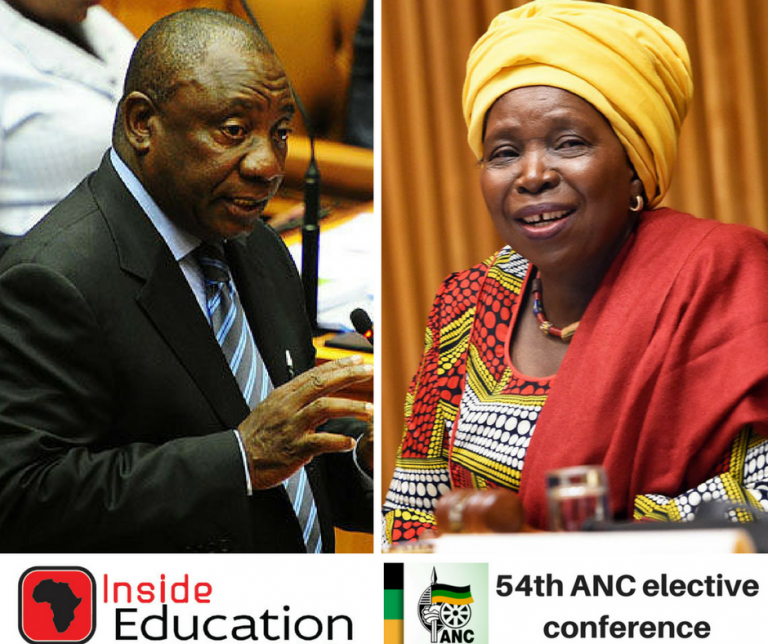
Cyril Ramaphosa vs Nkosazana Dlamini-Zuma

Deputy President:

Lindiwe Sisulu vs David Mabuza

Secretary General:

Senzo Mchunu vs Ace Magashule

Deputy Secretary General:

Jessie Duarte vs Zingiswa Losi

Treasurer General:

Paul Mashatile vs Maite Nkoana-Mashabane

Voting is expected to take place this evening with the results announced tomorrow morning.

ANC elective conference: Credentials finally sorted

0

Thabo Mohlala

Credentials for the 54th ANC conference at Nasrec have finally been adopted marking the real start of the convention.

Briefing the media a few hours ago, Jessie Duarte, ANC Deputy Secretary-General, said they had to ensure they managed the situation carefully following the disqualification of some branches and Provincial Executive Committee (PEC) members by three court orders.

Yesterday some delegates expressed their disquiet when they discovered their names did not appear on the accreditation list while others claimed they had been replaced by bogus members.

Fourteen branches from Free State and 35 in the North West will not be voting while PECs from KwaZulu-Natal and Free State have been demoted to observers’ status.

“This created a difficulty as we had to explain to members why they would not be voting and it contributed to the delay. It is not unusual to delay, we do it to protect the integrity of the conference,” said Duarte.

She said credentials involved checking very thoroughly every detail to ensure that every delegate passed the verification process.

Duarte said the disqualification has whittled down the number of delegates to 4 700 instead of the anticipated 5 000.

According to media reports, these are the numbers of votes per provinces:

Western Cape – 136
Gauteng – 491
Mpumalanga – 708
North West – 446
Eastern Cape – 632
KwaZulu-Natal – 804
Limpopo – 567
Free State – 349
Northern Cape – 193

ANC Constitutional structures also have voting rights: Youth and Women’s Leagues each contribute 60, Veterans League 55 and NEC members account for 86.

Baleka Mbete makes her choice: The ANC needs Ramaphosa for 2019

0

Bonile Khanyi

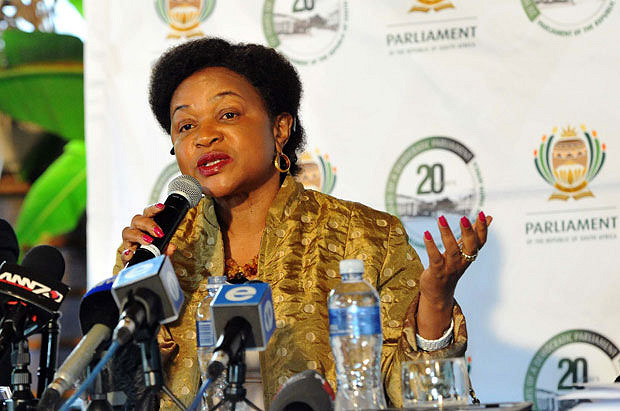
ANC delegates need to choose a leader who will ensure the party is victorious in the 2019 general elections. This is what Baleka Mbete said when she put her weight behind Cyril Ramaphosa as he fights for the top seat in the ANC.

“It would be wrong for us to have a limited approach to what we have come to do here. The major part of what we have come to do is to look at how we mobilise South Africans, how we re-organise ourselves such that we can deliver better to them,” said Mbete.

Speaking at the ANC’s 54th national conference on Saturday night, the outgoing ANC national chairperson announced her endorsement for Deputy President Cyril Ramaphosa as the ruling party’s new president.

“We publicly endorse Comrade Cyril Ramaphosa. We have been talking and we agree on how to approach the issues of maximising unity in the organisation, in particular moving towards 2019,” said Mbete.

When asked why she chose to support Ramaphosa and not Nkosazana Dlamini-Zuma, Mbete said its because they’ve worked together for a long time and that they agree on a lot of issues they’ve discussed to take the country forward.

Delegates at the conference are expected to vote for their preferred top six leaders and national executive committee (NEC) members on Sunday.


EFF: Free higher education is a victory for Fees Must Fall Movement

Bonile Khanyi

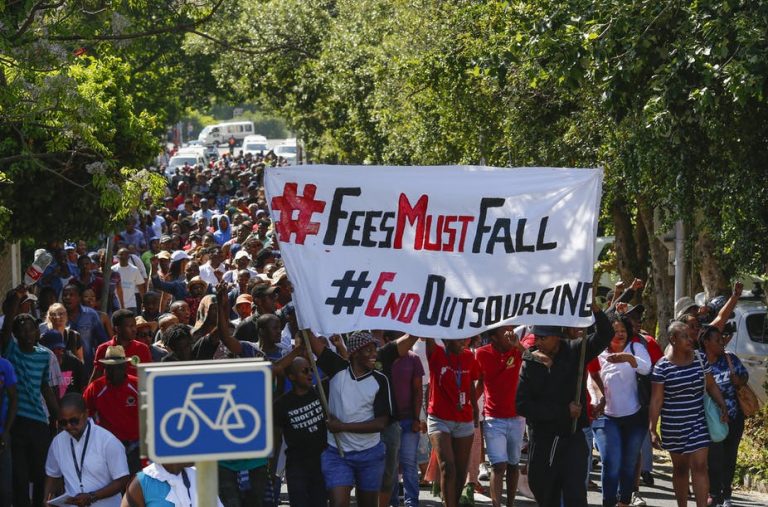
The Economic Freedom Fighters (EFF) has welcomed President Jacob Zuma’s announcement on free higher education, calling it a historic generational victory for the fees must fall movement.

In a statement issued on Saturday, the EFF said “this will aid a lot of families and relieve a lot of financial burden from their shoulders. We also welcome announcements of increase of government subsidy to universities as recommended by the Fees Commission.”

On Saturday morning, President Jacob Zuma announced that government will introduce free higher education and training for all South African students from poor and working classes homes.

“Having amended the definition of poor and working-class students‚ government will now introduce fully subsidised free higher education and training for poor and working-class South African undergraduate students‚ starting in 2018 with students in their first year of study at our public universities‚” read the statement.

He also said that the deserving students will be funded and supported through government grants, not loans.

“All poor and working class South African students enrolled at public TVET colleges will be funded through grants not loans.

For TVET colleges, full cost of study will include tuition fee, prescribed study material, meals, accommodation, and/or transport.”

Meanwhile, the Democratic Alliance has slammed Zuma’s announcement saying that his “playing politics with the hopes and futures of millions of young people.”

While the DA says it welcomes Zuma’s announcement, the DA’s Shadow Minister of Higher Education and Training Belinda Bozzoli said it must be seen for what it is.

“The statement is a combination of populist politicking, deceptive language, uncosted proposals and one positively dangerous assertion,” said Bozzoli.

“The President waited until the very end of the year so that he could make a splash at the ANC conference, while students, their families and the institutions they wish to attend anxiously awaited news. Such cheap politicking is appalling. Unsurprisingly, his statement is full of promises, but lacking actual implementation details.”

Gwede Mantashe: Nullified structures will not vote as they will contaminate conference

0

Thabo Mohlala

Structures that were nullified by the three court rulings yesterday will not be allowed to vote at the ANC 54th conference scheduled to start shortly this afternoon, Gwede Mantashe, told a brief media conference.

He said this was the outcome of the party’s urgently convened national executive committee (NEC) earlier this morning to discuss the implications of the court judgments against some of its provincial structures.

“All structures that are nullified by the courts will not be voting delegates at conference. We are not even going to try any idea that will actually contaminate the conference,” said Mantashe. He said the same will apply to “the branches that were cited in the cases in both Bojanala and the Free State will not vote at conference. We will not even allow then to vote with different colour coding. They are here already as observers and invitees to the conference.”

He said other issues will be discussed by the various provinces beyond the conference.

Court deals a blow to Nkosazana Dlamini-Zuma presidential ambitions

0

Thabo Mohlala

With just a day to go before the high-stakes ANC conference, the North West High Court has delivered a bombshell ruling that nullifies ANC’s Bojanala regional conference.

The case was brought to the court after the former regional secretary Tokyo Mataboge and 39 other members disputed the constitutionality of at least 40 branches’ general meetings. They also claimed that over 70 signatures were forged.

Bojanala is the North West’s biggest region and could seriously torpedo Nkosazana Dlamini-Zuma’s chances of winning the organisation’s top post on Sunday as delegates vote for a new ANC president.

The ANC North West provincial executive said it would appeal the court’s decision. Disgruntled members of ANC in the Free State province have also lodged a similar case with the court and judgement is due this afternoon.

SA universities announce 8% fee increase

Thabo Mohlala

Fee increases will not fall in 2018. All 26 universities in South Africa have, through their vice-chancellors, agreed to the inflationary income adjustment increase 0f 8% for 2018 academic year.

In a statement released on Thursday, Universities South Africa (USAF) said the decision for the fee increment was taken following lack of clarity on the part of the government to regarding its approach to fees both in the medium and long-term.

The body said this increase is based on “realistic” considerations and will allow the institutions to “function at a decent level” without having to resort to drastic cost-cutting measures and retrenchments.

It further noted that while it is anxiously waiting for the final outcome of the deliberations of the Inter-Ministerial Committee to process the Fees Commission recommendations, particularly fee-free education, time is not on their side as universities have to prepare for the start of the 2018/19 academic year.

USAF said it has canvassed the department of higher education and training and Minister Hlengiwe Mkhize who granted them permission “to put in place an effective subsidy dispensation”. They also added that “the Minister agreed to make a formal announcement about the decision of the national government in this regard”.

The body said the “inflationary income adjustment” is only for students who qualify for NSFAS loans and those whose families’ total income is above the NSFAS threshold of R122,000 and below R600 000 per annum.

“The higher education price index (HEPI) runs at about 1.7% above the consumer price index (CPI) because of the particular nature of the basket of expenditures that constitute their [universities] budgets. And so, the vast majority of the 26 universities have come together to determine that the inflationary income adjustment increase for 2018 will be set at 8%,” the statement read.

In her recent interview with Inside Education, Mkhize assured the country that discussions with vice-chancellors are proceeding well to ensure there is calm on campuses next year.

The issue of fees has been at the centre of student protests resulting in the disruptions of lectures in some universities. It is anticipated the final announcement on the matter will decisively address students’ demand for fee-free education and also increase subsidies to universities to operate optimally.

ANC Conference: Education, health, science and technology high on agenda

0

Bonile Khanyi

Education, health, science and technology will be high on the agenda at the upcoming 54th African National Congress (ANC conference), which will be held at Nasrec Expo Centre this week.

Briefing the media on Wednesday, Science and Technology Minister Naledi Pandor in her capacity as an ANC National Executive Committee (NEC) member, said that: “Since the dawn of democracy science and technology has been put in the centre of development in our country; and schools, colleges and universities have become accessible to all South Africans as a result of two decades of implementation of progressive policies and programmes as advocated by President Nelson Mandela.”

Pandor said that the ANC has made strides in education with more women than men at tertiary level.

“We have noted the positive impact of implementation of ANC policies that has resulted in increased and expanded participation in higher education. There has been a huge expansion in the number of women studying in higher education: women are in a majority,” said Pandor.

However, despite the increased participation, Pandor said the ANC is still aware of the challenges ahead, particularly the high costs of tertiary education.

“We are also saying the conference must direct the government to immediately finalise the model for free higher education for those who are unable to afford the costs of higher education,” said Pandor.

Pandor said whilst the focus is also on basic education, there are still issues of concern.

“The basic education sector is concerned with continued disruptions of schooling during times of unrests, high dropout and repetition rates, particularly in Grades 9 – 12; health-related challenges and their impact of schooling such as TB and HIV & Aids; and procurement challenges related to Learner-teacher support materials (LTSMs), infrastructure and school furniture,” said Pandor.

She said the ruling party was very confident that delegates would apply their minds to policy proposals that emerged out of the ANC National Policy Conference.

These include among other things;

  • Increasing support for postgraduate funding for poor students which will increase South Africa’s research capacity in science and technology;
  • Accelerating programmes to improve literacy and numeracy in basic education, particularly in formerly disadvantaged communities;
  • Finalise the model for free higher education for those who are unable to afford their fees as mentioned above;
  • And strengthening measures to improve the quality of care offered by health practitioners in the public and private sector.

Other issues that will be addressed include finding ways to strengthen the capacity and capability of the state as an important factor towards good delivery services.

In conclusion, Pandor said she was positive that all sectors have made good progress in implementing resolutions of the 53rd National Conference.

“We have noted areas of excellence and also areas of concern where sectors have room for improvement and where urgent action needs to be taken. All sectors are on track to achieve most of their goals,” concluded Pandor.

 

Rhodes University: Students were expelled for criminal activity, not protests

0

Bonile Khanyi

Rhodes University has rubbished claims that it expelled two students for protesting against rape culture on campus.

On Tuesday the hashtag #RhodesWar trended after two young women accused the university of expelling them for their activism during the #RUReferenceList protest against rape culture held at the institution in April 2016. The university accused the young women of “cynical attempts at manipulating public opinion” saying it expelled them for committing criminal acts.

“There is a clear distinction between vigorously pursuing our common objective of eliminating sexual and gender-based violence on the one hand and using such a noble cause as a cover to commit acts of criminality, which serve to undermine a noble struggle,” the university said in a media statement.

According to media reports, the list contained names of 11 alleged sexual predators was circulated on social media, which sparked action from the students who went to seek out the perpetrators from their various residencies.

It is understood that some students allegedly dragged four other students suspected of sexual assault out of their dorm rooms and beat them with up empty water bottles.

According to the university, the students exhibited “conduct beyond lawful boundaries and amounted to common law offences”, which led to their expulsion on November 17 this year.

The students were found guilty of kidnapping, assault, defamation and insubordination.

The news sparked massive outrage on social media under #RhodesWar hashtag.

The Socio-Economic Rights Institute (Seri), acting on behalf of one of the activists, Yolanda Dyantyi, slammed the institution for imposing “the harshest penalty imposed for ten years”.

In a statement, Seri it would launch an application to the High Court to review and set aside the disciplinary proceedings brought against Dyantyi.

“SERI believes that the University’s treatment of Ms. Dyantyi has been disproportionate, unfair and unlawful,” the statement read.

Meanwhile, the deputy minister of higher education Buti Manamela said that he would look into the matter.

Marking of matric papers progressing well ahead of the Friday deadline

Thabo Mohlala

Matric exam marking is going as planned and markers will meet the Friday deadline.

This is according to the department of basic education’s spokesperson, Elijah Mhlanga. The completion of the 2017 final examinations marked the beginning of another crucial stage of marking the scripts of just under 800 000 candidates.

Mhlanga said the “marking is progressing well” adding that the entire process was scheduled to take 10 days. The department assembled 44 911 markers to mark about 11 answer sheets in 6 844 centres across the nine provinces to make this possible.

He said once the scripts were marked they would immediately collate the data. This will then be passed on to Umalusi, Council for Quality Assurance in General and Further Education and Training to verify the marks and statistically moderate the final results.

The quality assurer gave the thumbs up to proceed with the final examinations. Umalusi said it is part of its key mandate to get involved at every stage during the conduct and administration of matric exams. This will ensure it applies rigorous quality assurance methods to gauge the level of readiness of the assessment bodies to administer fair and credible examinations without systematic irregularities. This also involves moderating and approving examination papers even before they can be written by the learners.

The 2017 matric finals took place without any reported incidences of leaked papers. Last year there was a reported incident of paper leakage in Limpopo. Umalusi attributes the lack of paper leakage to improved security and tightening of systems by the provinces. The lack of cheating and other irregularities, according to Umalusi, enhances the credibility and integrity of the national senior certificate.

Basic education minister, Angie Motshekga, will officially announce the final matric pass rate on January 04, 2018 at SABC – a day before the Independent Examinations Board releases its own results.

This year the Free State education department produced high pass rate beating both Gauteng and the Western Cape provinces, which used to consistently perform better.