Home Blog Page 535

Here’s why South Africa has a reading crisis and what can be done about it

0

Peter Rule

The teacher stands in front of her Grade 4 class. The 45 nine and ten-year-olds are crammed together at desks, huddled over shared books. Some are sitting on the floor. “Now, class read from the top of the page,” the teacher says. They comply in a slow sing-song drawl.

“Stop,” says the teacher. “It is not ‘Wed-nes-day’, you say it ‘Wensday’. It is what?” “Wensday,” the class responds. “Again.” “Wensday.” The reading resumes, the teacher frequently stopping to correct her pupils’ pronunciation.

Sometimes the children read aloud in groups. At other times, she calls a child to come to the front and read aloud. Not once does she ask a question about what the story means. Nor do the children discuss or write about what they have read.

This is the typical approach to how teaching is read in most South African primary schools. Reading is largely understood as an oral performance. In our research, my colleague Sandra Land and I describe this as “oratorical reading”. The emphasis is on reading aloud, fluency, accuracy and correct pronunciation. There is very little emphasis on reading comprehension and actually making sense of the written word. If you were to stop the children and ask them what the story is about, many would look at you blankly.

Pronunciation, accuracy and fluency are important in reading. But they have no value without comprehension. Countries around the world are paying increasing attention to reading comprehension, as indicated by improving results in international literacy tests.

The problem with the oratorical reading approach is evident in the results of the recent Progress in International Reading Literacy Study (PIRLS) 2016 tests. PIRLS’ purpose is to assess reading comprehension and to monitor trends in literacy at five-year intervals. Countries participate voluntarily. Learners write the test in the language of learning and teaching used in Grades 1 to 3 in their school.

The tests revealed that 78% of grade 4 pupils in South Africa fell below the lowest level on the PIRLS scale: meaning, in effect, that they cannot understand what they’re reading. There was some improvement from learners writing in Sesotho, isiNdebele, Xitsonga, Tshivenda and Sepedi from a very low base in 2011, but no overall improvement in South Africa’s performance.

South Africa was last out of 50 countries surveyed. It came in just behind Egypt and Morocco. The Russian Federation came first followed by Singapore, Hong Kong and Ireland.

South Africa also performs poorly in the Southern and Eastern Africa Consortium for Monitoring Educational Quality surveys. These show that in reading and numeracy South Africa is lagging behind much poorer African countries such as Tanzania and Zimbabwe.

Our research on reading at a rural primary school and an adult centre in the KwaZulu-Natal province showed that the oratorical approach to teaching reading was dominant both in the school and adult classes. Both adults and children were not learning to read with meaning, and so were not achieving literacy despite attending classes. Our findings confirmed the results of other South African studies.

So where does the problem lie and how can South Africa address it?

Rote learning

To understand the situation more deeply we interviewed teachers and explored how they had learned to read. We found that they teach as they were taught; an indication that oratorical reading is a cycle repeated from one generation to the next unless it is broken.

Teachers told us they assessed pupils’ reading ability just as they were assessed by their teachers: by having them read aloud. Marks were allocated for individual oral reading performance. This was based not on understanding the passage, but on fluency and pronunciation. There was no written assessment of reading comprehension. Reading was about memorising sounds and decoding words.

This suggests that the problem in learners’ performance lies in how reading is taught in most South African schools. Learners are taught to read aloud and pronounce correctly, but not to understand the written word and make sense of it for themselves. Another consequence is that the pleasure and joy of discovery and meaning-making are divorced from school reading.

New approaches

There are no quick fixes, but there certainly are slow and sure ones. The first is to get reading education in pre-service teacher training right. A report by JET Education Services, an independent non-profit organisation that works to improve education, found that universities don’t give enough attention to reading pedagogies.

Universities need to teach reading as a process that involves decoding and understanding text in its context, not just as a “mechanical skill”. Countries such as India, with its great diversity and disadvantaged populations, have begun to address the need for this change in how reading is taught.

The second “fix” concerns in-service training. The Department of Basic Education has a crucial role to play here. Teachers need to reflect on how they themselves were taught to read and to understand the shortcomings of an oratorical approach.

Effective reading instruction, such as the “Read to Learn” and “scaffolding” approaches, should be modelled and reinforced. In a multi-lingual African context, strategies that allow teachers and learners to use all their language resources in making meaning should be encouraged. Teachers’ own reading is vital, and can be developed through book clubs and reading groups.

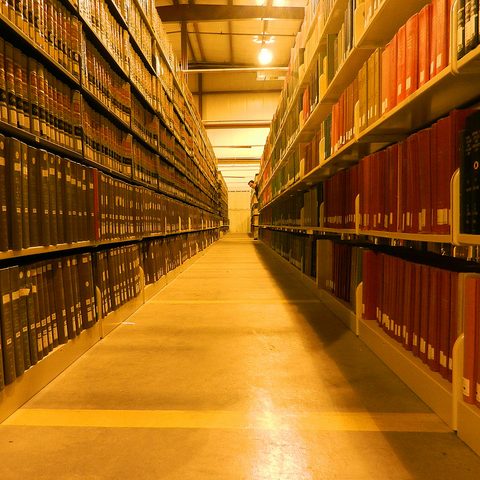
The school environment is also crucial. According to the PIRLS interviews with principals, 62% of South African primary schools do not have school libraries. These are central to promoting a reading culture, aswork in New Zealand shows.

Schools should develop strategies such as Drop Everything and Read slots in the timetable, library corners in classrooms, prizes for reading a target number of books and writing about them, and creating learners’ reading clubs. Learners can draw on local oral traditions by gathering stories from elders, writing them and reading them to others.

Finally, the home environment is vital. The PIRLS research showed that children with parents who read, and especially read to them, do better at reading. Our research found that children with parents who attended adult classes were highly motivated to learn and read with their parents. Even if parents are illiterate, older siblings can read to younger children. The Family Literacy Project, a non-profit organisation in KwaZulu-Natal, has done excellent work in creating literate family and community environments in deep rural areas, showing what is possible.

Developing families as reading assets rather than viewing them as deficits can help to strengthen schools and build a reading nation.

Peter Rule is Associate Professor at Centre for Higher and Adult Education, Stellenbosch University.

Source: The Conversation
 

Hlengiwe Mkhize: TVET Colleges are critical in reducing youth unemployment

Thabo Mohlala

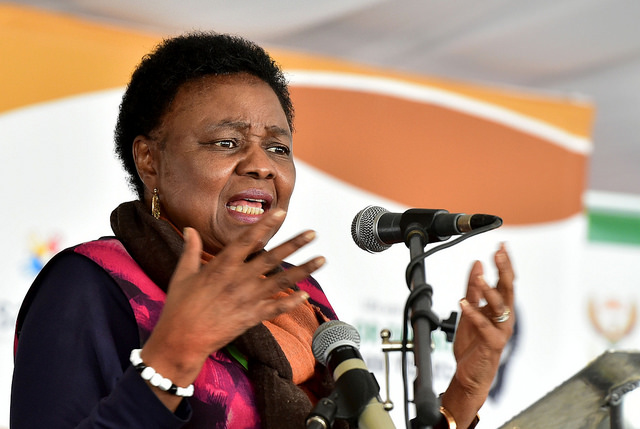
The Department of Higher Education and Training (DHET) is not only concerned with universities but they are looking at the re-configuration of the entire post-schooling education as its core mandate, this is according to Minister Hlengiwe Mkhize.

“Post-schooling education does not only speak to universities but it also speaks to Technical and Vocational Education Training (TVET) colleges as well, although billions went to universities since the start of #FeesMustFall campaign,” said Mkhize.

She said the colleges have been identified as key strategic institutions to provide alternative quality education to learners who could not make it to universities.

“TVETS colleges are very important. If you look at countries that have succeeded in cutting down unemployment they all say one thing that colleges are designed to do so. I have met with the ambassadors of the Nordic countries, Germany, Switzerland and others and they all say their colleges don’t compete with the universities. They offer integrated learning – meaning there is a combination of theoretical concepts and work experience so that when you complete your studies somebody in the sector will grab you,” said Mkhize.

She said TVET colleges were transferred to DHET and “what I proposed is that we put them under ‘Operation Phakisa’ so that we can look at everything that is still outstanding. This could be about, for instance, legislation that is not finalised or the curriculum that is still the same as that in the old policy framework of the department of basic education. Now they are closer to the SETAs, skills hubs, which have billions in their coffers”.

Mkhize said it was a question of how you position post-schooling education to be at the centre of skills production. And putting it under Operation Phakisa, she said, will help expedite the process of turning the colleges around. She said the process of revitalising the colleges entailed looking at, among other things, curriculum alignment,  review of the colleges to ascertain if they are producing students with the skills society needs especially in driving the economy and in fighting unemployment.

Mkhize said the private sector has a role to play such as giving students works experience as well place them afterwards. She said much work has been done but it is fragmented and they intend to strengthen their partnerships with the private sector.

“We are even looking at the BBBEE as we feel we have never emphasised the importance of supporting our educational programmes by incentivising companies through the BEE policy and how to make sure you are not taken advantage of by companies that do not apply the policy,” said Mkhize.

She singled out Ekurhuleni West TVET College as an archetype of what they want other colleges in the country to emulate.

“It is different and its uniqueness is that students get placement after completing their studies and captains of industry go there to teach. This is what our colleges should be focusing on and universities should also align their curriculum in such a way that they evaluate students with college experience,” said Mkhize

She said these are some of the intervention measures they are currently working on and will be implemented early next year so that they can see their impact on the post-schooling education and training.


Grade 11 learner commits suicide over failed exams

0

Bonile Khanyi

A Grade 11 pupil allegedly hanged himself in Ekangala near Bronkhorstspruit on Wednesday, after discovering he had failed his grade, according to the Gauteng Department of Education.

It is alleged his mother found him hanging in the garage at his home, shortly after receiving his year-end academic report.

He was a pupil from Strauss Secondary School in Ekangala.

In a statement, MEC of Gauteng Department of Education Panyaza Lesufi expressed shock at the incident and conveyed his condolences to the family.

“It is regrettable that such an incident occurred, as the department is working jointly with NGO’s such as Childline South Africa,” said Lesufi.

“We would like to convey our most sincere condolences to the family of the departed learner.”

The department also urged parents and the community to closely monitor the behaviour of learners and, if necessary, approach counsellors for assistance.

“The department appeals to learners not to commit suicide, and emphasise that failing a grade does not signify the end, we all fail at some point; however, we must be encouraged to start over and strive to reach our desired goals,” said Lesufi.

Learners experiencing depression due to their poor academic performance have been urged to contact the Childcare toll-free line on 0800 055 555, or Childline Gauteng on 011 645 2000.

The Department says trauma counselling will be provided to those who have been affected.

How collaboration between established and disadvantaged schools can better South Africa’s education system

0

Alan Stuart

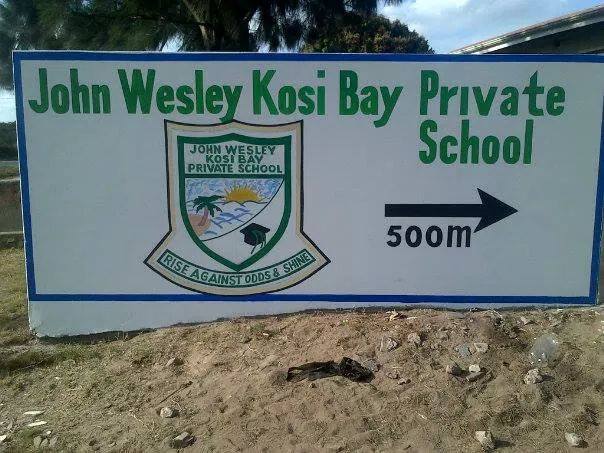
I was the HOD Intermediate Phase at John Wesley School, connected to Pinetown Methodist Church near Durban. John Wesley Pinetown had been established out of the need for quality education for ALL children at the time of apartheid. We employed well-qualified teachers, were well-resourced and occupied a beautiful, leafy campus.

Bishop Purity Malinga of KwaZulu-Natal (KZN) Coastal Methodist Churches was a member of our Board of Governors. And through her contact with all KZN Methodist Churches; she had discovered another John Wesley School also connected to the Methodist Society in Kosi Bay. Kosi Bay aka Manguzi is on the far north coast of KZN just 15 km from the Mozambique border.

“Make contact with them and see how you can help each other,” Bishop Malinga begged us.

I pricked up my ears at the chance of visiting a rural school also named John Wesley and was excited at the prospect of experiencing something new. Our management decided we would make our first contact via sport. We contacted the principal at Kosi Bay and asked if we could bring a soccer team to play a match against them on a certain Saturday.

We left on that Friday and stayed over in Hluhluwe at the home of an ex-staff member. The following day we navigated the R22 past Mbazwana as we made our way to John Wesley Kosi Bay situated behind the Umhlabuyalingana municipal buildings.

The school campus consisted of two sets of prefabs and a brick toilet block which had been used by Space Construction when the tar road was built. These buildings were surrounded by loose sea sand which sported patches of hardy grass. I asked the principal, Mrs Gugu Tembe, to show me the facilities. The school had adapted construction prefabs to house the just over one hundred children enrolled. I asked Mrs Tembe what the school’s biggest problem was. She said that staffing was their major challenge. First of all, they were not able to match salaries offered by the state and secondly, teachers were not readily available in a far, rural area such as Kosi Bay. Most of the teachers they employed were not qualified. The germ of an idea sprang into my head.

We transported the teams and spectators to the ‘town field’. This was a relatively flat, semi-hard, sandy, patch with roughly hewn soccer posts at either end. On one side of the field, street vendors had shisanyama spots and braaied on an open fire, mielies, red chips in thin plastic packets and isqeda (iced cooldrink in small plastic bags).

On the other side of the field was an open-air mechanic’s workshop, an open-air tyre repairman and an open-air timber supplier and carpentry shed. Mr Muzi Mkhonto, a teacher from JW Kosi Bay refereed the soccer match. The Kosi spectators, mainly girls clad in their green uniforms and light brown hats, cheered both teams on equally – that was most impressive! Fanele Masinga, one of the girls said, “Sir, why have you only brought a soccer team? We also play netball you know!” I was taken aback by her forthright manner and excellent English, I promised her that we would bring a netball team the next time.

The match ended in a 9 all draw which was very apt, I thought. They then led us to the Manguzi Methodist Church where a wonderful lunch was laid on for us. We met Rev Olga Dlamini, of Ukhozi FM fame, who was the resident Methodist minister and also chair of their Board of Governors. The Kosi Bay and Pinetown soccer players, as well as respective staff members, were then able to socialise over a meal. The Pinetown group departed and slept over in Hluhluwe again that night. A visit to Hluhluwe-Umfolozi Game Reserve was taken on the Sunday en route home.

Later that year we organised a teacher exchange between the two schools. I and two other teachers from Pinetown drove up to Kosi Bay, and at the same time, three Kosi teachers drove to Pinetown to spend three days at the respective host schools. During my three days in Kosi, I taught almost non-stop. The resident teacher was away for some reason. I spent most of my time in the grade seven class, then some time in the combined grade five and six class. I enjoyed my interaction immensely, but remember being dismayed at the disparity of abilities within each class. There were learners who could converse confidently in English ranging to a learner who could hardly give his name. Maths abilities had a similar range.

Robert and Gladness Ntuli hosted us on their homestead in Manguzi. They had been one of a group of Methodist parents who had initiated the start of John Wesley Kosi Bay as an alternative to state schooling.

After this visit, I decided to apply for a job at John Wesley Kosi Bay. I took the bishop’s instruction fully to heart. I wrote a letter to Rev Olga Dlamini offering my services and awaited a reply. She phoned me on my cell as she wanted to hear me make the offer using my voice! We agreed that I would start the following year (2005) on a very basic salary and that the church would provide my accommodation.

During the next ten years, we moved campus, built proper classrooms, established a computer centre, developed the library, grew the school to include grade RR to matric (800 learners), became Sars and Umalusi compliant, registered as a PBO & NPO, laid out a sports field and joined the KZN and SA Christian Schools’ Sports Associations. We also became the best performing school in the area in matric results.

I cannot take the credit for all that I have stated above. Building a school is the work of a team – principal, management, staff, learners, parents and community. I can say though that I brought with me the knowledge of how a school is established and the enthusiasm to get the job done. All this started from John Wesley Pinetown twinning with John Wesley Kosi Bay. I believe that if we wish to improve the standard of education in South Africa, then those who have the experience must share this experience in the most practical way possible. Go and work in a school where you can really make a difference.

I have since moved away from Kosi Bay and am currently teaching the combined grade six and seven class at John Wesley School Eshowe.

Mapungubwe festival inspires future filmmakers in Limpopo

Chester Makana

Modikwa Mpa had little insight into movie or documentary film-making. She thought all it required was a camera, some actors a bit of production and voila, you’re ready to show your film to the world.

But when she stepped out of a local hotel in the Polokwane CBD her mind was transformed and empowered to gather more arsenals to shoot a movie that can be enjoyed from Senwabarwana to Seoul.

“I have learned some secrets of film that I thought did not matter, now I will consider them going forward,” said Modikwa Mpa, who took part in the three-day Mapungubwe Film and video festival in Polokwane.

This three-day interactive workshop by film industry experts who shed light on aspects movie makers should consider when telling their story.

She said most of the technicalities applied in the making of a film was like a foreign language — simple to see when is written but difficult to understand as always seen on the screen.

Mpa was one of more than two hundred youths who attended the festival run by experts from The Film and Publication Board, independent producers and the National Film and Video Foundation.

The Limpopo department of Sports, Arts and Culture MEC Onicca Moloi called youths to participate in movie-making to help tell the stories their communities face.

Moloi and her department managed to secure experts like Ntshavheni wa Luruli a world-renowned producer whose latest movie Elelwani attracted the interest of movie lovers.

In his lecture, Luruli appealed to aspirant movie makers to work hard and avoid being a copy of Hollywood saying “it’s time” locals create their own stories.

According to Luruli attempting to apply a Hollywood-approach is a mistake that blocks the path for local filmmakers.

“There are many stories, that are uniquely Limpopo right here, you will be making a mistake as we always making mistake in South Africa by telling stories that are told by other people,” he said when rebuking tendency of employing Hollywood

“You take Hollywood those are not our stories,” argues Luruli

He suggested that local stories are always influenced by each culture and should be told without the influence of Hollywood elements which saw locals as copycats.

“Tell women stories our queens, tell that story it really shapes the whole thing of African feminism and not just follow what other people are writing overseas, this is where we fail.”

Like Mpa, Tlou Nkuna from Moletji is adamant that the development of film producers will see movies and stories told timeously.

He watched Kalushi and some of the other films screened at the festival on Monday.

He said the movie, among other things, shed light on how long it took producers to tell a struggle story.

“Kalushi was during apartheid era, we are going to tell new stories,” said inspired Nkuna.

He said the development of producers in South Africa, will see more stories told in time and reflect current affairs.

Senior producer Marc Nekaiar argued that Limpopo filmmakers should learn from Nollywood producers and not repeat their mistakes.

“The advantage of starting late is that you won’t mistakes that other people did,” he said

He said while Limpopo is coming to play after everybody has done it, It should work for producer and perfect the wrongs of others.

Film festival organizer Victor Phiri said this year’s festival and workshop opened a window for filmmakers to showcase their shows.

Phiri said they would be showing movies and play theming throughout the province to help producers acquire a space in the society.

Meanwhile, Film and Publication Board and NFVF warned producers to guard against pornographic materials saying it could be a waste of money as they are likely to be removed.

NFVF’s production and development manager Thandeka Zwans urged aspirant filmmakers to ensure that their films do not contain material that is harmful to children.

“We have duty to protect children from harmful materials, if you produce them we will remove them from viewers if its classified to be very harmful,” she said.

Mpa said she learned that the classification of movies per people’s age is for the advantage of the society.

Naledi Pandor: Third Science Forum in SA seeks to showcase African science and technology

Bonile Khanyi

Thousands of delegates from more than 50 countries have gathered at the CSIR Conference Centre in Pretoria to talk science, technology and innovation. 

The event is the third Science Forum in South Africa, which was initiated by
Science and Technology Minister Naledi Pandor to showcase the country’s
contribution to science worldwide. Delegates include various stakeholders including scientists, government representatives, industry leaders, students and civil society
organisations

Speaking at the Science forum on Thursday, Pandor said for the next two
days, people can look forward to a comprehensive programme of 70
parallel sessions where a broad range of issues with regards to the role of
science in society will be covered.

She also said that this year’s forum had three primary objectives.

“The first objective is to put science at the service of African society. We
believe it is through science that many of the challenges faced by our
communities can be addressed,” said Pandor.

Pandor said the second objective was to “promote international collaboration” while the third was to “showcase African science and technology into the
world”.

Deputy President Cyril Ramphosa was also there on Thursday and delivered
the keynote address.

Ramaphosa said this was an important event as it served as a platform through which cooperation and partnership could collectively advance science. The deputy president said the forum promoted innovation, science and collaboration which helped Africa grow.

“It is a forum working to advance pan-African co-operation in science and
technology but also to advance regional integration to promote peace in our
continent but also to enhance social cohesion and inclusive development.”
Ramaphosa said he is confident that this year’s event will move the African
youth to exploit the many opportunities that exist in scientific careers.

He stressed the importance of developing young people who believe in a future for science in this country and the continent at large.

“It is young people who must see themselves as agents of development
working to redesign the urban environment that many people live in,
expanding transport networks and building new and more sustainable
human settlements.”

Ramaphosa also called on stakeholders to partner with young entrepreneurs to help support development and sustainability of innovative businesses.

“These stories of success and these stories of dreams that they have demonstrates that indeed our young people can reach the pinnacle of their potential if we just do one simple thing, to nurture them, to give them the opportunity and to open up pathways for them to get in.”

Ramaphosa said it would be very wrong for people to deny young people opportunities.

This course aims to help librarians in SA schools adapt to digital

0

Janet Thomson, Megan Rademeyer and Hlengiwe Mfeka

“There needs to be a policy for school libraries, an implementation plan that includes
qualified school librarians in each school, and a support service at the provincial level. The
benefits and value of a functioning school library under the leadership of a professional
school librarian have been recognized globally and shown to boost learner achievement.”

This is the view of Dr Sandy Zinn, senior lecturer, Department of Library & Information
Science, University of the Western Cape expressed in a Nal’ibali reading-for-enjoyment
campaign article. Dr Zinn relates the lack of school libraries to the repeated reports on low
levels of literacy in South African schools. Sound research supports this view and is
particularly relevant in a country with eleven official languages, contested language policy
and where low levels of reading competency characterise many Foundation Phase
classrooms.

Sadly, school libraries in South Africa are not the norm. The majority of government schools have a sense that libraries are the preserve of the wealthy, well-resourced schools. Most schools can only dream of the day when they might have a dedicated position for a media specialist or teacher-librarian post. Such specialists are also rare in curriculum advisory roles in provincial or district departments of education, thus supporting the view that libraries are not a priority in the South African education system.

In addition to the shortage of qualified librarians, with the advent of technology, the
traditional role of a librarian has evolved to become that of being a curator of resources,
predominantly digital resources. School librarians are now expected to be knowledge
managers who provide their teachers with a rich array of content to support their teaching.

Some provinces have been striving to address these challenges by establishing directorates within provincial structures. One such province is KwaZulu-Natal which has a dedicated unit called ELITS (Education Library Information and Technology Service).
SchoolNet South Africa has recently been contracted by the KwaZulu-Natal Department of
Education to conduct professional development with ELITS Officials during December 2017.

The intention of this course is to equip officials and those responsible for managing school
libraries with the skills to adapt to this changing digital role.

In order to conduct this training, SchoolNet SA has developed a Digital Library Course,
aimed to equip school librarians and provincial officials with knowledge of all issues digital
and pertaining to the management of a school library. Across the weeklong course, officials can see how digital tools and resources enhance the services traditionally offered at libraries and resource centres.

The course covers essential topics that all modern day librarians should be aware of, which they can apply to their libraries in a way that is appropriate for their context and the resources they have available. Modules include discussion of the following topics:

Using software to conduct library administration

Basic library functions can be automated to provide a fast, accurate and efficient service
which meets the needs of library users. Automated systems also ensure that all items on loan are properly tracked and retrieved as a form of asset management. Librarians should have some knowledge of library automation programmes and how these can enhance library administration.

Effective use of online resources

There are many resources available online which are designed to enhance the teaching
programme. Librarians should be able to find and curate appropriate resources for their
contexts.

Communication and marketing and using social media

Signage, displays and posters can help make a library or resource centre an inviting space to be in; they can raise awareness of certain topics or special days. Newsletters, reading lists and social media can provide access to a wide range of resources. Librarians should have the skills to use digital tools to market their centres and to enhance communication.

e-Safety, plagiarism, copyright and ethical use of information

Librarians need to ensure that in addition to providing access to online materials with
educational value that their centres have a digital literacy programme in place which includes digital citizenship and e-safety. Furthermore they need to manage the ethical use of information.

Finally – a librarian needs to be able to apply what he or she knows about digital librarianship to his or her own unique context. With this in mind, the SchoolNet SA Digital Library Course culminates in participants developing a well-defined and well-informed personalized action plan designed to ensure that the school library or education centre that course participants are associated with fully utilize the advantages of digitization.

Whilst schools, municipal libraries and district ICT resource centres have different levels of
resources available, all staff tasked with managing libraries should be aware of digital issues pertaining to the management of their centres or libraries to enhance the services they offer.

The writers are with SchoolNet

Lack of transformation alienates students at universities

Thabo Mohlala

The minister of higher education and training, Hlengiwe Mkhize, said universities should begin to seriously confront the vexed issue of transformation and autonomy.

The minister said while she is seized with the Fees Commission report and engaging with vice-chancellors to ensure the academic year starts smoothly, she also flagged transformation as one of the areas that needs to be addressed earnestly.

Transformation was one of the students’ demands during the #FeesMustFall campaign. They called for the universities’ management to transform, among others, their institutional culture, staff demographics and composition, admission policies and curriculum.

“We have said to them that the #FeesMustFall campaign gave the country an opportunity to discuss funding of tertiary education but we know for a fact that, in some instances, universities alienate students. And as long as they don’t work hard on transformation issues, they subtly exclude students,” said Mkhize. She said a student who feels alienated is likely to fail first year and those who do not have support back home drop out because they feel the culture is alien.

“We feel, as the department, that whatever support we give to students, it will be a waste of resources if universities do not reposition themselves differently,” said Mkhize. She said they also highlighted the historical issue of the autonomy of universities; there is a historical context because universities didn’t want to be abused by the apartheid regime to implement the racist laws.

“But we have not really engaged them now in this democracy. We keep flagging these issues and say once they are addressed students must see fruits of their revolution on campuses,” Mkhize said.

A university in Ekurhuleni is definitely in the city’s future

Bonile Khanyi

Progress was made recently on a plan for a university to be built in the City of Ekurhuleni when its metropolitan municipality hosted the university symposium allowing stakeholders from government, business and youth to exchange their ideas on the process and also resolve on a way forward.

The event which was held late in September this year was addressed by the Deputy Minister of Higher Education and training Buti Manamela, university Vice Chancellors, as well as youth and business leaders.

Speaking to Inside Education, an official at the Ekurhuleni metro Zuko Godlimpi said plans for a university were still on the cards for the city.

“The City of Ekurhuleni has been working on the process towards the building of a university. But the building of universities is of course a competency of the national department of higher education and training and the city of Ekurhuleni has been building a case to justify why the region or City needs a university,” said Godlimpi.

Godlimpi said what informed their decision, is that Ekurhuleni historically has always been South Africa’s manufacturing hub which has experienced a decline in industrial assets since 1994.

“Our economic development plan includes revitalising manufacturing, but that requires, the building of a skills set that provides the labour and human capital required for that development,” said Godlimpi.

“So, that is why we have decided to push forward with our plans to build the City of Ekurhuleni a university that will benefit its people and its economy.”

Godlimpi said the university will also make it easier for students who would like to further their education to do so within the city, close to home.

“The population that of Ekurhuleni is quite high, but Ekurhuleni has a low tertiary education level among its citizens. This is partly because the people of Ekurhuleni have to compete for spaces in universities that are outside the region, so because of that competition, there are low numbers of people from the city that would end up being accepted in those universities,” said Godlimpi.

Speaking at the symposium, Executive Mayor Mzwandile Masina said that although it was still in the early planning phases, the university would feed the economy and will help citizens adapt to “the fourth industrial revolution”, which will see traditional industrial jobs disintegrate.

He also said practical steps had been taken to ensure that the project was followed through since the initial pronouncement at the State of the City Address in March.

When asked about how long the process would take, Godlimpi said it could take up to five years until they’re given the go-ahead to start building.

“What has to happen is that it has to be presented to the department and get an approval from the department,” said Godlimpi.

“A university by legislation is an act of parliament, and that means it is parliament that has to accept the university as an act of parliament.”

“So, what the city has already done, was to do a situational analysis and it also developed a business case for the university and it has also had conversations with private investors on the possibility of a public private partnership in infrastructure development for the university.”

“So, it could take anything from two to five years to get an acceptance.”

Godlimpi also said an Advisory Committee would be established comprising of a range of different stakeholders to guide the development of the university in the city.

“The city is putting together an advisory panel made up of different experts, people who have expertise in finance, in higher education administration, in academia and so on and it is that advisory panel that would actually supervise the concept of the financial modelling that will give us an indication of how far this thing can go,” said Godlimpi.

“When that is finalised, we can then get on with the work of financial models but also the model that the university will take.”

In conclusion, the city has strongly urged young people to participate in this process, in order to ensure that they fully own the process and that they become part of history in the making.

“When the executive mayor came into office, he came into office carrying the sentiment of the youth of Ekurhuleni, that whatever happens the city needs to work towards building a local university because of the various problems that they say they are facing when applying to universities elsewhere,” said Godlimpi.

“So, the whole concept is inspired by the youth of Ekurhuleni which is why it is important that they play their part in the process and help determine the nature of the academic programs it will offer among other things.”

“Essentially a university, although it’s a public good, its mainly a public good that it meant for young people,” concluded Godlimpi.

For more information on the development of the university in the City of Ekurhuleni, visit the website. 

The resilience of South Africa’s universities is being tested to the limit

Professor Ahmed Bawa

Universities are resilient institutions. Even so, in the face of ongoing instability and deepening underfunding, South Africa’s institutions of higher learning are taking enormous strain, testing that resilience to the limits.

The universities have arrived at the end of another academic year and while 2017 may appear to have been a much more stable one than 2016, most institutions experienced some level of localised instability during the year. While the #RhodesMustFall and #FeesMustFall campaigns have generated much public and media interest, we must remind ourselves that instability in the sector is decades old, prevalent mainly at those institutions which cater primarily for students from poor backgrounds. The issues have always been the same: the unaffordability of higher education for most South African families and the connection or relevance of the higher education system with the local context.

Universities are social institutions, created and funded by societies across the world. They play particular, highly specialised roles as knowledge-intensive institutions. For instance, they contribute to the national projects of nation-building, the sustainable growing of the economy and perhaps most importantly to the construction of a more equal society. At a more general level, we look to these institutions for the production of new cohorts of intellectuals shaped in the context that they seek the constant re-imagination and renewal of our humanity and the way in which it relates to the universe in which it exists.

Not surprisingly, therefore, universities are highly contested political, physical and conceptual spaces. They are either powerful institutions for the maintenance of the privilege of elites or they can be deeply subversive, deeply influential in reshaping humanity, in building societies and economies that place human beings at the centre. The knowledge project of each university and of the sector as a whole is at the heart of this highly contested space. We should not be surprised that universities generate such high levels ideological emotion and activism.

The key issue that underpins the instability that currently engulfs our universities is unresolved and it has to be one way or the other. The status quo cannot persist.

A national consensus does exist that in a democracy such as ours, with such deep and persistent inequalities, higher education cannot and must not be out of reach of most people. No South African admitted into one of our universities should be prevented from taking up the opportunity of studying for financial reasons. That negates a very basic and fundamental role of our universities.

So, what then is the problem? And why are we not making progress?

This is not a challenge that can be solved by the universities. This is a national issue. It is a challenge that has to be resolved through a national discourse that would advise the state of how to proceed and I daresay, this has happened already if the national government cares to listen.

We could adopt a model which says that all tuition fees should be scrapped. At the current levels of funding, this would mean an injection into the state subsidy towards the higher education institutions of about R25 billion a year to maintain the funding at current levels. This would not cover the full cost of studies, just the tuition fees.

The notion that higher education produces both public goods such as those mentioned above and private ones such as higher salaries on average, privileged access to the labour market, greater job satisfaction, flexibility, etc. is used to argue for a cost-sharing basis. This resides at the heart of the income contingency loan model put forward by the so-called Fees Commission. Student activists have eloquently made the point that this ignores the burdens of historic debt borne by the majority of South Africans and the historic privilege of minorities. The second argument is that there simply is not enough fiscal space in the national budget to address this challenge. This too is debatable and it is debated.

Actually, there are a number of solutions on the table. The numbers have all been crunched and a certain level of risk analysis done for each.

All we need now is a clearly defined route-map which lays out where we are, where we wish to be and the trajectory between these two points. This has not been done, even in the context of ongoing demands. Why?

The general paralysis of the state is disastrous for universities and their students, staff and leadership. And when the state does speak, it does so with many tongues adding to the confusion, the uncertainty, the instability. While the universities are committed to working vigorously and diligently with the state on this project, the state is for all reasonable purposes an absent player at this stage.

Are South Africa’s universities perfect? Of course not. Can we improve their efficiency? Clearly yes. Are they in optimal relationships with communities, local government, the NGO-sector, business and industry? These can and must be improved. But let’s be clear. Our universities are a massive national asset. The system is the best performing one on our continent and it punches way above its weight globally. Since 1994, it has more than doubled in size, its research output has grown threefold and it graduates more doctorates than ever before.

While contestation, debates and activism about its nature and role in society will always be a part of its fabric, it needs stability and more funding to foster its continuing positive impact on our society.

Professor Ahmed Bawa is the chief executive officer of Universities South Africa.