Home Blog Page 536

Noordgesig parents upset over appointment of “bantu African” principal

0

Bonile Khanyi

The Gauteng Department of Education (GDE) held a parent’s meeting at the Noordgesig Primary School in Soweto on Monday morning to discuss their concerns over the appointment of a black principal.

However, things didn’t go as planned, as parents refused to speak to the department’s officials who were sent there to intervene.

Speaking to Inside Education, the department’s Spokesperson Steve Mabona said the parents demanded that they either speak to the MEC or the Head of Department and no one else.

This follows last week’s protests when parents disrupted learning at the school on Friday, saying that the appointment was imposed on them and that they were not consulted.

In a statement, parents said they felt disrespected by the appointment of a new principal, as the acting headmistress was doing a good job and there was no reason to remove her.

They also referred to the newly appointed headmaster as “a Bantu African” but insisted they’re not rejecting him on the basis of race.

The new headmaster was supposed to start his first day on Friday morning as principal of the school – two years after his predecessor was fired amid a circumcision scandal.

Mabona said a meeting with the HOD will be scheduled for Tuesday afternoon to discuss a way forward.

“We will set up a meeting with the HOD for tomorrow (Tuesday) afternoon to discuss a way forward with the concerned parents as intended,” said Mabona.


Hlengiwe Mkhize’s working hard to avoid university protests next year

0

Thabo Mohlala

Minister of higher education and training (DHET), Hlengiwe Mkhize is positive the situation at universities will return to normal when the 2018/19 academic year starts in a few months.

Mkhize took over the reins at the DHET amid growing calls from students and university management for the release of the delayed Fees Commission report after it was submitted to President Jacob Zuma in August. The recommendations were finally made public and a special team of technocrats is currently processing them.

“The first day in office is always overwhelming in the sense that you look at the scope of work and wonder as to where you are going to start particularly in my case when I came towards the end of the academic term. Of course one has to prioritise and in this instance, the thing I had to look at is the Judge Heher commission report,” said Mkhize

She said the report has been discussed by cabinet and they are currently analysing it with the help of the Presidential Fiscal and Inter-ministerial Committees chaired by the Minister in the Presidency, Jeff Radebe.

“Looking at the recommendations as a collective helps to move the process forward. We are now moving towards taking clear positions and say this is within our reach in terms of financial constraints or that this and that might be long-term etc. With these recommendations, you can’t say they are right or wrong. Anyone interested in education will agree with some of the things such as for instance, a recommendation that all poor students studying in public and private institutions should be financially supported,” Mkhize said.

According to a report by Business Day, it seems free higher education for the poor will be introduced in next year’s budget. Some students demanded free education for all.

This is in line with what Mkhize told Inside Education. She said the technical team would make choices that are in line with 1994 policies that focus on funding the most financially vulnerable students in the system.

“The main considerations have been accessibility and sustainability. Basically, we feel whatever we finally take to the president must address these two critical factors,” said Mkhize.

Added Mkhize: “This process made me aware that we need to be smarter and avoid making certain pronouncements such as “free education”, rather we must think more about who is paying for what. And the big question has been about the right to education and responsibilities. What conditions can we put in place so that our students can take full responsibility for their studies.”

Why does she feel optimistic the academic year will get off to a smooth start despite threats of student protests?

“We have not been on holidays; we have been working and engaging with the vice-chancellor through their association – Universities South Africa. They seem to be on the same page; sympathetic to students’ cause especially the poor. So we agree on how to take care of those poor students. We have given them in principle decisions; they [vice-chancellors] are fully and better briefed than students because they were busy with examinations,” said Mkhize.

She said she will be meeting with all the academic registrars of the universities very soon to assess their state of readiness for the next academic year.

“So there is a lot of work taking place behind the scenes; we are not just waiting for the president to announce the final government position on the commission’s report. We are all agreed that whatever the final position is announced we should all go out to engage and communicate and avoid ambiguities so that students know for sure what official position is,” Mkhize said.

But, she said, it is important to highlight the point that students who get financial support must understand that the right to education goes with responsibility. “You don’t want a situation where you have high drop-out rates of students who have been fully funded,” added Mkhize.

She said they agreed with the vice-chancellors that since the final announcement has not been made yet, they should be cautious about what they discuss. But we are all agreed that we should come up with a reasonable package and to engage all the stakeholders as well as to be clear about the interventions we put in place.

Studies show girls perform better academically

Thabo Mohlala

A study by Stellenbosch University’s department of economics found that girls outperform boys at both school and university education.

Titled: The ‘Martha Effect’: The compounding female advantage in South African higher education, the study said girls learn to read much quicker than boys do – a global trend particularly in all middle and high-income countries.

According to Drs Nic Spaull and Hendrik van Broekhuizen, who formed part of the research group on Social-Economic Policy in the department of the SU’s department of economics, generally, girls do better than boys.

“On average girls actually do better than boys. They learn to read much quicker than boys do (which is true of pretty much all middle- and high-income countries). In South Africa girls also perform better in mathematics,” say Drs Nic Spaull and Hendrik van Broekhuizen from the research group on Socio-Economic Policy (ReSEP) in SU’s Department of Economics.

The researchers looked at a sample of nationally-representative surveys conducted from 2011 to 2015. It showed that girl learners trump boys in both literacy and numeracy. By grade 4, the report noted, girls are a full year of learning ahead of their male peers in reading and by grade 5 about 40% of a year of learning ahead of boys in mathematics. 

Curiously, though, this all get reversed when they reach matric as boys outshine girls in both maths and science. The researchers went further with a view to finding out if the trend of girls performing far better than boys holds at university level.

Through the use of data gleaned from the Higher Education Management Information System, the researchers looked at all the 2008 grade 12s  (112 402) who went to university and tracked them for a six-year period (2009-2014). They also relied on the detailed information based on the results of all students collected by both the departments of basic education and higher education and training.

Noted the researchers: “We found strong evidence of a large female advantage that continues to grow at each hurdle of the higher education process. To be specific, relative to their male counterparts we find that there were 27% more females who qualified for university, 34% more who enrol in university, 56% more who complete any undergraduate qualification and 66% more who attain a bachelor’s degree. This despite there being roughly equal numbers of boys and girls at the start of school.” 

They also noted the strikingly high drop-out of boys from matric to university degree attainment, saying “For every 100 females in matric there are only 85 males in matric. And for every 100 females in matric only 8 females will complete an undergraduate degree within six years, with even lower numbers for males (only 5 males).”

The researchers further found that “that this large female advantage remains after controlling for school-level performance, and exists for all subgroups of race, age, socioeconomic status, province of origin and institution attended.” 

They also dismissed the argument that girls do better because they tend to choose ‘easier’ fields of study than boys. The researchers examined 19 fields of study and found that “females are significantly more likely to get a degree in 12 of the 19 fields (often by substantial margins), and are significantly less likely to get a degree in five of the 19 fields.” This is not because of lower completion rates once they are in but rather due to the fact that female learners do not access these traditionally ‘male’ programs.  “Only in Engineering and Computer Science do girls do worse than boys once they are accepted to the programme,” the researchers observed.

They said one of their most interesting findings was that females are always and everywhere 20% less likely to drop out than their male counterparts (including in traditionally ‘male’ fields like Engineering and Computer Science). This even after controlling for field of study, race, age, socioeconomic status, location or institution, adding it is not a phenomenon confined to South Africa only.

“The emergence of a female advantage at school and at university is a global trend among middle and high-income countries. In the 33 countries that make up the Organization for Economic Cooperation and Development (OECD) – mainly a club of rich countries – 58% of bachelor’s degrees were awarded to women. In South Africa it is 61%,” said the researchers.

They said although they cannot explain yet why this is the case, “the best international evidence points to the fact that girls perform better when it comes to things such as self-control, self-motivation, dependability, sociability, perceptions of self-worth, locus of control, time-preference and delayed gratification”.

They added that any conversation about ‘gender equality’ needs to take into account the disadvantage faced by boys at school and university, but also why this reverses when one moves into the labour market.

EXCLUSIVE: No place to bath for matrics locked up at school for exams

Busisiwe Gumede

Every matric pass rate a school achieves is a result of hard-work, dedication and in some cases – extreme pressure placed on students through measures implemented by ambitious headmasters. The Memezelo High School in Soshanguve Township is no different.

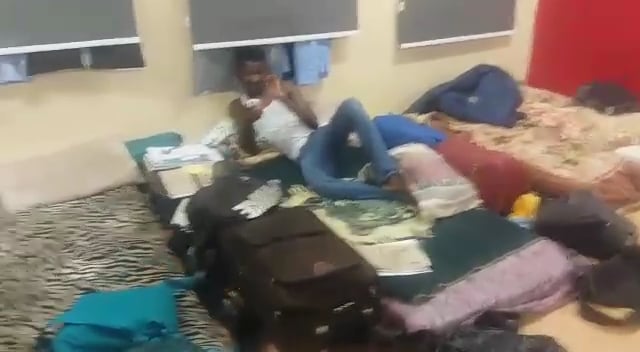
According to concerned pupils and educators, the matriculants at the school have been locked up in classrooms at night and compelled to study. This all happened, according to the pupils, with little adult supervision and scarce resources. This program, which has come to be known to the students as ‘the lock-in’’, was allegedly conceptualised and implemented by the current principal Prince Maluleke. Inside Education verified these allegations by speaking to three Memezelo matriculants and two educators who did not want to be named, out of fear of victimisation.

The three students said they were unhappy with the program Maluleke abruptly put in place in a bid to top the 91% pass rate achieved by the school’s matric class of 2016.  

20-year-old Songezo Kubeka* is one of the students who has been sleeping in a locked class for close to two weeks. He said “the lock-in” program was setting matriculants up to fail.

“It’s really compromising us as matriculants because instead of studying and working towards good marks, students are partying it up and drinking”.

According to Kubeka, four classrooms were set up for the matriculants to study and sleep in.

“There are two classrooms for girls and the other two have been allocated for the boys. We all sleep there cramped into one place”.

Kubeka said his parents knew and were in full support of the principal’s program.

“The principal did a good job of convincing our parents that we will produce good marks if only we stay at school. He had a big meeting with our parents and he promised that we will be well taken care of.”

But the matriculants argue that they weren’t properly cared for.

According to 18-year-old Slindile Phiri*, the students slept on sponges and blankets that they were requested to bring to the school.

“It’s even worse in the morning when we have to bath. We use kettles to boil the water and bath in little containers. We have to bath in full view of other students, sometimes in empty classrooms,” Phiri said.

The sleeping conditions were not the only challenge Slindile said made her unhappy. It’s extremely difficult to study too. She said some students made a noise while others attempted to study.

“Usually some kids sing at night when they are bored…that time we can’t study. Some of them even play music with the smartboard, it’s really difficult,” said Phiri. 

The spy camera footage that Inside Education is in possession of supported Slindile’s claims. The video shows students singing outside the room – blankets, bags and books everywhere. The video also shows how some students were watching a movie using the smart board.

Thabiso Mangena* said the principal didn’t start out like this. At first, it served as a tool for the students to sit and study together.

“After the principal saw our low marks in June he has been crazy with his plan. He said we should rather sleep inside the school and stay here,” said Mangena.

Mangena said, in the beginning, the principal never locked the classroom but after students were caught having a party he barred learners from moving freely.

The next morning after the party the principal was mad that some learners were drinking and having a party at night, so he said he was going to lock us in. You can’t go anywhere if you want to go to the toilet, or have an emergency. No one can go out,” Mangena said.  

All the learners said the lock-in was particularly stressful for a pregnant pupil. She was allegedly treated the same as the other learners irrespective of her pregnancy.

“We were worried that something could happen to her…she sometimes complained about the pain of sleeping on the floor, she didn’t like it like it at all”, said Mangena.

The teachers were more worried about incidences of sexual activity that took place at the school. Inside Education spoke to two teachers on condition of anonymity. They said some learners came to them to report the sexual activity. The teachers said upon further investigation, some students confessed to having sexual intercourse inside the classroom.

Mangena, one of the students we spoke to, said although the students were initially separated based on gender, some boys would find ways of sneaking into the girls’ section.

“What I know is that they would do that at night. But in the morning the caretaker would find used condoms while cleaning and nothing would happen,” Mangena told Inside Education.

Many asked why the students slept at the school if the principal was not forcing them to. They could choose not to stay behind after the last school bell for the day. The answer had a lot to do with the pressure to perform well. Many of them felt they could not disrespect the advice given by the principal, which they said, was more like an order than anything else. Many of them were also told by their parents to do as they were told. 

“My mother believes what the principal is doing is right. Yes we are not forced but we will get rejected by the principal and some teachers for not participating in the program” Mangena said.

“We sometimes attend classes very tired in the morning because we don’t sleep at night. My parents said I should be here, that it’s the right thing to do but I think it’s really going to have an effect on my studies” said Phiri, who is anxious about her future.

“I’m not even sure if I’ll be able to get space in university. What the principal has done is going to affect me and my chances of studying at varsity”

The hunt for a place at a leading university in the country appears particularly relentless. Depriving matriculants like Slindile, Thabiso and Songezo proper treatment by adding the pressure of competing academically at all costs, could be the metaphorical straw that breaks the camel’s back.  

Guiding and supporting them to be happy and stable as they go through academic challenges must be our number one priority as a country.

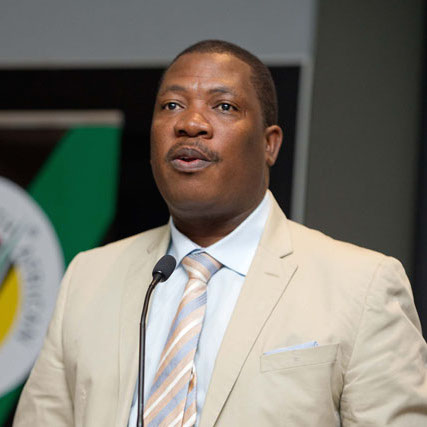
 

Medical graduates need guaranteed internship placement

Bonile Khanyi

Government needs to come up with a very clear policy that will ensure all final year medical students are placed in an internship, says the Junior Doctors Association of South Africa (JUDASA).

Nearly 300 final-year students have not been placed for internships next year and they’ve now taken their frustrations to social media, under the hashtag #UnemployedDoctors, to complain about their uncertain futures.

According to the Health Professions Act, medical graduates have to complete an internship followed by a year of community service before they can qualify.

However, young graduates have not been able to find placement due to an ongoing lack of available posts.

This has prompted a call on Premiers and the Finance Minister to address the looming crisis.

Speaking to Inside Education on Monday, JUDASA Secretary-General Dr Michael Van Niekerk, said he failed to understand how provincial departments did not know the number of people who needed to enter the profession by next year.

“As it stands, there are currently 280 unfunded posts that need to be filled next year,” said Van Niekerk.

“This is a big crisis because in South Africa we have one of the highest patients to doctor ratios in a society with a quadruple burden of disease and therefore we know that it is an essential service that needs to be fulfilled and that won’t be the case by the beginning of next year.”

“The worrisome problem here is that this is something that we highlighted at the beginning of the year already. We had a massive problem with placement last year and we foresaw this and it doesn’t make sense for the provincial department of health not to know the number of people that need to enter the profession by 1 January 2018 when this is something we’ve been dealing with annually,” said Van Niekerk.

Van Niekerk said since there was a clear indication that the problem will only persist, the government needs to come up with a policy that will guarantee graduates are placed in an internship every year.

“We need to realise that this is going to get worse, the number of medical graduates are being increased from a medical point of view and we know that South African Cuban trained doctors are also entering the system again by 2018 and 2019. Which means that the influx of numbers of doctors will increase, but the funding is decreasing,” said Van Niekerk.

“The department of health is sitting at a massive budget deficit at this moment. So there needs to be very clear policies in terms of how we’re going to guarantee placement next year.”

“The first would be to get a national standardised database immediately from the 1st of January to find out how many graduates per university have a maximum number who will be graduating by the end of this year.”

“And treasury and the provincial departments will have to source funding from January knowing that the application is supposed to start.”

Van Niekerk said all stakeholders involved need to start this as soon as possible to avert the same problem next year.

“We implore the department and the IDC to start this soon next year so that when they start this early in the year that we can see these provinces and try to foresee them and have a firm strategy to try and cope with it,” concluded Van Niekerk.


16 Days of Activism: Hear Me Move Educational Theatre launched to tackle child abuse in schools

0

Thabo Mohlala

With 16 Days of Activism against Women and Children abuse officially launched, a group of professional dancers and actors have teamed up to tour schools to raise awareness about sexual abuse.

In October this year, 87 girl learners were allegedly by one of the school guards at the AB Xuma Primary School in Soweto. Similar cases were reported in several other schools in the Gauteng province.

TV and theatre producer, Wandile Molebatsi said they felt the need to intervene when reading headline after headline about teachers and security guards who sexually molested young school girls.

He said choreographer and professional dancer, Paul Modjadji, suggested they respond to these social ills through the use of theatre and dance. Molebatsi said as a direct response they decided to form ‘Hear Me Move Educational Theatre’ – comprising seven original cast members of the dance film and a few new faces – to tour 10 schools around Gauteng province.

Lwazilubanzi Mthembu, actress, writer and director, who is also involved with the educational tour, said besides the show they also work closely with the Kwanele-Enuf is Enuf Campaign, which conducts workshops and also does interventions for children who are affected by abuse or are victims of the abuse themselves.

She said the Kwanele-Enuf is Enuf Campaign provides counselling and tools to empower abused children to get out of their situation. Mthembu said the campaign was also formed to mobilise society to take a proactive stand in eliminating abuse.

Molebatsi said theatre and dance are appropriate vehicles through which they can bring such a heavy subject matter to the level of young people. He said they use popular culture and edutainment to create context for young people to engage meaningfully with such a subject.

Molebatsi said when you create spaces and address issues that resonate with young people, they open up about the whole range of issues that affect them.

“The educational tour is not just about dancing and having fun but we also provide support and interventions to learners who may have been abused or may not have been aware they have been abused,” said Mthembu.

She said they are looking at extending the tours beyond the duration of 16 Days of Activism campaign. “This will enable us to reach more schools across the country to ensure every child is made aware of what child abuse is about and how they can be assisted to deal with it,” said Mthembu. 

Government needs to provide more services for children with special needs

0

Bonile Khanyi

The Chris Hani West Department of Education in the Eastern Cape has called upon the government to provide easy access to education for children with special needs.

This was during the department’s Disability Rights Awareness Month campaign, which was held at the Gali Thembani Centre on Friday morning.

Speaking to Inside Education, the department’s Queenstown district’s deputy director, Madoda Ndembe, said there weren’t enough services available to students with disabilities to match their requirements.

“The challenge we have here in our district, is that most of the schools that we have, are not accessible to children with special needs, because you’d find that they don’t have rails for learners in wheelchairs and you’d find that the facilities in general, are not favourable to people living with disabilities,” said Ndembe.

Ndembe said the department of education also needs to play its role in ensuring children with special needs have access to basic education like every other learner.

“As the department of education, we need to make sure that we’re playing our role as expected,” said Ndembe.

“You’d find that its not easy to place these learners into special schools and because of this, they are then forced to wait on long lists to gain access to a school and by the time there’s space, you’ll find that they’ve already progressed in age.”

“This makes it hard for their parents, as they tend to lose hope in the fact that their children will be given the opportunity to gain access to a school built for their special needs,” concluded Ndembe.

GDE pleads with learners to return tablets and textbooks

0

Thabo Mohlala

The Gauteng Department of Education (GDE) wants all learners to hand in their textbooks and tablets as soon as they finish writing examinations tomorrow.

In October the department launched the ‘Textbooks and Tablet Retrieval Campaign’ in Hammanskraal. Going by the slogan: “We Receive, We Care For, We Use, We Return Textbooks and Tablets”; the initiative aims to “instil discipline and a sense of responsibility amongst learners”.

The department said, in the media statement, that this will help it to properly manage resources and ensure that in the next academic year other learners could be afforded the same opportunity.

“It must be noted that the safe return of study material enables the department to plan on time for 2018 so that when schools reopen for the new academic year, teaching and learning is ready to commence,” read the GDE statement.

The department urged parents and school governing bodies to get actively involved in reminding their children to return the learning material to ensure the 100% retrieval of all the learning materials across the province.

MEC for Education in Gauteng, Mr Panyaza Lesufi, warned: “Withholding the department’s learning material is tantamount to theft and they are likely to be held criminally liable.”

Lesufi invested a lot of resources into the ICT programmes which he said he wanted to roll out to every school in the province.

But in her recent mid-term provincial budget, finance MEC, Barbara Creecy, did not allocate additional funding for the GDE’s classroom digital programme. The GDE’s spokesperson, Steve Mabona, told Inside Education that due to financial constraints, they would have to halt their ICT expansion plans. The textbook retrieval campaign must be seen as an attempt by the department retrieve every piece of the gadget they issued.

Schools are ordered to label the devices which must be returned with a charger and Proline tablets with keyboards. The schools are also required to submit the signed, updated and typed out Learner Tablet Asset Register including the soft copy version of the Asset Register to indicate the serial number of each device, model and classification.

The GDE said the tablet devices and chargers returned to the schools will help determine the same number of tablets and chargers to be re-distributed to each respective school for the 2018 academic year roll-out. No additional tablet and chargers will be provided, said the department. It is urgent for learners to return textbooks and tablets after the final examinations to make sure readiness and access to quality education in our province, added GDE.

Western Cape Education Department steps in to fund poor learners

0

Thabo Mohlala

The flawed national quintile system is putting severe financial strain on fee-paying schools making it difficult for them to sustain their daily operations. This is according to the Western Cape Education Department (WCED), which had to fork out over R50 million to assist the affected schools struggling to collect fees from parents.

The quintile system is designed to allocate funding to schools based on the level of poverty of the community and learners they serve. Quintile 1-3 are categorised as poor and do not charge fees while those falling under quintile 4-5  are considered wealthy and collect fees from parents to sustain themselves.

In a statement, posted on its website, WCED said the deepening economic struggle in the country made it difficult for most parents to continue to pay fees for their children.

“This puts a massive financial strain on fee-paying schools relying on the collection of  fees to sustain their daily-running costs,” read the department. It said it has consistently supported initiatives aimed at compensating schools that exempted learners from paying fees.

The exemption has seen high numbers of learners from impoverished families enrolling at schools classified currently categorised as quintile 4 and 5, which define them as wealthy. But the reality is that these schools are attended by a larger number of poor learners, the department said, adding that in some instances these schools should actually be classified as quintile 1-3.

“The National Quintile system and concomitant funding does not allow this, which shows the flawed nature of this system,” said the statement.

According to the department at the moment, there are 574 public ordinary fee-paying schools in the province and this year it has compensated 554 of these schools. This translates to 96.5% of fee-paying schools that the WCED is currently assisting despite its “constrained budget”. The compensation is made “available retrospectively for the previous school year”.

Parents qualify for the exemption if the school fees are more than 10% of the parents’ combined annual salary. They can also apply for a partial exemption if the fees represent between 2% and 10% of their annual salary depending on the number of children they have at any fee-paying public school.

There are two main conditions that a learner must fulfil to qualify for fee exemption: he or she should be an orphan or should have been abandoned by his or her parents, receiving ‘poverty-linked state social grant and his or her parents should have applied for an exemption from payment of school fees, which was granted by the governing body.

Metro Central and Metro South education districts have the highest number of schools that applied for compensation. The former has 123 schools applying for compensation for 12 8681 while Metro South has 107 schools applying for compensation for 17 146 learners.

Public schools that serve poorer communities were also given an option to apply for no-fee status. But the WCED has warned parents who can afford to pay for their children’s fees to do so, saying it can take legal action against them.

“Compulsory school fees remain an important source of additional funds in public schools that have not been declared no-fee schools. Every child has a right to education and we are very pleased that we can assist these schools with this kind of compensation, as well as assist our parents who are struggling to make ends meet,” read WCED statement.


South Africa must do more to keep teachers from seeking ‘greener pastures’

Rian de Villiers

Around the world, many teachers are choosing to leave their home countries once they’ve qualified. It’s a global phenomenon, and one that impacts both developed and developing nations – in some positive ways, but with negative effects particularly for the source country that’s losing skilled teachers to supposedly “greener pastures”. International teacher mobility is driven primarily by the prospect of earning more money. Teachers from developing countries can double their real income by teaching in some more developed host nations.

South African teachers are often recruited, particularly by industrialised nations, to deal with teacher shortages. South African teachers are particularly favoured for their hard work, loyalty and dedication. Most of them can also teach more than one subject.

I wanted to understand why South African student teachers might find working elsewhere more attractive. What is driving their migration, either through recruitment or on their own steam? So I conducted a study with a group of final-year Bachelor of Education (BEd) student teachers from a South African university. They responded to a 27-item questionnaire whose aim was to find out their career plans for the near future.

A sample of 134 students was involved in the survey. Most (79%) planned to stay in South Africa in the year after graduating – but a relatively high number (38%) said they’d like to be teaching in another country in five years’ time. The good news is that, of the 38%, most plan to return to South Africa after teaching elsewhere for a time. There were three main reasons for migration: the opportunity to travel; the chance to earn a higher salary and professional development.

But what of those who plan to leave for good? It’s important for a country like South Africa, which has a scarcity particularly of maths, science and language teachers, not to lose its trained teachers. Policy needs to focus on making the teaching profession stable and more appealing. South Africa must ensure that its locally trained teachers are recognised and nurtured so that they have more reason to stay in the country.

Greener pastures?

Of the students I surveyed, 8% said that they planned to teach in another country upon graduating and 8% were undecided. Another 4% indicated that they would not be entering the teaching profession at all.

Australia was most students’ preferred destination country. More than a quarter of the students (27%) who were planning to teach in another country preferred Australia, followed by the United Kingdom (16%), South Korea (16%) and the United States (14%). The most important reasons for choosing these four destination countries were higher salaries, friendly people, family and/or friends as residents. The students also cited those countries’ high standard of education and opportunities for professional growth.

A small percentage were planning to migrate to Canada, New Zealand, Japan, Taiwan, Saudi Arabia, The Netherlands, Switzerland and Scotland.

For the most part, students were motivated by pull rather than push factors. Some were worried about bad working conditions, bad social services, an unsafe environment and South Africa’s high rates of unemployment. Mostly, though, they were focused on what other countries had to offer – pull factors.

They indicated that their most important migration needs before leaving South Africa were information about health care, accommodation, salary scales, banking assistance, cost of living (transport and food costs), methods of learner assessment and tax advice.

Making South Africa a more attractive option

Migration is always an option, especially for professionals like teachers, and is in some cases inevitable. There are no reliable figures to show how many South African teachers are lost to other countries each year. But what’s important is that the country not lose too many of its teachers, whether they’re newly qualified or established; the best and the brightest of those who are already working are also targeted, especially in scarce skill subjects such as maths and science-related subjects.

More must be done to make teaching an attractive, stable profession in South Africa. This can be done by improving teachers’ working conditions and salary scales – particularly those who are teaching scarce skills subjects. Policy makers and authorities must monitor teacher recruitment agencies carefully to ensure that there isn’t a mass exodus of teachers that catches the country by surprise.

This is important if the country is to keep at least some of its qualified, passionate teachers and build up skills in areas like maths and science.

Rian de Villiers is an Associate Professor in Teacher migration at the University of Pretoria.

Source: The Conversation