Home Blog Page 537

Matrics asked to stay away from dangerous “pens-down” parties

0

Thabo Mohlala

With next week Tuesday marking the end of the strenuous matric examinations for grade 12 learners, most of them cannot wait to go and party the anxiety away.

It has become a norm for most grade 12 learners across the country to throw “Pens down Parties” to celebrate their victory. The parties sometimes end in deaths and tragedies as learners abuse drugs and alcohol, indulge in unprotected sex and other practices such as tearing school uniforms.

This week Mpumalanga education department issued a stern warning to learners ahead of the final examination papers next week Tuesday to desist from taking part in pens down parties. The department also appealed to parents and school authorities to discourage learners from participating in the parties.

Mpumalanga education department’s spokesperson, Jasper Zwane, said: “We appeal to parents and members of the community discourage these activities since they have the potential to rob our children of their bright future.”

The department has also requested owners of liquor stores and taverns to ensure they do not allow learners to buy alcohol on their premises.

Last year KwaZulu-Natal education MEC Mthandeni Dlungwane, issued a similar warning to grade 12 learners in his province, saying these incidents lead to wild and reckless sexual encounters and other maladies.

Dlungwane said it defies logic that learners spend 12 years in the system only to lose their lives after sitting for their final examination paper.

“Finishing Grade 12 is not the destination, but it should signal the beginning of a brighter future for any learner.”

In July this year, The Herald reported the death of three learners in Zwide, Eastern Cape, who were mowed down by a speeding minibus while celebrating the end-of-term. The party, held just a stone throw away from one of the popular local shebeens called Eyethu Sports Bar, attracted almost 1000 learners who thronged the streets

Zola Adoons, the mother of Siyasanga Adoons, one of the victims, remarked mournfully: “He was a good child – yes, he did naughty things, like all other teenagers, but he was a father and teacher to his younger sisters. When I was at work he was the one preparing food for the house, looking after his sisters and so on.” 

Adoons had no idea where her son was when she got home at about 3am after her nightshift on a Sunday night. She thought he would be back because he often went out without informing her of his whereabouts.  

“I wasn’t too worried because Siya regularly left the house without telling us where he was going, and then returned later. So I thought this was normal.”
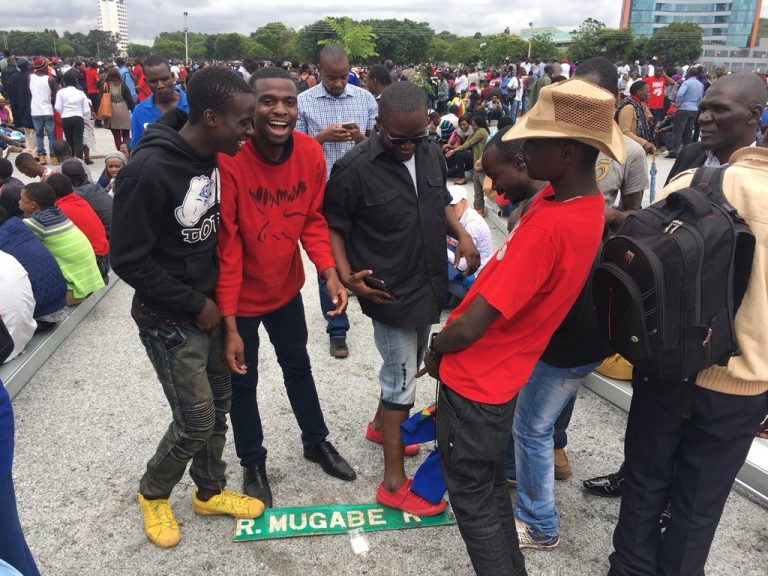
Skilled Zimbabweans vow to go back home to rebuild their country

Thabo Mohlala

ANALYSIS

As reality kicks in following the widespread excitement that greeted the ignominious end of Robert Mugabe’s rule, Zimbabweans will have to roll up their collective sleeves as they begin the onerous task of rebuilding their ruined country.

The economy has all but collapsed and the culture of political intolerance and human right violations in the country was so pervasive people are in constant fear of being brutalised by their own government.

One casualty of the crisis has been the education system. It is widely hailed for producing highly qualified graduates and for increasing high adult literacy rates.  In 2010 these rates reportedly stood at 92%.

But the combination of the economic and political meltdown and a raft of curriculum changes that were arguably implemented without the buy-in of the Progressive Teachers Union of Zimbabwe, seem to have seriously affected the quality of education.  

Teachers migrated in droves to the neighbouring SADC countries in search for better opportunities. South Africa is believed to have benefitted immensely from this, recruiting the majority to teach maths and science – two crucial learning areas in which local teachers are poorly skilled.

The deteriorating economy saw younger and highly qualified Zimbabweans moving to South Africa to eke out a living. While most occupied leadership positions in various key sectors of the economy, some of them were forced to settle for menial jobs despite their qualifications.

Inside Education took to the streets of Hillbrow and Yeoville and spoke to some ecstatic young Zimbabweans about what the changes mean to them and if they are keen to return home. Most expressed a yearning to return home to help rebuild their country

Prisca Jeremiah is 31 years old and holds an LLB degree from Unisa. She intends to enrol for a Master’s degree in Corporate Law.

“I came to South Africa looking for a job. It was and still is very difficult to get a job here. In the end, I worked as a domestic helper for a family in Isando for three years. The treatment was awful but I had to endure it so that I can have something to eat and pay rent. In between my punishing domestic chores I made sure I studied and in 2013 I registered for a straight four-year LLB degree with Unisa,” said Jeremiah.

Currently, she said sells scones to survive.

“My wish is to go back home and find a decent job. I really want to lead a normal life and I hope things will work out sooner,” Jeremiah said.

Lekang Tabulawa, who hails from Bulawayo, arrived in South Africa in 2004. The 44-year-old holds Level 1-3 rugby coaching certificates having played rugby while in grade 4 at Msitele Secondary School. His brothers are rugby fanatics and at the time he came to South Africa he was involved with Highlanders Rugby Club.

“Rugby runs in the family and one of my brothers was a development coach. I also went into development working closely with the Zimbabwean Rugby Union. But as race relations soured between us, we were forced to cut ties with the rugby union and they ceased to fund us any further,” said Tabulawa.

He then went to Francistown in Botswana where he coached for ten years until he decided to come to South Africa.

“Upon my arrival, I tried to establish contacts with rugby bodies but things never worked out. I was forced to look for any kind of a job and currently, I work at a bakery and also double as a manager of a Tupperware sales team. Although the experience was not nice it helped me learn a few critical survival skills to fend for my wife and three children. I am watching the situation in Zimbabwe with keen interest and once things are back to normal, I will definitely go back home,” said Tabulawa.

“I never thought I would live in a foreign country but after I stared starvation in the eye I decided to leave my country of birth to live here in South Africa,” said Dorothy Ncube.

“To me when I could not find salt on the local shop shelves, I felt it was time to go look for a job outside Zimbabwe,” said Ncube. 

The 34-year-old mother of three, two of whom she left back home, said she arrived in South Africa in 2010. She has the equivalent of matric and said despite the situation back home she prides herself on the quality of education they received.

“I am so excited things are promising back home and I am really keen to go back. As they say, home is home,” said Ncube.

Deputy Minister defines national plans for digital learning

0

Janet Thomson

Basic education deputy minister, Enver Surty opened SchoolNet’s “SA 2017 ICT in the Classroom”, held recently at Brescia House School in Bryanston, to discuss his department’s approach to digital learning.

Surty spoke from the heart, rather than from the script and delivered a most engaging and informative opening address in the school’s main hall.

He acknowledged “the enormous contribution by SchoolNet in the ICT domain” asserting that “ICT is becoming more critical and central to the facilitation of teaching and learning”. Surty then demonstrated the department of education’s holistic approach to digital learning by describing the various streams of the Operation Phakisa framework as well as government’s efforts to digitise content effectively and in an interactive format.

In relation to the vital teacher development component of Operation Phakisa, Surty noted the vital role of education centres, stressing that ICT was central to the future development of educators. He pointed out that The Integrated Strategic Planning Framework for Teacher Education and Development in South Africa, specifies the provincial and district teacher development institutes and education resource centres and their contribution towards teacher development in the future.

Surty further revealed his knowledge of the value of the type of professional development that SchoolNet has always advocated, by noting that he was not referring to the computer literacy of teachers but rather to the higher, innovative levels of teaching, integrating ICT “ïnto the curriculum”.

He discussed the strides that the Department of Basic Education (DBE) has been making around school administration and the use of data-driven decision making. In particular, he noted the Learner Unit Record Information and Tracking System (LURITS) which aims to collect data for each learner in South Africa. Interestingly and crucially, Surty mentioned the ability of LURITS to track the impact of teacher absence on learning and learner achievement.

He pointed out that the department had listened to stakeholders and experts in the field whose interventions had shown the positive impact of ICT on learning. When asked what support would be provided to provinces that were not making progress in crafting plans for implementation, the deputy-minister outlined the digital resources that were available to all provinces and said that his department was fully aware of challenges facing the so-called “Cinderella” provinces.

Surty pointed out that whilst Western Cape was the most effective out of all provinces at monitoring the use of the interactive workbooks, other provinces had made notable strides including the Free State which had broken “the ceiling of 90% matric pass rate”. The deputy minister made reference to two previous SchoolNet Conferences that he had opened in the Free State province during the last 10 years.

Thomson asked how the new Professional Development Framework for Digital Learning, being disseminated by the national DBE, was going to benefit teachers, bearing in mind that teachers seldom access policy documents. Surty was quick to acknowledge that both teachers and learners must have access to both technology and connectivity.

He went on to explain the impetus for the professional development framework and the need to standardise and reach a common understanding of minimum requirements, in teacher competencies for digital learning, particularly pedagogical competencies, across all interventions and initiatives in all provinces. This would include minimum requirements for teacher education qualifications.

The deputy-minister responded to the final question which was about the SACE (the South African Council for Educators) process in continuing professional development and the awarding of professional development points by indicating that SACE was independent of the DBE. However, he clarified the need for service providers for professional development such as SchoolNet and the reliance on corporates such as Microsoft and Intel to support teachers and provide opportunities for their further professional development.

At the end of the address, delegates felt they were being treated to a real-life insight into the national department´s thinking. Not only was the address directed at teachers and the most critical issues facing them currently but it also outlined the forward planning and wider policy development around digital learning for South Africa.

The deputy minister included a tribute to Oliver Tambo and conveyed a broader message for our overseas presenters who were most appreciative of the national and continental context provided.

For the full interview with the deputy minister, visit the SchoolNet YouTube Channel: https://youtu.be/uK9xWNKxAZk

Janet Thomson is the executive director of SchoolNet.

Classroom Matters: The global education sector needs innovation desperately

1

Classroom Matters

Xolani Majola

In this, the first in a series of articles on Classroom Matters, I am trying to highlight the multiplicity of issues attached to the teaching profession. What we normally see in the classroom is preceded by many layers of issues contributing to the essence of what teaching is about. The philosophy of teaching, the methodologies, and systems contributing to schooling are some of the many factors contributing to the success or failure of the teaching and learning process.

Teachers as facilitators

The majority of teachers the world over still follow, unfailingly, the old paradigm of the teacher as a fountain of knowledge and wisdom. Learners are still treated as subsidiary to the assumed intellectual superiority of the teacher. Learners are not expected to contribute to their academic development and cognitive growth. They are not assumed to possess any intellectual catalogue from which to draw and reference during the teaching and learning process. In my previous posts, I have written about the need to professionalise teaching.

Teachers in the 21st Century should operate as facilitators not drill sergeants. Their aim should be to help learners extract knowledge from themselves and assist them to make sense of it during application. The advent of technology has rearranged our knowledge space. The archaic model of a teacher-centred approach to learning has lost its relevance.

Learners can now rely on multiple information sources that they can access 24/7. From now onwards, teachers would do well to adapt to their new role as facilitators, supporters, motivators, enhancers, interpreters, guides, researchers, etc. Socrates once referred to himself as ‘an intellectual midwife’ — someone who assisted others in giving birth to their own ideas and thoughts.

Education always hits the raw nerve

In the DNA of the educational process is the need to challenge the current frame of mind of learners. Education is supposed to displace prejudices and many other forms of preconceived ideas, thoughts and feelings about the world. An education process that doesn’t challenge, promotes and babysits our preconceptions and prejudiced understanding of the world we live in. That’s why things don’t change, despite people being educated at the institutions in the world.

Instead of being challenged and displaced by their prejudices, they were left as they were. They entered the education systems with prejudices that made them unable to offer newness in the positions they now hold in society. Sad indeed.

As an educationist, I believe that our role is to challenge, excite, ignite curiosity, bring into focus, help to understand, help to question, help to dig deeper, etc. Our duty is to facilitate newness; taking our learners from the known to the unknown. That’s why I’m busy challenging the status quo. I’m pushing for the idea that teachers become independent professionals and practitioners making their own decisions about educational issues. So far teachers are muted functionaries.

The schooling “system”

There’s something terribly disarming about the education systems of the world. Firstly, education is not supposed to be a system. Systems imply replicability, predictability and rigidity. Systems tend to attract militarism in an area that requires advanced innovation. That is why education in the world keeps reproducing an advanced version of a learner from the 1900s. The only thing changing is technology. A case of rearranging the frog’s dress code hoping it will become a swan. At the exoskeleton of the world’s educational offerings is the lack of fundamental change and innovation in the ideology of education.

Education should be deeper than historical instructions, learning traditions that have no relationship with the needs of learners in 2017. Educationists around the world need to challenge their own conceptions of what they view as education. New thinking is needed desperately; evolutionary and out of this world thinking. Education should challenge and not babysits. If it doesn’t move you, it is not education.

Xolani Majola is an education policy analyst, writer and public speaker.

Michael Komape case: Basic Education ignored calls to fix sanitation at schools

0

Chester Makana

The basic education department lied to Section 27 when it was warned about the state of education in Limpopo, the advocacy group told the Limpopo High court on Tuesday.

Mark Heywood, Section 27 executive director, was battling the education crisis when the news of Michael Komape’s death broke. Through testimony in Komape’s civil litigation, came revelations of broken promises by the department.

In 2013, Section 27 alerted the Department of Basic Education (DBE) to the state of school logistics and sanitation with the hope that the crisis would be eliminated.

The problem, however, grew and was magnified when the 5-year-old fell into a pit toilet in Mahlodumela primary school in Chebeng village north-west of Polokwane.

Heywood said by then they had forwarded a list of at least 404 schools that required urgent intervention as their sanitation was on the verge of collapse.

He said some toilets had holes and others had no doors stripping pupils off their dignity.

Heywood explained that they conducted investigations on sanitation after it emerged that the department was in crisis and placed under administration per Section 100 of the constitution.

In 2011, the department was part of five provincial departments placed under administration after it exhausted its R45 Billion lion share and was subsequently denied a bailout.

Heywood’s testimony pleaded with the government to stop undermining sanitation. Because of continued dismissal of the crisis, some learners have had to relieve themselves in bushes.

“We were told yes, the department would commit to the sanitation, but this did not translate to activities in the schools,” said Heywood.

Heywood said this was because of department officials, including the Section 100 team, who disregarded agreements and commitments they made citing a lack of funds.

When the Section 100 team was brought in to assist, the department was failing to pay service providers and teachers weren’t being paid consistently.


Basic Education calls for public input on home schooling

0

Bonile Khanyi

The Department of Basic Education is calling for public comment on the Draft Policy on Home Education.

Basic Education Minister Angie Motshekga has invited all home educators, parents, institutions and organisations to submit their comments on the Bill by 8 December 2017.

In a statement issued on Monday, the department said this comes after the gazetting of a draft policy on home education, which calls for interested parties to submit input as part of the public participation process.

“Home Education is a purposeful programme of education for a learner, alternative to school attendance, which is provided under the direction and supervision of the learner’s parent primarily in the environment of the learner’s home,” read the statement.

“The provision of Home Education is guided by the Policy for the Registration of Learners for Home Education which was promulgated on 23 November 1999 (effective from January 2000), which sets out national norms and standards which apply uniformly across all Provincial Education Departments (PEDs).”

The department said it took a decision to review the 1999 policy in order to address gaps that created inconsistencies in the implementation of the policy nationwide.

Here’s what you need to know about the bill.

  • The draft bill provides more detail on the role of the parent when it comes to assessing a learner’s progress and determining whether the learning objectives have been met.
  • Parents will be required to apply to the Head of Department (HOD) for the registration of a learner to receive education at the learner’s home.
  • The bill also provides more clarity on the deregistration of learners and the role of the HOD.
  • And according to the draft bill parents who want to continue to educate their child at home after the learner has completed Grade 9, is not required to register for home education.

The draft policy can be accessed here:

file:///C:/Users/Administrator/Documents/Draft%20Policy%20on%20Home%20Education.pdf


CHE cracks the whip on inadequate LLB programmes

Thabo Mohlala

Universities are rushing against time to meet the Council for Higher Education (CHE)’s new stringent requirements to offer LLB programme. Last week the council issued warnings to four universities, which included Walter Sisulu, Free State, North West and Unisa. The universities of the Free State and North West have since complied and re-accredited.

Failure to meet the requirements means the universities face the risk and humiliation of losing their accreditation to offer the LLB degree.

The standards were the outcome of the council’s “standard setting” process that followed a legal summit where a national review of the programme was done four years ago. There has been a general outcry about the calibre and the quality of LLB graduates and this was blamed on the duration of the current four-year programme. This has since been increased to five years in line with the national review.

The summit was initiated by the country’s prominent legal structures, namely, South African Law Deans’ Association (SALDA), the Law Society of South Africa (LSSA) and the General Council of the Bar (GCB).

Although the institutions are still accredited, they will be barred from offering the programme if they do not make the required changes.

Olivia Mokgatle, CHE’s director of national standards and review unit, said for now what it essentially means is “if the issues are not fixed, you cannot study law there.” She said this is a warning to the universities to get things in order, adding that some of these issues require minor corrections while other would need lengthy time-frames.

“If we are not satisfied, we will have to review the decision,” said Mokgatle. She said they issued notices of withdrawal of accreditation because the affected institutions failed to address issues that threatened the quality and integrity of the programme.

The current four-year LLB programme was introduced to reduce costs and increase access to the law profession. Constitutional Court Justice Ronnie Boshielo said at the time they were trying to address challenges experienced by law students from previously disadvantaged communities.

Delivering a keynote address at the review summit Judge Boshielo said one of the reasons was that “the length of the LLB degree was seen to be an impediment to those who did not have the financial resources”.

We were concerned with the spread of lawyers in the country in ratio to the population of the country; the sad reality was that we had very few black lawyers in the country. The intention was that, by shortening the degree, perhaps we would open the doors for students from previously disadvantaged communities to enter university and come out within a very short period of time.”

Some legal experts said only 22% of students complete the degree in four years and that this reflects the “inadequacy of both primary and secondary education, which left them unprepared for university, as they lack digital knowledge, literacy and numeracy skills”.

In addition to evaluating the quality of the programme and the qualification of the staff, the council also makes site visits to ensure the institutions have the requisite infrastructure to deliver the programme.

Mokgatle said all the institutions offering LLB programme were sent letters in early April and were given 21 days after the receipt of the letters to make representations. Most of the universities have reportedly complied with the requirements.

UKZN investigating leaked psychology papers

Bonile Khanyi

An Investigation is underway at the University of KwaZulu-Natal (UKZN) after it emerged that four psychology exam papers were leaked.

In a statement, the university said an immediate investigation has confirmed that the exam papers were circulated on social media saying that they were moving quickly to identify the culprits.

“We are moving quickly to identify the individuals concerned and will be following established disciplinary procedures. It is regrettable that a small number of people have added to the stress of this year’s examinations. We have taken corrective action to ensure the fairness of the examination process,” read the statement.

More than 1000 third-year students will now have to rewrite their exams, including those that were written two weeks ago.

This comes after the university said new papers have been prepared and students will rewrite their exams next week. This includes both students who passed and those who failed.

“In the interest of maintaining academic integrity, all affected Psychology students will have to rewrite the examinations,” read the statement.

“In terms of the University’s contingency plans and in fairness to all students, the leaked papers in question were cancelled and new papers have been prepared.”

The university said going forward, it would ensure that the examination process will be secured.

UKZN management has expressed its regret for any inconvenience caused.

Students warn government to remove income-contingency loans from the funding model

Thabo Mohlala

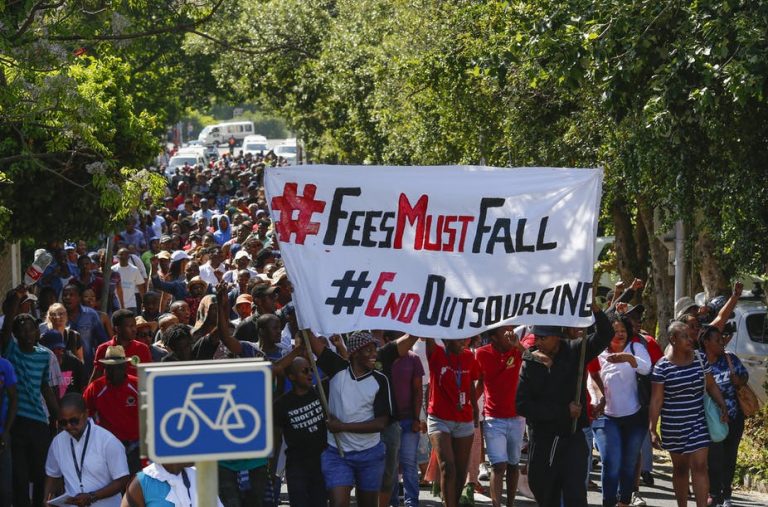
The government’s final position on the recently released Fees Commission report will determine how students will respond, come next year.

This is what Inside Education established after it spoke with an Economic Freedom Fighter Student Command (EFFSC) representative and a #FeesMustFall activist. But EFFSC might not wait for the final decision as it is already threatening to mobilise its student support to protest against the commission’s recommendation.

Koketso Poho, Economic Freedom Fighter’s chairperson at Wits University said the commission’s report falls short of meeting their demands. He said they would be meeting over this coming weekend to chart a way forward.

Poho said the commission did not say anything about their demands for free education for all and decolonisation of the tertiary curriculum. He said they were particularly unhappy about the commission recommendations on “Income-Contingency Loans” (ICL), saying the loan scheme is worse than National Students Financial Aid Scheme (NSFAS), which the commission recommends must be phased out.

“This proposal will increase black students’ debt and majority will be indebted eternally. The commission is also creating divisions between students who study at TVET and FET colleges in terms of the quality of teaching and status of their qualifications. It means universities will still remain the preserve for the rich while majority of poor black students would be forced to study at the colleges,” said Poho.

“The ANC-led government is playing political football with our education. It failed to structurally and fundamentally change the education system in the country. We will be meeting during the weekend and the December holidays to plan for the year ahead,” Poho said.

Bonginkosi Khanyile, another EFFSC member based n KwaZulu-Natal, told SABC News they would ramp up protests on campuses next year because they don’t believe government has no resources to provide free universal education.

“It is not true that this government has no resources. Government can, for instance, reduce the number of deputy-ministers and MECs and use the money for their salaries and perks to fund for free decolonised education,” said Khanyile.

The #FeesMustFall activist said there were few positive elements in the report. We are happy, she said that the issue of student accommodation and the provision of a fully-funded TVET and FET colleges is part of the commission’s recommendations. She also lauded the commission’s recommendation to do away with registration saying it removes a major obstacle at the beginning of the year.

But if you juxtaposed this with the ICL, the whole picture changes, she said.

“Unfortunately, this is not something we agree with. We put a number of better proposals that will not leave students mired in debts,” she said, adding that the model that the commission is recommending will leave students indebted for the rest of their lives.

“In the context of South Africa this becomes even worse particularly for black students who still have to deal with ‘black tax’. It will leave majority of them in serious debts and we feel this defeats the whole purpose of education which is to empower people,” said the activist.

She said even if government was to underwrite student debts, it may cost the state more. And this will be a real setback because the money that students pay back must be re-invested to fund more students, she added.

“But we are aware that these are the recommendations of the commission. We are waiting anxiously to see what government’s final policy will be based on these set of proposals,” she concluded.

Mandela Rhodes scholar wants to be a teacher so he can influence young people

Thabo Mohlala

It is very unusual for most young people to decide, with a measure of confidence, what career they will pursue after they complete their high school education. Some wait until they finish grade 12 while others choose when they are at tertiary level.

But this was not the case with Mkululi Nompumza, he knew early on in his high school career that he was cut out to be a teacher. Teaching is regarded as a calling and attracts very few young people, making Nompumza one of the rare crop of young people pursuing the profession because they are passionate about it.

“I always knew that I would follow teaching; I never doubted it. Actually, I knew early on in high school. I think the inspiration came from my former teacher, Benita Carelse. What she revealed to me was the influence that a teacher continues to have even beyond the classroom space,” said Nompumza.

In 2014 he enrolled for his education degree at Stellenbosch University where he is currently doing his fourth -year.

“Not only did I want to work with people but I also wanted to influence them. Teaching provided me that platform or an avenue through which I could fulfil this wish. I wanted to restore dignity to this noble profession,” said Nompumza, adding that he is also passionate about leadership.

At Stellenbosch University he used every opportunity to excel and his hard work paid off when early last month he received two Rector’s Awards for his outstanding academic achievement. One accolade was for excellent leadership and the other one was for excellent service delivery.

“I’m feeling very honoured because I think these awards say that we recognise your efforts, your leadership in this space and your contribution, he said after receiving the awards. He displayed leadership on campus and in 2015/16 he was elected the chairperson of the Education Student Committee. Nompumza was also instrumental in designing and implementing a short course in ‘Leadership in Education’. For the past two years, he coordinated the course presented by the Faculty of Education in collaboration with the Frederik van Zyl Slabbert Institute for Student Leadership Development.

Hardly a month after he received the two accolades, Nompumza received another enviable award: the Mandela Rhodes Scholarship. The scholarship aims to promote and “build exceptional leadership capacity in Africa by providing excellent educational and training opportunities to individual Africans with leadership potential”, among others. The leadership development programme is delivered primarily through a series of residential workshops.

Said a humbled by Nompumza: “I am honoured to be a part of the 2018 class of Mandela Rhodes scholars,” said MK. “I feel that being awarded this scholarship, out of many other young African leaders, gives me an opportunity to reflect upon my leadership journey to date; and it inspires me to continue leading the change that I want to see.”

He recently went abroad to attend an international summer school at Humboldt University in Berlin and was also involved with a partnership research project on planning and policy for bi- and multilingual schools.

Nompumza plans to pursue an honours degree in Education Development and Democracy in 2018. But what drives this intelligent young man? “It is people; helping, working and being around people motivates,” said Nompumza, who relaxes by reading [African] literature books and also taking part in wine-tasting activities.