Home Blog Page 538

Police dogs on campus cause anxiety for UCT students

0

Thabo Mohlala

Student leaders at the University of Cape Town (UCT) hope the management would relent and remove the massive white marquee pitched on the rugby field to serve as an exam venue following disruptions in the last two weeks.

More importantly, the leaders are trying to negotiate for the deferment of exams as most students said are not ready and others cited anxiety caused by strong police presence and dogs on campus.

Seipati Tshabalala, the outgoing student representative council (SRC) president, said university management would report back to them this afternoon on whether or not students would be allowed to defer examinations by a few days or a week.

“Students need time after the protest actions we experienced but the senate has been adamant they won’t grant blanket deferral and wanted proof or reasons for the postponement. After we held several meetings with them we hope today they would come up with a positive response,” said Tshabalala, who is writing her final exam.

Tshabalala took to Twitter to express her unhappiness about the situation on campus. 

Tshabalala said they received complaints from several students who felt they could not write their exams under the “abnormal prevailing conditions”.

She said some told them they were afraid of dogs and that the whole atmosphere was just not conducive to write examinations. She said tutors have also indicated their objections to the university security measures.

“What we heard is that the tutors would refuse to invigilate the examinations in the tent and that they intend petitioning the university to have the tent removed,” Tshabalala said.

University management said it had to resort to erecting the tent because it proved difficult for their campus security to secure all its multiple venues on campus. This has led to strict access control and road closures until the end of November when the examinations would have been completed.

“The plan is designed to ensure examinations are concluded in a safe, quiet and calm atmosphere. Due to the ongoing risk of disruptions, an alternative plan is being executed to ensure the successful delivery of the examinations,” read the university communiqué.

UCT has by far been the only institution that experienced ongoing disruptions compared to other universities in the country. It was forced to obtain a court interdict against some of the student activists preventing them from engaging in further disruptions.

Rosina Komape wept as she recalled her son’s pit toilet death

0

Chester Makana

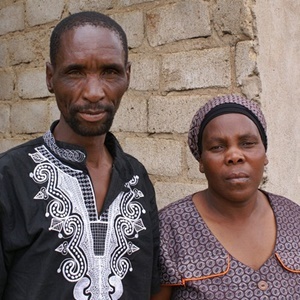
A Limpopo mother who is suing the government after her son drowned in a school’s pit toilet broke down and wept as she explained how she discovered her son at Chebeng village three years ago.

Rosina Komape and her family are demanding millions from the Department of Basic Education after the tragic loss of her five year-old son Michael Komape at Mahlodumela Primary School in Chebeng Village, outside Polokwane, on 20 January 2014.

Testifying at the Limpopo High Court, Rosina explained how the department’s officials failed to help her find her son, forcing her to search in every corner until Michael’s friend point her to the dilapidated pit toilet.

During her testimony, it was clear Rosina was still battling to accept her son’s loss when revisiting the tragic scene in the court papers submitted by her counsel Vincent Maleka of Thulamela Chambers.

On January 20, 2014 Michael fell into a pit toilet at Mahlodumela School and drowned in a pool of human faeces. For more than four hours no one knew his whereabouts, school officials called Rosina and said they could not locate her son.

She rushed to the school in search of an answer but still, there was none.

“When I arrived at the school the principal and teachers approached me, I asked them where is my son, they did not respond. I asked if they searched in the toilet, and their response was that we searched in the toilet, he is not there,” said Komape

Hours after she gave up on the search at the school, Michael’s friend who was playing at a local Creche apparently walked back to school, and point at a toilet where his friend drowned.

Rosina told the court that when she drew closer to the toilet she noticed her son’s hand up — a sign that he died calling for rescue.

“My son died looking for help, he raised his hand hoping that someone will come and rescue him, there was no seat in the toilet. The only thing I could see was his hand, the rest of the body was buried under human faeces.

I asked them to pull him out, I was thinking that he could be alive, maybe we could take him to hospital,” she said.

But Rosina and her family had to wait for hours for Emergency Rescue Personnel to arrive at the school situated in the province Capricorn district.

Court had to adjourn when Rosina broke down as her counsel said the emotional and traumatic deaths triggered tears for the traumatized mother.

SECTION27 and some members of the community were clad in white t-shirts with a message that read: “JusticeForMichael”. The advocacy group wants the court to compel the department to provide decent toilet to schools.

The court also heard that the family was so traumatised they had to convert one of their rooms into an in-house toilet as the family is troubled by pit toilets.

Rosina even lost her job and is battling to fend off the fear and trauma her family is going through.

“I lost my child, I lost my job while I was mourning my child’s death’s I couldn’t think straight, I did not know what I was doing.

Now I don’t have source of income, I lost everything my children are now suffering,” adds Rosina.

Today, the site of the school for Rosina and her family represents sorrow and mourning lingering in their minds.

“Whenever I see the school I feel like I am seeing my child,” she adds

“I haven’t seen a person dying in the manner my child died.”

Zuma will defiantly launch the alternative funding plan as his legacy project

Thabo Mohlala

ANALYSIS

The release of the Heher Commission report on the funding of tertiary education by President Jacob Zuma yesterday has come late in the day and will still not help university management make adequate financial plans for the next academic season.

At this time of the year university budgets have been cast in stone and loaded to kick in for the 2018 academic year.

While the report affords the public and particularly the university management and students to study it, there is still a long way to go before it can be consolidated into a coherent policy plan that all the main players can buy into.

Analysts say if President Zuma had shared the recommendations a few weeks after he received it, the government would have by now processed it and maybe even pronounced its policy position on it. This would have given the university management sufficient time and something tangible to work with.

But instead, they argue, Zuma hoarded the report for two months without advancing any clear valid reasons behind the delay. It remains to be seen if the inter-ministerial committee will conclude processing the recommendation before the year ends given the ANC conference in few weeks’ time.

Wits University vice-chancellor, Professor Adam Habib, said the commission’s recommendations would not amount to anything substantial until the government has made its own pronouncement.

“At the moment this is Heher Commission’s report. We are still waiting to hear government’s own recommendations, if government accepts these recommendations then we are in a different game,” said Habib.

The Fees Commission represents some move forward, but the elephant in the room is the report that president Zuma is simultaneously considering an alternative funding model. According to media reports President Zuma delayed to release the Fees Commission because he was also mulling another funding plan devised by Morris Masutha, believed to have been romantically linked to his and Nkosazana Dlamini-Zuma’s daughter Thuthukile.

It is further alleged that President Zuma defied counsel from his senior advisors including Treasury to steam ahead with the plan. The plan threatens to force an overhaul of the recent mid-term budget for 2017/18 financial year. And given his past brinkmanship decisions and political obstinacy that twice plunged the country into an economic abyss, there is reason for concern. This was given credence by the recent resignation Michael Sachs, a top and experienced Treasury deputy director-general, Michael Sachs, in the budget office. It is believed he resigned in a huff following President Zuma’s meddling in the functions of the Treasury.

According to Times Live, Masutha’s plan proposes government to make available R40-billion for the implementation of free universal tertiary education. Several commentators dismissed the plan as “unrealistic” and that it cannot be immediately implemented particularly in South Africa given its current economic vulnerability. Dr. Blade Nzimande confirmed that he interacted with Masutha’s plan in his capacity as the Minister of Higher Education and Training.

“I did interact with the proposal when I was minister from this young man. And one of the things I advised him to do was to go to the Heher Commission to table it there just like many others who had lots of brilliant ideas on this subject. But I also asked him to go and interact with my officials in the department…it was a good idea but it was an unworkable proposal,” said Nzimande.

But President Zuma ordered functionaries within both the Treasury and the ministry of finance to devise ways of how to secure the money. This means some departments would have to cut back on their budgets. The biggest concern is that with the country’s growing debt and the anaemic economy any unplanned additional financial burden on the fiscus would leave the rating agencies with no choice but to further downgrade the country to junk status.

Political commentators said they were not surprised as President Zuma has always been prone to taking populist positions to garner more political support. Given that his political tenure is coming to an end, his current pre-occupation is to leave an enduring legacy. Based on this, they argue, he will stop at nothing but to ram through this plan, notwithstanding its adverse financial consequences.

Jonathan Jansen recently said in a column: “our president is a man for whom everything is a political calculation.You do not need Jacques Pauw or Thuli Madonsela to tell you that Number One does not make judgments based on what is sensible for the fiscus or in the best interests of the country. Here you have short-term political calculation to benefit the man himself and his political agenda.”

In its reaction to the release of the Fees Commission report, the South African Communist Party (SACP) took a swipe at president Zuma. In a press statement, the party expressed its deepened “concern about how the President handled the process and the circumstances under which he finally released the report”.

The party said they find it odd that the president chose to share the report with his “alleged son-in-law or boyfriend of his daughter, but did not share it with the Minister of Higher Learning and Training, Dr. Blade Nzimande”.

The statement further said that it is aware of the “emergence, existence and operations of parallel state mechanisms which undermine or subordinate democratically established state authorities provided for in our Constitution”.

The SACP said it will release a “comprehensive response” after it had studied the report fully.

Why developing countries are particularly vulnerable to predatory journals

Sioux McKenna

Every day academics wade through emails riddled with spelling errors promising almost immediate publication of their research. These publications assure the reader that they can skip the tough realities of rejections and revisions. Just a simple click of the submission button, they promise, and within a month – or even just a few days – the article will be published.

No need to worry about rigorous peer review (or indeed any form of review): these journals are willing to publish absolutely anything in exchange for handsome sums of money.

These are predatory publications, and they’re rife. They’re different from mainstream journals because they charge exorbitant fees to publish the articles they solicit, and they don’t follow any of the quality assurance processes expected in an academic publication.

Academics in the developing world have become a favourite target for these journals, and many seem to be falling into the trap. We need to ask why.

The main reason for this is that there’s a systemic problem – academic publication is too often linked to performance targets or the accrual of incentive funding. For as long as this is the case, academics will take shortcuts.

This is certainly the case in South Africa, where academics are often encouraged to publish because this will increase the subsidy the institution receives from the state rather than because it is a university’s task to contribute to knowledge creation.

Pressure to publish

There’s every reason for African countries to focus on increasing academics’ publishing outputs to ensure dissemination of their research. Africa contributes very little to international knowledge creation. This is because the most common means of disseminating such knowledge is through academic publication and countries in Africa have not focused on developing this capacity. Developing such capacity will need to move beyond initiatives designed to support individual academics to take on the requisite research and academic writing practices.

It will also require consideration of the extent to which the institutional culture is focused on knowledge dissemination as part of a university’s public good responsibility.

African academics also continue to face multiple obstacles, such as the biases inherent in the publishing industry.

To overcome these problems South Africa has adopted an approach that involves the department of higher education and training encouraging publication output through a national funding formula. It follows various approaches to ensure that only quality contributions are funded in this way. But the process is not failsafe.

Universities need the money generated by publication output. They use three mechanisms to ensure that all academics publish. First, they reward academic publication explicitly in probation and promotion requirements. Secondly, some universities have imported the notion of key performance indicators from industry: research productivity is measured and the regular generation of research publications is required.

And thirdly, many universities provide financial incentives to the individual author in the form of funding into a research account. In a few cases, this funding even takes the form of bonuses in the academic’s salary.

The department of higher education and training has repeatedly cautioned against the use of incentives and the “perverse consequences” they bring. But they continue to be widely used. These institutional mechanisms have created a problematic culture in some universities where “getting published” becomes the end goal. Quantity edges out quality. From here it is practically inevitable that some academics will fall for the promises of predatory publications.

Not all universities fall into predatory traps. Research indicates that over a ten-year period, research-intensive universities had less than 1% of their publications in journals that showed strong evidence of being predatory. In the same period, five other universities – which are less research-intensive in focus – had more than 10% of their publications in such journals.

This suggests that having a strong research culture is key. If there is a general sense that academic publication is about knowledge dissemination rather than meeting performance targets or accruing incentive funding, academics and universities become less vulnerable to these vultures.

Making meaningful contributions

Institutional cultures are difficult to shift. But the South African higher education sector needs to consider how it speaks about – and rewards – publications. Universities should be very wary of introducing systems that focus on counts rather than contributions.

More intensive measures are also needed to support academics in making meaningful contributions. Many novice academics and postgraduate scholars ask me for suggestions about where they can “get published”. They either want to know what journals are most likely to accept their contributions or which will ‘count’ when it comes to promotion. In both cases, I ask them one simple question: “Where is the conversation happening?”

When an academic publishes their work they are making a contribution to the boundaries of a field. So there needs to be a sense of where the boundaries of a field are. Whose work are we drawing from? Whose positions are we challenging? Academics should be publishing wherever the conversation to which they are contributing is happening. Selecting a journal on the basis of where our knowledge contribution is most likely to be read provides us as academics with a strong immunisation against predatory publications.

The good news is that a great many journals take the stewarding of an academic article for publication very seriously. Among them are a growing number of high-quality open access journals which ensure that contributions are widely available to all – and not only to the universities which have access to expensive databases.

And more quality open access journals are being published in the Global South – AfricaSouth America, and elsewhere – than ever before. Academics can make sure their contributions are disseminated through legitimate publications that follow the kinds of quality measures necessary for credible academic contributions.

Sioux McKenna is the Director of PG Studies & Higher Education Studies PhD Co-ordinator, Rhodes University



Calls to integrate coding into school curriculum strengthen

0

Thabo Mohlala

Coding, popularly known as programming, is a critical skill that every child should acquire to keep up with the rapidly changing technological world. This was a central theme yesterday as learners showcased their inventions at the Mathematics and Coding Exhibition held at Indaba Hotel in Fourways.

The event was held under the auspices of ORT South Africa (ORTSA) – an NGO involved in a number of literacy and STEM education initiatives in schools around Gauteng. ORTSA runs extra-mural coding clubs at schools in Alexandra, Ivory Park and Soweto.

Several speakers at the function called on the education authorities to integrate coding into the school curriculum. The current ORTSA coding project resonates with Gauteng education department’s strategy of launching schools of specialisation and modernisation to ensure the province leads as the IT hub. Gauteng education MEC Panyaza Lesufi has introduced paperless classrooms in various township-based schools to fulfil this mission.

Learners from Dr. Mathole Motshekga Primary and Ivory Park Secondary Schools presented projects that drew rounds of applause from the audience. First to showcase their coding brilliance were the learners from the former. They used specialised coding kits called Arduino, to invent a purpose-built wheel-chair for paraplegic learners. Not only did they display their understanding of the coding aspects but they also stunned the audience as they demonstrated with an effortless easy how some of the features functions.

One of these is the LED light resistor programmed to automatically switch on when it is dark or off in daylight. Also intriguing is the rain sensor; when it rains the device activates a canvassed roof to cover the head of the disabled learner. It automatically retracts itself when the rain stops.

The Ivory Park Secondary School learners’ presentation equally drew gasps of awe and disbelief with their design of a digital timetable. They said this was motivated by the realisation that most teachers skip periods or stay overtime in class. The learners relied on the ‘microbits’ to design an interactive timetable that will send a notice in real time to a teacher that his or her class is about to start or is over.

The gadget is coded to enable the principal or a member of a school management team to communicate, via Bluetooth pairing, with the head class learner to find out if a particular teacher has been to a class or not. All these can be done with a touch of a button. The learners said this would not only improve teaching and learning as teachers would go to their classes but it also saves time.

Cynthia Sebogwane, who supervises the team, underscored the importance of coding at schools.

“Initially, when the learners approached me with this project, I dismissed them saying it will never work. But I changed my mind and urged them to pursue it while making sure I help where I can. And what you see here today is the direct outcome of their hard work and commitment to conclude this. I am impressed with their final product,” said Sebogwane.

Julius Olubodun, a grade 10 maths facilitator at Kwabhekilanga Secondary School, gave a presentation that highlighted the centrality of maths in innovation. He said some of the world’s admired and iconic inventions and other functional electronic gadgets have been designed using key mathematical concepts such as algorithms and parabola, to mention but two.

International maths competition aims to make the subject fun

1

Bonile Khanyi

One of 15 Primary school learners from the Marhulana Primary School in Xubeni Section who was to represent South Africa in the International Online Competition in Mathematics called BRICSmath.com, has described it both fun and difficult.

13-year-old Timothy Mushaikwa gained access to the International Online Competition in Mathematics when the National Department of Basic Education officially launched the programme at the school in Tembisa last week Wednesday.

At the launch, 15 Grade 6 learners, including Mushaikwa sat for 60 minutes in the main round of the competition for the very first time since its launch.

Asked about how the competition was, Mushaikwa said it was all fun and games, however, some of the tasks were a challenge.

He said these tasks helped improve his math skills.

Speaking to Inside Education on Wednesday, Marhulana Primary School Principal, Sarah Mahlagare said she was very happy that her school was chosen to be the only school to represent the country saying that such intervention strategies will help improve pupils’ mathematical skills and change learner’s perception that math is difficult.

“I am very happy that our school was chosen. Most of our learners find mathematics to be a challenging subject and with such intervention strategies, our learners would be able to see that math too can be fun and in that way, their attitude towards the subject will change for the better and they will no longer find it as challenging,” said Mahlagare.

Mahlagare also said that learners should take advantage, utilise the programme and register at home.

The department’s Curriculum Innovation and E-Learning Deputy Director, Pule Sechaba said the purpose of the competition was to bring learners from the five countries together and unite them through building a common interest in Mathematics.

The competition is offered in Brazil, Russia, India, China, and South Africa and learners from Grades R to Six will now be able to register for the programme nationwide.

Nelson Mandela Foundation hosts first group of Atlantic Fellows for Racial Equity

0

Thabo Mohlala

The Atlantic Fellows for Racial Equity (AFRE) has announced its inaugural group of 29 fellows to begin a year-long programme aimed at eliminating racism and inequality in South Africa and the United States.

South Africa will be represented by eleven of its own leading minds and voices championing socio-economic justice and racial equality. In South Africa, the Nelson Mandela Foundation will host the programme.

The foundation’s CEO, Sello Hatang said while racism has been formally removed from the law, its pernicious effects still remain today.

“While the racial orders of our pasts might have been buried formally, those pasts are far from done with us. Race is still a critical fault line in South Africa and generations of us remain profoundly damaged”, said Hatang.

The programme also seeks to sharpen the focus on the structures that keep inequality and indignity intact.

“We know that the negotiated settlement brought about political equality for all through the vote, and made South Africa a ‘rainbow nation’,” said the South African Director of AFRE, Dr Victoria Collis-Buthelezi. She further added that “as one of the most economically unequal societies, in which race and poverty are inextricably linked, the ‘rainbow’ is no longer enough”.

The group boasts activists, advocates, artists, scholars and other leaders, who will be the first of 10 groups in the ten-year programme. Their specific mission is to expose and work towards the complete elimination of racial discrimination and violence that dehumanise Black people and eventually harm all people. The programme is non-residential and it will annually support 35 fellows from South Africa and the United States and enable exchanges between them as they work towards building a just and equitable world. It is hoped their work will help deepen the understanding of anti-black racism work and its significance globally.

Given that both South Africa and the United States share a history of racism and inequality, the idea is to harness the efforts of this esteemed group so that the “corrosive cycle of injustice” can be broken, said Dr Kavitha Mediratta, Executive Director of AFRE.

The fellowship will kick off with learning tours in the US and South Africa, and conclude with country-specific, immersive courses with senior leaders in the field to provide mentorship and related critical support.

Fellows expressed shared their joy for being part of the programme. Brian Kamanzi, writer and student activist said he is excited to “join the fellowship at this difficult juncture globally when vicious anti-black racism, narrow nationalism, and the entrenchment of neoliberalism threaten historical gains for people’s relentless struggle for freedom”.

Obenewa Amponsah, another fellow and former CEO of the Steve Biko Foundation added: “My hope is that by our final group of fellows in 2028 we will live in a society in which everyone sees and truly conducts themselves as an activist, ally or advocate”, adding it is “key to ensuring that addressing racism is not seen as a ‘Black problem’ but a societal concern”.

For US-based fellow Alicia Garza, who co-founded Black Lives Matter, this is a chance to collaborate and find ways to end anti-blackness.

“This fellowship is an opportunity for us to learn from one another, share solutions and experiment—and this is critical to end anti-Black racism,” Garza said.

The last word came from Christopher G. Oechsli, President and CEO of Atlantic Philanthropies, and chair of AFRE’s governing board. “Atlantic Fellows for Racial Equity was launched to create a space for this new generation of leaders to envision and build a future anchored in the ideals of equity and inclusion rather than the hierarchy of anti-Blackness,” said “We are honoured to bring together this first group of Fellows and support their work to create a better society”


KZN education department must transport children to school

0

Bonile Khanyi

The KwaZulu-Natal Department of Education and the Department of Transport have until 1 April 2018 to provide scholar transport to 12 schools in Nquthu.

This comes after the Pietermaritzburg High Court handed down its judgement in the case against Equal Education (EE).

Pupils from 12 schools in KwaZulu-Natal were gathered in Court on Tuesday to support their lawyers who argued that the provincial government must provide transport for them.

Speaking to Inside Education on Tuesday, Head of National Organising Luyolo Mazwembe said EE was very happy with the judgement.

“We are very happy with the judgement. When we started this fight in 2014 and the department only provided 7 buses to 3 schools, we told ourselves we would not stop this fight until all schools in the province are provided with scholar transport,” said Mazwembe.

“Even if our children will have to continue to suffer until 1 April 2018, we are happy that they will eventually be provided with transport, especially schools here in Nquthu, where children have to walk long distances to get to school.”

“This makes them vulnerable to extreme weather conditions and violent crime‚ and they arrive late which makes it difficult for them to focus.”

The department’s Kwezi Mthethwa said they were aware of the judgment and that they will meet with MEC for Education Mthandeni Dlungwane to study the verdict.

“We have noted the verdict that was handed down by the Pietermaritzburg High Court this afternoon and we will study the verdict,” said Mthethwa.

Mthandeni also said that the department of education takes this matter seriously as it is important that they provide learners with transport.

“We have always agreed with Equal Education on the view that there should be provision of transport for learners and what has made things difficult or rather make the process slow is our means to provide these buses all at once,” said Mthethwa.


Distance learning: the five qualities student teachers need to succeed

Nhlanhla Mpofu

International bodies, politicians, policymakers and researchers have always been interested in the way teachers are prepared for the classroom. This is because the quality of a country’s teachers is an indicator of its developmental level.

Distance education is often viewed as a way to speed up the process of producing well qualified, good teachers. This approach involves a model in which students are physically separated from the university or training college in question. Students usually communicate with the institution through emails, online learning support systems or occasional face-to-face tutorials.

Distance education tends to be flexible and more affordable than full time study. It’s useful for a range of people when it comes to teacher education. Those who are just beginning to study teaching; those who want to continue their professional development and those who must familiarise themselves with a changing curriculum can all benefit. This is important, since teachers need an ever-changing set of skills, knowledge and competencies.

But distance education for teacher training also has its problems. Student retention rates are low and dropouts are high. Some scholars have suggested that improved support could help. But what form should this support take? How much of it should come from institutions? And how much can students do themselves?

My newest research focused on trying to understand what disposition students need to support themselves through what can be a very isolated experience. Working with in-service teachers enrolled in a distance education programme at Zimbabwe’s Solusi University, I found there were five qualities that really mattered. These were: coping, pro-activeness, ingenuity, tenacity and problem solving.

Five crucial qualities

In Africa, as in most developing contexts, students in distance education programmes are largely from rural or semi-rural settings. Using Botswana as an example, educationists Godson Gatsha and Rinelle Evans found that students tend to be isolated from the resources distance education institutions offer as support. Students simply don’t have the money to travel relatively long distances to access facilities.

This suggests that in-service teachers enrolled in distance education programmes require support beyond physical resources to complete their studies. This is where self-motivation – or what’s also known as self-efficacy – becomes important. Self-efficacy has been described as a person’s “judgements of their capabilities to organise and execute courses of action required to attain designated types of performances”.

With this definition in mind, I wanted to explore how students’ own initiatives and strategies – driven by self-efficacy – could motivate their academic success. Their answers and feedback helped me to identify five qualities that bolstered these students’ self-efficacy:

Coping: The student’s ability to adapt to the challenges inherent in any educational programme designed for self-study. A student who creates a balance between their working lives and the demands of studying, perhaps by developing a careful schedule and personalised timetable, is coping.

Pro-activeness: A student who displays initiative. She anticipates and prepares for the challenges that might result from the demands of studying. These students pay careful attention to both academic and administrative requirements.

Ingenious: These students adopt creative and original approaches to their studies. They have well developed study systems and have learnt how to access support from structures beyond the university, for example by forming study groups with other colleagues or using community libraries.

Tenacity: These students are determined, persistent and self-motivated. They recognise their own weaknesses and identify individuals or hobbies that motivate them to complete their studies.

Problem solvers: These students recognise the challenges inherent in distance education and find their own solutions. They identify problems, then categorise them – which will have an immediate effect on the quality of their studies, and which are less threatening? For instance, students realised that having limited knowledge about the structure of an academic essay was immediately problematic. They dealt with this as a priority, sometimes alone and sometimes through collaboration.

The five qualities I’ve described and discussed helped the students involved in my research to cope with the demands of distance education. These findings suggest that distance education students should be encouraged to develop self-efficacy before embarking on what can be a lonely, isolated course of study. And, crucially, they show that students can be their own greatest supporters in academic growth especially when enrolled in distance education.

Mpofu is senior lecturer, director teaching, learning and program development at Sol Plaatje University, Northern Cape.

Source: the Conversation

Matric learners in Gauteng affected by national taxi strike will still write

0

Bonile Khanyi

Grade 12 learners have no need to panic about a planned strike by the National Taxi Association (NTA) on Wednesday, the Gauteng Department of Education said.

According to media reports, the taxi association warned commuters to make alternative plans on Wednesday ahead of a planned national strike.

NTA spokesperson Theo Malele said about 10 000 members will be attending the march.

Members are expected to meet in Pretoria where they will first march to the Department of Transport offices before heading to the Union Buildings to hand out their list of grievances.

“Our plan is to meet at the Marabastad taxi rank and bus depot around 8am on Wednesday morning. We will then be marching to the department of transport to handover a memorandum of our grievances and later on, march to the presidency at the Union buildings to hand over our grievances there,” said Malele.

Malele accused Transport Minister Joe Maswanganyi of being arrogant and refusing to engage with the industry.

“We want to deal with the arrogance of the minister who refuses to give attention to a host of grievances in the taxi industry. We have issues with the new Aarto (Administrative Adjudication of Road Traffic Offences) bill and the failed taxi recapitalisation process, because the way in which it has been configured, it not favourable to the taxi industry,” Malele said. 

Speaking to Inside Education on Monday, the department’s Steve Mabona confirmed that there’s a contingency plan in place for exams should the strike go on as planned.

“Should some learners arrive late for their exams, all chief invigilators will know how to manage their examination and learners will be given an opportunity to write their exams on the day,” said Mabona.

Mabona appealed to parents and learners to make alternative means to reach their centres and avoid being affected by the taxi strike.

“We appeal to all the parents who will be dropping off their kids that they make alternative arrangements or to leave earlier than usual, to avoid delays,” said Mabona.

More than 150 000 Grade 12’s in Gauteng are expected to write English paper 2 on Wednesday morning.