Home Blog Page 548

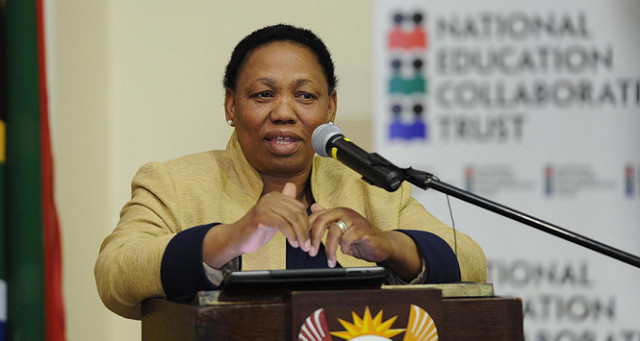
Teaching children to read must become the number one priority says Angie Motshekga

0

Bonile Khanyi

Reading at lower grades must become a priority said basic education minister Angie Motshekga on Monday. She was speaking at the opening of the third annual education lekgotla held at the Saint George Hotel in Irene, Gauteng.

Referring to the results of the 2016 Progress in International Reading Literacy Study (PIRLS), Motshekga said the outcome was disappointing and far below the expectations the sector set for itself.

“The 2016 results tell us that the need is just as relevant today and we must make reading the number one priority in the sector.”

Motshekga said the department would look at the quality of schooling in lower grades.

The three-day event’s theme is “Equipping Learners 20th Knowledge and Skills for a Changing World’’.

As such, Motshekga said the lekgotla’s main focus should be: “making conditions conducive for the children of South Africa to access their basic right to education without any impediments”. 

Motshekga referred to a report by Statistics South Africa (Stats SA) which revealed an increase in the number of learners who entered the education system over the past several years.

“According to Stats SA’s Education Series Volume III: Educational Enrolment and Achievement, 2016 – Attendance of pre-school has increased from an estimated 949 000 in 2002 to 2 059 000 in 2015. Attendance of Grade R has increased from an estimated 686 000 in 2010 to 1 222 000 in 2015 indicating that policy measures aimed at increasing participation in early childhood development are beginning to bear fruit,” said Motshekga.

She also said the number of pupils who completed Grade 12 at the age of 15 and above, increased by 2.3 million over the last two decades.

“The completion of Grade 12 by population aged 15 and more has increased from an estimated 3, 7 million in 1996 to 11, 6 million in 2016; and completion of higher educational institution by population aged 15 and more has increased from an estimated 1, 3 million in 1996 to 3, 6 million in 2016,” said Motshekga.

Motshekga also called on all South Africans to celebrate President Nelson Mandela’s legacy.

“This year, as we celebrate the Madiba’s centenary, we shall intensify our efforts to realise his vision of a united South Africa in which all live in peace with equal rights and opportunities,” said Motshekga.

“We shall celebrate his centenary not only as the people of South Africa, but also as a continent and as the broader global community.”

Maths & Science Centre Produces 5493 Distinctions

0

Vicky Abraham

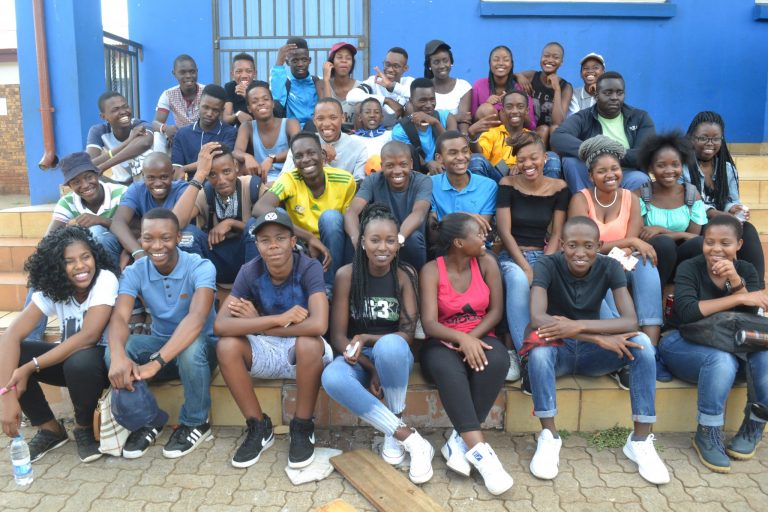
An esteemed centre for Maths, Science and Technology, Kutlwanong has produced 1050 distinctions for the 2017 matric exams.

Kutlwanong is a Section 21, non-profit organisation registered with the Department of Basic Education. It was founded in 2005 in Dobsonville, Soweto and focuses on boosting Maths and Science performance of township and rural students through learner support, teacher development and career path programmes.

It started with 140 Grade 12 learners, tutored by four educators. Currently, they have 368 educators and 18 centres and have tutored over 16,041 learners in seven provinces.

In 2017, the centre enrolled 2,500 matriculants and 1,690 obtained bachelor’s degree passes.

Founder Tumelo Mabitsela said, they produced 610 distinctions in Physical Sciences with 11 learners scoring 100%, and others 90% and 99% in 2017.

In Maths, 512 distinctions were produced with four learners scoring 100%, others obtained between 90% and 99%. Two learners who wrote advanced Maths obtained distinctions. For Accounting 22 students obtained distinctions with two scoring 100%.

“Since our inception in 2005, we have produced 16,041 decent passes to date (50-100%) and 4,443 Grade 12 distinctions for Maths and Science. Kutlwanong (Promaths programme) has assisted over 16,041 learners today, of which 2371 obtained distinctions in Maths core and 38 in Maths Paper 3 and 1,894 in Physical Sciences and 140 in Accounting. Total distinctions we produced is 4,443,” said Mabitsela.

The figure has increased with 1,050 distinctions in 2017, which saw the centre produce 5,493 distinctions since its inception.

Each year, they have at least five learners that are top performers at a national level, who receive a special invitation from the Minister of Basic Education, Angie Motshekga and are invited to the gala by the Gauteng Provincial MEC, Panyaza Lesufi.

“Our success is that we don’t look at student performance in a vacuum. For a learner to produce top results, they need to be committed to their studies requiring them to apply specific life skills like discipline, time management, resisting distractions and competitiveness. We foster these qualities from Grade 10, so that when learners get to Grade 12, they are prepared mentally for the journey ahead.”

“Beyond our statistics, I have seen real lives change and a new breed of matric learner bloom. Our programme has significantly created alumni of young black students entering tertiary education and professional careers in large numbers for the first time. A more significant outcome is that these students dare to dream. They want to succeed and know that it is within their reach.”

Mabitsela said as a father and an educator, he is passionate about education and the role it plays in opening doors and helping young people access tertiary education and employment opportunities.

“As a principal at Makhoarane School in Soweto, I noticed that while learners obtained distinctions and good marks in the languages, Maths and Science performance was poor, year-on-year. A contributing factor to poor performance was time spent on tasks for these subjects. Classroom time was not enough to grasp Maths and Science concepts and to ask questions. Based on the pressure to complete the syllabus, a new topic was introduced each day, whether or not students were ready for it,” said Mabitsela.

“There came a point where I had to get involved to make a difference. I wanted students to be proficient at these subjects to follow on scarce skills that our country needed. Our aim was to provide quality Maths and Science tuition for a small group of students, in the very area I resided in (Dobsonville). I wanted to make a difference on my doorstep, and I wanted to see results – students passing and excelling at these subjects. My vision was to help students improve their Maths and Science performance, making professional careers like Chartered Accountancy, Finance, IT and others accessible. I also understood early on that subject performance was not an isolated issue. These subjects were intimidating and there were few local role models to help students feel empowered to succeed. Our programme needed to motivate learners and help them believe that success was within their reach,” said Mabitsela.

He said from humble beginnings, Kutlwanong started out with a vision to improve Maths and Science high school performance. Their programme is now diverse, encouraging students to not only think about life after matric but to plan for it.

*Meanwhile, Bhukulani Secondary School in Zola, Soweto, produced 123 distinctions in various subjects for 2017 exams and 144 in 2016.

New programme launched to help reduce the high rate of graduate unemployment

0

Thabo Mohlala

One of the common reasons graduates struggle to find employment is the misalignment of their expectations and those of the potential employers, said Sabelo Mbuku, head of communications at the Transport Education and Training Authority (Teta).

Mbuku was talking to SABC news on Friday about the Work Readiness Programme (WRP) which Teta has introduced to help graduates adequately prepare for the job market. The programme provides graduates with soft skills that most take for granted but which, he says, are crucial to ensure they are ready to work.

Mbuku said qualifications are just certification of one’s academic achievements but they are not enough to land a graduate a job. He said employers wanted someone who will hit the ground running and help the company to achieve or increase its profit margins.

“Qualifications somehow get into one’s [graduate’s] head because you raise your expectations based on them and forget that the employer is more concerned with productivity and profits. And now when you walk into that company and are not ready to deliver to the expectations of the company -irrespective of your qualifications -; chances are you may not get the job because in the eyes of the employer you are not ready for the job. You need to be prepared so that when you get employed you become productive and this is what will excite the employer,” said Mbuku.

Nomalungelo Nkabinde, one of the beneficiaries of the programme, shared her experiences. Qualified with a diploma in logistics, she said she also struggled to find a job. She said things changed for the better when she decided to volunteer instead of looking for a fulltime job. She underwent two months’ theoretical programme and spent four months with the host employer to gain practical experience and she finally got placed.

She said she found this very helpful as it exposed her to a real work situation, adding that graduates need to change their attitudes. “To me, attitude is everything, for instance, when I started on this programme I used to earn R2, 500, which is sponsored by Teta. And when I told other graduates they looked at me with disbelief because they felt it was too little,” said Nkabinde.

“When you have high expectations you are going to look at things like salaries; that I have a Masters’ degree and I should be earning so much. And only to realise that you have to start at the low end and that will certainly cause some discomfort. So we need to close that gap so that we increase the appetite and help you to tone down your expectations to realistic levels,” said Mbuku.

He said a graduate who has gone through the programme not only has a point of reference but is also taught how to apply for a job and this opens up opportunities for an interview.  “And by the time you are interviewed for a potential employment in the future, you have been through all these processes. It is no longer a shock for you and so you’ve got to be ready before the opportunity comes because when that opportunity presents itself and you are not ready, you might miss it and it may not come back again,” added Mbuku.

He said in most instances when graduates walked into a workplace they realised their expectations could not be met as they thought. What WRP does is to get them to minimise their expectations by giving them valuable soft skills that prepare them for the work environment.

Hoërskool Overvaal: It is not just about capacity but also diversity, says SECTION27 attorney

0

Thabo Mohlala

Schools are public bodies that are not only obliged to provide quality basic education but are also dutybound to address the issue of cultural diversity said Bhavna Ramji, an attorney with SECTION27.

Ramji was speaking to SABC News on Friday morning during a wide-ranging interview on education. Talking about the Hoërskool Overvaal situation, where there is a racial standoff, Ramji said although the judgment of the case has not been released to the public in written form, there were important and pertinent factors that school managers needed to understand.

She said beyond the issue of capacity, which was the main reason Hoerskool Overvaal advanced the current impasse, was the question of diversity. Ramji said schools were under an obligation in terms of the Constitution to ensure they accommodated cultural diversity.

“So let us say the Hoerskool Overvaal can’t accommodate these learners, they still have an obligation to ensure that they can provide a sufficient and culturally diverse programme for the learners who are from different backgrounds,” said Ramji.

Ramji also weighed on the issue of the influx of learners in provinces such as Gauteng and the Western Cape which places financial stress on the education departments to place learners at schools across the province. She said one of the main causes is the poor standard of education in the rural areas.

“There are huge problems going on in the rural schools from the way in which they are funded, not having efficient and reliable scholar transport to post provisioning which means not having enough teachers. And this has created a very real perception among parents that it is better to send their children elsewhere. So you have an equal distribution of learners across the country”, said Ramji

She said until we recognised and addressed the quality of education in rural areas as a starting point the problem would persist.

“I think that seriously we have to consider the quality of rural education in this country; that should be our starting point. It is not normal to have a situation where kids are being sent hundreds of kilometres away from their families to live with distant relatives and attend schools in other provinces, particularly where they learning in a language other than their own. Remember children have a right not just to basic education but also a right to learn in the language of their choice,” said Ramji.

She said moving children to areas that were perceived to provide quality education could be costly for parents. It is not only about physical dislocation but it also places children at a disadvantage when it comes to the issue of language.

“It is often there is a perception among parents that for a child to learn in English is equivalent to them actually learning English. But often not learning in mother tongue often places the child at a severe disadvantage which then takes to not admission which we look at the beginning of the year but something that we look at the end of the year which is quality of education and educational outcomes,” said Ramji.

Hoërskool Overvaal: School community fears protests will impact on learning

0

Thabo Mohlala

Amid calls to halt the standoff outside the premises of the beleaguered Hoërskool Overvaal in Vereeniging, Congress of South African Students (Cosas) upped the ante and threatened to intensify its protest action.

Parents, teachers and other role players are calling for decisive steps before the confrontation spills into the classroom and disrupts learning and teaching.

The comments made by Cosas’s greater Johannesburg region chairperson, Penuel Maduna, Friday morning during an interview with 702 gave substance to the concern. Maduna was responding to allegations that one of its members issued a call to members of the organisation to attack white people.

Although he conceded the call was made by one its members, who will face disciplinary action. 

Maduna said however, that the call was a direct response to some white parents who were seen armed with guns outside the school premises. Some protestors were armed with knobkieries.

Maduna said the problem could have long been nipped in the bud had the minister of basic education, Angie Motshekga, taken heed of Cosas’s request to prevent schools from using Afrikaans as a medium of instruction.

“We don’t have a problem with the department itself. The only problem is the minister of education because we have been writing letters to her department asking her to change the language policy so that English is the only medium of instruction in all the South African. And that all other languages must be treated equally, we cannot have schools that use Afrikaans while there are no schools that use our African languages. And we are saying that we can no longer be romantic about this issue nor can we continue to write letters because those white people have declared war against us by carrying weapons. We see this as a declaration of war,” said Maduna.

He said they were going to take on the fight against the use of Afrikaans as a medium of instruction as the generation of 1976 did against the apartheid government, adding: “There is nothing special about Afrikaans”.  

Maduna vowed they would do everything in their power to make sure the school does not function until they have appointed their own interim principal.

Meanwhile, Suid Afrikaanse Onderwyser-Unie (Saou) has put the blame of the escalating violent protest at the school at the door of Gauteng MEC of education, Panyaza Lesufi. In the statement released late yesterday, the teacher union said Lesufi wanted to achieve his objective of placing 55 learners at all costs even though he was told Hoërskool Overvaal has reached its capacity.

“Lesufi made it clear from the outset that he intended to achieve his objective: the placing of 55 English learners at an Afrikaans high school which is already full. His insistence on taking the school to court and involving the learners in the process directly fomented the resultant emotional violence on the part of the parents and community at large following the court judgment” read the statement.

The union said by targeting Afrikaans as a language, Lesufi betrayed his “political agendas” as this matter had very little to do with the “supply of quality education for all in the province”.

Saou further said: “At no point has Panyaza Lesufi or his department answered the obvious question: Why have sufficient numbers of schools not been timeously built to meet ever-growing numbers of learners needing to be placed? Is the MEC aware of the Education realities that obtain in his province? In the current year alone no fewer than between 20-30 new schools are required to begin to address the need.”

About 27 people have been arrested since the protests started on Wednesday.

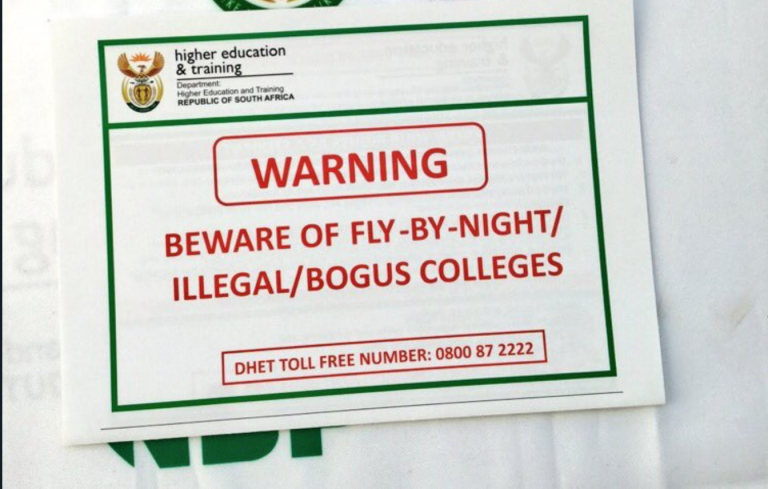
“No to bogus colleges”: Buti Manamela shuts down illegal institutions in Joburg

Bonile Khanyi

Deputy minister of higher education Buti Manamela shut down an alleged bogus college in Johannesburg on Friday morning.

In a video published by the Department of Higher Education and Training (DHET) on Twitter, Manamela was seen confronting the owner of the Johannesburg City College in Braamfontein and ordered him to shut it down with immediate effect. The college was not registered with the department to operate as an institution of higher learning.

Speaking to Inside Education, Manamela said this was part of his nationwide public awareness campaign aimed at enforcing compliance with the relevant legislation in the private college sector.

“We shut down the college this morning because it is not registered with the department of higher education or with any of the Skills Education Training Authorities (Sete’s) or with Umalusi,” said Manamela.

“This is part of an overall campaign that we are running as a department to alert particularly the poor and the working class, people who are the most taken advantage of by these colleges,” said Manamela.

Manamela urged students to be careful when applying for a course at an institution of higher learning.

“We urge students and prospective students to find out from the department whether or not the college has been registered and the programs that it offers have been accredited.”

Manamela said the department opened a case against the owner of the college over a year ago.

“We have since opened a case about a year or two ago with the police against the owner of the college, the matter is before the court and we hope that we’ll be successful in court because we do not believe that this college should be operating,” Manamela said.

Also on Friday morning, Manamela found Sandton Technical College was running illegally too after inspecting its documents. He gave them “a certain amount of time to comply with the rules and regulations of the department” or ship out.

The minister also said the campaign would be extended to the rest of the country under the #NoToBogusColleges after a twitter user asked him to raid institutions of higher learning in Durban Central.

Hoërskool Overvaal: SAHRC says protesters must be peaceful

0

Bonile Khanyi

Protesters have every right to be outside Hoërskool Overvaal but they must demonstrate peacefully.

This is what Advocate André Gaum, Commissioner of the South African Human Rights Commission (SAHRC) responsible for Basic Education, said on Thursday morning. Tensions have calmed after protest action flared up for a second day at the school after 8 were injured and 10 were arrested on Wednesday.

Speaking on Power FM, Gaum said he met with the principal, demonstrators and police. He said he made it clear to the principal that the protesters had every right to be there but also told the protesters they had to be responsible. Gaum said he told protestors to be peaceful and non-threatening.

No one from the school’s management team has met with the protesters.

Education MEC, Panyaza Lesufi said on Wednesday, that communication between him and the school broke down.

There was a standoff between parents and protestors early on Thursday.

ANC and EFF supporters took to the streets on the first day of school, to express their frustration over a court ruling that the Afrikaans-medium school did not have to admit 55 English-speaking pupils, despite the Gauteng education department’s instruction to do so.

The School’s Governing Body (SGB) is claimed there wasn’t enough space to accommodate the additional 55 learners.

According to recent media reports, the arrested group is expected to appear in the Vereeniging magistrate’s court on Thursday.


Angie Motshekga: Technical high schools are very important for the economy

0

Thabo Mohlala

The Department of Basic Education (DBE) will give special attention to technical high schools because they are poised to play a vital role in the country’s broader economic growth plan. This is according to basic education minister Angie Motshekga, who spoke during her visit to Hebron Technical College in the North West Province on Wednesday.

The school which is part of Madibeng sub-district under Bojanala district, attained 55,2% in the recent 2017 matric results. This was the lowest mark in the region and is believed to have impacted the North West’s overall 2017 National Senior Certificate (NSC).

Motshekga said the main reason for the poor performance was that the school did not have a principal for a long time. She said a new principal with requisite qualification has already been appointed with the specific brief to improve the school pass rate.

Motshekga said technical colleges are expensive to run but her department is determined to assist them to operate optimally to fulfil their key economic roles. She said the North West MEC of education, Sello Lehari, put together a strong team comprising municipality officials and big business to provide the necessary support and revitalise the technical colleges.

“Technical schools are very important to us, we have embarked aggressively on three streamed curriculum where we really want to do the best with technical schools. They are very expensive to run though they are extremely important to our economy. So it really concerns us if they don’t perform because we have put them at the centre of our work. It is really to find out what more can be done to get them to perform to their optimum,” said Motshekga.

Motshekga said the other purpose of the visit was to congratulate farm schools that did well during the NSC examinations and also motivated those that performed poorly. Two schools that produced outstanding matric results are Machadam Farm School in Mooi Nooi which obtained 100% pass rate in 2016 and 2017 and the Madikete High School in Maboloka which scored 82.5% in the NSC.

The provincial department, Motshekga said, has established a Directorate of Rural Education to specifically focus and provide targeted interventions to farm schools as particularly those that they decided not to close them down.

Motshekga’s sentiments resonate with her counterparts in the Department of Higher Education and Training (DHET). Both Minister Hlengiwe Mkhize and her deputy, Buti Manamela, also highlighted the need to beef up the TVET sector to accommodate learners who did not qualify for university.

This is part of the post-schooling education and training (PSET), which forms the cornerstone of the DHET’s strategic objective of creating a workforce of young people with skills set that meet the needs of the business community and the broader economy.

During his visit to the Capricorn TVET college Manamela emphasised the need to invest more resource to meet the growing demand shown by young people for training and vocational education.

He told Inside Education that TVET colleges statistics increased from 350,000 to at least 750,000 over the past four years.

“This shows that more people are responding to TVET colleges, therefore we need to respond to that,” he said.

But the huge and sudden demand for spaces at these colleges has also exposed the weaknesses in the system chief of which is lack of capacity of the TVET sector to accommodate the students.

The stampede at the Capricorn TVET college and the influx of students at Motheo TVET college in the Free State are a case in point.

Free State education MEC vows to retain the number one spot

0

Thabo Mohlala

Free State education MEC, Tate Makgoe, made a bold commitment yesterday that his department would retain its pole position for the third time in a row as the best performing province in 2018.

Still basking in the glory of his department’s 2017 matric exam victory, Makgoe spoke at Rehauhetswe Secondary School in Rammulotsi, Viljoenskroon to kick off the start of the 2018 academic year. The school is one of those that contributed to the province’s high pass rate with a 100% pass rate.

Speaking to SABC TV, Makgoe said he was extremely excited that schools performing well in the province were in township communities. He said this was a great motivation for black children and a sign they can hold their own against children from well-resourced areas.

“You must remember that 85% of our schools are no-fee paying schools and so when you see schools such as Rehauhetswe Secondary giving us 100% pass rate, we get very excited. We are saying to all the black children in the province of the Free State, it can be achieved and I am very proud that this year we have 20 similar poor township based schools that gave us solid 100% pass rate. We want to inculcate the culture in our learners that you don’t look back; you just have to look forward and achieve what you want to achieve,” said Makgoe

He said the high pass rate has created healthy competition and set the bar high for the learners and schools and encouraged them to continue to work hard and produce better results. He said this could also be attributed to the critical role that the districts play in supporting the schools.

“It is not surprising that the best district (Fezile Dabi) in South Africa comes from the Free State. The second best district (Thabo Mafutsanyana) comes from the Free State and that the only two districts that got 90% come from here. Clearly, we are on the league of our own, what we need to focus on on a continuous basis is to work on our primary schools so that we have more and more learners getting bachelors passes,” said Makgoe.

He said he was excited that schools from other parts of the province were also contributing to the overall pass rate. Take, for instance, Rantsane High School in QwaQwa, which he said produced 100% pass rate and 91% bachelors passes and Mohaladitwe Secondary School, which gave them a 100% pass rate and 85% bachelors.

“It is exciting that township schools are setting high performance standards for other township schools, added Makgoe.

Makgoe said they made sure that all resources needed for learning and teaching have been delivered to schools days before teaching commenced.

“Our systems are rolling; learner study materials and textbooks have been delivered. There might be shortages here and there because of the constantly growing numbers of our learner population,” he said.

Makgoe said they experienced phenomenal growth in the number of learners because of the good matric pass passes his department produced. “

We have learners from other provinces such as Gauteng, Eastern Cape and others and this growth is bound to put our resources under stress,” he said.

Makgoe vowed the Free State “will again in 2018 achieve the 90% pass rate and the 40% bachelor rate and the latter has been eluding us and we are going to be working very hard to achieve it. We’ve already been working with grade 11s, who are in grade 12 this year, they have been attending camps and they are ready to give us good results”, adding that “determination is much more important than resources in this game of education”.


Spark Schools network fuels parents’ anger over enrolment mess-up

1

Vicky Abraham

Parents of children enrolled at Spark Schools in Gauteng were left disappointed and confused when their children’s names did not appear on the registration roll, the day before schools started.

This was despite receiving emails from Spark Schools that their children had been accepted at different campuses around the province.

Distraught parents, bemoaned on the school’s Facebook media page that they had already bought school uniforms for their children because they were convinced that they had been accepted by the school. Also on the Facebook page, the school network informed parents it would not be accepting walk-in complaints and that parents should send their queries via email or over the telephone.

Nana Mashaba’s daughter had to return home on Wednesday morning as her name did not reflect in the admission list.

“Three ladies at the registration desk requested my daughter’s name and I gave them her name. Unfortunately, when they looked on the system my child’s name was not there. I was told that I need to phone the enrolment department to find out what is happening. I have been calling them since morning and they told me that I must just go home with the child because they are working on the system so that they can place her in the class. They could see that I have paid school fees, so the only thing that they have to do is to put the child in the classroom and allocate a class for her,” said Mashaba.

Mashaba said: “I am very disappointed because I woke up early in the morning and I arrived here at 6am. I was excited because as a parent I wanted to see my first child going to school. My daughter was very ecstatic, but now she has to go back home, and she is feeling sad and she was crying. She asked me ‘Mama why am I not joining the queue (other children), why am I going back home?’ I explained to her that I did everything right, but things didn’t work out properly, and I have been trying to get her a classroom.”

Spark Schools were inundated with calls and messages on social media from discouraged parents who were frustrated that they do not know where to take their children to as most schools had already closed for registration. They demanded the school to refund the fees they had already paid.

According to the Sparks Schools website, the annual fee is R21 000 for 2018 and the monthly tuition fee is R2 100.


Brian Khazamula and Manale Mabaso whose daughter was supposed to start her Grade R today at Turfontein, said: “We have done the application and paid the fees. We knew our child has to be at school today, but when we arrived here they told us we have to phone and confirm the registration. That is something that has to be done by the administration department not us. We are very frustrated, we have to go back home, and she will start her classes tomorrow.”

“She was excited when she came to school. But now her mood is dampened. She asked, ‘why am I going back home, isn’t this my school’. We had to create a story that her class starts tomorrow,” said Mabaso.

In response to parents’ displeasure, the Spark School team sent out a message to parents on Facebook notifying them they were aware of their concerns.

“We are aware that many of you do have queries regarding enrolment applications, and the first day of school. Should you have queries regarding enrolment please email registrar@sparkschools.co.za or phone 010 125 0600. We are experiencing high call volumes, so we do apologise if you are not answered immediately. Should you have any school-specific queries please contact your child’s school specifically. You can view contact details at the following page https://www.sparkschools.co.za/contact-us/. Please note that we will not assist any parents who come to the SPARK Schools Support offices. Any queries can only be managed via phone or email. We do thank you for your patience at this time,” wrote the Spark Schools’ team.

Spark School’s media team, Ogilvy Public Relations did not respond to questions sent to them before going to press.