Home Blog Page 57

CETA administrator vows to tackle chronic governance challenges at training authority

By Johnathan Paoli

The Construction Education and Training Authority (CETA) is on a path to recovery following the appointment of Oupa Dithaba Nkoane as its new administrator.

Speaking to Insight Education, Nkoane said his immediate priority is to restore stability, integrity, and operational efficiency to an organisation long plagued by governance challenges and allegations of mismanagement.

“Our first step is to fill key vacancies, including the CEO position, which will be advertised soon. Leadership stability is essential for restoring confidence and operational efficiency,” he said.

CETA, which oversees skills development in South Africa’s construction sector, has faced persistent criticism over financial mismanagement, irregular expenditure, and lapses in governance related to discretionary grants.

The organisation’s repeated qualifications by the Auditor-General have underscored systemic weaknesses that Nkoane says must be urgently addressed.

An urban development and governance professional with over 20 years of experience, Nkoane brings a background in town and regional planning, municipal management, and large-scale project facilitation.

He has held senior positions in several municipalities, including head of city planning and housing projects, and served as project director for major urban development programmes.

“CETA has chronic governance and organisational issues. My job immediately is to create an organisation that works, performs its core mandate, and is compliance-driven. Governance is priority number one,” he said.

Video: KGalalelo Setlhare

Critical steps will include filling key leadership roles such as CFO and company secretary, re-engineering business processes, and establishing accountability systems that promote transparency and compliance.

Nkoane also emphasised aligning CETA’s skills development programmes with South Africa’s infrastructure priorities.

“We need to create pipelines of skills development that match national capital projects. Our focus will be on high-impact interventions—mainstreaming artisans, identifying and training learnerships, and integrating them into large-scale construction projects,” he said.

By doing so, he hopes to produce a workforce that is not only skilled but ready to contribute directly to economic growth and job creation.

On controversial matters, including previous procurement decisions and the purchase of CETA’s head office building, Nkoane said all flagged issues will be investigated in line with legal and regulatory processes.

“Where irregularities are identified, consequence management will follow. It is essential that CETA operates transparently and responsibly,” he said.

Despite calls from some quarters to scrap the organisation, Nkoane insisted that South Africa cannot do without a dedicated body to oversee construction-sector skills development.

“By stabilising CETA and demonstrating its strategic importance, we ensure it continues to play a vital role in the built environment value chain,” he said.

Nkoane maintains that his experience will be vital in turning CETA around, emphasising that stabilising the organisation and implementing governance reforms will ensure CETA delivers measurable, high-impact results for the country’s construction sector. 
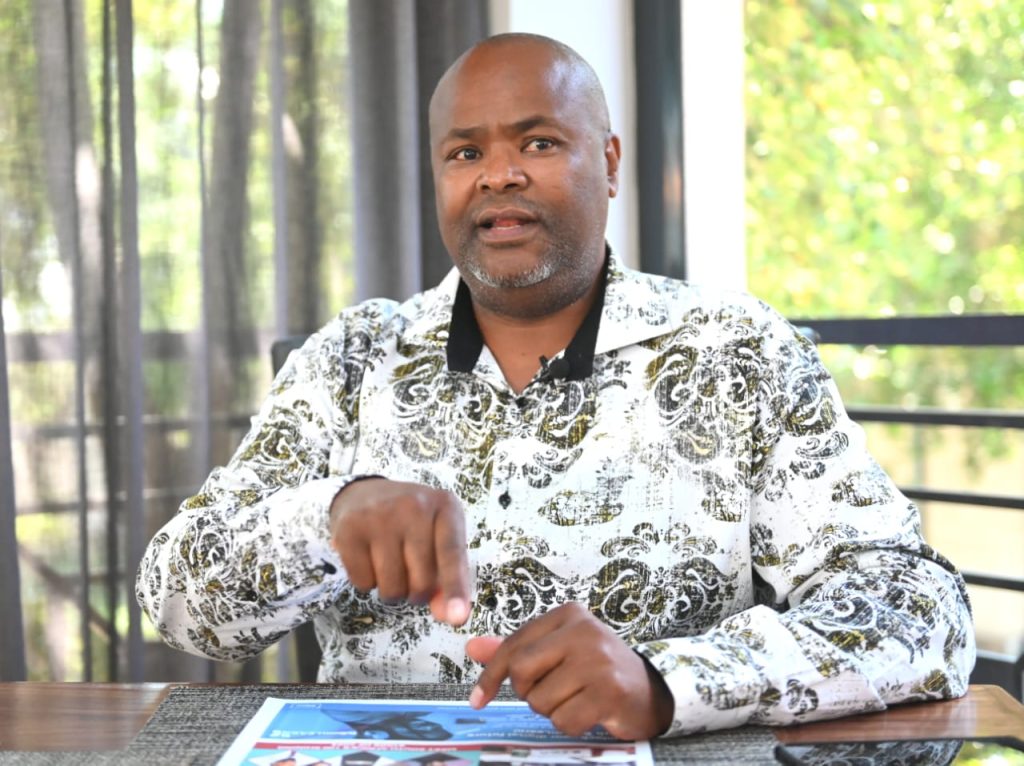
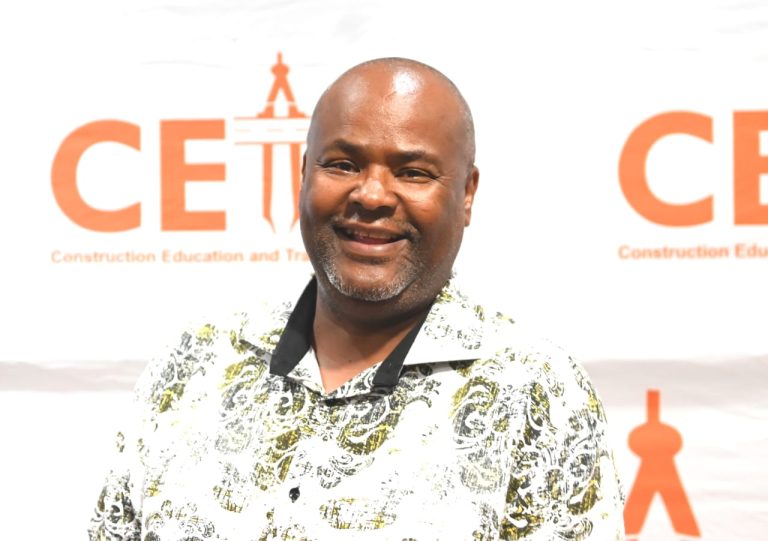
Where irregularities are identified, consequence management will follow, says Oupa Dithaba Nkoane, CETA Administrator. PHOTO: Eddie Mtsweni

INSIDE EDUCATION
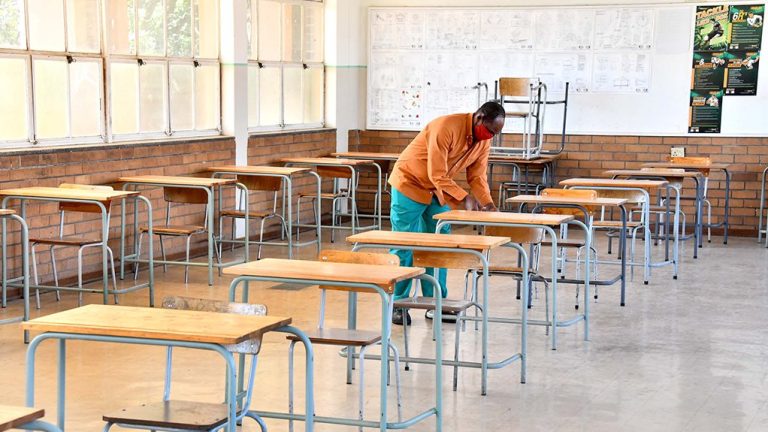
Basic education confirms readiness for 2025 matric finals

By Johnathan Paoli

The Department of Basic Education has officially released the 2025 National Senior Certificate (NSC) October/November examination timetable.

The schedule outlines a six-week examination period, beginning with Computer Applications Technology (CAT) and Information Technology (IT) practicals, before progressing to core academic subjects such as languages, mathematics, physical sciences, business studies, and the arts.

The exams are scheduled to begin on Tuesday, 21 October, and will run until Thursday, 27 November.

More than 700 000 Grade 12 learners are preparing to sit for the final exams that mark the culmination of twelve years of hard work and perseverance.

The structure has been designed to ensure a balanced and fair national examination process, giving learners enough time between major subjects to revise and recover.

According to the department, preparations for the national exams are well underway, with all provinces having submitted readiness reports confirming the finalisation of invigilation rosters, venue security measures, and logistical arrangements for rural and urban centres alike.

Umalusi, the quality assurance body, has also given the green light for this year’s NSC cycle, describing it as a “well-planned, robust and inclusive assessment season”.

For most matriculants, this period will be consumed by revision sessions, mock exams, and last-minute consultation with teachers before the real test begins.

The first paper, Computer Applications Technology Paper 1, will set the tone for the six-week marathon that follows.

From there, the timetable flows into the major language exams, mathematics, physical sciences, business studies, geography, and life sciences, concluding with practical and technical subjects in the final week.

For the department, the matric exams are not only a measure of academic performance but also a test of the education system’s ability to deliver under pressure.

Each year, the department coordinates the printing, packaging, and secure delivery of millions of examination papers to thousands of centres across the country.

This year’s exam timetable also includes several key milestones outside the main examination window.

Life Orientation’s Common Assessment Task (CAT) took place in early September, followed by rewrites in mid-October.

Visual Arts, Design and Performing Arts practical assessments was conducted in August and October, while schools nationwide are expected to host the annual Pledge Signing Ceremony on 17 October, a symbolic commitment by candidates to uphold honesty and integrity during the exams.

INSIDE EDUCATION

Fort Hare alumni accuse VC Buhlungu of corruption in letter to police commissioner

By Thapelo Molefe

A University of Fort Hare alumna, Mbali Silimela, has written to National Police Commissioner Fannie Masemola, making damning allegations of corruption, fraud, and abuse of power against the university’s Vice-Chancellor, Professor Sakhela Buhlungu, and other senior officials.

In his email, Silimela accuses Buhlungu of being at the centre of what he describes as a criminal syndicate within the university’s management. 

He claims the Vice-Chancellor, together with former senior official Isaac Plaatjies, who is currently in custody for his alleged involvement in the murder of university employee [Mr Vesele], has been involved in the looting of university funds through companies linked to close associates.

“Professor Sakhela Buhlungu is the first criminal syndicate. His involvement in fraud and corruption goes far beyond,” Silimela wrote. 

“Both the Vice-Chancellor and Isaac Plaatjies are involved in stealing University funds using companies of their friends to milk the funds.”

Silimela is an alumni of UFH having graduated from bachelor of education in 2022. 

He is the former chairperson of Cope Student Movement (COPESM) where he led a strike in 2021 and was suspended, however he was brought back by a court order. He was deployed as Students Representative Council’s academic officer where he was booted out by the system

According to Silimela, R1.4 million was unlawfully withdrawn from the university’s account in 2021, while a further R1.9 million was allegedly on the verge of being stolen in 2022 before the transaction was blocked.

He questions how Buhlungu became aware of the alleged attempted theft and how he managed to stop it despite not having access to the university’s accounts.

“It is very shocking how the Vice-Chancellor managed to block this R1.9 million from being stolen since he’s not linked with a university account,” Silimela stated. 

“I suspect he was told by the Chief Financial Office (CFO) or an accountant of the university. Therefore, if he was informed by a CFO or an accountant, we need documentation of their conversation alerting him.”

Silimela’s letter comes shortly after weeks of unrest at the University of Fort Hare’s Alice and East London campuses, where violent student protests led to disruptions in learning, damage to property, and heightened tensions between management and students.

The protests were fuelled by growing dissatisfaction over governance, safety, and alleged corruption within the institution.

Silimela’s letter further accuses the university’s CFO, accounting officials, and First National Bank (FNB) of withholding critical information about the alleged transaction. 

He insists that no documentation has been provided to prove that the attempted transfer was ever detected or stopped.

“If there are no indications from the bank showing that the R1.9 million was on the verge of being taken, it raises grave issues,” he wrote.

He describes the Vice-Chancellor’s anti-corruption stance as “a facade,” alleging that those who present themselves as reformers are, in fact, involved in the same activities they claim to expose.

Silimela’s email, sent directly to Masemola, calls for a full investigation into Fort Hare’s financial management, including access to bank statements, correspondence between the Vice-Chancellor and finance officials, and any internal records related to the alleged transactions.

INSIDE EDUCATION

Scholar transport shutdown leaves EC learners stranded as crisis deepens

0

By Johnathan Paoli

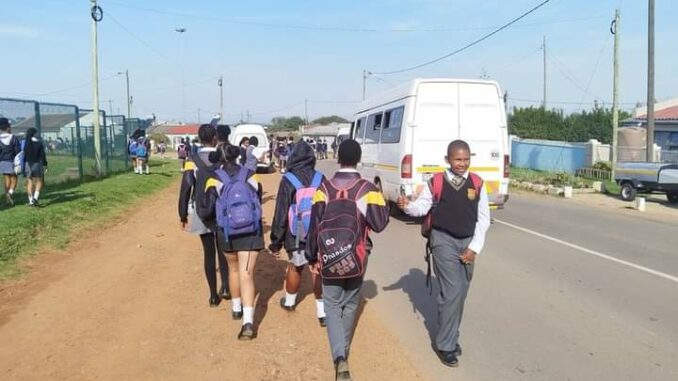
Thousands of learners across the Eastern Cape were left stranded on Monday morning as scholar transport operators embarked on a shutdown in protest over months of non-payment by the provincial Department of Transport.

The disruption, which coincides with the start of the new school term, has once again thrown the province’s embattled scholar transport system into disarray, raising fears that access to education for thousands of rural learners is being systematically undermined.

According to Democratic Alliance (DA) Shadow Education MEC Horatio Hendricks, the protest was a direct result of the department’s chronic mismanagement and repeated failure to honour payment agreements with contracted transport operators.

“Once again our children have been forced to walk long distances to school or turn back home entirely, while the Department once again shifts the blame. For rural families who depend on these services for safe access to education, this failure is not an inconvenience. It is a direct assault on their constitutional right to learn,” Hendricks said.

The shutdown has affected learners in several districts, including OR Tambo, Chris Hani, Alfred Nzo, and Amathole, where school attendance has plummeted since transport services came to a halt.

Many operators, unable to refuel vehicles or pay drivers, have suspended operations indefinitely until the department settles outstanding invoices dating back several months.

This latest crisis underscores what the DA describes as a “complete collapse” of the Eastern Cape’s scholar transport programme, a system meant to ensure that over 120,000 learners from remote communities can safely reach their schools each day.

The Transport department, responsible for the service, has faced long-standing criticism for late payments, poor oversight, and failure to maintain contractual and safety compliance among service providers.

Hendricks noted that the department’s own reports show millions of rands still owed to transport operators, some of whom have been forced to take vehicles off the road due to expired licences or lack of funds for maintenance and fuel.

“The result is that many have been unable to renew vehicle licences, fuel their fleets, or meet basic safety standards. These failures are not isolated. They reflect years of mismanagement, ignored court orders, and a lack of political accountability,” he said.

While discussions between the department and operator associations are reportedly underway, with a possible resumption of services expected on Tuesday, Hendricks warned that the talks would only provide temporary relief unless the underlying governance and financial issues were addressed.

The DA has previously raised the alarm over the sustainability of the scholar transport system.

In July, the party tabled a motion in the Eastern Cape Provincial Legislature calling for an urgent compliance review of the 2022 Makhanda High Court order compelling the provincial government to expand and properly administer the programme.

The motion sought to force both the Departments of Education and Transport to submit progress reports, financial records, and verification data to the Legislature for oversight, but the debate has yet to be scheduled.

The scholar transport programme has long been a flashpoint in the Eastern Cape’s education crisis.

Many rural schools are situated far from learners’ homes, often requiring children to walk over 10 kilometres daily if transport is unavailable.

In past years, delayed payments and contract irregularities have repeatedly resulted in service suspensions, with devastating effects on attendance and academic performance.

As the province’s school term begins, the DA has called on Premier Oscar Mabuyane and the MECs for Transport and Education to take urgent corrective action and ensure full compliance with court and legislative mandates.

INSIDE EDUCATION

Oxford tops world university rankings for 10th year

0

The University of Oxford has extended its record-breaking run at the top of an international league table to a 10th year.

The university, which is the oldest in the English-speaking world, topped the Times Higher Education World University Rankings 2026.

It is joined in the top 10 by Cambridge, which has risen to joint third from fifth place in last year’s edition, and Imperial College London, which is in eighth.

Overall, 11 UK universities made it into Times Higher Education’s (THE) top 100 institutions worldwide.

Prof Irene Tracey, Oxford’s vice-chancellor, said the institution was “honoured” to be top-ranked for a 10th year.

“This achievement reflects the dedication of our academics, professional services staff and students, but it comes at a time of real strain for UK higher education,” she said.

“Sustaining a dynamic and globally competitive sector requires renewed investment and support, so that universities can continue to drive discovery, opportunity and economic growth for future generations.”

BBC NEWS

South African students still don’t feel safe on campus: how protection can be stepped up

0

Students at South African universities have to deal with a disturbing reality. They face the threat of violent crime, in particular gender-based violence. They also battle with substandard infrastructure – some of it life threatening. And institutions aren’t ready to respond.

We are academics in environmental health and public health. Our work examines occupational health and safety in educational environments.

We recently completed a review of health and safety challenges in South African universities. We looked at public records, police reports, campus press statements, and national media coverage of violent incidents. We also noted infrastructure hazards reported at South African universities from 2015 to 2024.

Our study covered 10 of South Africa’s 26 public universities to identify campus safety trends.

Our findings reveal persistently high levels of danger, including murder and bad student housing conditions.

Rather than declining over the 10-year period studied, incidents appear to be occurring with greater frequency and severity. This suggests that interventions have not done enough about systemic safety challenges.

Campus safety crisis and evidence-based solutions

South Africa has some of the world’s highest crime rates. In 2024, the country had a crime index of 75.4, which is to be considered high. Over the observed period, the value fluctuated between 75 and 77. The same index ranks the country as the fifth most dangerous in the world.

Our findings show that this pervasive violence has entered higher education institutions. It has created unsafe learning environments that compromise student welfare and academic achievement.

Violence on campus

Over the 10-year review period, we found repeated and widespread reports of violence involving students and staff.

Fatal violence was concentrated in certain provinces, notably Gauteng and KwaZulu-Natal. Gender-based violence and student murders occurred in both formal university residences and off-campus areas.

Between January 2023 and September 2024, for example, at least 17 students were murdered across South Africa, based on police and media reports.

In 2023, the vice-chancellor of the University of Fort Hare, Professor Sakhela Buhlungu, was the target of an assassination attempt. During the attack, his bodyguard, Mboneli Vesele, was shot and killed while waiting for Buhlungu outside his home.

Women students were subject to rape and other forms of gender based violence. Our review recorded dozens of reported cases of rape and sexual assault in universities. Between 20% and 25% of female university students in South Africa report being sexually victimised during their studies. In 2017, South African university campuses recorded 47 cases of rape and sexual assault. The University of Cape Town had the highest number, nine cases. South Africa has 1.2 million students in its universities in 2025.

Gender-based violence cases are often under reported because of stigma and fear. Some universities lack support systems or clear procedures for handling complaints. Despite national policy pressure, the sector remains far behind in offering consistent protection and care.

Dangerous infrastructure and unsafe residences

Our findings show widespread problems with student housing.

Much of it is overcrowded, under-maintained and structurally unsafe. For instance, the University of Johannesburg’s 2022 occupational health risk assessment identified 11 high-risk sites on campus. These were linked to hazards such as poor ventilation, roof leaks and chemical exposure. An additional 33 areas were classified as moderate risk due to biological hazards, poor sanitation and inadequate waste management systems.

We also found that security in student accommodation was a concern. At some institutions, residences have unsecured entry points, making them easily accessible to intruders. Our research shows that lack of control has contributed to serious incidents, including killings and assaults inside residence rooms.

Substandard living conditions directly affect academic performance. Research shows that poor housing environments increase anxiety, illness and dropout rates.

Many universities rely on third-party providers to supplement campus housing. Oversight and safety standards in these accredited residences vary.

Poor response rates

Most universities lack clear protocols to respond to safety incidents.

In several high-profile incidents, including fatal attacks, university leadership delayed communication with students or failed to implement follow-up safety measures.

A few institutions have introduced safety initiatives like SMS alert systems, gender-based violence offices, and campus safety audits. These appear insufficient to address the systemic nature of campus safety challenges.

Violent incidents continue to rise. This suggests that the sector needs coordinated measures.

But there is no universal safety standard or consistent oversight to enforce safety requirements across institutions.

Safety and student success

This is more than a security problem.

Our research demonstrates that campus violence directly undermines academic achievement. Others show that unsafe student housing conditions have a negative impact on academic success. Students living in unsafe environments can’t focus on their studies.

Our analysis points to five critical intervention areas:

  • annual safety audits with external verification and public reporting
  • real-time campus alert systems integrated with security and law enforcement
  • survivor support units staffed by professionals offering psycho-social care and legal advice
  • safety-linked funding mechanisms
  • interdisciplinary safety committees.

Universities must be legally required to conduct comprehensive annual safety audits through independent, accredited assessment bodies. They should evaluate physical infrastructure integrity and student housing conditions. Similarly, campus crime patterns, emergency response capabilities, and compliance with occupational health and safety standards. Audit reports must be publicly accessible within 30 days of completion.

The Department of Higher Education and Training should tie funding to campus safety performance.

Expertise in criminology and victimology should be part of safety planning processes at universities. They would bring evidence to the design of safety measures.

Students must also be involved in designing and overseeing safety strategies. Student committees, peer-led awareness campaigns, and direct input into campus policy are essential for building trust and driving action.

Written by Maasago M. Sepadi, PhD in public health, Tshwane University of Technology and Martha Chadyiwa, Associate Professor of Public Health , Sefako Makgatho Health Sciences University

THE CONVERSATION

School football teams win at 2025 Kay Motsepe Schools Championship

0

By Levy Masiteng 

The Kay Motsepe Schools Championship concluded its 2025 football tournament at the Giant Stadium in Soshanguve over the weekend, with three teams walking away with R5 million that included cash and infrastructure upgrades.  

The tournament is a premier annual event that brings together over 13,000 school teams from across South Africa to compete in various sports, and is sponsored by Sanlam in partnership with the Motsepe Foundation.

“This initiative aims to empower young athletes by providing a platform to showcase their talents and develop essential life skills,” the Sanlam Group said in a post. 

The St. Marks Academy from Mpumalanga in the Under-19 Boys category defeated Fumana Under-19 Boys from Gauteng 1-0. 

The Academy took home a trophy and R3 million in prizes and infrastructure upgrades.  

Lungile Mokone, the coach of St. Marks Academy, told the media that the win was for Mpumalanga.

“It was a hard-fought final. Thanks to the boys for their efforts. I’m happy and proud of my players. This is for you, Mpumalanga.” 

In the Under-13 Boys category, Queenswood Laerskool from Gauteng crushed Madika Under-13 Boys from Limpopo 5-0, winning R1 million worth of prizes and upgrades in the process. 

In the Under-13 Girls category St. Anne Primary School from Free State won 5-4 on penalties after a 1-1 draw at full-time, and took home R1 million in prizes and upgrades for their efforts. 

“This is a great day for me, the players, and the people of Free State. I have been coaching the team for the past four months, and I’m still learning about them,” said Kadi Monyane, coach of St. Anne Primary School.

The Kay Motsepe Schools Championship said they have consistently produced top football talent, and this year’s event was no exception. 

The head of Sanlam, Nkazimulo Sokhulu, said:  “We continue to invest in young people. We believe sports open up a number of avenues and opportunities for young people.”

Bongani Zondi, Deputy Director of Sports and Enrichment at the Department of Basic Education, emphasised the importance of sports in academic success.

“Sports instils values such as discipline, teamwork, social cohesion, and timekeeping, which contribute to academic success,” he stated. 

The Motsepe foundation said that the prize money won by the schools will be used to improve their football facilities and benefit their communities. 

INSIDE EDUCATION

Eastern Cape and Mpumalanga schools crowned champions at national moot court final

0

By Charmaine Ndlela

Learners from Ndamase Senior Secondary School in the Eastern Cape and Kopanong Senior Secondary School in Mpumalanga have been named joint winners of South Africa’s 14th Annual National Schools Moot Court Competition.

The final round of the competition was held on Sunday at the Constitutional Court in Braamfontein.

The two teams argued before Constitutional Court and High Court judges in a mock appeal that tested their understanding of constitutional rights and the limits of language-based school admissions.

The 2025 case centred on the fictional learner Thando Khumalo, a gifted 12-year-old denied admission to two Afrikaans-medium high schools because she was not fluent in the language.

Deputy Minister of Justice and Constitutional Development Andries Nel, delivering the keynote address, praised the finalists as “constitutional custodians of tomorrow”.

He said the competition had evolved into “a national movement” since its launch in 2011 and had already produced lawyers, magistrates, activists and public servants across the country.

“You have not merely studied the Constitution; you have interrogated it and wielded it with conviction,” Nel told the courtroom.

“The Constitution is not something abstract and theoretical, but has a very real and very direct impact on the daily lives of people.”

More than 900 Grade 9 learners entered this year’s competition, which began eight months ago with essay submissions. From 180 teams that qualified, 36 reached the national rounds, culminating in Sunday’s final before Chief Justice Mandisa Maya and Gauteng Acting Judge President Audrey Ledwaba, and others.

Professor Tshepo Madlingozi of the South African Human Rights Commission opened proceedings by thanking the Departments of Basic Education and Justice for their long-standing partnership.

“It has not been easy, yet we persevere because we believe deeply in the cause of growing the next generation of social justice and human-rights warriors,” he said.

He hailed all four finalist schools – Brebner High (Free State), Kgomotso High (Northern Cape), Ndamase Secondary (Eastern Cape) and Kopanong Senior (Mpumalanga) – for their dedication.

Johanna Mashego of Kopanong Senior Secondary was named Best Oralist of 2025, while Ndamase’s Asisipho Sebeni and Sandisiwe Nompetsheni impressed judges with their arguments on equality and education rights.

Nel said the learners’ submissions showed “intellectual rigour and moral clarity”, invoking precedent and the Bill of Rights to defend inclusivity in schools

He linked the moot’s theme to the Basic Education Laws Amendment (BELA) Act, describing it as “an act of transformative constitutionalism” that promotes multilingualism and strengthens accountability. “Robust debate, public participation and active citizenry are features of a healthy democracy,” he said

Nel also urged ongoing investment in teacher development, curriculum reform and technology to build an education system that is “future-ready”.

“Education is not just a policy – it is a promise,” he said. “A promise to every learner that their potential matters; a promise to every teacher that their work is life-changing.”

Nel urged the students to carry the lessons of the moot into their communities. “The Constitution is not argued and defended only in courts – it is lived in every decision we make, in every policy we write, and every child we choose to include,” he said.

“There are many children like Thando in our country and we owe it to them to uphold the constitutional right to education and put the best interests of the child first.”

INSIDE EDUCATION

Gauteng ready for 2025 matric exams, 2026 school placements – Chiloane

0

By Johnathan Paoli

Gauteng Education MEC Matome Chiloane has declared the province fully ready to administer the 2025 National Senior Certificate (NSC) examinations and to begin placing learners for the 2026 academic year.

Speaking ahead of the exam season, Chiloane said the department’s preparations were “complete and credible”, with all 1,040 examination centres audited, compliant, and staffed with trained invigilators and monitors.

“Our systems are ready, our officials are prepared, and our learners have been supported through every possible intervention. We are confident that Gauteng will once again deliver credible results that reflect the hard work of our teachers and learners,” Chiloane said.

The NSC exams will begin next week Tuesday, and conclude on 27 November.

This year, a total of 192,745 candidates have registered to write, 144,246 full-time and 48,499 part-time, marking a six percent increase in full-time enrolments compared to 2024.

Chiloane said the rise reflected growing confidence in the public schooling system and a commitment to ensuring that every learner has the opportunity to complete their basic education.

The MEC praised the Class of 2024 for achieving an 88.41 percent pass rate, with 66,979 bachelor passes, the province’s highest number since 1996, and expressed confidence that this year’s cohort would go even further.

“We have set ourselves a target of reaching a 90 percent pass rate, and preliminary assessments show that we are on course. The Class of 2025 has shown resilience and discipline, and we believe they will rise to the occasion,” he said.

Chiloane attributed the province’s continued academic improvement to a mix of targeted support programmes and innovative digital learning platforms. Initiatives such as the Secondary School Improvement Programme (SSIP), High Flyer interventions, and live broadcast lessons have provided learners with extensive academic support.

“Through these programmes, we ensure that no learner is left behind, especially those in underperforming schools and communities facing service delivery challenges,” he said.

He noted that the department would continue to offer daily revision sessions under the Just-in-Time programme during the examination period to help learners consolidate their knowledge before each paper.

Turning to exam integrity, Chiloane said additional chief invigilators and monitors had been deployed to large examination centres, while new security mechanisms were in place to prevent irregularities, including paper leaks.

He urged candidates to arrive early at their centres, follow all screening procedures, and avoid bringing prohibited items such as cellphones or smartwatches into exam rooms.

“Cheating is not only unethical, it can destroy your future. Learners found guilty of dishonesty face having their results nullified and being barred from writing for up to three years,” he warned.

All candidates will sign the NSC Pledge next week Friday, committing themselves to the Examination Code of Conduct.

Chiloane also appealed to parents and communities to create a peaceful environment for learners during this period.

“We urge parents to provide emotional support and to ensure learners have quiet spaces to study. Communities must avoid protests or disruptions near schools, as even a single missed paper can set a learner back an entire year,” he said.

The marking process will take place between 16 November and 12 December, with the national release of results set for 12 January 2026 and the provincial release the following day.

Learners will be able to collect their statements of results from their schools on 13 January.

Chiloane reminded learners who missed the Life Orientation Common Assessment Task in September to attend the rewrite scheduled for 14 October, warning that those who do not complete it this year will only qualify to write again in September 2026.

The MEC also confirmed that the department is ready to begin the placement phase for the 2026 online admissions cycle on Thursday, 16 October.

During the application period between 24 July and 29 August, the GDE received more than 820,000 applications from over 358,000 unique users.

Chiloane explained that placement offers would be issued via SMS on a rolling basis from 16 October and urged parents to accept offers within seven school days to avoid losing their preferred placements.

He emphasised that placement decisions are guided by proximity and family connections to schools rather than the order in which applications were submitted.

To accommodate high demand, the department has deployed 786 mobile classrooms to 223 schools across the province, particularly in high-pressure areas such as Johannesburg South, Tshwane and Ekurhuleni.

He encouraged parents to resolve any placement disputes through the established objection and appeal processes, which the department has pledged to handle within prescribed timeframes.

Chiloane ended with declaring his department’s confidence and pride as the province enters this critical period for both examinations and admissions, calling on the class of 2025 to stay focused, disciplined and believing in their potential.

INSIDE EDUCATION

Fort Hare unrest ‘criminal, not protest’ – Manamela

By Akani Nkuna

Higher Education Minister Buti Manamela said on Saturday that the violent incidents at the University of Fort Hare in Alice, Eastern Cape, were acts of criminality, not protest.

This follows violent demonstrations at the university’s Alice campus on Wednesday when ‘protesters’ burned several administrative and staff buildings.

The unrest stems from a range of grievances, including calls for the Vice-Chancellor Professor Sakhela Buhlungu’s resignation, delays in National Student Financial Aid Scheme (NSFAS) payments, and demands for immediate student leadership elections.

Addressing the media in Hatfield, Pretoria, Manamela outlined his department’s intervention measures following the week’s events, saying the destruction of property and intimidation of staff could not be tolerated.

He also emphasised that students who allegedly committed “such atrocious acts” ought to be classified as criminals and be subjected to the full might of the law.

“This is criminality even if these people are students. They are basically unleashing crime. We need to make a distinction between people who are students and also people who are criminals. Criminals who are also in the process endangering the lives of other students,” Manamela added.

He said that his department was working closely with the South African Police Service (SAPS), the Eastern Cape provincial government and the university’s security teams to restore calm and protect students and staff.

“A university should be a space of learning, hope and progress, not one of fear and destruction,” he said.

“The burning of buildings, the intimidation of staff, and the disruption of teaching and learning can never be justified.”

Manamela said the priority was to ensure that the academic programme resumes within the coming week.

“I met with the University Council yesterday and directed management to implement all necessary measures to reopen safely — including temporary online learning where required.”

He stressed that students must be able to complete their studies in peace and safety.

“That is non-negotiable. The university must ensure that the academic year is not put in jeopardy.”

Manamela said he had also instructed the University Council to reflect on several critical issues during its Sunday meeting, including governance and leadership, the role and status of the SRC, institutional culture, concerns about the Vice-Chancellor’s contract, and the in-sourcing of workers.

“In the coming week, I will respond in greater detail to the feedback from the ministerial team led by Professor Ahmed Bawa, which has been engaging students, staff, and other stakeholders over the past several days. Their work is central to shaping the next phase of our intervention,” he said.

INSIDE EDUCATION