Home Blog Page 58

WRO Africa 2025: Robotics Changing Classrooms and Futures

Across the African continent in 2025, a quiet revolution is roaring to life, and it hums with the sounds of servo motors, sensor data, and student laughter. The World Robot Olympiad (WRO) competition has taken root in schools from Zimbabwe to Nigeria, South Africa to Uganda, building a movement that’s not just reshaping how kids learn, but redefining why they learn.

And it is gaining more traction. Ministries of Education, embassies, universities, and global partners like Google, the United Nations Economic Commission for Africa (UNECA) and the Endeavour Foundation are investing in this grassroots momentum, recognizing that the future education – and innovation – might just look like a table full of buzzing wires and bright ideas.

More than a Tech Competition
Each year, WRO invites students from around the world to imagine, build, and compete, all through the power of robotics. It starts in classrooms: robotics workshops and bootcamps unfold across schools, where students form teams and begin designing robots that respond to the year’s theme – this time, “The Future of Robots.” In some countries, regional events pave the way to national finals. Then, the top teams earn the chance to represent their country on the global stage in Singapore in November, alongside young peers from over 90 nations.

In Nigeria, South Africa, Uganda, Tanzania and Zimbabwe, WRO Bootcamps have reached schools across the country, introducing coding, AI, and engineering principles through play and challenge-based learning to hundreds of students – including those from underserved and special needs communities.

“Every robotics bootcamp is a window into what’s possible when learning becomes active, inclusive, and tech-driven,” says Valentine Masicha, WRO Country Coordinator for Uganda with Mindset Coders. “In these sessions, students aren’t just tinkering with robots; they’re building confidence, learning to collaborate, and solving real-world problems with code and creativity.” For many, it’s their first time seeing how STEM can be relevant to their lives and community.

Mentorship in Motion
In each participating country, the excitement is just as palpable among the coaches who are at the heart of the WRO experience.

“Gone are the days when teachers simply delivered content”, says Victoria Nxumalo, WRO Country Coordinator for Zimbabwe and founder of Girls in STEM Trust. “WRO is revealing what relevant, future-facing education looks like in real-time: a shift from instructors to co-creators — mentors guiding discovery with courage.”

Google mentor, software engineer, and WRO lead mentor Andrew Muriithi couldn’t agree more. His thing? Train WRO coaches to accompany students from their first brainstorming session all the way to proudly representing their country at the WRO International Final. “Mentorship isn’t about having all the answers. It is about walking the journey with someone. You grow just as much as the mentee does,” says Andrew.

He continues: “Start messy, learn fast. A mentee once asked me, ‘When do I know I’m ready to build real projects?’ My answer: You don’t. You just start. And remember that every expert you admire started with broken apps and endless errors.”

This evolution mirrors global shifts in education. The World Economic Forum’s 2023 “Education 4.0” agenda singles out mentorship, creativity, and adaptable problem-solving as foundational skills in an AI-first world. Meanwhile, UNESCO’s 2024 AI Competency Framework outlines 12 essential AI competencies for students – ranging from ethical reasoning to system design – with the goal of preparing learners to become responsible, human-centered co-creators of AI.

By introducing robotics, coding, and AI as tools for collaboration and creativity, WRO is creating safe spaces for experimentation and failure – and that’s where real learning happens.

“WRO is the perfect launchpad for hands-on, trial-and-error learning,” Andrew explains. “In a world shaped by AI, it’s not just about getting it right. It’s about learning how to rethink, rebuild, and keep going. The problem-solving mindset these young people develop is exactly what the future needs.”

Meet the Makers: A Winning Team Up Close
In Manicaland Province, Zimbabwe, one WRO team captured the attention of judges, diplomats, and tech leaders alike.

Team FutureSight, winners of Zimbabwe’s National Championship in the Senior category, developed an AI-powered voice assistant for the blind. This smart, voice-controlled tool helps visually impaired users with daily tasks like reading, object recognition, and navigation. But what makes it truly special is its localisation: the team is adapting it to support local languages, ensuring accessibility for users who are often left behind in global tech developments.

“We wanted to build something that mattered,” said one team member. “Something that could make life better for people around us, not just win a trophy.”

This truth echoes in research, too: African youth often innovate with their community in mind, not a market. They consistently prioritize social impact over profit, seeking to solve real-world challenges like food access, clean energy, or equity in education (HSRC, 2024). This African mindset of ‘profit for purpose’ aligns powerfully with the spirit of WRO, where every robot tells the story that true innovation is transformational, not just transactional.”

With Africa’s workforce and innovation agenda at stake, Google and UNECA teamed up in 2024 to accelerate WRO’s spread across the continent, as Bahta Mamo Bekele, UNECA Program Coordinator and National Coordinator for WRO in Ethiopia, explains: “The WRO’s approach is fundamentally about building a vibrant African innovation ecosystem from the ground up. It empowers young people to tackle their communities’ most pressing challenges with their own hands and minds, giving them a voice that resonates far beyond their schools and cities. At the UNECA, we are witnessing this digital upskilling in action. It is inspiring a new generation of problem-solvers who are ready to own their narrative and shape the continent’s future.”

A New Era of Hands-on Learning
A growing body of educational research (e.g., OECD Future of Education 2030, Harvard Project Zero) confirms that interdisciplinary, collaborative, and values-based learning better prepares students for AI-rich futures than traditional subject silos.

More than a robotics competition, WRO is the new blackboard, the new lab coat, the new field trip. It becomes a testing ground for the kind of thinking machines can’t do: empathy, ethics, adaptability, and purpose. Yes, kids learn to code. But more importantly, they learn to connect ideas, people, and technology in meaningful ways.

“This is where education truly meets innovation in its truest form, robotics challenges becoming the new interdisciplinary classrooms, where math, science, and language meet creativity, cross-cultural teamwork, design thinking, and resilience. The skills forged here aren’t just nice-to-haves. They’re essential in an AI-powered world,” says Karen Bebelaar, WRO Program Manager.

And WRO Africa isn’t just nurturing future engineers, although it does that too. It is cultivating a generation of ethical innovators, systems thinkers, and global citizens who can lead with both skill and conscience.

Inclusion as a Power Engine
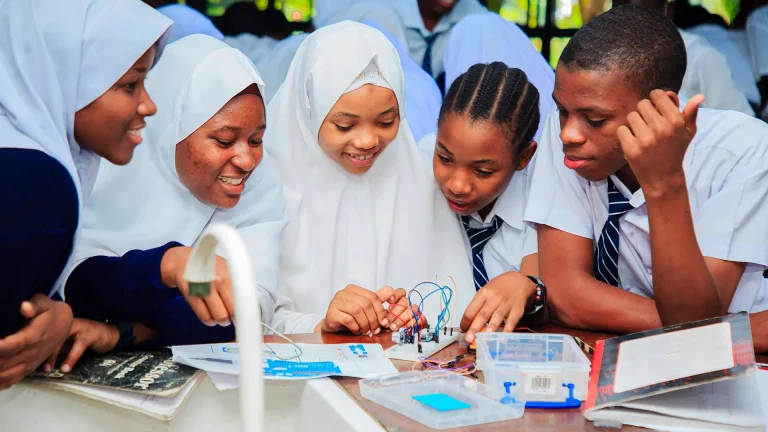
The smiles beaming from the Jangwani and Benjamin Mkapa schools in Dar es Salaam, Tanzania are spreading more good news backed by peer-reviewed evidence: educational robotics is a power mix of fun that significantly supports cognitive, social, and emotional development among learners with special needs.

A 2025 scoping review of 33 peer-reviewed studies confirmed significant gains in cognitive, emotional, and social development among learners with special needs engaged in robotics-based learning. One 2023 ERIC-reviewed study even showed that just eight weeks of robotics lessons led to improved mental planning and group interaction for children with Down syndrome.

But robotics isn’t just bridging gaps, it is opening new frontiers. Students with special needs actually help redefine what innovation looks like, their lived experiences bringing essential perspectives often missing from mainstream tech design.

“When children with disabilities build, code, and compete, they bring new ways of thinking to the table. Their contributions go beyond inclusion: they challenge design norms, foster empathy among peers, and drive user-centered innovation,” says Eva Shana, WRO Country Coordinator for Tanzania at the University of Dar es Salaam. Recent studies in inclusive tech design even highlight that co-creating with learners who have disabilities leads to more accessible, socially attuned technologies for all (GSSRR, 2023).

What’s in a WRO?
Far more than they imagined back in 2004, for sure.

What started as a robotics contest has evolved into a launchpad for equity, creativity, and human-centered innovation. In 2020, only 5 of the 90 participating countries were African. Last year, thanks to the unwavering support of partners like Google, UNECA, Irish Aid, Endeavour Foundation, Camden.education, and a growing network of local changemakers, 9,000 young people across 14 African countries took part in WRO activities – and with momentum building, even more are expected in 2025.

In Nigeria, strategic partnerships with state ministries and institutions are mainstreaming robotics across schools nationwide. The impact? Over 2,000 teachers trained and more than 20,000 young people from all walks of life engaged in WRO 2025.

“With WRO, students, coaches, and experts alike are being prepared today for the challenges of tomorrow. More than a competition, WRO is a launchpad raising solution-driven young people who can think differently, innovate locally, and function globally,” says Abisola Obasanya, WRO Nigeria National Organiser.

Some 4,000 miles further south, the sentiment is shared by WRO South Africa National Organiser Danie Heymans, who has just wrapped up 13 Provincial WRO events with Township Robotics, bringing key 21st-century skills to schools in historically underserved areas.

“In a world racing to automate, quantify, and scale, these fearless, ready-to-learn youth with their purpose-driven mindset remind us what real innovation looks like. And it looks a lot like Ubuntu*,” concludes Heymans.

*Ubuntu is an ancient African word rooted in humanist African philosophy and can be roughly translated as “humanity to others”, or “I am because we are”. It comes from the Zulu proverb “Umuntu ngumuntu ngabantu”, meaning “a person is a person through other people”.

The story was first published by World Robot Olympiad (WRO)
Gauteng education to assist matriculants disrupted by water outages in Westbury, Coronationville

By Johnathan Paoli

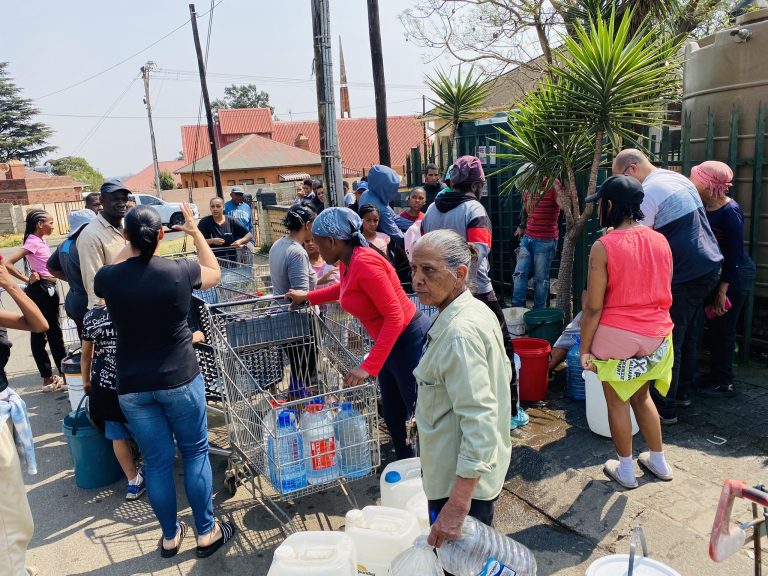
The Gauteng Education Department has moved to put contingency measures in place for matriculants affected by ongoing water outages and protest disruptions in the communities of Westbury and Coronationville.

Department spokesperson Steve Mabona confirmed that while water tankers and JoJo tanks had been deployed to affected schools, the prolonged lack of supply has stretched the system to breaking point. 

“We have tanks, JoJo tanks, in our schools. When we have water, we then fill up those tanks. But if, on a continuous basis, there’s no water, we will then be depleted,” he said. 

The outages, which have sparked days of unrest, left teaching schedules in disarray and raised concerns about the impact on learners preparing for crucial final examinations.

Mabona said the department’s immediate focus was on protecting the academic progress of Grade 12 learners. 

“The only challenge in Coronationville is that we have those that are coming from outside those areas. Now the arrangement is that especially the Grade 12s, they are writing at the neighbouring schools. We’ve made those arrangements for them to continue to write,” he said.

Protests erupted earlier this week, with residents demanding urgent intervention to restore water services.

Several community members sustained rubber bullet injuries on Wednesday when demonstrations turned violent.

The unrest has prevented some learners from outside the affected communities from reaching their schools, further disrupting teaching and learning. 

“In that entire area, our schooling is not normal. The lower grades cannot access schools unless they live within walking distance. Grade 12s have been our main concern, and we’ve ensured their preparatory examinations continue without major interruptions,” Mabona stressed. 

Similar arrangements have been implemented in Ebony Park, where many learners are walking to schools. Principals are collecting examination papers from distribution points to ensure assessments go ahead. 

The water outages in Westbury and Coronationville have also cast a spotlight on broader service delivery and infrastructure issues affecting schools across the province. 

In The Vaal, learners at the newly opened Tsepong Secondary School have reportedly been attending classes for only three hours daily due to water and sanitation challenges.

Mabona acknowledged the difficulties but assured the public that the matter had been resolved. 

“Yes, indeed, we are aware. The challenge was with the municipality, because we made a payment in January already. But there were problems of locating the transaction. There’s now confirmation that the municipality has received the money, and workers are on site connecting the school to park services for water and electricity,” he said.

 Asked whether such problems pointed to systemic weaknesses in municipal payments and service connections, Mabona said schools generally receive allocations to pay for services directly. 

“In this instance, because it was a new establishment, the department had to apply for the connection. But in all other schools, we provide them with their allocation to pay municipal services. Where challenges arise, we engage municipalities directly and make interim arrangements,” he said.

While the department is working to mitigate the immediate impact of the outages on matriculants, concerns remain about the long-term disruption to teaching. 

Civil society groups have warned that if the crisis persists, it could compromise curriculum coverage, particularly for younger grades who are not part of examination contingency plans.

The department has urged calm and appealed for constructive dialogue between residents, municipalities, and education authorities.

INSIDE EDUCATION

South Africa leads push for future-ready education

0

By Palesa Nguqu

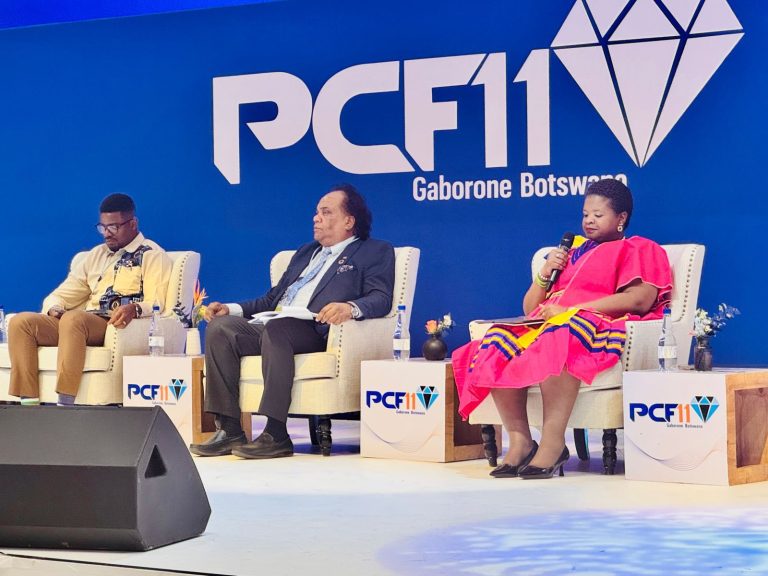
Deputy Higher Education Minister Dr. Mimmy Gondwe says small states face major challenges in building resilient and inclusive education systems, from limited economies of scale to talent retention.

She said South Africa is supporting its neighbours through collaboration, digital innovation, and skills development, initiatives that not only strengthen individual nations but also advance regional stability and shared prosperity.

Gondwe was speaking at the Ministerial Panel on Small States of the Commonwealth, held during the 11th Pan-Commonwealth Forum on Open Learning (PCF11) in Gaborone, Botswana, from 10–12 September 2025.

The forum, under the theme “Innovative Open Education: Fostering Resilient Societies for Sustainable Economic Development,” brought together education ministers from across the Commonwealth.

Delegates shared experiences, challenges, and successes in policy implementation, with the aim of fostering cross-learning and improving coordination between national policies and international frameworks.

Gondwe underscored the importance of solidarity and cooperation in ensuring no state is left behind.

“Small states face vulnerabilities such as limited economies of scale and talent retention challenges. But through partnerships, mutual recognition of qualifications, and shared knowledge, we can build resilient systems that are future-ready,” she said.

South Africa’s contributions include strengthening academic mobility, ensuring quality assurance, and advancing digital learning platforms.

Gondwe cited ongoing initiatives such as the SADC Protocol on Education and Training, which facilitates academic exchanges and the mutual recognition of qualifications.

“Our collaboration enables small states to access a broader pool of expertise and to develop joint initiatives that benefit all,” she explained.

South Africa also champions Open Distance Learning (ODL) through platforms like the National Open Learning Systems (NOLS).

“Through partnerships with Botswana, Lesotho, and Namibia, we are expanding opportunities for students who might otherwise be excluded from higher education,” noted Gondwe.

These platforms provide adaptable open educational resources tailored to local languages and contexts, promoting inclusivity and lifelong learning.

Support further extends to technical and vocational education and training (TVET).

The Department of Higher Education and Training is also working with countries such as Eswatini and Lesotho to align TVET programmes with industry needs and to develop a skilled workforce.

“Our goal is to equip young people with skills that are relevant and demanded by the economy,” said Prince Maele, Botswana’s Minister of Higher Education.

Research collaboration is another pillar of regional integration.

Mauritius and Seychelles, for example, have partnered with South African universities on projects related to sustainable ocean economies and climate adaptation. In addition, initiatives such as the Potential of Micro-Credentials in Southern Africa (POMISA) aim to create flexible, scalable learning pathways that support lifelong learning and improve employability.

Gondwe underscored that supporting small states is a matter of solidarity, not charity.

“Our collective future depends on how well we harness collaboration,” she said.

“Supporting small states is not charity—it is an act of shared regional interest, ensuring no nation is left behind in building resilient, knowledge-driven societies.”

INSIDE EDUCATION

Schools tried to ban phones and avoid politics. Then came Charlie Kirk’s assassination

0

Some students watched the video in the middle of class. Others pulled out their phones as they walked out of school and found themselves watching the videos over and over. Some teachers interrupted lessons to discuss the horrific news.

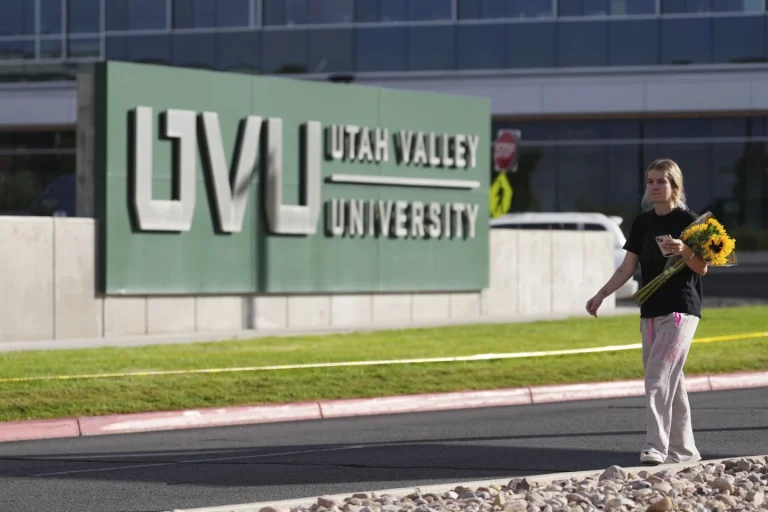
Almost instantly after Charlie Kirk was assassinated Wednesday at Utah Valley University, the news — captured on video in grisly detail — sent shockwaves through classrooms everywhere. Because no matter teens’ political opinions, everyone knew Kirk.

In high school classes in Spanish Fork, Utah, chatter spread fast Wednesday, as students learned of the shooting and began to wonder if Kirk would live or die. A cellphone ban meant many students didn’t learn of Kirk’s fate until the final bell — pushing tough conversations in class to the next day.

“By the end of the day, I was worn out,” said English teacher Andrew Apsley. He discussed the shooting with each of his four classes Thursday at Landmark High School, about 15 miles south of UVU.

In the current political climate and with new cellphone bans, schools have tried to push social media and controversial topics to the sidelines, saying classes should focus on basic academics. Kirk’s shooting upended all that.

Graphic footage of Kirk’s shooting on the Utah college campus was available almost immediately online, captured by cellphones from several angles.

The videos, in slow motion and real-time speed, show a direct view of Kirk being shot, his body recoiling and blood gushing from his neck. The videos were easy to find on X, TikTok and Instagram.

Many teens say they feel traumatized by what they saw.

They couldn’t escape the videos popping up on their social media feeds or being passed to them by friends and classmates.

Some teens posted warnings that urged people not to click on the Kirk videos, saying they wished the visuals had come with trigger warnings.

Apsley’s 19-year-old child received a gruesome video of Kirk’s death in a message from a friend. His child has autism and has difficulty processing emotions, so the video was “pretty traumatic,” Apsley said. That incident became a teaching moment for Apsley’s students.

“I know we want to be first. I know we want to be the one to share the information that other people rely on,” Apsley recalled telling his classes. “But at the same time, not everyone is well-equipped to handle something as graphic and violent as that.”

Students tuned in everywhere, highlighting the global reality of social media.

In Canada, Aidan Groves was in a college writing class when he saw a headline on Reddit that Kirk had been shot. He had not shared Kirk’s political views, yet “my heart sank, and I was immediately on edge,” said Groves, a student at Southern Alberta Institute of Technology in Calgary. He quickly swiped through comments, feeling overcome by horror and dread.

Even so, he left his classroom to watch the video.

Groves, 19, grew up watching his dad play video games with violent imagery, but he was struck by the video’s immediacy and the crowd’s frantic reaction.

When Groves returned to class 10 minutes later, everyone was distracted by the news of the shooting. Students passed around their phones. Some of his classmates expressed shock. Others who weren’t fond of Kirk’s views cracked jokes.

Through it all, the professor carried on with his lesson.

A similar scene played out in a now-viral video taken in a classroom at the University of North Texas, where a student filmed her class watching the video on tablets and cell phones they passed around the room. Some students have amused looks on their faces, and the student filming the video chastises those making light of it.

“Why are we cheering for someone getting shot? No matter what political beliefs are, we should not be cheering that someone got shot,” the student tells her classmates. A University of North Texas spokeswoman confirmed the video was filmed in one of its classrooms.

“I’ve never seen anybody die, and immediately everybody in this crowd had just witnessed that,” he said.

Whether students admired Kirk or not, teenagers across the world knew him from his social media presence.

A right-wing activist and close ally of President Donald Trump, Kirk’s savvy use of social videos, capturing his pithy responses to questions from liberals, raised his profile at speaking events on college campuses and online, especially among young men.

San Francisco teen Richie Trovao didn’t agree with all of Kirk’s ideas, but admired how the activist “really stood on his beliefs.” Trovao, 17, had thought about getting politically involved himself, but the assassination has given him second thoughts. He worries that speaking his mind could put him at risk.

The high school senior was on Discord when a friend messaged that Kirk had been shot. Trovao didn’t believe it at first, so he went to X to confirm, and a video of Kirk’s death autoplayed. His stomach turned.

“I never thought I would see something like that happen to someone who’s just basically an influencer,” Trovao said. Especially shocking: Some social media comments seemed to celebrate Kirk’s death.

Reaction to the video has highlighted the political divide and polarization that exists among American youth, said Connecticut high school senior Prakhar Vatsa. That was the main topic of discussion among classmates in his AP Government class after Kirk’s death.

Raised in an era of easy access to violent imagery, Vatsa, 17, said he wasn’t too affected when he saw the video while scrolling social media, because he isn’t too sensitive to gore.

“It was a bit traumatizing, but I’ve seen worse,” he said.

AP

DA launches national investigation into statutory rape, child pregnancies

By Levy Masiteng 

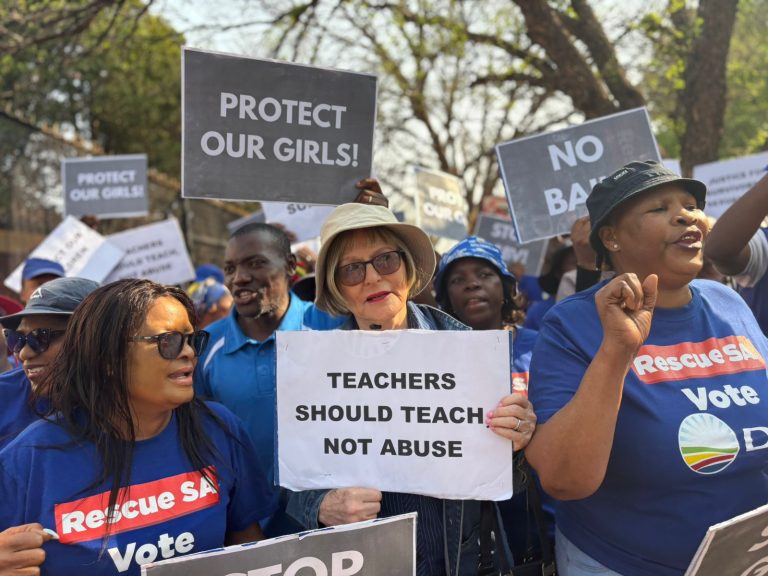
The Democratic Alliance (DA) on Thursday launched a national investigation into rising cases of statutory rape and child pregnancies, saying provincial governments must be held accountable for tackling the issue.

The move followed DA Federal Council chairperson Helen Zille’s attendance at a bail hearing in the Bronkhorstspruit Magistrate’s Court for a 53-year-old deputy principal accused of repeatedly raping an eight-year-old girl at his primary school.

The party announced in October last year that according to a response to a parliamentary question, Over 106 000 rape cases and 22,000 sexual assault cases involving children were reported over the last six financial years.

Zille said the campaign would examine whether provincial departments were meeting their obligations under the Children’s Act, which seeks to ensure that perpetrators of rape and statutory rape face prosecution.

Zille urged community members to report suspected abuse.

“The DA will not allow the rape of children to become normalised in South Africa,” she said. “We urge all people who suspect incidents of abuse to report the matter as they are required to do, to the relevant authorities.”

Zille said some community members had raised concerns that perpetrators often pay victims to remain silent. “We are aware that perpetrators often buy the silence of victims and their families to cover up their crimes. Those who succumb to such bribery and extortion are equally guilty of a crime,” she said.

The DA said it would push for psycho-social support for victims. “The DA will seek to ensure that the victims of such abuse get the psycho-social support which they need to heal to the greatest extent possible,” Zille added.

“The alleged perpetrator has the right to be presumed innocent until proved guilty,” she said, “but the fact that suspects in child rape cases make it into court is an important step in the accountability chain.”

INSIDE EDUCATION

Minister Manamela deploys stabilisation team to address College of Cape Town governance crisis

By Levy Masiteng 

The Minister of Higher Education and Training (DHET), Buti Manamela, has assured the Portfolio Committee on Higher Education that his department will address governance and management disputes at the College of Cape Town (CCT).

In a statement, the DHET said the stabilisation team is aimed at restoring order and protecting the institution.

Manamela said the team’s mandate includes conducting a fact-finding process into governance and leadership disputes, mediating between the council, principals and deputy principals, and recommending corrective steps to his office. 

“This intervention is not about taking sides. It is about restoring order, protecting the institution, and ensuring that students are not the collateral damage of leadership conflicts.

“Our priority is to stabilise governance, safeguard teaching and learning, and build confidence in the College’s future,” Manamela said.

The duty of ensuring CCT is brought to order, will be assigned to a respected retired judge or senior advocate with support from experts in labour relations and higher education governance. 

The team is expected to begin its work within seven days and conclude within 45 days.

During this period, all new disciplinary processes involving CCT’s principal, the council chairperson, and the deputy principals will be suspended to prevent further escalation.

The intervention follows persistent tensions among senior managers, resulting in weak governance, low staff morale, and disruptions to academic programmes. 

Committee spokesperson, Tebogo Letsie welcomed the department’s interventions under Section 46 of the Continuing Education and Training Act, 16 of 2006. 

During the committee meeting, members said they were alarmed by CCT’s challenges, after it was revealed that divisions within management escalated after the appointment of the principal, sparking a prolonged power struggle.

“The ongoing instability at CCT cannot be allowed to compromise the academic success of students,” said Letsie.

The director-general of the DHET, Nkosinathi Sishi, clarified that the principal is facing 21 charges, not 300 as alleged. 

 “We welcome the decisiveness on this matter, as it was evident that the principal regarded this institution as his own until we called him to order. Such attitudes have no place in government institutions that are funded by the taxpayers of this country,” Letsie said. 

Manamela said his department will report back to the committee within two months on the progress and outcomes of the stabilisation team. 

“As the committee we are hopeful that the Minister will remain firm in his decision and report back within two months on the progress and outcomes of the stabilisation team, as promised”, Letsie said. 

INSIDE EDUCATION

TUT wins top international prize for Solar Car Project

By Phumla Mkize

The Tshwane University of Technology (TUT) Solar Car Project Team has been awarded the prestigious International Council of Academies of Engineering and Technological Sciences (CAETS) Communication Prize for 2025. 

TUT was announced as the winner on 10 September 2025 at the annual CAETS Conference underway in Brisbane, Australia, for the submission that captured innovation and excellence in TUT’s Solar Car Project, dubbed SunChaser.

 TUT’s entry titled “Sustainable Automotive Technologies: a TUT Case Study” stole the hearts of the judging panel to scoop the US$5 000 prize, beating finalists from China, India, the US, the Netherlands, the UK, Australia, Poland, Mexico and Uruguay.

The inspirational five-minute video is not only a spectacle of engineering and technological feats used in SunChaser models including the latest model, SunChaser 4, but also highlights the role of science and technology in solving societal challenges. It is also a masterclass in building student capacity while engaging communities and inspiring future engineers and technologists. 

Produced by Dr Christian Oosthuizen, Senior Mechatronics Engineering Lecturer and Prof Ben van Wyk, Deputy Vice-Chancellor for Teaching, Learning and Technology, it won by a unanimous decision of the judging panel comprising CAETS members from Australia, China, India, the Netherlands, Nigeria and Uruguay. 

According to Prof Van Wyk, the Solar Car Project is a story of resilience, innovation and engineering excellence. “It is a call to the next generation to push boundaries, embrace sustainable technology and reimagine the future of mobility,” he said.

The winning video features Prof Van Wyk; Dr Oosthuizen, who is also Co-Manager of the Solar Car Project; Cleo-Ann Manamela, third-year mechanical engineering student and Solar Car Project member; Johannes De Vries, Electrical Engineering Technologist and Co-Manager of the Solar Car Project; and Andile Dlamini, Solar Car driver and third-year mechanical engineering student. 

“It is a proud moment for TUT and a demonstration of the power of science, technology and engineering to inspire,” said Prof Mxolisi Shongwe, Executive Dean of the Faculty of Engineering and the Built Environment.  

Prof Tinyiko Maluleke, Vice-Chancellor and Principal, said the TUT Solar Car is testimony to the University’s commitment to environmental sustainability. 

“Four models and several national as well as international accolades later, we can say, without any fear of contradiction, that the TUT Solar Car model is an engineering masterpiece. And the accolades do not come bigger and better than the International Council of Academics of Engineering and Technological Sciences (CAETS) Communication Prize,” he said.

“My chest swells with pride when I consider that for a decade at least, TUT engineers and their students have been meticulously constructing and improving the SunChaser. Congratulations to the team of staff and students!” said Prof Maluleke.

The CAETS Communication Prize is awarded to “the most outstanding audio-visual communication of excellence and innovation in engineering and technological science”. Entries for the prize are accepted through member country academies. TUT’s entry was submitted by the South African Academy of Engineering. 

Explaining the role of the award, CAETS said it aims to encourage technological scientists and engineers worldwide to communicate in a simple and engaging way with general audiences, particularly young people and students. 

“This is done through a competitive selection of short videos, each under five minutes, explaining the societal significance of technological advances and engineering achievements. Such videos have the dual aim of inspiring students to follow careers in engineering and technological sciences, and educating the general public on the impact that engineering and technological sciences have on their lives and future,” said the Council in the entry criteria. 

Tshwane University of Technology

Western Cape government supports matric learners in preparation for 2025 final exams

By Palesa Nguqu

With just 40 days remaining before the start of the 2025 National Senior Certificate (NSC) exams, thousands of matric learners across the Western Cape are preparing for their final exams.

The Western Cape education department (WCED) has implemented a range of support initiatives, from intensive revision classes during winter and spring holidays to innovative digital learning resources to help students succeed. 

WCED spokesperson, Kerry Mauchline said, “Our dedicated teachers and officials have worked tirelessly to ensure our matric learners are fully prepared for the upcoming exams, with extensive revision classes and support booklets to empower our students to excel in their final exams.”

A key part of these preparations was the WCED’s #BackOnTrack Winter School, which saw nearly 22,000 matric students attending during the mid-year holidays.

These intensive revision sessions, held across eight districts in the province, provided learners with valuable opportunities to strengthen their understanding of key subjects and concepts. 

The winter school was aimed at giving students a head start before the final exams, boosting their confidence and readiness for the challenging exam season ahead.

WCED also provided a comprehensive range of digital learning resources with study guides and online learning platforms, to support learners beyond the classrooms.

These tools are designed to enhance self-study and allow students to access revision materials anytime, anywhere.

As the exams approach, the department emphasised the importance of supporting students’ wellbeing alongside academic preparation recognising the stress that comes with the period.

The WCED said they’ve offered wellness programmes and counseling services to enable learners to manage pressure and stay focused.

“The success of our matric candidates depends not only on their knowledge but also on their mental and emotional resilience, and the collective effort of teachers, parents and communities remains vital in guiding them through this crucial time,” Mauchline said. 

INSIDE EDUCATION

A partnership that nourishes children and builds futures

0

By Johnathan Paoli

When children arrive at school hungry, the simple act of learning can feel like an impossible task.

Across South Africa, malnutrition and stunting remain among the most pressing challenges facing young learners, stripping them of opportunities and leaving long-term cognitive gaps that are difficult to repair.

It is against this backdrop that two faith-based non-profit organisations, The Love Trust and Soul Food, have renewed their commitment to a powerful partnership that addresses both sides of the equation: education and nutrition.

Soul Food CEO Thabo Maluleke confirmed that his NPO has always believed that proper nutrition is a human right.

“It is shocking that 1.7 million children in South Africa, about 27%, are already stunted. Many of them were never given a fair chance at proper nutrition. By narrowing our focus to children between 0 and 10 years old, we are targeting the crucial window where we can make the biggest difference,” Maluleke said.

The collaboration, which began in 2019, has been given fresh momentum following Mandela Day 2025, when Soul Food pledged to provide daily breakfast meals indefinitely to learners at The Love Trust’s Nokuphila School in Thembisa.

The commitment reflects a shared belief that food and education are inseparable in the fight to break the cycle of poverty.

Soul Food has grown into one of the largest hunger relief organisations in South Africa, distributing between 1.5 and 1.7 million meals every month.

Through its network of more than 1,000 centres, the organisation feeds over 70,000 children daily.

Central to this approach are Soul Food’s flagship meal products, designed specifically to tackle childhood hunger and malnutrition.

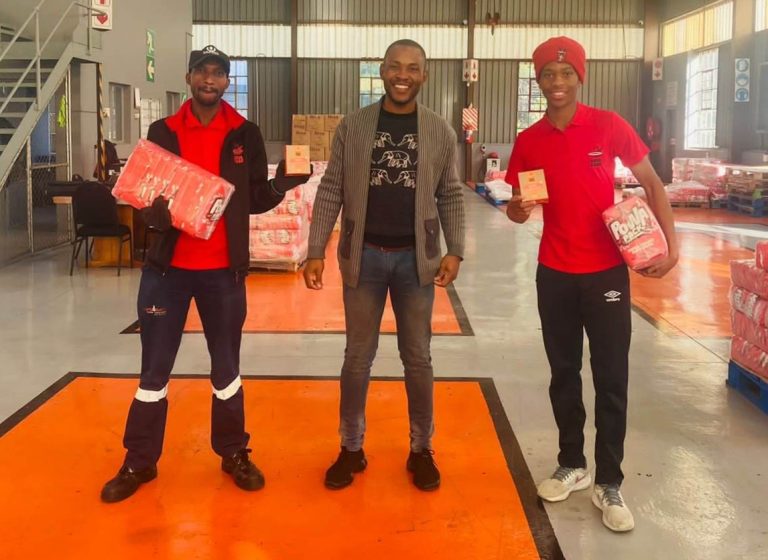
The POWA Pack, a sorghum-based porridge rich in protein and nutrients, delivers 25 meals from a single 1kg bag and can be prepared as porridge or a shake.

Complementing this is the POWA Loda, a soy-based lunch meal with rice and spices, providing children with a hearty, balanced midday option.

Both products were developed through extensive research and collaboration with food scientists, manufacturers, and academic partners.

In addition to producing its signature meals, Soul Food plays a crucial role in reducing food waste.

Working with retailers such as Woolworths and Checkers, as well as farming partners, the organisation rescues surplus consumable food that is close to expiration.

Trained food pickers ensure that only safe, quality food is redistributed, preventing millions of kilograms of food from being wasted each year.

For The Love Trust, which operates the Nokuphila School in Thembisa and runs a teacher training programme, the renewed partnership with Soul Food represents more than just food provision.

By ensuring that learners receive consistent, nutritious meals, the organisation can redirect resources to other pressing needs such as STEM education, classroom resources, and safe transport.

“Our partnership with The Love Trust is a no-brainer. They are giving children the gift of education, and we ensure that they are nourished enough to learn. Together, we can go over and above a bowl of food and offer children a real future,” Maluleke said.

Founded in 2009, The Love Trust has established itself as a cornerstone of community-driven education in South Africa.

Its Nokuphila School offers quality Christian education to vulnerable children from grades 000 to grade 8, while its teacher training programmes empower disadvantaged women to qualify as early childhood development educators.

The organisation’s vision is to nurture future generations of service-oriented leaders who combine academic excellence with moral and spiritual integrity.

Looking forward, Soul Food is continuing to invest in innovation that could further transform nutrition for South Africa’s children.

The organisation is currently developing POWA Baby, a meal designed for infants aged six months to two years to combat malnutrition from the earliest stages of life.

It is also rolling out NUTRI TRACK, a system that will monitor children’s health and nutrition in real-time, allowing for targeted interventions and improved outcomes.

For both organisations, the mission extends beyond immediate relief to long-term empowerment.

“If we can keep a child in school, learning with energy and dignity, then we have done more than feed them; we have invested in South Africa’s future,” Maluleke said.

INSIDE EDUCATION

South Africa’s student debt trap: two options that could help resolve the problem

By Michele Van Eck

Education is widely regarded as the road to a better life. Yet the rising cost of tertiary education means many students can only go to university if they get financial aid, bursaries or loans.

South Africa’s National Student Financial Aid Scheme (NSFAS) offers students bursaries or loans which provide allowances for tuition and registration fees, books, travel and accommodation. But this type of funding applies only under specific and limited conditions. Many students fall outside its scope.

Students who are not enrolled for a qualification that is approved by the Department of Higher Education, or who wish to study for a second undergraduate qualification, or who are studying at private institutions, don’t qualify to get the funding.

The result is that many students can’t keep up with paying their university fees. In 2025 South African universities collectively held about R9.3 billion (US$528 million) in student debt that had remained unpaid since 2023.

Universities have been trying different methods to pressure students and graduates to pay outstanding student debts. This has included withholding of degree certificates, academic transcripts and marks.

Universities require funding to operate effectively, pay staff and maintain infrastructure. But withholding academic documents from indebted students may prevent them from securing employment – the very means by which they could repay their debts. These practices, while commercially defensible, often have the opposite effect. According to Unesco, “student loans generally have catastrophic effects for students and families across the world”.

It seems reasonable to conclude that student debt collection practices may entrench poverty and make it harder for graduates to get jobs.

From recent court cases, it appears that this issue is especially pronounced in the legal profession. Law graduates face additional scrutiny, as admission to the profession requires not only academic qualifications but also proof of moral character. The Legal Practice Act 28 of 2014 mandates that candidates be “fit and proper” individuals, embodying values such as honesty, integrity and reliability. Outstanding debt may be seen as a contrast to the values of honesty and integrity.

Fulfilling financial obligations can indeed have a bearing on ethics (a field I study as a legal scholar). But as I argue in a recent paper, it’s necessary to distinguish between graduates who are unwilling to pay and those who are genuinely unable to.

I also propose a couple of ways this could be achieved so that universities get their money and graduates get their start in working life.

How universities collect debt

Unlike South Africa, some countries have taken steps to deal with the impact of student debt.

My paper highlights that, in the United States, several states don’t allow universities and colleges to withhold degree certificates and transcripts (records of academic activity) over unpaid fees. They recognise that those debt-collection practices hinder employment and make inequality worse. Instead, they promote other strategies, like repayment plans related to income, or policies for how to treat students who are experiencing hardship.

In the United Kingdom, universities are advised not to use academic sanctions to recover non-academic debts, such as accommodation fees. Consumer protection laws treat students as consumers, allowing them to challenge unfair contractual terms. If a university’s contract includes provisions to withhold degrees for unpaid fees, students may contest these clauses as unjust.

South Africa lacks similar legal safeguards. Each university sets its own rules. These range from students not being able to graduate unless all fees are paid, to the withholding of certificates from students not in good financial standing, and even preventing students from viewing their examination scripts if they owe money. Some examples may be found at the University of the Free State (page 27), University of Pretoria (page 16) and University of the Witwatersrand.

Law students face additional hurdles

In the legal profession, financial responsibility is often tied to ethical conduct. Lawyers manage trust accounts, client funds and sensitive legal matters. Integrity is non-negotiable.

However, the inability to pay student debts is not inherently dishonest. Some students fall into debt due to circumstances beyond their control, like family obligations, socio-economic conditions, unemployment or the sheer cost of education.

South African courts have grappled with outstanding student debts when it comes to admitting law graduates to the profession. The courts’ approach has been inconsistent.

In Ex Parte Tlotlego the court emphasised that poverty should not bar entry into the legal profession. It said courts should not require proof of debt repayment arrangements, which would be unfair to students from disadvantaged backgrounds.

But in Ex Parte Makamu the court found that a law graduate must still demonstrate how they intend to settle their debts to satisfy the ethical standards of honesty and integrity.

More recently, Ex Parte Galela reinforced this view. The court declined the application for admission because it wasn’t clear why the law graduate hadn’t paid off their debt. It suggested that financial irresponsibility could reflect poorly on the graduate’s character.

The courts’ approach and general student debt-collection practices often fail to differentiate between students who cannot pay and those who choose not to. This distinction is vital. A student who ignores their debt without justification may raise ethical concerns. But a student who is willing to pay yet lacks the financial means should not be penalised.

Solutions

The solution lies in balancing the financial interests of universities with the socio-economic realities of students. Student debts must be repaid, but repayment mechanisms must also be fair and sustainable.

There have been attempts to find a solution, such as the draft Student Relief Bill, which proposes setting up a Student Debt Relief Fund. But that might place unsustainable pressure on the economy.

I have another proposal: allowing graduates to receive their degree certificates regardless of outstanding debt, along with two legislative interventions. These are:

  1. Automatic garnishee orders: upon graduation, an automatic garnishee order (a court order directing an employer to deduct a certain amount from an employee’s income) could be placed on future salaries of a graduate. This would ensure that student debt is repaid over time.
  2. Amendment to the Prescription Act 68 of 1969: This could exclude student debt from prescribing (becoming too old to collect). Normally, such a debt would prescribe after three years. An amendment would allow universities to recover debts for the duration of graduates’ employment, not just within three years.

These measures would uphold the financial sustainability of universities while protecting the dignity and future employment prospects of graduates.

The Conversation