Home Blog Page 6

UKZN professor wins inaugural global dermatology award

0

Staff Reporter

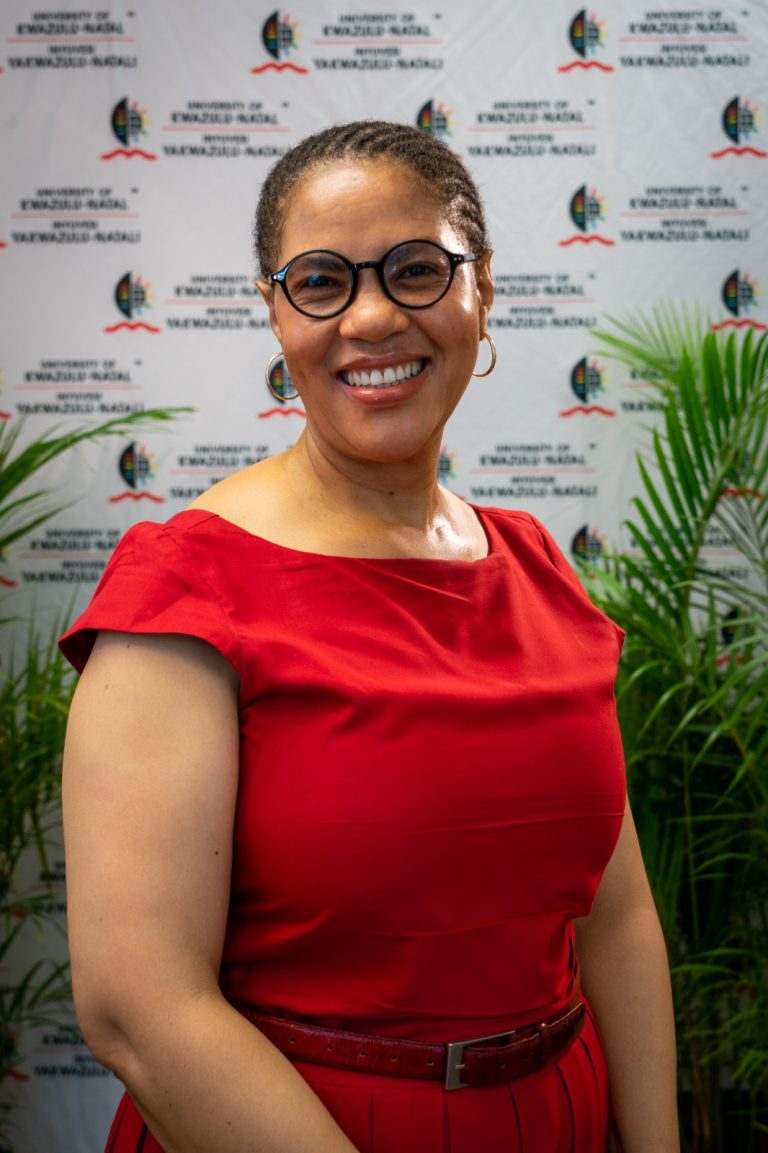
The University of KwaZulu-Natal’s head of dermatology, Professor Ncoza Dlova, has been named one of the inaugural recipients of the Beiersdorf Icons of Care Award.

The prize recognising leaders in dermatology for achievements, innovation and dedication that have advanced skincare.

UKZN said on Monday that Dlova was selected after a review of more than 100 dermatologists from around the world and was recognised for her sustained contribution to dermatology across scientific research, mentoring and patient care.

ALSO READ: DA wants ETDP SETA hearing over R637.6m audit findings

She will be formally honoured at the Beiersdorf Icon Exchange event at the Denver Art Museum on Thursday, 26 March.

A full professor and the immediate past dean of UKZN’s School of Clinical Medicine, Dlova was the first African dean in the school’s 73 year history. Her academic and research interests include ethnic skin and hair, global health and medical education.

Dlova has authored more than 135 scientific publications and holds a B rating from South Africa’s National Research Foundation. She serves on several international dermatology boards and societies.

Her honours include membership of the American Dermatology Association, the Maria Duran Award from the International Society of Dermatology, and a board position at the International League of Dermatology Societies, where she represents Africa as the first fully elected African representative in the organisation’s 89 year history.

More recently, she has received the Gold Award from the South African Medical Research Council in 2024, the Fellowship in Arts and Sciences Award from the South African Medical Association in 2024, and the UKZN Living Legends Award in 2023, among other honours.

ALSO READ: Ramaphosa: Mankweng operation shows what SA’s health system can achieve

“I’m truly grateful and humbled by this recognition. I hope that through this accolade, I can inspire and encourage the next generation to dream bigger, work harder, and believe in the impact they can make,” said Dlova.

UKZN Deputy Vice Chancellor and head of the College of Health Sciences Professor Busisiwe Ncama said, “Congratulations on this wonderful recognition. Looking at the criteria, you truly deserve it. Advancing scientific knowledge and building the next generation of dermatologists has been your signature. May you keep growing from strength to strength.”
INSIDE EDUCATION

DA wants ETDP SETA hearing over R637.6m audit findings

0

By Lebone Rodah Mosima

The Democratic Alliance has asked Parliament’s higher education committee to summon ETDP SETA’s leadership after Auditor-General findings showed serious record-keeping and internal control failures, with R637.6 million in grant expenditure allegedly not being substantiated.

DA Deputy Spokesperson on Higher Education and Training Karabo Khakhau said that the Auditor-General of South Africa’s findings reflected a “shocking failure” of governance regarding discretionary grants at the ETDP SETA.

“According to the Auditor-General’s findings, a staggering R637.6 million in grant expenditure could not be substantiated due to missing records, with auditors unable to confirm the validity of the spending,” Khakhau said.

The funds were intended to support critical skills development programmes, including bursaries, internships and work-integrated learning opportunities for young South Africans.

The DA’s statement comes just days after President Cyril Ramaphosa said at News24’s On The Record summit that the SETA system “must be changed”, with his office later stating that government was working to replace it with a “fit-for-purpose system” that better links training to jobs.

In her statement, Khakhau said the AG report found not only administrative failure, but a betrayal of young people who rely on SETAs to access training and employment pathways.

“At a time when South Africa faces a deepening youth unemployment crisis, such gross mismanagement undermines both economic growth and public trust.”

According to the report, performance targets were not met, with some programmes using as little as 22% of their allocated budgets.

Khakhau said the findings raised questions about whether funds were not only mismanaged but potentially misappropriated.

“Equally concerning is the apparent absence of consequence management,” she said.

“The report indicates that no consistent disciplinary action has been taken against officials responsible for irregular or wasteful expenditure.”

Khakhau further said the alleged mismanagement had entrenched a culture of impunity within an institution tasked with empowering the next generation.

She said the DA would demand full accountability from the ETDP SETA’s executive leadership as well as its board.

“We will push for a comprehensive explanation of how such a vast sum of public money could be spent without adequate records, and what steps will be taken to recover any lost funds,” she said.

Khakhau said the matter reflected the overall problems in the SETA system.

“Increasingly, the entire SETA system looks to be a massive scheme for misappropriation where billions disappear, and ANC cadres are appointed to the highest levels,” she said.

The ETDP SETA was unavailable for comment.

INSIDE EDUCATION

Ramaphosa: Mankweng operation shows what SA’s health system can achieve

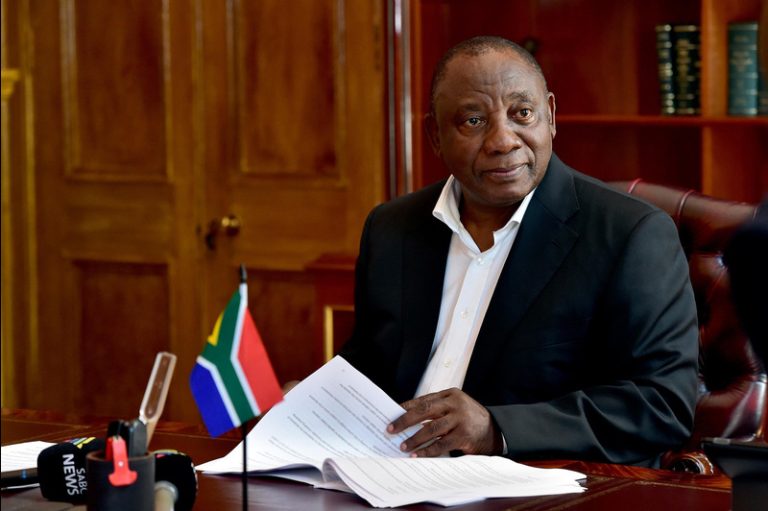
By Cyril Ramaphosa

Last week, surgeons at Mankweng Hospital in Limpopo completed a remarkable operation.

A team of doctors, nurses and other health workers successfully separated conjoined twins in a complex operation that demanded extraordinary skill and precision.

We owe the medical teams that performed the operation, that helped deliver the twins and that are now caring for them our deepest admiration and gratitude.
 
This achievement is more than a medical milestone. It is proof of what our public health system is capable of. It is a reminder that South Africa possesses world-class medical expertise, not only in the private hospitals in our cities, but also in public facilities serving communities that have historically been neglected and underserved.
 
It is also the visible outcome of sustained national investment in cultivating medical excellence. This includes heavily subsidising the country’s medical schools, providing study bursaries for needy medical students, and providing on-the-job training through the Internship and Community Services Programme.
 
And yet, for every story of excellence like Mankweng, we know there are too many South Africans who cannot access the quality healthcare they need and deserve.
 
Our Constitution guarantees every person the right of access to healthcare services. That right cannot depend on where you were born, how much you earn or where you live. A child in rural Limpopo has the same right to quality healthcare as a child in the suburbs of Johannesburg or Cape Town. 
 
Closing the gap between the constitutional promise of healthcare and the daily lived reality is precisely what motivates the National Health Insurance (NHI).

The NHI is more than a funding mechanism. It is a commitment, grounded in our constitutional values, that every South African will have access to quality health services without suffering financial hardship. It is the instrument through which we will ensure that the skills and dedication on display at Mankweng are available to all our people, regardless of their ability to pay.
 
To realise this vision, we need genuine and sustained partnerships between the public and private health sectors, as well as academic institutions, medical professionals, pharmaceutical companies, non-governmental organisations and communities. 
 
South Africa has a well-equipped and well-funded private healthcare sector, with some of the finest hospitals, specialists and medical technology on the continent.

Yet only around 16% of South Africans have access to these facilities.

By contrast, the majority of the population, some 84%, uses public health facilities. On average, the amount of money spent each year on a person who uses private health care is around five times what is spent on someone in the public sector.
 
These two parts of our healthcare system cannot continue to operate in parallel, as if serving two separate nations. They must work together in service of one nation.
 
There are few people in South Africa who can disagree with this view, and there are a great many role-players who are eager for collaboration.

They recognise that there is both a great need and much opportunity to build stronger partnerships in health care. 
 
We should be doing more to share skills and knowledge across the public-private divide, as happens when private specialists contribute time to public hospitals.

It means investing in the training and retention of healthcare workers so that public facilities do not continue to lose their best people to private employers or to opportunities abroad. 
 
As we prepare to implement the NHI, we are already making significant investments to strengthen our public health infrastructure.

We are building and refurbishing clinics and hospitals, expanding our community health worker programme, working to ensure the availability of essential medicines, introducing digital systems and improving the management of facilities.
 
At the heart of all of this are the women and men who dedicate their lives to healing others. The surgeons at Mankweng did not separate the conjoined twins for recognition or reward, but because they understood their responsibility as health professionals.

We owe it to every healthcare worker to give them the support, tools and working conditions they need to do their vital work.
 
The great achievement at Mankweng Hospital has shown us what is possible. It has also reminded us of what is necessary: a health system that serves every South African with excellence, compassion and dedication.

Equal access to quality health care must be the standard we set and the constitutional promise that we keep.

Cyril Ramaphosa is President of Soth Africa.

INSIDE POLITICS

Weekend Roundup | ‘Intimidation culture’ choking Services SETA, Gauteng launches specialised sports school, and more

0

The administrator of the Services Sector Education and Training Authority (SETA), Lehlogonolo Masoga, has condemned what he described as a culture of intimidation and victimisation of whistleblowers, warning that it undermines governance and cripples the entity’s performance.

Masoga said the climate discourages employees from speaking out against wrongdoing, allowing corruption and maladministration to persist unchecked.

“You can imagine that if employees are aware that there is a culture of intimidation in the organisation, it suppresses open engagement,” he said on Friday.

Click on the link below to read the full story:

ALSO READ: Gauteng launches specialised sports school at Vorentoe

Gauteng Education MEC Matome Chiloane on Thursday launched the Vorentoe Sports School of Specialisation in Johannesburg, with the province using the event to showcase its 38th specialist school and a new private-sector investment in the campus.

The Gauteng Department of Education said ION Holdings would build new classrooms, upgrade parking and sports facilities, and contribute towards a new pavilion at the school, in efforts to link academic performance with elite sport development.

Chiloane said the launch marked “a massive milestone for education and school sports” in the province.

ALSO READ: Gina tells funders to explain rejected start-up applications

Deputy Minister of Science, Technology, and Innovation Nomalungelo Gina has accused government-owned funding agencies of stifling innovation by rejecting start-up applications without feedback.

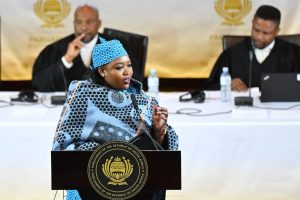
Speaking at the opening of Innovation Week at Nasrec, she said the state funders needed to stop dismissing applications without guidance and instead help entrepreneurs improve and resubmit them.

“To the funders, especially government-owned funding instruments like the Innovation Fund, the Industrial Development Corporation, the Public Investment Corporation, the National Empowerment Fund, and others, please stop this practice of rejecting people’s applications without informing them where their applications or business plans fell short,” Gina said.

Click the link below to read the full story:

INSIDE EDUCATION

‘Intimidation culture’ choking Services SETA, administrator warns

By Akani Nkuna

The administrator of the Services Sector Education and Training Authority (SETA), Lehlogonolo Masoga, has condemned what he described as a culture of intimidation and victimisation of whistleblowers, warning that it undermines governance and cripples the entity’s performance.

Masoga said the climate discourages employees from speaking out against wrongdoing, allowing corruption and maladministration to persist unchecked.

“You can imagine that if employees are aware that there is a culture of intimidation in the organisation, it suppresses open engagement,” he said on Friday.

“Even when people see wrongdoing, they keep quiet because they fear severe punishment.”

He added that addressing these challenges is central to the administration’s mandate.

“These are some of the issues the administration seeks to address. Administration has been brought in as an instrument to respond to the challenges identified, including improving performance,” he said.

Masoga was speaking to the media at the Government Communication and Information System (GCIS) in Pretoria, following a mid-term progress report by the Higher Education Minister on three SETAs placed under administration — Services SETA, Construction SETA and Local Government SETA.

His remarks come amid scrutiny over the dismissal of three senior Services SETA employees between 2017 and 2020, who were accused at the time of enabling irregularities.

Masoga rejected that characterisation, saying the employees were, in fact, whistleblowers who had raised concerns about alleged corruption and maladministration within the entity.

Lehloma Ramajoe, a former senior manager for special projects who later moved to chamber operations, was suspended on 20 July 2019 and subsequently charged following an investigation by a firm of attorneys.

According to Masoga, Ramajoe had made protected disclosures relating to alleged maladministration involving several individuals.

A review of records corroborated his account, and it was determined that he suffered “occupational detriment” as a result.

He is now eligible for remedial action in terms of Section 193.

Similarly, Thandi Mkhize, who served as a senior manager for quality assurance from 2002 until her dismissal in 2017, was found to have been unfairly targeted.

She had been charged with misconduct, including allegedly sharing information with union members and inciting resistance to performance management changes.

“Based on the facts before me, it has been concluded that Mkhize was deliberately targeted,” Masoga said, adding that she will be compensated.

The third case involves Tshepiso Mofokeng, a chamber manager since 2008, who was dismissed in August 2019 for allegedly failing to perform her duties.

However, a review found that she had been unfairly victimised after raising concerns about irregularities within the entity. She will also receive compensation.

Masoga said these decisions form part of a broader effort to restore governance and accountability at Services SETA.

“Restorative justice incorporates, among other elements, active participation by affected parties, taking responsibility and a commitment to repairing harm, as well as a victim-centred approach,” he said.

“It is for this reason that, on behalf of Services SETA, I take full responsibility for the actions and inactions of my predecessors and commit to dispensing justice to the victims of our previous decisions.”

He added that disciplinary and legal action against individuals implicated in corruption and financial mismanagement is under way, with investigations being conducted by the Public Protector and the Hawks.

While some suspects have been identified, Masoga said names would not be disclosed until cases are finalised.

“Until someone is found guilty, it would be inappropriate to publicly name individuals. We will wait for the appropriate time,” he said.

INSIDE EDUCATION

Gauteng launches specialised sports school at Vorentoe

0

By Lebone Rodah Mosima

Gauteng Education MEC Matome Chiloane on Thursday launched the Vorentoe Sports School of Specialisation in Johannesburg, with the province using the event to showcase its 38th specialist school and a new private-sector investment in the campus.

The Gauteng Department of Education said ION Holdings would build new classrooms, upgrade parking and sports facilities, and contribute towards a new pavilion at the school, in efforts to link academic performance with elite sport development.

ALSO READ: Gina tells funders to explain rejected start-up applications

Chiloane said the launch marked “a massive milestone for education and school sports” in the province.

Vorentoe now joins Gauteng’s growing network of Schools of Specialisation, which are designed to develop talent in targeted disciplines while keeping learners in mainstream public education.

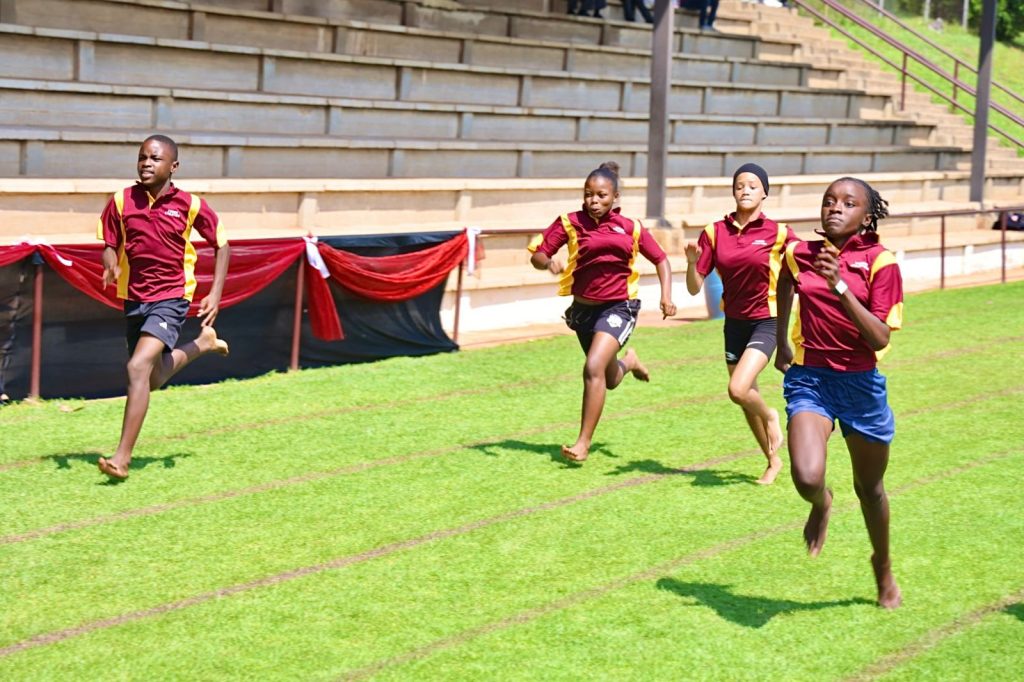
Vorentoe offers 11 sporting codes, including volleyball, hockey, tennis, netball, chess, cricket, soccer, rugby and athletics.

It’s facilities include a hockey field, cricket oval and tennis and netball courts.

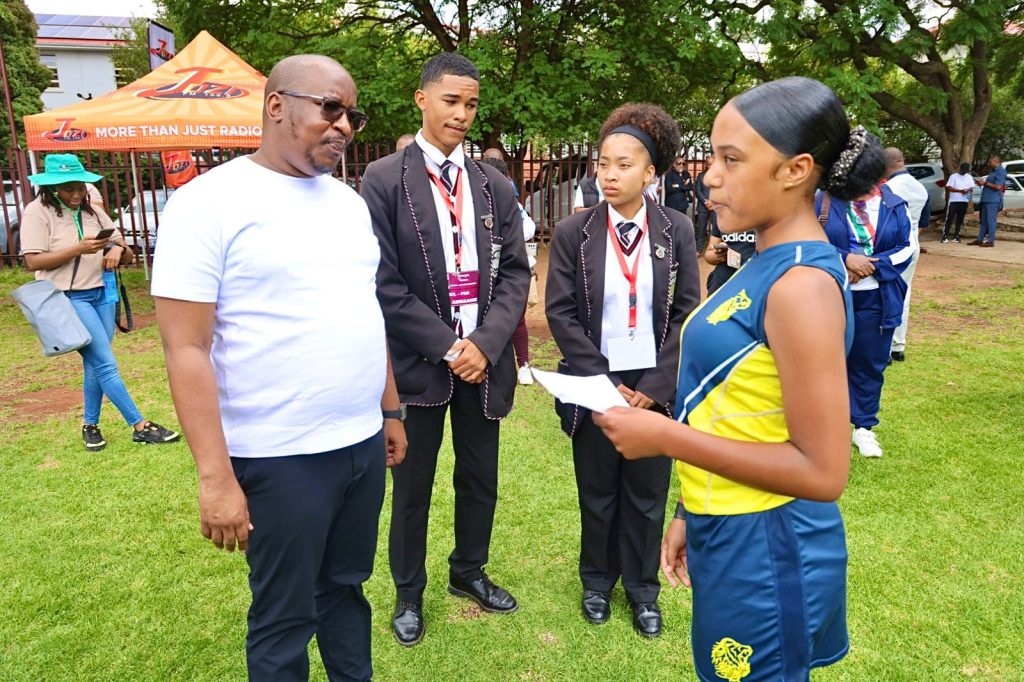
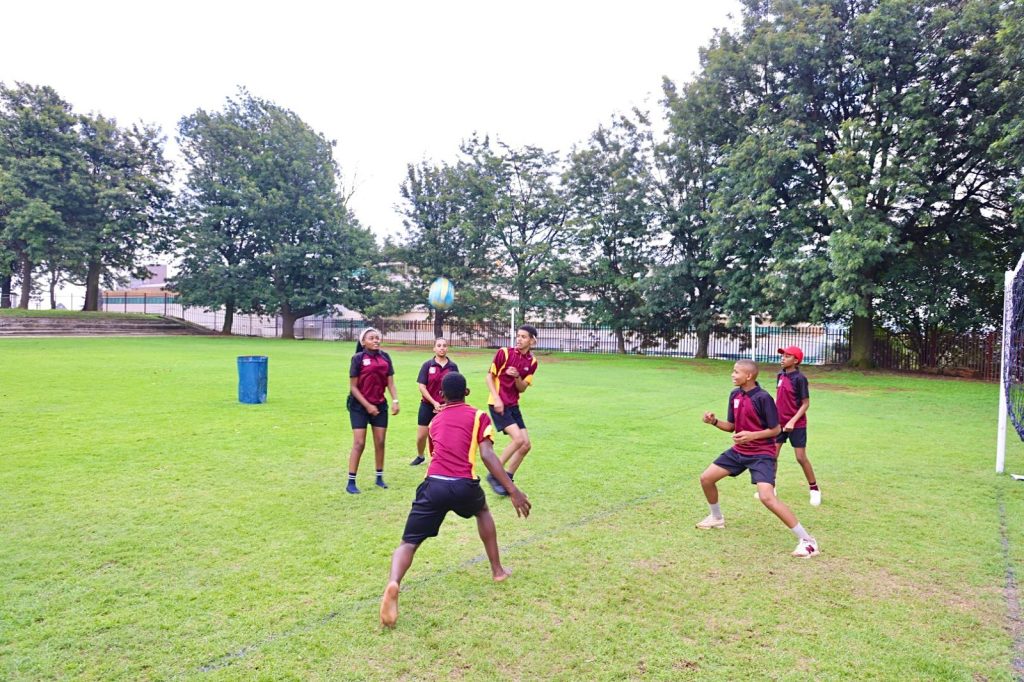
During the launch, learners staged demonstrations across several sporting codes, while also presenting a custom-built sports app developed at the school.

Vorentoe has produced high-profile athletes including Banyana Banyana’s Amanda Nthandi and former Kaizer Chiefs player Itumeleng Shopane.

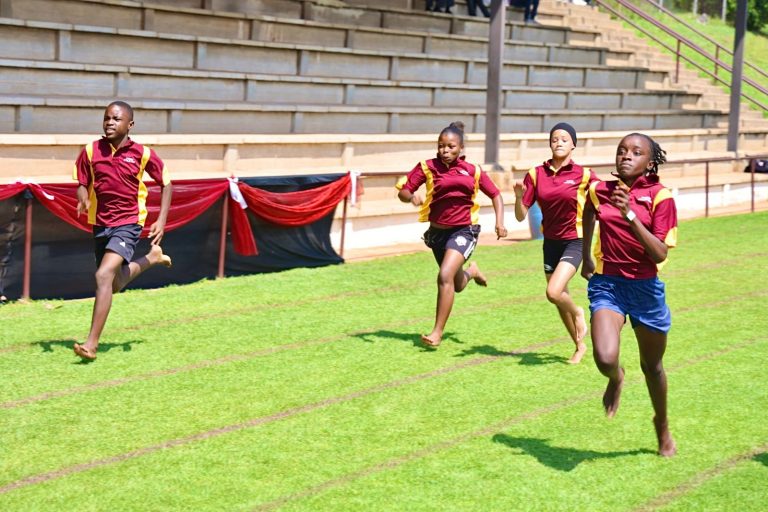
The boys’ cross-country team had been North Vaal champions for 15 years, while the girls’ team had won 13 titles in the last 15 years.

ALSO READ: Ramaphosa calls for overhaul of SETA system

According to the department, Vorentoe posted a 94.1% matric pass rate in 2024 and improved that to 94.9% in 2025.

It said that the school would introduce sports-related subjects such as Sports Science and Sports Management, while learners would also be able to leave school with additional accredited skills through a Multi-Certification Skills Programme.

“Vorentoe Sports School of Specialisation is not just an institution, it is a beacon of hope, a centre of excellence, and a symbol of what can be achieved when knowledge, sport, and community come together,” Chiloane said.

“Let us continue to build on this proud legacy, ensuring that Vorentoe Sports SOS remains the key that unlocks success for generations to come.”

INSIDE EDUCATION

Gina tells funders to explain rejected start-up applications

0

By Lebone Rodah Mosima 

Deputy Minister of Science, Technology, and Innovation Nomalungelo Gina has accused government-owned funding agencies of stifling innovation by rejecting start-up applications without feedback.

Speaking at the opening of Innovation Week at Nasrec, she said the state funders needed to stop dismissing applications without guidance and instead help entrepreneurs improve and resubmit them.

ALSO READ: Vaal crash driver Ayanda Dludla revives bail bid

“To the funders, especially government-owned funding instruments like the Innovation Fund, the Industrial Development Corporation, the Public Investment Corporation, the National Empowerment Fund, and others, please stop this practice of rejecting people’s applications without informing them where their applications or business plans fell short,” Gina said.

“As government funders, we have failed so many people; we have shut down so many dreams and prevented potential innovations because we have no care or patience to provide guidance, despite the business sense an application makes,” she said. “Let’s do better for our people.”

“Start-ups may not be good at paperwork, and hiring consultants to handle it can be expensive,” she said.

ALSO READ: New Joburg CBD tech campus bets on digital jobs for unemployed youth

She said the department’s 2022-2032 decadal plan aimed to raise gross expenditure on research and development to 1.5% of gross domestic product from about 1%.

Current levels were inadequate, she said.  

“For some time now, R&D funding has been underfunded,” Gina said, adding that industries were not investing enough in research and development.

Universities had also seen a decline in R&D because of revenue pressure, she said.

She said South Africa faced a persistent gap between innovation and commercial uptake, with universities and science bodies sitting on prototypes that were ready for use but not being absorbed by the private sector.

ALSO READ: 40 Mpumalanga learners hospitalised after suspected snack poisoning

Gina said government was trying to close those gaps through the Innovation Fund, administered by the Technology Innovation Agency, which is meant to de-risk early-stage technologies and attract private venture capital.

She said that the country faced a skills mismatch as new technologies, including artificial intelligence, reshaped the economy.

“We have a skills mismatch as a country; more graduates are unemployed because they have skills that this gig economy doesn’t really need,” Gina said.

INSIDE EDUCATION

Ramaphosa calls for overhaul of SETA system

0

By Akani Nkuna

President Cyril Ramaphosa has called for a sweeping overhaul of South Africa’s Sector Education and Training Authority (SETA) system, describing it as ineffective and unfit for purpose.

Ramaphosa said the current framework should be replaced with a dual model that integrates academic learning with skills development and workplace-based training.

He added that South Africa’s advanced financial sector could position the country as a global hub for financial services.

ALSO READ: ATM calls for probe after reported crowning of Nigerian Igwe in Eastern Cape

“The SETA system has not served us well at all, it must now be changed. We must build from our strength as a country to create jobs for the economy of the future. We have one of the most sophisticated financial systems in the world, we can position SA as a destination for financial services,” he said.

Ramaphosa was speaking at the News24 Record Summit at the Cape Town International Convention Centre.

The summit is aimed to find practical solutions that will help create five million jobs in 10 years.

The summit has brought together local and international experts to explore strategies for economic growth and job creation, and to support the objectives of the National Dialogue.

His remarks come amid mounting criticism of SETAs over governance failures, poor performance and high administrative costs.

ALSO READ: Mkhwanazi says prison letter and Matlala meeting strengthen political interference claims

Several SETAs have been placed under administration due to financial mismanagement.
The Department of Higher Education and Training (DHET) has recently begun a process to merge some SETAs in a bid to improve efficiency, address skills shortages and reduce operational costs.

Ramaphosa said South Africa’s high unemployment rate is rooted in structural factors linked to apartheid-era spatial planning and economic exclusion, which continue to disproportionately affect Black youth.

He stressed, however, that historical injustice should not be used to excuse government shortcomings, calling for intensified efforts to expand economic opportunities, particularly for young people.

“South Africa’s high unemployment is not a result of a single failure. It is the outcome of deep historical, and policy linked factors interacting overtime. To understand it properly, you have to look at it more holistically and that means we have got to look back at where it originates from,” said Ramaphosa, adding that the ambition to create five million jobs over the next decade represents a defining moment for the country.

“Creating jobs is the most and foremost priority of our government. Our single greatest challenge is to translate positive economic momentum into jobs for millions of South Africans who today remain unemployed. A job is more than just an income, it is about dignity, confidence, a sense belonging and an ability to contribute to our society.”

Ramaphosa also called for stronger coordination across government, saying improved intergovernmental cooperation is critical to boosting economic efficiency and inclusivity.

ALSO READ: Court clears way for SAPS firearms inspection at Mathibeli security company

He said the government is examining international models to restructure the energy sector, describing it as a key driver of future growth.

“And it is when we all work together that we will be able to build a very strong platform for growth in a wide range of sectors, from green, steel to new energy vehicles. We have a thriving agricultural sector that can create a million and more jobs, and we will be focusing on that very, very closely,” said Ramaphosa.

INSIDE EDUCATION

Vaal crash driver Ayanda Dludla revives bail bid

0

Vaal crash driver Ayanda Dludla revives bail bid

By Charmaine Ndlela

The driver accused of causing the crash that killed 14 schoolchildren in the Vaal in January is to apply for bail, the Vanderbijlpark Magistrate’s Court has heard.

Ayanda Dludla, 22, had previously told the court that he had chosen to remain in custody while investigations continued.

Dludla faces 14 counts of murder and three counts of attempted murder following the 19 January crash on the R553 near Vanderbijlpark.

ALSO READ: Makgori learners set to return after parents protests over teachers, infrastructure

The scholar transport minibus he was driving, carrying 16 pupils, collided with a truck, killing 12 children at the scene, while two others later died in hospital.

The state has also charged Dludla with several transport-related offences, including allegedly driving without a valid professional driving permit (PDP) and operating an unlicensed vehicle.

ALSO READ: 40 Mpumalanga learners hospitalised after suspected snack poisoning

His lawyer, Reward Nxumalo, told the media that Dludla is remorseful and struggling to come to terms with the tragedy. Nxumalo also said that his client requires psychological intervention, as he is finding it difficult to cope while in custody.

The bail hearing is set for 31 March.

INSIDE EDUCATION

New Joburg CBD tech campus bets on digital jobs for unemployed youth

0

By Charmaine Ndlela

The Maharishi Invincibility Institute on Wednesday opened a new technology campus in Johannesburg’s CBD, saying it aims to train unemployed youth for work in fields such as artificial intelligence, cybersecurity and data science.

Housed in a newly unveiled 10-storey, 10 065m² campus at 56 Main Street in Marshalltown, the institute aims to equip unemployed youth with high-demand digital skills while contributing to the revitalisation of the inner city.

ALSO READ: Makgori learners set to return after parents protests over teachers, infrastructure

The launch forms part of the Institute’s broader “Education Town” vision — an urban renewal initiative focused on transforming the CBD into a safe, vibrant hub for learning that leads directly to employment opportunities.

MNIT will focus on preparing students for careers linked to the Fourth Industrial Revolution, offering training in areas including artificial intelligence, cybersecurity, data science, cloud engineering and digital skills, as well as financial and professional services such as insurance, banking and financial markets, in partnership with industry leaders.

Delivering his keynote address during the launch, CEO and co-founder Dr Taddy Blecher said the initiative builds on the institute’s long-standing mission to empower young people through education.

“This is more than a building; it is a promise to our youth that they will not be left behind by the AI revolution,” Blecher said.

“This building is not just infrastructure, it is a centre for accelerating tech talent and giving young people access to opportunities that were previously out of reach.”

ALSO READ: 40 Mpumalanga learners hospitalised after suspected snack poisoning

“We are training youth in cutting-edge fields like artificial intelligence, cybersecurity and data science, because these are the skills that will define the future of work.”

According to the institute, it has already trained 25 995 young people, 70% of whom are women, with graduate earnings supporting an estimated 175 000 family members. It also says it has provided training to more than 18 000 employed individuals.

“If we can educate 100 000 young people and connect them to meaningful employment, we can inject billions into South African households and fundamentally shift communities out of poverty,” Blecher said.

The institute says its model has delivered a 98% conversion rate of graduates into permanent or long-term employment.

“Our approach is simple — when one student succeeds, they uplift others. Every graduate supports another student and contributes to education in their own community,” he added.

The new campus will further expand these efforts by enabling tailored training for corporate partners, while also creating a pipeline of skilled talent for South Africa’s growing digital economy.

“For 20 years, we have seen that when you unlock the potential in young people, they can compete at the highest global levels,” Blecher said.

“This initiative is about ensuring that young people from underserved communities are not left behind in the digital revolution.”

The development was made possible through the support of South African tech entrepreneurs and philanthropists David Frankel and Tracey Frankel, who supported the new campus. The building was donated by the couple.

“We believe in a future where Johannesburg becomes one of the pre-eminent tech capitals on the continent,” David Frankel said.

ALSO READ: Chiloane to introduce legal team probing Tembisa learner’s death

“By providing this infrastructure and nurturing cutting-edge programmes, we are confident that young people will emerge as future tech leaders.”

Tracey Frankel further said that they look forward to seeing students “engaging in learning inside this magnificent building and eventually working in the job that they have been praying for. That is our dream.”

The Maharishi Invincibility Institute is also part of Jozi My Jozi, a coalition that includes major businesses and other partners working to restore economic activity in the inner city.

As part of its Education Town model, the institute has already introduced projects such as Maharishi Park and sports facilities in the CBD, along with safety initiatives in the area, including solar-powered street lighting for students.

By its fifth year, the MNIT campus is expected to reach full capacity and serve as a blueprint for similar tech talent development hubs across South Africa.

“We are not just building a tech institute. We are building an ecosystem where education leads directly to employment and long-term impact,” Blecher said.

INSIDE EDUCATION